

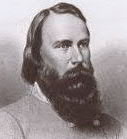
Brig. Gen. Benjamin Grubb Humphreys (b. 1808, d. 1882). Born in Mississippi when it was still a Territory, he was educated in New Jersey. Together with future Southern heros Robert E. Lee and Joseph Johnston he entered West Point in 1825 but was expelled for rioting on Christmas Eve one year later. Humphreys returned to Mississippi where he worked as lawyer and started a political career. He represented his native county from 1839 to 1844 in the state’s senate before becoming a planter. Although opposing secession he offered his service to the Confederate States of America after Mississippi had left the Union. Raising a company for the 2nd Mississippi he was commissioned a captain and rose to regimental command by November 1861. As colonel of the 21st Mississippi he fought through the Peninsula campaign in the brigade of Gen. Richard Griffith and after the latter’s death at Savage Station (June 29, 1862) under Gen. William Barksdale. The Mississippi brigade belonged to Gen. Lafayette McLaw’s division that stayed near Richmond and did not rejoin the army until after Second Manassas. It was part of the force that captured Harpers Ferry at the beginning of the Maryland campaign and arrived just after the start of Antietam on September 17. After the retreat to Virginia Barksdale's whole brigade played an important role in defending Fredericksburg the following December. It had the task to delay the Federal advance through the town and Humphreys’ and the other regiments were involved in street fights before retreating. While the Confederates repulsed this time every Union attempt to take the heights around the town they did not have the manpower to hold the heights five months later. While further west the battle of Chancellorsville was fought, the Mississippians with Humphreys had the task to keep Gen. John Sedgwick’s corps from taking Fredericksburg and get into the Confederate rear. Although the Southerners repulsed several attacks they had to retreat finally. However, as the main battle was a Confederate victory it opened the way for the invasion of Pennsylvania. At Gettysburg, Humphreys and the brigade fought on the battle’s second day in the “Peach Orchard” and the “Wheat Field”, where they were beaten back despite some success. As Barksdale was mortally wounded in that fight, Humphreys rose to brigade command and received promotion to brigadier general on August 10, 1863. When the I corps was sent west to support the Army of the Tennessee, Humphreys’ brigade was part of it. At Chickamauga on the second day (September 20) it was part of the successful attack that almost broke the Union right and won the day for the South. Humphreys served through the ensuing Knoxville campaign and fought in all important battles of the Overland campaign the following year. In August 1864 Humphreys and his brigade were sent to the Shenandoah Valley to support Gen. Jubal Early. They were not involved in any fighting there until ordered back to Petersburg at the beginning of September. At Berryville they collided with Federals. Both sides were surprised by the engagement and Humphreys was severely wounded before the Confederates withdrew. Humphreys recovered only enough to take command of a military district in Mississippi, where he witnessed the end of the war. During Reconstruction he was elected first governor of his native state after the war in October 1865 and re-elected in 1868. As Democrat he pursued a moderate politic which did not please the Radical Republicans. When they started to dominate Reconstruction politics, they ordered Humphreys to be removed. When he and his family refused to leave the governor’s mansion on June 15, 1868 they were forced out by Federal troops at bayonet point. Humphreys resumed afterwards the life as a planter and worked in the insurance business until his death in 1882. He was buried in Port Gibson, Mississippi.
Ldr: 4
Tact: 4
Init: 3
Cmd: 3
Cav: 0
Teaches: Blasted (for Gettysburg), Sustained Volley and/or Woodsmen
Brig. Gen. Benjamin G. Humphreys
Moderator: Gil R.
-
jkBluesman
- Posts: 797
- Joined: Mon Feb 12, 2007 6:48 pm
Brig. Gen. Benjamin G. Humphreys
"War is the field of chance."
Carl von Clausewitz
Carl von Clausewitz
RE: Brig. Gen. Benjamin G. Humphreys
Copied, thanks.
Michael Jordan plays ball. Charles Manson kills people. I torment eager potential customers by not sharing screenshots of "Brother Against Brother." Everyone has a talent.
RE: Brig. Gen. Benjamin G. Humphreys
I finally have started editing bios again, and chose Humphreys for no particular reason. It's still too long, but I wanted to do a fact-check before figuring out how much more needs cutting.
The question: Was my change regarding Humphreys not heading to Petersburg with his brigade correct? Since Berrysville happened under Early that seemed logical, but I’m not sure just what happened. (Also, if Humphreys was wounded at Berrysville that must mean that they were involved in some fighting before heading to Petersburg.
Brig. Gen. Benjamin Grubb Humphreys (b. 1808, d. 1882). Born in Mississippi when it was still a territory and educated in New Jersey, Humphreys entered West Point in 1825, together with future Southern heroes Robert E. Lee and Joseph E. Johnston, but was expelled for rioting on Christmas Eve a year later. He returned to Mississippi, where he worked as lawyer and entered politics, representing his native county from 1839-1844 in the state senate before becoming a planter. Although opposed to the secession movement, Humphreys offered his services to the Confederacy after Mississippi had left the Union and raised a company for the 2nd Mississippi infantry regiment. Rising to regimental command by November 1861, as Colonel of the 21st Mississippi Humphreys fought in the Peninsula Campaign of March-July 1862 in a Mississippi brigade that was first commanded by Gen. Richard Griffith, who was killed at Savage Station on June 29, and then Gen. William Barksdale. The brigade, part of Gen. Lafayette McLaw’s division, stayed near Richmond and did not rejoin the Army of Northern Virginia until late that summer, in time for the Maryland Campaign. Having participated in the capture of Harpers Ferry, this force arrived at Sharpsburg just after the start of the Battle of Antietam on September 17. Barksdale’s brigade played an important role in defending Fredericksburg that December: given the task of delaying the Union’s advance through the town, it engaged in street fighting before retreating. While the Confederates on this occasion repulsed every Union attempt to take the heights around the town, they did not have the manpower to do so five months later: while the Battle of Chancellorsville was being fought just to the west on May 3, 1863, Humphreys and his fellow Mississippians had the task of keeping Gen. John Sedgwick’s VI Corps from taking Fredericksburg and endangering the Confederate army from the rear, but ultimately had to retreat after repulsing several attacks. Despite this setback, the main battle was a Confederate victory, opening the way for the invasion of Pennsylvania two months later. At Gettysburg, Humphreys and the brigade fought on the battle’s second day in the “Peach Orchard” and the “Wheat Field,” where they were beaten back despite some success. As Barksdale was mortally wounded in that fight, Humphreys rose to brigade command and received promotion to brigadier general on August 10, 1863. When Gen. James Longstreet’s I Corps was sent west to support the Army of the Tennessee, Humphreys’ brigade was among the units traveling 775 miles by rail and arriving at the Battle of Chickamauga in time to fight on the second day (September 20). After participating in the successful attack that almost broke the Union right and won the day for the South, Humphreys’ brigade served through the ensuing Knoxville Campaign. Having returned to the Virginia theater, the following spring, they fought in all important battles of the Overland Campaign. In August 1864, Humphreys’ brigade was sent to the Shenandoah Valley to support Gen. Jubal Early’s army, but they were not involved in any major fighting and were soon ordered to Petersburg. Humphreys, however, did not accompany them: at Berryville on September 3-4, an unexpected collision of Union and Confederate forces led to a small battle, during which Humphreys was severely wounded before the Confederates withdrew. He recovered only enough to take command of a military district in Mississippi, where he witnessed the end of the war. During Reconstruction, Humphreys was elected the first post-war governor of his native state in 1865, gaining reelection in 1868. A Democrat, he pursued a moderate policy that displeased the Radical Republicans. When they started to dominate Reconstruction politics, they ordered Humphreys to be removed from office, and when he and his family refused to leave the governor’s mansion they were forced out by Federal troops at bayonet point. He subsequently resumed his life as a planter and also worked in the insurance business until his death in 1882. Humphreys was buried in Port Gibson, Mississippi. (Bio by Joern Kaesebier)
The question: Was my change regarding Humphreys not heading to Petersburg with his brigade correct? Since Berrysville happened under Early that seemed logical, but I’m not sure just what happened. (Also, if Humphreys was wounded at Berrysville that must mean that they were involved in some fighting before heading to Petersburg.
Brig. Gen. Benjamin Grubb Humphreys (b. 1808, d. 1882). Born in Mississippi when it was still a territory and educated in New Jersey, Humphreys entered West Point in 1825, together with future Southern heroes Robert E. Lee and Joseph E. Johnston, but was expelled for rioting on Christmas Eve a year later. He returned to Mississippi, where he worked as lawyer and entered politics, representing his native county from 1839-1844 in the state senate before becoming a planter. Although opposed to the secession movement, Humphreys offered his services to the Confederacy after Mississippi had left the Union and raised a company for the 2nd Mississippi infantry regiment. Rising to regimental command by November 1861, as Colonel of the 21st Mississippi Humphreys fought in the Peninsula Campaign of March-July 1862 in a Mississippi brigade that was first commanded by Gen. Richard Griffith, who was killed at Savage Station on June 29, and then Gen. William Barksdale. The brigade, part of Gen. Lafayette McLaw’s division, stayed near Richmond and did not rejoin the Army of Northern Virginia until late that summer, in time for the Maryland Campaign. Having participated in the capture of Harpers Ferry, this force arrived at Sharpsburg just after the start of the Battle of Antietam on September 17. Barksdale’s brigade played an important role in defending Fredericksburg that December: given the task of delaying the Union’s advance through the town, it engaged in street fighting before retreating. While the Confederates on this occasion repulsed every Union attempt to take the heights around the town, they did not have the manpower to do so five months later: while the Battle of Chancellorsville was being fought just to the west on May 3, 1863, Humphreys and his fellow Mississippians had the task of keeping Gen. John Sedgwick’s VI Corps from taking Fredericksburg and endangering the Confederate army from the rear, but ultimately had to retreat after repulsing several attacks. Despite this setback, the main battle was a Confederate victory, opening the way for the invasion of Pennsylvania two months later. At Gettysburg, Humphreys and the brigade fought on the battle’s second day in the “Peach Orchard” and the “Wheat Field,” where they were beaten back despite some success. As Barksdale was mortally wounded in that fight, Humphreys rose to brigade command and received promotion to brigadier general on August 10, 1863. When Gen. James Longstreet’s I Corps was sent west to support the Army of the Tennessee, Humphreys’ brigade was among the units traveling 775 miles by rail and arriving at the Battle of Chickamauga in time to fight on the second day (September 20). After participating in the successful attack that almost broke the Union right and won the day for the South, Humphreys’ brigade served through the ensuing Knoxville Campaign. Having returned to the Virginia theater, the following spring, they fought in all important battles of the Overland Campaign. In August 1864, Humphreys’ brigade was sent to the Shenandoah Valley to support Gen. Jubal Early’s army, but they were not involved in any major fighting and were soon ordered to Petersburg. Humphreys, however, did not accompany them: at Berryville on September 3-4, an unexpected collision of Union and Confederate forces led to a small battle, during which Humphreys was severely wounded before the Confederates withdrew. He recovered only enough to take command of a military district in Mississippi, where he witnessed the end of the war. During Reconstruction, Humphreys was elected the first post-war governor of his native state in 1865, gaining reelection in 1868. A Democrat, he pursued a moderate policy that displeased the Radical Republicans. When they started to dominate Reconstruction politics, they ordered Humphreys to be removed from office, and when he and his family refused to leave the governor’s mansion they were forced out by Federal troops at bayonet point. He subsequently resumed his life as a planter and also worked in the insurance business until his death in 1882. Humphreys was buried in Port Gibson, Mississippi. (Bio by Joern Kaesebier)
Michael Jordan plays ball. Charles Manson kills people. I torment eager potential customers by not sharing screenshots of "Brother Against Brother." Everyone has a talent.
-
jkBluesman
- Posts: 797
- Joined: Mon Feb 12, 2007 6:48 pm
RE: Brig. Gen. Benjamin G. Humphreys
Humphreys belonged to the part of Anderson's corps that had been detached to Early in August. However, Lee ordered it back to Petersburg at the beginning of September. On their way the Confederates clashed with Union troops at Berryville. In that fighting Humphreys was wounded. So Berryville did not happen under Early according to Eicher's "Longest Night". Heidler does not even mention the battle, but says that Anderson's command moved by the flank of Sheridan on the way to Petersburg. Wikipedia mentions the skirmish and says Early retreated after inconclusive fighting as he thought the enemy position too strong.
Good to see you using your talent again.
Edited for spelling once again.
Good to see you using your talent again.
Edited for spelling once again.
"War is the field of chance."
Carl von Clausewitz
Carl von Clausewitz
RE: Brig. Gen. Benjamin G. Humphreys
Okay, thanks. I'll try to get this one all finished.
Michael Jordan plays ball. Charles Manson kills people. I torment eager potential customers by not sharing screenshots of "Brother Against Brother." Everyone has a talent.
RE: Brig. Gen. Benjamin G. Humphreys
Okay, based on your comments I restored your original language about Berryville, making just a superficial change to how it was phrased. And then I had to shorten it by 200 characters. So, it took a while, but it’s now good to go.
Brig. Gen. Benjamin Grubb Humphreys (b. 1808, d. 1882). Born in Mississippi when it was still a territory, Humphreys entered West Point in 1825, together with future Southern heroes Robert E. Lee and Joseph E. Johnston, but was expelled for rioting on Christmas Eve a year later. He returned to Mississippi, where he worked as lawyer and entered politics, serving in the state senate from 1839 to 1844, and then becoming a planter. Although opposed to the secession movement, Humphreys offered his services to the Confederacy after Mississippi had left the Union and raised a company for the 2nd Mississippi Infantry regiment. Rising to regimental command by November, as Colonel of the 21st Mississippi Humphreys fought in the Peninsula Campaign of March-July 1862, serving in a Mississippi brigade commanded by Gen. Richard Griffith until his death at Savage Station on June 29, and then by Gen. William Barksdale. The brigade, part of Gen. Lafayette McLaw’s division, stayed near Richmond until rejoining the Army of Northern Virginia for the Maryland Campaign. Having participated in the capture of Harpers Ferry, this force arrived at Sharpsburg just after the start of the Battle of Antietam on September 17. Barksdale’s brigade played an important role in defending Fredericksburg that December: given the task of delaying the Union’s advance through the town, it engaged in street fighting before retreating. While the Confederates on this occasion repulsed every Union attempt to take the heights around the town, they did not have the manpower to do so five months later: while the Battle of Chancellorsville was being fought just to the west on May 3, 1863, the brigade had the task of keeping Gen. John Sedgwick’s VI Corps from taking Fredericksburg and endangering the Confederate army from the rear, but after repulsing several attacks ultimately had to retreat. Despite this setback, the main battle was a Confederate victory, opening the way for the invasion of Pennsylvania two months later. At Gettysburg, Humphreys and his men fought on the battle’s second day in the “Peach Orchard” and the “Wheat Field,” where they were beaten back despite some success. As Barksdale was mortally wounded in that fight, Humphreys rose to brigade command and received promotion to brigadier general on August 10. When Gen. James Longstreet’s I Corps was sent west to support the Army of the Tennessee, Humphreys’ brigade was among those traveling 775 miles by rail and arriving at the Battle of Chickamauga in time to fight on the second day, September 20. After participating in the successful attack that almost broke the Union right and won the day for the South, Humphreys’ brigade served through the ensuing Knoxville Campaign. Having returned to Virginia, they fought in all important battles of 1864’s Overland Campaign, and in August were sent to the Shenandoah Valley to support Gen. Jubal Early. Humphreys’ men were not involved in any fighting there until ordered back to Petersburg at the beginning of September, when they unexpectedly collided with the enemy at Berryville. Severely wounded before the Confederates withdrew, Humphreys recovered only enough to take command of a military district in Mississippi, where he witnessed the end of the war. During Reconstruction, Humphreys was elected the first post-war governor of his native state in 1865, gaining reelection in 1868. A Democrat, he pursued a moderate policy that displeased the Radical Republicans. When they started to dominate Reconstruction politics, they ordered Humphreys to be removed from office, and when he and his family refused to leave the governor’s mansion they were forced out by Federal troops at bayonet point. He subsequently resumed his life as a planter and also worked in the insurance business until his death in 1882. Humphreys was buried in Port Gibson, Mississippi. (Bio by Joern Kaesebier)
Brig. Gen. Benjamin Grubb Humphreys (b. 1808, d. 1882). Born in Mississippi when it was still a territory, Humphreys entered West Point in 1825, together with future Southern heroes Robert E. Lee and Joseph E. Johnston, but was expelled for rioting on Christmas Eve a year later. He returned to Mississippi, where he worked as lawyer and entered politics, serving in the state senate from 1839 to 1844, and then becoming a planter. Although opposed to the secession movement, Humphreys offered his services to the Confederacy after Mississippi had left the Union and raised a company for the 2nd Mississippi Infantry regiment. Rising to regimental command by November, as Colonel of the 21st Mississippi Humphreys fought in the Peninsula Campaign of March-July 1862, serving in a Mississippi brigade commanded by Gen. Richard Griffith until his death at Savage Station on June 29, and then by Gen. William Barksdale. The brigade, part of Gen. Lafayette McLaw’s division, stayed near Richmond until rejoining the Army of Northern Virginia for the Maryland Campaign. Having participated in the capture of Harpers Ferry, this force arrived at Sharpsburg just after the start of the Battle of Antietam on September 17. Barksdale’s brigade played an important role in defending Fredericksburg that December: given the task of delaying the Union’s advance through the town, it engaged in street fighting before retreating. While the Confederates on this occasion repulsed every Union attempt to take the heights around the town, they did not have the manpower to do so five months later: while the Battle of Chancellorsville was being fought just to the west on May 3, 1863, the brigade had the task of keeping Gen. John Sedgwick’s VI Corps from taking Fredericksburg and endangering the Confederate army from the rear, but after repulsing several attacks ultimately had to retreat. Despite this setback, the main battle was a Confederate victory, opening the way for the invasion of Pennsylvania two months later. At Gettysburg, Humphreys and his men fought on the battle’s second day in the “Peach Orchard” and the “Wheat Field,” where they were beaten back despite some success. As Barksdale was mortally wounded in that fight, Humphreys rose to brigade command and received promotion to brigadier general on August 10. When Gen. James Longstreet’s I Corps was sent west to support the Army of the Tennessee, Humphreys’ brigade was among those traveling 775 miles by rail and arriving at the Battle of Chickamauga in time to fight on the second day, September 20. After participating in the successful attack that almost broke the Union right and won the day for the South, Humphreys’ brigade served through the ensuing Knoxville Campaign. Having returned to Virginia, they fought in all important battles of 1864’s Overland Campaign, and in August were sent to the Shenandoah Valley to support Gen. Jubal Early. Humphreys’ men were not involved in any fighting there until ordered back to Petersburg at the beginning of September, when they unexpectedly collided with the enemy at Berryville. Severely wounded before the Confederates withdrew, Humphreys recovered only enough to take command of a military district in Mississippi, where he witnessed the end of the war. During Reconstruction, Humphreys was elected the first post-war governor of his native state in 1865, gaining reelection in 1868. A Democrat, he pursued a moderate policy that displeased the Radical Republicans. When they started to dominate Reconstruction politics, they ordered Humphreys to be removed from office, and when he and his family refused to leave the governor’s mansion they were forced out by Federal troops at bayonet point. He subsequently resumed his life as a planter and also worked in the insurance business until his death in 1882. Humphreys was buried in Port Gibson, Mississippi. (Bio by Joern Kaesebier)
Michael Jordan plays ball. Charles Manson kills people. I torment eager potential customers by not sharing screenshots of "Brother Against Brother." Everyone has a talent.