RE: Akyab
Posted: Tue Apr 19, 2005 1:30 pm
Looks good. One question - How will the TKs pick up Oil in the Middle East? They can't reach the port unless the start there.
What's your Strategy?
https://forums.matrixgames.com:443/
ORIGINAL: bstarr
Looks good. One question - How will the TKs pick up Oil in the Middle East? They can't reach the port unless the start there.
ORIGINAL: Ron Saueracker
Supply in Karachi and Bombay represents direct supply convoys from around the Cape, not production in India.
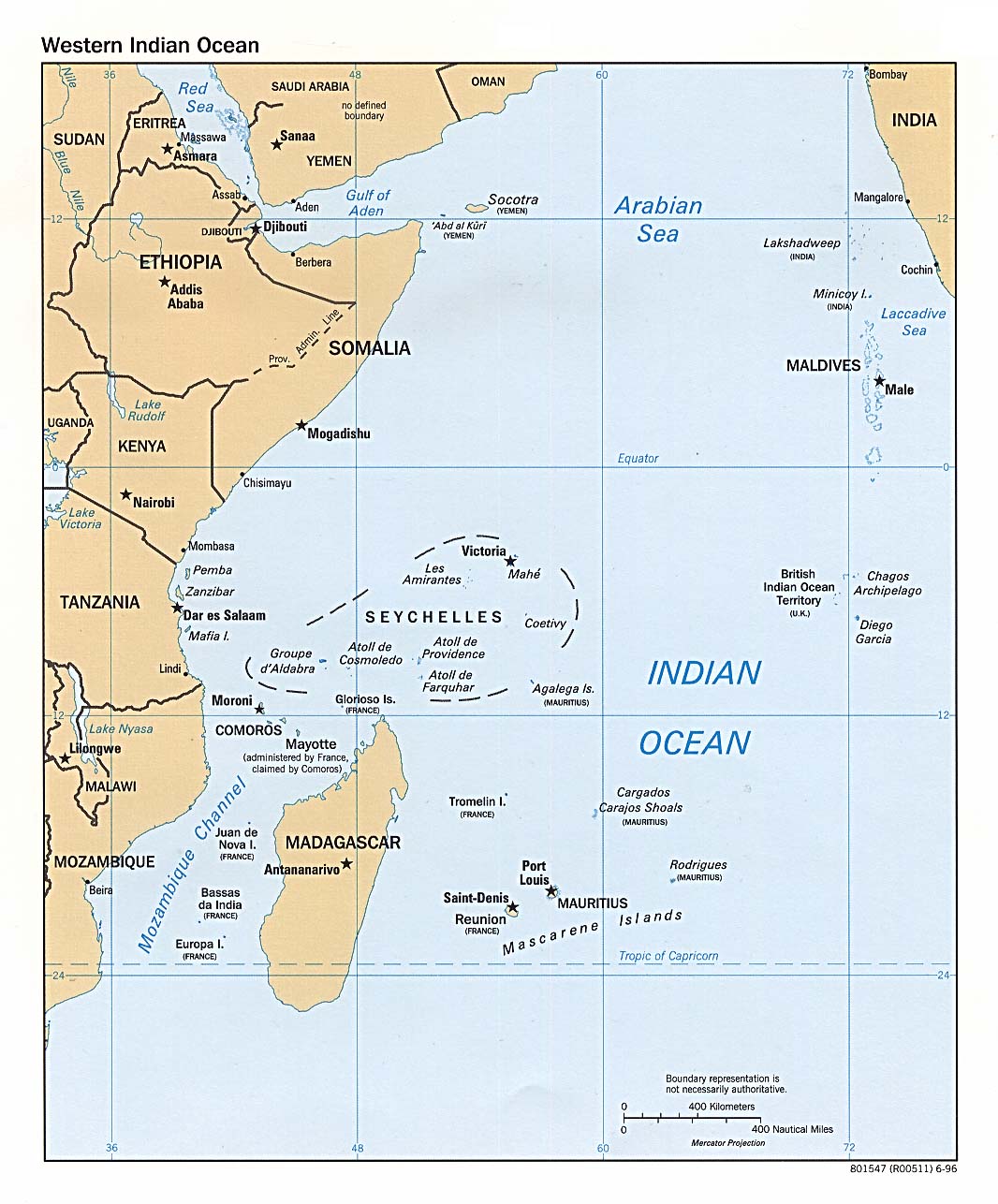
Ooohhh. Too bad there is not enough room to add a winding path to Durban, South Africa, or at least Diego Garcia.
May 1940 The British set up a Convoy Route dubbed "X.C." from the Chagos through the Maldives to Colombo, Ceylon. The route is used throughout World War II. RAFA ANNE (Royal Air Force Association ship) arrives from Seletar in the Maldives with 'sectionalised huttery', an Air Ministry Works Department officer and coolies to set up an RAF seaplane outpost. RAFA ANNE, a.k.a. RAFA TUNG SONG was a twin screw steamer of 178 feet length, with carrying capacity of 350 tons. On charter from Singapore Straits Steamship Company, she was still crewed by the civilian crew, with a small detachment of RAF personnel aboard.
July 7, 1941 Squadron Leader Jardine flies Catalina W8417 from Diego Garcia to check for enemy shipping at Suvadiva (Huvadhu) and Addu Atolls, then over flew Male, and checked progress of RAF buildings on Dhoonidhoo Island (north of Male) thence to Koggala, Ceylon.
February 14, 1942 HMAS WOLLONGONG, a 650-ton minesweeper, departs Freemantle Australia to join the "Eastern Fleet" at Diego Garcia.
February 1942 Two 6-inch Naval Rifles made by Birmingham Small Arms are installed on the oceanside of Eclipse Point to hold off the Japanese Navy. In charge of the installation is Scottish Royal Marine Captain J. Alan Thompson who later writes three novels about life on Diego Garcia during the war.
March 1942 An RAF Seaplane Base is established at East Point.
July 26, 1942 The Imperial Japanese Navy submarine I-16 reconoiters the doings on Diego Garcia. In the preceeding month she had sunk four merchantmen south of the Chagos (3,889-ton Yugoslav SUSAK at 15-42S 40-58E, 4,847-ton Greek AGHIOS GEORGIOS IV at 16-12S 41-00E, 3,748-ton Yugoslav SUPETAR at 21-49S 35-50E, and 5,243-ton Swedish EKNAREN at 17-00S 40-00E). After her visit to DG, she cruises to Penang, and then back to Japan.
November 17, 1942 The Corvette HMIS BENGAL, an Australian built minesweeper in the service of the Indian Navy, arrives at East Point to repair battle damage after sinking the Japanese Armed Merchant Cruiser HOKOKU MARU. The captain of the BENGAL, Lieutenant-Commander Wilson, RNR, received the Distinguished Service Order, while others of his crew were also awarded for the battle. This victory cause the Imperial Japanese Navy to abandon commerce raiding with surface ships in the Indian Ocean.
January 27, 1943 HMAS TAMWORTH, sister ship to the WOLLONGONG I, sailed from Fremantle, escorting the tanker SS ATHELDUKE to Diego Garcia. From Diego Garcia she proceeded to Colombo to join the British Eastern Fleet, with which she was to serve for some two years on Indian Ocean and Persian Gulf convoy escort duty.
April 1943 The British set up a Convoy Route dubbed "C.X." from Colombo through the Maldives to the Chagos. It is the reciprocal of X.C. set up in May 1940.
September 20, 1943 At 3 p.m., the German Submarine U-532, commanded by Ottoheinrich Junker and operating from its base in Jakarta, torpedos the British ship SS FORT LONGUEUIL near Diego Garcia. Although at least four rafts with at least 16 men of the 59-man crew survived the sinking, only two men, Thakar Miah and Mohamed Aftab, survived to reach shore (in Malaysia) four and a half months later. They were captured by the Japanese but survived the war.
September 30, 1943 Wreckage from the Liberty Ship SS SAMUEL HEINTZELMAN 0651 washes ashore at Minni Minni. The HEINTZELMAN had been sunk by the German Submarine U-511 about 200 miles east of Diego (at 9S-81E) on July 9. She was carrying 5,644 tons of ammunition and blew up after being struck by a single torpedo with the loss of all 69 crewmen and six passengers.
April 4, 1944 HMS PATHFINDER (G-10), a P-Class Destroyer, stops by en route from Ceylon to South Africa. In the Atlantic in 1942, she had sunk a U-Boat and an Italian sub, and in April, 1943, sunk another U-Boat. During her service escorting convoys from 1942-1945, not one ship in any convoy was lost to submarines, which was quite a feat in those days.
June 29, 1944 Here's why the Catalinas were on Diego Garcia. The Imperial Japanese Navy submarine I-8 sinks the 6,942-ton Eastern and Australia Line's freighter NELLORE about 200 miles ESE of Diego at 07-51S, 75-20E. There were 209 passengers and crew on board, and 79 are lost and the I-8 took 1 crewmember and 10 passengers prisoner. A week later, the frigate HMS LOSSIE rescues 112 crewmen and lands them at Addu Atoll. On 17 July, two crewmen are picked up by an RAF "Catalina" and landed at Ceylon. On 27 July, almost 2500 miles from the site of the NELLORE's sinking and a month later, ten crewmen land at Sambavany, Madagascar. On July 2, the I-8 torpedoes the 7,176-ton American "Liberty" ship JEAN NICOLET. The I-8 takes 99 survivors aboard, where Captain Ariizumi has them searched, bound and questioned. He has the NICOLET's master, radio operator and a civilian passenger taken below. Then, in a three-hour massacre, most of the survivors are beaten, stabbed, or shot. Some are made to run a gauntlet of crewmen with knives and pipes. When the I-8's radar picks up an aircraft, Ariizumi submerges and leaves the bound Americans on deck to drown, but some of the survivors, return to the sinking NICOLET and launch rafts. On 4 July, the Indian Navy trawler HOXA rescues just 23 survivors. Of the three Americans taken below on the I-8, only the passenger survives internment as a POW. This isn't the first time Ariizumi killed prisoners. On 26 March 1944, Ariizumi had his crew massacre the crew of the 5,787-ton armed Dutch merchant TJISALAK near the Maldives. He had the crew kill them on the I-8's deck with swords and by clubbing them with wrenches, and ordered machine-gunners to fire on any survivors who leap overboard. Of the 102 men and one nurse on the TJISALAK only five men survive. They eventually reach a lifeboat and are later picked up by the American "Liberty" ship JAMES A. WILDER.
September 15, 1944 A Seaplane Tender and two PBY Catalinas break their moorings and are blown ashore at East Point during a typhoon. One of the Catalinas, K for Katie, Pilot Officer James Park, Commander, remains on the beach to this day.
September -
October 1944 An epidemic of dengue fever strikes the island. Most of the RAF personnel came down with the disease, and several islanders died of it.
September 1945 The RAF Seaplane Base at East Point is closed, and the airmen and the soldiers manning the guns at Eclipse Point start going home. It would be another seven years before aircraft were seen in the skies over Diego
Map link...
http://www.lib.utexas.edu/maps/islands_ ... n_w_96.jpg
And....mmmmm...U Boats! A stretch.[8D]

Kyoto - 1(4) 2(2) 1(4) Airfield -> Base
Taiden - 1(4) 1(2) 1(4) Airfield -> Base
Anshan - 1(4) 1(2) 1(4) Airfield -> Base
Bora Bora 0(3) 0(3) 1(3) 0(3)
quote:
Kyoto - 1(4) 2(2) 1(4) Airfield -> Base
Taiden - 1(4) 1(2) 1(4) Airfield -> Base
Anshan - 1(4) 1(2) 1(4) Airfield -> Base
Mike indicated that these cities could not be developed into ports due to being on cliffs. Perhaps just making them 0 (0) port bases??
ORIGINAL: Bradley7735
quote:
Kyoto - 1(4) 2(2) 1(4) Airfield -> Base
Taiden - 1(4) 1(2) 1(4) Airfield -> Base
Anshan - 1(4) 1(2) 1(4) Airfield -> Base
Mike indicated that these cities could not be developed into ports due to being on cliffs. Perhaps just making them 0 (0) port bases??
Hi Don/Andrew, Because of the "Mannargudi bug", there are only two options for these bases. 1: Make the port SPS of 0 (and make them a base), or change the hex they are in so that ships can not enter (make it non coastal). Personally, I don't know which is better. I tend to think that any country, with a lot of work can do just about anything. It'll take a lot of time and materials, maybe some block ships, and eventually, they might build a level 3 port. But, maybe it's better to make the hex a non-coastal hex. I don't know. But, the Mannargudi bug will cause problems when ships enter a base that is listed "Airfield" and not "Base".
I leave it up to your capable hands to decide. Thanks again for everyone's hard work.
Hi Don/Andrew, Because of the "Mannargudi bug", there are only two options for these bases. 1: Make the port SPS of 0 (and make them a base), or change the hex they are in so that ships can not enter (make it non coastal). Personally, I don't know which is better. I tend to think that any country, with a lot of work can do just about anything. It'll take a lot of time and materials, maybe some block ships, and eventually, they might build a level 3 port. But, maybe it's better to make the hex a non-coastal hex. I don't know. But, the Mannargudi bug will cause problems when ships enter a base that is listed "Airfield" and not "Base".
Bora Bora had a single long wooden pier at Viatape, on the edge of the excellent Teavanui Harbor. There apparently was another, much smaller pier at a village on Fanui Bay. Total pre-war population was only 1400, which would not have supported significant port resources. I guess I'm not sure what constitutes a level 1 port.
Ps I still think Darwin port wise should start at 1. Darwin had 1 pier and 1 manual crane and that was it.
ORIGINAL: Andrew Brown
Ps I still think Darwin port wise should start at 1. Darwin had 1 pier and 1 manual crane and that was it.
I have to admit that a lot of my values for Australian ports are based more on "gut feeling' than factual information. If Darwin really was that lacking in port facilitites in 1941 then maybe it should be reduced to a '1'. I would need to do some research to come up with a more informed answer of my own, so I am happy to defer to those more knowledgeable than myself.
It looks like Port Moresby should be reviewed as well.
ORIGINAL: irrelevant
In addition to reducing supplies, I would really like to see a wholesale reduction of base sizes across the map. Smaller bases (both initial values as well as SPS) would do much to slow things down.
This may be old news, but it was new to me. Bases can be given arrival dates. I set 567 Nias Island to arrive on 12/8/41 and, sure enough, it wasn’t there on 12/7 and appeared on 12/8 just like it was supposed to.
.
.
.
It may be possible to reduced, say, the United States base by ½ and then added a second base in an adjacent hex that arrived later in the war with the other half of the resources, supplies, oil, etc. I’m not sure if that would work or not, but it’s an idea worth mentioning just in case we need to decrease US supply. May not even be something we need, but it's a card we can keep up our sleeves.
This was exactly my thought.Most air bases don't really need an SPS greater than 1 for example.
quote:
Most air bases don't really need an SPS greater than 1 for example.
This was exactly my thought.