Page 3 of 6
RE: Old Wounds
Posted: Fri May 16, 2008 6:24 pm
by rtrapasso
ORIGINAL: Cuttlefish
ORIGINAL: rtrapasso
Simple explanations are usually more likely than secret and complex conspiracies.
Actually, i think it says the most simple explanation that fits all the evidence is the most likely explanation.
You are correct. If a simple explanation does not fit the evidence then a more complex explanation is necessary. It is also true that Occam's razor is a guiding principal and not a scientific or philosphical rule. The simplest explanation that fits the facts isn't necessarily the correct one; it's just that that's the way to bet.
I know this to be true because that's how the aliens who escaped from Roswell explained it to me, and they are very smart.
[:D] [:D]
RE: Old Wounds
Posted: Fri May 16, 2008 6:25 pm
by greg_slith
The biggest problem the conspiacy people have is the fact that the guv'ment that can plan 9/11, AIDS, Katrina and Area 51 and KEEP IT A SECRET FOR YEARS is the same guv'ment that can't seem to find its a$$ with both hands and a flashlight. It's hard for me to think the Illuminati have ET stashed someplace but can't have an affair with a stripper without it getting splashed all over tv. [:D]
I feel bad for the people who actually believe there is something going on. Too often they get joined by the types of people who wear tin-foil hats to keep out the transmissions from Uranus.[X(] Ouch. Of course, the tin foil people could be working for the NSA, Hmmm.
RE: Old Wounds
Posted: Fri May 16, 2008 6:28 pm
by rtrapasso
ORIGINAL: Big B
That is a bit...odd. I don't know, there was an interesting book written a few years ago called Day of Deceit.
For years I never believed in PH conspiracy stuff, but these days I'm not so sure.
But it is also apparent that seriously talking about it is heresy, so I'll leave it at that...
ORIGINAL: rtrapasso
Not sure about about the unstable part... my father (who was a participant in the war) had followed the investigations with some interest, and was particularly "amused" when several tons of documents subpoenaed by Congress were "accidentally diverted to an incinerator". Layton (who wrote "And I Was There") also recounts the disappearance of many key documents in the investigation.
My alternate explanation is malfeasance combined with incompetence: someone was trying to cover up their mistakes prior to the attack, not their foreknowledge of the events...
RE: Old Wounds
Posted: Fri May 16, 2008 6:31 pm
by Cuttlefish
ORIGINAL: Charbroiled
OT? OT? Who's been on-topic?[:D]
Nobody has answered my original questions, but I don't really mind. The direction this post has gone was not my intention, but it has been interesting to read.[8D]
I've enjoyed it!
But to try and answer your original question, let's look at the three bullet points at the top of the page you linked to:
[font="Arial"]FDR blinded the commanders at Pearl Harbor and set them up by --
1. denying intelligence to Hawaii (HI)
2. on November 27 and later, misleading the commanders into thinking negotiations with Japan were continuing to prevent them from realizing the war was on
3. having false information sent to HI about the location of the Japanese carrier fleet[/font]
Point one. I think that the information that reached Kimmel and Short was to some extent incomplete and contradictory. I haven't seen any solid evidence that lays this failure at Roosevelt's door, though.
Point two. This one is flat-out wrong. Negotiations
were continuing, as this was short of Japan's drop-dead date for the end of negotiations (November 30/December 1, if I remember correctly). Certainly Japan still had hopes of avoiding war at that point.
Point three. I have never heard that anyone in the US had solid evidence about where the Japanese carriers were prior to the attack. Does anyone know any different?
RE: Old Wounds
Posted: Fri May 16, 2008 6:35 pm
by rtrapasso
ORIGINAL: Cuttlefish
ORIGINAL: Charbroiled
OT? OT? Who's been on-topic?[:D]
Nobody has answered my original questions, but I don't really mind. The direction this post has gone was not my intention, but it has been interesting to read.[8D]
I've enjoyed it!
But to try and answer your original question, let's look at the three bullet points at the top of the page you linked to:
[font="Arial"]FDR blinded the commanders at Pearl Harbor and set them up by --
1. denying intelligence to Hawaii (HI)
2. on November 27 and later, misleading the commanders into thinking negotiations with Japan were continuing to prevent them from realizing the war was on
3. having false information sent to HI about the location of the Japanese carrier fleet[/font]
Point one. I think that the information that reached Kimmel and Short was to some extent incomplete and contradictory. I haven't seen any solid evidence that lays this failure at Roosevelt's door, though.
Point two. This one is flat-out wrong. Negotiations
were continuing, as this was short of Japan's drop-dead date for the end of negotiations (November 30/December 1, if I remember correctly). Certainly Japan still had hopes of avoiding war at that point.
Point three. I have never heard that anyone in the US had solid evidence about where the Japanese carriers were prior to the attack. Does anyone know any different?
There have been reports of radio interceptions that showed the location of the KB - these reports are
highly controversial, and many of the documents have... disappeared (i.e. - the pages supposedly that would have showed them were ripped out of the log books.) Again, all this is highly controversial.
RE: Old Wounds
Posted: Fri May 16, 2008 6:44 pm
by mdiehl
will say i do not think rosevelt or anyone else knew about PH. but they were trying to draw the japanesse into a incident
I think that is not in the slightest correct. It's much more accurate to say that the Japanese were belligerent beyond reason and the US was looking to avoid a war but not willing to aid and abet Japan in criminal malfeasance, as was Japan's demand. No one in the US was stupid enough to view Japan's demand that the US NOT put any military assets in the Philippines, and Japan's demand that JAPAN be allowed to "secure the neutrality of the Philippines" as anything other than a demand for land and assets backed by the threat of force. Everyone knew the ball was going to drop. No one knew when. In the US, pretty much everyone was looking to avoid a war, but the US was not going to cave to demands from criminals.
There were dozens of Japanese instigated "incidents" prior to 7 Dec. 1941. Japanese overflights of US military bases, acts of sabotage in the PI, assaults committed against Americans by Japanese operatives in China, PI, Japan, &c. The US went out of its way to ignore these incidents. In the final analysis, Japan chose war with the United States because the United States refused to cede US territories and refused to provide Japan with the war supplies required to invade China and continental Southeast Asia.
RE: Old Wounds
Posted: Fri May 16, 2008 6:52 pm
by MightyPaladin
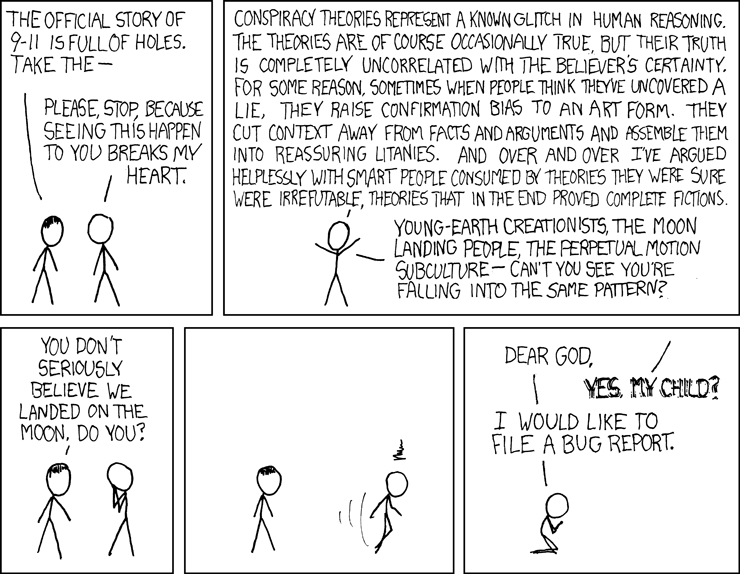
xkcd rules.
RE: Old Wounds
Posted: Fri May 16, 2008 6:52 pm
by greg_slith
I'd agree with most of this post except the part about the US not wanting war. No war with Japan, maybe. No war with Germany and Italy almost definately not. Roosevelt probably laughed himself into a hemmorage when Germany declared war on the US. I do wonder what would have happened if Hitler had kept his mouth shut. He didn't HAVE to declare war since Japan was the aggressor. Would the US still have declared war on Germany if they had said "This is between y'all. We're perfectly happy with the war we have now, thank you very much".
RE: Old Wounds
Posted: Fri May 16, 2008 6:56 pm
by Charbroiled
ORIGINAL: mdiehl
Japan chose war with the United States because the United States refused to cede US territories and refused to provide Japan with the war supplies required to invade China and continental Southeast Asia.
I read somewhere, I think it was in "Eagle against the Sun" that the sanctions placed on Japan were not to include withholding steel and oil, because Roosevelt knew that without those items Japan would have no option but to aquire them through other means (Borneo, Java, & Sumatra). The question came up through Roosevelt's staff on whether those items were included, but Roosevelt was in a meeting and noone wanted to disturb him, so the concluded that they were part of the sanctions. Once Roosevelt found out, it was too late to change it.
RE: Old Wounds
Posted: Fri May 16, 2008 7:10 pm
by Grell
ORIGINAL: Canoerebel
Charbroiled, I haven't visited that website nor do I know anything about that author, but anybody who thinks Roosevelt allowed Pearl Harbor to happen is unstable and not credible. All these folks - whether their particular fixation is Roosevelt and Pearl Harbor, denying that the Holocaust occurred, whatever - are willing to dispense with all credible, reliable evidence and instead to rely on unsupported, wild accustations based upon no credible evidence.
Exactly what I would have said![:)]
Regards,
Greg
RE: Old Wounds
Posted: Fri May 16, 2008 7:16 pm
by Ambassador
ORIGINAL: rtrapasso
There have been reports of radio interceptions that showed the location of the KB - these reports are highly controversial, and many of the documents have... disappeared (i.e. - the pages supposedly that would have showed them were ripped out of the log books.) Again, all this is highly controversial.
Some have disappeared... a lot, in fact. Although drawing the line of where "standard procedures for destroying classified information" stops and "actual cover-up for a conspiracy" starts is impossible. A lot of classified data were quickly destroyed, partly because the Allies' Intel services were wary of the Jap's discovering the extent of the breaks in their codes (understandably, as every new version of their codes, especially five-numeral and other high-level codes, needed several weeks/months of work before the first breaks could be made). So, did these burned/crunched/eaten files actually contain PH- and KB-related intel ? There's absolutely no way to know. I do know that, had I been in charge of such a maneuver, I would certainly have done my best to cover this, by destroying any incriminating evidence. As usual, CIA/NSA/Mossad/other intel agencies are only know for their failures - never for their successes ; the same can be said from every other special ops.
By the way, some of the papers are still classified... after 66 years (600 to go...). Only two reasons exist of documents to remain classified so long thereafter : either it could endanger other current operations (which was the case for many classified files during Cold War, especially regarding counter-intelligence's success), or it could reveal shady maneuvers. Until they're declassified, we can't know their content (
unless some of us have the accreditations, but in such a case they couldn't report their findings).
It would have taken much cynicism on the part of FDR e.a. to actually sacrifice the sailors and their ships - and so, I do not believe it was done, at least not done willfully. But can I rule out,
with absolute certainty, that he did expect an attack, even on PH, but an attack that wouldn't be so damaging ? There come the numerous mistakes that have been made at PH (
Kimmel/Short rivalry and negligence, radar screw-up, lack of defensive measures like torpedo nets or ammunitions for flak, etc) and that have made possible the kind of disaster that happened, and without which the raid would not have been as successful. We cannot rule them out, because evidence have been destroyed - much like
we cannot prove those theories.
After all, even three centuries later, we still don't know who the Man with the Iron Mask was. History as it is depends on documents - and establishing the authenticity of them, beyond reasonable doubt, is always a difficult, next to impossible, task. For better or for worse, the question of whether or not the Allies knew of the PH raid will never be resolved - and I would say it doesn't matter, nobody's left to put the blame on.
RE: Old Wounds
Posted: Fri May 16, 2008 7:21 pm
by mdiehl
EatS was not a particularly competent or thorough analysis, IMO.
There's a bunch of transcripts of Japanese radio communications throughout 1941. Prior to the occupation of Southern Indochina, it is clear that the US conveyed to Japanese diplomats that a move into southern Indochina would probably trigger a US oil embargo; the Japanese knew what would push the US to embargo and willfully chose that route. At best it demonstrates a level of Japanese arrogance (to think the US would not react as claimed) only exceeded by their moral depravity in all their SE Asia policies and their mendacity in negotiating with the US. In my view the extremists in Japan occupied Indochina in order to bring about the US oil embargo so that they would have at last the "dire circumstance" required to convince the doubters about the need to attack the US.
For ex decrypt of 21 July 1941 of a communique from Japanese ambassador's office in DC to Tokyo:
He went on by saying that the advices received were to the effect that Japan would take the southern portion of French Indo-China by force within the next few days. Such an act would definitely be in violation with the spirit of the Japanese-U. S. conversations which are being conducted in behalf of maintaining peace on the Pacific.
That is the American viewpoint, he said, but would appreciate being advised of the Japanese viewpoint.
Wakasugi, therefore, replied that he was well aware of the fact that the Ambassador and the Secretary were conducting negotiations aimed at improving U. S.-Japanese relations, and that he, himself, prays that they will succeed. By "a reliable source of information", Wakasugi asked, did the Undersecretary mean the U. S. Embassy in Japan? To this, avoiding a clear answer, Welles merely replied that the report was an accurate one.
Wakasugi then said that he would relay the information contained in the report referred to the Ambassador. In the meantime, he said, he would like to make an inquiry, as one emanating purely from himself and one which in no way should be considered an official one. Assuming, Wakasugi said, that Japan is planning to make a move in the manner described by the Undersecretary in some direction what effect would that have on the U. S.-Japanese discussions which were being conducted?
Welles replied that such an act on the part of Japan would be in direct conflict with the spirit of the discussions. So saying, he implied that further discussion would be in vain. On the other hand, he continued, he had been lead to understand that the new Foreign Minister of Japan was a close friend of Ambassador Nomura. Moreover, in new of the fact that very little time has elapsed since the new Cabinet was installed, probably it had not decided upon any definite policy as yet. In view of this fact the United States would patiently await developments before taking any steps to halt the discussions.
Wakasugi told Welles that he would report this conversation to the Ambassador in detail, and withdrew.
23 July 1941 Tokyo to Washington [Tokyo to Japanese ambassador in DC]
Should the U. S., however take steps at this time which would unduly excite Japan (such as closing of _____ for all practical purposes and the freezing of assets), an exceedingly critical situation may be created. Please advise the United States of this fact, and attempt to bring about an improvement in the situation.
24 July 1941 Washington to Tokyo
However according to information received by us lately, especially according to newspaper reports, there is the possibility of the United State freezing Japanese funds or of instituting a general embargo on petroleum,
Moreover, it is clear that the move into Indochina was made in order to provide a springboard into Indonesia and the Philippines:
Canton to Tokyo 14 July 1941
2. The immediate object of our occupation of French Indo-Chin will be to achieve our purposes there. Secondly, its purpose is when the international situation is suitable, to launch therefrom a rapid attack. This venture we will carry out in spite of any difficulties which may arise. We will endeavor to the last to occupy French Indo-China peacefully but, if resistance is offered, we will crush it by force, occupy the country and set up martial law. After the occupation of French Indo-China, next on our schedule is the sending of an ultimatum to the Netherlands Indies. In the seizing of Singapore the Navy will play the principal part. As for the Army, in seizing Singapore it will need only one division and in seizing the Netherlands Indies, only two. In the main, through the activities of our air arm (in your city, the Spratley Islands, Parao, Thaiese Singora, Portuguese Timor and French Indo-China) and our submarine fleet (in the South Seas mandate islands, Hainan Island and French Indo-China) we will once and for all crush Anglo-American military power and their ability to assist, in any schemes against us.
The point of all this is that (1) Japan intended to seize southern Indochina as a base for planned operations against the US, UK, and Netherlands East Indies, (2) it was obvious to the US that the seizure of southern Indochina could only be as the opening move against the US, UK, and NEI, (3) therefore the US would immediately freezed Japanese assets and impose an oil embargo if the Japanese were to occupy southern Indochina, (4) the Japanese knew that the US would freeze Japanese assets and impose an oil embargo if they were to occupy southern Indochina, (5) Japan, despite this knowledge, did seize southern Indochina, and (6) the US, as everbody knew they would a priori, imposed an oil embargo and froze Japanese assets on account of it.
There never was a war "thrust upon" Japan. Japan desired and actively sought a war with the US and was actively doing so by March 1941. The fact that said war did not occur until December 1941 reflects remarkable restraint on the US' part, motivated in part no doubt by the realization that the US was not ready for a war anywhere.
RE: Old Wounds
Posted: Fri May 16, 2008 7:27 pm
by greg_slith
Wouldn't having the Pacific fleet safely (ie south of Hawaii) at sea during the raid have yielded the same, or better results. Imagine the full weight of Japanese Naval Air flying into PH only to find a handful of tenders and yardcraft. I don't think they would have turned around and flew back to their ships with all their ordanace still hanging. So they bomb. Blow a whole bunch of stuff sky high. Suddenly, ADM Kimmel and the Whole friggin' Pacific Fleet show up and there is your honest-to-God decisive battle.[&o] On American terms. We probably would have taking a good spanking[:(] but the outcome (Japan attacks) would still be the same with the added bonus that we hurt the enemy. Seems like this would be MY sneaky plan if I knew the Japanese were coming.[:D]
RE: Old Wounds
Posted: Fri May 16, 2008 7:31 pm
by mdiehl
If the US had known the Japanese were coming, our CV fleet would not have been scattered to the winds including one CV located all by itself in a very vulnerable place ferrying aircraft to Midway. They'd have been sitting northeast of Strike Force and would have f**ked Nagumo over royally on first report of Japanese a.c. attacking PH.
RE: Old Wounds
Posted: Fri May 16, 2008 7:37 pm
by greg_slith
My point entirely. Who says you have to be the loser in the opening round of the war? A sneak attack is a sneak attack. Ardor would still be raised. The declaration of war could still be issued. All that would be missing is the one-sided blood letting.
RE: Old Wounds
Posted: Fri May 16, 2008 7:46 pm
by mdiehl
Victory in the Pacific got that part of the story correct. You may recall that the disposition of American CVs was in that game determined by a DR (which was silly). But one possible result was several American CVs ganged up in the Hawaiian Islands area at sea, in which event the US could attempt to generate post-PH CV combat. In one memorable game I wound up with 3 US CVs in the Hawaiian Islands box, went for Strike Force, sank 4 Japanese CVs, then withdrew. I think that is not only a possible but LIKELY outcome if the US had actually known that the Japanese were headed for Hawaii.
RE: Old Wounds
Posted: Fri May 16, 2008 8:31 pm
by hawker
ORIGINAL: mdiehl
Victory in the Pacific got that part of the story correct. You may recall that the disposition of American CVs was in that game determined by a DR (which was silly). But one possible result was several American CVs ganged up in the Hawaiian Islands area at sea, in which event the US could attempt to generate post-PH CV combat. In one memorable game I wound up with 3 US CVs in the Hawaiian Islands box, went for Strike Force, sank 4 Japanese CVs, then withdrew. I think that is not only a possible but LIKELY outcome if the US had actually known that the Japanese were headed for Hawaii.
Yes,you will certainly sink KB with 3 CVs[:D]
Maybe,but just maybe,in dreams[;)]
Probably that would happen only at Mad cow steakhouse[:D]
For the PH attack- I read somewhere that Aussie sub actually see japanese CVs approaching PH and report that to Americans.
I just hope that general Short and admiral Kimmell families will sucseed in attempt to wash their names at face of history. And,i hope, ghosts of sacrificed sailors (there are Croats also in PH) will finally rest when truth came out.
RE: Old Wounds
Posted: Fri May 16, 2008 8:59 pm
by John 3rd
The true issues here were brought up in At Dawn We Slept. Though dated, the book still rings with strong arguments. I think a good portion of blame must sit with Kimmel and Short. They had gotten so many warnings and cautions, that they should have done SOMETHING more then they did. I believe that Prange described it as a 'fatal lethargy' of the mind.
Kimmel knew things were about to happen. This is why Lex and Ent took out their plane delieveries without any of the BBs to slow them down. Imagine Pearl Harbor if a BB Division had gone with each American CV? Only 4 BB in harbor when the attack occurs...THAT would have made things a bit different!
Don't think that I am placing all the blame on the local commanders but they should have done MORE then what they in fact did do. How hard would it have been to have a standing CAP over the islands? Even a squadron or two of P-40s rotating their CAP Duty would have made it far more interesting. How about if the Fleet had been at Condition 2 within the Harbor? That might have lessoned the casualties. All sorts of things that could have been done without getting carried away.
RE: Old Wounds
Posted: Fri May 16, 2008 9:15 pm
by Big B
I will say this much,
That the Government and Services knew war with Japan was immanent, we do know.
After all, they knew that Japanese TFs were headed south, issued war warnings to overseas commands , etc.
All that is at stake comes down to - whether or not one is willing to believe that PH attack was also known and considered part of a sacrifice to unite the country - or whether that is just unthinkable to you.
If it is unthinkable, then you needn't consider it any further.
RE: Old Wounds
Posted: Fri May 16, 2008 9:55 pm
by mdiehl
@ whomever
Yes,you will certainly sink KB with 3 CVs
Anyone could do it in "Victory in the Pacific" if they had the ability to weigh the opportunity and the risk. I took a calculated risk and it paid off quite well. I'll bet that on a good day, given the right circumstances, you could do it too, assuming you have the ability to recognize opportunity and calculate risk.
@Big B
If it is unthinkable, then you needn't consider it any further.
My view on the matter is that "conspiracy" is a more complex explanation than the alternative, and that Occam's (and Heinlein's) Razor argue against it. Also, as there is no evidence for such conspiracy, I apply Carl Sagan's rule of engagement: a claim made without evidence may be rejected without evidence.