Page 3 of 3

RE: Historical based vs Historical

Posted: Sat Oct 03, 2009 2:39 pm
by Erik Rutins
ORIGINAL: Time Traveller
ORIGINAL: Terminus

Maybe "Time Traveller" should consider who's been writing about how "badly the AE AI cheats", instead of just accepting it as gospel.

I really dont know who is who on this forum because I really dont spend much time here. Are you saying the players who are reporting the cheating AI are not trustworthy? Just trying to get all the facts before deciding to buy or pass. Thank you.

That was an odd remark open to lots of interpretation, I agree. I believe that what he meant was that the developers have not confirmed these reports or speculations.

RE: Historical based vs Historical

Posted: Sat Oct 03, 2009 3:32 pm
by Knavey
ORIGINAL: wdolson

The US was sort of bluffing with the first two dropped.

Bill

Ouch! If you consider that bluffing, I am NOT playing you in poker! [:D]

RE: Historical based vs Historical

Posted: Sat Oct 03, 2009 8:49 pm
by wdolson


ORIGINAL: wdolson

The US was sort of bluffing with the first two dropped.

Bill
ORIGINAL: Knavey
Ouch! If you consider that bluffing, I am NOT playing you in poker! [:D]

[:D]

As far as what Erik said. The developers are looking into the AI and seeing what can be done.

We take tech support seriously. We can't fix every issue, some are too complex, and some are matters of opinion one way or the other, but we do look at the issues and do what we can to fix the problems.

Bill

RE: Historical based vs Historical

Posted: Sat Oct 03, 2009 9:26 pm
by ny59giants
Gary D, thanks for the reply. When I say play historically, I mean things like blockading the Japanese home islands. Apparently, it's pretty pointless doing this now when playing as Allies against Japanese AI due to the practically unlimited supplies, resources and aircraft production bonuses the AI gets. And don't even get me started on the teleporting ships. I want the choice to play on normal difficulty settings without the AI getting such ridiculous cheats/bonuses that the human player doesn't get. If the Allied side will usually win with a more historically-balanced game, then so be it. I just don't agree with the concept of making game play more challenging at the cost of historical accuracy

IMO, your premise is false. You have the foreknowledge of what is likely to happen with either side before the game even begins. The AI does not have that to the degree you have. Japan AI still has to get Resource and Fuel/Oil to the Home Islands to keep her economy running. The AI will get some advantages depending on the "Difficulty" setting you choose. You seem to be looking for the AI to give you the same challenge that an actual human opponent will, but still have it be the AI. When you find such a game, please let me know. [;)]

RE: Historical based vs Historical

Posted: Sat Oct 03, 2009 10:13 pm
by treespider
ORIGINAL: dorjun driver

If this game is so damn accurate, where is the Lanikai? [:)]


In the Mod Don is working on...was she in Manila on Dec 7/8 or was she in the China Sea?

RE: Historical based vs Historical

Posted: Sun Oct 04, 2009 1:10 am
by JeffroK
ORIGINAL: treespider
ORIGINAL: dorjun driver

If this game is so damn accurate, where is the Lanikai? [:)]


In the Mod Don is working on...was she in Manila on Dec 7/8 or was she in the China Sea?
http://www.ibiblio.org/hyperwar/USN/shi ... anikai.gif

Up a creek wihout a paddle?

RE: Historical based vs Historical

Posted: Sun Oct 04, 2009 1:11 am
by JeffroK
http://www.ibiblio.org/hyperwar/USN/shi ... nikai.html

Office of the Chief of Naval Operations
Naval History Division • Washington
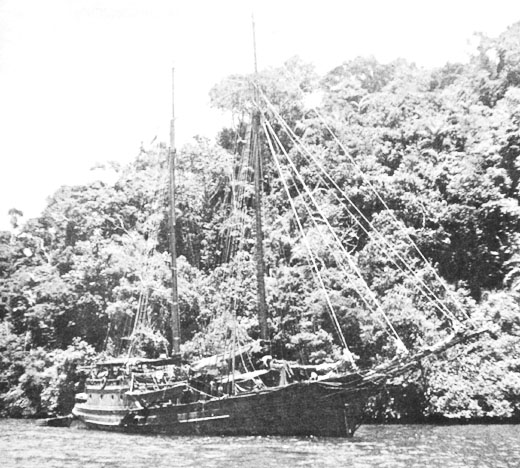
USS Lanikai (Yacht) [blockquote] A village on Oahu, north of Honolulu. [/blockquote] (Yacht: t. 150; l. 87'3"; b. 9'0"; s. 7 k.; cpl. 19; a. 1 d-pdr., 2 .30 cal. mg.)
Lanikai, a schooner-rigged diesel powered yacht built in 1914 at East Oakland, Calif., was taken over by the Navy at Cavite Navy Yard, Philippine Islands, under charter from Luzon Stevedoring Co., Inc., 5 December 1941; and commissioned the same day, Lt. Kemp Tolley in command. Late in November 1941 it became apparent to the American Government that Japanese forces were tactically deposed for major operations in Southeast Asia, but her precise target was unknown. A large convoy was steaming south from Formosa Straits, and it was hoped that learning the destination of these ships might reveal Japan's intentions. On 2 December, President Roosevelt ordered through Chief of Naval Operations, Adm. H. R. Stark, that Commander in Chief, Asiatic Fleet, Adm. T. C. Hart "charter three small vessels to form a defensive information patrol . . . to observe and report by radio Japanese movements in the west China Sea and Gulf of Siam." Lanikai, which had been seen by millions in the movie "Hurricane", was one of the small ships chartered to learn of Japan's intentions. Fitted out at Cavite with the greatest dispatch, the schooner lay at the entrance of Manila Bay in the wee hours of 8 December (7 December east of the International Date Line) awaiting daylight to thread her way through the dangerous minefields which guarded the harbor. Tolley's orders read: "Patrol off the entrance of Camranh Bay and report the direction taken by the Japanese Fleet when it emerges." However at 0300 word of Japan's attack on Pearl Harbor arrived with orders to return to Manila. In ensuing weeks, the schooner patrolled the approached to Manila Bay and served as dispatch vessel within the harbor. On 10 December she survived the devastating Japanese air raid which destroyed Cavite Navy Yard. On Christmas Day, she assisted in the evacuation of Manila, carrying Army Officers and equipment to Corregidor. As a result of plans and actions of Lt. Comdr. Charles Adair, Flag Lieutenant to Admiral Hart, approval was obtained for Lanikai to attempt to escape to the Netherlands East Indies. On the evening of 26 December, carrying as passengers one Dutch and three American officers, Lanikai, with her Filipino crew, got underway from Mariveles harbor, Luzon, "destination unknown." Heading generally south, hiding in friendly coves during daylight, and traveling principally at night, the schooner sailed from island to island as enemy forces spread across the East Indies with explosive speed. Heaven-sent storms covered her as she crossed the three large stretches of open water which lay between Luzon and Australia and offered no coves for daylight concealment. When, as happened all too often, enemy aircraft approached the lightly armed schooner, they were preoccupied for the most part, with bigger game; but, at Soerabaya, Java, 3 February 1942, three Japanese bombs straddled the schooner so close aboard that Lanikai crewmen put off in a skiff to pick up a large quantity of stunned fish. In late February, under full sail despite heavy seas, Lanikai headed due south from Tjilatjap, Java. This course was taken to avoid enemy forces which might be searching the direct route from Java to Darwin, Australia. On 1 March, while about 200 miles east of Christmas Island, a large Japanese task force was sighted on the port bow. Evasive action by Lanikai was successful. On 18 March, 82 days after departing Mariveles, the schooner arrived at Fremantle. After replenishment and repairs there, she got underway 4 April, to cruise along the northwest Australian coast and search for possible Japanese coast watchers. Lt. Comdr. Adair relieved Lt. Comdr. Tolley of command of the vessel 27 April and continued the search into mid-May. Lanikai decommissioned at Fremantle 22 August and was transferred to the Royal Australian Navy which she served on harbor defense throughout the war. After peace returned, Lanikai was brought back to the Philippines for later return to her owner. However, while anchored in Leyte Gulf off Samar, Lanikai sank during a typhoon. Lanikai received one battle star for World War II service.

RE: Historical based vs Historical

Posted: Sun Oct 04, 2009 2:17 am
by stuman
Man. What a story. How has that not been made into a movie [:)]


RE: Historical based vs Historical

Posted: Sun Oct 04, 2009 2:22 am
by Klahn
ORIGINAL: wdolson

ORIGINAL: aspqrz
Nope. The Japs were going down ... in a radioactive dust cloud if necessary. 1950 isn't on the cards. Not even close [:D]

Phil

I exaggerated a bit, but it would have been at least mid-1946 before more than the first two nukes were available. They used up the entire stock of fissionable materials making the test prototype and the two live drops. The US was sort of bluffing with the first two dropped.

If the War in the Pacific hadn't stabilized when it did, the war in Europe would have lasted longer too. The deal was that the US would pour resources into the Pacific until the Japanese offensive was blunted, then the bulk of resources would go to Europe until Germany was out of the way.

Still, there are few scenarios which would make the war last past sometime in 1946 or 1947.

Bill

That isn't true at all. The US had material for a third bomb ready for release by the 3rd week in August, and would have 3 more available in September and 3 more for October. The shipment of the heavy material for Fat Man 2 to Tinian had already been started when the Japanese surrendered. Target was being debated but Tokyo, Sapporro, and Kokura were high on the list. Gen. Marshall gave clearance for the delivery of bomb 3 to Tinian with the explicit instructions that it was not to be used without a direct order from President Truman. These would all have been Fat Man bombs. There wasn't expected to be another Little Boy available until December.

RE: Historical based vs Historical

Posted: Sun Oct 04, 2009 6:00 am
by aspqrz02
ORIGINAL: wdolson

ORIGINAL: aspqrz
Nope. The Japs were going down ... in a radioactive dust cloud if necessary. 1950 isn't on the cards. Not even close [:D]

Phil

I exaggerated a bit, but it would have been at least mid-1946 before more than the first two nukes were available. They used up the entire stock of fissionable materials making the test prototype and the two live drops. The US was sort of bluffing with the first two dropped.

Nope. In Allen and Polmar's "Codename Downfall" they cite the Manhattan Engineering District reports and the numbers I gave are correct ... there was a bottleneck, a very temporary one, just after the third bomb (the one that was, IIRC, assembled and ready but never dropped), but by the end of 1945, no later, they estimated that the production rate would be ramping up and they would have *on hand* around 12 bombs, minimum ... with a rate of 5 bombs a month, rising to 10 bombs a month by the end of the first quarter of 46 and then 10/15/20 or more a month thereafter. (FYI: Average production rate throughout the period 1946-end of cold war was an average of 4 per day).

The "alternative" Olympic-Coronet plans (assuming a more realistic 1946 invasion as it would have really been impossible to manage an effective one in 1945) proposed attacking when there would be at least 20 bombs available (very early 46) and using at least a dozen tactically against the invasion beaches [X(]

Allied troops would advance through the blast zones in M3 Halftracks under canvas covers and standard trucks likewise "protected" ... the invasion of the Kanto Plain, should it have become necessary, would have been later in the year and, well, with between 10-20 bombs coming off the line every month, I wouldn't want to be the Japanese with that sort of attitude to usage [:)]

Normally I could give page cites, but I am currently in the middle of packing up to move house after 50 years and, well, everything's in boxes.

Really, truly, though, the bottleneck was gonna be well and truly over by the end of 45 ... Halsey would have been right if the Japs continued into 46, Japanese would have been a language "spoken only in hell ..."

Phil