T18
Posted: Tue Mar 06, 2018 8:36 am
T18
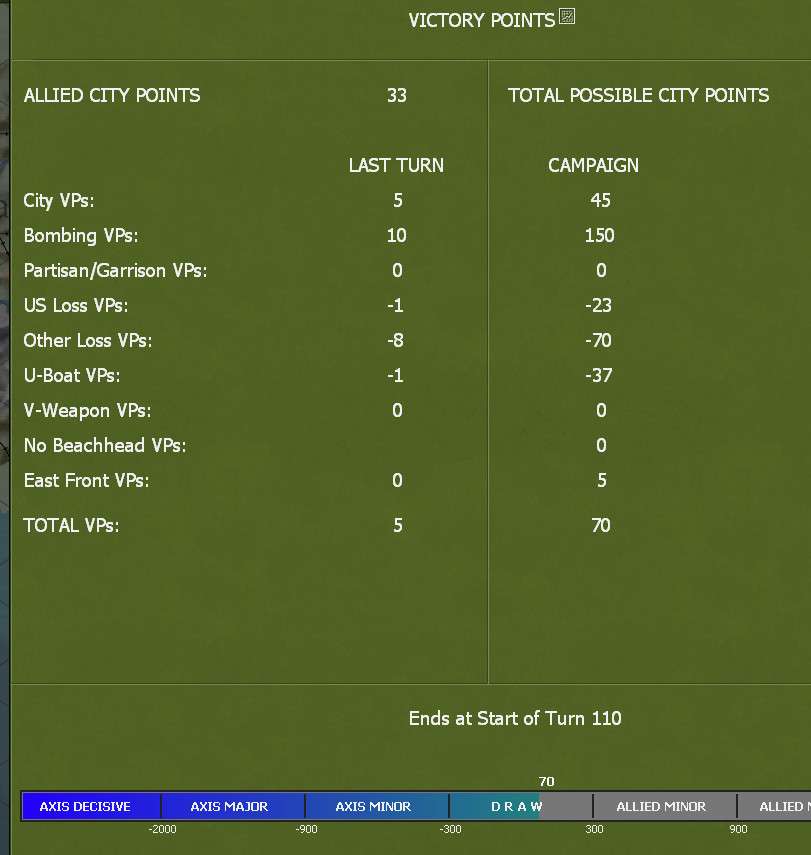
Not sure if the expected weather pattern has changed – or I am being lucky ... or have simply forgotten what has happened in past games. Anyway, only lost 1 bombing week to bad weather and it remains no worse than cloud/rain.
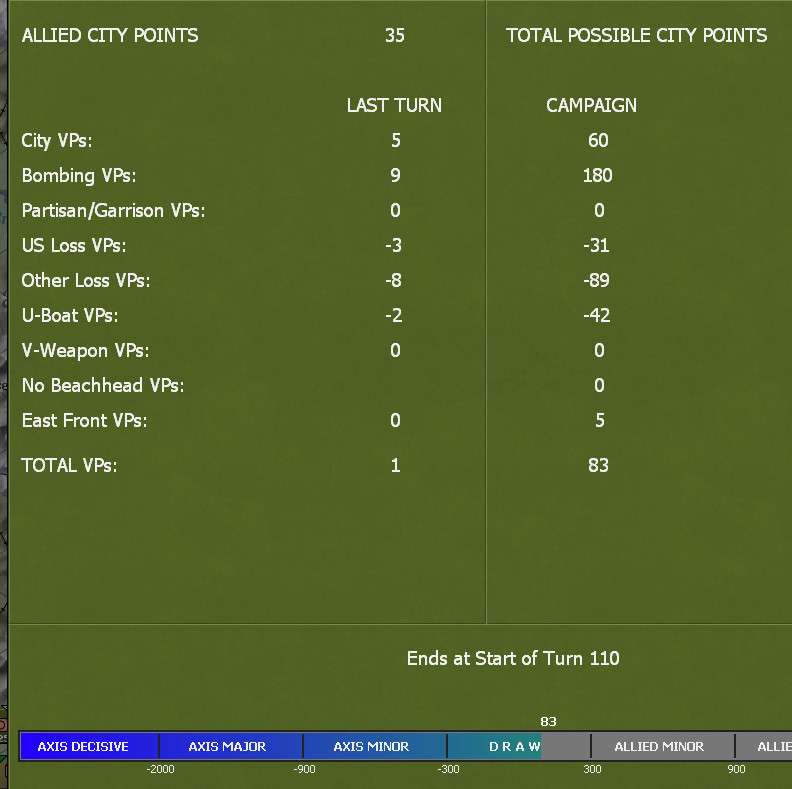
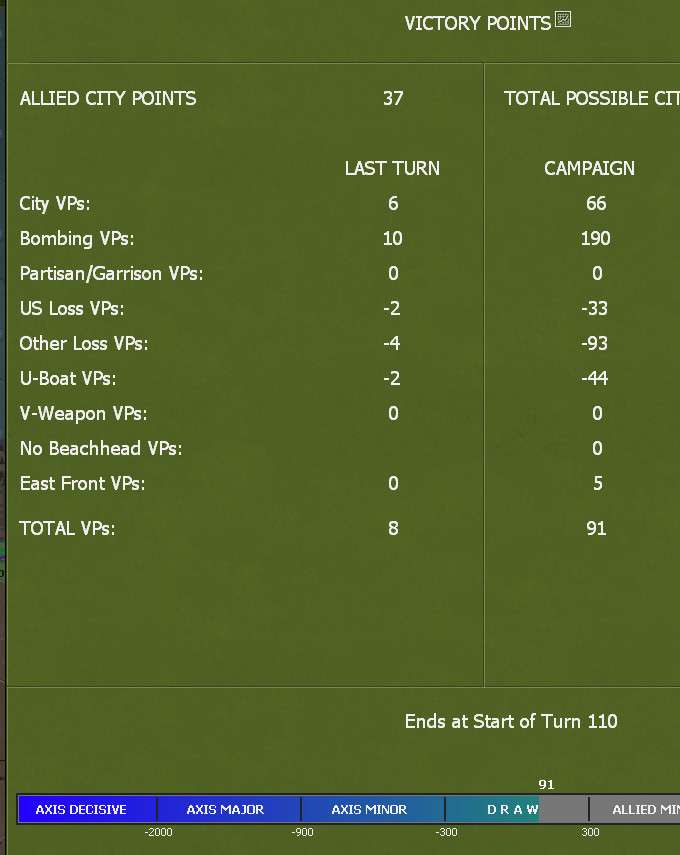
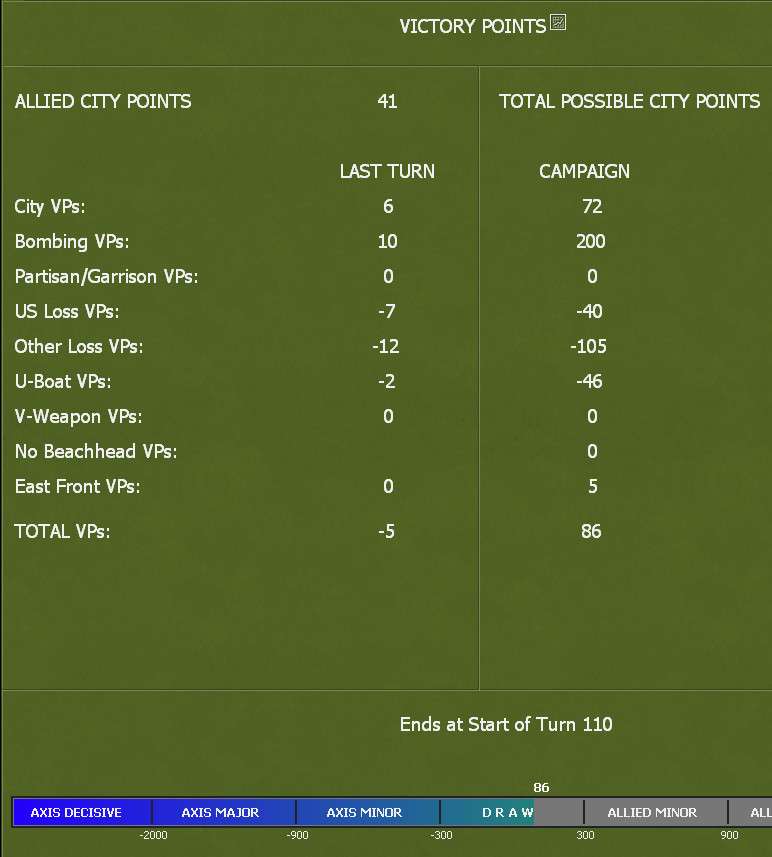
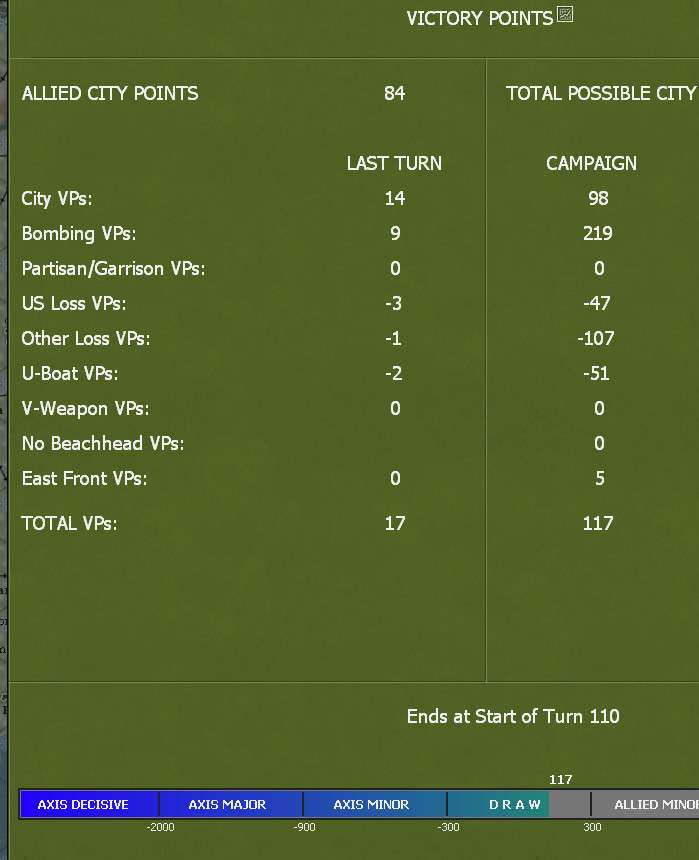
U-boats are back at 3.

Annoying. Prepared to ignore them when they are at 1-2 VP per turn but that is too much, especially as Danzig has almost repaired from its T1 raid.
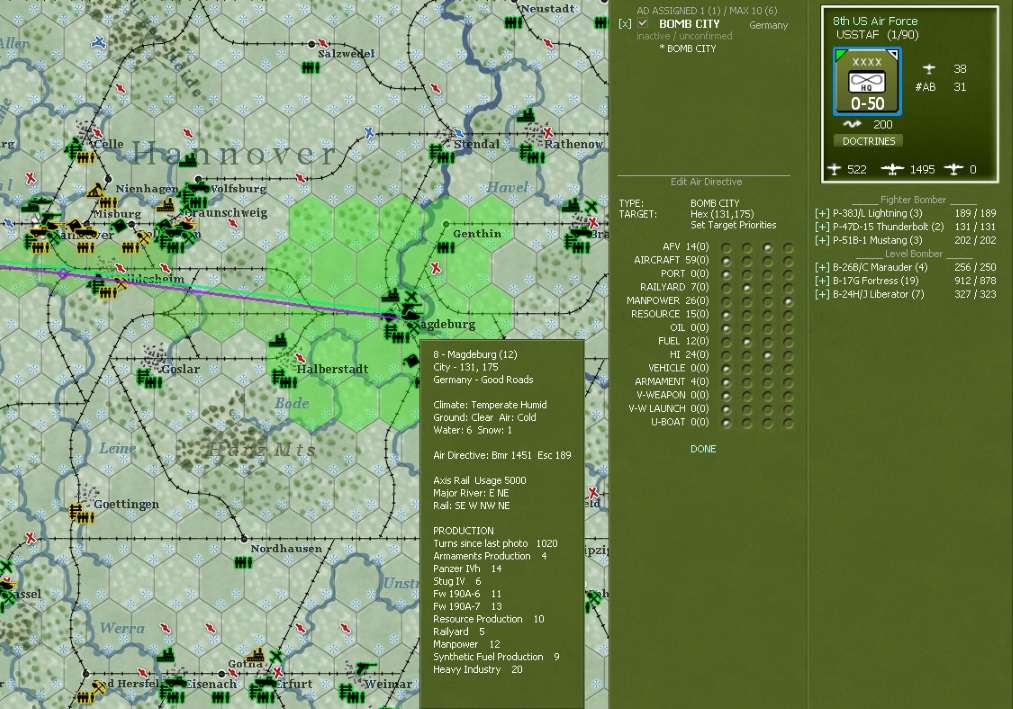
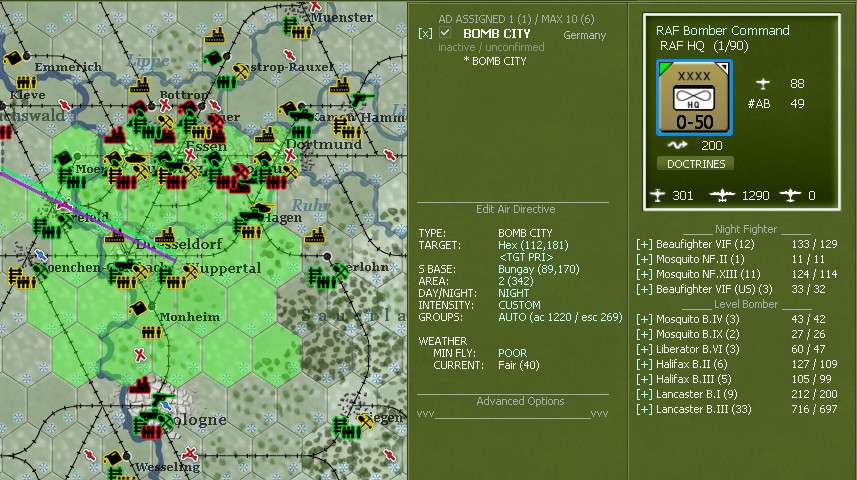
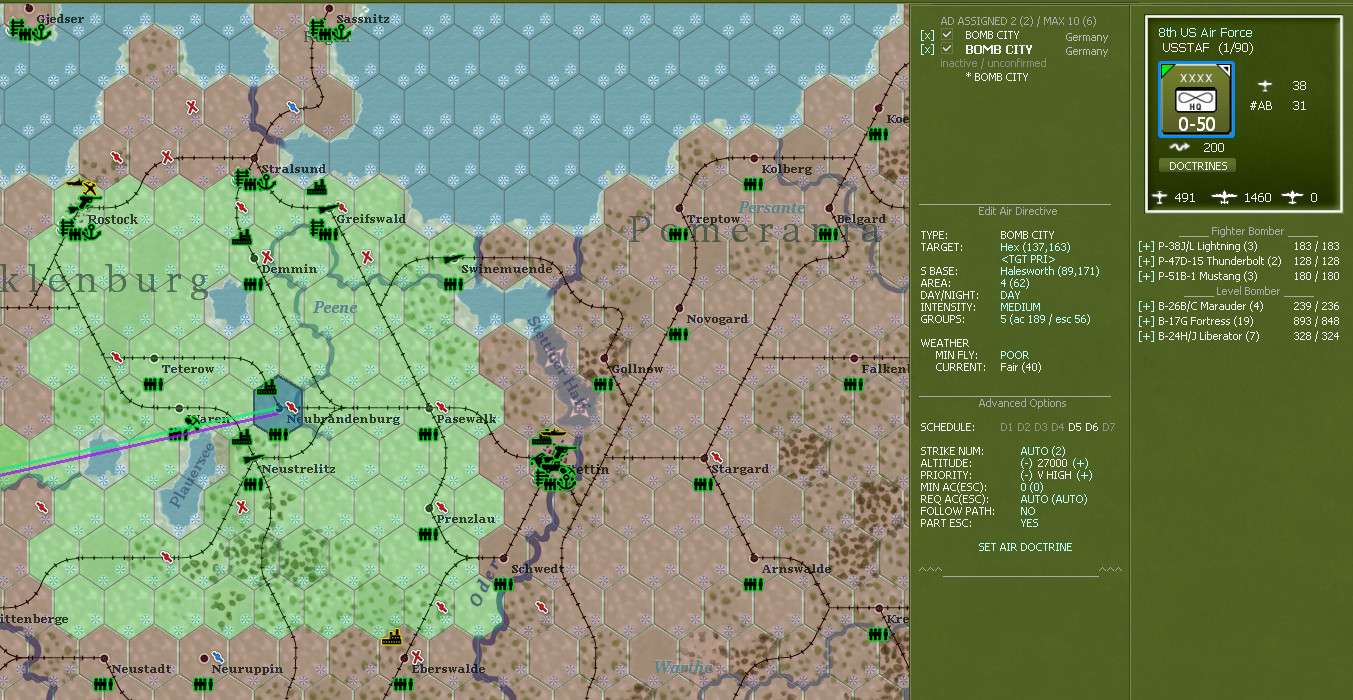
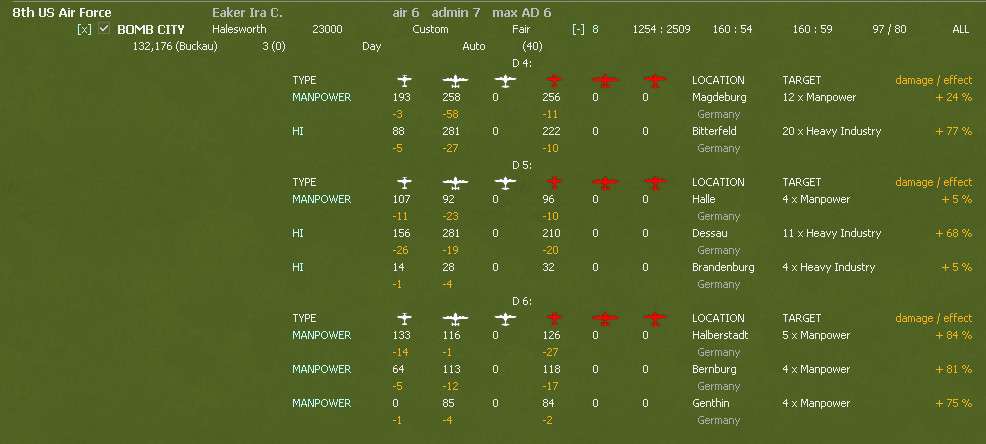
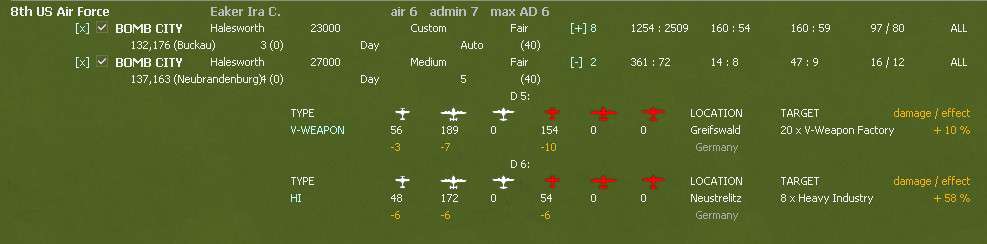
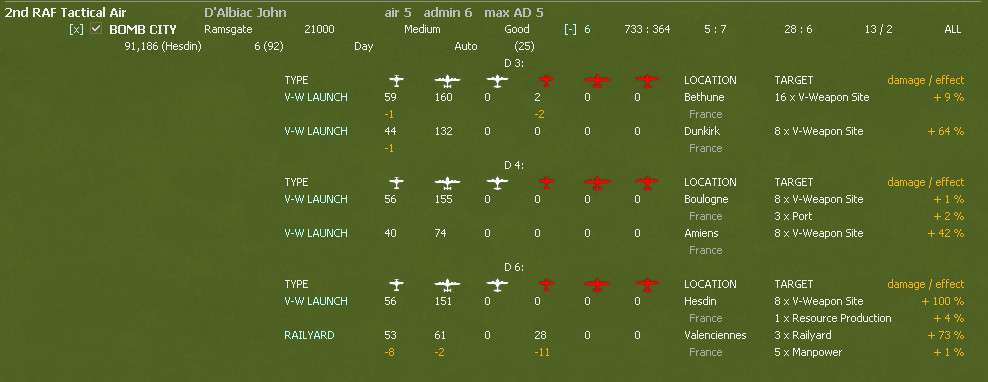
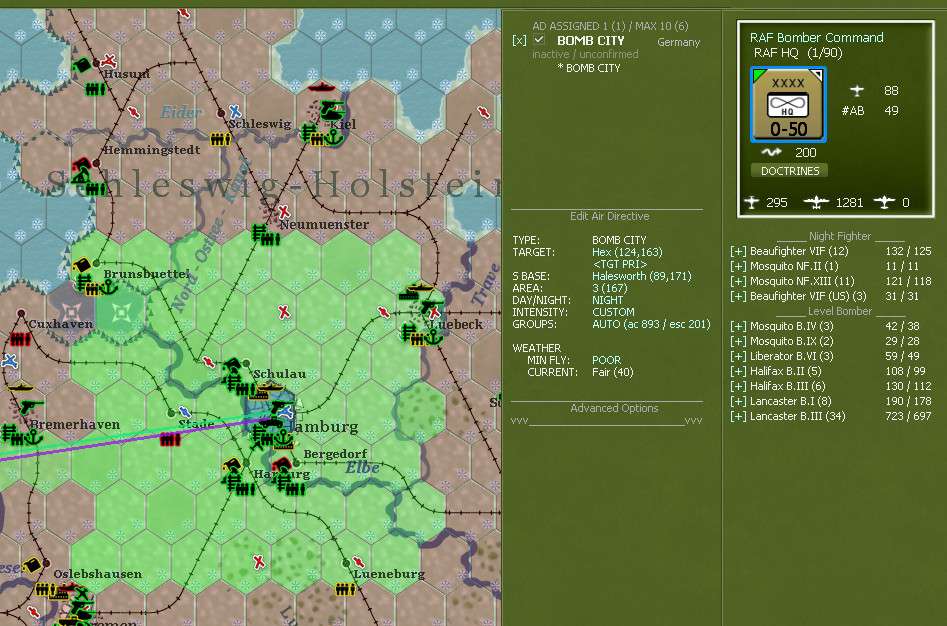
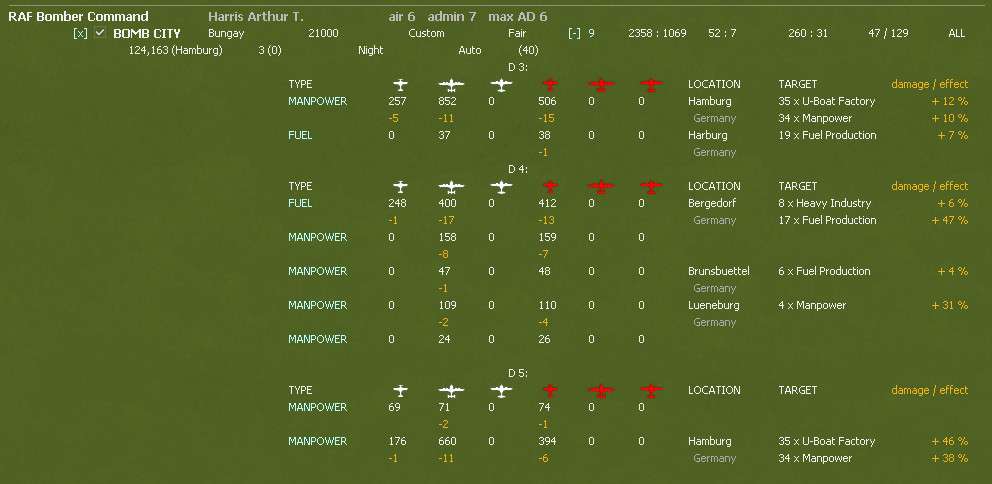
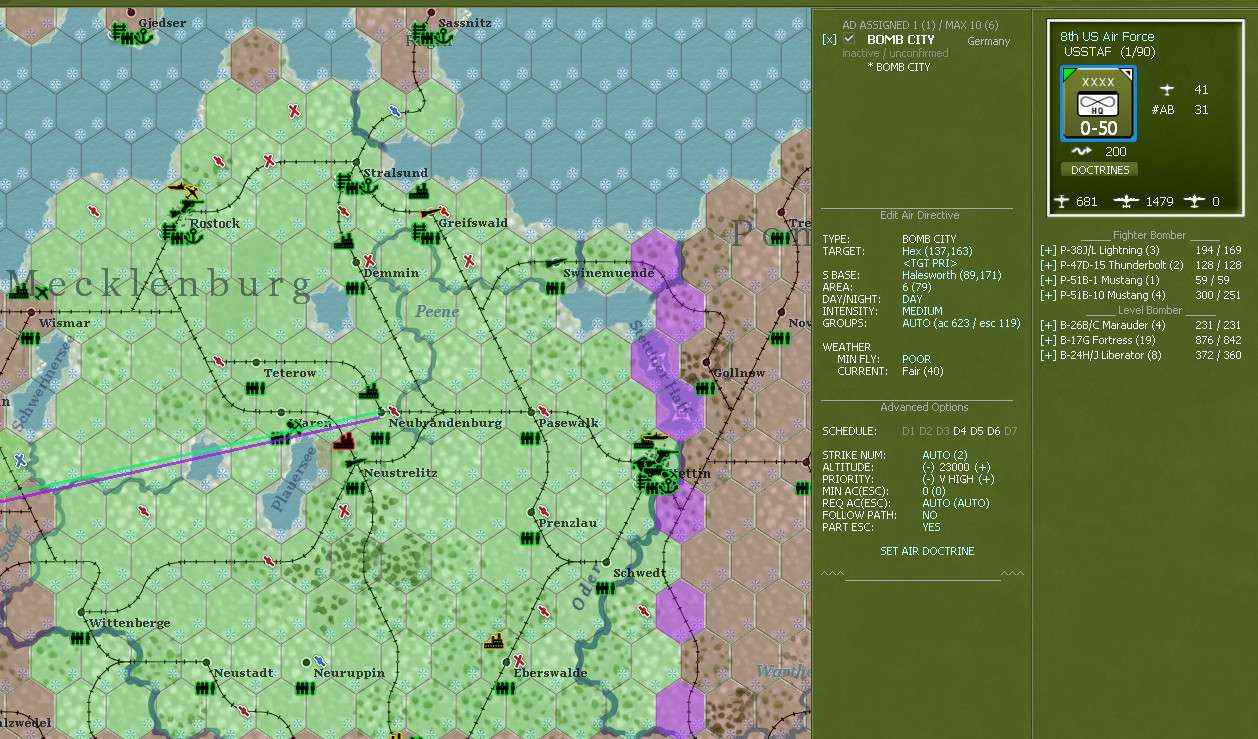
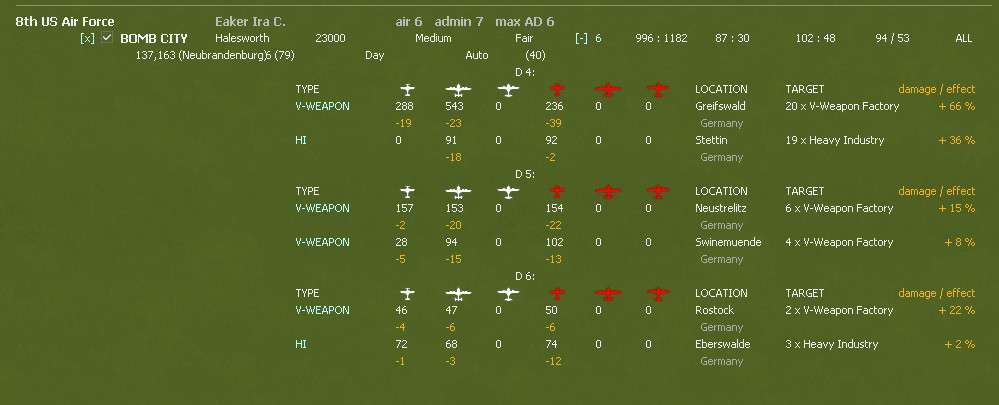
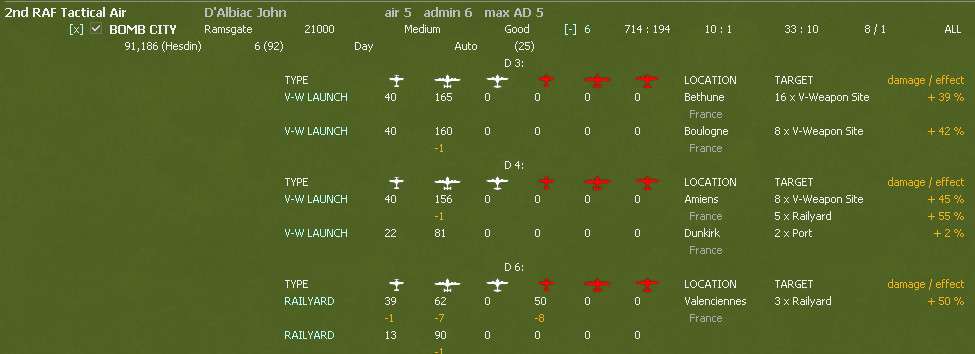
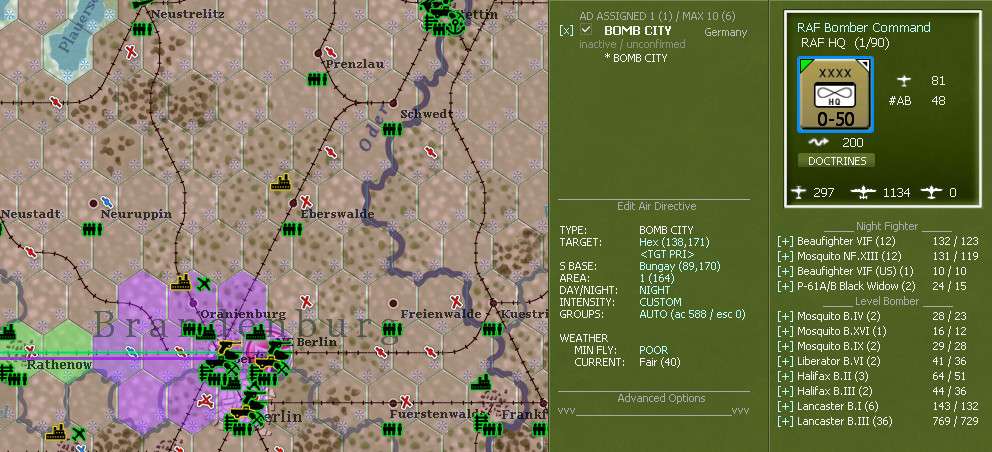
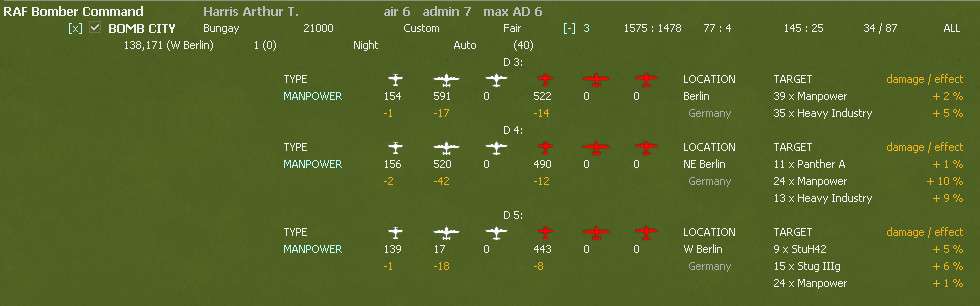
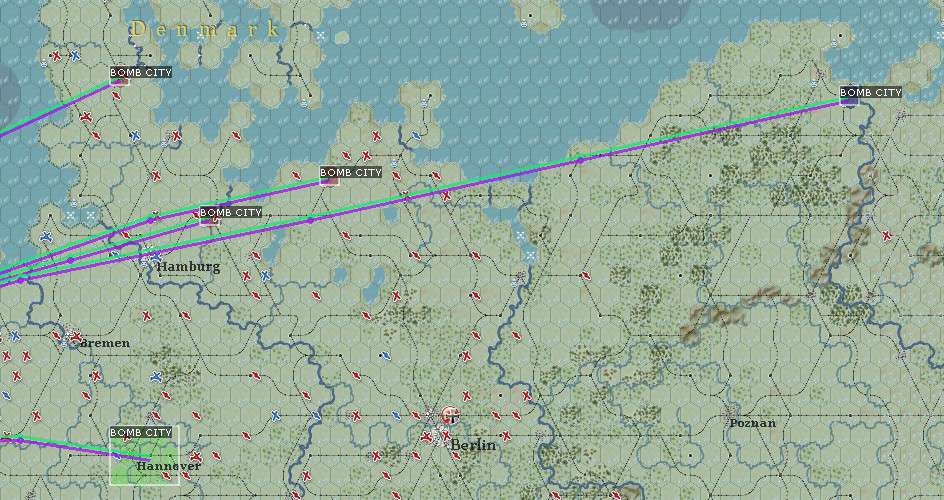
So this determined my bombing approach. BC goes for Hannover (for a change), 8 AAF split into 4 single city/2 day each raids on the most likely U-boat problems. The 2 engined bombers of Tac Air go back to Paris (protected by a well rested FC) to hit the rail yards and trucks.
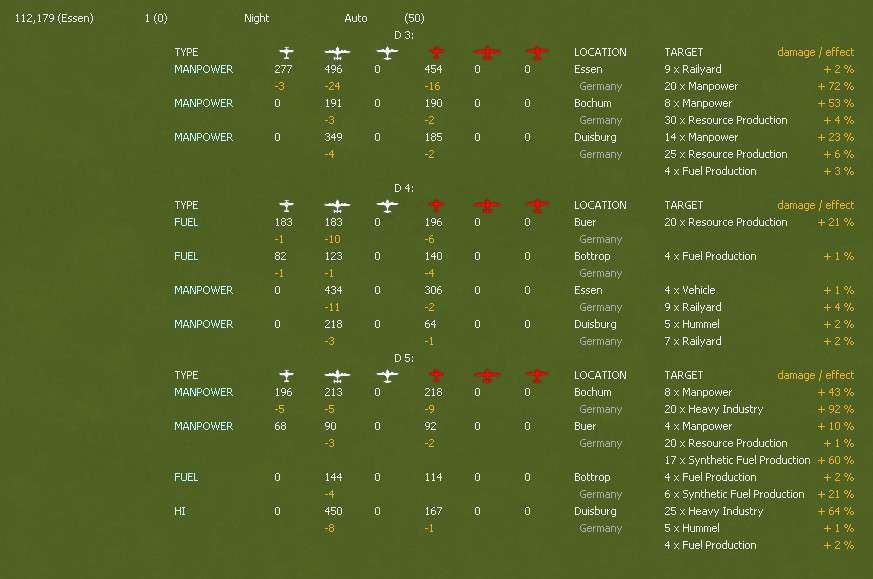
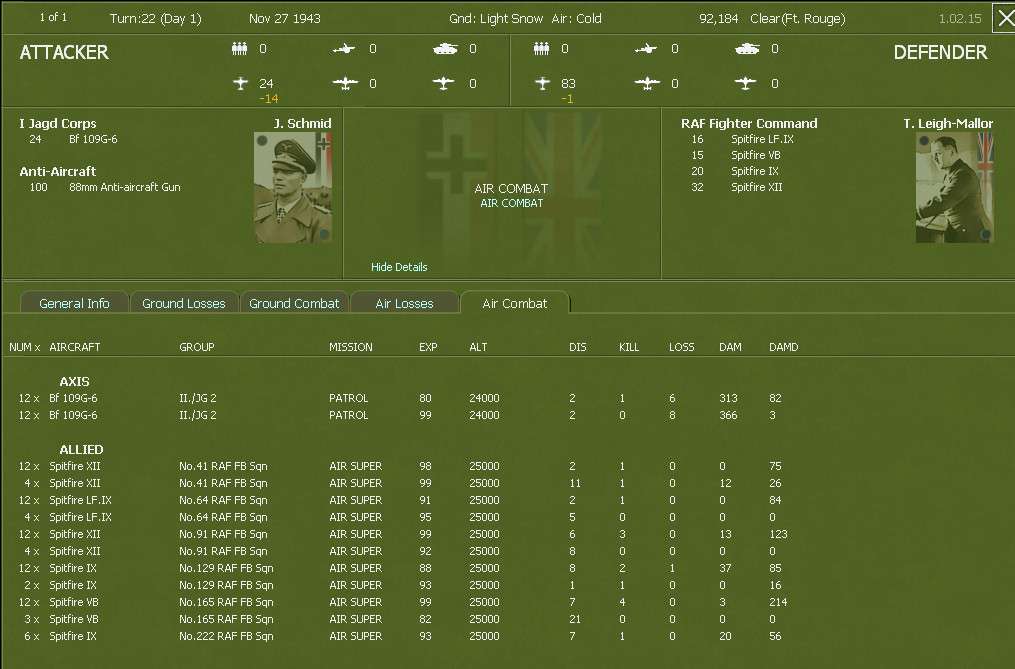
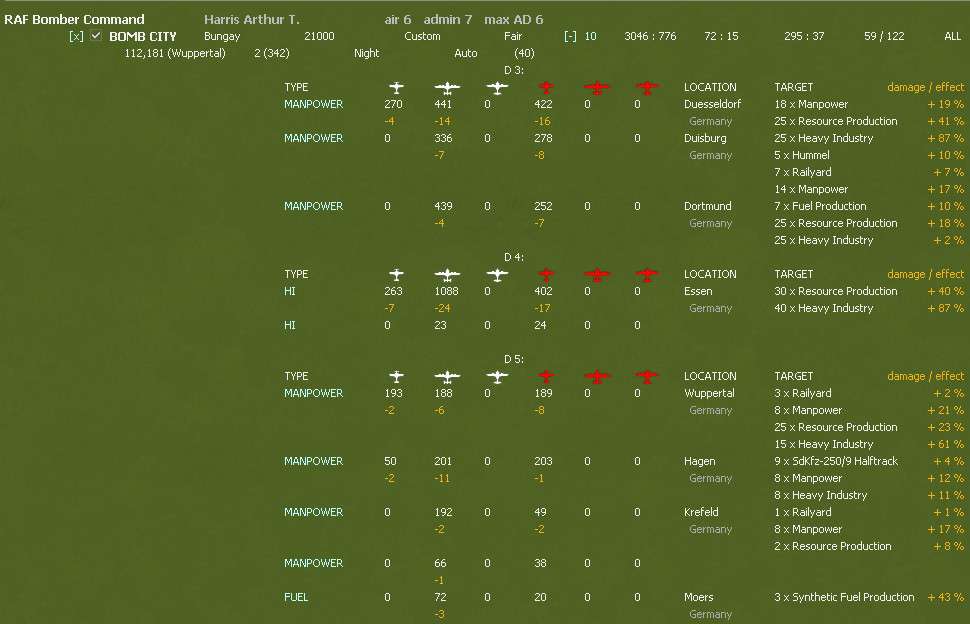
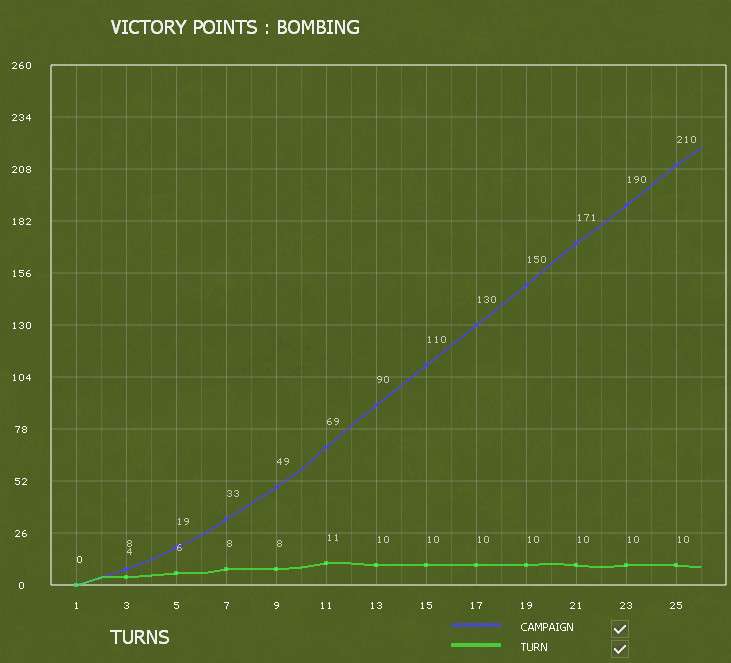
So the German bombing is:
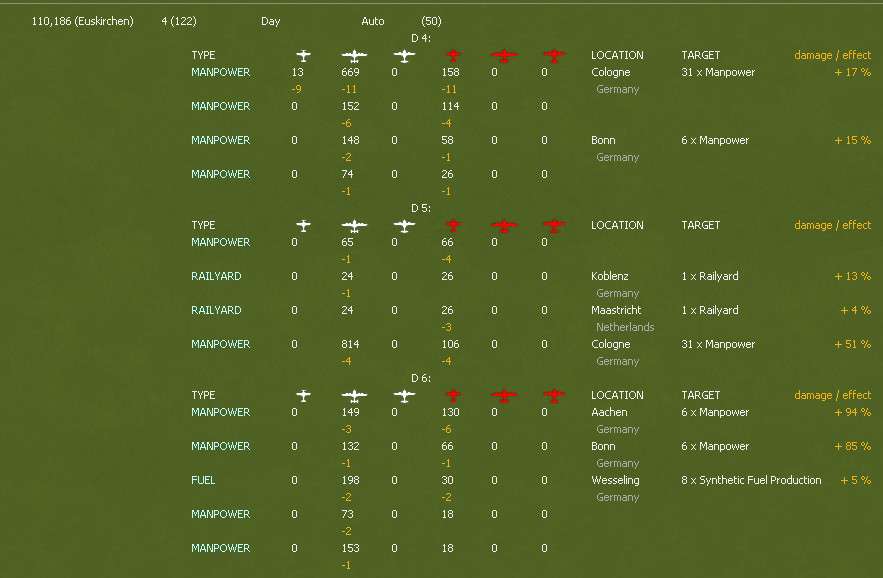
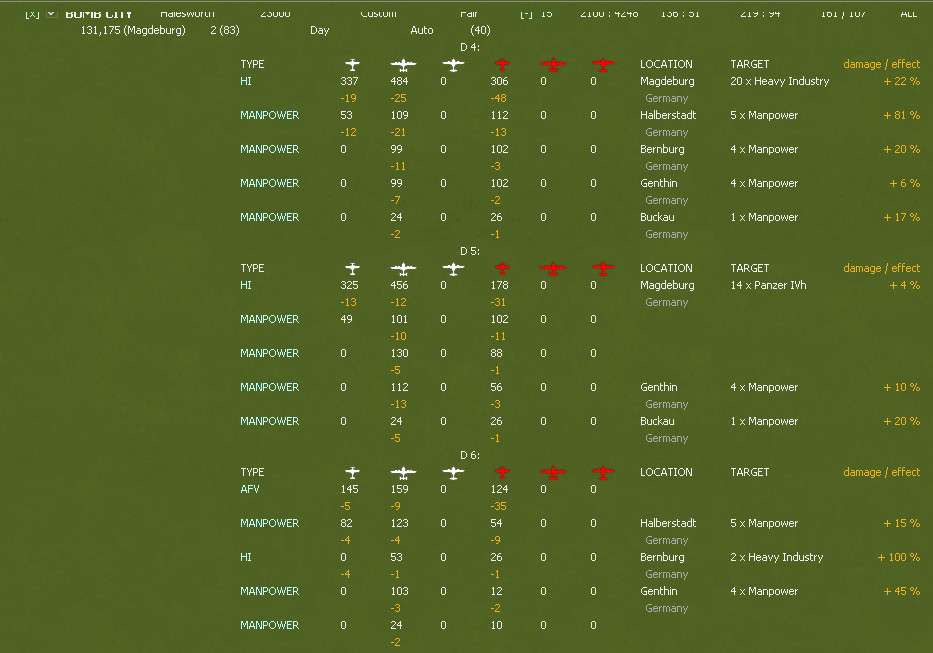
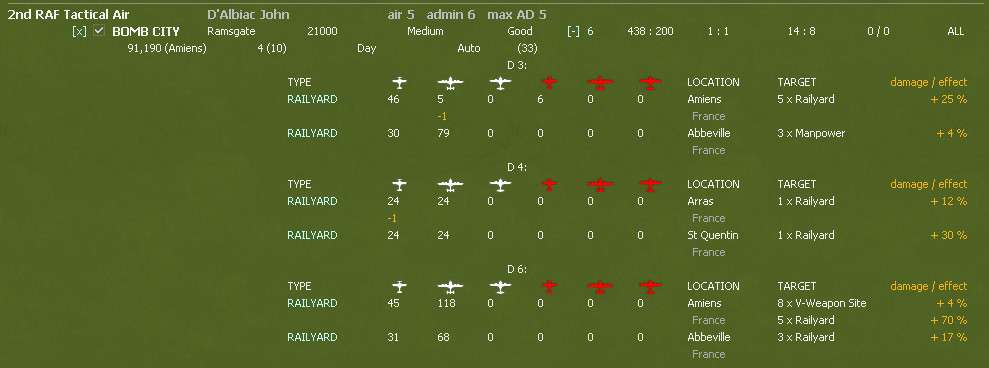
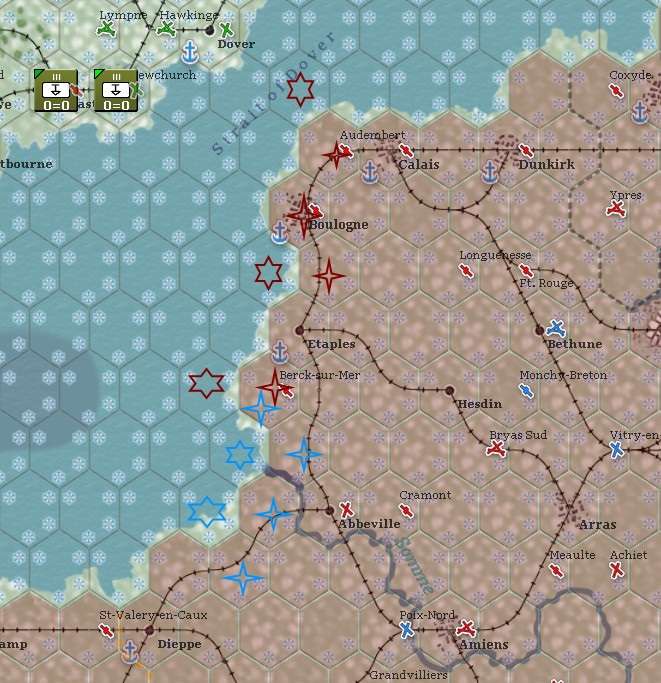
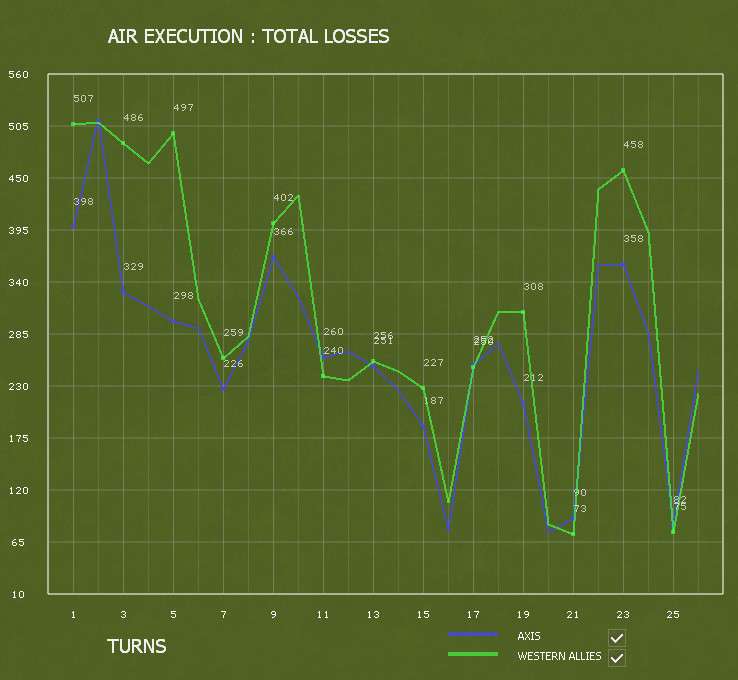
And my return to Paris:
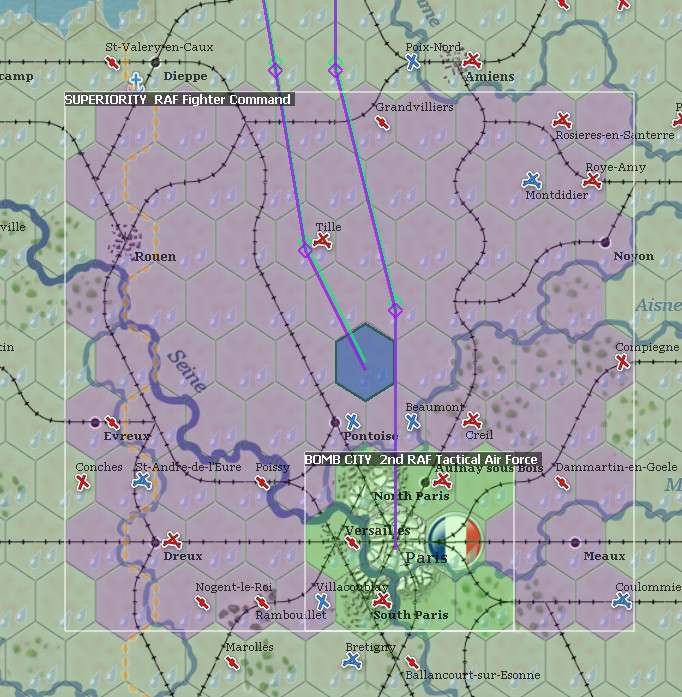
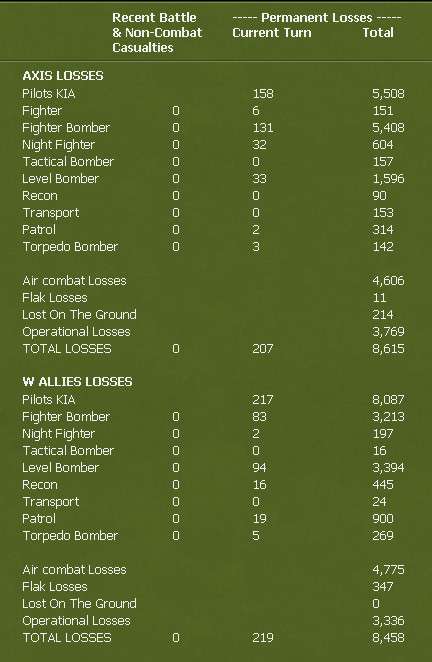
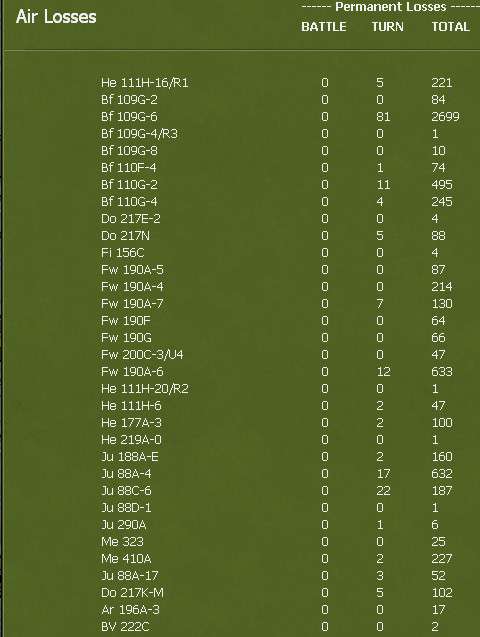
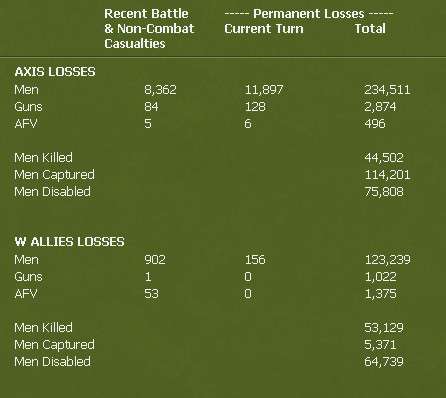
If that is correct then BC was reasonably effective.
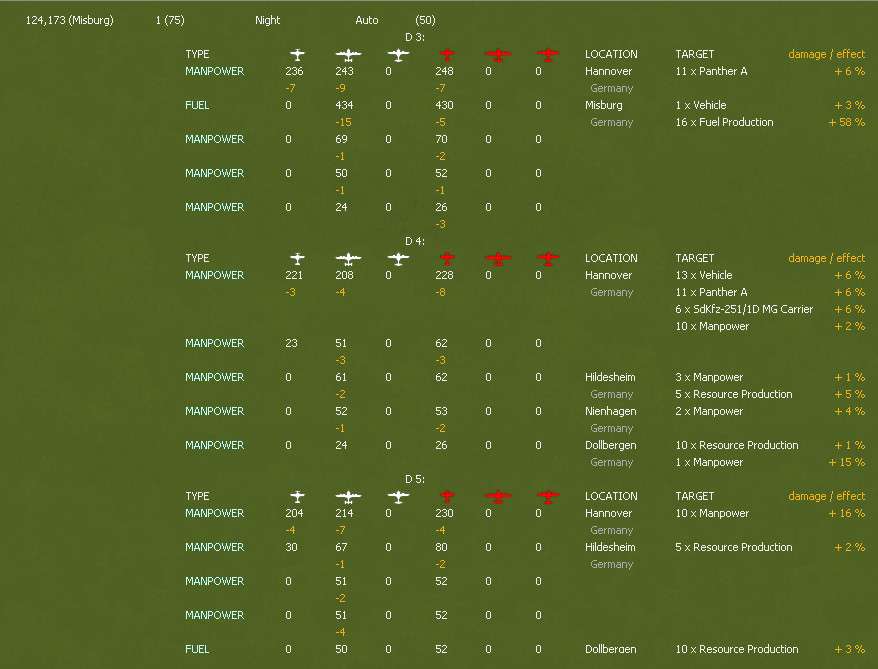
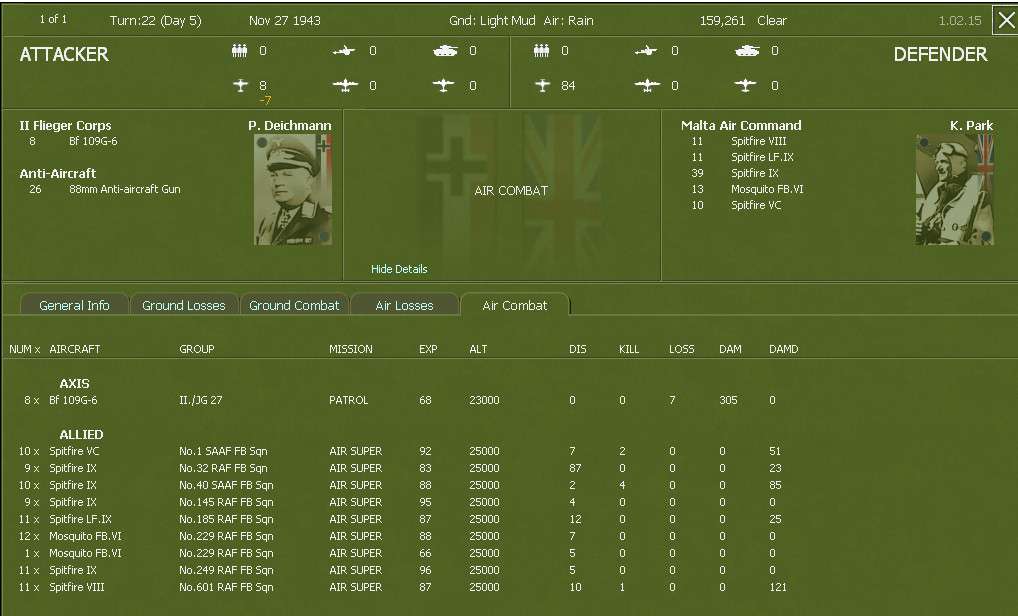
FC overwhelmed the Luftwaffe protecting Paris.

But the bombers decided to hit everything apart from the rail yards. Need to apologise to De Gaulle [1].
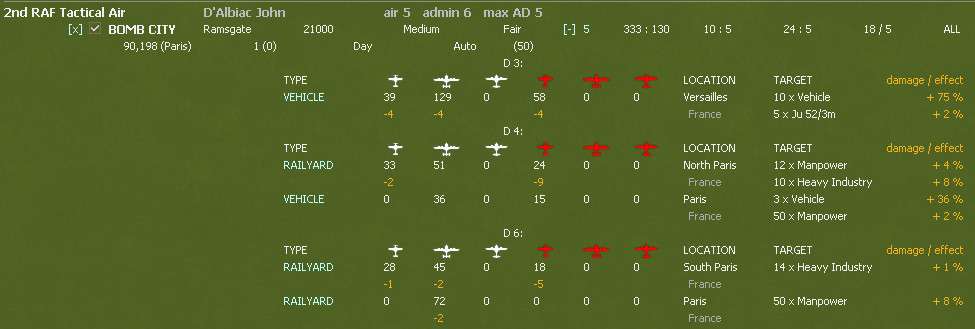
8 AAF had varied impact. That should stop Flensburg repairing before the end of 1943.
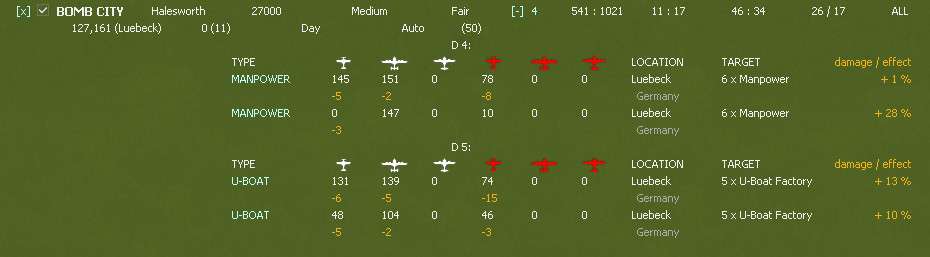
Luebeck maybe, probably needs another visit.
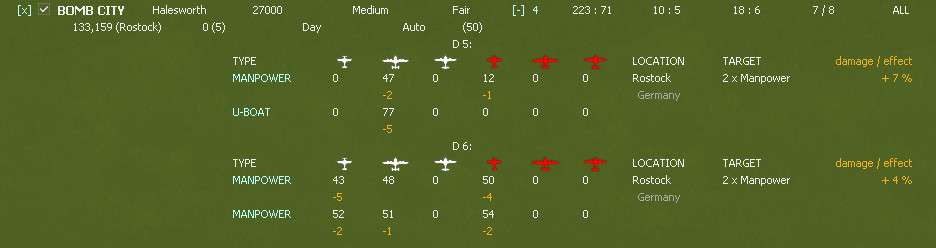
Rostock was a bit of a disaster.
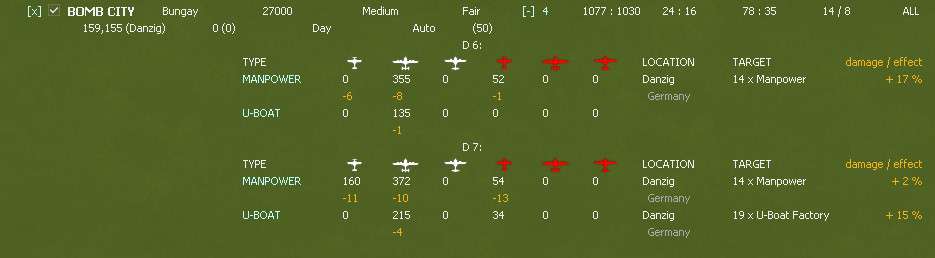
But that should keep Danzig non-productive.
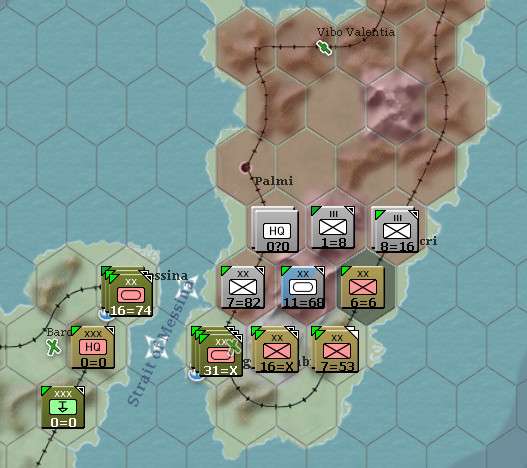
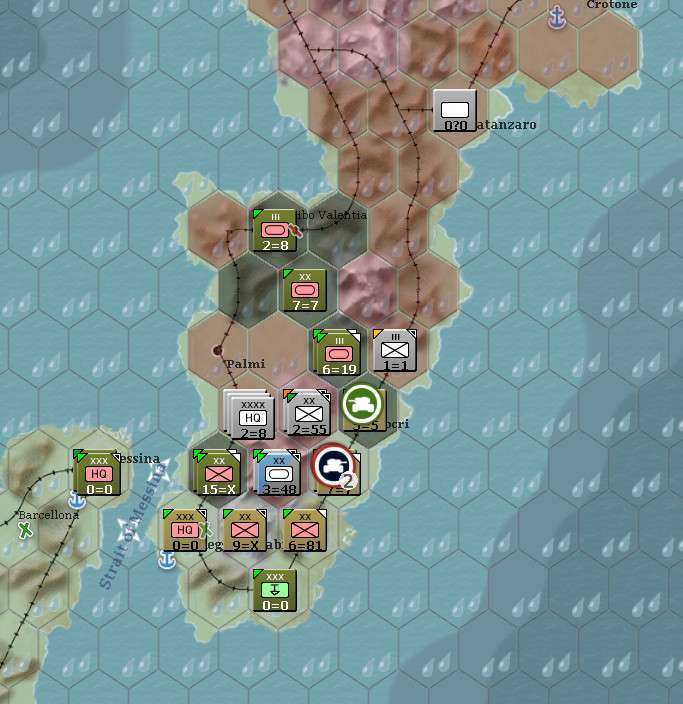
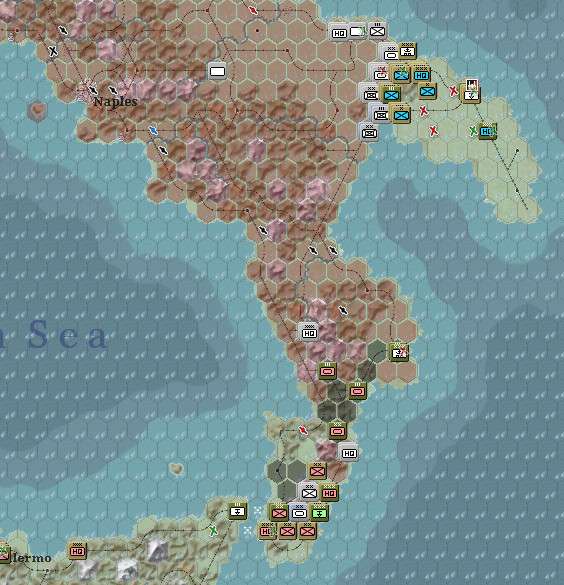
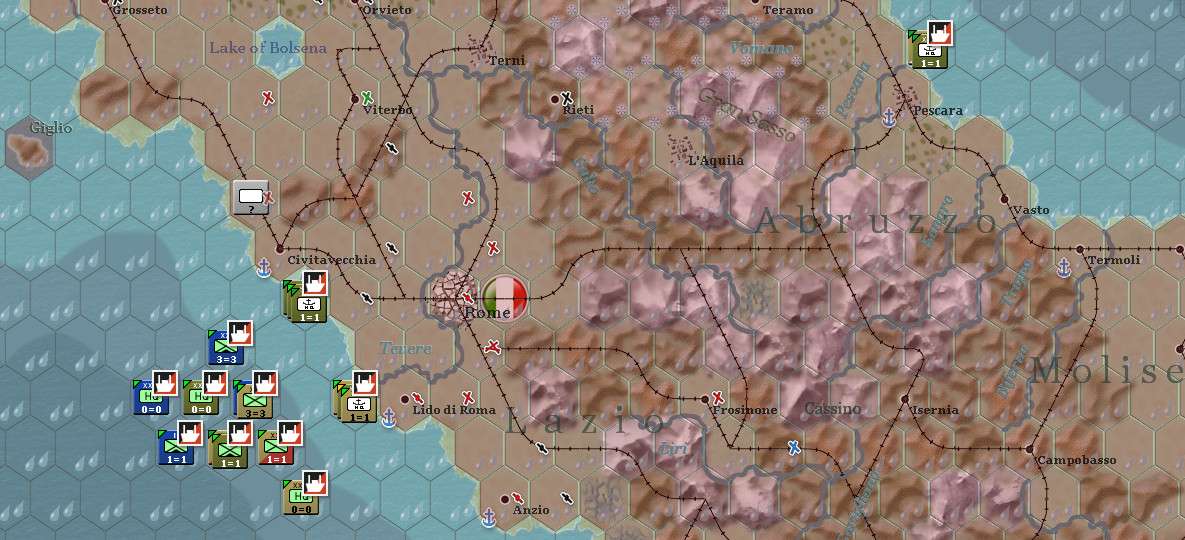
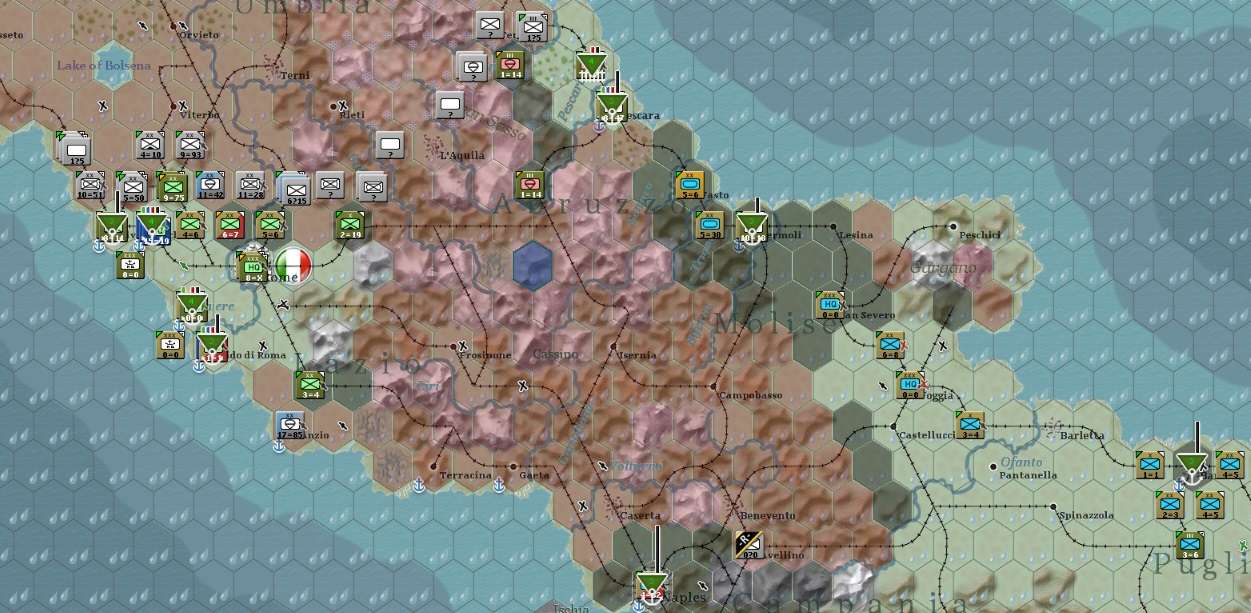
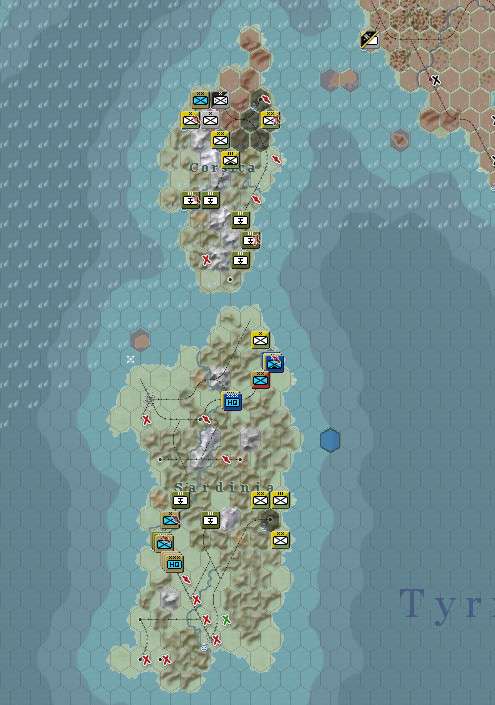
Italy. Sardinia is now mine, have all the ports on Corsica so should finish off the German defenders in the next two turns.
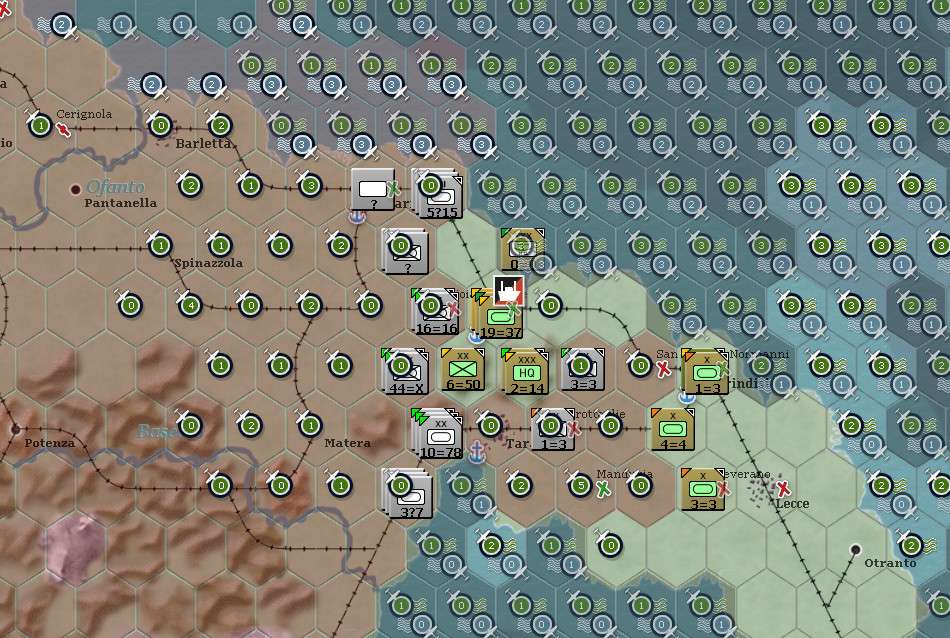
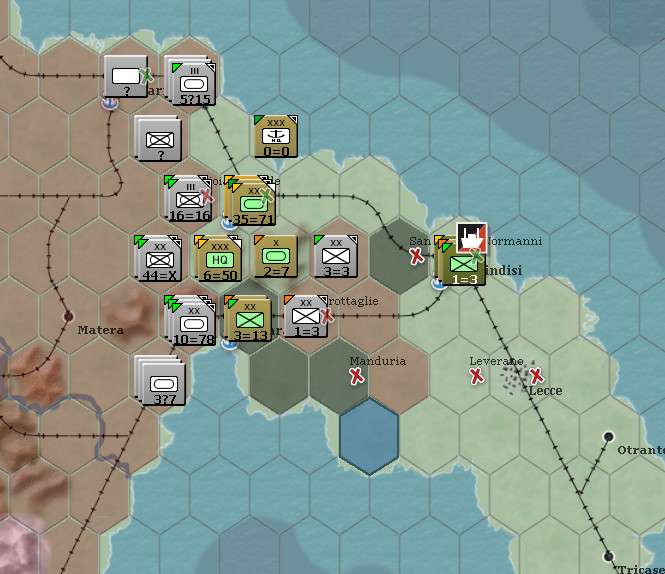
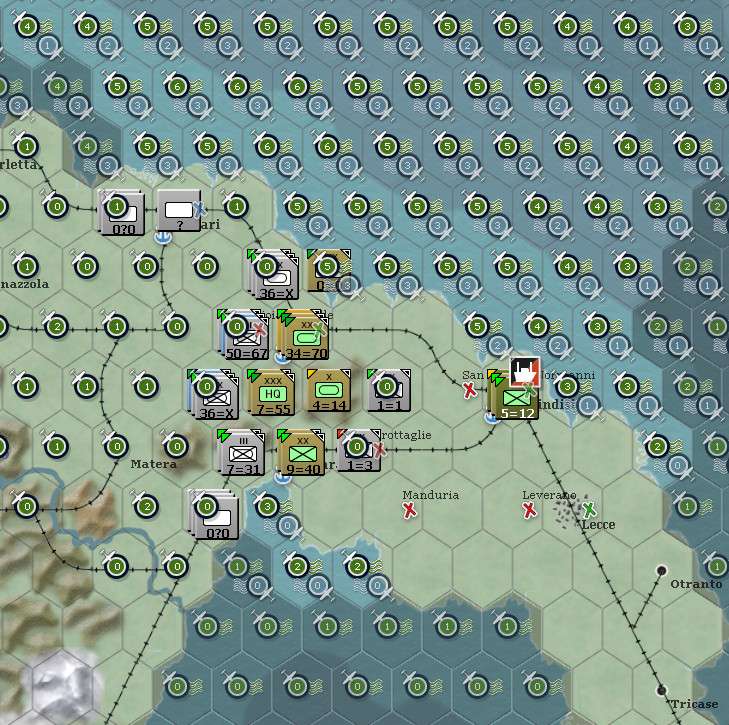
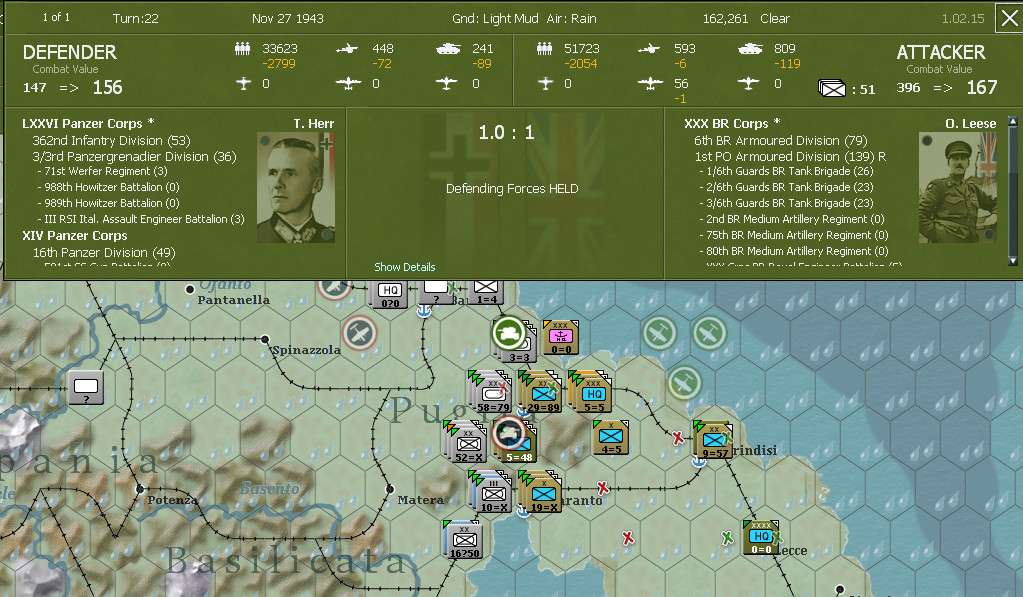
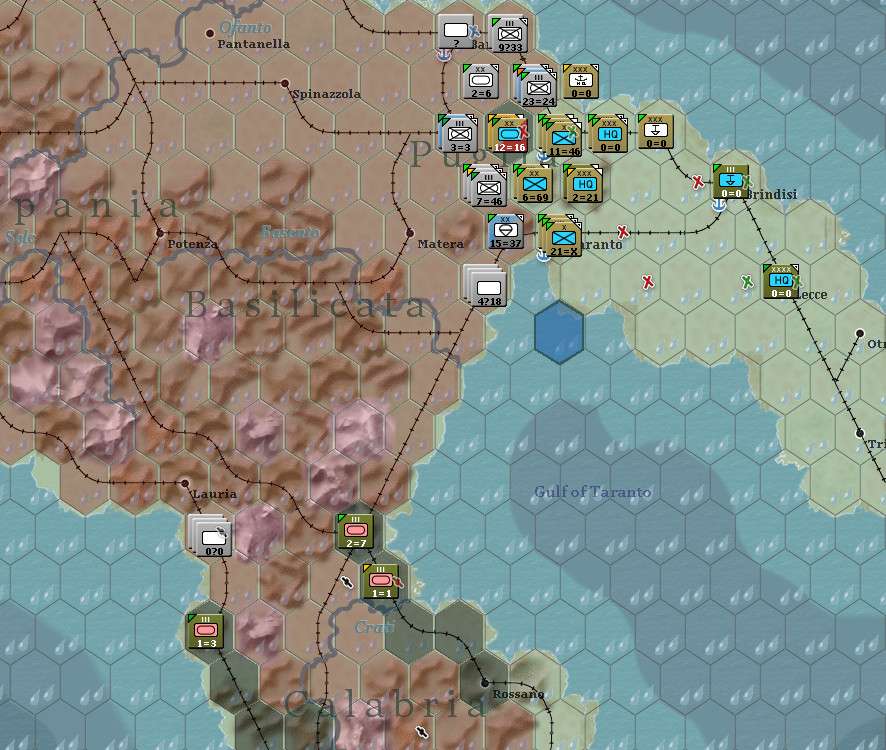
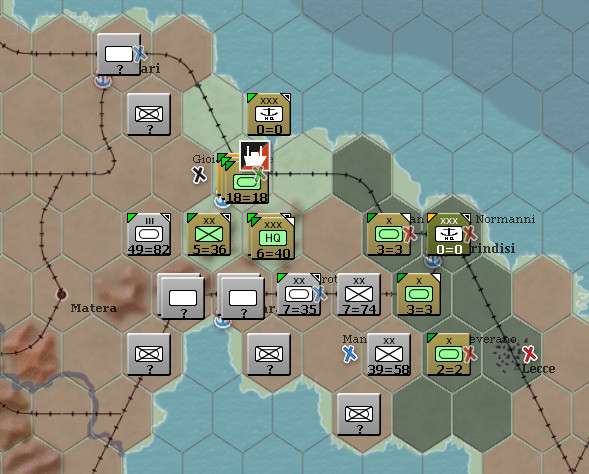
AI gave me Brindisi. Note the TF repairing the level 2 port. In effect I am keeping one free of further landings to do this and to replace any that start to take heavy losses protecting a temp port.
[1] Overry's excellent Bombing War has a really interesting chapter on the decision making around Allied bombing of France, Belgium and the Netherlands. Clearly a constant trade off between hitting certain targets, that, to a point, Allied bombing raised morale but how a raid that turned out badly could be very counter-productive.
I'd recommend it to anyone looking for a good general overview of all the strategic bombing campaigns in WW2 (Allied, German and Soviet) and the intersection between operational planning, political issues and the different responses of the various civilian populations. He argues the only population where bombing produced active dissent was Italy (even before the surrender) in part as Italy was the only major power not to divert significant resources to coping with the effects.
Not sure if the expected weather pattern has changed – or I am being lucky ... or have simply forgotten what has happened in past games. Anyway, only lost 1 bombing week to bad weather and it remains no worse than cloud/rain.
U-boats are back at 3.
Annoying. Prepared to ignore them when they are at 1-2 VP per turn but that is too much, especially as Danzig has almost repaired from its T1 raid.
So this determined my bombing approach. BC goes for Hannover (for a change), 8 AAF split into 4 single city/2 day each raids on the most likely U-boat problems. The 2 engined bombers of Tac Air go back to Paris (protected by a well rested FC) to hit the rail yards and trucks.
So the German bombing is:
And my return to Paris:
If that is correct then BC was reasonably effective.
FC overwhelmed the Luftwaffe protecting Paris.
But the bombers decided to hit everything apart from the rail yards. Need to apologise to De Gaulle [1].
8 AAF had varied impact. That should stop Flensburg repairing before the end of 1943.
Luebeck maybe, probably needs another visit.
Rostock was a bit of a disaster.
But that should keep Danzig non-productive.
Italy. Sardinia is now mine, have all the ports on Corsica so should finish off the German defenders in the next two turns.
AI gave me Brindisi. Note the TF repairing the level 2 port. In effect I am keeping one free of further landings to do this and to replace any that start to take heavy losses protecting a temp port.
[1] Overry's excellent Bombing War has a really interesting chapter on the decision making around Allied bombing of France, Belgium and the Netherlands. Clearly a constant trade off between hitting certain targets, that, to a point, Allied bombing raised morale but how a raid that turned out badly could be very counter-productive.
I'd recommend it to anyone looking for a good general overview of all the strategic bombing campaigns in WW2 (Allied, German and Soviet) and the intersection between operational planning, political issues and the different responses of the various civilian populations. He argues the only population where bombing produced active dissent was Italy (even before the surrender) in part as Italy was the only major power not to divert significant resources to coping with the effects.