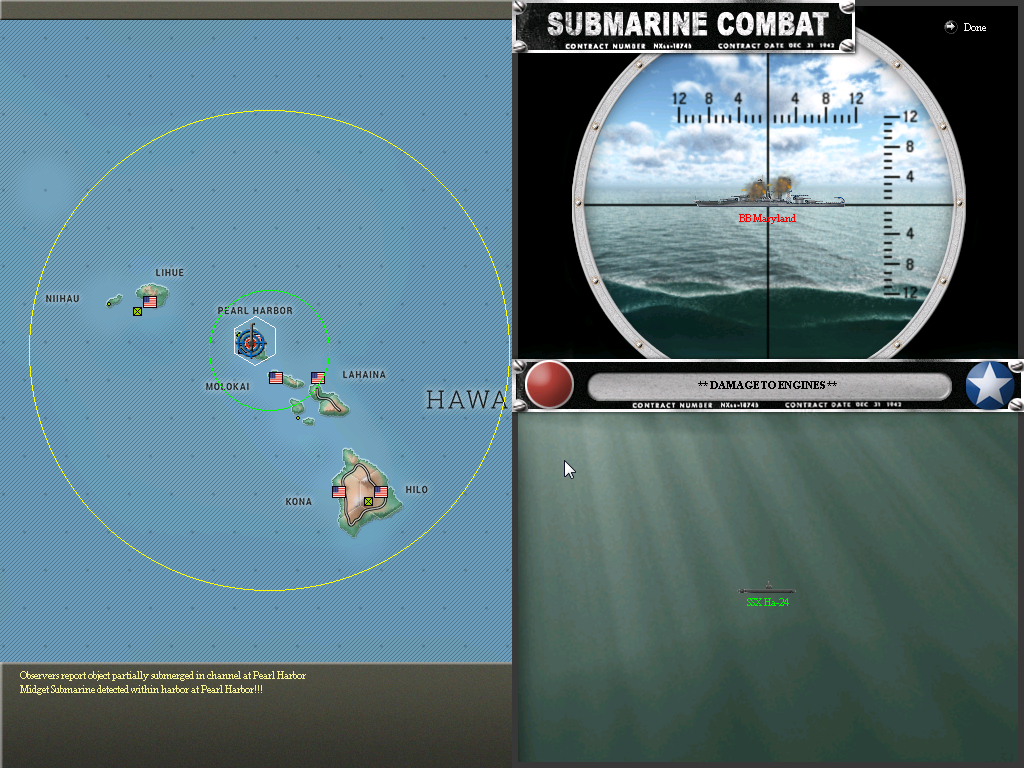
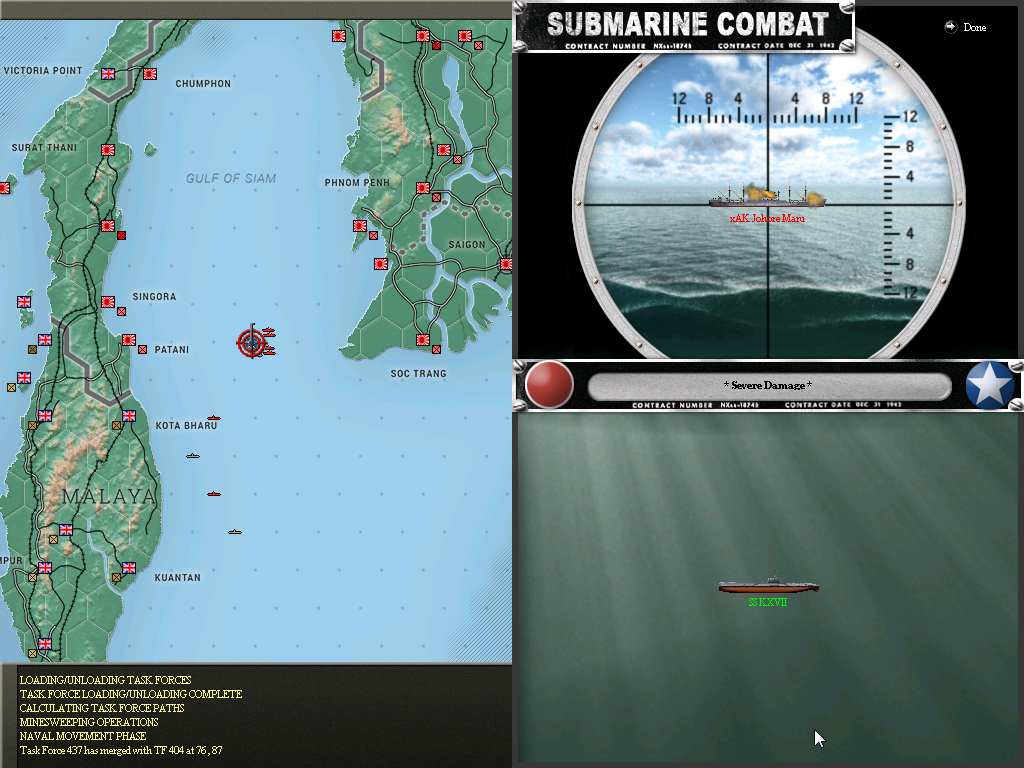
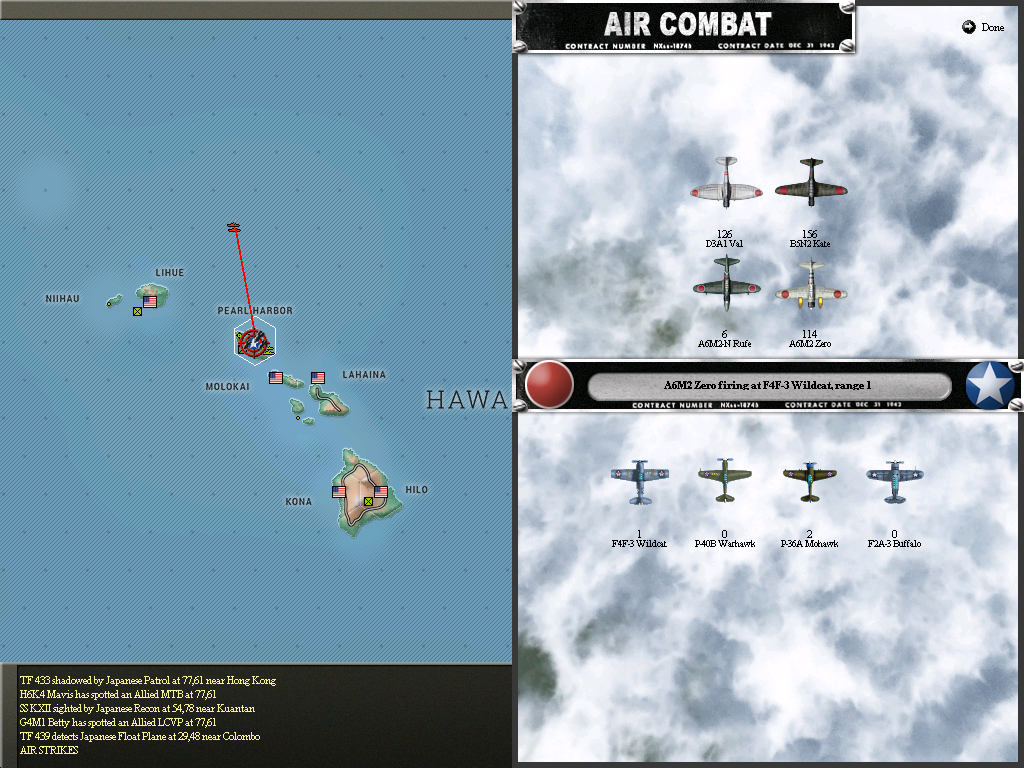
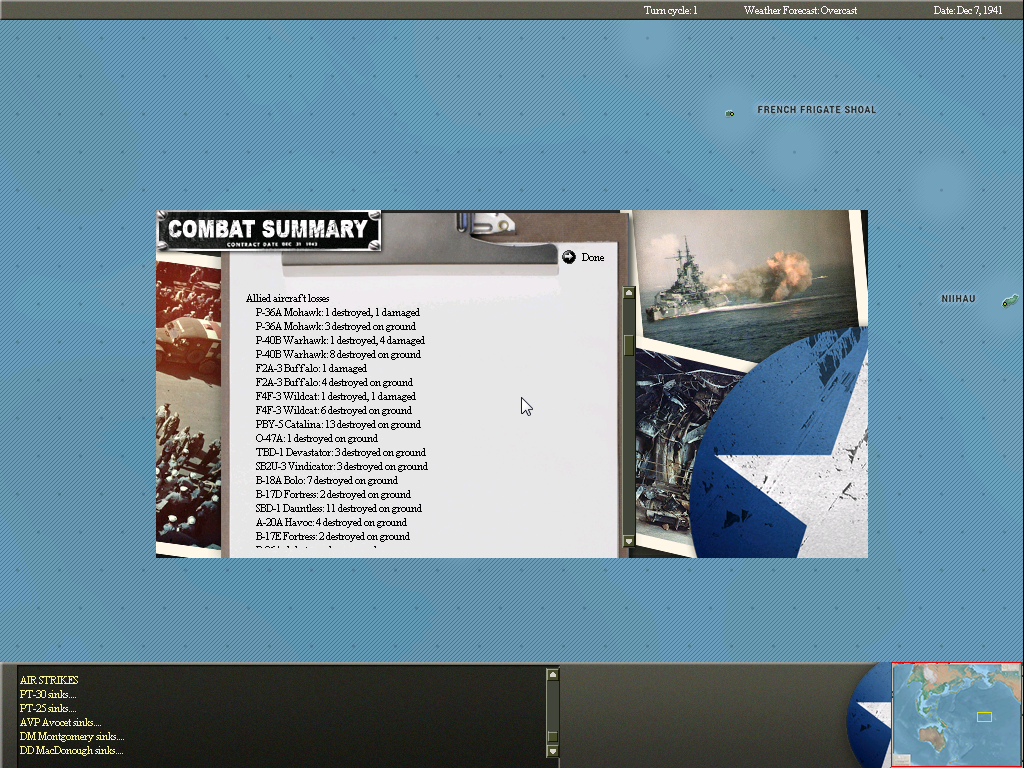
As an aside, I'm indebted to General Patton, who has been more than patient with me in holding my hand through the beginnings of my first PBEM game and first time playing as the Japanese.
There are still a lot of kinks to work out in the mod, but I hope that this After Action Report and the game helps me identify the issues that need to be worked out.
What is Focus Pacific?
Focus Pacific is an implausible alternate history in which the Japanese player starts with the assets and resources given to the AI in AndyMac's excellent Ironman scenario, with the intention of delaying the date when the Allies can overwhelm Japan with men and materials. The allies also receive a significant amount of new toys, which I hope will allow them to make Japan work a little harder in 1942 to achieve its strategic goals.
There are many excellent mods that base their alternate history scenarios on exhaustive research. This is not one of them, and is instead designed to be PBEM scenario that will be more of a slugfest for Japan and the Allies sides, giving each more to throw into the battle. Those that are interested in plausible alternate historical scenarios will probably not enjoy this mod. If you're interested in the mod, more information can be found in the Scenario Design and Modding forum. Feel free to download the scenario, but as I mentioned, there are still a lot of kinks to work out, and it's not yet ready for a true release.
The (Far-Fetched) Alternate History Behind Focus Pacific
1934
Japan gives formal notice that it will terminate its participation in the Washington Naval Treaty, and immediately thereafter embarks on ambitious ship-building program with the intention of matching the combined naval power of Great Britain and the United States. This ambition is made possible by years of careful industrial modernization and planning, including building additional shipyards and stockpiling the steel reserves necessary for this undertaking.
Great Britain and the United States are both alarmed by the number of carriers that Japan is laying down, and both nations begin pursuing flight-deck cruiser designs as a stopgap measure until more fleet carriers can be laid down.
1936
The Netherlands begin to re-arm. Henrikus Colijin, Prime Minister of the Netherlands, directs additional funding to the KNIL, with the directive that the KNIL take steps to ensure that it can remain operationally effective even when cut off from the Netherlands.
1937
With Japan's invasion of China, France sees the threat of not only Germany invading France, but also the threat of Japan invading French Indochina and eventually threatening French Caledonia and even French Polynesia. With that in mind, French troops, material and warships are dispatched to French Indochina, New Caledonia and to French Polynesia.
Due to the difficulty supplying their forces half a world away, France encourages the development of light industry in French Indochina, Pondicherri and French Polynesia, as well as expanding the ports, airfields and shipyards in their territories.
It becomes apparent to the French Air Council that domestic manufacturers can not equip the Armee de l'Air with enough airframes. In addition to contracting other countries to produce foreign designed aircraft to help fill the void, French Aircraft manufacturers are encouraged and subsidized to license their designs to foreign manufacturers, especially in the US. American companies begin manufacturing French aircraft, some of which make their way to bases in French Indochina, New Caledonia, Pondicherri and French Polynesia.
1938
France begins retrofitting their aging carrier Bearn to contemporary naval standards, and rushes production on their two Joffre class fleet carriers.
1939
America's eventual entrance to WWII seems inevitable. Aircraft factories ramp up production, which has already expanded considerably to fill French aircraft orders.
1940
In June, Japan invades Northern French Indochina. During the invasion, French intelligence obtains documents that were to be presented at the Konoe Cabinet in Japan later that year that listed French Polynesia as one of Imperial Japan's eventual targets. This information is made known to French naval command, including Admiral Marcel-Bruno Gensoul.
In July, British Captain Cedric Holland gives the French fleet under the command of Admiral Marcel-Bruno Gensoul at Mers-el-Kebir an ultimatum to surrender their ships, sail to Martinique for interment, or be fired upon (Operation Catapult). In tense negotiations, Britain agrees to let France evacuate the bulk of its fleet, naval personnel and naval aviation assets to French Polynesia as an alternative to Martinique. The agreement allowed the British to achieve their goal of removing French naval forces that might fight for Vichy France from the Atlantic, Med and Suez, and gave an opportunity for the French Navy to maintain their autonomy and still defend French colonies. This precedent from what came to to be called the Mers-el-Kebir accords is honored for the remaining French Naval forces in the Western Hemisphere.
French carriers Joffre and Painleve are launched. Unfinished, they flee to Tahiti to join the bulk of the French Navy and to avoid capture by the Germans.
Later in July, France signs the Armistice, while French carrier Bearn is docked on the East Coast picking up its order of Curtiss P-36s, SBC Helldivers and Brewster Buffalos. The precedent set by Admiral Gensoul at Mers-el-Kebir allows the Bearn to avoid internment at Martinique and instead sail to French Polynesia to join the French fleet.
French Polynesia, New Caledonia, Chad, the French Congo and Cameroon, join the Free French along with France's Indian colony, Pondicherri. The French navy, now ironically mostly operating in the Pacific, joins the Free French forces.
The U.S. allows aircraft manufacturers to continue their French contracts, but with the airframes delivered to the Free French colonies. Free French colonies around the world receive deliveries of aircraft.
1941
Free French ships, including the Bearn, support Free French operations off the coast of Equatorial West Africa, French Somaliland and Madagascar. With British and Commonwealth support, Free French forces continue to build up infrastructure in the Pacific and Pondicherry India.
In July, Japan invades South Indochina with 140,000 troops. While French forces in French Indochina were nominally under vichy control, the remaining French forces there choose to evacuate to Free-French held Noumea and join the Free French.
December 7th, The United States enters the war. Desperate for carrier strength in the Pacific, the United States offers to finish the construction of the carriers Joffre and Painleve.
Focus Pacific Features and Credit
Most of the features in Focus Pacific are not new, but instead rely on the hard work of other modders. Features include:
*AndyMac's Ironman Secnario used as the starting point for the Japanese Economy and OOB
*Juan's Allied Aircraft Purchase System
*Ship and air art and data from John 3rd and his Reluctant Admiral and Between the Storms team
*Extended map and hex data from DBB
*French ship and air art and Data from Skyland
*Additional air art from Madman Rick
*Additional ship art from Gary Childress
*USAAF, USN, USMC, RAF and RAAF training squadrons
*The Free French Army, Navy and Armee de l'Air in greatly expanded roles
*The addition of a new French base-hex, Pondicherri, in Eastern India.
What's New for Each Side?
Lockmart Lawndart, playing with the Japanese, will have the following advantages over stock:
Starting Ships and Future Production:
9 additional CV
11 additional CVL
6 additional CVE
10 additional BB
5 additional BC/CB
13 additional CA
31 additional CL
80 additional DD
14 additional TB
27 additional E
43 additional PB
62 additional SS
26 additional AMCs
13 additional DMS
15 additional APD
9 additional LSD
307 addtional AK
126 additional AKL
22 additional TK
93 additional LCI
39 additional xAP
178 additional xAK
318 additional Airgroups, made up of 6,400 total additional aircraft
118 additional LCUs of various types
A monster of a Japanese economy, with greatly increased supply and fuel stockpiles and production.
Replacement pools of some key air-frames in addition to production pools
G3N bombers, upgrading to 65N with research, giving the Japanese a mid-late game long-range punch
I'll have to be on my toes vs Lockmart Lawndart's Japanese Juggernaut, but as the allies I have some tricks up my sleeves as well:
*The French Navy, including CVL Bearn. The Joffre and Painleve start the game in Tahiti in an unfinished state. They start the game unfinished, with no weaponry or aircraft handling capability, and must travel to a friendly port with large enough yard to complete their construction, which will take months.
*Greatly enhanced aircraft production as well as additional airgroups. Japan will have a harder time dominating the skies in 1942.
*A better prepared and supplied KNIL.
*Flight-Deck Cruisers. They're poor cruisers and even worse carriers, but they can be converted to CVLs by the allies, giving them more naval air-power in 1942.
The First Turn
House-rules dictate that I can't form new TFs on the first turn, so I don't have a lot to do other than setting search arcs, CAP and the like.
Force Z
Admiral Thomas Phillips turns south, away from the threat of Japanese airpower.
USN Carriers
Saratoga and Lexington converge on Canton Island along with the the flight-deck cruisers. They will combine into one air combat TF once they get there, and then make their way back to Pearl, well away from the KB.
China
Most units are withdrawn to the rail line, while others move to reinforce Wenchow and Kwangchowan, both of which I want to be a thorn in Japan's side as long as possible.
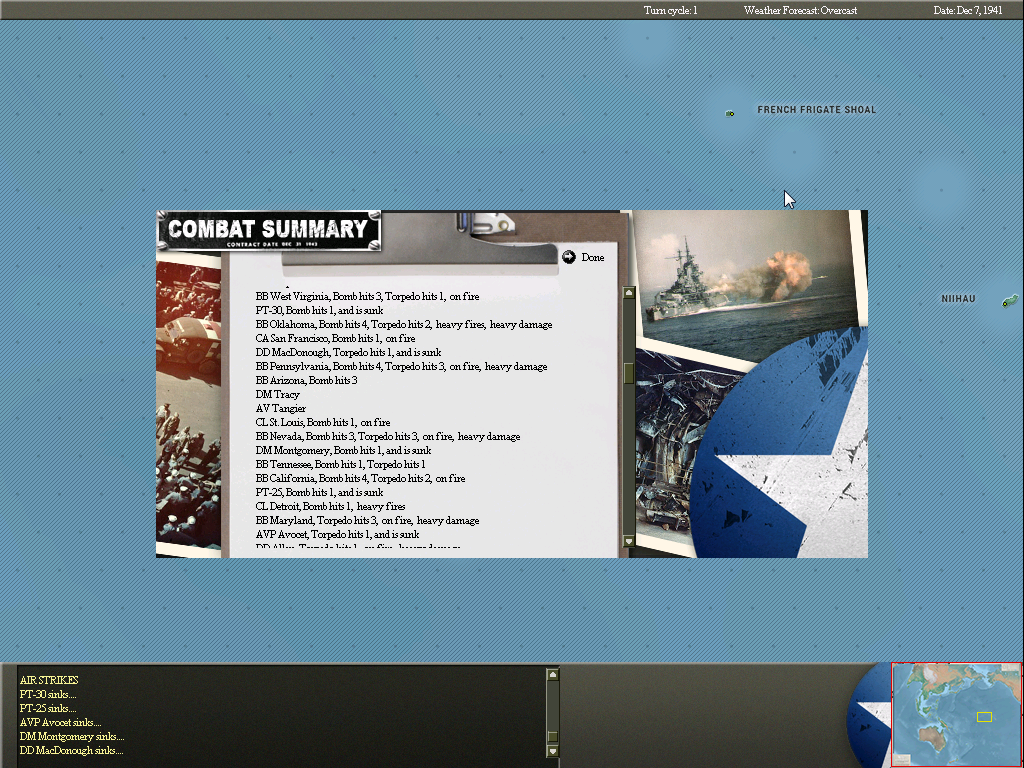
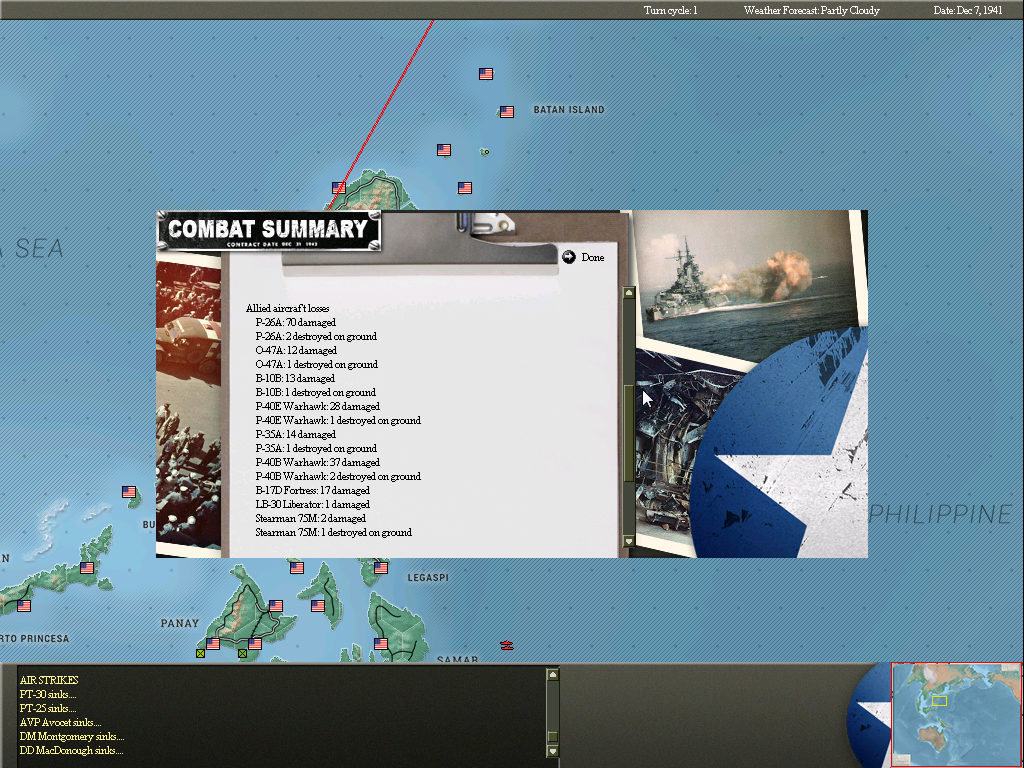
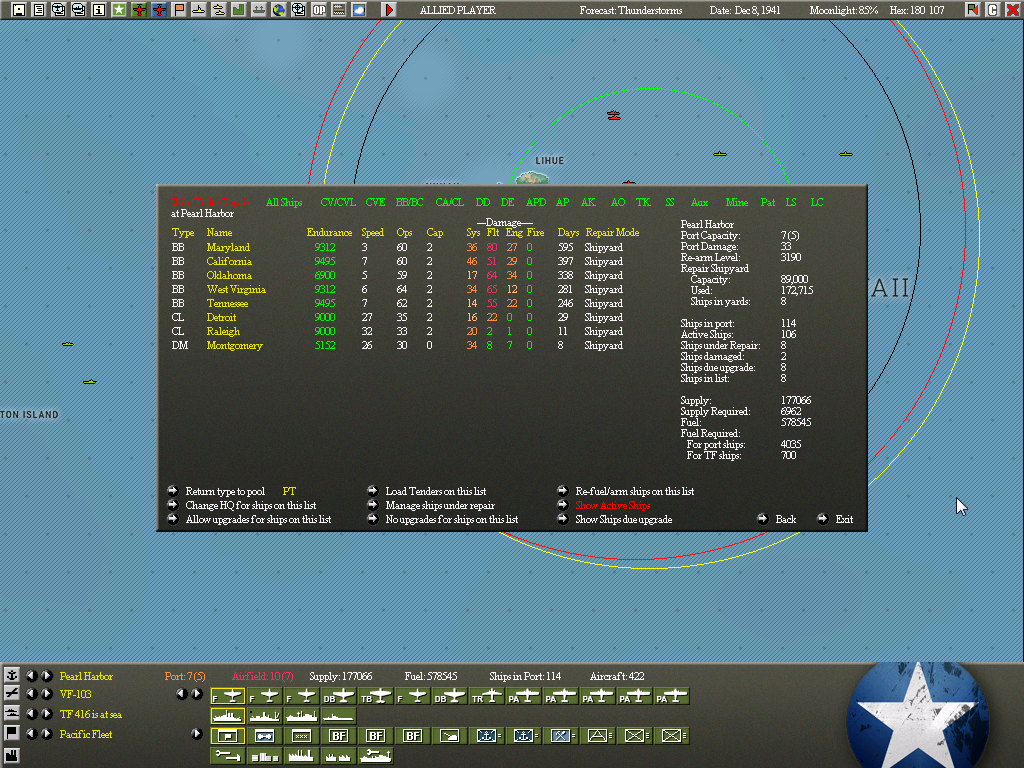
No I just have to wait - in this scenario, Japan starts with an additional carrier in the KB. How devastating will the Pearl strike be?
The French CV Joffre, in it's unfinished state: