Dev Diary #1: The Ardennes is not like the Eastern Front
Posted: Tue Oct 13, 2026 1:23 pm
In this Decisive Campaigns: Twilight in the East developer diary I'll highlight a few key features that set it apart from the previous title in the series, Ardennes Offensive.
Let’s start with the obvious, and let’s be frank: the Ardennes is not the Eastern Front. It does not even come close. And if we also consider that the Ardennes is actually one of the more remote “wild” areas of Western Europe, the difference between Western Front and Eastern Front becomes even clearer.
During the Ardennes Offensive the German infantry divisions often only occupied 4–5 km of frontage each. In the East the average frontage per division at least triples, if not much more in some places.
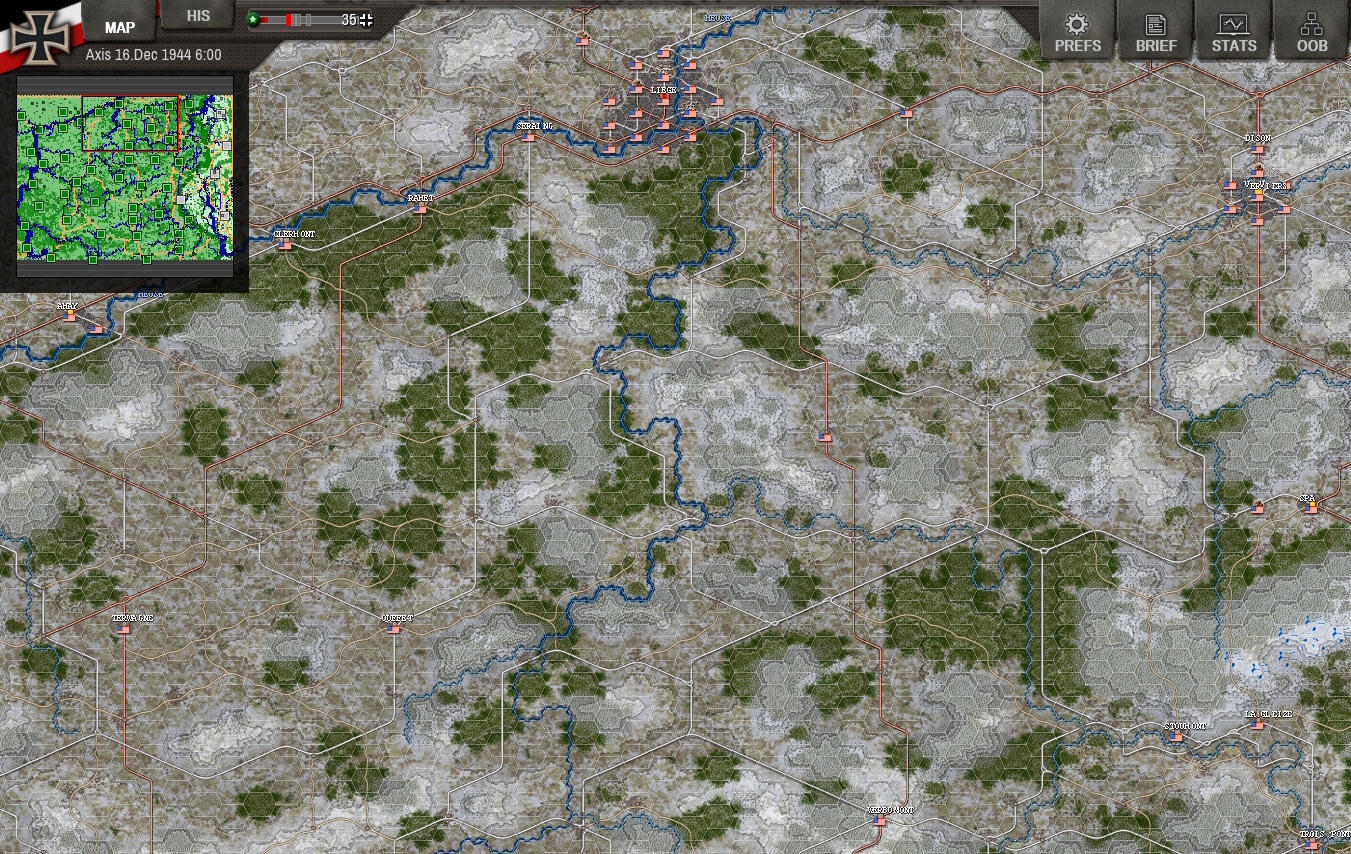
Note the dense high-quality road network around Liege (Luik).
The road network of the Western Front compared to the Eastern Front is like day and night. The rail and sealed road systems in Western Europe, even in the Ardennes, were of an order of magnitude better than what we find in most parts of WWII-era Soviet Russia.
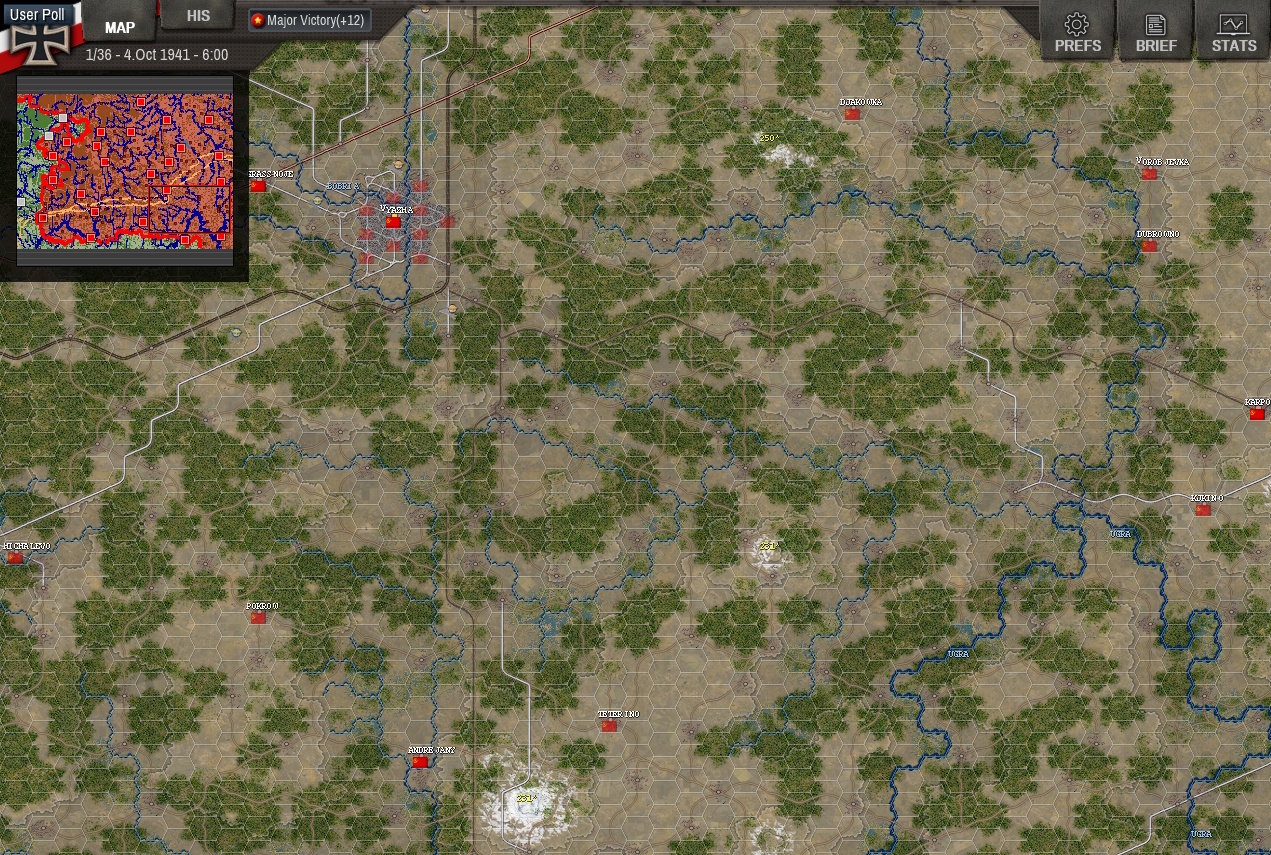
Now note how dirt roads reign supreme in the Soviet Union even this close to the rather major city of Vyazma.
The above is the raison d’etre for a number of major changes to the engine to support the Eastern Front in Twilight in the East.
Defensive Line Mode (DLM) is a new feature introduced in Twilight in the East. It allows splitting a battalion into 2 or 3 parts (about the size of a company). This DLM feature, in theory, makes it possible for, say, a German infantry division to use its 9 battalions to cover 27 hexes with 1 roughly company-sized unit per hex.
According to my gut feeling & studies this is not a deployment mode used for offensive operations. Hence the word “Defensive” in DLM.
DLM allows great flexibility but at a price. Units in Defensive Line Mode (DLM) can only advance 1 hex per turn & can only do so if they remain in contact with each other.
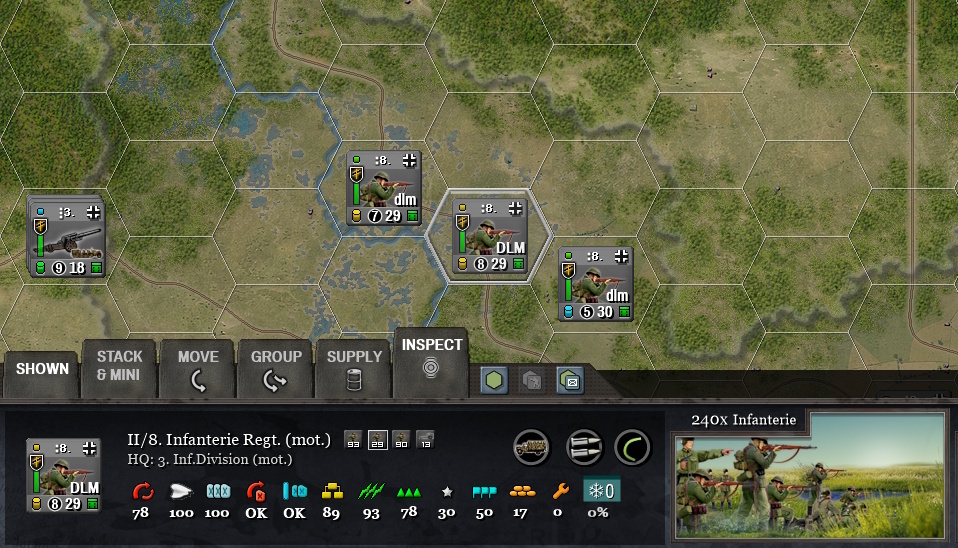
The II/8 Battalion has split up into 3 DLM parts. Note the typical Russian landscape around it. Swamps and forests….
In many ways, the DLM feature that comes on top of the existing & continued Kampfgruppe feature allows for proper historical modelling of Eastern Front battles.
The other big accommodation of the engine to the Eastern Front is the revamping of the supply system. Now in the East the railroads are the spine of your logistics. Of course, the sealed roads system is important and plays a role in managing logistics. Between those good railroads and sealed roads are large (sometimes very large) stretches of Russian countryside. And that means small villages and dirt roads… the Russian countryside is surprisingly underdeveloped.
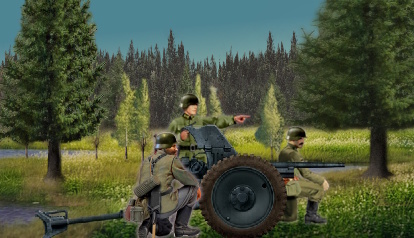
Dirt roads might seem bad, but the new landscape type, Forested Swamp, must be one of the worst to advance through.
These big areas of bad mobility and often suboptimal supply are unique to the Eastern Front. They are crucial to advance through if you want to avoid frontal attacks over the key railroads/highways, but this is only feasible over a limited distance. The supply rules have been QA-ed a lot to make it easier to read and track what is happening. There is a dashboard report with high-level aggregates, more in-depth per-unit analysis, improved list and log reports, and a supply layer view mode that now also allows you to track map flow details of supply deliveries and traffic points.
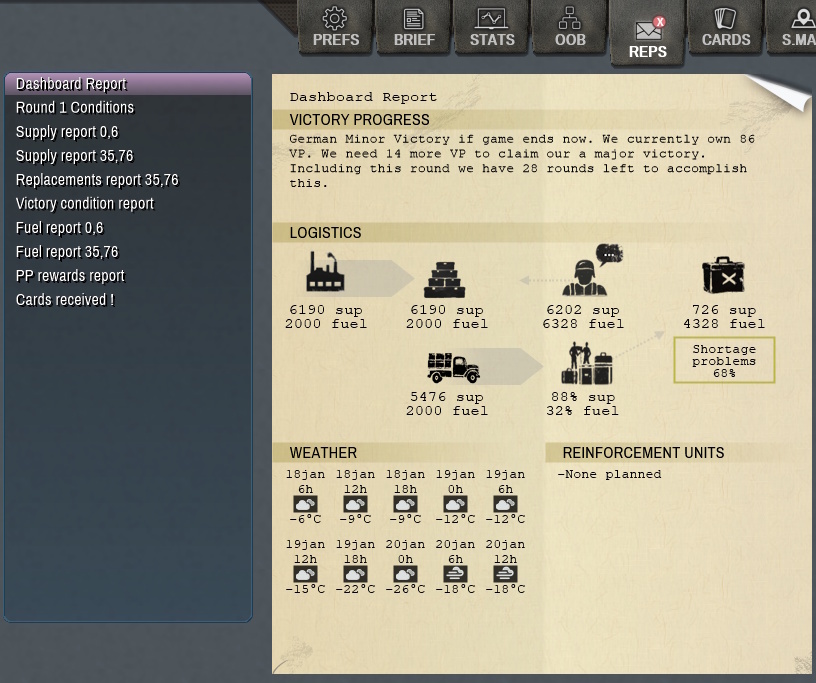
See the overall supply state at a glance.
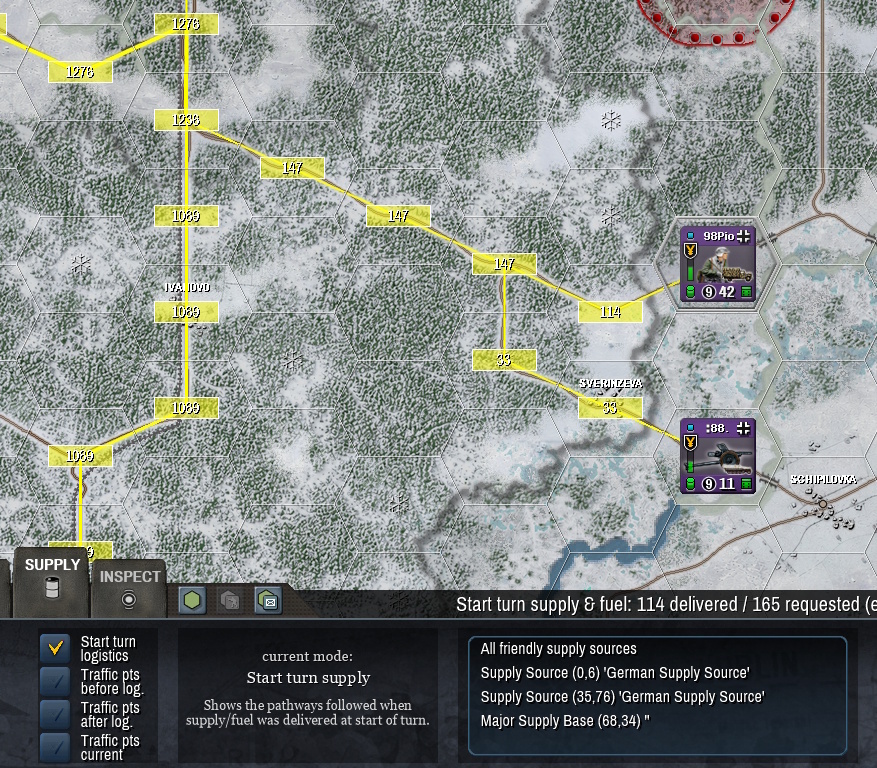
See how many units of supply and fuel moved over each stretch of road.
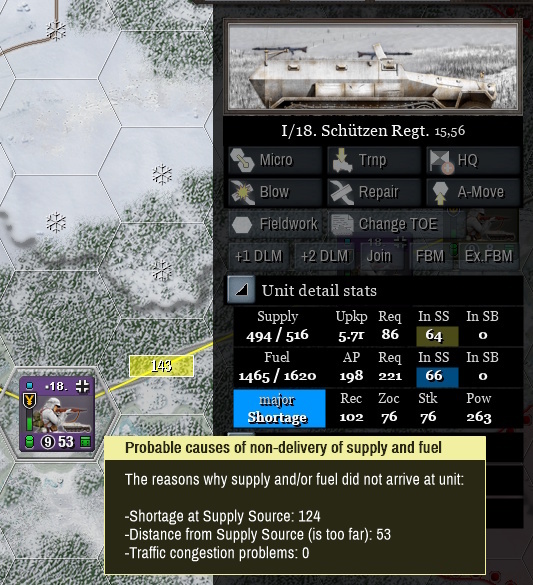
These schützen are getting most of their supply, but it seems fuel is lacking at the supply source.
The Supply Base feature, so important in the Ardennes Offensive, is still there in Twilight in the East but has become much more optional to use. This has basically been done because the regular supply source system can now project logistics up to 1000 AP distance, where it was 250 AP in Ardennes. Also, I judged the previous system necessary for Ardennes, but a bit too finicky. I did the same for the binary fuel delivery rule and judged that one to be confusing.
So, summing up the differences between Twilight and Ardennes here is a full revision of the supply system, making the rules easier to understand, improving the UI so you can actually check up on where things go wrong, and making the system easier to manage.
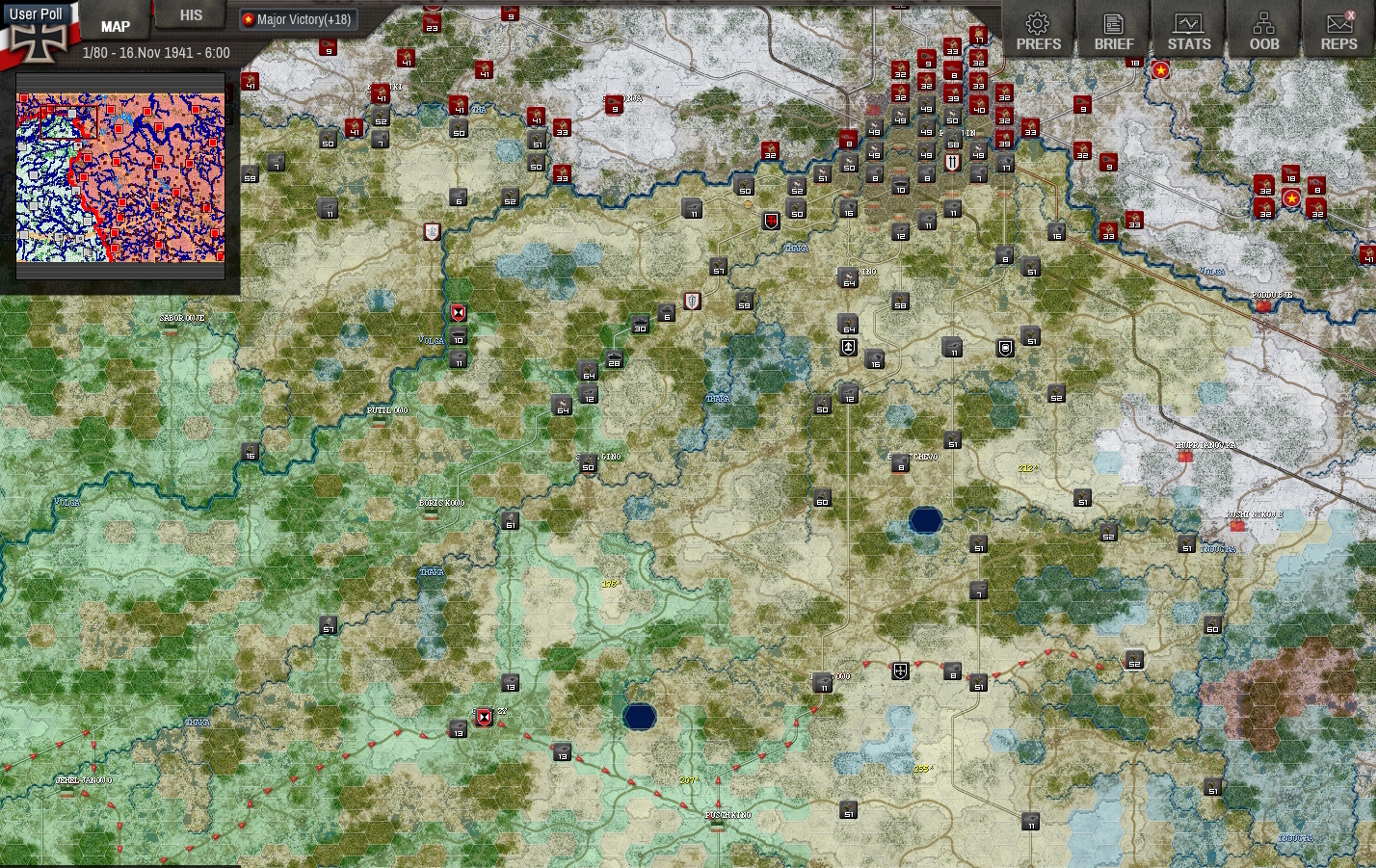
Now you understand why the historical German advance’s main axis was along the key highway to Moscow
The nature of the Soviet defenses in the East, especially their ability to create fieldworks to present formidable defensive lines to block or slow down the German advance, is represented in Twilight in the East in a 3-fold way.
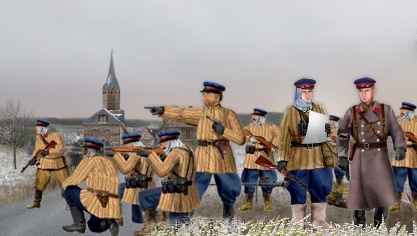
It also helped the Red Army a lot that they actually had large stockpiles of good winter clothing.
First the already discussed DLM allows forming a continuous front & preventing easy bypasses.
Secondly, units that keep entrenching (not moving) will eventually build up enough “Fieldwork Points” that a permanent fieldwork is added to their hex, or an existing one upgraded, further boosting their defensive modifiers.
Third, for the more cunning players, part of the defense can be put slightly behind the frontline and assigned to Fire Brigade Mode (FBM). This will make such a unit eligible to bolster the defenders in nearby hexes when attacked during the enemy’s turn.
Together these 3 additions, in combination with already existing features from Ardennes Offensive, such as intercept fire on advancing attackers and defensive intercept fire to help the defenders under assault, make “The defense” the stronger form of battle.
Or so it might seem... it will depend on the scenario and the players if it really is. Because, if there is space for manoeuvre and deep penetration, no “superior” defense will survive being cut off from its supply source.
This dev diary focused on some key differences between Ardennes Offensive & Twilight in the East. In the next one, we will look into the Wehrmacht and Red Army and how they differ.
Victor ‘Vic’ Reijkersz
Developer
VR Design
Let’s start with the obvious, and let’s be frank: the Ardennes is not the Eastern Front. It does not even come close. And if we also consider that the Ardennes is actually one of the more remote “wild” areas of Western Europe, the difference between Western Front and Eastern Front becomes even clearer.
During the Ardennes Offensive the German infantry divisions often only occupied 4–5 km of frontage each. In the East the average frontage per division at least triples, if not much more in some places.
Note the dense high-quality road network around Liege (Luik).
The road network of the Western Front compared to the Eastern Front is like day and night. The rail and sealed road systems in Western Europe, even in the Ardennes, were of an order of magnitude better than what we find in most parts of WWII-era Soviet Russia.
Now note how dirt roads reign supreme in the Soviet Union even this close to the rather major city of Vyazma.
The above is the raison d’etre for a number of major changes to the engine to support the Eastern Front in Twilight in the East.
Defensive Line Mode (DLM) is a new feature introduced in Twilight in the East. It allows splitting a battalion into 2 or 3 parts (about the size of a company). This DLM feature, in theory, makes it possible for, say, a German infantry division to use its 9 battalions to cover 27 hexes with 1 roughly company-sized unit per hex.
According to my gut feeling & studies this is not a deployment mode used for offensive operations. Hence the word “Defensive” in DLM.
DLM allows great flexibility but at a price. Units in Defensive Line Mode (DLM) can only advance 1 hex per turn & can only do so if they remain in contact with each other.
The II/8 Battalion has split up into 3 DLM parts. Note the typical Russian landscape around it. Swamps and forests….
In many ways, the DLM feature that comes on top of the existing & continued Kampfgruppe feature allows for proper historical modelling of Eastern Front battles.
The other big accommodation of the engine to the Eastern Front is the revamping of the supply system. Now in the East the railroads are the spine of your logistics. Of course, the sealed roads system is important and plays a role in managing logistics. Between those good railroads and sealed roads are large (sometimes very large) stretches of Russian countryside. And that means small villages and dirt roads… the Russian countryside is surprisingly underdeveloped.
Dirt roads might seem bad, but the new landscape type, Forested Swamp, must be one of the worst to advance through.
These big areas of bad mobility and often suboptimal supply are unique to the Eastern Front. They are crucial to advance through if you want to avoid frontal attacks over the key railroads/highways, but this is only feasible over a limited distance. The supply rules have been QA-ed a lot to make it easier to read and track what is happening. There is a dashboard report with high-level aggregates, more in-depth per-unit analysis, improved list and log reports, and a supply layer view mode that now also allows you to track map flow details of supply deliveries and traffic points.
See the overall supply state at a glance.
See how many units of supply and fuel moved over each stretch of road.
These schützen are getting most of their supply, but it seems fuel is lacking at the supply source.
The Supply Base feature, so important in the Ardennes Offensive, is still there in Twilight in the East but has become much more optional to use. This has basically been done because the regular supply source system can now project logistics up to 1000 AP distance, where it was 250 AP in Ardennes. Also, I judged the previous system necessary for Ardennes, but a bit too finicky. I did the same for the binary fuel delivery rule and judged that one to be confusing.
So, summing up the differences between Twilight and Ardennes here is a full revision of the supply system, making the rules easier to understand, improving the UI so you can actually check up on where things go wrong, and making the system easier to manage.
Now you understand why the historical German advance’s main axis was along the key highway to Moscow
The nature of the Soviet defenses in the East, especially their ability to create fieldworks to present formidable defensive lines to block or slow down the German advance, is represented in Twilight in the East in a 3-fold way.
It also helped the Red Army a lot that they actually had large stockpiles of good winter clothing.
First the already discussed DLM allows forming a continuous front & preventing easy bypasses.
Secondly, units that keep entrenching (not moving) will eventually build up enough “Fieldwork Points” that a permanent fieldwork is added to their hex, or an existing one upgraded, further boosting their defensive modifiers.
Third, for the more cunning players, part of the defense can be put slightly behind the frontline and assigned to Fire Brigade Mode (FBM). This will make such a unit eligible to bolster the defenders in nearby hexes when attacked during the enemy’s turn.
Together these 3 additions, in combination with already existing features from Ardennes Offensive, such as intercept fire on advancing attackers and defensive intercept fire to help the defenders under assault, make “The defense” the stronger form of battle.
Or so it might seem... it will depend on the scenario and the players if it really is. Because, if there is space for manoeuvre and deep penetration, no “superior” defense will survive being cut off from its supply source.
This dev diary focused on some key differences between Ardennes Offensive & Twilight in the East. In the next one, we will look into the Wehrmacht and Red Army and how they differ.
Victor ‘Vic’ Reijkersz
Developer
VR Design