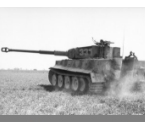
Tigers on the Hunt is a World War 2 hard-core tactical wargame for PC.
It creates a truly and immersive depth tactical simulation. Tigers on the Hunt boasts a ferocious and adaptive AI which will dynamically respond to a player’s maneuvers.
Peter, don't shoot on me, but adding long range fire for MMG/HMG's only will essentially have no impact on the game, because such weapons:
1. have a normal range between 12 and 16 hexes: given the usual visibility ranges, they already fire at such ranges. Only the shorter-ranged ones (Russian MMG/HMG) will gain some extra fire opportunities.
2. cannot fire after moving: the failure to fire in the Advancing Fire Segment does not affect them anyway.
What makes the AI such a wimpy opponent - in my opinion, though the majority here seems to enjoy the current "Malmedy Massacre" playing style - is its utter inability to fire at reduced effectiveness. This includes - but is not limited to - long range fire: the AI also won't fire in the Advanced Fire Segment (whether after the units moved or not) or when Pinned (and this makes the effect of a "Pin" on AI units much more severe).
Of course, the above rambling does not include AFV, which fire wildly even with abysmal to-hit chances. Sometimes, the AI target selection leaves me a bit puzzled, but this is another story (I saw an AI SU-152 with a Tiger 2 hexes away firing at a Pz III 14 hexes away, with several intervening hindrance hexes [&:] [&:] [&:]).
I am not worn, but the imminent release of Check 6! should take me away at least for a while.
In Advancing Fire Segment, all weapons effectiveness is reduced by 50%, as you are basically firing a weapon after you moved/run. By adding long range, a weapon effectiveness is further reduced by by additional 50%. Therefore Light machine guns would loose too much firepower and be essentially ineffective. Never mind the fact that you can break your weapon every time you fire, so there is just more risk without much benefit.
Most of the Ordnance, vehicles do not suffer from long range reduction because their effective range is roughly the size of the whole map.
Here is how I approach changes to the game: I'm a single developer working on a game that already has 500K+ lines of code, out of which about 100K+ is AI alone. Therefore I have to be very careful in terms what changes (and how much) am I going to make to the game. I can't afford to make changes that to the game that will not surely give me the result I'm looking for. I can't take the chance on implementing something big that can potentially destabilize the game, I don't want to break anything. I want to make sure that all the changes I make will actually make the game better. So in that sense, I have to think of evolution rather than revolution - I hope you get my meaning. I can't afford to spend 6 months working something that I'm not 100% sure if it's overall going to benefit the game or not. You see, with every new feature I implement, not only do I only on work on the positive path of a feature but I also have to cover of all the wrong things that may happen, I need to explore and cover of all potential negative impact. So every new feature requires proper analysis, design and developmention.
So I have to think of smaller solid steps that will overall in long run contribute make the game better. I believe from where I stand, each UPDATE I have released to the game so far has positively impacted the game overall - I want to continue in that direction.
Peter, I greatly appreciate the great work you have done, working all alone on this project. I never, ever stated the updates were useless. My remarks are due to my great love of this game, otherwise I would have shelved it a long time ago together with other bad purchases.
But, excuse me, I think we have a major misunderstanding here: AI units do not fire any time their firepower is reduced.
This means they:
> never fire at long range (this allows a clever human player to fire from just 1 hex over the enemy normal range, or to move in the open with the sure knowledge the AI units won't fire at his units)
> never fire after moving (this means they will have to survive the subsequent Fire Phase before being able to reply)
> never fire when they are pinned (making a pin a much more severe result than it is for human units).
The case you take an example (a moving LMG at long range) implies a double halving of FP. I don't know if I would fire, but the AI certainly won't and this is the point. A human player already has the advantage of being smarter than the AI: I do not pretend the AI should do feints or other smart moves, but currently, AI-led SS are as dangerous as a bunch of Hare Krishna.
Am I the only one here who thinks that there is an issue with the AI? Some time ago I took the pain of recording how many times the AI fired during a scenario, playing it from both sides. The few reactions were something like "Oh, yes, interesting, but when will be able to have the Latvian SS squads or the Sd Kfz 254?".
I didn't criticize your feedback either, I was just trying to explain what I do and how I do it. I'm very much open to feedback and I will work towards making the game better.
UP844 you are presenting your thoughts very well. Thus giving Peter the information he needs to consider the changes/additions you like. These kind of threads, and there are more, makes the game develop in a great way. [:)]
For my part, I shall do my duty as a general; I shall see to it that you are given the chance of a successful action. /Lucius Aemilius Paullus
OK folks, I played training scenario 1 on both sides.
Every time the human player or the IA fired, I took a written note of the fire type according to range and movement status. I forgot taking note of how many times firing units were tired or pinned [:(]: I only once noticed a pinned IA unit firing.
The tables below provide the cold numbers.
"mixed" indicates a fire where part of the units - usually MGs - fire at normal range and the rest - usually squads - fires at long range:
"effective fires" indicate those fire that caused at least a "pin" result.
German human vs. US IA.
Major German victory.
German losses: 2 Squads, 1 HS
US losses: 4 squads, 1 HS, 5 Ldr
German (human) fire type:
Point blank 2
Point blank after moving 3
Normal range 15
Normal range after moving 8
Mixed 4
Mixed after moving <none>
Long range 8
Long range after moving 6
Total fires: 46
Effective fires: 13 (28.2%)
US (IA) fire type:
Point blank 3
Point blank after moving <none>
Normal range 22
Normal range after moving <none>
Mixed <none>
Mixed after moving <none>
Long range <none>
Long range after moving <none>
Total fires: 25
Effective fires: 4 (16%)
The US force was virtually annihilated at the end of turn #5. Only 1 squad survived until the end of the scenario, but it was broken an with no leaders remaining.
IA fired 25 times vs 46 human fires (the human fired 1.84 times for every time the AI fired).
German IA, US human.
Major US victory.
German losses: 4 HS, 1 Ldr
US losses: none
German (IA) fire type:
Point blank <none>
Point blank after moving <none>
Normal range 6
Normal range after moving <none>
Mixed <none>
Mixed after moving <none>
Long range <none>
Long range after moving <none>
Total fires: 6
Effective fires: 2 (33.3%)
US (human) fire type:
Point blank <none>
Point blank after moving <none>
Normal range 18
Normal range after moving 1
Mixed 2
Mixed after moving <none>
Long range 25
Long range after moving 3
Total fires: 49
Effective fires: 19 (38.7%)
The German force never managed to come into normal range of its infantry squads. The 6 fires all come from the LMGs. The AI suffered few losses, but most of its units were broken and hidden in the bottom part of the map when the scenario ended. A couple leaders advanced all alone, but this issue has already been fixed by Peter. The only casualty the US force suffered was a broken (and promptly rallied) squad.
IA fired 6 times vs 49 human fires (i.e. the human fired 8.2 times for every time the AI fired).
My final two cents:
- on the defense, the AI fired much more than on the attack, but this is mostly due to the time constraints that force the German player to advance quickly to take all the VP hexes;
- on the attack, the amount of firepower the Germans delivered on the US defenders has been negligible (see next note). The US "normal range" fires (18 out of 49) all come from the MG, as no German unit ever arrived within 4 hexes of the US airborne squads, which always fired at long range (with excellent results against units moving in the open [:D]);
- the Germans have a 50% advantage in raw firepower (6 SS squads @ 6 FP = 36 FP + 4 Fsj squads @ 5 FP + 3 LMGs @ 3 FP = 65 FP vs. 5 Abn squad @ 7 FP = 35 FP + 1 MMG @ 4 FP = 39 FP). The SS squads also enjoy a slight range advantage over the US airborne squads;
- notice how the AI never fires after moving. In other games I noticed it almost never fires after moving even when its units are adjacent to the enemy;
- on the other hand, the same AI unit fires both as First Fire and as Final Fire (and, again, as Final Protective Fire) even tought the last two fires are made at half FP (doubled for FPF).
Great AAR[&o][&o][&o].
In this scenario, 10 german units have 3 support LMG, after update, 3 LMG units cover 7 other move units thus the theory of fire and movement becomes practice.[8D]
It's an incredibly boring task and my report is incomplete as well (I forgot taking notes about the pinned/tired status of AI units firing).
The AI behaviour is less apparent in scenarios where LOS is limited due to terrain or visibility, but the lack of firing after moving (or when pinned) should be noticeable anyway. For a clear appreciation of the issue, try some scenario like Canicattì Ridge, Battle for Lasterkomagi(*), The Hedgehog of Piepsk, Hill 621 or Bucholz Station.
(*) I'm certain I wrote it wrong [:D]
In all such scenarios, in the defense, you should be able to greatly disrupt (read: slaughter) the attacking side; in the attack, you should be able to significantly weaken the defenders. In both cases, return fire from the enemy squads should be negligible; this is especially significant when opposing the Russians (which usually have very few MGs).
@Rico:
Believe it or not, I am perfectly knowledgeable about the fire-and-movement theory. In fact, I used the SS squads to pin/break the US infantry and then the Fsj closed for the kill (through PB fire, CC or failure to rout). When I played with the Americans, I had no need for such sophisticated tactics: I just chewed my cigar and ordered "Give 'em hell, boys!"
Thank you UP844.
You have and I hope, will continue to point out the gameplay issues .
I agree with Paullus;
UP844 you are presenting your thoughts very well.
Thus giving Peter the information he needs to consider the changes/additions (edited) the players like
These kind of threads, and there are more, makes the game develop in a great way
I would like to think the seed has been planted but until there are 10 Peters we may have to wait.
Small steps .
I think I may have read most of your posts ,
And there is not one I recall that was not for the advancement of the game .
Alright guys, I'm sharing with you guys my latest version of the game that I'm currently working on for UPDATE5. Please note that, this is a work in progress ALPHA version.