This new stand alone release based on the legendary War in the Pacific from 2 by 3 Games adds significant improvements and changes to enhance game play, improve realism, and increase historical accuracy. With dozens of new features, new art, and engine improvements, War in the Pacific: Admiral's Edition brings you the most realistic and immersive WWII Pacific Theater wargame ever!
Holy crap I didn't know that . . . so the bigger your "Replacement" pool is the bigger your monthly loss of _HEAVY INDUSTRY!?_
Talk about hammering the Japanese player! [:@][;)]
No. Re-read the previous posts - the pilots that are in basic training before they appear on any lists are the ones spending HI points. Once they finish basic training and are assigned to pools or units, the auto-expenditure of HI ends but you expend supplies when you train them further in squadrons in the game.
Well I think I'm still missing the point here because he was suggesting this was a way to save on monthly HI expenditure by putting more pilots into on map training. If they are not even in the pools yet, then you cannot put them on map eh?
I think the problem is with the term 'replacement pool' that you used in the earlier post. That has a specific meaning (pilots that have finished their basic training, reached their national average experience and are ready to be assigned). Pilots in the replacement pool do not cost any further HI - they have incurred the full 60 HI cost during basic training. Only the pilots in the process of the basic training are incurring further costs.
After you have assigned all the pilots from your replacement pool, if you pull any further pilots they come from those that are still undergoing basic training: month 11 pilots first, then 10, 9 etc - each month having progressively less good xp as they have completed fewer months of the basic program. Pulling these forward into on map groups is where you save the HI (albeit with a penalty to their xp and skills, though this is not a significant issue).
If they are not even in the pools yet, then you cannot put them on map eh?
If Japan runs out of pilots in her pilot pool, she may then start drawing them from the training cycle. These would be poor candidates for any combat activity. Its essentially what Japan did IRL when her front-line pilots were gone. The results would be the same, unless she trains them up.
Ah right. But that off-map pool is at least several hundred isn't it? So in order for the ploy that Yakface was thinking out loud about to work, you'd need to first have depleted several hundred pilots, then upsize all your resizeable units ,then fill them all with pilots from the pool?
Something like that, and then once Japan hits 1943, she gets even more pilots each month. I know its possible to do, but I've never done it out to Dec '42. That's as far as I've gone. As time goes on its even likely this will occur whether planned or not. Depends on how many pilots Japan burns through.
It is seldom that liberty of any kind is lost all at once. Hume
In every party there is one member who by his all-too-devout pronouncement of the party principles provokes the others to apostasy. Nietzsche
By re-sizing the float plane squadrons and using them to train fighter pilots you really aren't losing very much operationally. You can keep all of your IJNAF fighter squadrons on active duty and simply feed them with trained pilots from the float plane squadrons - which really only have marginal utility. Same for DBs.
I actually only have one float plane group on training fighter pilots and that one starts in the HI as a 36 plane unit. Well that's not entirely true I do have some of the AV group Pete's training for air combat when not on ops, but that's just temporary and for expediency. I use Pete's as CAP in some areas in the early going. Totally historical, but I may do it a bit more that Japan did. BTW Pete's are useful as ASW assets in your TF's. At least once trained a bit. Also historical.
Just had a Pete shoot down its first A/C. One of those Dutch twin engine bombers. My main goal originally was to combat the 'Donier menace'. I've had no trouble from those puppies since I've had Pete's CAPing my rear area bases. They'll even rattle most B-17 raids, at least enough to throw their aim off.
Eventually I will put Rufe units to training fighter pilots. Once there usefulness diminishes.[;)]
It is seldom that liberty of any kind is lost all at once. Hume
In every party there is one member who by his all-too-devout pronouncement of the party principles provokes the others to apostasy. Nietzsche
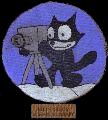
Will try and add some useful comments as a repayment for all the good advice I've gotten from the forum. The embedded picture is what I call flight school, and to my knowledge these are the pilots that cost 5 HI per pilot at the beginning of the month. It's a small price to pay for these pilots to get trained up to the current national level.
I expand any SP (Sea Plane) group that comes from an AV or CS to 24. I never considered using the SP on BBs or CAs. Maybe that is my self imposed limit. Resizing gives me a boost and certainly helps, but unless my tactics and battles go flawlessly I feel it will only delay the inevitable. By the playing Scen 1 PBEM as Japan.
Also there are a few land based fighter and bomber groups that are hard coded to resize at a later date in the game, and you cannot manually resize these groups. Also, none of the 1st Air Fleet's Air Groups can be resized until after July 42.
Now, pilot training wise I was shocked at something I saw the other day. While rotating new bomber pilots through their training program, I moved some pilots out of a Kate torpedo bomber training unit and put them into a Val naval search training unit. Any pilot with a general experience above 50 lost skill points when changing aircraft! Unfortunately the pilot training pool only shows types by fighter, bomber, transport, etc. It does not show DB, TB or MB so you do take a loss by switching aircraft. Rufe to Zero does the same thing. And there isn't an experience penalty when you release a pilot, and there shouldn't be since you could load that pilot back into the same aircraft.
The max for floatplanes is 24 and to be honest only an idiot would resize them all to 24.
Hey, I resemble that remark.[:D] TBH I don't know if I do them all. I certainly do most.
Even with all this I've never drained my pilot pool and gone into the training cycle pilots. Even if I did the cost would just be switched from HI to supply, as groups on training use supply. And you would need to train those pre-grads as their experience and skill levels would be rather low to say the least.
Well with all I meant all. This would include to remove all groups from your ships. I doubt you do that
I've done it. It really doesn't take THAT long. Only a month or so. It helps if you wait for the mandatory April 1942 resizes on many of them, so that you can get them too.
ORIGINAL: rustysi
If they are not even in the pools yet, then you cannot put them on map eh?
If Japan runs out of pilots in her pilot pool, she may then start drawing them from the training cycle. These would be poor candidates for any combat activity. Its essentially what Japan did IRL when her front-line pilots were gone. The results would be the same, unless she trains them up.
There's actually a pretty good reason to pull the really inexperienced pilots, but it takes some explaining. The gist of it is that more experienced pilots train do not train as quickly as more inexperienced pilots. Pilots are "spawned" when pulled from the replacement pool (or flight school), with an average Experience - which is a range, and also (from observation) affects the level of their relevant skills. If "spawned" into a fighter unit, the pilot's highest skills will be Air, Defense, etc., while if "spawned" into a torpedo bomber unit then the pilot's skills will be NavB, NavT, and GrdB - I'm not sure on the exact mix of skills, but that's more or less how it works.
When training, a pilot's Experience will level up as they level up their skills. The more a pilot levels up, the longer it takes for the next one. It follows then that if you want a pilot who is only skilled in ONE thing (say, NavB for kamikazes) then you should begin training a pilot at as low an experience level as possible in order to train them as high as possible in that one skill that you desire (for kamikazes, keeping in mind that the average pilot experience has to be under a certain threshold in order to convert the unit to kamikaze).
*sigh* it is a shame this is all so arcane. Not to say that the Japanese player should have an unrealistic ability to generate legions of super pilots, nor be destined to experience exactly the sort of pilot shortage Japan experienced in 1944 . . . Modeling historical opportunities and constraints in a way that allows the player to accurately and reasonably assess his/her assets and to then analyze what actions he/she might take to implement any given plan for long-term personnel development is what the game should do. Here is what I would have suggested:
1. A pane that lists National Basic Flight Schools: Pilot Population (in U.S. terminology, most soldiers attend "Basic Training" followed by "Advanced Training" and often times additional "Advanced Training" schools; this may not reflect the exact terminology and organization of IJ at the time, but in any event, it would seem that what the game is presenting [and what existed in history] were roughly analagous to this and thus the panes should make this obvious, without any reference to any manuals to pin down the finer nuances).
Exactly how this population was represented could vary a great deal and exactly what user-interface controls or display options the user was given could also vary dramatically. However, at minimum, I would consider something like the following:
2. A series of rank-order toggles that allow the user to up-tick or down-tick the quantity of effort/resources (heavy industry or whatever) that are going in to pilot training. The algorithms behind this could be tweaked so that: the optimum level was (a) moderated by the level of TRACOM; (b) victory point level; (c) mean morale of all air groups on map; (d) overall kill ratio [or something along those lines]. Ideally, the user would be able to adjust not just one resource that was being expended to do "off map" Pilot Basic Training, but two or three: (i) material investment (number of airframes, number of classrooms, number of landing strips, number of ground support buildings/staff, etc.), I guess Heavy Industry is a reasonable measure of this, but it would seem that an argument could be made for some drain on supply and light industry as well . . . in fact, I'd even lean toward saying that heavy industry shouldn't figure in at all, just supply and light industry; (ii) personnel investment (number of recruiters, number of instructors, number of support staff for training schools) = manpower, eh?
Obviously you could make this as complicated as you wanted to but, the key point here is: the game is attempting to simulate WWII in the Pacific, an historical event during which Imperial Japan experienced an eventual extreme dearth in availability of trained pilots (by about the time Marianas Turkey Shoot is my understanding). Unless it is considered that, this was INEVITABLE for Japan to suffer this eventuality, i.e., that there was NOTHING which Imperial Japan should have done or could have done to avert this eventuality, then simply imposing a flat "5 HI per pilot per month" seems coarse at best. Like I said, the game shouldn't allow the Japanese to achieve the impossible . . . but with tradeoffs, and realistic give and take, would it not have been possible for Japan to have anticipated that it would need to a lot more pilots in the coming years and to take preemptive steps to prepare for that demand?
3. Synthetic descriptive statistics, perhaps with some degree of configurability by the user (to look at different parameters) that allow the user to assess how the processes he/she is seeking to influence in the national pilot Basic Training pool are proceeding and how their plan is or is not working.
At present it is more like a black box with a few obscure viewports, toggles and indicator dials and the process of 'adjusting' to follow one particular national strategy for basic pilot recruitment/training or another seems more like Industrial Bushido Voodoo than like 'managing a national pilot training plan.'
Ah well, maybe in WitP AE2, if anyone ever develops it [;)]
ORIGINAL: Lokasenna
When training, a pilot's Experience will level up as they level up their skills. The more a pilot levels up, the longer it takes for the next one. It follows then that if you want a pilot who is only skilled in ONE thing (say, NavB for kamikazes) then you should begin training a pilot at as low an experience level as possible in order to train them as high as possible in that one skill that you desire (for kamikazes, keeping in mind that the average pilot experience has to be under a certain threshold in order to convert the unit to kamikaze).
It's not entirely like this, I believe. Less experienced pilots train faster, yes. But only until trained skill hits 70. After that the training slows down to a crawl. You can get 71-73 with some more months of training, but it obviously aint worth it.
It follows that you want your multiskilled trainees to have as low xp as possible at start, not single skilled trainees.
On the other hand, if you want to keep the pace of training you can deliberately drop xp down from 50 (which I believe is a kind of soft threshold for training speed) by transfering pilots between types of planes. So XP situation is not a barrier for a determined player
Kamikaze xp shold be as high as possible in the circumstances of general lack of pilots ofc. Unit designation can be done any time with temp junk pilots
ORIGINAL: Lokasenna
When training, a pilot's Experience will level up as they level up their skills. The more a pilot levels up, the longer it takes for the next one. It follows then that if you want a pilot who is only skilled in ONE thing (say, NavB for kamikazes) then you should begin training a pilot at as low an experience level as possible in order to train them as high as possible in that one skill that you desire (for kamikazes, keeping in mind that the average pilot experience has to be under a certain threshold in order to convert the unit to kamikaze).
It's not entirely like this, I believe. Less experienced pilots train faster, yes. But only until trained skill hits 70. After that the training slows down to a crawl. You can get 71-73 with some more months of training, but it obviously aint worth it.
It follows that you want your multiskilled trainees to have as low xp as possible at start, not single skilled trainees.
On the other hand, if you want to keep the pace of training you can deliberately drop xp down from 50 (which I believe is a kind of soft threshold for training speed) by transfering pilots between types of planes. So XP situation is not a barrier for a determined player
Kamikaze xp shold be as high as possible in the circumstances of general lack of pilots ofc. Unit designation can be done any time with temp junk pilots
I haven't tested because fuggit, but I suspect that total skill level slows down training - not necessarily the level 70 in a skill.
ORIGINAL: Lokasenna
I haven't tested because fuggit, but I suspect that total skill level slows down training - not necessarily the level 70 in a skill.
No, it is individual skill ceiling, not total. Pilots with different starting skills (and Japan has wide variety at start) hit this same wall
ORIGINAL: Lokasenna
I haven't tested because fuggit, but I suspect that total skill level slows down training - not necessarily the level 70 in a skill.
No, it is individual skill ceiling, not total. Pilots with different starting skills (and Japan has wide variety at start) hit this same wall
But... how do you know? [;)]
Ever tried cross-training pilots? TB (that's torpedo bomber, not tuberculosis) pilots with high skills (65+) in NavB and NavT will train extremely slowly in another skill. If they also have 65+ in NavS, fuggedaboutit.
ORIGINAL: Lokasenna
I haven't tested because fuggit, but I suspect that total skill level slows down training - not necessarily the level 70 in a skill.
No, it is individual skill ceiling, not total. Pilots with different starting skills (and Japan has wide variety at start) hit this same wall
But... how do you know? [;)]
Ever tried cross-training pilots? TB (that's torpedo bomber, not tuberculosis) pilots with high skills (65+) in NavB and NavT will train extremely slowly in another skill. If they also have 65+ in NavS, fuggedaboutit.
I have not noticed this effect - and I cross train PBY squadrons in NavS/ASW/NavB/NavT/Recon. Not all those to the 70 level though. Either I have not been watching closely enough or it could be different for the Allies? I am thinking the developers could have abstracted the huge training resources of the Allies vs the meagre ones for Japan?
No matter how bad a situation is, you can always make it worse. - Chris Hadfield : An Astronaut's Guide To Life On Earth
No, it is individual skill ceiling, not total. Pilots with different starting skills (and Japan has wide variety at start) hit this same wall
But... how do you know? [;)]
Ever tried cross-training pilots? TB (that's torpedo bomber, not tuberculosis) pilots with high skills (65+) in NavB and NavT will train extremely slowly in another skill. If they also have 65+ in NavS, fuggedaboutit.
I have not noticed this effect - and I cross train PBY squadrons in NavS/ASW/NavB/NavT/Recon. Not all those to the 70 level though. Either I have not been watching closely enough or it could be different for the Allies? I am thinking the developers could have abstracted the huge training resources of the Allies vs the meagre ones for Japan?
It's both a skill wall in training and an EXP wall that slows training in any area as EXP increases.
I've tested this in several ways. On method is using general training, as this improves EXP faster than skill. Individual skill train slower as EXP increases. Also, the main skill (at 70 when the group entered a general training period) has hardly increased at all (1-2 points) after months of general skill training, while other area have increased more quickly (5-10points).
I cross-train TB pilots too, and this is where I first noticed these effects.
"Success is the ability to go from one failure to another with no loss of enthusiasm." - Winston Churchill
It's both a skill wall in training and an EXP wall that slows training in any area as EXP increases.
I've tested this in several ways. On method is using general training, as this improves EXP faster than skill. Individual skill train slower as EXP increases. Also, the main skill (at 70 when the group entered a general training period) has hardly increased at all (1-2 points) after months of general skill training, while other area have increased more quickly (5-10points).
I cross-train TB pilots too, and this is where I first noticed these effects.
Ever tried cross-training pilots? TB (that's torpedo bomber, not tuberculosis) pilots with high skills (65+) in NavB and NavT will train extremely slowly in another skill. If they also have 65+ in NavS, fuggedaboutit.
I have not noticed this effect - and I cross train PBY squadrons in NavS/ASW/NavB/NavT/Recon. Not all those to the 70 level though. Either I have not been watching closely enough or it could be different for the Allies? I am thinking the developers could have abstracted the huge training resources of the Allies vs the meagre ones for Japan?
It's both a skill wall in training and an EXP wall that slows training in any area as EXP increases.
I've tested this in several ways. On method is using general training, as this improves EXP faster than skill. Individual skill train slower as EXP increases. Also, the main skill (at 70 when the group entered a general training period) has hardly increased at all (1-2 points) after months of general skill training, while other area have increased more quickly (5-10points).
I cross-train TB pilots too, and this is where I first noticed these effects.
Yes, I am aware and have observed a slow down in training gains rate as skills or experience rise, but I have not observed any absolute wall at 70. I have trained lots of skills beyond 70 and have fighter pilots over 70 Exp. just from flying CAP without having any combat. [:)]
But then, I am playing the AI and attrition of my air units is low, so these things are much more possible than in a game against a human opponent.
No matter how bad a situation is, you can always make it worse. - Chris Hadfield : An Astronaut's Guide To Life On Earth
Ever tried cross-training pilots? TB (that's torpedo bomber, not tuberculosis) pilots with high skills (65+) in NavB and NavT will train extremely slowly in another skill. If they also have 65+ in NavS, fuggedaboutit.
I have not noticed this effect - and I cross train PBY squadrons in NavS/ASW/NavB/NavT/Recon. Not all those to the 70 level though. Either I have not been watching closely enough or it could be different for the Allies? I am thinking the developers could have abstracted the huge training resources of the Allies vs the meagre ones for Japan?
It's both a skill wall in training and an EXP wall that slows training in any area as EXP increases.
I've tested this in several ways. On method is using general training, as this improves EXP faster than skill. Individual skill train slower as EXP increases. Also, the main skill (at 70 when the group entered a general training period) has hardly increased at all (1-2 points) after months of general skill training, while other area have increased more quickly (5-10points).
I cross-train TB pilots too, and this is where I first noticed these effects.
Yup, the numerical implications of the bolded part here are why you'll be better off starting out with lower XP pilots if you are crosstraining in multiple skills.
Yes, I am aware and have observed a slow down in training gains rate as skills or experience rise, but I have not observed any absolute wall at 70. I have trained lots of skills beyond 70 and have fighter pilots over 70 Exp. just from flying CAP without having any combat. [:)]
But then, I am playing the AI and attrition of my air units is low, so these things are much more possible than in a game against a human opponent.
Yes, I am aware and have observed a slow down in training gains rate as skills or experience rise, but I have not observed any absolute wall at 70. I have trained lots of skills beyond 70 and have fighter pilots over 70 Exp. just from flying CAP without having any combat. [:)]
But then, I am playing the AI and attrition of my air units is low, so these things are much more possible than in a game against a human opponent.
Sure, you can go over 70 when you're training and forget about them. They sit for two extra months wasting your training time. So you end up with guys that are 55/73 instead of getting another group of pilots almost trained. [:)]
Flying CAP in rear groups will definitely get the EXP up. It's just a question of whether you want 120 new pilots at 50/70 or 60 at 60/72. I'll usually take the 120 mediocre pilots, but there are situations where I do fly "training" CAP. Just not as a primary strategy.
"Success is the ability to go from one failure to another with no loss of enthusiasm." - Winston Churchill
ORIGINAL: Lokasenna
I haven't tested because fuggit, but I suspect that total skill level slows down training - not necessarily the level 70 in a skill.
No, it is individual skill ceiling, not total. Pilots with different starting skills (and Japan has wide variety at start) hit this same wall
But... how do you know? [;)]
Ever tried cross-training pilots? TB (that's torpedo bomber, not tuberculosis) pilots with high skills (65+) in NavB and NavT will train extremely slowly in another skill. If they also have 65+ in NavS, fuggedaboutit.
Crosstrained a lot, yes, that is why I advocated low-xp recruits there. Training to 3 skills into 70 takes about 1.5 years for 35 xp flightschoolers. Starting Japanese pilots of 55-60 xp/skills lagged behind those recruits when trained in the same units.
My observations are consistent with the hypothesis of skill training slowdown because of eventual XP buildup, so I did not run any specific tests to see if it is XP and not total skillset. But the setup is pretty straightforward - taking best multiskillers and dropping their xp under 50 by transfers.
ORIGINAL: obvert
Flying CAP in rear groups will definitely get the EXP up. It's just a question of whether you want 120 new pilots at 50/70 or 60 at 60/72. I'll usually take the 120 mediocre pilots, but there are situations where I do fly "training" CAP. Just not as a primary strategy.
This is where runaway resizing really shines. Lots of CAP training places
Yes, I am aware and have observed a slow down in training gains rate as skills or experience rise, but I have not observed any absolute wall at 70. I have trained lots of skills beyond 70 and have fighter pilots over 70 Exp. just from flying CAP without having any combat. [:)]
But then, I am playing the AI and attrition of my air units is low, so these things are much more possible than in a game against a human opponent.
Sure, you can go over 70 when you're training and forget about them. They sit for two extra months wasting your training time. So you end up with guys that are 55/73 instead of getting another group of pilots almost trained. [:)]
Flying CAP in rear groups will definitely get the EXP up. It's just a question of whether you want 120 new pilots at 50/70 or 60 at 60/72. I'll usually take the 120 mediocre pilots, but there are situations where I do fly "training" CAP. Just not as a primary strategy.
I only fly CAP in front line squadrons and can still afford to assign a small % to train if needed because the enemy air forces have been decimated.
I was acknowledging that this strategy only works because of my situation and would not be good when fighting a human opponent and taking higher losses.
My aim was not to persuade newbies to use this method but to show the kinds of manipulation of training that are available to the Air General/Chief Marshall.
No matter how bad a situation is, you can always make it worse. - Chris Hadfield : An Astronaut's Guide To Life On Earth