

Not discussing Strategic reasons like:
1. Japan should have built 10 more carriers before Pearl
2. Japan should have just not gone to war, and what all...
But, more of theater or operational reasons why Japan lost the war - and here is the caviate - that Japan's belief that the US would have lost it's will to fight eventually if Japan could have kept up the casualties and delayed the war into 1946 or later...
An example might be - why Japan didn't launch a 3rd strike on Pearl hitting the sub pens and the fuel tanks - what might that have meant - moving the Pac Fleet to San Diego or San Fran instead of Pearl for 1942 and maybe 1943 - would it have put off the advance up the Solomons back??
Another example - Japan continually moved their carrier plans to Rabaul and Buin during late 1942 and early 1943 - this ate up their experienced carrier pilots in battles of attrition against land based planes designed for such battles. Reading several battle histories, it's likely that if you interpolate the results, Japan would have likely had a much more experienced carrier force during the Mariana's battle than they did, in fact, during the invasion of Tarawa, Japan was sitting with its carriers docked in Truk with no planes, they had just been eaten up in attrition battles over Rabaul and Buin and the Shortlands... What would a major carrier battle have looked like in 1943 with Sho, Zui, Jun, Hiy, ect... vs. the first couple of Essex's with relatively similar pilot skill?? If Japan could have smashed that invasion, ( not likely, I know ) how far back on the timetable would that have put the war?
Another example - Japan's inability to wage effective submarine or ASW warfare... If Japan would have understood how the US would have used subs ( like their allie, Germany, would have loved to have been able to do ) could they have significanly impacted the submarine war. Of anywhere - this was a possibility - there was no numerical superiority or waves of Hellcats to impact the battle - just one sub vs. a tanker or freightor - what if Japan had implemented ASW wolfpacks like the US did in the Atlantic, with their smaller carriers and destroyers and escorts searching through the shipping lines for US subs... Instead of building 2 more Yamatos, ordering additonal BB's being laid down ( a 5th Yamato had it's keel laid I believe ) but focused instead on many more DD's and DE's - how much longer would Japan had been able to wage war if she had not been strangled by submarine warfare ( I know this is a strategic question ) but the operational use of her assets to prosecute ASW might have delayed the war by a year or more due to more pilot trainging time, more planes and more supplies, ect...
So - what ideas can ya'll come up with!
Operationally - Why Japan lost...
Moderators: Joel Billings, wdolson, Don Bowen, mogami
-
diesel7013

- Posts: 245
- Joined: Thu May 02, 2002 7:21 am
- Location: Texas
Operationally - Why Japan lost...
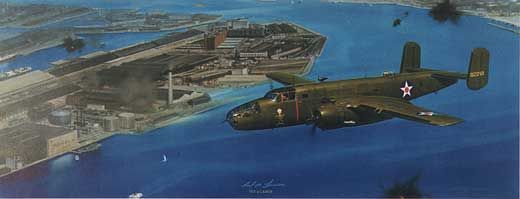
We few, We happy few, We band of brothers
-
Demosthenes

- Posts: 525
- Joined: Thu Dec 08, 2005 6:41 pm
- Location: Los Angeles CA
RE: Operationally - Why Japan lost...
All things considered I'm thinking reason #2 was the closest to the mark.[;)]
-
jwilkerson

- Posts: 8272
- Joined: Sun Sep 15, 2002 4:02 am
- Location: Kansas
- Contact:
RE: Operationally - Why Japan lost...
The balance of the historical research seems to feel that Japan effectively had lost the war by starting it. Or re-stated - that in any "on paper" analysis of the situation, the war was hopeless.
But the Japanese had two previous "wars" with major Western powers - and had come out victorious - so they were at least dazzeled by their own successes in these previous encounters.
What they lacked in WWII was anyone to help them end it.
The war against America was a "limited" war, which means they knew they would not acheive "total victory" .. that is they would not capture Washington DC and dictate terms from the steps of the White House. They were counting on some other way to end the war.
Against Russian, they had the "good offices" of the USA to mediate. And the war against Russia was certainly also a "limited war" .. the Japanese could not have invaded St. Petersberg and driven South to capture Moscow. So in that war also they didn't a way to end it - except via a negotiated peace.
Against Germany, they had the full weight of the Allied powers on their side. The Japanese did pretty darn well for themselves in WWI.
But if you look at the resources and industrial capacity available to the US versus Japan, the USA could out produce Japan by a factor of about 10 to 1. From a manpower perspective, the difference was hardly as great, but the Japanese were also fighting the Chinese and "watching" the Soviets and these "fronts" occupied the attention of a good chunk of the military manpower. And these two "theaters" were in play, before the attack on the USA ever happened.
So Japan's chances boil down to destroying the enemy's "will to fight" ... any effort to beat the USA in a attrition war ( as in fact happened ) would be doomed to failure.
Unfortunately, the majority of Japanese leadership completely mis-judged the USA "will to fight" and how to influence that "will to fight" .. even the vaunted Admiral Yammamoto contributed to the problem by suggesting the attack on Pearl Harbor. This act, at one stroke put the Japanese in a extreme deficit in the "will to fight" account of the USA vis-a-vis the Japanese.
Was it 100% hopeless - no - we could never say that when talking about a major war - there are too many variables. Under just the right circumstances, the South could've won the equally hopeless civil war ( by somehow gaining recognition by France or Britain - though they would've almost certainly had to abandon slavery as an institution to get that recognition ). Had the Japanese won the battle of Midway or Won the Guadalcanal compaign .. who knows. Maybe a series of defeats would've tempered the eire of the American public. I really can't imagine that happening, but I'm a methematian by training, and I cannot rule something out completely unless the probability is ZERO. Which it is not.
But as long as Japan is fighting an attrition war - she will lose - that much seems clear - so after Midway .. and certainly after the evacuation of Guadalcanal ... Japan's chances would have to be rated at "epsilon" ( a concept we mathematicians use to decribe a number greater than zero - but smaller than any number you can name ! ).
So a "winnning" strategy has to include retaining the initiative and continuing to chaulk up victories over the USA and continuing to do this time and time again, until the USA has to pull back ... at that point .. maybe .. the "Europe First" strategy kicks in ... and the "defend in the Pacific" plan kicks in as well ( and these were called for at the time ). The USA would still have eventually have the material to return and win - but would they have the will. We can't answer that - all we can say it this is about the best the Japanese can do. And then again China, can they get a settlement there ? Maybe, if the Chinese decide that USA will NOT win the war for them - then maybe they will "settle" - though any settlement with the Chinese has to be viewed from the perspective of "talk today - fight tomorrow - fight today - talk tomorrow" ...so you never really have peace with China if you have something they want ( like their coastal provinces ! ). So not sure this quagmire ever gets relieved for the Japanese either, but maybe the intensity is reduced for a time.
Note that this "strategy" of retaining the initiative and trying to continue to gain victories, was exactly what the Japanese were trying to do. But in the event it didn't work - they lost at Midway and they lost in the Guadalcanal campaign and then it was much more like over. So, they have to fight the Midway's and the Guadalcanals to retain the initiative and get victories .. but they actually have to win. And they pretty much have to win every time. One Coral Sea, they could suffer .. but probably not a second one. And that is a pretty tough order. But it isn't totally impossible.
As to ASW warfare .. the Japanese completely missed the boat in this department. One senior Japanese Naval Officer who was a part of the Grand Escort comand, even kind of blames this on the Japanese "culture" .. saying this type of warfare really just wasn't something they could understand. But by the time the war starts, the Japanese are needing to play catch up .. and they don't really get serious about starting until mid-1943 .. and needless to say it is too late by then. Even the British had a tough time remembering how to deal with submarines for the first two years of the war - and they had no excuses !!! But if you could imagine a half dozen "Johnny Walker-San" destroyer captains in the IJN who ... do ASW exceedingly well .. and who advocate for ASW loudly and continuously and who are willing to get fired for it ... and who won't take no for an answer ... and have these guys active from day one of the war ... then maybe that would make a difference ... but these guys just didn't exist ...
So yes Japan can delay .. but delaying in an attrition war is hopeless ... kciking the pants out of the Allies throughout the course of 1942 .. getting them to abandon the Pacific except for West Coast USA defense and fight in Europe ... that is the one chance ... and even then .. what happens after that ? No answer - but I can't imagine anything better.
WITP Admiral's Edition - Project Lead
War In Spain - Project Lead
War In Spain - Project Lead

RE: Operationally - Why Japan lost...
I personally think Japan could've knocked Pearl off the map, sunk most/all of our carriers, and still lost in a timlely fashion. Had any of the above occurred, FDR's position with Churchill regarding priorities would've been different, and the US would have altered production to make up for it.
It's truly intimidating when you think of the comparative industrial might of the United States versus Japan.
It's truly intimidating when you think of the comparative industrial might of the United States versus Japan.
-
diesel7013
- Posts: 245
- Joined: Thu May 02, 2002 7:21 am
- Location: Texas
RE: Operationally - Why Japan lost...
Understand all that - what operational decisions did Japan make to shorten the war - and what could she have done to lenghthen the war??
We few, We happy few, We band of brothers
RE: Operationally - Why Japan lost...
One of the most fateful operational decisions certainly has to be to split the KB and attack towards the S (Port Moresby), E (Midway) and NE (Aleutians) all pretty much at the same time. For the first time the US was able to meet the Japanese with something like equal force (at least in terms of airpower). The results of those meetings determined that Japan's control of the war's direction was pretty much finished.
-
jwilkerson
- Posts: 8272
- Joined: Sun Sep 15, 2002 4:02 am
- Location: Kansas
- Contact:
RE: Operationally - Why Japan lost...
ORIGINAL: spence
One of the most fateful operational decisions certainly has to be to split the KB and attack towards the S (Port Moresby), E (Midway) and NE (Aleutians) all pretty much at the same time. For the first time the US was able to meet the Japanese with something like equal force (at least in terms of airpower). The results of those meetings determined that Japan's control of the war's direction was pretty much finished.
Good point - but for that matter - skipping the tour through the Bay of Bengal wouldn't hurt - then KB doesn't get so worn out that it needs to rest. The enemy to be beaten was the US - focus, focus, focus.
WITP Admiral's Edition - Project Lead
War In Spain - Project Lead
War In Spain - Project Lead
-
Treetop64
- Posts: 933
- Joined: Tue Apr 12, 2005 4:20 am
- Location: 519 Redwood City - BASE (Hex 218, 70)
RE: Operationally - Why Japan lost...
Here is an excellent resource of information regarding this subject:
www.combinedfleet.com
Not only is this among the most informative sites I've ever read regarding the IJN, it is quite entertaining to read as well! The author and his cohorts did a very good job putting this stuff together. Highly recommended.
www.combinedfleet.com
Not only is this among the most informative sites I've ever read regarding the IJN, it is quite entertaining to read as well! The author and his cohorts did a very good job putting this stuff together. Highly recommended.


RE: Operationally - Why Japan lost...
Understand all that - what operational decisions did Japan make to shorten the war - and what could she have done to lenghthen the war??
One of their big mistakes was that they concentrated on building offensive power and put very little emphasis on defensive power. There military philosophy was to take the fight to the enemy and destroy him before he could get into position to attack. That's why the Zero sacrificed durability for range, why they built ships with big guns and few AA guns. It's also why their destroyers had good offensive punch but little ASW equipment. Never having waged or suffered an unrestricted submarine war, they didn't appreciate the dangers it represented to a maritime nation like Japan. They should have recognized what the submarine could do from WWI. They knew the US had a sizeable submarine fleet.
They failed to develop an effective defensive fighter to counter heavy bombers. They didn't think the B-17 and other 4Es represented a threat because they would attack the airfields before hand. They simply didn't put much effort into any system that was defensive in nature. Even radar was considered defensive in nature because they thought of it as an "early warning" device. They actually led the US and the Brits at one point in radar development by developing the magnetron. But then they set it aside.
Once their offensive power was blunted at Midway and Guadalcanal, they had no effective plan for being on the defensive. Even the Kamikaze was thought of in offensive terms, though in reality it was strictly a last ditch defensive measure. Probably their biggest miscalculation was failing to recognize that the Allies might not be willing to wage war in the same manner as they did. The classic example is the turning dogfight vs the boom and zoom tactic. To them, the boom and zoom was a cowardly way to wage war. They just couldn't understand why an enemy would fight in this "dishonorable" way.
The economic issues everyone knows. Yamamato was intimately familiar with American industrial capacity and warned Japan's leaders that they could only be successful for 6 months to a year but after that America's industrial weight would bury them.
Looking back, its hard to fathom how they could seriously think they could win even a limited engagement with the US and its allies. Even had they won Midway and Guadalcanal, it would have only postponed the inevitable allied offensive by a year or so.
Chez
Ret Navy AWCS (1972-1998)
VP-5, Jacksonville, Fl 1973-78
ASW Ops Center, Rota, Spain 1978-81
VP-40, Mt View, Ca 1981-87
Patrol Wing 10, Mt View, CA 1987-90
ASW Ops Center, Adak, Ak 1990-92
NRD Seattle 1992-96
VP-46, Whidbey Isl, Wa 1996-98
VP-5, Jacksonville, Fl 1973-78
ASW Ops Center, Rota, Spain 1978-81
VP-40, Mt View, Ca 1981-87
Patrol Wing 10, Mt View, CA 1987-90
ASW Ops Center, Adak, Ak 1990-92
NRD Seattle 1992-96
VP-46, Whidbey Isl, Wa 1996-98
-
AmiralLaurent
- Posts: 3351
- Joined: Tue Mar 11, 2003 8:53 pm
- Location: Near Paris, France
RE: Operationally - Why Japan lost...
In real life, the Japanese Navy had far more fuel shortages that we have in WITP. It was one of the reasons because they commited peacemeal off Guadalcanal, for example, rather than sending all available BBs here.
Actually the KB tried several times in 1943 to intercept US CV raids in the Pacific. At this time USN was sending 2-3 CV raiding Wake and so on. Had one intercept succeeded, it would very probably be a reverse Midway and everybody will now say it was a stupid idea.
As for dividing the KB between Coral Sea, Midway and the Aleutians, every Japanese player in WITP had this choice to made one time to advance only on one theater or try to advance in weakly defended areas in several places. The AAR section is full of such cases of baby KB defeated or at least badly hit by Allied LBA or CVs.
Last but not least, WITP Japanese players know about Ultra. They don't know what the enemy knows, but they know that he may know everything, while Japanese were quite sure to have some days off Midway before US CVs will arrive.
I agree with the statement that the Japanese strategy was fully offensive. Their philosophy of war was to strike the enemy until it was destroyed or lost the will to fight. On the other hand Japan had no means to win a defensive war against USN industrial power, and at least Yamamoto knew that.

RE: Operationally - Why Japan lost...
Hi all,
Just one small correction to otherwise great analysis... the "Ultra" was in Europe (i.e. UK vs. Germany dechipering effort) whilst "Magic" was US effort vs. Japan...
BTW, yes... I do have _HUGE_ book by David Kahn "Codebreakers"... it is 1000+ pages of hardcore reading for maniacs... [;)]
Leo "Apollo11"
ORIGINAL: AmiralLaurent
Last but not least, WITP Japanese players know about Ultra. They don't know what the enemy knows, but they know that he may know everything, while Japanese were quite sure to have some days off Midway before US CVs will arrive.
Just one small correction to otherwise great analysis... the "Ultra" was in Europe (i.e. UK vs. Germany dechipering effort) whilst "Magic" was US effort vs. Japan...
BTW, yes... I do have _HUGE_ book by David Kahn "Codebreakers"... it is 1000+ pages of hardcore reading for maniacs... [;)]
Leo "Apollo11"

Prior Preparation & Planning Prevents Pathetically Poor Performance!
A & B: WitW, WitE, WbtS, GGWaW, GGWaW2-AWD, HttR, CotA, BftB, CF
P: UV, WitP, WitP-AE
RE: Operationally - Why Japan lost...
They simply didn't put much effort into any system that was defensive in nature. Even radar was considered defensive in nature because they thought of it as an "early warning" device.
CAP and fleet defense for the Kido Butai are prime examples of such systems . As described in "Shattered Sword" protection afforded by the Japanese system was pathetically deficient. Placing the carriers at the center of the formation was virtually the only thing similar to an American CVTF. Even there though the carriers were separated from each other and most of their screens by 2-3 miles. The flak guns of the vast majority of the ships in the TF were too far away to support a carrier under attack. Other than apparently being assigned a sector to cover with CAP each carrier fulfilled its assignment in whatever way that suited its flight deck control officer at any given moment(can't remember the title but this officer was charged with managing any and all evolutions on the flight deck and apparently in the hangar deck as well). Shotai of fighters operated pretty much independently of both the ship and other shotai while airborne. Coordination of seperate a/c within shotai or between shotai was accomplished principally through hand signals. Threat information was passed to the CAP with smoke screens and main gun salvos in the direction of approaching enemy a/c. The completely uncoordinated nature of the various elements defensively could practically be guaranteed to fail if an enemy ever managed to put together a strong attack of his own. And it did fail in every battle in which it was put to the test.
In a related vein, fighter escort of IJN bombers was thought of as somewhat defensive and therefore of less importance. Hiryu's first strike against Yorktown had an escort of 6 Zeros. While still approaching Yorktown, the escort force sighted some US SBDs flying parallel to and below the IJN strike. The fighters abandoned their charges to attack the SBDs. The American CAP then got to initially intercept the bombers when they were without any escort. After this raid Hiryu only had 5 serviceable dive bombers. I believe another Zero escort did much the same thing at Santa Cruz, left their charges in order to attack some US planes encountered enroute to the target (though I believe that this time the US planes were still loaded and headed towards the KB). In any case the American CAP had an easier time inflicting losses on the IJN raid as a result. Japan lost far more of its naval aviators at Santa Cruz than at Midway in any case.
RE: Operationally - Why Japan lost...
Not discussing Strategic reasons like:
1. Japan should have built 10 more carriers before Pearl
2. Japan should have just not gone to war, and what all...
But, more of theater or operational reasons why Japan lost the war -
There were at least 3 "operational" decisions that IMHO had a wide reaching effect on the war and they all seem to be related to the Japanese leadership training.
1. The aforementioned failure of Admiral Nagumo to repeat the strikes at Pearl Harbor to destroy the oil tanks.
2. The failure of the Japanese to press the attack on Port Moresby after the Battle of the Coral Sea.
3. The failure by Admiral Kurita to press on to Leyte Gulf with his heavy surface units after the IJN had successfull lured Halsey away from San Bernadino Strait.
The first and second decisions would probably not have changed the outcome of the war unless, as has been mentioned, it prolonged the war to the point where the American people would no longer accept the casualties.
The 3rd decision could have been devastating had Kurita gotton into Leyte Gulf, and wreaked havoc among MacArther's transports and the landing beaches. It would IMHO have been almost as bad as if the invasion of Normandy had been driven into the sea and would have taken a long time to recover from.
As for a small nation, with limited resources, defeating a larger more powerful nation by making it lose it's will to fight, well, that's exactly what Vietnam did to the US.
It might also be kept in mind that Japan did not want to conquer the US, or Australia. It simply wanted to neutralize any threat to its assault on the resources of the DEI. Victory disease did however, modify this attitude later.
"Those who don't remember History are condemned to relive it" George Santayana
-
captskillet
- Posts: 2493
- Joined: Fri Feb 28, 2003 10:21 pm
- Location: Louisiana & the 2007 Nat Champ LSU Fightin' Tigers
RE: Operationally - Why Japan lost...
yall get much white stuff the other day Diesel??? I was down at my camp on Caddo and we got a little sleet and thats it.
As far as the operational reasons they lost I think the main reason was their willingness to turn every battle into a 'battle of attrition' which they never had a chance to win with our firepower and production edge and as jwwilkerson said they lost the 'head' war when they did Pearl Harbor for as Adm.Yamamoto said "I fear that we have awakened a sleeping giant and filled him with a terrible resolve".
As far as the operational reasons they lost I think the main reason was their willingness to turn every battle into a 'battle of attrition' which they never had a chance to win with our firepower and production edge and as jwwilkerson said they lost the 'head' war when they did Pearl Harbor for as Adm.Yamamoto said "I fear that we have awakened a sleeping giant and filled him with a terrible resolve".
"Git thar fust with the most men" - Gen. Nathan Bedford Forrest
-
AmiralLaurent
- Posts: 3351
- Joined: Tue Mar 11, 2003 8:53 pm
- Location: Near Paris, France
RE: Operationally - Why Japan lost...
Kurita's failure has been discussed for a long time. But he hasn't even 1/10 of the shells necessary to sink all USN ships (more than 1000 IIRC) in the Leyte Gulf, and then would be almost certainly be caught by the fast carriers and most of its force destroyed... Not that it will change much, as they were almost no more used later (except as targets for US airmen and submarines).
The fact is that Kurita's was unable to destroy a CVE group, suffering 3 CA sunk and other ships damaged in this action for sinking a CVE and 3 (or 4) DD/DE. Even if the BB that had been engaged in Surigao battle were short of shells, they, and their escort, would have been a more formidable opposition.
Tanaka's retreat at the end of the Savo battle is another example of "mistake" often critisized. Except that Tanaka has no way to know that US CV retired from the area and so was right to retire from the area IMOO. And he had no way to know Guadalcanal will be the theater of a major battle, it was just another unimportant tropical island at the time.
I think the operations that may have delayed Allied advance were those where IJN managed to achieve local superiority in 43 or 44. But no battle occured in these cases. The US CV raid in 1943 in Pacific may have turned badly as I said before. The KB had the ships, AC and fuel necessary to intercept these (it sortied 3 times to intercept raids, real or expected) but not enough fuel to patrol closer to the "frontline".
Another missed occasion was in June 1944 when the Japanese Navy was ready to strike at Biak with full force and then diverted to the Mariannas. As we know now, their intervention here only slowed operations for some days, while they may have dealed far greater damage to Allied shipping around Biak.
-
jwilkerson
- Posts: 8272
- Joined: Sun Sep 15, 2002 4:02 am
- Location: Kansas
- Contact:
RE: Operationally - Why Japan lost...
Tanaka's retreat at the end of the Savo battle is another example of "mistake" often critisized. Except that Tanaka has no way to know that US CV retired from the area and so was right to retire from the area IMOO
Tanaka is strange spelling for Mikawa ( in this case ) [:D][:D][:D]
WITP Admiral's Edition - Project Lead
War In Spain - Project Lead
War In Spain - Project Lead
-
Tom Hunter

- Posts: 2194
- Joined: Tue Dec 14, 2004 1:57 am
RE: Operationally - Why Japan lost...
Don't look at Japanese industrial - production policy for answers that involve an increase in production. Japan started the war behind and was eating muscle (when you are starving first your body consumes fat to stay alive, then muscle) almost from the start.
There might have been some benefits to changing priorities the classic example being cancel Shinano and build escorts but it is doubtful that would have made any real difference. Shinano absorbed the engines of 4 or 6 escorts, I remember she got DD turbines but not how many. She absorbed the steel of as many as 30 escort vessels depending on how big they are. But realistically the steel is not the limiting factor, the machined parts are, and even if the Japanese had managed 30 small ships from her materials so what?
One area of human knowledge that has advanced a lot over the last 20-30 years is understanding of how human organizations respond to opportunities and threats. Japanese leadership in the 30s and 40s had substantial systemic problems that made failure in any major, multi-year undertaking likely. A good short example of this is the tendancy of certain segments of the army to assasinate anyone who expressed an opinion they disagreed with.
I agree that answer number 2 in the right one. I don't think Japan was likely to do much better than historical, in fact Japans performance in the early war was amazing, in some ways it is suprising that she did so well for as long as she did.
-
TulliusDetritus

- Posts: 5581
- Joined: Thu Apr 01, 2004 1:49 am
- Location: The Zone™
RE: Operationally - Why Japan lost...
Amiral Laurent,
but the japanese sent the Hiei and Kirishima to Guadalcanal. Both were lost in... 48 hours! The japanese just concluded "two big ships lost in 48 hours is excessive. Let's send the 'Tokyo Express' again instead". And they never tried to commit the big ships again. Not saying your fuel hypothesis is 100% wrong though. You have probably much more information than me.
To all,
your point of view is too radical: you only see "exterminators" and "exterminated". Do not forget the other possibility: a "negotiated peace". Remember the Battle of Midway. One of Yamamoto's objectives (had Japan won): a negotiated peace (he would have pressed the japanese government). The japanese did not know that the allies would fight a "total war". They failed to understand this: a strategic mistake.
"Hitler is a horrible sexual degenerate, a dangerous fool" - Mussolini, circa 1934
-
AmiralLaurent
- Posts: 3351
- Joined: Tue Mar 11, 2003 8:53 pm
- Location: Near Paris, France
RE: Operationally - Why Japan lost...
ORIGINAL: jwilkerson
Tanaka's retreat at the end of the Savo battle is another example of "mistake" often critisized. Except that Tanaka has no way to know that US CV retired from the area and so was right to retire from the area IMOO
Tanaka is strange spelling for Mikawa ( in this case ) [:D][:D][:D]
You're right [&o], I guess I played too much UV and WITP [8|]
-
AmiralLaurent
- Posts: 3351
- Joined: Tue Mar 11, 2003 8:53 pm
- Location: Near Paris, France
RE: Operationally - Why Japan lost...
ORIGINAL: TulliusDetritus
Amiral Laurent,
but the japanese sent the Hiei and Kirishima to Guadalcanal. Both were lost in... 48 hours! The japanese just concluded "two big ships lost in 48 hours is excessive. Let's send the 'Tokyo Express' again instead". And they never tried to commit the big ships again. Not saying your fuel hypothesis is 100% wrong though. You have probably much more information than me.
To all,
your point of view is too radical: you only see "exterminators" and "exterminated". Do not forget the other possibility: a "negotiated peace". Remember the Battle of Midway. One of Yamamoto's objectives (had Japan won): a negotiated peace (he would have pressed the japanese government). The japanese did not know that the allies would fight a "total war". They failed to understand this: a strategic mistake.
About the fuel situation, there is a in-depth analysis somewhere on the Net about the fuel situation during the Guadalcanal battle. IIRC correctly if IJN gathered all available BB they would not have been able to sail them to Guadalcanal and come back to Truk...
About your second point, the original question was about operationnal mistakes that could have delayed the outcome, not about Japan winning the war. That was impossible from the start, as the US will to fight back was far bigger than what Japanese thought of weak Western mind. In this scope, the goal of the Japanese was not to exterminate the US forces, or the USA, but to hit them hard. On the other hand, starting from 1944, any battle may finish with the extermination of the IJN (Leyte Gulf was close to achieve it).