


i think there is a easy solution for this debate:
ask yourself the following question:
if you were a WW2 navy pilot, which plane would you prefer to sit inside and to dogfight with? the A6M2/A6M3 or the F4F?
i for myself would prefer a plane, which can take a lot of punishment, has a good armament and gives the pilot a great surviving chance. i would not like to sit inside a plane, which explodes when a single bullet hits its fuel tanks.
the wildcat was without a chance against the zero until the navy pilots found out, that simply turning into a attacking zero and useing the thach-weave when attacked by a zero will give the wildcat a huge advantage above the zero...espacialy against the japanese pilots, who made a lot of frontal attacks because of their aggressive samurai and bushido spirit.
Flying torches
Moderators: Joel Billings, Tankerace, siRkid
RE: Flying torches
Ike, word of advice, welcome or not. Hope you take it the way I intend it.
I debate like you IRL. This is not my subject at all, but even if it was..on the internet you have to soften it quite a good deal as a lot is lost in translation. I thought you defended your points very well. In fact, if armed with your info, its exactly how I'd attack to win IRL and often do.
Very easy to take things the wrong way over the internet, and while I recognized this and thought it was a safe assumtion thats how you attacked someones points IRL, it goes over real bad on the net.
My post here is a prime example of something that can go horribly wrong, but would be quite reasonable if we were sitting down having coffe and something I would normally avoid. Only take the risk of offending you because I honestly believed throughout you were debating the issue and not attackng the person.
Si yo estuviera debatiendo a cerca de "wildcat" y "zero" en la mesa de la cocina con mdielhl mientras tomamos un cafe, yo diria lo mismo que estoy escribiendo aqui. Lo que escribo aca suena bastante razonable para mi y no agresivo como vos decis. Honestamente yo no estoy seguro de cual parte decis que yo fui agresivo. Ademas algunos de extrema derecha aqui me han dicho en estos foros y en mensajes privados que son peores que lo que yo he dicho de ellos. Ellos frecuentemente me atacan en lo personal a mi y a mi pais, entonces yo respondo del mismo modo. Bueno, en fin, esto es asi.
Hope nothing is lost in translation among hig-ly educated people.
¨If you tremble with indignation at every injustice, then you are a comrade of mine.¨ Che Guevara
The more I know people, the more I like my dog.
The more I know people, the more I like my dog.
RE: Flying torches
He dove down on a Zero ¨lined it up¨ and shot. Then, he says the Zero began twisting and turning. etc
That is not correct. It isn't what the combat narrative says. You just made up every sentence of that. Thus, that which you wrote is a fictitious narrative that you have attributed to Smith, just as you have attributed fictitious claims to the people here who have not bought into your agenda.
You said Bauer was last seen by Voss doing a head on Pass against a Zero.
Nope. Perhaps you should reread what I said. Given your reluctance to substantiate sources I doubt you will. What I said was that according to FOSS, he and Bauer were ambushed from behind. Bauer was able to reverse and put the Zero into a head to head fight. I don't know how you imagine an F4F driver could take a Zero from his six o' clock relative and put it into his 12 o' clock relative without "out maneuvering" the Zero. Perhaps you imagine he used a crystal ball, a magical spell, or one of those space aliens in which you believe.
I have, You.
Only in your imagination.
You weren´t selling Wildcat manuverability and ability to dog fight with Zeros?
Nope. Any honest person would take what I actually wrote as representative of my opinion, rather than desperately trying to construct a straw man argument. For the sixth, seventh, maybe eighth time, I note that the Zero was easily more maneuverable at speeds below 270 mph. The F4F was more maneuverable at high speed. I've provided you with plenty of sources on F4Fs turning with or inside Zeros when both are at high speed. You claim that I have not provided those sources. Charitably stated, your claim is not correct. The fact that you are unwilling to attempt to read them seems indicative more of a dogmatic faith in your perception, rather than the ability to reason critically and reflect on evidence.
mdiehl, A Zero can out turn a F-15 at 100 mph, so ¨under the right circumstances¨ a Zero is more manuverable and can dog fight and win against an F-15 with guns only.
I'll run with your failed attempt at reducto ad absurdem for a moment, because it does in fact illustrate the flaws in your understanding of the abilities of A6Ms and F4Fs. A Zero could easily out turn an F-15. I'm guessing it could do so at much higher airspeeds than 100 mph. I doubt that a Zero could keep an F-15 in gun range at any airspeed long enough to hit it though. That is an important difference. When F4Fs and Zeros maneuvered at high speed, an F4F had sufficient energy and better control surfaces that allowed it to stay with a Zero and keep its guns on the Zero long enough to inflict critical damage. It helped, alot, that the A6M was a flimsy aircraft, and that the BMG .50 call could impart 12,000 foot-pounds of energy at ranges of 200m (in comparison with, for example, the 2000 ft-lbs of energy of a typical rifle-caliber machine-gun round).
Trying to say I don´t understand the circumstances and draw incorrect conclusions in one section.
It is regrettable that you take it personally. Nevertheless, the suggestion that the Japanese were particularly disadvantaged by the situations of combat over Guadalcanal in 1942 has no merit in fact. You could read about it, but I'm pretty sure you're not interested in the details.
Then in the next trying to compare the Zeros and Wildcats over Quadalacanal with Zeros and Hellcats over Rabaul just offers up more proof you really don´t have a firm understanding of the subject matter.
I have a superior understanding, by vast margins, of air combat over the solomons, than yours. Perhaps you should read about it. There are some sources (already provided) that you could consider. More to the point, your claim was that the Zero, being a "better plane" (according to you) was handicapped by a long flight from Rabaul to Guadalcanal, and therefore the favorable (to the IJN) kill ratio means that the Zero+pilot was in essence considerably better (more lethal, more combat effective, choose what language you will), than the F4F+pilot.
All I did was point out that operating under similar circumstances of long range, Allied pilots attacking Rabaul had no difficulty with the Zero.
I also pointed out that in the carrier vs carrier engagements, ALL of which occurred at ranges favorable to the A6M, the F4F drivers consistently won. You'd like to ignore that fact, but it's still there. You could read about it, but I'm pretty sure you're not interested in the details.
But we don´t agree and there it is.
That is because your position is built around an unsubstantiated stereotype, dogmatically reinforced by your deliberate ignorance of material that does not conveniently line up with your view.
Show me a fellow who rejects statistical analysis a priori and I'll show you a fellow who has no knowledge of statistics.
Didn't we have this conversation already?
Didn't we have this conversation already?
RE: Flying torches
Eh.I could write something in Hawaiian that would be witty but that would take too much time.
RE: Flying torches
If I were debating about "Wildcat" and "zero" on the kitchen table while we mdielhl with a cup of coffee, I diria the same thing I'm writing here.What I write here sounds quite reasonable to me and not aggressive like you decis. Honestly I am not sure which part decis that I was aggressive. In addition, some right-wing here have told me in these forums and private messages that are worse than what I have said about them. They frequently attack me on what my staff and my country, then I respond the same way. Well, finally, this is so.[/align] [/align]_-_-close?[/align]
RE: Flying torches
ORIGINAL: OG_Gleep
If I were debating about "Wildcat" and "zero" on the kitchen table while we mdielhl with a cup of coffee, I diria the same thing I'm writing here.What I write here sounds quite reasonable to me and not aggressive like you decis. Honestly I am not sure which part decis that I was aggressive. In addition, some right-wing here have told me in these forums and private messages that are worse than what I have said about them. They frequently attack me on what my staff and my country, then I respond the same way. Well, finally, this is so.[/align] [/align]_-_-close?[/align]
You are a cheerleader.... I'm having more fun reading the side commets than the 'discussion' that is going on.
Just an FYI there is at least one recorded incident where a Huey (chopper) shot down a MIG, which, using current logic, means that the Huey is a better A/C (?) than the MIG. [:D]
RE: Flying torches
I could write something in Latin or by god Elvish but then I'd look like an elitist snob. [;)]
Various combat narratives of F4Fs that maneuvered Zeroes out of their six o'clock and into their 12 o'clock. I don't see how one can achive such a feat without "out maneuvering" the Zero unless the Zero pilots really were talentless boobs even in 1942.
Joe Foss:
There was, many years ago, an interesting bull session between historian John Lundstrom and Erikson Shilling (for those who don't know, a P-40 driver from the AVG). After extensive interviews with USN and USMC pilots who flew out of Guadalcanal, Lundstrom summarized Joe Foss' opinion of how F4Fs could successfully fight A6Ms as follows. Since Ike won't read Lundstrom's peer-reviewed public works, he'll have to settle for Lundstrom's 1 paragraph internet summary:
Lundstrom conversing w/ Shlling
(emphasis added by me)
Long meandering archived discussion at:
http://yarchive.net/mil/thach_weave.html
Various combat narratives of F4Fs that maneuvered Zeroes out of their six o'clock and into their 12 o'clock. I don't see how one can achive such a feat without "out maneuvering" the Zero unless the Zero pilots really were talentless boobs even in 1942.
Joe Foss:
Joe was leading an interception on morning of the 18th when the Zero top cover pounced on them and downed an F4F. But Foss was able to get above them and flamed the nearest, hit another, and briefly engaged a third. Gaining an angle, he finally shot up the third plane's engine. Next he found a group of Bettys already under attack by VF-71. He executed a firing pass from above, flashed through the enemy bombers, and pulled up sharply, blasting one from below. ..
'Cactus Fighter Command' struggled to keep enough Wildcats airworthy to meet the daily Japanese air strikes. On the 23rd, it put up two flights, led by Foss and Maj. Davis. There were plenty of targets and Joe soon exploded a Zero. He went after another which tried to twist away in a looping maneuver. Joe followed and opened up while inverted at the top of his loop. He caught the Zero and flamed it.
Despite rugged living conditions and the stress of daily combat flying, Foss retained his enthusiasm. He and some other fliers of VMF-121 occasionally went prowling with their rifles in the jungle, looking for Japanese soldiers, but Col. Bauer stopped this activity; trained fighter pilots were too valuable to risk this way. They slept in six-man tents and ate the wretched powdered eggs that are mentioned in almost every pilot's memoirs. On guy had a gramophone that they played scratchy records on. They bathed in the Lunga River; many grew beards rather than try to shave in cold water. They kept the beards neatly trimmed, not for appearances, but to ensure their beards didn't interfere with the close-fitting oxygen masks. 'Washing Machine Charlie' and 'Millimeter Mike' harassed the field nightly, so some pilots tried to sleep in the daytime.
There was, many years ago, an interesting bull session between historian John Lundstrom and Erikson Shilling (for those who don't know, a P-40 driver from the AVG). After extensive interviews with USN and USMC pilots who flew out of Guadalcanal, Lundstrom summarized Joe Foss' opinion of how F4Fs could successfully fight A6Ms as follows. Since Ike won't read Lundstrom's peer-reviewed public works, he'll have to settle for Lundstrom's 1 paragraph internet summary:
Lundstrom conversing w/ Shlling
When attacked by Zeros, the key was to scissor and turn into the incoming Zeros for a head-on pass. If a Zero jumped his tail, the F4F pilot was to "cut the throttle, slip, skid, and otherwise kick it around until the Zero overruns, then pour on the coal and let 'em have it." Under no circumstances was the F4F to turn tail and run. The Marines had confidence in their armor, protected fuel tanks, and rugged Pratt & Whitney radial engine.
(emphasis added by me)
Long meandering archived discussion at:
http://yarchive.net/mil/thach_weave.html
Show me a fellow who rejects statistical analysis a priori and I'll show you a fellow who has no knowledge of statistics.
Didn't we have this conversation already?
Didn't we have this conversation already?
RE: Flying torches
Just an FYI there is at least one recorded incident where a Huey (chopper) shot down a MIG, which, using current logic, means that the Huey is a better A/C (?) than the MIG
Running with this example that you have raised, although of course we are talking a hypothetical circusmtance, were it the case that Hueys in sustained air to air combat campaigns achieved a 1:1 loss ratio against MiGs I'd say that "the Huey+pilot was as effective a fighter as the MiG+pilot." I'd also want to know how the Huey drivers used their a.c. and under what circumstances they were able to get the drop on MiGs.
Show me a fellow who rejects statistical analysis a priori and I'll show you a fellow who has no knowledge of statistics.
Didn't we have this conversation already?
Didn't we have this conversation already?
RE: Flying torches
Think this is the first time I have been happy about being called a cheerleader [:D]

RE: Flying torches
Mdiehl- I've noted a few times you've spoke about the differing kill ratios of the USN/USMC F4F pilots. I'm left to wonder how much the supply situation at Guadalcanal in parts and stores had to do with the lesser performance by these gentleman than their USN counterparts.
I haven't read Beregund as of yet but does he or any of your other sources get into that aspect.
On a side note , I remember Thomas Miller wrote about fatigue and such and the pilots started to get rotated out after 3 weeks if memory serves me correctly in Cactus Air Force.
This thread has been interesting reading thanks to all who have contributed.[:)]
I haven't read Beregund as of yet but does he or any of your other sources get into that aspect.
On a side note , I remember Thomas Miller wrote about fatigue and such and the pilots started to get rotated out after 3 weeks if memory serves me correctly in Cactus Air Force.
This thread has been interesting reading thanks to all who have contributed.[:)]
"There’s no such thing as a bitter person who keeps the bitterness to himself.” ~ Erwin Lutzer
RE: Flying torches
Heres an interesting link about Kill/Loss:
http://www.ww2aircraft.net/forum/aviation/hawker-hurricane-mk-iib-vs-grumman-f4f-4-wildcat-1550-2.html
May not be exactly what you were asking, don't know if its right or not, but I enjoyed reading it.
http://www.ww2aircraft.net/forum/aviation/hawker-hurricane-mk-iib-vs-grumman-f4f-4-wildcat-1550-2.html
May not be exactly what you were asking, don't know if its right or not, but I enjoyed reading it.
RE: Flying torches
One more source material for you mdiehl to weigh in on your final conclusion...
Interview of Lieutenant Commander John S. Thach, U. S.N.
Commanding VF-3, U.S.S. SARATOGA
in the Bureau of Aeronautics
August 26, 1942
¨The only way we can ever bring our guns to bear on the Zero fighter is to do it when they are preoccupied shooting another one of our planes, or else trick the Zero into recovering in front of us.¨
With this. To show you what a nice person I am. I´ll leave you with the last word.
Interview of Lieutenant Commander John S. Thach, U. S.N.
Commanding VF-3, U.S.S. SARATOGA
in the Bureau of Aeronautics
August 26, 1942
¨The only way we can ever bring our guns to bear on the Zero fighter is to do it when they are preoccupied shooting another one of our planes, or else trick the Zero into recovering in front of us.¨
With this. To show you what a nice person I am. I´ll leave you with the last word.
¨If you tremble with indignation at every injustice, then you are a comrade of mine.¨ Che Guevara
The more I know people, the more I like my dog.
The more I know people, the more I like my dog.
RE: Flying torches
@ Ike
Thach was one of the guys who was vociferously critical of the F4F. His opinion differed from the opinions of Joe Foss, Bauer, O'Hare, Smith and others. Thach, in the same report that you cite (IIRC) also mentions that their favorable kill ratio (F4Fs beating up Zeroes) was largely a consequence of the overall superiority of American pilots that made up for the shortfalls of what he felt was a crummy plane. You seem quite dedicated to the task of cherry picking the works of the few pilots who were most critical of the F4F (although you seem quite willing to disregard Thach's assessment of Japanese pilot quality). That sort of thing is one of the reasons why in my view anecdotes aren't worth a whole lot as measures of capability or, in the statistical world, central tendency.
I've provided you not only with three peer reviewed scholarly works on the matter, but now I have also provided you with Joe Foss and Bauer's opinions that specifically contradict Thach. Hanging on Thach's opinion without concern for the range of opinion on the matter strikes me as evidence of a willful blindness to information that is inconvenient to your world view.
@SuluSea
I think it had alot to do with it. The kill ratios that I talled from Guadalcanal were gleaned from Richard Frank's appendix on combat losses. One of the problems, however, that is apparent in the F4F ops at Cactus (written about by Lundstrom) was what seems to me to be a very high operational loss rate, specifically in re the failure of oxygen bottles. Something like 6-8 (IIRC) F4F drivers died from O2 bottle failure when they'd scrambled to intercept a Japanese raid but before contact was made. Also, Lundstrom's study also includes references to Guadalcanal pilots flying aircraft into combat that were known to be suffering from engine reliability problems owing to poor maintenance and coral dust abrading parts (with no good replacements). It is quite clear, when one compares Saburo Sakai's accounts of his billet at Rabaul, that Rabaul was a safe, secure, comfortable, well-supplied facility; that stands in very strong contrast to the situation at Henderson field through September 1942, saying nothing of the Japanese snipers, infiltrators, and artillery missions falling around Henderson.
Yes. That is by the way a very good account of the general living conditions and supply situation at Guadalcanal. The actual rotation schedules of the pilots at Henderson is written about in Lundstrom's second volume. After three or four weeks most of the USN pilots were in poor health owing to dysentary, malaria, and malnutrition. While Japanese aviators at Rabaul did not suffer these sorts of physical chellenges, the fact that the Japanese didn't work hard at rotating forward-based pilots did eventually wear out their airmen.
Thach was one of the guys who was vociferously critical of the F4F. His opinion differed from the opinions of Joe Foss, Bauer, O'Hare, Smith and others. Thach, in the same report that you cite (IIRC) also mentions that their favorable kill ratio (F4Fs beating up Zeroes) was largely a consequence of the overall superiority of American pilots that made up for the shortfalls of what he felt was a crummy plane. You seem quite dedicated to the task of cherry picking the works of the few pilots who were most critical of the F4F (although you seem quite willing to disregard Thach's assessment of Japanese pilot quality). That sort of thing is one of the reasons why in my view anecdotes aren't worth a whole lot as measures of capability or, in the statistical world, central tendency.
I've provided you not only with three peer reviewed scholarly works on the matter, but now I have also provided you with Joe Foss and Bauer's opinions that specifically contradict Thach. Hanging on Thach's opinion without concern for the range of opinion on the matter strikes me as evidence of a willful blindness to information that is inconvenient to your world view.
@SuluSea
Mdiehl- I've noted a few times you've spoke about the differing kill ratios of the USN/USMC F4F pilots. I'm left to wonder how much the supply situation at Guadalcanal in parts and stores had to do with the lesser performance by these gentleman than their USN counterparts.
I think it had alot to do with it. The kill ratios that I talled from Guadalcanal were gleaned from Richard Frank's appendix on combat losses. One of the problems, however, that is apparent in the F4F ops at Cactus (written about by Lundstrom) was what seems to me to be a very high operational loss rate, specifically in re the failure of oxygen bottles. Something like 6-8 (IIRC) F4F drivers died from O2 bottle failure when they'd scrambled to intercept a Japanese raid but before contact was made. Also, Lundstrom's study also includes references to Guadalcanal pilots flying aircraft into combat that were known to be suffering from engine reliability problems owing to poor maintenance and coral dust abrading parts (with no good replacements). It is quite clear, when one compares Saburo Sakai's accounts of his billet at Rabaul, that Rabaul was a safe, secure, comfortable, well-supplied facility; that stands in very strong contrast to the situation at Henderson field through September 1942, saying nothing of the Japanese snipers, infiltrators, and artillery missions falling around Henderson.
On a side note , I remember Thomas Miller wrote about fatigue and such and the pilots started to get rotated out after 3 weeks if memory serves me correctly in Cactus Air Force.
Yes. That is by the way a very good account of the general living conditions and supply situation at Guadalcanal. The actual rotation schedules of the pilots at Henderson is written about in Lundstrom's second volume. After three or four weeks most of the USN pilots were in poor health owing to dysentary, malaria, and malnutrition. While Japanese aviators at Rabaul did not suffer these sorts of physical chellenges, the fact that the Japanese didn't work hard at rotating forward-based pilots did eventually wear out their airmen.
Show me a fellow who rejects statistical analysis a priori and I'll show you a fellow who has no knowledge of statistics.
Didn't we have this conversation already?
Didn't we have this conversation already?
RE: Flying torches
I am as knowledgeable about net communications as you guys know about this subject. Going back it was pretty obvious why people were rubbed wrong, and imho it was simply how you communicated your points.
Only reason I bothered mentioning it, is because I thought it was unfortunate that you got jumped on, as I think you argued your case well (you both did). Had you made a few adjustments on how you communicated them, I doubt you'd have been crucified as you did.
If that translated right, you can't talk on forums ....especially debates, as you wuold IRL without consequences. Especially with your style and how your counter-attack.
I'll leave it alone. Like I said, best of intentions (case in point, no fricken way I'd talk like this irl).
*edit* just FYI, I am wayyy to lazy atm to bother to edit my posts. That means 0 spell checking.
Only reason I bothered mentioning it, is because I thought it was unfortunate that you got jumped on, as I think you argued your case well (you both did). Had you made a few adjustments on how you communicated them, I doubt you'd have been crucified as you did.
If that translated right, you can't talk on forums ....especially debates, as you wuold IRL without consequences. Especially with your style and how your counter-attack.
I'll leave it alone. Like I said, best of intentions (case in point, no fricken way I'd talk like this irl).
*edit* just FYI, I am wayyy to lazy atm to bother to edit my posts. That means 0 spell checking.

RE: Flying torches
ORIGINAL: bigbaba
...i for myself would prefer a plane, which can take a lot of punishment, has a good armament and gives the pilot a great surviving chance. i would not like to sit inside a plane, which explodes when a single bullet hits its fuel tanks.
As would I, but I'm just now wondering whether Japan -- which was short on metals and other industrial essentials -- couldn't afford to armor plate its planes and seal its fuel tanks.
Of course, it could still be cultural, i.e, the sammurai had 2 swords but no shield, and this "best defense is a good offense" mentality was simply carried over into Japanese weapon systems.
Stratford, Connecticut, U.S.A.[center]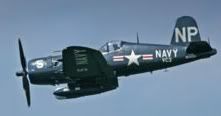 [/center]
[center]"The Angel of Okinawa"[/center]
Home of the Chance-Vought Corsair, F4U
The best fighter-bomber of World War II
[/center][center]"The Angel of Okinawa"[/center]
Home of the Chance-Vought Corsair, F4U
The best fighter-bomber of World War II
-
HansBolter

- Posts: 7457
- Joined: Thu Jul 06, 2006 12:30 pm
- Location: United States
RE: Flying torches
ORIGINAL: Joe D.
ORIGINAL: bigbaba
...i for myself would prefer a plane, which can take a lot of punishment, has a good armament and gives the pilot a great surviving chance. i would not like to sit inside a plane, which explodes when a single bullet hits its fuel tanks.
As would I, but I'm just now wondering whether Japan -- which was short on metals and other industrial essentials -- couldn't afford to armor plate its planes and seal its fuel tanks.
Of course, it could still be cultural, i.e, the sammurai had 2 swords but no shield, and this "best defense is a good offense" mentality was simply carried over into Japanese weapon systems.
Having recently read Bergerud I recall he attributted it to the natural outcome of the trend in the twenties towrd a romantic fascination with the dogfighters of WWI amongst pilots world wide that had a stong appeal to the "individual warrior" spirit of the Japanese AND a result of their experiences in China where light, highly maneuverable (at low speed) planes could triumph easily over the Chinese who were flying obsolete I-15s and I-16s. The light airframes were also easy to produce within the context of Japan's "cottage industry" approach to industrial production.
Hans

RE: Flying torches
Samurais did have 2 swords, but rarely used them at the same time (Musashi Miyamoto, the famous swordsman was an expection, that said, he did not fight as part of an army, rather in minor fights, similar to our image of cowboy duels.
Much of the fighting was done with spears.
Much of the fighting was done with spears.
To quote from Evans/Peattie`s {Kaigun}
"Mistakes in operations and tactics can be corrected, but
political and strategic mistakes live forever". The authors were refering to Japan but the same could be said of the US misadventure in Iraq
"Mistakes in operations and tactics can be corrected, but
political and strategic mistakes live forever". The authors were refering to Japan but the same could be said of the US misadventure in Iraq
RE: Flying torches
ORIGINAL: HansBolter
ORIGINAL: Joe D.
ORIGINAL: bigbaba
...i for myself would prefer a plane, which can take a lot of punishment, has a good armament and gives the pilot a great surviving chance. i would not like to sit inside a plane, which explodes when a single bullet hits its fuel tanks.
As would I, but I'm just now wondering whether Japan -- which was short on metals and other industrial essentials -- couldn't afford to armor plate its planes and seal its fuel tanks.
Of course, it could still be cultural, i.e, the sammurai had 2 swords but no shield, and this "best defense is a good offense" mentality was simply carried over into Japanese weapon systems.
Having recently read Bergerud I recall he attributted it to the natural outcome of the trend in the twenties towrd a romantic fascination with the dogfighters of WWI amongst pilots world wide that had a stong appeal to the "individual warrior" spirit of the Japanese AND a result of their experiences in China where light, highly maneuverable (at low speed) planes could triumph easily over the Chinese who were flying obsolete I-15s and I-16s. The light airframes were also easy to produce within the context of Japan's "cottage industry" approach to industrial production.
so maybe a combination of:
-cultural characteristic (aggressive bushido-codex and natural) in combination with fighter planes with no armor, which were not ideal for direct and frontal attacks,
-underestimation of the americans (weak paper tigers in the eye of the japanese except yamamoto and few other intelligent officers) because of fighting against weak enemies (china) for a long time,
-the incapability to recognize, that going down with the ship/plane and killing yourself after a mistake has no room in a modern war, where specialists are more worth then material,
led into the death of the japanese navy and army airforce.
later in the war, the japanese seems to leran from the mistakes (later fighter planes had armor and self sealing tanks), but at this time, it was too late to catch up the american advantage of better planes, better pilots, better tactic and better fighter ground control.
RE: Flying torches
According to Chennault according to Shilling the Zeros flew "boom & zoom" against the Chinese I-15s and I-16s. I'm not sure the whole "cult of the dogfighter" thing holds alot of water, even for the Japanese.
The Zero was, from a production-logistics point of view, a brilliant design. It got very good airspeed in a capable decently-armed aircraft while conserving strategic materials like aluminum, using only a 900-something HP engine and it could run on standard gasoline.
To build a heavier better armed fighter would have required steel for the cockpit armor, rubber for the gas tanks, much more aluminum for a sturdier frame, wing and control surfaces to accommodate the extra weight (for ex of lined wing tanks), and of course a more powerful (and therefore heavier) engine to haul it all around.
Someone who can talk in greater detail about gasoline and engines can explain whether or not they'd have needed 100 octane gas to get better HP:weight out of their engines. As I recall, the use of 100 octane fuel in Allied a.c. allowed us to build engines with higher compression ratios and therefore obtain more efficient energy per unit weight of engine, but I'm not sure that's accurate or sufficient.
Late war Japanese a.c. had SOME plane protection, but they were still fragile as compared with Allied fighters. I don't recall any Japanese fighter design, for example, that called for bullet resistent glass. Not that it would have mattered against a BMG slug.
Interestingly, the USAAF had a plane that could turn inside a Zero in the unarmored, unprotected late variants of the P-36. Rather than running with that plane, however, the US deliberately went for a.c. that had greater pilot survivability. Probably that had something to do with statistical analyses of the half-life of WW1 aviators in 1917-1918.
The Zero was, from a production-logistics point of view, a brilliant design. It got very good airspeed in a capable decently-armed aircraft while conserving strategic materials like aluminum, using only a 900-something HP engine and it could run on standard gasoline.
To build a heavier better armed fighter would have required steel for the cockpit armor, rubber for the gas tanks, much more aluminum for a sturdier frame, wing and control surfaces to accommodate the extra weight (for ex of lined wing tanks), and of course a more powerful (and therefore heavier) engine to haul it all around.
Someone who can talk in greater detail about gasoline and engines can explain whether or not they'd have needed 100 octane gas to get better HP:weight out of their engines. As I recall, the use of 100 octane fuel in Allied a.c. allowed us to build engines with higher compression ratios and therefore obtain more efficient energy per unit weight of engine, but I'm not sure that's accurate or sufficient.
Late war Japanese a.c. had SOME plane protection, but they were still fragile as compared with Allied fighters. I don't recall any Japanese fighter design, for example, that called for bullet resistent glass. Not that it would have mattered against a BMG slug.
Interestingly, the USAAF had a plane that could turn inside a Zero in the unarmored, unprotected late variants of the P-36. Rather than running with that plane, however, the US deliberately went for a.c. that had greater pilot survivability. Probably that had something to do with statistical analyses of the half-life of WW1 aviators in 1917-1918.
Show me a fellow who rejects statistical analysis a priori and I'll show you a fellow who has no knowledge of statistics.
Didn't we have this conversation already?
Didn't we have this conversation already?
RE: Flying torches
ORIGINAL: mdiehl
Just an FYI there is at least one recorded incident where a Huey (chopper) shot down a MIG, which, using current logic, means that the Huey is a better A/C (?) than the MIG
Running with this example that you have raised, although of course we are talking a hypothetical circusmtance, were it the case that Hueys in sustained air to air combat campaigns achieved a 1:1 loss ratio against MiGs I'd say that "the Huey+pilot was as effective a fighter as the MiG+pilot." I'd also want to know how the Huey drivers used their a.c. and under what circumstances they were able to get the drop on MiGs.
I'm not sure if a MIG ever shot down a Huey or not, it would not normally be a priority target for a fighter but if no Huey was ever shot down by a MIG then the Huey would be a better A/C because he attained a 0:1 loss ratio. [8|]
Actually it was quite simple, the MIG made a pass and over shot the chopper (of course) the chopper pilot pulled the nose up and unload 48 2.5" unguided rockets up the tail pipe of the MIG. MIG gone. Who says a shotgun is not a good weapon. [:D]