


I find the beaufighters and P39s to be very effective at 100 feet. Any second generation US fighter is great too as they have big bomb loads. Seems to work very well in disrupting units. If I have a major attack coming a large carpet bombing by 100+heavies and mediums seems to work. Also large attacks will usually break into two missions and attack two units.
Seems to work OK to me.
Close Air Support
Moderators: Joel Billings, wdolson, Don Bowen, mogami
RE: Close Air Support
I am the Holy Roman Emperor and am above grammar.
Sigismund of Luxemburg
Sigismund of Luxemburg
-
castor troy

- Posts: 14331
- Joined: Mon Aug 23, 2004 10:17 am
- Location: Austria
RE: Close Air Support
ORIGINAL: crsutton
I find the beaufighters and P39s to be very effective at 100 feet. Any second generation US fighter is great too as they have big bomb loads. Seems to work very well in disrupting units. If I have a major attack coming a large carpet bombing by 100+heavies and mediums seems to work. Also large attacks will usually break into two missions and attack two units.
Seems to work OK to me.
100 ft? Could turn pretty fast into a disaster if there are a couple of base forces in the hex also... [:D]
RE: Close Air Support
It would indeed; that is why CAS for me doesn't fly to a new target until either we have id'd the units there (either by me or my opponent launching some sort of attack) or have flown AF suppression attacks for a least a day or two to localize and degrade the flak.ORIGINAL: castor troy
ORIGINAL: crsutton
I find the beaufighters and P39s to be very effective at 100 feet. Any second generation US fighter is great too as they have big bomb loads. Seems to work very well in disrupting units. If I have a major attack coming a large carpet bombing by 100+heavies and mediums seems to work. Also large attacks will usually break into two missions and attack two units.
Seems to work OK to me.
100 ft? Could turn pretty fast into a disaster if there are a couple of base forces in the hex also... [:D]
Oh, but woe to the lone tank/infantry unit on a road with no base; they can get pummelled mercilessly.
Sing to the tune of "Man on the Flying Trapeze"
..Oh! We fly o'er the treetops with inches to spare,
There's smoke in the cockpit and gray in my hair.
The tracers look fine as a strafin' we go.
But, brother, we're TOO God damn low...
..Oh! We fly o'er the treetops with inches to spare,
There's smoke in the cockpit and gray in my hair.
The tracers look fine as a strafin' we go.
But, brother, we're TOO God damn low...
RE: Close Air Support
The Marines have always tried to conduct CAS historically, because of a lack of artillery. Duriing WWII it USMC MAWs where mostly not in direct support of USMC Divisions. Early on they where learning just like everyone else, but there where 2-3 MAGS that coducted all CAS supporting the US ARMY during the 44 PI Ops. When the MAWS where in direct support they were worried about air defense than CAS. Okinawa and Gualdualcanal are 2 examples.. sorry spelling... [:D]
Korea was when the Marines used it best. Even early on during Pusan, Inchon, and Chosin...
cutman
Korea was when the Marines used it best. Even early on during Pusan, Inchon, and Chosin...
cutman

RE: Close Air Support
Well, it's my signature, so I should say something on this thread.
Marine fighter-bombers performing close support for fellow Marines on the ground was driven more by esprit de corps than effectiveness.
CAS was probably more effective in the ETO than the PTO due to the jungle terrain.
I don't think CAS hit its stride until "tank plinking" in Desert Storm. Today, w/smart bombs, CAS is much more effective regardless of wx and terrain, which wasn't the case in the PTO in WW II.
Marine fighter-bombers performing close support for fellow Marines on the ground was driven more by esprit de corps than effectiveness.
CAS was probably more effective in the ETO than the PTO due to the jungle terrain.
I don't think CAS hit its stride until "tank plinking" in Desert Storm. Today, w/smart bombs, CAS is much more effective regardless of wx and terrain, which wasn't the case in the PTO in WW II.
Stratford, Connecticut, U.S.A.[center]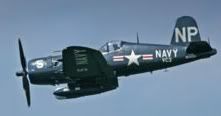 [/center]
[center]"The Angel of Okinawa"[/center]
Home of the Chance-Vought Corsair, F4U
The best fighter-bomber of World War II
[/center][center]"The Angel of Okinawa"[/center]
Home of the Chance-Vought Corsair, F4U
The best fighter-bomber of World War II
RE: Close Air Support
I would say vietnam was when CAS came into its own. Napalm was the first great CAS weapon dispite the fact that it was increadibly dangerous FF wise you could bring it a hell of alot closer in to your men since it lacked the shrapnal that most bombs have, its explosion pattern is also very predictable so you could easily bring it in parrallel with a line.

RE: Close Air Support
ORIGINAL: flanyboy
I would say vietnam was when CAS came into its own. Napalm was the first great CAS weapon dispite the fact that it was increadibly dangerous FF wise you could bring it a hell of alot closer in to your men since it lacked the shrapnal that most bombs have, its explosion pattern is also very predictable so you could easily bring it in parrallel with a line.
But wasn't Napalm actually developed during WWII? Actually, here is a tidbit about it...
The first use of napalm occurred on July 23, 1944, during pre-invasion air strikes on the island of Tinian, part of the Marianas island chain in the Pacific.
Vietnam was simply the apex of its use. Make no mistake this is a horrible weapon and is no doubt very demoralizing to anyone it is used against. And in the CAS mission, it would certainly work to break an enemies will to fight. No one wants to burn to death.
Distant Worlds Fan
'When in doubt...attack!'
'When in doubt...attack!'

RE: Close Air Support
What is true today, and was even more true in WWII, is that CAS is very effective just beyond the front line.
It remains difficult, even today, to call a CAS strike in close to friendlies. However, a rearward artillery position or especially a truck convoy, a train, or a fixed facility are ideal for a CAS strike.
Someone above mentioned all the wrecks in Northern France during D-day as a result of CAS strikes. True enough. However, those were generally not directed by ground spotters -- the pilots self-selected targets of opportunity.
CAS should really hammer logistics and supply at an operational/tactical level. It really isn't, nor was it ever, a substitute for artillery.
Regards,
Feltan
It remains difficult, even today, to call a CAS strike in close to friendlies. However, a rearward artillery position or especially a truck convoy, a train, or a fixed facility are ideal for a CAS strike.
Someone above mentioned all the wrecks in Northern France during D-day as a result of CAS strikes. True enough. However, those were generally not directed by ground spotters -- the pilots self-selected targets of opportunity.
CAS should really hammer logistics and supply at an operational/tactical level. It really isn't, nor was it ever, a substitute for artillery.
Regards,
Feltan
RE: Close Air Support
ORIGINAL: flanyboy
I would say vietnam was when CAS came into its own ...
Judging by the end result of operations in Vietnam compared w/Desert Storm, I disagree. CAS doesn't do nearly as well in a jungle w/a dense canopy as it does on a flat, desert expanse where nothing can hide from above.
Smart bombs, introduced in Storm, were greatly improved in Op Iraqi Freedom. Today, one well-armed Hornet has as much effective firepower as an entire WW II carrier strike squadron.
Stratford, Connecticut, U.S.A.[center][/center]
[center]"The Angel of Okinawa"[/center]
Home of the Chance-Vought Corsair, F4U
The best fighter-bomber of World War II
[/center][center]"The Angel of Okinawa"[/center]
Home of the Chance-Vought Corsair, F4U
The best fighter-bomber of World War II
RE: Close Air Support
Feltan thats not a CAS strike thats a Interdiction strike.
As for napalm I know when it was first used but it reached its apex as far as CAS abilities and use in Vietnam. Not because it was used the most but because it was finally used very effectively.
Joe I didn't say that Vietnam was CAS peak just that, it was in Vietnam when CAS truely became effective so that it was turning the tide of many battles. LZ-Xray for example would have been a whole sale slaughter of 300+ US troops instead it was a bloody victory that was made possible by air support. The air support also took out an estimated 50%+ of the 1,800-2,200 NVA casulties.
There were also incidences in Korea of air support saving units but it wasnt until Vietnam that units really depended on air support for their survival in a large number of battles.
And as for dense Jungle terrain, not all of vietnam was really jungle, the north and central area's were heavily wooded yes but not really jungle, the south was the typical jungle and most people have an incorrect idea of what vietnam looks like thinking that everything looks like the mekong delta.
As for napalm I know when it was first used but it reached its apex as far as CAS abilities and use in Vietnam. Not because it was used the most but because it was finally used very effectively.
Joe I didn't say that Vietnam was CAS peak just that, it was in Vietnam when CAS truely became effective so that it was turning the tide of many battles. LZ-Xray for example would have been a whole sale slaughter of 300+ US troops instead it was a bloody victory that was made possible by air support. The air support also took out an estimated 50%+ of the 1,800-2,200 NVA casulties.
There were also incidences in Korea of air support saving units but it wasnt until Vietnam that units really depended on air support for their survival in a large number of battles.
And as for dense Jungle terrain, not all of vietnam was really jungle, the north and central area's were heavily wooded yes but not really jungle, the south was the typical jungle and most people have an incorrect idea of what vietnam looks like thinking that everything looks like the mekong delta.
RE: Close Air Support
I still remember all the "we'll bomb them into the stone age" boasts by the UASF, along w/the over-estimated enemy casualties/body counts during Vietnam.
CAS could be tactically effective to the point of turning the tide of a battle, but it didn't win the war in Vietnam. Our troops weren't supposed to just survive, but win; CAS in Vietnam didn't deliver that victory.
CAS could be tactically effective to the point of turning the tide of a battle, but it didn't win the war in Vietnam. Our troops weren't supposed to just survive, but win; CAS in Vietnam didn't deliver that victory.
Stratford, Connecticut, U.S.A.[center][/center]
[center]"The Angel of Okinawa"[/center]
Home of the Chance-Vought Corsair, F4U
The best fighter-bomber of World War II
[/center][center]"The Angel of Okinawa"[/center]
Home of the Chance-Vought Corsair, F4U
The best fighter-bomber of World War II
RE: Close Air Support
ORIGINAL: Feltan
What is true today, and was even more true in WWII, is that CAS is very effective just beyond the front line.
It remains difficult, even today, to call a CAS strike in close to friendlies. However, a rearward artillery position or especially a truck convoy, a train, or a fixed facility are ideal for a CAS strike.
Someone above mentioned all the wrecks in Northern France during D-day as a result of CAS strikes. True enough. However, those were generally not directed by ground spotters -- the pilots self-selected targets of opportunity.
CAS should really hammer logistics and supply at an operational/tactical level. It really isn't, nor was it ever, a substitute for artillery.
Regards,
Feltan
It can really do a number on formed troops. As I noted earlier, its effects are much longer lasting than those of artillery if they hit the target at the right time. That's why USMC ground commanders like their USMC air support.
Harry Erwin
"For a number to make sense in the game, someone has to calibrate it and program code. There are too many significant numbers that behave non-linearly to expect that. It's just a game. Enjoy it." herwin@btinternet.com
"For a number to make sense in the game, someone has to calibrate it and program code. There are too many significant numbers that behave non-linearly to expect that. It's just a game. Enjoy it." herwin@btinternet.com
RE: Close Air Support
Thats why Interdiction strikes are the most carried out strikes by US fighter bomber forces, you hit them as they are getting near the front (if there is a front) so they are still in formation.
As for CAS delivering the victory, the airforce claimed they would bomb the north into the stone age and kill VC troops in the jungle with their Ark Light or w/e they were called raids. That said they never said CAS would win the war they claimed more Stratigic style bombing would win the war.
Bombing alone never wins wars. I am not aruging it does.
However the north and VC lost over 500,000 men in the course of that conflict, body counts at some times were very accurate at other times over hyped. It really depended who was commanding the army units in the area. Many officers over counted in the hopes of helping their own careers, others simply stated the facts.
P.S. On a side note there is one massive success that people never really talk about when it comes to vietnam. The gurrilla war was basically a clean cut victory for the US. The VC forces were so smashed during the TET offencive that after around 69 the war became more and more conventional. In fact the US essencially won the gurillia war, the problem was after 69 the NVA still had over 500,000 men and were training over 30,000 more men per year, so without an invasion of the north victory would not be attainable.
Though people dont realize the linebacker campaigns did do a number on the norths ability to fight the war. There is some evidence though nothing is certain that had the US airforce been bombing the north the whole war rather than their typical bomb real heavy for a couple weeks and then dont bomb for a year that with the ground war the way it went the NVA could have been brought to its knees in a couple of years.
Also air power saved the south in the Easter Offencive and had the US airforce still been aiding the south during the final offencive in 75 odds are the south would have survived that offencive as well.
As for CAS delivering the victory, the airforce claimed they would bomb the north into the stone age and kill VC troops in the jungle with their Ark Light or w/e they were called raids. That said they never said CAS would win the war they claimed more Stratigic style bombing would win the war.
Bombing alone never wins wars. I am not aruging it does.
However the north and VC lost over 500,000 men in the course of that conflict, body counts at some times were very accurate at other times over hyped. It really depended who was commanding the army units in the area. Many officers over counted in the hopes of helping their own careers, others simply stated the facts.
P.S. On a side note there is one massive success that people never really talk about when it comes to vietnam. The gurrilla war was basically a clean cut victory for the US. The VC forces were so smashed during the TET offencive that after around 69 the war became more and more conventional. In fact the US essencially won the gurillia war, the problem was after 69 the NVA still had over 500,000 men and were training over 30,000 more men per year, so without an invasion of the north victory would not be attainable.
Though people dont realize the linebacker campaigns did do a number on the norths ability to fight the war. There is some evidence though nothing is certain that had the US airforce been bombing the north the whole war rather than their typical bomb real heavy for a couple weeks and then dont bomb for a year that with the ground war the way it went the NVA could have been brought to its knees in a couple of years.
Also air power saved the south in the Easter Offencive and had the US airforce still been aiding the south during the final offencive in 75 odds are the south would have survived that offencive as well.
RE: Close Air Support
ORIGINAL: herwin
ORIGINAL: Feltan
What is true today, and was even more true in WWII, is that CAS is very effective just beyond the front line.
It remains difficult, even today, to call a CAS strike in close to friendlies. However, a rearward artillery position or especially a truck convoy, a train, or a fixed facility are ideal for a CAS strike.
Someone above mentioned all the wrecks in Northern France during D-day as a result of CAS strikes. True enough. However, those were generally not directed by ground spotters -- the pilots self-selected targets of opportunity.
CAS should really hammer logistics and supply at an operational/tactical level. It really isn't, nor was it ever, a substitute for artillery.
Regards,
Feltan
It can really do a number on formed troops. As I noted earlier, its effects are much longer lasting than those of artillery if they hit the target at the right time. That's why USMC ground commanders like their USMC air support.
No argument -- but you are pointing out a shortfall in game mechanics, not real life affects of CAS.
Regards,
Feltan
RE: Close Air Support
ORIGINAL: Feltan
ORIGINAL: herwin
ORIGINAL: Feltan
What is true today, and was even more true in WWII, is that CAS is very effective just beyond the front line.
It remains difficult, even today, to call a CAS strike in close to friendlies. However, a rearward artillery position or especially a truck convoy, a train, or a fixed facility are ideal for a CAS strike.
Someone above mentioned all the wrecks in Northern France during D-day as a result of CAS strikes. True enough. However, those were generally not directed by ground spotters -- the pilots self-selected targets of opportunity.
CAS should really hammer logistics and supply at an operational/tactical level. It really isn't, nor was it ever, a substitute for artillery.
Regards,
Feltan
It can really do a number on formed troops. As I noted earlier, its effects are much longer lasting than those of artillery if they hit the target at the right time. That's why USMC ground commanders like their USMC air support.
No argument -- but you are pointing out a shortfall in game mechanics, not real life affects of CAS.
Regards,
Feltan
Yes, I learned that the hard way. I flew some attack aircraft into a front-line airbase to provide CAS, and they got grounded and overrun. I guess the game designers hadn't realised what was going on in Imphal during the Japanese offensive.
Harry Erwin
"For a number to make sense in the game, someone has to calibrate it and program code. There are too many significant numbers that behave non-linearly to expect that. It's just a game. Enjoy it." herwin@btinternet.com
"For a number to make sense in the game, someone has to calibrate it and program code. There are too many significant numbers that behave non-linearly to expect that. It's just a game. Enjoy it." herwin@btinternet.com
-
niceguy2005

- Posts: 12522
- Joined: Mon Jul 04, 2005 1:53 pm
- Location: Super secret hidden base
RE: Close Air Support
Interesting thread. I posted twice on this last year also suggesting that CAS was not well modeled in the game. I have changed my mind. After playing the game another year, if anythihng I think it's possible that it is too effective.
My first realization was that yes, if you order ground attacks the same turn you order an LCU attack the enemy ground forces are much less effective. YOu do need to use a reasonable number of planes...the size of the attack should be scaled to the number of defenders.
Second was the realization just how ineffective CAS was going to be thoughout the Southwest Pacific and Southeast Asia. Sure it was used, but it didn't bring nearly the results it did in places like Europe.
My first realization was that yes, if you order ground attacks the same turn you order an LCU attack the enemy ground forces are much less effective. YOu do need to use a reasonable number of planes...the size of the attack should be scaled to the number of defenders.
Second was the realization just how ineffective CAS was going to be thoughout the Southwest Pacific and Southeast Asia. Sure it was used, but it didn't bring nearly the results it did in places like Europe.

Artwork graciously provided by Dixie
RE: Close Air Support
ORIGINAL: niceguy2005
Interesting thread. I posted twice on this last year also suggesting that CAS was not well modeled in the game. I have changed my mind. After playing the game another year, if anythihng I think it's possible that it is too effective.
My first realization was that yes, if you order ground attacks the same turn you order an LCU attack the enemy ground forces are much less effective. YOu do need to use a reasonable number of planes...the size of the attack should be scaled to the number of defenders.
Second was the realization just how ineffective CAS was going to be thoughout the Southwest Pacific and Southeast Asia. Sure it was used, but it didn't bring nearly the results it did in places like Europe.
The effectiveness in Europe reflected learning by the air staffs in Europe. In the Pacific, the Marines had good CAS, but they owned their own aircraft.
Harry Erwin
"For a number to make sense in the game, someone has to calibrate it and program code. There are too many significant numbers that behave non-linearly to expect that. It's just a game. Enjoy it." herwin@btinternet.com
"For a number to make sense in the game, someone has to calibrate it and program code. There are too many significant numbers that behave non-linearly to expect that. It's just a game. Enjoy it." herwin@btinternet.com

RE: Close Air Support
ORIGINAL: Joe D.
I still remember all the "we'll bomb them into the stone age" boasts by the UASF, along w/the over-estimated enemy casualties/body counts during Vietnam.
Doesn't really mean much to say "we'll bomb them into the stone age", when they pretty much were already living in the stone age.
[/quote]
-
anarchyintheuk
- Posts: 3958
- Joined: Wed May 05, 2004 7:08 pm
- Location: Dallas
RE: Close Air Support
Terrain and the nature of the campaigns were probably a more important factor than the relative capabilities of the staffs. Learning how to blow up Adolph in the Libyan desert was far easier than learning how to blow up Mitsuo at Kokoda or Guadacanal. Being continental campaigns, they also had continous opportunities to learn and refine technique, unlike the relatively short island campaigns conducted in the Pacific. Just my $.02.
RE: Close Air Support
I'm suprised that no one has mentioned the role of aircraft at Falaise Gap. Also, quite famously, CAS covered the right flank of Patton's "dash across France." And again, at the start of Operation Cobra, Heavy and Medium bombers opened the path through the German lines.
Further, consider the reliance that the Germans placed on bad weather for the launch of the Ardennes offensive in '44. The timing of the operation was predicated on the idea that Allied CAS would be impaired of unavailable, as the Germans had no effective way to gain air superiority over the area.
I think the short answer is that CAS is much more effective in a war of movement such as that in Europe, rather than siege warfare as was seen in the Pacific.
Just my .02
Further, consider the reliance that the Germans placed on bad weather for the launch of the Ardennes offensive in '44. The timing of the operation was predicated on the idea that Allied CAS would be impaired of unavailable, as the Germans had no effective way to gain air superiority over the area.
I think the short answer is that CAS is much more effective in a war of movement such as that in Europe, rather than siege warfare as was seen in the Pacific.
Just my .02
<pow>