D-Day

Gamers can also use this forum to chat about any game related subject, news, rumours etc.

Moderator: maddog986

chrisol
Posts: 214
Joined: Sat Jan 05, 2008 8:16 pm
Location: Cambridge, UK

RE: D-Day

Post by chrisol »

ORIGINAL: Hertston

There was/is a 'colorized' version floating around that got at least one showing on TV in the UK, which might be the one you recall seeing. As I recall, it looks bl**dy awful.

Yes... I've seen part of that one, and yes... awful.

Chris
User avatar
Doggie
Posts: 618
Joined: Wed Sep 19, 2001 8:00 am
Location: Under the porch
Contact:

RE: D-Day

Post by Doggie »

ORIGINAL: MikeBrough


'It takes an Irishman to play the pipes'??? Traitorous swine.


Is it true that Bagpipes were the evolution of a Scottish custom of running about with an indignant pig under the arm? I've heard Scots were so fond of little piggies they couldn't bear to part with them until sheep came along.
GoodGuy
Posts: 1506
Joined: Wed May 17, 2006 5:36 pm
Location: Cologne, Germany

RE: D-Day

Post by GoodGuy »

ORIGINAL: Joe D.

But there's another wrinkle; as Good Guy posted, the filming for TTT was an enormous expense, but then add the cash the producers "wasted" on hiring Akira Kurosawa to direct the Japanese scenes, only to later fire him for attempting to "cast friends and business associates in key roles in the film's Japanese segments as a quid-pro-quo for later funding of future films. Twentieth Century Fox was not amused by this, and finally, the breach became the cause for Kurosawa's dismissal from the project."

Well, according to most sources (incl. imdb IIRC), Kurosawa had been lured into the project: he was told David Lean would direct the US segments - so he said he'd be in. As this turned out to be a false info, Kurosawa did everything to get fired (on purpose), possibly because he couldn't just leave the project (penalty clause). Maybe he figured that it was a very commercial approach and anything but an "arty" project, too. Kurosawa's work always had an arty touch, as a director - he was rather an artist than a plain craftsman, in all of his approaches. David Lean had a rep. to create epic - if not lengthy and glorifying - movies, which still had an arty touch, expecially regarding the photography.
re IMDb, "Of all the time and money spent by Akira Kurosawa, less than one minute of the film he shot is in the final release version." http://www.imdb.com/title/tt0066473/trivia

There was a great deal of $ spent and mis-spent on this film, so there had to be cuts somewhere, and apparently it was in the cast.

You don't know how much of the budget had been "burned" that way, actually. I think you're drawing a false conclusion there:

Artist fees are usually being negotiated before a project starts.

For example, half of Patton's budget ($12 Mill.) was spent for renting military equipment from the Spanish military (they had built German bombers and fighters under license 'til way after the war), but there was still enough money for hiring A-actors, and Patton featured George C. Scott with Karl Malden as supporting actor, at least.
Rod Steiger, Lee Marvin, Robert Mitchum and Burt Lancaster all turned down the lead role, only John Wayne was really hot for the lead role, but he got turned down by the producer. Quite some of the lead role's lines were cheesy, egomaniacal or not sufficiently backed up by sources/wittnesses, so I can see why these actors had passed the offer.

Same with Tora, I'm sure many A-actors passed as they may have thought that Tora would just be another cheesy war movie, at a time where ppl were raging against the War in Vietnam.

Hiring 3-5 A-artists would have made the production costs of Tora only marginally higher, as most of the characters have rather short parts. Same with "Midway", filming of Robert Mitchum's complete cast in Midway took one day only.
Mitchum got $870,000 for his fully-blown leading part in "Ryan's daughter" (1970/71), but he usually got between $150,000 and $400,000 (Moses) for leading parts during the late 60s...

I doubt that he or any other A-artist received a similar amount (ie. 800+ k) for their short casts in Midway. That movie was packed with characters, just like Tora, but most had rather short appearances.

The only mega-salary paid in 1971 was the then astronomical amount of around $1.4 million bucks Sean Connery had received for his comeback as James Bond in "Diamonds are forever".
Although it was an astronomical amount, it seems that the worldwide success and revenue of the Bond series justified that offer. Still, no other actor in the world made that amount of money in 1971, afaik.

That said, you seem to overestimate the average fee for an A-artist back then, and you underestimate the cost-saving effect you get if you build your own flying replicas of planes, as you don't have to pay exorbitant daily rental fees for the equipment (like for Patton mentioned above, or like "Apocalypse Now" - mil. equipment was rented from the Philipine Army, which [along with a typhoon] almost killed the project, the shooting took 16 months, it went severely over budget). While building your own planes etc. may be a big investment regarding material and manpower, initially, it actually helps to save costs once you have the equipment ready, as you don't risk to get way over the budget with fees for rented equipment, in case the shooting doesn't progress as expected.

Also, usually, if a production gets close to the budget limit, directors and producers have to come up with ideas how to reduce costs... they may just cancel scenes with costly effects and equipment, or use some cheaper replacements, like miniatures, RC-models, etc.
The German director Roland Emmerich (Universal Soldier, Independence Day) is well known for his habit to optimize procedures and lower costs even during the actual shooting, often resulting in the production costs falling way below the budget limit at the end of the project, for example.
Still, you don't save costs by cutting the actor's salaries during the shooting, as contracts are made before the actual shooting starts, and Tora's budget should have been sufficient to finance a few A-actors AND SFX, as in many movies of the time, the sum of the actor fees amounted to 15% (or even less) of the production costs, with "Diamonds are forever" being an absolute exception at the time, as Sean Connery's salary alone amounted to 20% ($1.4 million) of the budget ($7.2 million).
"Aw Nuts"
General Anthony McAuliffe
December 22nd, 1944
Bastogne

---
"I've always felt that the AA (Alied Assault engine) had the potential to be [....] big."
Tim Stone
8th of August, 2006
GoodGuy
Posts: 1506
Joined: Wed May 17, 2006 5:36 pm
Location: Cologne, Germany

RE: D-Day

Post by GoodGuy »

ORIGINAL: Joe D.

Yeah, but after learning that DDs played such a key role in securing the Omaha beach-head, I have the same problem watching the end of TLD as I do watching "Midway" after reading Shattered Sword.

From what I gathered, from the official Navy analyzis after the war, from "Omaha Beach" (Army History 1945), and "Amphibious Operations" (CNCUSFLT = Commander-in-Chief US-Fleet) from 1944, pre-landing naval fire was "inadequate" (quote from a Navy post-war analyzis), to say the least.
The Allies overrated the effect of the preliminary bombing campaign targeting beach installations and bunkers, as the Germans had camouflaged vital installations, and as Allied aerial recon gave them the false impression that the majority of vital bunkers had been hit/destroyed. They also overrated the effects of the naval pre-landing bombardment, which - in many sectors - did little or medium damage only.

A similar letdown was the deployment of rocket launchers on US Navy ships. There's some original footage showing the ships firing these rockets at Omaha beach installations, but the material does not show the impact of the rockets. It seems that this part was censored by the US military:
Veterans described the launching of the rockets as impressive scenery, making them think that this massive firepower and the armada of ships would make the landing a comparatively easy job.
But they then witnessed that ALL rockets fell short, splashing in the water - way off the beach installations. Some vets described that as waste of resources and as frustrating and maddening event.

The Allied capital ships then did not dare to fire at beach installations during the actual landings as they feared friendly fire, they only fired at suspected German artillery positions further inland, except for occasional duels (capital ship vs coastal gun battery) here and there, where a German battery sunk at least one Allied ship (DD? or CL?) and damaged other ships before it could be knocked out.
That said, there was NO substantial naval close fire support during the landings, except for individual (2 DDs use to be mentioned, mainly) DDs trying to support pinned troops.

The DDs might have helped, and there were surely more than those 2 DDs, but they did not play a key role. Although their small calibre guns and machine guns were actually the only fire support at hand, and although they could possibly provide sufficient fire suppression on MG nests here and there, they could not penetrate sea walls, or sufficiently suppress bunkers and coastal gun installations.
On Omaha Beach, around 3.5 hours after the first wave had hit the beach, only small groups, sometimes even individual soldiers only, achieved small and local breakthroughs, after soldiers had managed to clear some of the barbwire and obstacles, allowing them to get to the sea wall or cliffs, in order to infiltrate the MLR, which was often only offered because of the confusion on the German side, in fact, as gun nests mistakenly reported the loss of other German strong points or gun nests, resulting in confusion, unforced retreats or shifting of support fire (mainly mortars and 88).

Quite some gun nests had been abandoned solely because they had run out of ammunition or replacement barrels - after hours of fighting/firing, quite some communication lines leading to support/supply units waiting further inland were either sabotaged or damaged due to the bombardment, too.

But even getting to the top did not result in massive infiltrations, as the top was heavily mined and zero'ed in by pockets of resistance. DDs could not help there.

The commander of the German division covering the Omaha beach sector told his superiors that he had sufficient forces to contain the American beachhead and deny substantial American progress until D1+, if he'd get reinforcements right after. His request was turned down, and he was told that there were ZERO reserves available.
"Aw Nuts"
General Anthony McAuliffe
December 22nd, 1944
Bastogne

---
"I've always felt that the AA (Alied Assault engine) had the potential to be [....] big."
Tim Stone
8th of August, 2006
vonRocko
Posts: 1454
Joined: Tue Nov 04, 2008 12:05 pm

RE: D-Day

Post by vonRocko »

Richard Todd just passed away at 90. Todd,a British paratrooper during the Normandy invasion,was approached by producer Darryl Zanuck to play himself in The Longest Day.Todd declined and instead portrayed British Maj. John Howard. RIP
User avatar
decaro
Posts: 4004
Joined: Wed Aug 31, 2005 12:05 pm
Location: Stratford, Connecticut
Contact:

RE: D-Day

Post by decaro »

ORIGINAL: GoodGuy

Well, according to most sources (incl. imdb IIRC), Kurosawa had been lured into the project ...

Regardless of how it happened, money, time and film was wasted.
You don't know how much of the budget had been "burned" that way, actually. I think you're drawing a false conclusion there ...

Outside of the studio heads, no one knows how much money was lost, and no studio would advertise that kind of wasteful incompetence to the public.


Stratford, Connecticut, U.S.A.[center]Image[/center]
[center]"The Angel of Okinawa"[/center]
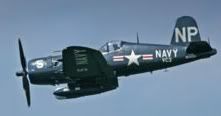
Home of the Chance-Vought Corsair, F4U
The best fighter-bomber of World War II
User avatar
decaro
Posts: 4004
Joined: Wed Aug 31, 2005 12:05 pm
Location: Stratford, Connecticut
Contact:

RE: D-Day

Post by decaro »

ORIGINAL: GoodGuy
ORIGINAL: Joe D.

Yeah, but after learning that DDs played such a key role in securing the Omaha beach-head, I have the same problem watching the end of TLD as I do watching "Midway" after reading Shattered Sword.

... The DDs might have helped, and there were surely more than those 2 DDs, but they did not play a key role. Although their small calibre guns and machine guns were actually the only fire support at hand, and although they could possibly provide sufficient fire suppression on MG nests here and there, they could not penetrate sea walls, or sufficiently suppress bunkers and coastal gun installations..

According to a History Channel special that featured newly discovered aerial maps of the beach head, Gen. Bradley was at the point of withdrawing the Omaha landing forces, but then used his last "ace": the DDs.

The HC said the DDs moved-in at point-blank range and obliterated German positons; the show presented aerial photos of the DDs in action to back-up their claim.
Stratford, Connecticut, U.S.A.[center]Image[/center]
[center]"The Angel of Okinawa"[/center]
Home of the Chance-Vought Corsair, F4U
The best fighter-bomber of World War II
User avatar
MikeBrough
Posts: 265
Joined: Sun Jan 30, 2005 10:59 am
Location: Scotland

RE: D-Day

Post by MikeBrough »

ORIGINAL: Doggie

ORIGINAL: MikeBrough


'It takes an Irishman to play the pipes'??? Traitorous swine.


Is it true that Bagpipes were the evolution of a Scottish custom of running about with an indignant pig under the arm? I've heard Scots were so fond of little piggies they couldn't bear to part with them until sheep came along.

Yeah, well we had to wait until the Aussies were finished with the sheep before we relinquished our piggies. How are you finding the little porkers?
Mike Brough
Proud to be an Arab

Be sceptical of the things you believe are false; be very sceptical of the things you believe are true.
User avatar
Doggie
Posts: 618
Joined: Wed Sep 19, 2001 8:00 am
Location: Under the porch
Contact:

RE: D-Day

Post by Doggie »

Not bad once we get past the wee bit that's been used.
User avatar
hgilmer3
Posts: 530
Joined: Sun Dec 28, 2008 7:15 pm

RE: D-Day

Post by hgilmer3 »

ORIGINAL: JudgeDredd

So he wa...Pvt Flannigan apparently!

A couple of quotes I really liked that I can't remember exactly what he said and I'm sure someone will help me out here...

"Come on out, you dirty slobs! Flanagan's back!"

One of the men on the landing beach said something about avenging Dunkirk or the "War's that way!"and he said something to the effect of, "Did you hear that, then? Sure, and I bet he was in the University while we were at Dunkirk!"
KurtC in the WITE PBEM module.
GoodGuy
Posts: 1506
Joined: Wed May 17, 2006 5:36 pm
Location: Cologne, Germany

RE: D-Day

Post by GoodGuy »

ORIGINAL: Joe D.

According to a History Channel special that featured newly discovered aerial maps of the beach head, Gen. Bradley was at the point of withdrawing the Omaha landing forces, but then used his last "ace": the DDs.

The HC said the DDs moved-in at point-blank range and obliterated German positons; the show presented aerial photos of the DDs in action to back-up their claim.

Joe, I can imagine that it's tempting to believe such claims. What you have to know (or keep in mind), though, is that the quality of HC features went downhill many many moons ago.

When I've been to the US for a few weeks in 1998, visiting friends, I watched the History Channel only. I found many of the WWII features to be halfway accurate and interesting, well with some factual errors regarding German details here and there. In 2007, when I got back to the US for a few months, I figured how HC had deteriorated. Shows packed with factual errors and/or tabloid approaches that leave out or boast details or water down crucial details.

Same with the recent feature about Patton, where HC claimed Patton had been sent to Northern France to save the post D-Day operations, which is pretty off, as he was part of the planning since either January 1944 or somewhere between March and May 1944 (the exact time frame is still a bit controversial, as commands had been merged and/or renamed). He was not appointed to "save" the operation.

Back to the Destroyers. Let me quote from the COMINCH (Commander-in-Chief, United States Fleet) After Action Review:
ORIGINAL: COMINCH P-006
Amphibious Operations
Invasion of Northern France
Western Task Force
June 1944

Chapter II
Naval Gunfire
page 5

From: Commander Assault Force "0", (Commander Eleventh Amphibious Force).

At this juncture the destroyers CARMICK, DOYLE, MCCOOK, THOMPSON, FRANKFORD, HARDING, EMMONS, and BALDWIN and the three British Hunts MELBREAK, TALYBONT and TANATSIDE closed the beach and took under fire many of the enemy positions. Their fire was directed in part from the ships and in part from Shore Fire Control Parties which managed to set up communications. Too much credit cannot be given the destroyers which participated in this bombardment. Lacking complete knowledge of their own troops positions, and hard pressed to pick out enemy positions, they closed in some cases to within 800 yards of the beach. Position after position was taken under direct fire. It is certain that they destroyed many of the enemy positions and it is probable that without their assistance the casualties on the beach would have been considerably higher.

Of the destroyers mentioned above only USS Frankford and USS McCook are really sticking out if you read veteran accounts. One of these DDs moved from Les Moulins (sp?) all the way to the East to sector Fox Red (this distance displayed almost half of the entire Omaha Beach), as most of the troops had failed to hit their assigned beach sectors (all landed east of their assigned slots), firing at targets of opportunity all the way.
The comment "too much credit cannot be given to the destroyers" surely refers to their contribution at this particular juncture, and not to the overall effort, and it mostly refers to the fact that they kept firing at targets (and most likely knocked out some of them) until afternoon/evening, means hours after INF had infiltrated the MLR, and - starting around midday - notably with the help of shore fire control parties, who were then save (less or no enemy fire) to direct things. During the first hours, individual DDs got to point-blank range, but not every DD kept spilling rounds, as they had to watch their ammo level (eg. USS Herndon's report below) and they always feared to hit their own troops.

page 13

From: Deputy Commander Destroyer Fire Support Group. Force "0", (Commander Destroyer Division 36).

At H minus 40 minutes (0550 B) or shortly thereafter all destroyers opened fire on their assigned targets. Coastal artillery immediately answered the fire and from then on until late the next day all destroyers were under intermittent fire by enemy coastal defenses, mortars and heavy machine guns. During the period of scheduled fire from H minus 40 minutes to H hour it was necessary for the destroyers to occasionally shift fire from their assigned target to some enemy gun that was shooting at them. In most of these instances a few salvos were sufficient to temporarily silence these enemy guns and fire was then immediately shifted back to scheduled targets. The fire of all destroyers during this period was fast and accurate. There were no material or personnel casualties during this phase of the Support Fire although many enemy shells fell close aboard the destroyers. As the first wave closed the beach the Fire Support destroyers preceded them closing the beach to from one thousand (1000) to two thousand (2000) yards. At 0617 (H minus 13 minutes) LCT(R)s commenced firing rockets drenching the area just inland from the beaches. Fire from this beach was temporarily silenced and the entire area covered with heavy smoke and dust. Troops landed and proceeded up the beach into the smoke.

From the landing of the troops until the establishment of Shore Fire Control Parties the Fire Support Destroyers fired on targets of opportunity. It is considered that the support of destroyers during this phase was not utilized to over twenty (20) percent of their possibilities. There was no communication with the beach and on numerous occasions destroyers could not fire on targets which should have been fired on because they did not know the location of our own troops. This is a most crucial period in the assault and some method of communication between troops and Fire Support Ships must be devised. The Destroyers acquitted themselves well indeed whenever a target presented itself. Numerous guns firing on the beaches were detected by their flashes and were destroyed by the Fire Support Ships. The destroyers closed to less than a thousand (1000) yards from the beach, the fire of each ship being directed by the Commanding Officer.

Most notably here, a 75mm gun position had been knocked out, and one of the bigger (MG)gun nests.
Some of the groups/vessels mentioned below were either assigned to UTAH or the British beachhead, iirc, I would have to dig for the exact assignments, too lazy now.
During the remainder of the day Fire Support Destroyers fired at targets as directed by Shore Fire Control Parties, Commander Destroyer Squadron EIGHTEEN, Commander Task Group 124.9, and by their own commanding officers. (For individual ship targets and ammunition expenditure on each target see Reports of Action by Ships). At 1750 SATTERLEE had fired over seventy (70) percent of her bombardment ammunition. Directed THOMPSON to relieve her in support of Rangers and shifted my pennant and staff to HARDING. SATTERLEE departed Fire Support Area to report to Area Screen Commander. At 1800 BARTON (Commander Destroyers Squadron SIXTY) and O'BRIEN reported to Fire Support Area and were assigned stations and Shore Fire Control Parties. At 2000 directed CARMICK to report to Area Screen Commander she having expended over seventy (70) percent of her bombardment ammunition. OMAHA beaches were under sporadic but heavy shelling during most of the afternoon and evening of D day. This fire came from sources Fire Support Ships had great difficulty in locating. However it was evidently controlled by observers watching the beaches. There were numerous houses behind the beaches and on adjacent hills and cliffs overlooking the beaches which had not been thoroughly shelled even at this late date. I believe that this was a costly error on our part and for future landing operations I strongly advocate the demolishment of all structures, houses, churches, etc., that could possibly house light artillery, machine guns, mortars and/or observation and communication posts prior to and immediately after the landing of troops. This could have readily been done by the destroyers but by the time we realized this our troops were advancing and we were unable to obtain permission to shell any but a few of the most obvious. It was most galling and depressing to lie idly a few hundred yards off the beaches and watch our troops, tanks, landing boats, and motor vehicles being heavily shelled and not be able to fire a shot to help them just because we had no information as to what to shoot at and were unable to detect the source of the enemy fire. Advancing troops must have some visual means to call for immediate fire support from close Fire Support Ships. A mortar shell with a distinctively colored smoke would have been most effective and would have insured immediate destruction of a target so designated.

The phrase I highlighted above indicates that DDs could have contributed way more to the troops' attempts (later on) to move further inland, if there would have been sufficient communication between vessels AND troops on the ground, and if there would have been a sufficient number of shore fire control teams.
ORIGINAL: page 18, 19

From: USS FRANKFORD (DD).

Conclusions and Recommendations. In spite of the difficulty of the lack of a shore fire control it is felt that the fire delivered on targets of opportunity was effective and of material aid to the troops on the beach. Some of the targets selected may have been already immobilized but every effort was made by this vessel to fire on targets that more definitely seem to hold up the advance of our troops from the beaches. Several attempts were made to communicate visually with units on the beach to determine where we could fire to aid them but none of these visual messages furnished us with enough information to open fire on dangerous nearby targets. It is recommended that men in the first wave, particularly signal corps personnel, be advised of the capabilities of the destroyer fire control systems and be instructed how to designate close-up targets that are within range of the 5 inch guns. If this were accomplished destroyers could be of more aid to men on the beaches even though shore fire control parties were knocked out or pinned down.

ORIGINAL: 2-(page)20

From: Commander Gunfire Support Craft Eleventh Amphibious Force.

At about H plus 6 hours on D day, we proceeded close inshore all along the OMAHA beach. We were under fire the whole way. Troops were unable to advance. I reported this to the Task Force Commander and requested permission to lay down rocket barrage. The request was refused because of the possibility of killing our own troops. I then proceeded to the force flagship to report in person to the Task Force Commander, Major-Generals HEUBNER and GEROW were aboard. After reviewing the conditions observed, it was again decided not to use the rockets for fear of endangering own troops who may have filtered through.


I'm not sure what sector USS Herndon was assigned to, but at 1310 the MLR had been infiltrated hours ago, so the Herndon CO might refer to targets way off the beach exits (where some were being processed by engineers around that time already - in some sectors -, to pave the way), and/or pockets of resistance:
page 18

From: USS HERNDON (DD).

At approximately 1310 the Shore Fire Control Party called for a large left spot. MPI was then adjusted by several small spots and rapid fire commenced at an initial rate of 12 round per minute. The Shore Fire Control Party kept requesting an increasing rate of fire until finally we were firing four gun salvos at five second intervals. Spots were applied as called for without checking fire. After the initial spot all deflection spots were to the right at the rate of a 100 yard right spot about every minute as the Army advanced normal to our line of fire. Five second salvos were maintained until ammunition supply failed. Lower hoists will not supply ammunition at that rate. Fire was slowed to ten and fifteen second salvos. At this time it was explained to the Shore Fire Control Party that rate of fire was very high and ammunition was being used up. They replied that results were excellent, that the enemy was on the run, and requested that high rate of fire be continued.

USS Herndon's report shows that the DDs could not sustain high rates of fire for longer periods, and that they were running low on ammo at 13:00 already.

Anyway, these statements and assessments indicate that DDs contributed. They also had difficulties to tell friend from foe, giving them a hard time to deliver sufficient immediate support, as there was no (or insufficient) shore fire control until around 12:00 or 13:00 or even later, at a point when US infantry actually had already succeeded to capture parts of the top of the cliffs and a number of gun nests.

The DDs might have reduced the casualty rate that day (which was already extremely high, some sources say 2000 troops killed, another thousand wounded), so they contributed to quite some extent (unlike the capital ships), but I wouldn't call it key role, and I wouldn't refer to them as units that turned the tide either.

Last but not least it was Bradley's own stubborn decision (against the advice of officers with experience in amph. landings in the Pacific), not to extend the naval pre-landing bombardment (40 minutes only), that had endangered the success of the landing.

The key factors for success were the lack of reserves on the German side, German mistakes and the German 352th Div's fragmented message (where it "seemed" to indicate that the US landing effort had been thrown back into the sea during the initial phase, so that the last reserve was moved to the British beachhead) contributed big time, well along with dedication and stubbornness among US troopers on the beach.
No analyzis indicates that the DDs involved had turned the tide or that they had played a key role, besides for substantial local/individual fire support. DDs delivered useful support, with individual DDs really sticking out, but they could not knock out bunkers or reinforced gun positions with their 5inch-guns - these had to be captured/overcome by troops on the ground.

Throughout D-Day, there were occasions where Allied capital ships (eg. cruisers) reported that they had silenced particular German coastal batteries or bunkers, only to see them open fire again after a while (as they had waited for the cruisers to target other German positions), and occasions where "knocked out" guns became active again a few hours later, after the German crews had managed to remove rubble that was blocking the bunkers' embrasures.

With these positions, the German order/decision to retreat or the US troops on the ground were the only tools that could eject them.
"Aw Nuts"
General Anthony McAuliffe
December 22nd, 1944
Bastogne

---
"I've always felt that the AA (Alied Assault engine) had the potential to be [....] big."
Tim Stone
8th of August, 2006
GoodGuy
Posts: 1506
Joined: Wed May 17, 2006 5:36 pm
Location: Cologne, Germany

RE: D-Day

Post by GoodGuy »

ORIGINAL: Joe D.

Outside of the studio heads, no one knows how much money was lost, and no studio would advertise that kind of wasteful incompetence to the public.

Right. Then you might want to reveal your source for the claim that - with a big fat budget of $24.x million - there was no money left to hire A-actors. It's not History Channel, is it? [:D]

There are no sources revealing the production costs of "Midway", but since the director of Midway had "recycled" so many "Tora" scenes, it's safe to say its costs were even way lower than Tora's costs, I'd say, as Midway was considered to be a profitable project at the box office (gross: ~$24 million, iirc), unlike Tora.
"Aw Nuts"
General Anthony McAuliffe
December 22nd, 1944
Bastogne

---
"I've always felt that the AA (Alied Assault engine) had the potential to be [....] big."
Tim Stone
8th of August, 2006
User avatar
decaro
Posts: 4004
Joined: Wed Aug 31, 2005 12:05 pm
Location: Stratford, Connecticut
Contact:

RE: D-Day

Post by decaro »

ORIGINAL: GoodGuy
ORIGINAL: Joe D.

According to a History Channel special that featured newly discovered aerial maps of the beach head, Gen. Bradley was at the point of withdrawing the Omaha landing forces, but then used his last "ace": the DDs.

The HC said the DDs moved-in at point-blank range and obliterated German positons; the show presented aerial photos of the DDs in action to back-up their claim.

Joe, I can imagine that it's tempting to believe such claims. What you have to know (or keep in mind), though, is that the quality of HC features went downhill many many moons ago ...

No argument there, but this particular HC series was several years ago; it used then recently discovered aerial photos to cover a range of operations from D-Day to the Pacific, and it was much better than most HC endeavours, i.e., "Patton 360," which were often "uneven".
ORIGINAL: GoodGuy
Throughout D-Day, there were occasions where Allied capital ships (eg. cruisers) reported that they had silenced particular German coastal batteries or bunkers, only to see them open fire again after a while (as they had waited for the cruisers to target other German positions), and occasions where "knocked out" guns became active again a few hours later, after the German crews had managed to remove rubble that was blocking the bunkers' embrasures.

With these positions, the German order/decision to retreat or the US troops on the ground were the only tools that could eject them.

Even in computer sims, i.e., the HoI series, ships, like planes, can't occupy territory: in the end it's always the infantry that takes and holds anything.

After doing an AAR of D-Day, the IJA OIC of Iwo decided not to exchange fire w/the ships off-shore supporting the amphib landings; apparently some astute German gunners had already realized that "the hard way."

In any event, the DDs were given no role in TLD.

And as for Bradley's miscues, the winner in war, as in any game of chess, is the player who makes the next to last mistake.
Stratford, Connecticut, U.S.A.[center]Image[/center]
[center]"The Angel of Okinawa"[/center]
Home of the Chance-Vought Corsair, F4U
The best fighter-bomber of World War II
User avatar
decaro
Posts: 4004
Joined: Wed Aug 31, 2005 12:05 pm
Location: Stratford, Connecticut
Contact:

RE: D-Day

Post by decaro »

ORIGINAL: GoodGuy
ORIGINAL: Joe D.

Outside of the studio heads, no one knows how much money was lost, and no studio would advertise that kind of wasteful incompetence to the public.

Right. Then you might want to reveal your source for the claim that - with a big fat budget of $24.x million - there was no money left to hire A-actors. It's not History Channel, is it? [:D]

There are no sources revealing the production costs of "Midway", but since the director of Midway had "recycled" so many "Tora" scenes, it's safe to say its costs were even way lower than Tora's costs, I'd say, as Midway was considered to be a profitable project at the box office (gross: ~$24 million, iirc), unlike Tora.

Midway may have been a more profitable, movie but it wasn't more accurate; prior to the successfully Allied SBD attack, Allied recon photos from B-17s showed the only planes on the IJN CVs were Zero's flying Cap: this was later confirmed by the IJN flight logs presented in Shattered Sword.

As for production costs, read between the lines of trivia at IMDb: to hire and then fire Japan's top director, Akira Kurosawa, w/only one minute of film to show for it must have been a financial disaster, one that the studio heads would not want their stockholders to know much about.

Then consider that the American actors in TTT were not leading men. In fact, some were former film stars who had already stepped-down to do TV; it would be like hiring David Hasselhoff to play Admiral Kimmel [;)]
Stratford, Connecticut, U.S.A.[center]Image[/center]
[center]"The Angel of Okinawa"[/center]
Home of the Chance-Vought Corsair, F4U
The best fighter-bomber of World War II
GoodGuy
Posts: 1506
Joined: Wed May 17, 2006 5:36 pm
Location: Cologne, Germany

RE: D-Day

Post by GoodGuy »

ORIGINAL: Joe D.

No argument there, but this particular HC series was several years ago; it used then recently discovered aerial photos to cover a range of operations from D-Day to the Pacific, and it was much better than most HC endeavours, i.e., "Patton 360," which were often "uneven".

I doubt that in 1944 aerial photos sufficiently displayed the level of involvement of destroyers, and I doubt they delivered proof that DDs had turned the tide or that they had a key role, especially since Allied aerial recon failed to identify numberous strongpoints, gun nests, and even installations and since the evaluation of the pre-landing photos covering beach installations misled the Allied command to think that the bomber campaign had been pretty successful. What some of the photos taken on D-Day actually showed was that big (valuable) guns had been moved further inland, resulting in dedicated bombing runs to destroy the guns right after. It also turned out that some guns had never been installed on the coast and that they had been stored inland instead (ie. Pointe du Hoc), but this detail could only be assessed on the ground, by the Rangers who took the Pointe.

So, until I see another source/author accurately evaluating photos/claims, I'll stick to the COMINC's assessments and proceed to characterize this HC claim as gossip. [:)]
ORIGINAL: Joe D.

In any event, the DDs were given no role in TLD.

Let me correct your assessment by quoting the COMINC report again, Chapter I this time:
ORIGINAL: COMINCH P-006
Amphibious Operations
Northern France
Western Task Force
June 1944

Chapter I, page 5:

The Landing Attack Plan was as follows: The 16th RCT attacked on the left on Beaches FOX GREEN and EASY RED with two battalions in assault and one following. The 116th RCT attacked on the right with two battalions in assault and one following, on Beaches EASY GREEN, DOG RED, DOG WHITE, and DOG GREEN. One assault battalion of the 116th RCT landed three companies abreast on Beaches EASY GREEN, DOG RED and DOG WHITE; the other landed three companies in column on Beach DOG GREEN, Nine of the twelve companies of the 2d and 5th Ranger Battalions landed on Beach DOG GREEN while the remaining three Ranger companies landed on the POINTS DU HOE in Sector CHARLIE to capture an enemy battery located there which threatened the Transport Area. The 18th RCT landed immediately after the 16th RCT on the same beaches. The Rifle Companies of the 115th embarked in LCI(L)s were to land on call on the same beaches as the 116th unless otherwise directed. The Landing was preceded by a forty minute naval bombardment at previously designated targets. A bombing attack was scheduled for delivery between H-30 minutes and H hour. This, however, failed to materialize. In addition to the bombardment by naval gunfire from supporting ships and craft, tanks embarked in LCT(A)s fired on targets of opportunity during the last 3000 yards of their approach to the beach and 105 mm SP artillery embarked in LCTs likewise fired during their passage through the boat lanes. LCT(R)s and LCS(S)s were scheduled to deliver a full discharge of rockets immediately prior to the "touchdown" of the infantry. The fire of the gunfire support craft and of the destroyers close inshore where they could observe the actual landing was to continue until such time as the advancing troops were actually endangered by it instead of being lifted at a pre-arranged clock time.

Chapter II, which I partially quoted in my previous post, elaborately documents that some DDs had conducted this mission (= role) well past 17:00 on D-Day, where they then suffered from the lack of sufficient resupplies (ammo) that kicked in past midday.

According to this COMINC report, Assault Force "O" (Omaha Beach) incorporated 9 DD, 3 Hunt DD and one DE, which is probably the reason why secondary and tertiary sources use to differ regarding the number of DDs involved: Some sources mention 12 (where they count the 3 ASW [Hunt]DDs obviously), some list 9 DDs.
"Aw Nuts"
General Anthony McAuliffe
December 22nd, 1944
Bastogne

---
"I've always felt that the AA (Alied Assault engine) had the potential to be [....] big."
Tim Stone
8th of August, 2006
User avatar
wworld7
Posts: 1726
Joined: Tue Feb 25, 2003 2:57 am
Location: The Nutmeg State

RE: D-Day

Post by wworld7 »

ORIGINAL: Joe D.
Then consider that the American actors in TTT were not leading men. In fact, some were former film stars who had already stepped-down to do TV; it would be like hiring David Hasselhoff to play Admiral Kimmel [;)]

Joe,

Equating actor David Hasselhoff with Martin Balsam is an absurd comparison. What's next, comparing Jason Robards with Pee Wee Herman?

The reason Paul Newman and Robert Redford types were not cast for this movie was more for artistic reasons (ie: the Director and Producers vision) than budgetary reasons (ie: the Producers wallet).

While some did TV, American actors such as Robards, Balsam, Whitmore were all highly regarded both for for stage and film work.

P.S. If they remake Tora, Tora, Tora with David Hasslehoff, then they better put in some of the Baywatch babes to bring it up to The History Channel standards.[:)][:)][:)]
Flipper
GoodGuy
Posts: 1506
Joined: Wed May 17, 2006 5:36 pm
Location: Cologne, Germany

RE: D-Day

Post by GoodGuy »

ORIGINAL: Joe D.

Midway may have been a more profitable, movie but it wasn't more accurate; prior to the successfully Allied SBD attack, Allied recon photos from B-17s showed the only planes on the IJN CVs were Zero's flying Cap: this was later confirmed by the IJN flight logs presented in Shattered Sword.

Hehe Joe, you're "opening" another theater, that reminds me of our discussion about the War in the Balkans. [:D] Actually, I should lead you back to your claim that there was no money left for A-actors, but now I'm interested in the detail above.

I haven't read Shattered Sword. Although the US Navy Historical Center regards this book as a currently valid/accurate view of events (I even think they made it a mandatory read for Navy historians), I have only read reviews and excerpts. The book's approach is somewhat hmm .. disturbing, though: Quite some assessments and details had been forwarded by 3rd parties to the Japanese authors and Historians cooperating with the US authors, who then sent it to the 2 authors of the book. So, what I criticize is that the authors did not get to see original documents, nor did they talk to veterans themselfs. So for me, this work has the aftertaste of featuring hearsay, to some extent. Also, they rant about the bad fire suppression aboard the Japanese carriers over and over, and I'm not sure whether they sufficiently considered
a) Japan's antiquated radar technology,
b) mistakes committed by the Japanese squadron command,
c) fortunes of war
or not.
I'm not totally sure that their assessment, that the Japanese carriers were doomed anyways (eg. bad onboard fire suppression, lack of fire suppression teams, design of the carriers [keywords: hangars/storage of ammunition, amount and design of AA-guns], etc.), really reflects the core of the reasons for the actual outcome.

The book is a milestone on the path of getting away from the US literature that had been focusing on American POVs and sources for decades, but it still leaves some aftertaste. I'll read it some time, though. POE might be willing to throw in some valuable info, I remember he discussed "Shattered Sword" in these forums before. [:)]

Back to the detail I'm interested in:
What time-frame and what squadron are you referring to, if you say that there were IJN planes only. Afaik, the US attacks were not coordinated, probably due to comm failure. Torp squad and bomber squad were supposed to attack simultanously, but since the bombers did not show up at the same time, the torpedo planes were shot to pieces by the zeros. US sources indicated that a simultanous attack could have resulted in a stunning victory, no?
What's the book's take on that?
As for production costs, read between the lines of trivia at IMDb: to hire and then fire Japan's top director, Akira Kurosawa, w/only one minute of film to show for it must have been a financial disaster, one that the studio heads would not want their stockholders to know much about.

First you claim there was no money left, then you ask me to read between the lines of some trivia of a web-portal that tries to collect infos about the film industry. Where's your s o u r c e that backs up your claim? [:)]
Kurosawa and the US director filmed parallel. Actor fees are negotiated before the shooting starts.
Then consider that the American actors in TTT were not leading men. In fact, some were former film stars who had already stepped-down to do TV; it would be like hiring David Hasselhoff to play Admiral Kimmel [;)]

Erm no, lol, Flipperwasirish hits the nail there.
That doesn't prove your assumption that actor salaries had to be cut while the shooting was already in progress, either.
Also, you don't even know whether they actually planned to get B-actors or not. The budget allowed for hiring A-actors, as usually only 15% of the budget was spent on actor fees, at the time. It rather looks like they didn't get any.
"Aw Nuts"
General Anthony McAuliffe
December 22nd, 1944
Bastogne

---
"I've always felt that the AA (Alied Assault engine) had the potential to be [....] big."
Tim Stone
8th of August, 2006
User avatar
decaro
Posts: 4004
Joined: Wed Aug 31, 2005 12:05 pm
Location: Stratford, Connecticut
Contact:

RE: D-Day

Post by decaro »

ORIGINAL: GoodGuy

... Afaik, the attacks were not coordinated, probably due to comm failure. Since the bombers did not show up at the same time, the torpedo planes were shot to pieces by the zeros. What's the book's take on that?

Not com failure, but a failure to comunicate w/their own escorts; in any event, it's difficult to co-ordinate a successful air sortie combining escorts, dive and torpedo bombers simultaneously.
ORIGINAL: GoodGuy
... But that doesn't prove your assumption that actor salaries had to be cut while the shooting was already in progress.
Also, you don't even know whether they actually planned to get B-actors or not. The budget allowed for hiring A-actors, as usually only 15% of the budget was spent on actor fees, at the time. It rather looks like they didn't get any.

But why wouldn't they, considering all the A-list actors that were originally signed-on by the two producers of the highly successful TLD and who were also involved w/TTT?

I think the studio "planned" to get character actors by default after the budget was bled white; that was the "assumption" of the documentary re the filming of TTT, and it makes sense to me.
Stratford, Connecticut, U.S.A.[center]Image[/center]
[center]"The Angel of Okinawa"[/center]
Home of the Chance-Vought Corsair, F4U
The best fighter-bomber of World War II
User avatar
decaro
Posts: 4004
Joined: Wed Aug 31, 2005 12:05 pm
Location: Stratford, Connecticut
Contact:

RE: D-Day

Post by decaro »

ORIGINAL: flipperwasirish
ORIGINAL: Joe D.
Then consider that the American actors in TTT were not leading men. In fact, some were former film stars who had already stepped-down to do TV; it would be like hiring David Hasselhoff to play Admiral Kimmel [;)]

Joe,

Equating actor David Hasselhoff with Martin Balsam is an absurd comparison. What's next, comparing Jason Robards with Pee Wee Herman?

The reason Paul Newman and Robert Redford types were not cast for this movie was more for artistic reasons (ie: the Director and Producers vision) than budgetary reasons (ie: the Producers wallet).

While some did TV, American actors such as Robards, Balsam, Whitmore were all highly regarded both for for stage and film work ...

Robards wasn't an action hero, Balsam was best known as the detective killed by "Norman Bates," and Whitmore won praise for his protrayal of NCOs, not admirals; IMO, they were all cast against type.

As I posted, the producers vision was to give the PH attack the same treatment as TLD, and the same two producers who did TLD were also invovled w/ TTT; Wayne, Douglas et al did Preminger's In Harm's Way, and they did it in B&W: both concepts worked well.

And the Hasselhoff comparison was a double entendre for GG; everyone knows "Germans just love David Hasseloff," at least according to SNL!
Stratford, Connecticut, U.S.A.[center]Image[/center]
[center]"The Angel of Okinawa"[/center]
Home of the Chance-Vought Corsair, F4U
The best fighter-bomber of World War II
GoodGuy
Posts: 1506
Joined: Wed May 17, 2006 5:36 pm
Location: Cologne, Germany

RE: D-Day

Post by GoodGuy »

ORIGINAL: Joe D.

But why wouldn't they, considering all the A-list actors that were originally signed-on by the two producers of the highly successful TLD and who were also involved w/TTT?

There could be a ton of reasons.
Do you think that 9 years later 20th Century Fox just has to come up with the names of a producer team, in order to have hordes of A-actors beat a path to their door?
There was the highly unpopular Vietnam War, there was a somewhat cheesy script, and I'm really not sure what Hollywood aces thought about Kurosawa, at the time. It takes more than 2 producers to convince top-notch actors to join in. And then there's the possibility that the producers/director decided to go with certain actors, like flipper pointed out.
I think the studio "planned" to get character actors by default after the budget was bled white; that was the "assumption" of the documentary re the filming of TTT, and it makes sense to me.

I doubt there was a chance to get less "attractive"/"popular" actors since..... guess what? They had been hired before Kurosawa could waste bucks. Still, you don't know what amount had been supposedly "wasted".
"Aw Nuts"
General Anthony McAuliffe
December 22nd, 1944
Bastogne

---
"I've always felt that the AA (Alied Assault engine) had the potential to be [....] big."
Tim Stone
8th of August, 2006
Post Reply

Return to “General Discussion”