

OT: Speachless
Moderators: wdolson, MOD_War-in-the-Pacific-Admirals-Edition
-
NigelKentarus

- Posts: 207
- Joined: Fri Mar 27, 2015 8:54 pm
- Location: OH, USN 20 yrs, & FL
RE: OT: Speachless
It's a boat boom, it's used when a ship is at anchor, usually for an extended period. The boat boom is swung out and secured in place. The ship's boats (ours was a motor whale boat) would then be able to tie up to the lines hanging down and the boats crew would climb up and down the bos'n ladders. That way you wouldn't have to keep bringing the ship's boats aboard after each use. They could remain in the water until needed. We use to use them in liberty ports to ferry the crew back and forth, etc.
Fight like you're the 3rd monkey on the plank to Noah's ark. And brother, it's starting to rain.
-
Jorge_Stanbury
- Posts: 4345
- Joined: Wed Feb 29, 2012 12:57 pm
- Location: Montreal
RE: OT: Speachless
Pagoda masts are the epitome of cool [8D]

RE: OT: Speachless
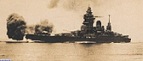
Is IJN BB Fuso overloaded in the diorama with the subs? She looks as if she were sinking.
RE: OT: Speachless
That may be accurate. From the time they were designed in the 1920s a lot of weight was added in AA guns, aircraft equipment like catapults and hangars and of course that enormous pagoda superstructure. I recall reading that many IJN ships were poor sea boats because of low freeboard and heavy tophamper.ORIGINAL: Yaab
Is IJN BB Fuso overloaded in the diorama with the subs? She looks as if she were sinking.
No matter how bad a situation is, you can always make it worse. - Chris Hadfield : An Astronaut's Guide To Life On Earth

RE: OT: Speachless
One has only to look at pictures of HMS Hood from 1919 and then to 1939 and see that additions deepened draft.
RE: OT: Speachless
Actually, the pagodas had to have rather cramped stairways, didn't they?
RE: OT: Speachless
Many BBs removed single purpose secondary armament as weight compensation for everything added in wartime, such as AA guns. Not sure if Hood got to that point before she was sunk.ORIGINAL: dr.hal
One has only to look at pictures of HMS Hood from 1919 and then to 1939 and see that additions deepened draft.
RE: OT: Speachless
Yes Hood had her 5.5 inch secondary battery fully removed in 1940. However additional armor and anti-torpedo bulges along with AA guns added to her displacement (alone with restoration of a number of armor bulkheads) all of which added a few thousand tons which made her aft decks VERY wet in any weather. She was LONG overdue for a major engine and armor refit (1941?) but as we all know, she never lived that long. As designed she was supposed to reach 32 knots, however due to lessons learned at Jutland her displacement was increased even BEFORE she was launched which slowed her (engines were NOT redesigned). By the time she was hit by Bismark it was suggested that she could only do a little over 26 knots but records seem to be conflicting. Certainly she could not reach 30 knots.ORIGINAL: Zorch
Many BBs removed single purpose secondary armament as weight compensation for everything added in wartime, such as AA guns. Not sure if Hood got to that point before she was sunk.ORIGINAL: dr.hal
One has only to look at pictures of HMS Hood from 1919 and then to 1939 and see that additions deepened draft.
-
fcooke
- Posts: 1158
- Joined: Mon Jun 17, 2002 10:37 pm
- Location: Boston, London, Hoboken, now Warwick, NY
RE: OT: Speachless
ok - see not reaching 32, but only 26 seems a bit much.....
RE: OT: Speachless
I'll look into it, but I did read that her last trials she went to 26.4.... but like most things I could be wrong. Yet, like my own time in the navy, in trials you try to do things under "perfect" conditions so if 26.4 was tops for her on trials, then it might be less under "normal" conditions but slightly more under wartime conditions (27.5?)! Clearly she was in engine room trouble... the moment she got underway until she docked it's my understanding the crew was on "water hours" and for those readers that didn't serve on ships of World War 2 style (let alone World War 1) it means that your fresh water condensers only put out enough potable water to feed the boilers and to drink.... NOT to wash. Hood's steam system was in bad shape mainly due to lack of yard time to put it right (and steam pressure equates in large part to HP which directly impacts speed, along with other factors such as the condition of the hull bottom, etc.). The war came a few years early for Hood, as her "extensive" overhaul was postponed and postponed until the battle with the Bismark but it beyond reach.ORIGINAL: fcooke
ok - see not reaching 32, but only 26 seems a bit much.....
RE: OT: Speachless
I really question why the Hood was used in the neutrality patrol off Spain in 1936-39 when heavy cruisers were enough to ride herd on the German pocket battleships. My guess is that there was no money for Hood's overhaul at that time.ORIGINAL: dr.hal
I'll look into it, but I did read that her last trials she went to 26.4.... but like most things I could be wrong. Yet, like my own time in the navy, in trials you try to do things under "perfect" conditions so if 26.4 was tops for her on trials, then it might be less under "normal" conditions but slightly more under wartime conditions (27.5?)! Clearly she was in engine room trouble... the moment she got underway until she docked it's my understanding the crew was on "water hours" and for those readers that didn't serve on ships of World War 2 style (let alone World War 1) it means that your fresh water condensers only put out enough potable water to feed the boilers and to drink.... NOT to wash. Hood's steam system was in bad shape mainly due to lack of yard time to put it right (and steam pressure equates in large part to HP which directly impacts speed, along with other factors such as the condition of the hull bottom, etc.). The war came a few years early for Hood, as her "extensive" overhaul was postponed and postponed until the battle with the Bismark but it beyond reach.ORIGINAL: fcooke
ok - see not reaching 32, but only 26 seems a bit much.....
No matter how bad a situation is, you can always make it worse. - Chris Hadfield : An Astronaut's Guide To Life On Earth
RE: OT: Speachless
Also, there may not have been any open dry docks big enough for Hood, given that the first 2 KGV class were under way and that Warspite and Queen Elizabeth (and maybe Renown?) were being reconstructed.ORIGINAL: BBfanboy
I really question why the Hood was used in the neutrality patrol off Spain in 1936-39 when heavy cruisers were enough to ride herd on the German pocket battleships. My guess is that there was no money for Hood's overhaul at that time.ORIGINAL: dr.hal
I'll look into it, but I did read that her last trials she went to 26.4.... but like most things I could be wrong. Yet, like my own time in the navy, in trials you try to do things under "perfect" conditions so if 26.4 was tops for her on trials, then it might be less under "normal" conditions but slightly more under wartime conditions (27.5?)! Clearly she was in engine room trouble... the moment she got underway until she docked it's my understanding the crew was on "water hours" and for those readers that didn't serve on ships of World War 2 style (let alone World War 1) it means that your fresh water condensers only put out enough potable water to feed the boilers and to drink.... NOT to wash. Hood's steam system was in bad shape mainly due to lack of yard time to put it right (and steam pressure equates in large part to HP which directly impacts speed, along with other factors such as the condition of the hull bottom, etc.). The war came a few years early for Hood, as her "extensive" overhaul was postponed and postponed until the battle with the Bismark but it beyond reach.ORIGINAL: fcooke
ok - see not reaching 32, but only 26 seems a bit much.....
RE: OT: Speachless
Gunboat diplomacy is a concept built around symbolism and the Hood was "the pride of the Royal Navy". In other words the biggest, baddest gunboat the RN had....