Oh btw just came across this reference on the Midway Roundtable (http://midway42.org/Backissues/2014/20140301.aspx) from Barrett Tillman himself:
"The only thing I would add is elevator speed. I don't have the figures at hand (I cited them in the CV6 book) but the Yorktowns' elevators were significantly faster than the Lexingtons. That was especially important in cycling CAPs, as at E Sols and Santa Cruz."
That means he did put this data somewhere in his book about USS Enterprise. I happen to have this very book in my bookshelf (but didn't pay that much attention to it till now), I'll see if I can dig up something... ^^
Participative thread - about carriers & carrier ops IRL
Moderators: wdolson, MOD_War-in-the-Pacific-Admirals-Edition
RE: Participating thread - about carriers & carrier ops IRL
Sorry but in my limited experience with BuShips records, they are found either via NARA visits or in dusty old report books that pop up for sale every now and then. Digitalization hasn't caught up with them yet.
Interesting on the Lex's inoperative aft elevator. I might go back to look at the combat reports at some point and check what its status was by the time of Coral Sea. Perhaps see what the Sara's status was with it too.
If you get a confirm on the Yorktown's elevator details, is that the US side covered or are you chasing the Essex, Independence and CVE classes too?
Interesting on the Lex's inoperative aft elevator. I might go back to look at the combat reports at some point and check what its status was by the time of Coral Sea. Perhaps see what the Sara's status was with it too.
If you get a confirm on the Yorktown's elevator details, is that the US side covered or are you chasing the Essex, Independence and CVE classes too?
This was the only sig line I could think of.
RE: Participating thread - about carriers & carrier ops IRL
I suppose that Lexington's condition got fixed during her stay at Pearl between the Lae raid and Coral Sea, if not before. I will check tomorrow what it was about. It was certainly logged in the ship's cruise report back to Pearl anyway.
Regarding other CVs, well, any additional info is always welcome, but we are focusing on pre-war CVs. As a matter of fact, Wasp and to a lesser extent Ranger are a more relevant matter. I suppose Wasp's classic elevators would have the same characteristics as Yorktown, but gotta have to find a realistic value for the deck-edge one. I'll check if I don't have a video out there...
Regarding other CVs, well, any additional info is always welcome, but we are focusing on pre-war CVs. As a matter of fact, Wasp and to a lesser extent Ranger are a more relevant matter. I suppose Wasp's classic elevators would have the same characteristics as Yorktown, but gotta have to find a realistic value for the deck-edge one. I'll check if I don't have a video out there...
RE: Participating thread - about carriers & carrier ops IRL
Never seen a vid with the Wasp's swing-arm type elevator in action. I've just assumed in the past the cycle time and weight capacity was below that of the deck lifts, although the benefits of the elevator position made up for it.
Good luck with that one.[:)]
Good luck with that one.[:)]
This was the only sig line I could think of.
RE: Participating thread - about carriers & carrier ops IRL
Unfortunately ([;)]) you're right - I had the feeling I had seen something, but it's because the few very good B&W photos that exist of it morphed into some sort of false memory regarding a possible video [:(]
Back to square one on this one...
Back to square one on this one...
RE: Participating thread - about carriers & carrier ops IRL
Just a small update after one month of progress, if anyone's interested.
Experiments are still going on, thanks to all who gave a hand. We're currently quite busy with the flight model and deck ops in general. The Air Boss AI is now pretty much ready to roll and answer the expectations of the commander, while the air AI is already able to proceed with basic flight instructions (that is taking off, flying in formation, and landing back on the carrier using a classic pattern). Still a long way to go, but hopefully we'll get there eventually [&o]
Naturally everything is very much work in progress, it is still a feasibility study and prototype more than anything coming close to a game and actual gameplay. But it grows a bit more everyday. Let's see where it will lead us... In the meantime, enjoy the show [;)]
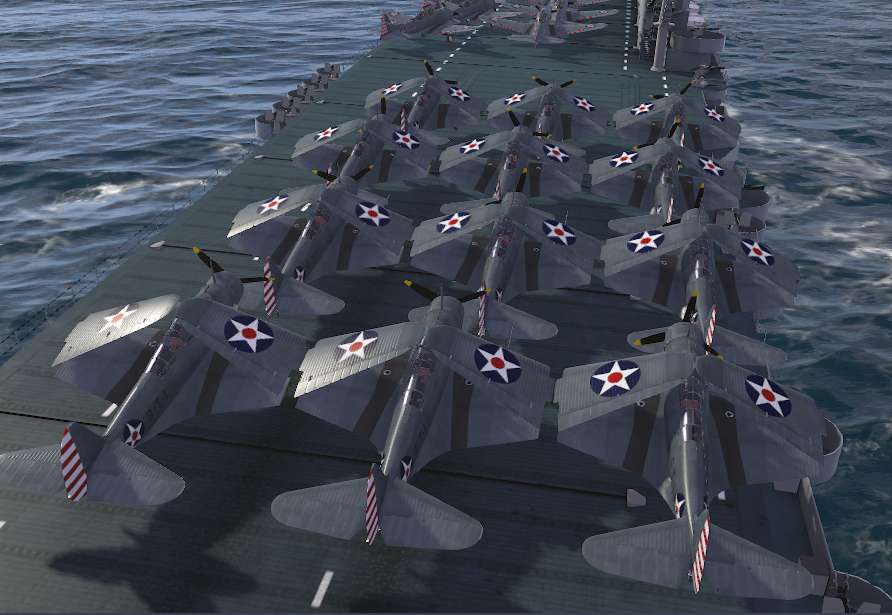


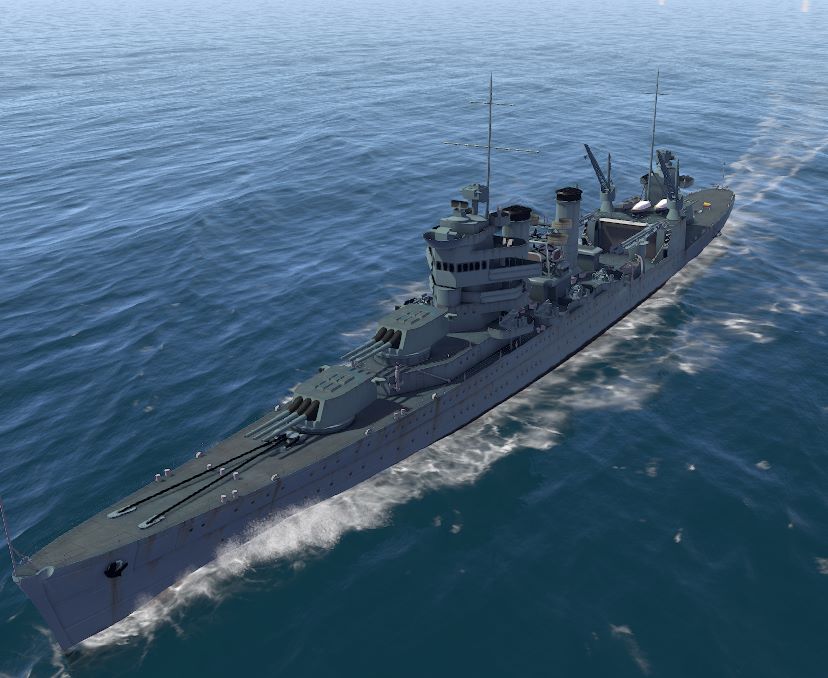


Experiments are still going on, thanks to all who gave a hand. We're currently quite busy with the flight model and deck ops in general. The Air Boss AI is now pretty much ready to roll and answer the expectations of the commander, while the air AI is already able to proceed with basic flight instructions (that is taking off, flying in formation, and landing back on the carrier using a classic pattern). Still a long way to go, but hopefully we'll get there eventually [&o]
Naturally everything is very much work in progress, it is still a feasibility study and prototype more than anything coming close to a game and actual gameplay. But it grows a bit more everyday. Let's see where it will lead us... In the meantime, enjoy the show [;)]
RE: Participating thread - about carriers & carrier ops IRL
Wow [X(]
Can you give me more details about the game?
Can you give me more details about the game?
RE: Participating thread - about carriers & carrier ops IRL
Thank you bro ^^
Would be a bit insensitive to talk about it in here though - and, well, design details are still little more than expectations, if not speculation. There isn't much actual work done just yet as we are still early in prototyping.
But let's say that, if everything goes well, it will be a command simulation, some sort of hybrid between a wargame and a simulation. More about that when we'll go live and public next month (hopefully!). And it's gonna be all about US carriers in 1942, but I suppose it was rather obvious considering what Ive been asking the forum about since the beginning [;)]
Stay tuned [8D]
Would be a bit insensitive to talk about it in here though - and, well, design details are still little more than expectations, if not speculation. There isn't much actual work done just yet as we are still early in prototyping.
But let's say that, if everything goes well, it will be a command simulation, some sort of hybrid between a wargame and a simulation. More about that when we'll go live and public next month (hopefully!). And it's gonna be all about US carriers in 1942, but I suppose it was rather obvious considering what Ive been asking the forum about since the beginning [;)]
Stay tuned [8D]
RE: Participating thread - about carriers & carrier ops IRL
I will do [:)]
RE: Participating thread - about carriers & carrier ops IRL
Hey AleRonin
Been posting some random stuff at Grogheads, if you're interested to follow the development - I'll keep updating the topic over there with some new experiments until the moment we go live [:)]
http://grogheads.com/forums/index.php?topic=10341.75
Take care!
Been posting some random stuff at Grogheads, if you're interested to follow the development - I'll keep updating the topic over there with some new experiments until the moment we go live [:)]
http://grogheads.com/forums/index.php?topic=10341.75
Take care!
RE: Participating thread - about carriers & carrier ops IRL
Thanks Fishbed, very nice the last picture full of books!
Time to increase my library...
Time to increase my library...

RE: Participating thread - about carriers & carrier ops IRL
I just have to say that the previews look fantastic!
Also, I have been reading a great book you might want to pick up, if you haven't already: How Carriers Fought: Carrier Operations in WWII by Lars Celander. It brings together a lot of information regarding many niche topics regarding WW2 carriers and covers multiple navies.
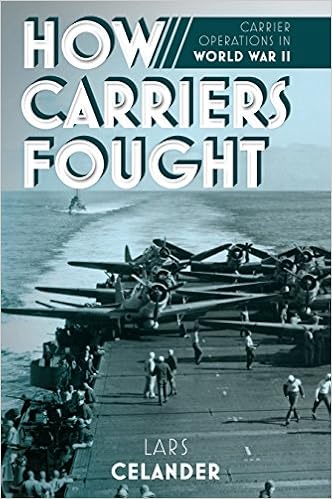
As an example of how good it is, it has explained a lot of very specific design choices in WitP:AE in a way that no other book has. For example, it's much better to fight the urge to assign carrier captains with high AIR skill and instead use captains with NAVAL skill and to use an admiral with high AIR skill at the task force command level to cover the command skill need for the air group. Using high NAVAL skill captains is to give your carriers the best chance of dodging attacks. From page 93 in the book:

Although you can get particular pieces of info from other sources, this book is crammed with such tidbits across many topics.
Best of all, it's only $1 USD in Kindle format from the Amazon store. A great reference, a steal for the price.
Also, I have been reading a great book you might want to pick up, if you haven't already: How Carriers Fought: Carrier Operations in WWII by Lars Celander. It brings together a lot of information regarding many niche topics regarding WW2 carriers and covers multiple navies.
As an example of how good it is, it has explained a lot of very specific design choices in WitP:AE in a way that no other book has. For example, it's much better to fight the urge to assign carrier captains with high AIR skill and instead use captains with NAVAL skill and to use an admiral with high AIR skill at the task force command level to cover the command skill need for the air group. Using high NAVAL skill captains is to give your carriers the best chance of dodging attacks. From page 93 in the book:
Although you can get particular pieces of info from other sources, this book is crammed with such tidbits across many topics.
Best of all, it's only $1 USD in Kindle format from the Amazon store. A great reference, a steal for the price.

RE: Participating thread - about carriers & carrier ops IRL
Thank you for the suggestion and the kindness both Korvar. I did buy that book online already indeed, no worries! [;)]

RE: Participating thread - about carriers & carrier ops IRL
Naval skill for not just dodging attacks but aso friendly ships. [&:]
Seek peace but keep your gun handy.
I'm not a complete idiot, some parts are missing!
“Illegitemus non carborundum est (“Don’t let the bastards grind you down”).”
 ; Julia Child

I'm not a complete idiot, some parts are missing!
“Illegitemus non carborundum est (“Don’t let the bastards grind you down”).”
; Julia ChildRE: Participating thread - about carriers & carrier ops IRL
Good point - in fact, the book addresses that within a page of what I quoted above.
How Carriers Fought pp. 93-95:
On a major warship it takes about 15–30 seconds to turn the rudder
over from straight ahead to hard over, that is to a deflection of 30–35°. On
a destroyer it might take around 5 seconds. A deflection more than 30–35°
did not result in sharper turn, it only slowed down the ship and put great
stress on the rudder. After the rudder has been put hard over, it then takes
several seconds more for the turn to fully develop. Once in a turn a ship can
choose to stay in that turn. Doing that avoids going in a relatively straight
line while the rudder is being turned over to the other side. Staying in a hard
turn might be the most difficult maneuver for the attacker to handle despite
being somewhat predictable.
While in a fully developed turn, the speed of a major warship drops to
about 15–20 knots. For this reason, the sharpest turns may be avoided and
reserved for really critical situations like avoiding a torpedo. A smaller ship
like a destroyer slows down less in a turn, having more excess horsepower at
lower speeds. A destroyer will also accelerate faster out of the turn.
The latency inherent in executing a turn means that it is impossible to turn
in unison with another ship by simply observing what the other ship is doing.
There has to be some sort of general command for a fleet to turn in unison.
It is this latency that is the core problem why ships sometimes collide for no
apparent reason. It is not enough to react to what the other ship is doing,
the reaction has to be started before it is apparent what the other ship is
doing — hence the need for communication between ships in close proximity.
(emphasis mine)
RE: Participating thread - about carriers & carrier ops IRL
Interesting. I know that in WWI at Jutland, the British lead ship would turn and the rest would take the turn in order to keep in the same order. Much like soldiers marching in column where they follow the leader. But the Germans would signal and the entire column would turn at the same time. Much harder to do safely but better seamanship actually.
Seek peace but keep your gun handy.
I'm not a complete idiot, some parts are missing!
“Illegitemus non carborundum est (“Don’t let the bastards grind you down”).”
; Julia Child
I'm not a complete idiot, some parts are missing!
“Illegitemus non carborundum est (“Don’t let the bastards grind you down”).”
; Julia ChildRE: Participating thread - about carriers & carrier ops IRL
In terms of the Pacific Theater of WW2, I know that the column formation was generally preferred, but an "all ships turn" command was available as an option to pretty much all navies at the time. It primarily has to do with the improvement of radio technology as well as its prevalence in naval vessels compared to WW1. The column would generally be maintained in surface combat groups unless there was a compelling reason to break it - such as a known or suspected incoming torpedo attack which would take the column too long to dodge as columns add another layer of latency to a turning command. For surface combat groups, the effects of Trafalgar were still very much felt - forming a column and trying to "cross the T" of the enemy column was still primary doctrine for the black shoe navies at the outbreak of WW2.
The more primitive radio technology of WW1 meant that visual communications were paramount. This influence can even be seen in the main US Pacific Battle Fleet in the interwar period - for instance, the range clocks (often confused as being timekeeping clocks) mounted on the upper part of the masts. The lead ship (or any ship which acquired a good visual) would set the estimated range to the enemy ships, and the following ships would update their own dials to relay that information down the battle line visually. I believe they were developed by the Royal Navy as part of the fallout of Jutland and were largely no longer in use by WW2.
The increasing potency of sub and air attacks meant that columns no longer were effective in many instances. Various forms of 'ring' formations were used, with the most valuable/vulnerable assets clustered in the middle as much as possible. Determining the stations of the various ships was often a balance between offering AA and sub screening vs the maneuvering restrictiveness of close formations. Early war carrier formations tended to favor looser formations as maneuver was still the primary defense against air threats and for the US Navy in particular, the formations tightened up as time moved forward - the improvements in quantity / quality of AA armament as well as fighter direction / CAP meant that maneuvering became a secondary last line of defense. Captain Wayne Hughes goes into the game theory of this calculus quite well in his Fleet Tactics book.
The more primitive radio technology of WW1 meant that visual communications were paramount. This influence can even be seen in the main US Pacific Battle Fleet in the interwar period - for instance, the range clocks (often confused as being timekeeping clocks) mounted on the upper part of the masts. The lead ship (or any ship which acquired a good visual) would set the estimated range to the enemy ships, and the following ships would update their own dials to relay that information down the battle line visually. I believe they were developed by the Royal Navy as part of the fallout of Jutland and were largely no longer in use by WW2.
The increasing potency of sub and air attacks meant that columns no longer were effective in many instances. Various forms of 'ring' formations were used, with the most valuable/vulnerable assets clustered in the middle as much as possible. Determining the stations of the various ships was often a balance between offering AA and sub screening vs the maneuvering restrictiveness of close formations. Early war carrier formations tended to favor looser formations as maneuver was still the primary defense against air threats and for the US Navy in particular, the formations tightened up as time moved forward - the improvements in quantity / quality of AA armament as well as fighter direction / CAP meant that maneuvering became a secondary last line of defense. Captain Wayne Hughes goes into the game theory of this calculus quite well in his Fleet Tactics book.
RE: Participating thread - about carriers & carrier ops IRL
Good discussion on maneuver. Apparently the IJN grasped he significance of communication and favoured formations that let their DD squadrons maneuver independently of the flagship with appropriate comms of course. I never heard of IJN ships shooting at each other as a result of this independence but it may have contributed to Adm. Goto's reluctance to open fire at the beginning of the Battle of Cape Esperance.
Adm. Spruance seemed to be particularly good at anticipating carrier movements for his screening cruisers, presumably by watching aircraft preparing to land and take off and paying attention to the wind direction. Legend has it that Halsey recommended Spruance as replacement (for Halsey) because of his skill at maneuvering.
Adm. Spruance seemed to be particularly good at anticipating carrier movements for his screening cruisers, presumably by watching aircraft preparing to land and take off and paying attention to the wind direction. Legend has it that Halsey recommended Spruance as replacement (for Halsey) because of his skill at maneuvering.
No matter how bad a situation is, you can always make it worse. - Chris Hadfield : An Astronaut's Guide To Life On Earth
RE: Participating thread - about carriers & carrier ops IRL
Makes sense since Spruance was a cruiser skipper before he ever commanded carrier groups.
The IJN favored maneuver in general, which explains a lot about their carrier operations. This well-known image of the Sōryū at Midway demonstrates that the carriers were given a wide berth in which to maneuver:

Even the IJN flight deck operations were set up in such a way to have minimum interference between the carriers. Carriers generally sail into the wind for aircraft takeoffs and landings, ideally directly into the wind for takeoff and slightly offset for landings. The reason to be slightly offset during landings is to minimize the turbulence from the island interfering with the landing, while still giving the landing aircraft a general headwind. Thus, carrier landing patterns are generally opposite the island.
Japanese doctrine had their carriers operate as purpose-built pairs, which formed the nucleus of each carrier division. If you ever wondered why some Japanese carrier islands were on the port side and others starboard, this is why:

This allowed the carriers to sail closer together to give a degree of mutual support, while still being able to turn away from one another when needed to maneuver; however, the practice of building mirrored flight decks was abandoned by the time Shōkaku and Zuikaku were built - both of their islands were starboard like most carriers of various navies were.
The IJN favored maneuver in general, which explains a lot about their carrier operations. This well-known image of the Sōryū at Midway demonstrates that the carriers were given a wide berth in which to maneuver:
Even the IJN flight deck operations were set up in such a way to have minimum interference between the carriers. Carriers generally sail into the wind for aircraft takeoffs and landings, ideally directly into the wind for takeoff and slightly offset for landings. The reason to be slightly offset during landings is to minimize the turbulence from the island interfering with the landing, while still giving the landing aircraft a general headwind. Thus, carrier landing patterns are generally opposite the island.
Japanese doctrine had their carriers operate as purpose-built pairs, which formed the nucleus of each carrier division. If you ever wondered why some Japanese carrier islands were on the port side and others starboard, this is why:
This allowed the carriers to sail closer together to give a degree of mutual support, while still being able to turn away from one another when needed to maneuver; however, the practice of building mirrored flight decks was abandoned by the time Shōkaku and Zuikaku were built - both of their islands were starboard like most carriers of various navies were.
RE: Participating thread - about carriers & carrier ops IRL
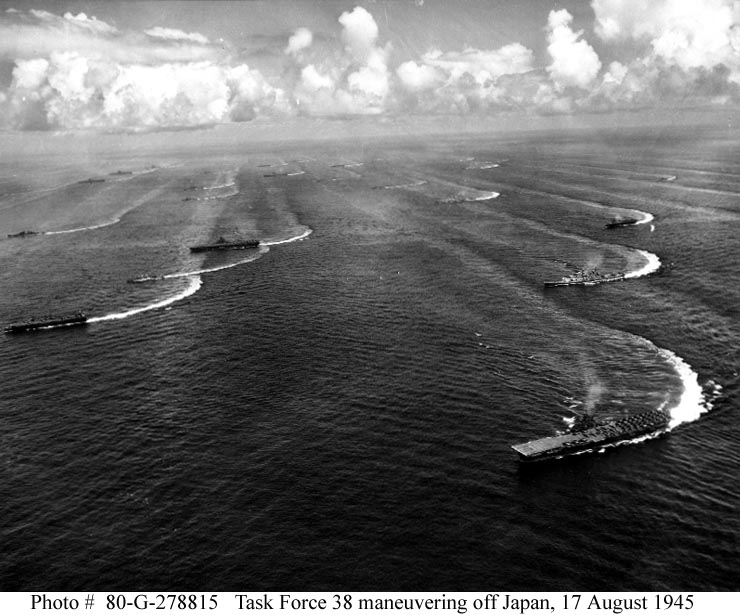
Well it's funny you'd mention signals & procedures for maneuvers. We were actually discussing this photo just yesterday with the dev team. By 1945, that's how well the USN had drilled itself into making Task force simultaneous "all ships" maneuvers happen. It's quite a sight...