ORIGINAL: Big B
Assume the following situation:
IF - the Pacific Fleet Battle Force had been deployed back to (or never left) Los Angeles in 1941.... (as both commanders before Adm Kimmel demanded),
and ... the Joint Chiefs turned down Mac Arthur's request for a heavy Philippine Islands deployment of US resources and troops in 1941 (MacArthur only won them over in the summer of 1941), - but the USA still embargoed exports to Japan - with all the consequences entailed ....
It is likely the Pacific War would still have happened, due to the economic consequences of the embargo, which was the real tipping point.
SO, ....Japan still moves to war in Malaya, the Philippines, and the DEI (the prize) - but with no fleet at Pearl Harbor - what do you think the KB would have been assigned to do? (... this is my real question here)
Curious as to what you think.
B
If Japan had not attacked Pearl Harbor, or if the US Pacific Fleet had remained stationed in California, it is highly likely that the Japanese carriers would have conducted the same operations that they did immediately post-PH. These operations had been planned and scheduled long in advance of the war’s outbreak and relied on close coordination and clock-work timing (whether realistic or otherwise). These operations, including forces, responsibilities, and timing, were detailed in the Imperial Conference and resulting Army-Navy Central Agreement of 2 July, 1941, following the general strategic plan outlined by the January, 1941 Planning Board Conference. The spark for detailed operational planning was the US oil boycott, announced in August of that year, but known to be coming as early as June.
In response to the boycott, the joint Army-Navy planners chose Option-4 (from the Planning Board’s smorgasbord) which provided for simultaneous attacks and advance along two axes, Malaya and the Philippines, followed by a concentric attack and seizure of the oil centers of the Netherlands East Indies. The planners accepted the problems of coordination, timing and dispersion of force, because it was the only option which compromised the views of both the Army and Navy.
Naval planning was finalized at the Naval War College exercises of 10-13 September. These plans did not include Yamamoto’s proposal for a Pearl Harbor operation, although they did include seizure of Guam and Wake Islands along with the Philippines; operations which would surely have brought the US into the conflict in exactly the manner envisioned by Navy planning and doctrine since 1929. Objections to Yamamoto’s proposals were just those set forth by BigB as the thread premise; the Pacific Fleet might have been re-stationed, and the possibility of discovery and timely preparation too great i.e., the fleet might not be in port. It was not until Yamamoto made his threat to resign that the PH operation was included in the modified plan of 20 October.
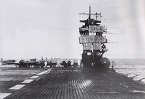
The general plan did not forsee a role for Carrier Squadrons 1 and 5, indeed ComCarDiv 5 was only activated on 14 November. CarRon 2 was originally designated as part of the cover force for the attacks on Mindanao (which clearly did not happen because of PH) and subsequently in support of seizure of the Celebes, Moluccas, and Ambon (which did happen). CarRon 4 (Ryujo) was designated as direct support for the seizure of Davao (which did happen according to plan). CarRon 5 was originally designated as cover and support for operations against Eastern New Guinea and the Northern Solomons. These operations were to have been conducted by the South Seas Detachment (Horii) immediately following its seizure of Guam, but the execution date was extended until CarRon 5 completed the PH operation. Otherwise, it went as planned.
IJN land based air assets were always intended for initial strikes and naval interdiction for Malaya and the Northern Philippines. This is why carriers were not allocated to these roles.
Matt.
Political Strategy Prior to Outbreak of War, IV; Japanese Studies in World War II, CMH, US Army, Washington DC.
Morton, Louis, The War in the Pacific, 1941-1942, CMH, US Army, Washington DC, 1962.
Senshi Sosho, V-3, Occupation of Dutch East Indies, NIDS, Tokyo (1966)
Senshi Sosho, V-26, N.E.I.-Bengal Bay Area Naval Attack Operations, NIDS, Tokyo (1969)
Senshi Sosho, V-45, Conduct of Navy Operations .. Before Outbreak of Pacific War, NIDS, Tokyo (1971)
Japanese Monographs 160, 169, Outline of Naval Armament and Preparations, USAFFE