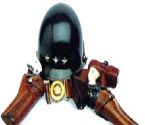
Josef 'Sepp' Dietrich

Gamers can also use this forum to chat about any game related subject, news, rumours etc.

Moderator: maddog986

Post Reply
User avatar
Von Rom
Posts: 1631
Joined: Fri May 12, 2000 8:00 am

RE: Josef 'Sepp' Dietrich

Post by Von Rom »

ORIGINAL: EricGuitarJames

Still quoting from Farago, that noted journalist and author of works on conspiracy theories I see. But I won't quote from that distinguished historian Charles Whiting in deference to your feelings.

All you've proved is that there is reasonable doubt as to whether Patton was actually in Austria at the time of Dietrich's surrender. In any case, the German army was surrendering in droves to whatever Allied unit was closest (unless it was Soviet). Donitz (Hitler's successer) surrendered to Montgomery on Luneberg Heath on May 4th. Around 300,000 German troops surrendered to Gerow in the Ruhr following Model's suicide on April 21st. It just happens that these generals were at these locations when the surrenders occured, there is no credit to be taken apart from being part of the victorious alliance.


Still quoting from Farago, that noted journalist and author of works on conspiracy theories I see. But I won't quote from that distinguished historian Charles Whiting in deference to your feelings.


Sorry, but you have been greatly misinformed.

BTW, I have more definitions on what hearsay means, if you need them. Just trying to be helpful.


Ladislas Farago's Credentials:


Mr. Farago is very qualified to write books on military history and intelligence.

He is internationally known as a writer, military historian, biographer, and as an expert in espionage and intelligence.

He served in WWII as Chief of Research and Planning, Special Warfare Branch, Chief of Naval Operations, U.S. Navy.

He is the author of 18 books on intelligence and military history, and has edited Corps Diplomatique and United Nations World.

He wrote The War of Wits which is a classic of military and political intelligence.

He also wrote The Tenth Fleet which has been heralded as the classic study of US anti-submarine action in WWII.

He also authored a number of works which are still classified, such as History of Propaganda in World War II and Morale and Its Maintenance in the German Army.

Both his books on Patton: Patton: Ordeal and Triumph (which took 12 years to research and write) as well as The Last Days of Patton were made into movies. And both books have stood the test of time for their content.

The screenplay for the movie Tora! Tora! Tora! was written by Ladislas Farago, Larry Forrester, Ryuzo Kikushima, and Hideo Oguni.


All you've proved is that there is reasonable doubt as to whether Patton was actually in Austria at the time of Dietrich's surrender. In any case, the German army was surrendering in droves to whatever Allied unit was closest (unless it was Soviet). Donitz (Hitler's successer) surrendered to Montgomery on Luneberg Heath on May 4th. Around 300,000 German troops surrendered to Gerow in the Ruhr following Model's suicide on April 21st. It just happens that these generals were at these locations when the surrenders occured, there is no credit to be taken apart from being part of the victorious alliance.

So, what's your point?

Ike just happened to be Supreme Commander.

Marshall just happened to be Chief of Staff.

Allied Armies just happened to invade Normandy on D-Day. . .

Rommel just happened to be in North Africa. . .

I'm amazed the ends some of you will go to, to deny the facts of history, especially when it relates to Third Army [;)]

History and circumstances often hinge on being in the right place at the right time. . .

The interesting thing is that D'Este completely leaves out the fact that Patton was even in Austria on May 7, 1945.

I have at least done my homework and shown that Patton was in Austria at this time.

In addition, there is Irrefutable Proof that Dietrich's 6th SS Panzer Army DID surrender to Third Army. So Patton did not even have to be in Austria to receive credit for this. Yet again, D'Este and other historians completely leave this fact out of their books.

I realize this information may trouble you.

But history can sometimes be uncomfortable.


1) Patton was in Austria on May 7, 1945. This is when many important German army units and Nazis surrendered. Patton, along with Patterson, the Under Secretary of War, flew to XX Corps HQ at St. Martin/Innkreis, Austria on May 7, 1945 (Martin Blumenson & George S. Patton, The Patton Papers 1940-1945; Da Capo Press; (October 1, 1996); p. 697).

2) Units of Third Army (the 80th Division) moved into Austria in May, 1945 and accepted the surrender of units of 6th SS Panzer Army:

On 7 May, 1945, SS Brigade Keitel, under the command of SS Major Keitel [Author's note: This was the son of General Keitel, Hitler's right hand.], surrendered to our forces. Brigade Keitel, strength 3,000 was an element of the 6th SS Panzer Army. Keitel's report that Sepp Dietrich still commanded the 6th SS Panzer Army was the first knowledge of the Allies that Dietrich still lived. He had previously been reported dead by the Russians.

http://www.thetroubleshooters.com/history156.html


3) "Dietrich. . . on his own initiative, ordered the Hohenenstaufen [9th SS Pz Div] and Hitlerjugend [12th SS Pz Div] to withdraw to the River Ybbs, where they surrendered to Patton's troops" (Messenger, Charles, Hitler's Gladiator, Brassey's defence Publishers, p.171).


All of this conclusively proves those websites were correct.
User avatar
Von Rom
Posts: 1631
Joined: Fri May 12, 2000 8:00 am

RE: Josef 'Sepp' Dietrich

Post by Von Rom »

ORIGINAL: EricGuitarJames

Still quoting from Farago, that noted journalist and author of works on conspiracy theories I see. But I won't quote from that distinguished historian Charles Whiting in deference to your feelings.


Let's Compare Authors, shall we? [;)]


Here are some opinions about "Charles Whiting's" writings:

*******************************************************************

The Other Battle of the Bulge: Operation Northwind (West Wall Series) > Customer Review #1:
--------------------------------------------------------------------------------
Thoughts on Whiting

Reading the other posts about this book compels me to say a few things about the author. Charles Whiting is a popular, readable and prolific writer of WWII stories, but he is not a historian in any way, shape or form. If you have read more than one of his books you will recognize the following:

1) lack of any kind of endnotes and few footnotes: where is this material coming from?
2) quotes from interviews with the author, which are not in any way anotated at the end of the book
3) praise of the common US soldier but uniformly harsh criticism of all senior U.S. leadership, especially Eisenhower
4) comparisons with Vietnam which, while occasionally interesting (he points out that William Westmorland fought in the Huertgen Forest without learning its lessons) usually border on the ridiculous
5) plagarism from his own works, including entire chapters, some of which have not even been re-written, but simply included whole in different books
6) where are the @and*#and! maps?

This book, like his "Ardennes: The Secret War" posits that Operation Nordwind was a bigger threat than the Battle of the Bulge to the Allies because it nearly defeated the Alliance politically at a time when they had already won the war militarily. It is an interesting conjecture, but it is tainted by the half-hidden glee that Whiting seems to feel over any disaster involving American troops and particularly their leadership. Everything he writes is written through that distoring lens. In any endeavour, if you want to find fault, you will, and in war this is particularly easy. Eisenhower was an armchair warrior and a true mediocrity as a strategist, but he was a superb military politician, maybe the only man who could have kept such a contentious alliance together until final victory. He deserves credit for holding it all together.

I have read five of Whitings books and found most of them to be very entertaining, especially because he tends to focus on American disasters which naturally have not gotten much press since the war, and thus have not been written about extensively. He puts books together like a novel, and is far from a dry writer. But his scholarship would not have met the standards of my high school history teacher, much less those of a true historian. He seems to write about what interest him only, is careless with his statistics and dates, includes facts that suit his opinions, states his opinions as facts, and constantly recycles his own material. You could probably file his books under historical fiction before you could file them under history."

************************************************************

Whiting, Charles. The Battle for Twelveland: An Account of Anglo-American Intelligence Operations Within Nazi Germany, 1939-1945. London, Leo Cooper, 1975. The Spymasters: The True Story of Anglo-American Intelligence Operations Within Nazi Germany, 1939-1945. New York: Dutton, 1976.

Constantinides says this is "a potpourri of fact and fiction, actuality and myth, assumptions, sketchy versions of certain events, contrived tie-ins, and a certain confusion." Nevertheless, the author is "sometimes so accurate as to indicate access to well-informed sources or successful combining of certain versions." There is also "a good segment on SIS's role and the basis of its intelligence successes against Germany."


Whiting, Charles. Gehlen: Germany's Master Spy. New York: Ballantine, 1972.

NameBase: "Charles Whiting's book is somewhat sensational in tone and doesn't cite sources.... There are altogether too many exclamation points, along with direct quotes that appear to be added for effect rather than accuracy. Most of the book concerns Gehlen's career in Germany, particularly after the war, rather than his associations with U.S. intelligence."

http://intellit.muskingum.edu/alpha_fol ... f-whz.html

************************************************************


Here are more reviews about Whiting's books:

http://www.amazon.com/exec/obidos/tg/de ... 1?v=glance

http://www.amazon.com/exec/obidos/tg/de ... 1?v=glance

http://biologybooks.net/Heydrich_Reinhard_Heydrich.html

http://216.239.51.104/search?q=cache:UX ... lr=lang_en


******************************************

More reviews of Whiting's books:


1) http://216.239.51.104/search
q=cache:VQOn8Yl73RYJ:members.aol.com/VonRanke/wwii.html+historians+opinions+about+whiting+books&hl=en&lr=lang_en


2) http://216.239.51.104/search?q=cache:tn ... lr=lang_en


3) And this review:

"West Wall" Misses the Mark

Another assembly line book by Charles Whiting (is there an actual person with this name, or is it a pseudonym used by the publisher?)-sloppy writing and a total lack of any new insight or even information.

I picked up this book with anticipation about learning more on the often overlooked Allied campaign to break through the defenses of the German Siegfried line in the west.

Disappointment set in soon as popular myths about the French Maginot line are retold as fact while odd, irrelevant (and sometimes vulgar) anecdotes are inserted without adding anything to the story-do we really need to know that much about Ernest Hemingway? Yet not enough details are included on the structure or techniques of Organization Todt, the German contractor for the Siegfried Line and other massive wartime projects as just one example.

Do yourself a favor and buy any of the WWII books by Cornelius Ryan instead, especially "A Bridge too Far" which deals with a German resistance in the west as the Allies approached the Rhine.

http://bookworms.org/aws.cgi/mode_books ... r%20Series


*************************************


Now let's compare this with reviews about Farago's book:

Ladislas, Farago, Patton: Ordeal and Triumph (New York: Astor-Honor, Inc., 1964)


Patton: Ordeal and Triumph, June 14, 2000
Reviewer: Tom Rawlings (Pakenham, Victoria, Australia) - See all my reviews

Amazon managed to obtain me an out of print copy, without which I would not be able to write this review. This book is an excellent exposition of George Patton the warrior and General. There is no doubt that had his and Bradley's roles been reversed that the war in Europe would have finished months earlier than it did. The failure to close the Falaise gap and the subsequent german escape is an example of indecision by both Eisenhower and Bradley. I have read three books on Patton and a Soldiers Story by Bradley - Patton was the warrior - Patton was the leader - Patton was the difference. Thanks Amazon for the effort to find me a copy. I appreciate it.


Must reading for anyone interested in WW II, February 25, 2000
Reviewer: "rjgrib" (Deltona, FL United States) - See all my reviews

Who can forget George C. Scott's incredible Oscar winning performance as Patton? Yet few people remember that the movie came mostly from this book and Omar Bradley's input. Patton was one of the most eccentric, brilliant, egotistical generals ever. This fine book takes you through his upbringing to his last days after the war. Farago is outstanding in his research and presentation. This is truly one of the greatest biographies ever written.


Give me maps!, July 14, 2004
Reviewer: A reader

Great history of the Third Army and Patton's life and command. I have the paperback copy and maps would have been extremely helpful and have added to my enjoyment. Every advance and movement is described in detail, both Allied and Axis, but trying to keep track in my mind drove me sometimes to distraction. With maps every chapter or so, this would definitely be a five star book.

http://www.amazon.com/exec/obidos/tg/de ... 4?v=glance
EricGuitarJames
Posts: 498
Joined: Sun Feb 08, 2004 12:02 am
Location: Not far enough away for some!
Contact:

RE: Josef 'Sepp' Dietrich

Post by EricGuitarJames »

Faragos credentials.. LoL

Read my post carefully and you will see that I mentioned nothing about Third Army or 6th SS Panzeramee - just Dietrich and Patton. Your reaction reveals your stunning paranoia regarding Third Army, finding criticism and slurs where none are present.

My 'point' is that there is no credit to be taken from accepting the surrender of a beaten enemy apart from that of being a component of the winning side. Ultimately it is of no consequence exactly who the Germans surrendered to as the war closed - the surrendered to the Allies!

Hearsay? Presume we're on Dietrich here. Apart from his statement regarding Hitler's supposed 'Terror Order' prior to the 'Bulge there is no corroborating evidence - certainly nothing was passed on. Therefore it's hearsay, not even 'circumstantial evidence'[:)]
It's Just a Ride!
EricGuitarJames
Posts: 498
Joined: Sun Feb 08, 2004 12:02 am
Location: Not far enough away for some!
Contact:

RE: Josef 'Sepp' Dietrich

Post by EricGuitarJames »

I'm not going to waste my time digging any more dirt on Farago, I've already posted enough and don't need to continuously repeat myself.
It's Just a Ride!
User avatar
Von Rom
Posts: 1631
Joined: Fri May 12, 2000 8:00 am

RE: Josef 'Sepp' Dietrich

Post by Von Rom »

ORIGINAL: EricGuitarJames

Faragos credentials.. LoL

Read my post carefully and you will see that I mentioned nothing about Third Army or 6th SS Panzeramee - just Dietrich and Patton. Your reaction reveals your stunning paranoia regarding Third Army, finding criticism and slurs where none are present.

My 'point' is that there is no credit to be taken from accepting the surrender of a beaten enemy apart from that of being a component of the winning side. Ultimately it is of no consequence exactly who the Germans surrendered to as the war closed - the surrendered to the Allies!

Hearsay? Presume we're on Dietrich here. Apart from his statement regarding Hitler's supposed 'Terror Order' prior to the 'Bulge there is no corroborating evidence - certainly nothing was passed on. Therefore it's hearsay, not even 'circumstantial evidence'[:)]

Faragos credentials.. LoL

Ah, yes. . .

Yet his book was used for the movie Patton. And it has stood the test of time.


Read my post carefully and you will see that I mentioned nothing about Third Army or 6th SS Panzeramee - just Dietrich and Patton. Your reaction reveals your stunning paranoia regarding Third Army, finding criticism and slurs where none are present.


Few historians even mention the fact that Patton was even in Austria on May 7, 1945. D'Este leaves us with the false impression that Patton remained in Regensburg the whole time.

And if I have to keep mentioning Third Army, it is because of the very odd logic some will use when discussing it.


My 'point' is that there is no credit to be taken from accepting the surrender of a beaten enemy apart from that of being a component of the winning side. Ultimately it is of no consequence exactly who the Germans surrendered to as the war closed - the surrendered to the Allies!

If you will recall, this entire discussion started when Ironduke brought up Dietrich's surrender to Patton and he mentioned that Dietrich did not direct elements of the 6th SS panzer Army to surrender.

Here:
I said:

He [Dietrich] surrendered his army to U.S. General George C. Patton on May 8, 1945.


IronDuke said:

Not exactly, he surrendered to a US Master Sergeant of the 36th Infantry Division.

Secondly, you seem to be suggesting Dietrich represented his Panzer Armee when he surrendered. However, since they surrendered separately, in another area, of their own volition, not because Dietrich was directing them to, how do you support this statement?


I have shown that Patton was in Austria on May 7-8, 1945. He was a Four Star General at that time, and was senior commander in AUSTRIA. This does raise doubt as to the officer who should claim credit for Dietrich's surrender. Most historians are mute on this issue.

I have also shown that Dietrich ORDERED several of his divisions west, where they surrendered to Third Army.

Therefore, those websites that state Dietrich's 6th SS Panzer Army surrendered to General Patton and/or Third Army are correct.
Hearsay? Presume we're on Dietrich here. Apart from his statement regarding Hitler's supposed 'Terror Order' prior to the 'Bulge there is no corroborating evidence - certainly nothing was passed on. Therefore it's hearsay, not even 'circumstantial evidence'

You STILL don't understand the definition of hearsay. [8|]
User avatar
Von Rom
Posts: 1631
Joined: Fri May 12, 2000 8:00 am

RE: Josef 'Sepp' Dietrich

Post by Von Rom »

ORIGINAL: EricGuitarJames

I'm not going to waste my time digging any more dirt on Farago, I've already posted enough and don't need to continuously repeat myself.


Some people only seem to try to score points in a debate without actually taking the time to read some of the books in question for themselves, or in trying to understand some of the issues and details involved.
User avatar
dinsdale
Posts: 383
Joined: Thu May 01, 2003 4:42 pm

RE: Josef 'Sepp' Dietrich

Post by dinsdale »

ORIGINAL: Von Rom
You STILL don't understand the definition of hearsay. [8|]

And I very much doubt you do either. Hearsay is a subject too complex to be defined in a dictionary, or handful of tidy definitions, it's a topic which takes many weeks of study in the field of Evidence, and that would also presume that we were all in under identical law so that we were discussing the identical concept.

If you did understand what the word meant, you'd have attempted to show how this statement could be an exception to hearsay, which it most probably would be in English Law, and admissible in the imaginary court which appears to have been constructed for this thread.

I quite agree with you, this thread has departed the realm of discussion, englightenment and learning, and degenerated into points scoring, funny how that appears to happen every time Patton is either the subject, or tangenital to a thread.

Forgive the intrusion, but I couldn't sit back and let you butcher the term hearsay any longer.
User avatar
Von Rom
Posts: 1631
Joined: Fri May 12, 2000 8:00 am

RE: Josef 'Sepp' Dietrich

Post by Von Rom »

ORIGINAL: dinsdale
ORIGINAL: Von Rom
You STILL don't understand the definition of hearsay. [8|]

And I very much doubt you do either. Hearsay is a subject too complex to be defined in a dictionary, or handful of tidy definitions, it's a topic which takes many weeks of study in the field of Evidence, and that would also presume that we were all in under identical law so that we were discussing the identical concept.

If you did understand what the word meant, you'd have attempted to show how this statement could be an exception to hearsay, which it most probably would be in English Law, and admissible in the imaginary court which appears to have been constructed for this thread.

I quite agree with you, this thread has departed the realm of discussion, englightenment and learning, and degenerated into points scoring, funny how that appears to happen every time Patton is either the subject, or tangenital to a thread.

Forgive the intrusion, but I couldn't sit back and let you butcher the term hearsay any longer.

And I very much doubt you do either. Hearsay is a subject too complex to be defined in a dictionary, or handful of tidy definitions, it's a topic which takes many weeks of study in the field of Evidence, and that would also presume that we were all in under identical law so that we were discussing the identical concept.


Hearsay is quite easy to understand actually.

That is why we have LEGAL DICTIONARIES.


Hearsay:

Statements by A witness who did not see or hear the incident in question but heard about it from someone else. Hearsay is usually not admissible as evidence in court.

http://www.thelegaldictionary.com/legal ... ls/Hearsay


In other words, if you tell me something, I CAN testify to it in a court of law. This is called Direct Testimony.

On the other hand, if you tell me something that you heard from someone else, I CANNOT testify to it in a court of law. This is called Hearsay.

Dietrich testified in court under oath that he PERSONALLY heard Hitler talk about the "wave of terror order". This is called Direct Testimony and is allowed in a court of law.

What in all this do you and GuitarJames fail to understand?

I am well aware of the exceptions to the hearsay rule. But they do NOT apply here, because Dietrich was personally giving direct ORAL testimony to what he heard. That is why his testimony was allowed in court.
IronDuke_slith
Posts: 1385
Joined: Sun Jun 30, 2002 4:00 pm
Location: Manchester, UK

RE: Josef 'Sepp' Dietrich

Post by IronDuke_slith »

Patton and the Undersecretary flew to Austria on May 7, 1945.

They stayed the night in Austria:

"We had a very pleasant evening and I [Patton] found him [the Undersecretary] extremely talkative and had the good sense to let him do the talking" (Martin Blumenson & George S. Patton, The Patton Papers 1940-1945; Da Capo Press; (October 1, 1996); p. 697).

Ladislas Farago in his Patton: Ordeal and Triumph (New York: Astor-Honor, Inc., 1964), mentions that Patton was kept very busy in Austria and visited several areas.

The press conference in Regensburg on May 8, 1945 was held in the morning. But at what time in the morning?

Patton is usually an early riser. Morning lasts from sunrise (about 7:00 am) until noon. So, if the plane trip took about one or one and half hours to make it back to Regensburg, then Patton had plenty of time to do so, and still be at the morning press conference.

Therefore, Patton was in Austria on May 7 and 8, 1945. In fact, as we all know, May 8 arrived at 12:01 am.

So, you're telling us that Dietrich surrendered to Patton because Patton woke up in Austria the day Dietrich surrendered. This is wonderful. I couldn't make this up, no one would believe me.

Patton's quote about the evening being pleasant doesn't actually state where it was pleasant. You merely state they stayed the night in Austria. Can you quote (with page ref etc) where it states that they stayed the night in Austria.

What's been confusing me is that when you talk about the surrender of 6th SS Panzer Armee, you emphasise their capture by elements of 3rd Army (You don't mention which division, I've hard to work this out separately). Here, Patton gets the credit because his troops received the surrender. When you talk about the capture of Dietrich you emphasise that he surrendered to Patton because you believe Patton woke up in Austria (Sorry, I can't help smiling at this) the day Mr & Mrs Dietrich surrendered. So, Patton gets the credit either way (very handy, that).

Which is the overriding principle, because if it's the latter, than when the LSSAH surrendered on 9 May, Patton had gone back to Regensburg hadn't he, and there would have been another senior Officer in Austria who should be credited. The point is moot, except that it serves to illustrate the hoops I think you get forced to jump through when you argue, because you seem unable to admit you might be wrong. Of course, if we can ascertain where General Devers's HQ was on 8 May, then the argument may be over because he outranked Patton and if his HQ was in Austria, then....

For the record, Dietrich clearly surrendered to members of Seventh Army, a fact finally proven by his debriefing which was carried out by members of Seventh Army intelligence, whose chain of command led through General Patch or Keyes to General Devers (who outranked Patton). Judging from Dietrich's movements on the day he surrendered, I think Patton must have long been in Germany when Dietrich was picked up by the men of 7th Army in Austria. If you want to claim credit for 3rd Army for accepting the surrender of 6th SS Panzer Armee, it seems strange you work so hard to deny the veterans of 7th US Army (Patton's first Army command IIRC) the credit for capturing Dietrich. I wonder what motives drives such an attempt, but it is not for me to say. For the record, had Eisenhower been touring austria with the Under Secretary on 8th May, I don't think anyone would have claimed Dietrich surrendered to him. Eisenhower certainly wouldn't have claimed it. The last irony, is that I don't think General Patton would have claimed the surrender of Dietrich either. From what I've picked up about the General in the last few weeks, I don't think he would have dreamed of claiming the credit from men of 7th Army. It is a shame you do it in his name.

IronDuke
User avatar
dinsdale
Posts: 383
Joined: Thu May 01, 2003 4:42 pm

RE: Josef 'Sepp' Dietrich

Post by dinsdale »

ORIGINAL: Von Rom
Hearsay is quite easy to understand actually.

That is why we have LEGAL DICTIONARIES.

A bit like someone using WW2 for dummies and being able to discuss with the depth and understanding you appear to possess for the subject.

Let's use this nice mickey mouse site for the general rule
http://oasis.gov.ie/justice/evidence/he ... dence.html
A statement made out of court cannot be introduced in court to prove the content of the statement. For example, if you are a witness in a trial, you cannot give the following evidence "My mother told me she saw the accused at 3pm". This is evidence of a statement made out of court and it is "hearsay". For that evidence to be introduced, your mother must take the stand and describe what she herself saw

That should do. Now, "acting on Hitlers orders" does not equal "I heard Hitler order me to..."

Now forgive me if there is something else you're basing your assumption on, but unless he's testifying that Hitler himself personally ordered him to carry out these orders, then this is classic hearsay. At no point during the thread though have I seen that used, althouth given the vebose nature of it, it's entirely possible I missed that quote.
IronDuke_slith
Posts: 1385
Joined: Sun Jun 30, 2002 4:00 pm
Location: Manchester, UK

RE: Josef 'Sepp' Dietrich

Post by IronDuke_slith »

ORIGINAL: Von Rom
ORIGINAL: dinsdale
ORIGINAL: Von Rom
You STILL don't understand the definition of hearsay. [8|]

And I very much doubt you do either. Hearsay is a subject too complex to be defined in a dictionary, or handful of tidy definitions, it's a topic which takes many weeks of study in the field of Evidence, and that would also presume that we were all in under identical law so that we were discussing the identical concept.

If you did understand what the word meant, you'd have attempted to show how this statement could be an exception to hearsay, which it most probably would be in English Law, and admissible in the imaginary court which appears to have been constructed for this thread.

I quite agree with you, this thread has departed the realm of discussion, englightenment and learning, and degenerated into points scoring, funny how that appears to happen every time Patton is either the subject, or tangenital to a thread.

Forgive the intrusion, but I couldn't sit back and let you butcher the term hearsay any longer.

And I very much doubt you do either. Hearsay is a subject too complex to be defined in a dictionary, or handful of tidy definitions, it's a topic which takes many weeks of study in the field of Evidence, and that would also presume that we were all in under identical law so that we were discussing the identical concept.


Hearsay is quite easy to understand actually.

That is why we have LEGAL DICTIONARIES.


Hearsay:

Statements by A witness who did not see or hear the incident in question but heard about it from someone else. Hearsay is usually not admissible as evidence in court.

http://www.thelegaldictionary.com/legal ... ls/Hearsay


In other words, if you tell me something, I CAN testify to it in a court of law. This is called Direct Testimony.

On the other hand, if you tell me something that you heard from someone else, I CANNOT testify to it in a court of law. This is called Hearsay.

Dietrich testified in court under oath that he PERSONALLY heard Hitler talk about the "wave of terror order". This is called Direct Testimony and is allowed in a court of law.

What in all this do you and GuitarJames fail to understand?

I am well aware of the exceptions to the hearsay rule. But they do NOT apply here, because Dietrich was personally giving direct ORAL testimony to what he heard. That is why his testimony was allowed in court.

Why do you keep emphasising this evidence? At the Malmedy trial, Dietrich rescinded all his extra-judicial statements (along with many others) claiming they had been extracted under duress during interrogation. Why do you want to use these words, when Dietrich first made statements, then denied they were the truth. Even if there had been an order, no court (much less a Historian) is going to uncritically accept evidence when a defendant or witness makes statements and then later rescinds them. Why do you place such emphasis on it?


IronDuke
Kevinugly
Posts: 435
Joined: Wed Apr 02, 2003 12:44 am
Location: Colchester, UK
Contact:

RE: Josef 'Sepp' Dietrich

Post by Kevinugly »

I've been trying to find Dietrich's statement that he allegedly made under oath. MacDonald doesn't mention it at all, the 'Jewish Library' link that I gave above only mentions that the US prosecuters tried to make use of it during the trial of Peiper & co. at Dachau and failed. Cole makes a meal of it in his 'Official History' but doesn't quote verbatim. I'm starting to wonder whether Dietrich ever said anything about the 'Terror' order whilst under oath since there surely would be a written record of it - it's one of the big war trials from the perspective of the American military after all.
Thankyou for using the World Wide Web. British designed, given freely to the World.
IronDuke_slith
Posts: 1385
Joined: Sun Jun 30, 2002 4:00 pm
Location: Manchester, UK

RE: Josef 'Sepp' Dietrich

Post by IronDuke_slith »

Von Rom
Few historians even mention the fact that Patton was even in Austria on May 7, 1945. D'Este leaves us with the false impression that Patton remained in Regensburg the whole time.


I think you have read too much Farago. You seem to read conspiracy into every turn. Patton (by your account) went on a jaunt to Austria with a visiting politician. Why would D'Este (or any other Historian) feel it had to be mentioned? He mentions that Patton met the Under Secretary at this time, why read anything into the fact he couldn't be bothered mentioning where? It is only important now because you're trying to prove Patton woke up (or was in Austrian airspace) in Austria when Dietrich surrendered. I can't believe D'Este omitted the fact the visit was in Austria in anticipation of taking my side in this argument.
Von Rom
If you will recall, this entire discussion started when Ironduke brought up Dietrich's surrender to Patton and he mentioned that Dietrich did not direct elements of the 6th SS panzer Army to surrender.


I am right. You just do not know enough of the circumstances of the surrender of 1st SS Panzer Corp et al to know this.
You seem to run two statements together.
Von Rom
I have also shown that Dietrich ORDERED several of his divisions west, where they surrendered to Third Army.


You make it sound as if Dietrich ordered his divisions westwards and ordered them to surrender. He did order them westwards, into concentration areas. The HJ and LSSAH were ordered (separately) to surrender at 6th SS Panzer Armee HQ by Dietrich's Deputy. Dietrich was not present. I believe he was then currently travelling to Zell am See where he arrived on 8th May to learn of the capitulation. In other words, some units of SS Panzer Armee were ordered to surrender before Dietrich even knew Germany had surrendered, because he was not at Sixth SS Panzer Armee HQ when the surrender was announced. This makes it difficult for him to order a surrender when he thought Germany was still fighting!
I have no doubt he was retreating westwards because he felt the end was near, but the demise of the SS Panzer Armee is not Dietrich's finest hour, as there are allegations he effectively disappeared for reasons of his own choosing to visit a theatre HQ to meet the Theatre Commander when his immediate Superior (Rendulic) was available. Rendulic gave the final order for the LSSAH to surrender (To the Russians, an order they disobeyed for obvious reasons).

Thus, Dietrich ordered his divisions west, but the actual surrender was ordered by other Officers.

IronDuke
IronDuke_slith
Posts: 1385
Joined: Sun Jun 30, 2002 4:00 pm
Location: Manchester, UK

RE: Josef 'Sepp' Dietrich

Post by IronDuke_slith »

ORIGINAL: Kevinugly

I've been trying to find Dietrich's statement that he allegedly made under oath. MacDonald doesn't mention it at all, the 'Jewish Library' link that I gave above only mentions that the US prosecuters tried to make use of it during the trial of Peiper & co. at Dachau and failed. Cole makes a meal of it in his 'Official History' but doesn't quote verbatim. I'm starting to wonder whether Dietrich ever said anything about the 'Terror' order whilst under oath since there surely would be a written record of it - it's one of the big war trials from the perspective of the American military after all.

The whole trial was a mess, and Reynolds in his Peiper biography gives a good account of the mess, without revealing too much of the specifics of the courtroom.

The testimony Von Rom keeps quoting was important to the American case because it showed all troops were guilty of war crimes because all had received the order and understood it. The order (if accepted as evidence) demonstrates pre-meditation, and condemns those who receive and accept it. The irregularities that were alleged about the trial were quite extensive. Perhaps the key element that discredited the wave of terror order was that Peiper's men clearly took hundreds of prisoners both before and after the episode at Malmedy. In other words, they must have disobeyed Hitler's order more often than they obeyed it.

Reynolds says that all the statements were dictated by American interrogators, before being signed by the defendants. I suspect Dietrich said nothing of the sort, it was dictated for him. The evidence would not be accepted in a court of law, heresay or otherwise.

Some of the stuff is laughable. At one point, the US prosecutors persuaded a Belgian citizen to sign a dictated statement alleging his wife was killed by German tank fire. The statement never got read into the evidence, because before he signed it, the Belgian crossed out the words German tank and replaced them with American artillery.

I personally suspect it was a case of a German Panzer crewman suspecting or noticing an american or two at the back of the crowd set off across the fields in escape. (We know some Americans escaped quietly before the shooting started).
The US Soldiers understandably panicked as the shots rang out and began to run (Some witnesses reported the Officers ordered them to stand firm, perhaps realising what would happen). Trigger happy Waffen SS in the vicinity saw the panic and opened up, triggering more running and more shooting. Too many people escaped the massacre for me to be convinced it was wholly premeditated.

I don't buy the argument they were left behind by Peiper and picked up weapons before opening up on the next Waffen SS that came along. These were green troops if memory serves, who had just lost fifty of their number. They were an artillery unit, I seem to remember, and I can't believe they would have done this.

It is Peiper's responsibility. POWS are under the care of those that accept the surrender. I suspect in the general hurry of the advance, the men were not escorted or cared for properly and a tragic chain of events ensued.

In terms of a grudging admiration for Peiper, he seems to have lost all interest in anything when he was told at his interrogation some of his Camrades were providing evidence against him. It may not simply be a case of the Commanding Officer grimly accepting all responsibility. It's also difficult to warm to a man who served Heinrich Himmler on his personal staff for years and remained a NAZI until his death.

Regards,
IronDuke
User avatar
Von Rom
Posts: 1631
Joined: Fri May 12, 2000 8:00 am

RE: Josef 'Sepp' Dietrich

Post by Von Rom »

ORIGINAL: IronDuke
Patton and the Undersecretary flew to Austria on May 7, 1945.

They stayed the night in Austria:

"We had a very pleasant evening and I [Patton] found him [the Undersecretary] extremely talkative and had the good sense to let him do the talking" (Martin Blumenson & George S. Patton, The Patton Papers 1940-1945; Da Capo Press; (October 1, 1996); p. 697).

Ladislas Farago in his Patton: Ordeal and Triumph (New York: Astor-Honor, Inc., 1964), mentions that Patton was kept very busy in Austria and visited several areas.

The press conference in Regensburg on May 8, 1945 was held in the morning. But at what time in the morning?

Patton is usually an early riser. Morning lasts from sunrise (about 7:00 am) until noon. So, if the plane trip took about one or one and half hours to make it back to Regensburg, then Patton had plenty of time to do so, and still be at the morning press conference.

Therefore, Patton was in Austria on May 7 and 8, 1945. In fact, as we all know, May 8 arrived at 12:01 am.

So, you're telling us that Dietrich surrendered to Patton because Patton woke up in Austria the day Dietrich surrendered. This is wonderful. I couldn't make this up, no one would believe me.

Patton's quote about the evening being pleasant doesn't actually state where it was pleasant. You merely state they stayed the night in Austria. Can you quote (with page ref etc) where it states that they stayed the night in Austria.

What's been confusing me is that when you talk about the surrender of 6th SS Panzer Armee, you emphasise their capture by elements of 3rd Army (You don't mention which division, I've hard to work this out separately). Here, Patton gets the credit because his troops received the surrender. When you talk about the capture of Dietrich you emphasise that he surrendered to Patton because you believe Patton woke up in Austria (Sorry, I can't help smiling at this) the day Mr & Mrs Dietrich surrendered. So, Patton gets the credit either way (very handy, that).

Which is the overriding principle, because if it's the latter, than when the LSSAH surrendered on 9 May, Patton had gone back to Regensburg hadn't he, and there would have been another senior Officer in Austria who should be credited. The point is moot, except that it serves to illustrate the hoops I think you get forced to jump through when you argue, because you seem unable to admit you might be wrong. Of course, if we can ascertain where General Devers's HQ was on 8 May, then the argument may be over because he outranked Patton and if his HQ was in Austria, then....

For the record, Dietrich clearly surrendered to members of Seventh Army, a fact finally proven by his debriefing which was carried out by members of Seventh Army intelligence, whose chain of command led through General Patch or Keyes to General Devers (who outranked Patton). Judging from Dietrich's movements on the day he surrendered, I think Patton must have long been in Germany when Dietrich was picked up by the men of 7th Army in Austria. If you want to claim credit for 3rd Army for accepting the surrender of 6th SS Panzer Armee, it seems strange you work so hard to deny the veterans of 7th US Army (Patton's first Army command IIRC) the credit for capturing Dietrich. I wonder what motives drives such an attempt, but it is not for me to say. For the record, had Eisenhower been touring austria with the Under Secretary on 8th May, I don't think anyone would have claimed Dietrich surrendered to him. Eisenhower certainly wouldn't have claimed it. The last irony, is that I don't think General Patton would have claimed the surrender of Dietrich either. From what I've picked up about the General in the last few weeks, I don't think he would have dreamed of claiming the credit from men of 7th Army. It is a shame you do it in his name.

IronDuke

So, you're telling us that Dietrich surrendered to Patton because Patton woke up in Austria the day Dietrich surrendered. This is wonderful. I couldn't make this up, no one would believe me.

No I am NOT saying Dietrich personally surrendered to Patton.

NO historian to my knowledge has stated to What officer Dietrich surrendered to.

What I AM saying is that Patton, as senior officer in Austria, was present on May 7-8, 1945.

You'll note that D'Este completely omits the fact that Patton as in Austria at all!

What's been confusing me is that when you talk about the surrender of 6th SS Panzer Armee, you emphasise their capture by elements of 3rd Army (You don't mention which division, I've hard to work this out separately). Here, Patton gets the credit because his troops received the surrender. When you talk about the capture of Dietrich you emphasise that he surrendered to Patton because you believe Patton woke up in Austria (Sorry, I can't help smiling at this) the day Mr & Mrs Dietrich surrendered. So, Patton gets the credit either way (very handy, that).

You obviously have not been reading thoroughly (and people wonder why I have to keep posting the SAME material over and over again).

Elements of 6th SS Panzer surrednered to the 80th Division.

I have have also listed other sources abovoe - read them over.

I am NOT saying that about patton. But what I have revealed, is what few historians (including D'Este) fail to mention, is that Patton WAS present in Austria.

It is STANDARD poilicy that SENIOR officers accept the surrender of enemy officers, especialy if they have high rank.

Surely, you must be aware of this [;)]

If you want to claim credit for 3rd Army for accepting the surrender of 6th SS Panzer Armee, it seems strange you work so hard to deny the veterans of 7th US Army (Patton's first Army command IIRC) the credit for capturing Dietrich. I wonder what motives drives such an attempt, but it is not for me to say. For the record, had Eisenhower been touring austria with the Under Secretary on 8th May, I don't think anyone would have claimed Dietrich surrendered to him. Eisenhower certainly wouldn't have claimed it. The last irony, is that I don't think General Patton would have claimed the surrender of Dietrich either. From what I've picked up about the General in the last few weeks, I don't think he would have dreamed of claiming the credit from men of 7th Army. It is a shame you do it in his name.

I never tried to fight AGAINST the credit going to the 36th Division. And you know that.

I wanted proof that the 36th was part of the 7th army on the day of Dietrich's surrender.

I found my proof at the library and I said so.

On the other hand, we simply do not to whom Dietrich surrendered.

Seventh Army HQ was in Bavaria at the time.

I was merely doing exploratory research and uncovered the fact that Patton WAS in Austria at the time.

I have no motives except to find the truth in this matter.

It is not helped by the fact that some many historians obfuscate details and leave out important facts.
User avatar
Von Rom
Posts: 1631
Joined: Fri May 12, 2000 8:00 am

RE: Josef 'Sepp' Dietrich

Post by Von Rom »

ORIGINAL: dinsdale
ORIGINAL: Von Rom
Hearsay is quite easy to understand actually.

That is why we have LEGAL DICTIONARIES.

A bit like someone using WW2 for dummies and being able to discuss with the depth and understanding you appear to possess for the subject.

Let's use this nice mickey mouse site for the general rule
http://oasis.gov.ie/justice/evidence/he ... dence.html
A statement made out of court cannot be introduced in court to prove the content of the statement. For example, if you are a witness in a trial, you cannot give the following evidence "My mother told me she saw the accused at 3pm". This is evidence of a statement made out of court and it is "hearsay". For that evidence to be introduced, your mother must take the stand and describe what she herself saw

That should do. Now, "acting on Hitlers orders" does not equal "I heard Hitler order me to..."

Now forgive me if there is something else you're basing your assumption on, but unless he's testifying that Hitler himself personally ordered him to carry out these orders, then this is classic hearsay. At no point during the thread though have I seen that used, althouth given the vebose nature of it, it's entirely possible I missed that quote.

Dinsdale, with all due respect, you don't have a clue about what you're talking about.

I am trying to be kind. But if this is the level of understanding about Dietrich's case, then no wonder we go around in circles. . .

The statement you gave above is HEARSAY.

Let me go through this again:

Hitler called a conference.

Dietrich was PERSONALLY at this conference.

Dietrich swore under oath that HE PERSONALLY heard Hitler give him and the other oficers present, the "wave of terror order".

Did you get that?

Dietrich PERSONALLY heard Hitler give him the order. Dietrich did not hear about Hitler's order from anyone else. Dietrich heard it directly from Hitler.

Dietrich swore under oath, and signed a statement, saying that he PERSONALLY received the order from Hitler.

What Dietrich gave in court is personal DIRECT TESTIMONY.

It is NOT hearsay.

In the books I have read on Dietrich's trial NEVER has the issue of his testimony being hearsay EVER been raised in over 50 years by ANY lawyers. Why? Because they know better.

Only you and GuitarJames have ever called Dietrich's direct testimony, hearsay.
User avatar
Von Rom
Posts: 1631
Joined: Fri May 12, 2000 8:00 am

RE: Josef 'Sepp' Dietrich

Post by Von Rom »

ORIGINAL: IronDuke
ORIGINAL: Von Rom
ORIGINAL: dinsdale


And I very much doubt you do either. Hearsay is a subject too complex to be defined in a dictionary, or handful of tidy definitions, it's a topic which takes many weeks of study in the field of Evidence, and that would also presume that we were all in under identical law so that we were discussing the identical concept.

If you did understand what the word meant, you'd have attempted to show how this statement could be an exception to hearsay, which it most probably would be in English Law, and admissible in the imaginary court which appears to have been constructed for this thread.

I quite agree with you, this thread has departed the realm of discussion, englightenment and learning, and degenerated into points scoring, funny how that appears to happen every time Patton is either the subject, or tangenital to a thread.

Forgive the intrusion, but I couldn't sit back and let you butcher the term hearsay any longer.

And I very much doubt you do either. Hearsay is a subject too complex to be defined in a dictionary, or handful of tidy definitions, it's a topic which takes many weeks of study in the field of Evidence, and that would also presume that we were all in under identical law so that we were discussing the identical concept.


Hearsay is quite easy to understand actually.

That is why we have LEGAL DICTIONARIES.


Hearsay:

Statements by A witness who did not see or hear the incident in question but heard about it from someone else. Hearsay is usually not admissible as evidence in court.

http://www.thelegaldictionary.com/legal ... ls/Hearsay


In other words, if you tell me something, I CAN testify to it in a court of law. This is called Direct Testimony.

On the other hand, if you tell me something that you heard from someone else, I CANNOT testify to it in a court of law. This is called Hearsay.

Dietrich testified in court under oath that he PERSONALLY heard Hitler talk about the "wave of terror order". This is called Direct Testimony and is allowed in a court of law.

What in all this do you and GuitarJames fail to understand?

I am well aware of the exceptions to the hearsay rule. But they do NOT apply here, because Dietrich was personally giving direct ORAL testimony to what he heard. That is why his testimony was allowed in court.

Why do you keep emphasising this evidence? At the Malmedy trial, Dietrich rescinded all his extra-judicial statements (along with many others) claiming they had been extracted under duress during interrogation. Why do you want to use these words, when Dietrich first made statements, then denied they were the truth. Even if there had been an order, no court (much less a Historian) is going to uncritically accept evidence when a defendant or witness makes statements and then later rescinds them. Why do you place such emphasis on it?


IronDuke

Why do you keep emphasising this evidence? At the Malmedy trial, Dietrich rescinded all his extra-judicial statements (along with many others) claiming they had been extracted under duress during interrogation. Why do you want to use these words, when Dietrich first made statements, then denied they were the truth. Even if there had been an order, no court (much less a Historian) is going to uncritically accept evidence when a defendant or witness makes statements and then later rescinds them. Why do you place such emphasis on it?


Here you go again, re-directing the debate onto a subject which had no bearing in my original post above.

The subject was over the meaning of Hearsay.

I showed that Dietrich's sworn statement was NOT hearsay.

If you want to debate Dietrich's testimony, then start a new thread.
Kevinugly
Posts: 435
Joined: Wed Apr 02, 2003 12:44 am
Location: Colchester, UK
Contact:

RE: Josef 'Sepp' Dietrich

Post by Kevinugly »

Ah, you've read books on Dietrich's trial, what exactly did he say?
Thankyou for using the World Wide Web. British designed, given freely to the World.
IronDuke_slith
Posts: 1385
Joined: Sun Jun 30, 2002 4:00 pm
Location: Manchester, UK

RE: Josef 'Sepp' Dietrich

Post by IronDuke_slith »

ORIGINAL: Von Rom
ORIGINAL: dinsdale
ORIGINAL: Von Rom
Hearsay is quite easy to understand actually.

That is why we have LEGAL DICTIONARIES.

A bit like someone using WW2 for dummies and being able to discuss with the depth and understanding you appear to possess for the subject.

Let's use this nice mickey mouse site for the general rule
http://oasis.gov.ie/justice/evidence/he ... dence.html
A statement made out of court cannot be introduced in court to prove the content of the statement. For example, if you are a witness in a trial, you cannot give the following evidence "My mother told me she saw the accused at 3pm". This is evidence of a statement made out of court and it is "hearsay". For that evidence to be introduced, your mother must take the stand and describe what she herself saw

That should do. Now, "acting on Hitlers orders" does not equal "I heard Hitler order me to..."

Now forgive me if there is something else you're basing your assumption on, but unless he's testifying that Hitler himself personally ordered him to carry out these orders, then this is classic hearsay. At no point during the thread though have I seen that used, althouth given the vebose nature of it, it's entirely possible I missed that quote.

Dinsdale, with all due respect, you don't have a clue about what you're talking about.

I am trying to be kind. But if this is the level of understanding about Dietrich's case, then no wonder we go around in circles. . .

The statement you gave above is HEARSAY.

Let me go through this again:

Hitler called a conference.

Dietrich was PERSONALLY at this conference.

Dietrich swore under oath that HE PERSONALLY heard Hitler give him and the other oficers present, the "wave of terror order".

Did you get that?

Dietrich PERSONALLY heard Hitler give him the order. Dietrich did not hear about Hitler's order from anyone else. Dietrich heard it directly from Hitler.

Dietrich swore under oath, and signed a statement, saying that he PERSONALLY received the order from Hitler.

What Dietrich gave in court is personal DIRECT TESTIMONY.

It is NOT hearsay.

In the books I have read on Dietrich's trial NEVER has the issue of his testimony being hearsay EVER been raised in over 50 years by ANY lawyers. Why? Because they know better.

Only you and GuitarJames have ever called Dietrich's direct testimony, hearsay.

You are digging a hole for yourself, although I'm not sure why I'm letting you in on this.
Let me go through this again:

Hitler called a conference.

Dietrich was PERSONALLY at this conference.

Dietrich swore under oath that HE PERSONALLY heard Hitler give him and the other oficers present, the "wave of terror order".

Did you get that?

Dietrich PERSONALLY heard Hitler give him the order. Dietrich did not hear about Hitler's order from anyone else. Dietrich heard it directly from Hitler.

Dietrich swore under oath, and signed a statement, saying that he PERSONALLY received the order from Hitler.

What Dietrich gave in court is personal DIRECT TESTIMONY.

Dietrich rescinded all his testimony at the Malmedy trial, claiming it had been extracted under duress. We know all the statements were dictated by the interrogators, and merely signed by the defendants. He wasn't alone. Whether heresay or not, given what we know of the circumstances of the arrest and interrogation, no court in the world (I take that back) no court in the democratic world would accept it as evidence today.

Ironduke
User avatar
Von Rom
Posts: 1631
Joined: Fri May 12, 2000 8:00 am

RE: Josef 'Sepp' Dietrich

Post by Von Rom »

ORIGINAL: Kevinugly

I've been trying to find Dietrich's statement that he allegedly made under oath. MacDonald doesn't mention it at all, the 'Jewish Library' link that I gave above only mentions that the US prosecuters tried to make use of it during the trial of Peiper & co. at Dachau and failed. Cole makes a meal of it in his 'Official History' but doesn't quote verbatim. I'm starting to wonder whether Dietrich ever said anything about the 'Terror' order whilst under oath since there surely would be a written record of it - it's one of the big war trials from the perspective of the American military after all.

It's interesting how some historians can be so clueless on certain issues.

It can indeed be difficult trying to track down facts on certain subjects.

Perhaps a new thread on this subject might be helpful.
Post Reply

Return to “General Discussion”