Civil War 150th

Gamers can also use this forum to chat about any game related subject, news, rumours etc.

Moderator: maddog986

User avatar
Capt. Harlock
Posts: 5379
Joined: Sat Sep 15, 2001 8:00 am
Location: Los Angeles
Contact:

RE: Civil War 150th

Post by Capt. Harlock »

Mid-September, 1863:

It was becoming clear to both sides that something big was going to happen over the Georgia border south of Chattanooga. Perhaps because he had been irritated by Washington's repeated complaints earlier, William Rosecrans had rested only a few days in the city and then pushed his men into a further advance. As usual, he had spread out his various units to probe for weak points -- which now was a mistake, for he no longer had the advantage of numbers. This should have given the Confederates a chance to defeat one group at a time. But confusion of orders, and the fact that neither side knew exactly where the other was, had thwarted all attempts to concentrate superior numbers at a point of contact. And time was a factor, for the Northerners had learned that the Rebels were being reinforced, and were calling up reinforcements of their own. (However, Grant was still confined to bed after his riding accident, which delayed the transfer of his troops.)

The authoritarian Braxton Bragg had his flaws as a commander, but lack of intellect was not one of them. He knew that merely pushing the Union Army of the Cumberland back, even if he recaptured Chattanooga, would accomplish little in the long run against superior Northern manpower. His goal was to destroy the Union army. This could no longer be done by defeating isolated units one by one, for Rosecrans was pulling his forces together. But it could be done by forcing the Yankees into a position where they were cut off from supplies, and could not retreat -- or at least, not retreat as an organized body. In the rough terrain of the Georgia-Tennessee border, this was quite possible.

The key was to force the Northern troops to move west or south, and not leave an escape route to the north. Bragg planned to assault with his right wing, which would then sweep around the north of the Union army. The two divisions under James Longstreet had been delayed, but should be arriving on the 19th. Bragg set the 20th for the date of his attack.

Image
Map by Hal Jespersen, www.cwmaps.com
Attachments
Chickamauga_Sep18.jpg
Chickamauga_Sep18.jpg (282.68 KiB) Viewed 381 times
Civil war? What does that mean? Is there any foreign war? Isn't every war fought between men, between brothers?

--Victor Hugo
User avatar
Capt. Harlock
Posts: 5379
Joined: Sat Sep 15, 2001 8:00 am
Location: Los Angeles
Contact:

RE: Civil War 150th

Post by Capt. Harlock »

150 Years Ago Today:

Near Chickamauga creek, A little after dawn, a Union reconaissance in force encountered Nathan Bedford Forrest's cavalry. The terrain was irregular and full of underbrush, making cavalry charges all but impossible. Forrest wisely pulled his men back and sent for reinforcements, and the Yankees called for more troops of their own. As at Gettysburg, a small-scale encounter rapidly erupted into an all-out pitched battle. This was the area that Bragg needed to move through to cut the Northern army off from Chattanooga. He sent in division after division, only to be matched by Rosecrans, who eventually fed in two entire corps, commanded by Major General George Henry Thomas, already proving his ability as a defensive commander. The fighting escalated to fever pitch:

[font="Times New Roman"]Again and again were those charges repeated along our line, only to be hurled back--broken and shattered. It did seem that our men were more than human. The artillerymen worked as never before. Their guns double-shotted had scarce delivered their charges, and before the gun could complete its recoil, it was caught by strong arms, made doubly strong by the fever-heat of battle; was again in position, again double-shotted, and again fired into the face of the foe. The arms bared, the veins standing out in great strong lines, the hat or cap gone from the head, the eyes starting almost from the socket, the teeth set, the face beaded with perspiration, balls falling all about them, those men of the Seventh Indiana battery and Battery M seemed to be supernaturally endowed with strength. Their comrades in the infantry vied with them in acts of heroism, and daring and endurance. They shouted defiance at the foe with every shot, with face and hands begrimed in the smoke and dust and heat of the battle; with comrades falling about them, the survivors thought only of vengeance.
[center]--Captain James R. Carnahan, Personal Recollections of Chickamauga[/center][/font]
Image

The Rebels were held to minimal gains. In some areas, they had even been pushed back:

[font="Times New Roman"]We debouched through the woods, firing as we marched, the Yankee line about two hundred yards off. Bang, bang, siz, siz. It was a sort of running fire. We kept up a constant fire as we advanced. In ten minutes we were face to face with the foe. It was but a question as to who could load and shoot the fastest. The army was not up. Bragg was not ready for a general battle. The big battle was fought the next day, Sunday. We held our position for two hours and ten minutes in the midst of a deadly and galling fire, being enfiladed and almost surrounded, when General Forrest galloped up and said, "Colonel Field, look out, you are almost surrounded; you had better fall back." The order was given to retreat. I ran through a solid line of blue coats. As I fell back, they were upon the right of us, they were upon the left of us, they were in front of us, they were in the rear of us. It was a perfect hornets' nest. The balls whistled around our ears like the escape valves of ten thousand engines. The woods seemed to be blazing; everywhere, at every jump, would rise a lurking foe. But to get up and dust was all we could do.
[center]-- Sam R. Watkins, "Co. Aytch" Maury Grays, First Tennessee Regiment[/center] [/font]

Image
When nightfall finally arrived, the combat wound down for the time being. The day's fighting had already amounted to a major battle. Casualty figures are very difficult to come by because the reports almost always give two-day totals, but it seems reasonable that each side had lost at least 7,000 men in killed, wounded, and missing. Since they were on the offensive, Confederate losses may have been as high as 9,000.

But neither side had any intention of quitting. That evening, two more brigades had arrived from Virginia, along with James Longstreet in person. The Confederates now had the edge in numbers (although much of their artillery was still en route). On the Northern side, Rosecrans was under an unusual handicap: Assistant Secretary of War Charles A. Dana was there and sending reports by telegraph to Washington. Any talk of retreat would have been politically unwise.

Maps by Hal Jespersen, www.cwmaps.com
Attachments
Chickamauga_Sep19_3.jpg
Chickamauga_Sep19_3.jpg (208.18 KiB) Viewed 381 times
Chickamauga_Sep19_1.jpg
Chickamauga_Sep19_1.jpg (212.94 KiB) Viewed 381 times
Civil war? What does that mean? Is there any foreign war? Isn't every war fought between men, between brothers?

--Victor Hugo
User avatar
Capt. Harlock
Posts: 5379
Joined: Sat Sep 15, 2001 8:00 am
Location: Los Angeles
Contact:

RE: Civil War 150th

Post by Capt. Harlock »

150 Years Ago Today:

For the Confederate Army of Tennessee, it was today or never. They had received the bulk of their infantry reinforcements, and now had an edge of about 65,000 men to the Union Army of the Cumberland's 60,000. If they waited, the Northerners would start to reinforce in turn, and there was a serious danger that the Army of the Ohio would advance from the east and catch them in a pincer. Braxton Bragg altered his plan: he would still begin with an attack on the Union left, but then he would have Longstreet attack the right wing, hoping for a complete collapse. He gave orders that re-organized his army; one wing under Longstreet, the other under Lieutenant General Leonidas Polk.

But he communicated his plans poorly, the first assault began late, and it gained no ground. George Henry Thomas' Yankees had spent the early morning digging in, and were resisting even more strongly than they had the day before. It was evident to all that the Southerners were taking heavy losses:

[font="Times New Roman"]The battlefield was in a rough and broken country, with trees and undergrowth, that ever since the creation had never been disturbed by the ax of civilized man. It looked wild, weird, uncivilized. Our corps (Polk's), being in the engagement the day before, were held in reserve. Reader, were you ever held in reserve of an attacking army? To see couriers dashing backward and forward; to hear the orders given to the brigades, regiments and companies; to see them forward in line of battle, the battle-flags waving; to hear their charge, and then to hear the shock of battle, the shot and shell all the while sizzing, and zipping, and thudding, and screaming, and roaring, and bursting, and passing right over your heads; to see the litter corps bringing back the wounded continually, and hear them tell how their command was being cut to pieces, and that every man in a certain regiment was killed, and to see a cowardly colonel (as we saw on this occasion—he belonged to Longstreet's corps) come dashing back looking the very picture of terror and fear...
[center]-- Sam R. Watkins, "Co. Aytch" Maury Grays, First Tennessee Regiment
[/center] [/font]

Finally, Longstreet suggested to Bragg that he might gain some ground on the Union right, since the attack on the left was stalled. It was not what Bragg really had in mind, but he judged it better than nothing. As he frequently did, Longstreet organized a powerful assault, and a little after 11:00 A.M., the bugles rang for the move. Now luck turned in favor of the Confederates, and in spectacular fashion. Part of the Union line ran through a wooded area, making the Federal troops there virtually invisible. Alarmed by a report of an apparent break in the line, General Rosecrans pulled the units from a nearby sector and sent them to fill the supposed breach. The problem was that no one ordered any of the reserve troops to replace the ones being moved. Thus an actual gap had been created; and it was at that gap that the Confederate charge struck.

Here was the split of a Northern army that Lee had hoped for at Gettysburg -- and the results were almost as disastrous to the Federals as Lee had in mind. The whooping Confederates rolled up the right wing, taking a number of prisoners and scattering the rest. Another charge collapsed the center as well.

[font="Times New Roman"]General Leonidas Polk rides up and happening to stop in our front, some of the boys halloo out, "Say, General, what command is that which is engaged now?" The general kindly answers, "That is Longstreet's corps. He is driving them this way, and we will drive them that way, and crush them between the 'upper and nether millstone.'" Turning to General Cheatham, he said, "General, move your division and attack at once." Everything is at once set in motion, and General Cheatham, to give the boys a good send-off, says, "Forward, boys, and give 'em h—l." General Polk also says a good word, and that word was, "Do as General Cheatham says, boys." (You know he was a preacher and couldn't curse.) After marching in solid line, see-sawing, right obliqueing, left obliqueing, guide center and close up; commence firing—fire at will; charge and take their breastworks; our pent-up nervousness and demoralization of all day is suddenly gone. We raise one long, loud, cheering shout and charge right upon their breastworks. They are pouring their deadly missiles into our advancing ranks from under their head-logs. We do not stop to look around to see who is killed and wounded, but press right up their breastworks, and plant our battle-flag upon it. They waver and break and run in every direction, when General John C. Breckinridge's division, which had been supporting us, march up and pass us in full pursuit of the routed and flying Federal army.
[center]-- Sam R. Watkins, "Co. Aytch" Maury Grays, First Tennessee Regiment
[/center][/font]


Rosecrans had tried to nickname himself "Hold Fast" after the Battle of Stones River, but here, his own headquarters was overrun. The panic infected him and his staff, and they went fleeing back to Chattanooga.

On the already hard-pressed Union left, General Thomas learned from a courier of the shattering defeat, and that he was now the senior commander in the field. Fortunately for the Union, he was equal to the emergency. He drew up a solid new defense line, using the terrain of Horseshoe Ridge. Even so, he and his men might have been overwhelmed if Major General Gordon Granger, commanding Northern reserves three miles (5 km) to the rear, had not deduced from the noise of the battle that something had gone badly wrong and marched three brigades to the rescue. (His orders had been to stay where he was unless ordered to move.)

Although Longstreet ordered the attack to be continued (while he enjoyed a lunch of bacon and sweet potatoes with his staff), Thomas' new position stopped the Rebel advance for the time being -- and forever afterwards, Thomas would be known as "The Rock of Chickamauga". Summoned to Bragg's headquarters, Longstreet asked for more men. Bragg denied the request:

[font="Times New Roman"]I then offered as suggestion of the way to finish our work that he abandon the plan for battle by our right wing, or hold it to defence, draw off a force from that front that had rested since the left wing took up the battle, join them with the left wing, move swiftly down the Dry Valley road, pursue the retreating forces, occupy the gaps of the Ridge behind the enemy standing before our right, and call that force to its own relief. He was disturbed by the failure of his plan and the severe repulse of his right wing, and was little prepared to hear suggestions from subordinates for other moves or progressive work. His words, as I recall them, were: “There is not a man in the right wing who has any fight in him.” From accounts of his former operations I was prepared for halting work, but this, when the battle was at its tide and in partial success, was a little surprising. His humor, however, was such that his subordinate was at a loss for a reopening of the discussion. He did not wait, nor did he express approval or disapproval of the operations of the left wing, but rode for his head-quarters at Reed’s Bridge. There was nothing for the left wing to do but work along as best it could. The right wing ceased its active battle as the left forced the enemy’s right centre...
[center]-- James Longstreet, From Manassas to Appomattox: Memoirs of The Civil War in America
[/center][/font]

But Thomas knew, with only half the army, he could not hold his position permanently. As the sun went lower, he ordered a gradual retreat back to Chattanooga. The last fighting of the day gave the Confederates a bonus as three Northern rear-guard units were wiped out.

In captured cannons, ammunition, and supplies, the Southerners had made a rich haul, but the butcher's bill appalled both sides. It was the bloodiest two-day battle of the war, and second only to Gettysburg in casualties. The Union lost 1,657 killed, 9,756 wounded, and 4,757 captured/missing for a total of 16,170, or 27% of Rosecrans' forces. The Confederate losses were even higher: 2,312 killed, 14,674 wounded, and 1,468 captured/missing, totaling 18,454 or 28% of Bragg's forces.

Map by Hal Jespersen, www.cwmaps.com

Image
Attachments
Chickamauga_Sep20_3.jpg
Chickamauga_Sep20_3.jpg (204.6 KiB) Viewed 381 times
Civil war? What does that mean? Is there any foreign war? Isn't every war fought between men, between brothers?

--Victor Hugo
User avatar
Capt. Harlock
Posts: 5379
Joined: Sat Sep 15, 2001 8:00 am
Location: Los Angeles
Contact:

RE: Civil War 150th

Post by Capt. Harlock »

150 Years Ago Today:

The administration in Washington soon learned learned of the disaster at Chickamauga. Assistant Secretary of War Charles Dana was on the scene, and had telegraphed: "My report today is of deplorable importance. Chickamauga is as fatal a name in our history as Bull Run." Discussions went back and forth as to the best way to retrieve the situation. Some reinforcements were already on the way, but they would take much time to arrive. General Ambrose Burnside's Army of the Ohio was closest, but he did not have enough men to hold Knoxville and still send a useful force.

Meanwhile, both Northern and Southern armies in the area were in considerable confusion. The Federals were split: half the army was in Chattanooga under William Rosecrans, but the other half, under George Henry Thomas, had made it only as far as a town called Rossville. There they had set up a defensive position. With reports of Yankees in several places, the Confederates were having a hard time guessing what the position was.

So, to the anger and amazement of Braxton Bragg's subordinates, the Confederate commander forbade immediate pursuit. His army was low on food and ammunition, and while the retreating Union soldiers had abandoned a considerable amount of ordnance, it would take time to gather and distribute it. The Northerners had also managed to save most of their transport wagons with their rations, so food would have to be brought up. The always-aggressive Nathan Bedford Forrest argued that there were plenty of supplies in Chattanooga if they would just advance and capture it. But Bragg had just lost three out of ten of his effectives; he did not feel his army was in any condition for another major assault.
Civil war? What does that mean? Is there any foreign war? Isn't every war fought between men, between brothers?

--Victor Hugo
User avatar
Capt. Harlock
Posts: 5379
Joined: Sat Sep 15, 2001 8:00 am
Location: Los Angeles
Contact:

RE: Civil War 150th

Post by Capt. Harlock »

150 Years Ago Today:

Concerning the defeat at Chattanooga, Sherman would later write, "The whole country seemed paralyzed by this unhappy event; and the authorities in Washington were thoroughly stampeded." This was somewhat unfair. By this date, the Lincoln administration was moving rapidly to retrieve the situation. It had been decided the night before to take two full corps from the Army of the Potomac and send them west to Tennessee. "Fighting Joe" Hooker, who had been in administrative limbo since being relieved just before Gettysburg, would be put in command of this force. Orders had also been cut to Grant to send whatever troops he could spare towards Chattanooga. On this date, the wires to Chattanooga were still open, and Lincoln was able to telegraph to Commander William Rosecrans that reinforcements on the order of 50,000 men were being put in motion.

From the west, the reinforcements would be slow in arriving. The telegraph lines were not continuous to several points. Grant claimed he did not receive his orders to send troops until the 27th, and even then he was still confined to bed. It was also decided for Sherman's force to repair the rail lines as they went back east. On paper, this looked like a wise move: the supply line to Rosecrans and his men in Chattanooga was only capable of supplying that force, so at least one more route for supplies was needed. In practice, it would slow the movement of the troops to a crawl, for much of that country was home to Confederate partisans who wrecked the lines as fast as they could be repaired.

From the east, however, the troop movements would be rapid. Secretary of War Edwin Stanton was meanwhile summoning the heads of the major railroad lines, and giving them orders in no uncertain fashion. Troop trains were to have priority over anything and everything else, and locomotives and cars would be sent to all points where differences in rail gauge made a change of train necessary. In this, Stanton was overreaching his authority, which was interesting when it is realized he had been trained in Constitutional law. But while he was head of the War Department, he never seemed to question his legal grounds to give whatever directives he saw fit.


Image
Attachments
EdwinStanton.jpg
EdwinStanton.jpg (49.51 KiB) Viewed 381 times
Civil war? What does that mean? Is there any foreign war? Isn't every war fought between men, between brothers?

--Victor Hugo

User avatar
Capt. Harlock
Posts: 5379
Joined: Sat Sep 15, 2001 8:00 am
Location: Los Angeles
Contact:

RE: Civil War 150th

Post by Capt. Harlock »

Late September, 1863:

After a few days, the Confederate confusion about the Union positions at Chattanooga had been resolved. Virtually the entire Northern army had withdrawn into the city, with a few troops guarding the roads back towards Nashville. In hindsight, this was a serious mistake, for it meant the abandonment of key high ground such as Lookout Mountain, which the Rebels now proceeded to occupy.

They could have moved even faster, crossed the Tennessee River, and completely cut off the Federals. But Braxton Bragg seemed to still be shaken by his losses at Chickamauga. Bragg's inertia was, however, more than matched by that of William Rosecrans. Although his performance at Stones River had been nothing short of heroism, Rosecrans seems never to have been quite the same man after his flight from the battlefield of Chickamauga. (Possibly he was suffering from post-traumatic stress syndrome after having to flee when his headquarters was overrun.) It fell to George Thomas to organize the defense of the city.

Thomas and his subordinates did so very effectively. Rifle-pits, earthen ramparts, and other fortifications were quickly thrown up. Houses were pulled down when in the way of the lines or when wood was needed, and trenches were even dug in one of the city cemeteries. In days the city was a fortress. The Confederates, seeing this, dug in even better than the Northerners, since they had the advantage of higher ground. For the moment, it was a stalemate; neither side could attack the other to advantage.

This situation enraged the Confederate generals under Bragg. Several had already developed a deep resentment of their commander, and now James Longstreet joined their opinion. He had not left Virginia to fight a "fruitless victory" while Richmond was still under threat (he did not yet know that two Union corps were being transferred to the scene, making an advance on the Confederate capital unlikely). The Rebel command structure drifted towards breakdown.
Civil war? What does that mean? Is there any foreign war? Isn't every war fought between men, between brothers?

--Victor Hugo
t001001001
Posts: 326
Joined: Thu Apr 30, 2009 7:06 pm

RE: Civil War 150th

Post by t001001001 »

I grew up in Chattanooga. Mum drove me down missionary ridge into the valley when I was in K-4. I won't list every field, the ground is familiar to me. I remember trying to read the plaques while I was still learning phonics. OK enough reminiscing.

The area is awful for what those guys were trying to do. Im not surprised to read commanders on bofe sides were getting irritated. In gaming terms it's a map nobody would want to play.

I guess the confed army was undermined elsewhere, but I still can't believe they just let the yankess walk in there like that [:-] After that they tried to take it back. But whatever. I don't know much about the Civil War. Knowing the area, it was easily defensible. Bad logistics I reckon.
t001001001
Posts: 326
Joined: Thu Apr 30, 2009 7:06 pm

RE: Civil War 150th

Post by t001001001 »

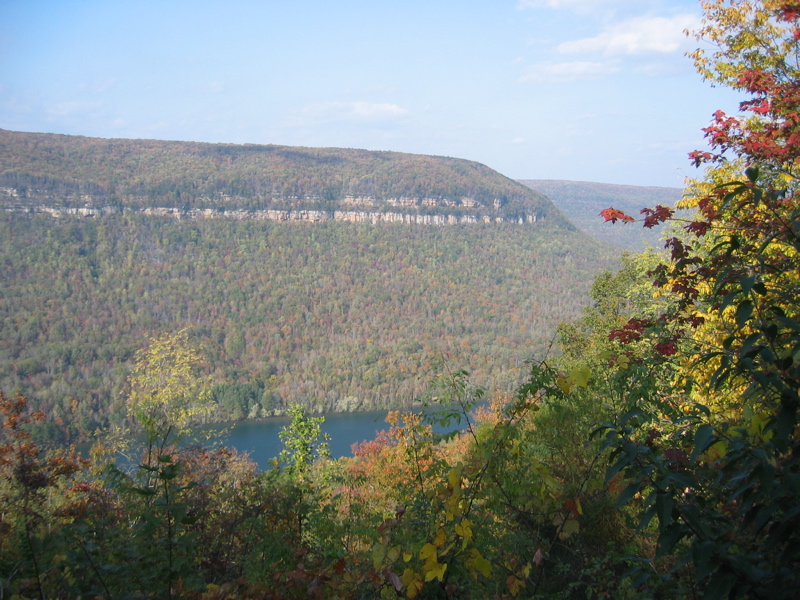
The maps posted don't do justice to the topography.

Image

User avatar
SLAAKMAN
Posts: 2556
Joined: Wed Jul 24, 2002 9:50 am
Contact:

RE: Civil War 150th

Post by SLAAKMAN »

MISTACHICKEN, I don't know much about the Civil War. Knowing the area, it was easily defensible. Bad logistics I reckon.

THE PROBLEM WAS THAT YOU NEGLECTED TO DEFEND THE SOUTH BY USING THAT IGNORANCE AS A WEAPON TO CONFUSE & CONFOUND THE YANKEES, BEAKWANKER! YOU SHIRKED YOUR DUTY BY SITTING ON AN EGG IN THE COOP INSTEAD OF FLAPPING ABOUT SCREAMING, "THE SKY IS FALLING, THE SKY IS FALLING!" AND DONT GIVE US THIS CRAP ABOUT NOT BEING BORN YET. THATS NO EXCUSE SINCE I KNOW YOU WERE THERE CHUGGING DOWN MOONSHINE INSTEAD OF MAKING RANK!! I BLAME YOU!!!
Image
Germany's unforgivable crime before the Second World War was her attempt to extricate her economy from the world's trading system and to create her own exchange mechanism which would deny world finance its opportunity to profit.
— Winston Churchill
t001001001
Posts: 326
Joined: Thu Apr 30, 2009 7:06 pm

RE: Civil War 150th

Post by t001001001 »

Come challenge me on my pet chickamauga map and see how it goes, SLAAKMAN [8D]


sry for the minor hijack, Capt. Harlock. I really enjoy your thread it's very interesting.
User avatar
SLAAKMAN
Posts: 2556
Joined: Wed Jul 24, 2002 9:50 am
Contact:

RE: Civil War 150th

Post by SLAAKMAN »

The Man-of-Cluck, Come challenge me on my pet chickamauga map and see how it goes, SLAAKMAN
You mean the map where you keep running away for ten years straight? [8|]
sry for the minor hijack, Capt. Harlock. I really enjoy your thread it's very interesting.

(oops my apologies as well Capt Harlock. It is a great topic and the opportunity to ambush the Egglayer was just too tempting. As a token of condolence I offer you this)-
[:o]
Image
Germany's unforgivable crime before the Second World War was her attempt to extricate her economy from the world's trading system and to create her own exchange mechanism which would deny world finance its opportunity to profit.
— Winston Churchill
User avatar
Capt. Harlock
Posts: 5379
Joined: Sat Sep 15, 2001 8:00 am
Location: Los Angeles
Contact:

RE: Civil War 150th

Post by Capt. Harlock »

150 Years Ago Today:

One of the many things that Secretary of War Stanton believed that he had the authority to do was to post a government censor in all of the telegraph offices. But there were other ways of leaking information, and on this date, the New York Post provided one of the worst examples. The news of the transfer of two full corps from the Army of the Potomac to reinforce the Federals holding out in Chattanooga was published for everyone to read.

The short-tempered Stanton is reported to have "raged like a lion", and Lincoln himself was understandably unhappy. But no one seems to have ever found out just where the leak came from, which is not surprising given how many soldiers and railroad employees were in on the secret. And for several days, Robert E. Lee thought the news to be a trick. It was simply too obvious, and he suspected that it was a cover for more men joining the Army of the Potomac, rather than being transferred away from it. Finally, reports from spies in the north, and scouts in Virginia and Tennessee, would confirm the information.
Civil war? What does that mean? Is there any foreign war? Isn't every war fought between men, between brothers?

--Victor Hugo
User avatar
Capt. Harlock
Posts: 5379
Joined: Sat Sep 15, 2001 8:00 am
Location: Los Angeles
Contact:

RE: Civil War 150th

Post by Capt. Harlock »

150 Years Ago Today:

The search for those responsible for the Union disaster at Chickamauga began. Corps commanders Thomas Crittenden (bearded, standing) and Alexander McCook (mustached, sitting) were relieved of their commands and sent to Indianapolis for court-martial. It is interesting to note that a week after the battle, when the Union and Confederate lines were established around Chattanooga, there appears to have been no difficulty in traveling out of the city.

Both generals would be acquitted of all charges. However, both would also have great difficulty in getting another command.

Image

Image
Attachments
Alexander_..l_McCook.jpg
Alexander_..l_McCook.jpg (157.31 KiB) Viewed 381 times
Thomas_L_C..en_Brady.jpg
Thomas_L_C..en_Brady.jpg (26.41 KiB) Viewed 381 times
Civil war? What does that mean? Is there any foreign war? Isn't every war fought between men, between brothers?

--Victor Hugo
User avatar
Capt. Harlock
Posts: 5379
Joined: Sat Sep 15, 2001 8:00 am
Location: Los Angeles
Contact:

RE: Civil War 150th

Post by Capt. Harlock »

150 Years Ago Today:

Realizing that the situation at Chattanooga was becoming a siege, the Confederates were making moves to cut off the supply routes going to the city. The route not already under the eyes of the Rebels was along Walden's Ridge, but it involved nearly 60 miles (96 km) of travel through moderately difficult terrain.

There were three primary modes of transport during the Civil War: by water, by rail, and by road. Sea or river transport was the best for the Union, but of course this depended on the geography of the area. (In this case, the river was there, but no Northern vessels could move under the Southern artillery.) Rail transport was second best, but the railroad network did not cover everywhere. Roads were the slowest and least reliable, for the great majority were dirt roads which became very difficult in rain. More, the horses and mules hauling wagons had to be fed. If there was no forage along the route, some space in the wagons had to be given over to fodder. The longer the distance, the more space needed to be used, until eventually no useful amounts of supplies could be carried.

Sixty miles was near the upper limit of the feasible road transport distance. It had not taken long for all the edible stuffs along the way to be eaten by the hard-working mules, and the amount of supplies reaching the city was no longer enough for full rations for the Union soldiers. The Confederates were determined to make the situation even worse. A force of Rebel cavalry under Major General Joseph Wheeler went north to intercept the Northern wagon trains.

On this date, the Southerners fell on a column of no less than 800 wagons at Anderson's Cross Roads, quickly driving off the small detachment of guards. Wheeler ordered his men to burn the wagons and slaughter the mules. This plan was soon disrupted by the discovery of whisky in several of the wagons. There was a search for more items, and the Confederate troopers soon found badly-needed clothing and other booty. The plundering continued for eight hours.

Finally a brigade of Union cavalry showed up. By this time the Confederates had lost nearly all order, and a number of them were drunk. After some skirmishing costing 270 casualties, the Southerners retreated. The Yankees had saved many of the mules, but the great majority of the wagons and supplies were lost. The situation in Chattanooga looked more and more threatening for the Northerners -- and the Rebel cavalry would sober up and continue raiding.


To the west, William T. Sherman had dispatched several of his units to the aid of Chattanooga. But while leaving camp with his family, he was running into a grim delay. His nine-year-old son Willie, who had so won the affections of the Thirteenth U. S. Regulars Battalion that the men had made him an honorary sergeant, had fallen ill. On the steamer carrying the family to Memphis, the doctor diagnosed typhoid.

Image
Attachments
Willie_Sherman.jpg
Willie_Sherman.jpg (9.69 KiB) Viewed 381 times
Civil war? What does that mean? Is there any foreign war? Isn't every war fought between men, between brothers?

--Victor Hugo
User avatar
Capt. Harlock
Posts: 5379
Joined: Sat Sep 15, 2001 8:00 am
Location: Los Angeles
Contact:

RE: Civil War 150th

Post by Capt. Harlock »

150 Years Ago Today:

[font="Courier New"]The river was low; we made slow progress till above Helena; and, as we approached Memphis, Dr. Roler told me that Willie's life was in danger, and he was extremely anxious to reach Memphis for certain medicines and for consultation. We arrived at Memphis on the 2d of October, carried Willie up to the Gayoso Hotel, and got the most experienced physician there, who acted with Dr. Roler, but he sank rapidly, and died the evening of the 3d of October. The blow was a terrible one to us all, so sudden and so unexpected, that I could not help reproaching myself for having consented to his visit in that sickly region in the summer-time. Of all my children, he seemed the most precious.
[center]--Memoirs of General W. T. Sherman[/center]
[/font]
The tragic fate of 11-year-old Willie Lincoln had repeated itself with 9-year-old Willie Sherman.


In Washington, Lincoln and his advisers decided that General William Rosecrans was no longer the man to head the besieged Army of the Cumberland. As Lincoln remarked, Rosecrans seemed "confused and stunned like a duck hit on the head". A man of energy was needed to break the Confederate moves encircling Chattanooga. Even though U. S. Grant was still recovering from having his horse fall on top of him, he was the prime candidate for the job. The telegraph message went out: "It is the wish of the Secretary of War that as soon as General Grant is able he will come to Cairo [Illinois] and report by telegraph." . However, it would take a week to reach Grant.

On this date, Lincoln sent out another message:

[font="Times New Roman"][center]By the President of the United States of America.

A Proclamation.[/center]

The year that is drawing towards its close, has been filled with the blessings of fruitful fields and healthful skies. To these bounties, which are so constantly enjoyed that we are prone to forget the source from which they come, others have been added, which are of so extraordinary a nature, that they cannot fail to penetrate and soften even the heart which is habitually insensible to the ever watchful providence of Almighty God. In the midst of a civil war of unequaled magnitude and severity, which has sometimes seemed to foreign States to invite and to provoke their aggression, peace has been preserved with all nations, order has been maintained, the laws have been respected and obeyed, and harmony has prevailed everywhere except in the theatre of military conflict; while that theatre has been greatly contracted by the advancing armies and navies of the Union. Needful diversions of wealth and of strength from the fields of peaceful industry to the national defence, have not arrested the plough, the shuttle or the ship; the axe has enlarged the borders of our settlements, and the mines, as well of iron and coal as of the precious metals, have yielded even more abundantly than heretofore. Population has steadily increased, notwithstanding the waste that has been made in the camp, the siege and the battle-field; and the country, rejoicing in the consciousness of augmented strength and vigor, is permitted to expect continuance of years with large increase of freedom.
No human counsel hath devised nor hath any mortal hand worked out these great things. They are the gracious gifts of the Most High God, who, while dealing with us in anger for our sins, hath nevertheless remembered mercy. It has seemed to me fit and proper that they should be solemnly, reverently and gratefully acknowledged as with one heart and one voice by the whole American People.
I do therefore invite my fellow citizens in every part of the United States, and also those who are at sea and those who are sojourning in foreign lands, to set apart and observe the last Thursday of November next, as a day of Thanksgiving and Praise to our beneficent Father who dwelleth in the Heavens. And I recommend to them that while offering up the ascriptions justly due to Him for such singular deliverances and blessings, they do also, with humble penitence for our national perverseness and disobedience, commend to His tender care all those who have become widows, orphans, mourners or sufferers in the lamentable civil strife in which we are unavoidably engaged, and fervently implore the interposition of the Almighty Hand to heal the wounds of the nation and to restore it as soon as may be consistent with the Divine purposes to the full enjoyment of peace, harmony, tranquility and Union.

In testimony whereof, I have hereunto set my hand and caused the Seal of the United States to be affixed.

Done at the City of Washington, this Third day of October, in the year of our Lord one thousand eight hundred and sixty-three, and of the Independence of the Unites States the Eighty-eighth.

By the President: Abraham Lincoln

William H. Seward,
Secretary of State
[/font]

On rare occasions, previous presidents had also declared "Days of Thanksgiving". But from 1863 on, it would become a yearly American tradition. This was largely because of the urging of one Sarah Josepha Hale, who also has a place in history as the author of "Mary Had a Little Lamb". She had written to four previous presidents before Lincoln, but this time her letters had a sympathetic reader.

Image
Attachments
382px-Lett..oLincoln.jpg
382px-Lett..oLincoln.jpg (66.15 KiB) Viewed 381 times
Civil war? What does that mean? Is there any foreign war? Isn't every war fought between men, between brothers?

--Victor Hugo
User avatar
Capt. Harlock
Posts: 5379
Joined: Sat Sep 15, 2001 8:00 am
Location: Los Angeles
Contact:

RE: Civil War 150th

Post by Capt. Harlock »

150 Years Ago Today:

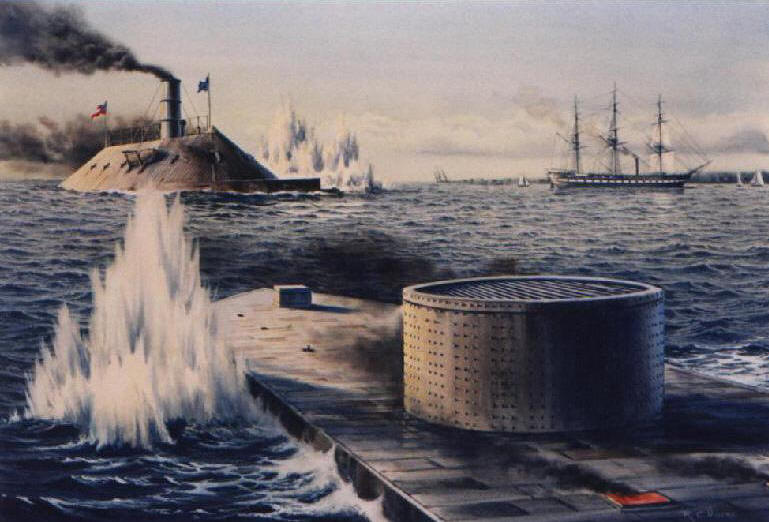
In Charleston harbor, the semi-submersible torpedo boat CSS David set out to sink the mighty USS New Ironsides. The David looked very much like a full submarine, but it was designed to keep the topmost part above water. This allowed for an air intake and a smokestack for a steam engine, giving her considerably more speed than the human-powered fully submersible craft that the Confederates were also working with.

The USS New Ironsides was a formidable foe. Heavily armed and armored, she had so far been invulnerable, in spite of being hit by at least 150 cannon shells. (She had also survived being over a massive underwater "torpedo", which failed to detonate.) But the four men aboard David on this night had high hopes for their spar torpedo (a long pole with an explosive charge at the end), planning to explode it below the New Ironsides' armor belt.

The approach went well. In the dark, CSS David was hard to see, and was only challenged by the New Ironsides' watch when within shotgun range. The commander of the David fired his shotgun, fatally wounding a Union junior officer, and then the spar torpedo struck and detonated. But it had been raised too high, and much of the blast was absorbed by the armor belt. It also threw a column of water into the air, some of which splashed through the hatch of the Confederate torpedo boat and extinguished the boiler fires. Three of the four Rebel crewmen abandoned their vessel, but the pilot couldn't swim and so clung to the side. It being very dark, there was much confusion and the Union sailors fired their revolvers at whatever made a noise without hitting any of the Southerners.

After a few minutes, it became clear that New Ironsides was not going to sink. A Union picket boat pulled the Rebel commander from the water, and a crewman clung to the New Ironsides' anchor chains until he was discovered and captured at daybreak. The engineer, however, swam quietly back to the David, pulled the pilot back aboard, and re-started the boiler. The two men then managed to sail the David back to Charleston and safety.

Some days later, when the coal in a bunker had been shoveled out, it was found that the attack had in fact done some damage. There were significant cracks in the wooden planking behind the armor belt. Not wanting the Confederates to learn that their torpedo boat had been partly successful, the Union Navy would keep New Ironsides on station off Charleston until early June the next year.


Image
Attachments
Css_david_attack_2.jpg
Css_david_attack_2.jpg (101.78 KiB) Viewed 381 times
Civil war? What does that mean? Is there any foreign war? Isn't every war fought between men, between brothers?

--Victor Hugo
User avatar
Capt. Harlock
Posts: 5379
Joined: Sat Sep 15, 2001 8:00 am
Location: Los Angeles
Contact:

RE: Civil War 150th

Post by Capt. Harlock »

150 Years Ago Today:

On this date, President Davis and several staff officers set forth from Richmond by train, heading for northern Georgia and eventually to the scene of action near Chattanooga. He had decided that his presence was needed at what was now the most critical spot in the Confederacy.

Thus far, my primary style has been to quote the documents and the eye-witness accounts, and let them in general speak for themselves. However, the U. S. Civil War is the most written about war that human beings have ever fought, and in order not to simply add to the rivers of ink and swarms of electrons expended, it seems fit that I should put in something of my own. Many histories of the Civil War state that after the twin defeats at Gettysburg and Vicksburg, the Southerners were no longer able to win militarily. But my belief is that the extraordinary victory at Chickamauga gave them one last chance. Using the advantage of the high ground around Chattanooga, they could have starved the Union Army of the Cumberland into surrender, and then or even at the same time moved and destroyed the smaller Army of the Ohio. From there, the recapture of Tennessee and the seizure of Kentucky would have been fairly easy. There were elections in 1863 (unlike today where the even years are the election years), and the Republicans would have suffered badly at the polls after such a twin disaster.

But a great deal depended on speed. Union reinforcements were already on the way, but Confederate commander Braxton Bragg had not allowed any force but cavalry raids north of the Tennessee River. Instead of surrounding the Yankees, the Confederates were quarreling amongst each other. Unhappy with the failure to completely destroy the Union army, Bragg was looking for scapegoats to punish among his division and corps commanders, and they in turn were actively petitioning the War Department in Richmond for his removal. Nathan Bedford Forrest went even further, and may have set an all-time record for insubordination. Forrest had raised a brigade of cavalry at his own expense, and Bragg had taken it away from Forrest and assigned it to Joseph Wheeler, whom Forrest detested. (And Wheeler was not doing particularly well with them.) Forrest effectively removed himself from Bragg's command with a blistering tirade to Bragg's face, concluding with:

[font="Courier New"]"...now this second brigade, organized and equipped without thanks to you or the government, a brigade which has won a reputation for successful fighting second to none in the army, taking advantage of your position as the commanding general in order to further humiliate me, you have taken these brave men from me.
I have stood your meanness as long as I intend to. You have played the part of a damn scoundrel, and are a coward; and if you were any part of a man, I would slap your jaws and force you to resent it. You may as well not issue any more orders to me, for I will not obey them, and I will hold you personally responsible for any further indignities you endeavor to inflict upon me. You have threatened to arrest me for not obeying your orders promptly. I dare you to do it, and I say to you that if you ever again try to interfere with me or cross my path it will be at the peril of your life.”
[/font]

Several other officers felt much the same way, and urged that Bragg be replaced. The two most senior commanders available were P.G.T. Beauregard and Joseph Johnston, but President Davis had grown to detest both men. There was also the possibility of James Longstreet, but he felt he was an easterner and an outsider, and his taking over the army would look very bad. To try and untangle this knotty problem, and to reverse the setbacks of Gettysburg and Vicksburg, Davis was now on his way to the siege lines.
Civil war? What does that mean? Is there any foreign war? Isn't every war fought between men, between brothers?

--Victor Hugo
User avatar
Capt. Harlock
Posts: 5379
Joined: Sat Sep 15, 2001 8:00 am
Location: Los Angeles
Contact:

RE: Civil War 150th

Post by Capt. Harlock »

150 Years Ago Today:

Joseph Wheeler's Rebel cavalrymen were not doing as well as hoped raiding the Union supply lines. To do the maximum damage, Wheeler had spread out his forces. Thus he had managed to capture wagons, tear up railroad tracks, and burn a bridge, but he had not overrun the big Union supply depot at Murfreesborough. He had also left his men vulnerable to the Federal cavalry, and had suffered a beating at Shelbyville. It was time to retreat back to Confederate lines. Commander Braxton Bragg was still failing to isolate the Northern army:

[font="Times New Roman"]At that time the shortest line of the enemy’s haul of provisions from the depot at Stevenson was along the road on the north bank of the river. The Confederate chief conceived, as our cavalry ride had failed of effect, that a line of sharp-shooters along the river on our side could break up that line of travel, and ordered, on the 8th of October, a detail from my command for that purpose. As the line was over the mountain about seven miles beyond support, by a rugged road not practicable for artillery, I ordered a brigade of infantry detailed to go over and protect the sharp-shooters from surprise or capture. The detail fell upon Law’s brigade. The line for this practice extended from the east side of Lookout Creek some ten miles down the river. The effect of the fire was about like that of the cavalry raid. It simply put the enemy on shorter rations until he could open another route for his trains. But more to be deplored than these novel modes of investment was the condition of the Confederate army. After moving from Virginia to try to relieve our comrades of the Army of Tennessee, we thought that we had cause to complain that the fruits of our labor had been lost, but it soon became manifest that the superior officers of that army themselves felt as much aggrieved as we at the halting policy of their chief, and were calling in letters and petitions for his removal.
[center]-- James Longstreet, From Manassas to Appomattox: Memoirs of The Civil War in America[/center]
[/font]

Note that the posting of sharpshooters, a fairly obvious move, did not happen until over two weeks had passed since the battle of Chickamauga. It was not surprising that the Generals under Braxton Bragg were "aggrieved".

Longstreet did not know it, but the Yankees in Chattanooga were not just on short rations, they were beginning to starve. The problems of sharpshooters and cavalry raids had been joined by a much greater factor not of men's doing: the weather. Heavy rains were now falling with the beginning of autumn, and the roads, as civil war roads generally did, turned to mud. The exhausted horses and mules, without extra fodder to compensate for their exertions, began to collapse and die along the way.
Civil war? What does that mean? Is there any foreign war? Isn't every war fought between men, between brothers?

--Victor Hugo
User avatar
Capt. Harlock
Posts: 5379
Joined: Sat Sep 15, 2001 8:00 am
Location: Los Angeles
Contact:

RE: Civil War 150th

Post by Capt. Harlock »

150 Years Ago Today:

In Britain, the two Laird rams had been prevented from setting out to sea, it obviously wouldn't do to keep them in the shipyard forever. On this date, the two iron-clads were formally seized by the Surveyor of Customs. Since they were private property, some compensation would be needed. After several months, the Laird Brothers firm would receive payment 25% above the original contract price, while the two ships joined the Royal Navy.


In Virginia, Robert E. Lee had determined that the Union army facing him had lost two of its corps, sent to reinforce the besieged Army of the Cumberland at Chattanooga. (The two corps had already arrived in Tennessee, but they could not go to Chattanooga, since there were not enough supplies to feed the Federals already there.) Since Lee had transferred only one of his corps westward, he decided to make a move against the Army of the Potomac. Wisely, he did not make a head-on attack, but attempted to move around and flank the Union right.

But Northern commander George Meade was not to be caught by such a move as Joe Hooker had been at Chancellorsville. He had scouts and pickets set out in plenty, and reports of skirmishing as the Confederate troops crossed the Rapidan River soon came in. Although Meade's forces still outnumbered those of Lee, the Union general decided to fall back to an even stronger position.


After giving a speech in Marietta, Georgia, President Davis arrived at the headquaters of Braxton Bragg:

[font="Times New Roman"]The President came to us on the 9th of October and called the commanders of the army to meet him at General Bragg’s office. After some talk, in the presence of General Bragg, he made known the object of the call, and asked the generals, in turn, their opinion of their commanding officer, beginning with myself. It seemed rather a stretch of authority, even with a President, and I gave an evasive answer and made an effort to turn the channel of thought, but he would not be satisfied, and got back to his question. The condition of the army was briefly referred to, and the failure to make an effort to get the fruits of our success,
[center]-- James Longstreet, From Manassas to Appomattox: Memoirs of The Civil War in America[/center]
[/font]

The condition of the Confederate Army of Tennessee was not good. The Union soldiers in Chattanooga were going through hard times, but the Southerners were in not much better condition. Food was just enough to prevent starvation, and new clothes for the rainy season and the approaching winter were scarce. As well as being unpopular with his subordinate officers, Bragg appears to have been a poor administrator. Supplies were available, but they were not being efficiently conveyed to the men.
Civil war? What does that mean? Is there any foreign war? Isn't every war fought between men, between brothers?

--Victor Hugo
User avatar
SLAAKMAN
Posts: 2556
Joined: Wed Jul 24, 2002 9:50 am
Contact:

RE: Civil War 150th

Post by SLAAKMAN »

The condition of the Confederate Army of Tennessee was not good. The Union soldiers in Chattanooga were going through hard times, but the Southerners were in not much better condition. Food was just enough to prevent starvation, and new clothes for the rainy season and the approaching winter were scarce. As well as being unpopular with his subordinate officers, Bragg appears to have been a poor administrator. Supplies were available, but they were not being efficiently conveyed to the men.
Bloody hell. What were our ancestors thinking when they decided to start that crazy war? Slavery? Sovereignty? Manifest Destiny?? Balderdash! No way would I have followed the orders of buffoons, then or now. [:@]
Germany's unforgivable crime before the Second World War was her attempt to extricate her economy from the world's trading system and to create her own exchange mechanism which would deny world finance its opportunity to profit.
— Winston Churchill
Post Reply

Return to “General Discussion”