

E. V. Sumner, D. N. Couch, A. A. Humphreys
Moderator: Gil R.
E. V. Sumner, D. N. Couch, A. A. Humphreys
Major General Edwin Vose Sumner (b. 1797 d. 1863) General Sumner was the first commander of the famed II Corps of the Army of the Potomac during the Civil War. He also became the oldest field commander to serve on either side of the conflict. His nickname, "Bull Head," came from a legend that a musket ball once bounced off his head. His Civil War service was marred with inconsistency. Sumner was born on January 30th 1797 in Boston Massachusetts. In 1819 Sumner became bored with his life as a businessman and decided to join the military. Sumner served in the Black Hawk War and various Indian campaigns. He was considered to be an upcoming officer and was assigned to the 1st U.S. Dragoons upon the regiment’s creation in 1833 with the rank of Captain. He took part in the Mexican-American War with the rank of Major and was brevetted to the Brevet Rank of Colonel. In 1857 he also was given command of an expedition against the Cheyenne Indians. Sumner was promoted to the rank of Brigadier General in 1861to replace A. S. Johnston who had command of the Pacific Department; thus Sumner was in California during the campaigning season of 1861 and took no part in the first Bull Run. In the fall of 1861 General McClellan ordered Sumner back East, promoted him to the rank of Major General of Volunteers and gave him command of a division. He was given command of the II Corps during the Peninsula Campaign. Sumner was criticized after the Battle of Williamsburg for his lack of aggression, which allowed the rebels to withdraw fairly easily. He performed well at the Battle of Seven Pines, getting his Corps across a river to come to the aid of the Union’s IV Corps. Sumner’s timely arrival prevented a Confederate victory. At Antietam Sumner’s Corps attacked the Confederate positions in the center of the battlefield. However Sumner performed poorly and his Corps attacked in piecemeal fashion. When General Burnside took command of the Army of the Potomac the Army was reorganized into three wings.(grand divisions) and Sumner was given command of the Right Grand Division. It was Sumner’s Wing that launched the ill-fated assaults on Marye’s Heights. After Burnside was relieved in early 1863 Sumner requested to be transferred. He was given command of the Department of Missouri, however he never arrived. Sumner suffered a heart attack and died on March 21st 1863 in Syracuse, New York at the age of 66. His final words were “The Second Corps never lost a flag or a cannon NEVER … God save my country The United States of America.”
RE: E. V. Sumner, D. N. Couch, A. A. Humphreys
Major General Darius Nash Couch (b. 1822 d. 1897) Darius Couch was born in Putnam County New York in 1822. He attended the military academy at West Point in 1842 and graduated with the class of 1846. He fought in both the Mexican-American War and the Second Seminole War though he did not stand out at the time. He resigned from the military in 1855. In 1861 Couch volunteered and rejoined the Army as the Colonel of the 7th Massachusetts Infantry. He was quickly promoted to Brigadier General. Couch commanded a brigade at the start of the Peninsula Campaign in 1862 however after his early success he was promoted to Maj. General and given command of a division in the IV Corps. He fought successfully with his division during the remainder of the Peninsula Campaign and through the Seven Days Battles as well as at Antietam. General Couch was then given command of the II Corps following Sumner’s promotion to command of the Right Grand Division. The II Corps took the highest casualties of any Corps in the disastrous assaults on Marye’s Heights. Couch continued to command the II Corps at the Battle of Chancellorsville. Following the Battle he began to quarrel with General Hooker and Couch requested a transfer to a non-field command. Couch was assigned to command the Department of the Susquehanna. During the Gettysburg campaign Couch commanded roughly 20,000 militia based near Harrisburg and fought Confederate cavalry at the Battle of Sporting Hill. In December 1863 Couch was sent west to command a division in the XXIII Corps. He commanded his division capably throughout the Atlanta Campaign and Franklin-Nashville Campaign. He served out the remainder of the war in this position. After the war Couch ran a mining company before moving to Connecticut in 1871. There he served as the Quartermaster General, and then Adjutant General, for the state militia until 1884. In 1897 Couch died in Norwalk, Connecticut, and was buried in Taunton.
RE: E. V. Sumner, D. N. Couch, A. A. Humphreys
Major General Andrew Atkinson Humphreys(b. 1810 d. 1883) General Andrew Humphreys was born in Philadelphia, Pennsylvania on November 2nd 1810. His family had prominent naval ties; his grandfather was the architect of the frigate U.S.S. Constitution (Old Ironsides). Humphreys attended the military academy at WestPoint and graduated from there in 1831. Over the next thirty years Humphreys served in the military largely as a civil engineer though he did fight in the artillery during the Seminole War. In August 1861 Humphreys was promoted to Major and became chief topographical engineer in Maj. Gen. George B. McClellan's Army of the Potomac. During the Civil War he was initially a key player in designing the fortifications around Washington D.C. By the spring of 1862 he was transferred and promoted to Brigadier General and given command of the Third Division V Corps. At the Battle of Antietam Humphreys was stationed in reserve and saw no action. At Fredericksburg Humphreys’ Division assaulted Marye's Heights and Humphreys was commended for his personal bravery in leading his men. While he earned the respect of his men, they did not like him. In his mid fifties his men thought he was old and nicknamed him "Old Goggle Eyes" for his eyeglasses. He was a taskmaster who imposed a very strict discipline on his men. Charles A. Dana, the Assistant Secretary of War, called him a man of "distinguished and brilliant profanity.” At Chancellorsville the Third Division once again took no part on account of their enlistments being near an end. After the battle Humphreys was given command of the Second Division III Corps. Just before Gettysburg General Meade asked Humphreys to be his Chief of Staff however Humphreys declined, preferring a field command. At Gettysburg Humphreys’ Division played a prominent role. On July 2nd when General Sickles advanced against orders to a more forward position, Humprheys division was placed on the right flank of the III Corps. This position was far to long for him to hold and two of his brigades were nearly whipped out. On July 8th 1863 Humphreys was promoted to Major General of Volunteers. Meade again requested Humphreys to be his Chief of Staff and with the III Corps no longer an effective fighting force Humphreys accepted. Humphreys served in that capacity until November of 1864 when he assumed command of the II Corps following Hancock’s reassignment. Humphreys commanded the II Corps for the remainder of the war. After the war Humphreys commanded the District of Pennsylvania and became Chief of Engineers in 1866. Humphreys’ published work, Physics and Hydraulics of the Mississippi River, gave him considerable prominence in the scientific community. He also wrote his personal accounts of the war, From Gettysburg to the Rapidan and The Virginia Campaign of '64 and '65. He died in Washington, D.C. on December 27th 1883, and was buried there in the Congressional Cemetery.
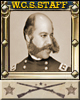
RE: E. V. Sumner, D. N. Couch, A. A. Humphreys
Okay, here's how Sumner looks after I tweaked it, plus here are the ratings I've assigned:
Maj. Gen. Edwin Vose Sumner (b. 1797, d. 1863). Sumner was the first commander of the famed II Corps of the Army of the Potomac during the Civil War. He also became the oldest field commander to serve on either side of the conflict. His nickname, "Bull Head," came from a legend that a musket ball once bounced off his head. His Civil War service was marred with inconsistency. Sumner, who was born in Boston, in 1819 became bored with his life as a businessman and decided to join the military. He served in the Black Hawk War and various Indian campaigns. He was considered to be an upcoming officer and was assigned to the 1st U.S. Dragoons upon the regiment’s creation in 1833 with the rank of Captain. He took part in the Mexican-American War with the rank of Major and was brevetted to the Brevet Rank of Colonel. In 1857 he also was given command of an expedition against the Cheyenne Indians. Sumner was promoted to the rank of Brigadier General in 1861 to replace Gen. Albert S. Johnston, who had command of the Pacific Department – thus Sumner was in California during the campaigning season of 1861 and took no part in the Battle of First Bull Run. In the fall of 1861, Gen. George B. McClellan ordered Sumner back East, promoted him to the rank of Major General of Volunteers and gave him command of a division, and he subsequently was given command of the II Corps during the Peninsula Campaign. Sumner was criticized after the Battle of Williamsburg for his lack of aggression, which allowed the rebels to withdraw fairly easily. He performed well at the Battle of Seven Pines, getting his Corps across a river to come to the aid of the Union’s IV Corps. Sumner’s timely arrival prevented a Confederate victory. At Antietam Sumner’s Corps attacked the Confederate positions in the center of the battlefield. However Sumner performed poorly and his Corps attacked in piecemeal fashion. When Gen. Ambrose Burnside took command of the Army of the Potomac the Army was reorganized into three wings (or “grand divisions”) and Sumner was given command of the Right Grand Division. It was Sumner’s Wing that launched the ill-fated assaults on Marye’s Heights. After Burnside was relieved in early 1863 Sumner requested to be transferred. He was given command of the Department of Missouri, but he never arrived: Sumner suffered a heart attack and died on March 21st 1863 in Syracuse, New York at the age of 66. His final words were “The Second Corps never lost a flag or a cannon, NEVER... God save my country The United States of America.”
Leadership: 3
Tactics: 2
Initiative: 3
Command: 4
Cavalry:
Maj. Gen. Edwin Vose Sumner (b. 1797, d. 1863). Sumner was the first commander of the famed II Corps of the Army of the Potomac during the Civil War. He also became the oldest field commander to serve on either side of the conflict. His nickname, "Bull Head," came from a legend that a musket ball once bounced off his head. His Civil War service was marred with inconsistency. Sumner, who was born in Boston, in 1819 became bored with his life as a businessman and decided to join the military. He served in the Black Hawk War and various Indian campaigns. He was considered to be an upcoming officer and was assigned to the 1st U.S. Dragoons upon the regiment’s creation in 1833 with the rank of Captain. He took part in the Mexican-American War with the rank of Major and was brevetted to the Brevet Rank of Colonel. In 1857 he also was given command of an expedition against the Cheyenne Indians. Sumner was promoted to the rank of Brigadier General in 1861 to replace Gen. Albert S. Johnston, who had command of the Pacific Department – thus Sumner was in California during the campaigning season of 1861 and took no part in the Battle of First Bull Run. In the fall of 1861, Gen. George B. McClellan ordered Sumner back East, promoted him to the rank of Major General of Volunteers and gave him command of a division, and he subsequently was given command of the II Corps during the Peninsula Campaign. Sumner was criticized after the Battle of Williamsburg for his lack of aggression, which allowed the rebels to withdraw fairly easily. He performed well at the Battle of Seven Pines, getting his Corps across a river to come to the aid of the Union’s IV Corps. Sumner’s timely arrival prevented a Confederate victory. At Antietam Sumner’s Corps attacked the Confederate positions in the center of the battlefield. However Sumner performed poorly and his Corps attacked in piecemeal fashion. When Gen. Ambrose Burnside took command of the Army of the Potomac the Army was reorganized into three wings (or “grand divisions”) and Sumner was given command of the Right Grand Division. It was Sumner’s Wing that launched the ill-fated assaults on Marye’s Heights. After Burnside was relieved in early 1863 Sumner requested to be transferred. He was given command of the Department of Missouri, but he never arrived: Sumner suffered a heart attack and died on March 21st 1863 in Syracuse, New York at the age of 66. His final words were “The Second Corps never lost a flag or a cannon, NEVER... God save my country The United States of America.”
Leadership: 3
Tactics: 2
Initiative: 3
Command: 4
Cavalry:
Michael Jordan plays ball. Charles Manson kills people. I torment eager potential customers by not sharing screenshots of "Brother Against Brother." Everyone has a talent.
RE: E. V. Sumner, D. N. Couch, A. A. Humphreys
And here's Couch, with ratings:
Maj. Gen. Darius Nash Couch (b. 1822, d. 1897). Couch was born in Putnam County, New York in 1822. He attended the military academy at West Point in 1842 and graduated with the class of 1846. He fought in both the Mexican-American War and the Second Seminole War, though he did not stand out at the time. He resigned from the military in 1855, but in 1861 Couch volunteered and rejoined the Army as the Colonel of the 7th Massachusetts Infantry. He was quickly promoted to Brigadier General. Couch commanded a brigade at the start of the Peninsula Campaign in 1862, and after his early success he was promoted to Major General and given command of a division in the IV Corps. He fought successfully with his division during the remainder of the Peninsula Campaign and through the Seven Days Battles as well as at Antietam. Gen. Couch was then given command of the II Corps following Sumner’s promotion to command of the Right Grand Division. The II Corps took the highest casualties of any Corps in the disastrous assaults on Marye’s Heights during the Battle of Fredericksburg. Couch continued to command the II Corps at the Battle of Chancellorsville. Following that battle he began to quarrel with Gen. Joseph Hooker, and requested a transfer to a non-field command. Couch was assigned to command the Department of the Susquehanna. During the Gettysburg campaign Couch commanded roughly 20,000 militia based near Harrisburg and fought Confederate cavalry at the Battle of Sporting Hill. In December, 1863 Couch was sent west to command a division in the XXIII Corps. He commanded his division capably throughout the Atlanta Campaign and Franklin-Nashville Campaign, and served out the remainder of the war in this position. After the war Couch ran a mining company before moving to Connecticut in 1871. There he served as the Quartermaster General, and then Adjutant General, for the state militia until 1884. In 1897 Couch died in Norwalk, Connecticut, and was buried in Taunton.
Leadership: 4
Tactics: 2
Initiative: 3
Command: 3
Cavalry:
Maj. Gen. Darius Nash Couch (b. 1822, d. 1897). Couch was born in Putnam County, New York in 1822. He attended the military academy at West Point in 1842 and graduated with the class of 1846. He fought in both the Mexican-American War and the Second Seminole War, though he did not stand out at the time. He resigned from the military in 1855, but in 1861 Couch volunteered and rejoined the Army as the Colonel of the 7th Massachusetts Infantry. He was quickly promoted to Brigadier General. Couch commanded a brigade at the start of the Peninsula Campaign in 1862, and after his early success he was promoted to Major General and given command of a division in the IV Corps. He fought successfully with his division during the remainder of the Peninsula Campaign and through the Seven Days Battles as well as at Antietam. Gen. Couch was then given command of the II Corps following Sumner’s promotion to command of the Right Grand Division. The II Corps took the highest casualties of any Corps in the disastrous assaults on Marye’s Heights during the Battle of Fredericksburg. Couch continued to command the II Corps at the Battle of Chancellorsville. Following that battle he began to quarrel with Gen. Joseph Hooker, and requested a transfer to a non-field command. Couch was assigned to command the Department of the Susquehanna. During the Gettysburg campaign Couch commanded roughly 20,000 militia based near Harrisburg and fought Confederate cavalry at the Battle of Sporting Hill. In December, 1863 Couch was sent west to command a division in the XXIII Corps. He commanded his division capably throughout the Atlanta Campaign and Franklin-Nashville Campaign, and served out the remainder of the war in this position. After the war Couch ran a mining company before moving to Connecticut in 1871. There he served as the Quartermaster General, and then Adjutant General, for the state militia until 1884. In 1897 Couch died in Norwalk, Connecticut, and was buried in Taunton.
Leadership: 4
Tactics: 2
Initiative: 3
Command: 3
Cavalry:
Michael Jordan plays ball. Charles Manson kills people. I torment eager potential customers by not sharing screenshots of "Brother Against Brother." Everyone has a talent.
RE: E. V. Sumner, D. N. Couch, A. A. Humphreys
Interesting bio. Here it is after the minor changes, with ratings and two abilities he can teach. (He was an engineer, so it's a no-brainer that he should be able to teach "Diggers.")
Maj. Gen. Andrew Atkinson Humphreys (b. 1810, d. 1883). Humphreys was born in Philadelphia, on November 2nd, 1810. His family had prominent naval ties: his grandfather was the architect of the frigate U.S.S. Constitution (Old Ironsides). Humphreys attended the military academy at West Point and graduated in 1831. Over the next thirty years Humphreys served in the military largely as a civil engineer, though he did fight in the artillery during the Seminole War. In August, 1861 Humphreys was promoted to Major and became chief topographical engineer in Maj. Gen. George B. McClellan's Army of the Potomac. During the Civil War he was initially a key player in designing the fortifications around Washington D.C. By the spring of 1862 he was transferred and promoted to Brigadier General and given command of the Third Division V Corps. At the Battle of Antietam Humphreys was stationed in reserve and saw no action. At Fredericksburg Humphreys’ division assaulted Marye's Heights and Humphreys was commended for his personal bravery in leading his men. While he earned the respect of his men, they did not like him. Since he was in his mid-fifties his men thought he was old and nicknamed him "Old Goggle Eyes" for his eyeglasses. He was a taskmaster who imposed a very strict discipline on his men. Charles A. Dana, the Assistant Secretary of War, called him a man of "distinguished and brilliant profanity.” At Chancellorsville the Third Division once again took no part on account of their enlistments being near an end. After the battle Humphreys was given command of the Second Division III Corps. Just before Gettysburg Gen. George G. Meade asked Humphreys to be his Chief of Staff; however, Humphreys declined, preferring a field command. At Gettysburg Humphreys’ division played a prominent role. On July 2nd, when Gen. Daniel E. Sickles advanced against orders to a more forward position, Humphreys’ division was placed on the right flank of the III Corps. This position was far too long for him to hold and two of his brigades were nearly wiped out. On July 8th, 1863 Humphreys was promoted to Major General of Volunteers. Meade again requested Humphreys to be his Chief of Staff and, with the III Corps no longer an effective fighting force, Humphreys accepted. Humphreys served in that capacity until November of 1864, when he assumed command of the II Corps following Hancock’s reassignment. Humphreys commanded the II Corps for the remainder of the war. After the war Humphreys commanded the District of Pennsylvania and became Chief of Engineers in 1866. Humphreys’ published work, “Physics and Hydraulics of the Mississippi River,” gave him considerable prominence in the scientific community. He also wrote his personal accounts of the war, “From Gettysburg to the Rapidan” and “The Virginia Campaign of '64 and '65.” He died in Washington, D.C. on December 27th 1883, and was buried there in the Congressional Cemetery.
Leadership: 6
Tactics: 4
Initiative: 4
Command: 5
Cavalry:
Teaches: Diggers, Disciplined
Maj. Gen. Andrew Atkinson Humphreys (b. 1810, d. 1883). Humphreys was born in Philadelphia, on November 2nd, 1810. His family had prominent naval ties: his grandfather was the architect of the frigate U.S.S. Constitution (Old Ironsides). Humphreys attended the military academy at West Point and graduated in 1831. Over the next thirty years Humphreys served in the military largely as a civil engineer, though he did fight in the artillery during the Seminole War. In August, 1861 Humphreys was promoted to Major and became chief topographical engineer in Maj. Gen. George B. McClellan's Army of the Potomac. During the Civil War he was initially a key player in designing the fortifications around Washington D.C. By the spring of 1862 he was transferred and promoted to Brigadier General and given command of the Third Division V Corps. At the Battle of Antietam Humphreys was stationed in reserve and saw no action. At Fredericksburg Humphreys’ division assaulted Marye's Heights and Humphreys was commended for his personal bravery in leading his men. While he earned the respect of his men, they did not like him. Since he was in his mid-fifties his men thought he was old and nicknamed him "Old Goggle Eyes" for his eyeglasses. He was a taskmaster who imposed a very strict discipline on his men. Charles A. Dana, the Assistant Secretary of War, called him a man of "distinguished and brilliant profanity.” At Chancellorsville the Third Division once again took no part on account of their enlistments being near an end. After the battle Humphreys was given command of the Second Division III Corps. Just before Gettysburg Gen. George G. Meade asked Humphreys to be his Chief of Staff; however, Humphreys declined, preferring a field command. At Gettysburg Humphreys’ division played a prominent role. On July 2nd, when Gen. Daniel E. Sickles advanced against orders to a more forward position, Humphreys’ division was placed on the right flank of the III Corps. This position was far too long for him to hold and two of his brigades were nearly wiped out. On July 8th, 1863 Humphreys was promoted to Major General of Volunteers. Meade again requested Humphreys to be his Chief of Staff and, with the III Corps no longer an effective fighting force, Humphreys accepted. Humphreys served in that capacity until November of 1864, when he assumed command of the II Corps following Hancock’s reassignment. Humphreys commanded the II Corps for the remainder of the war. After the war Humphreys commanded the District of Pennsylvania and became Chief of Engineers in 1866. Humphreys’ published work, “Physics and Hydraulics of the Mississippi River,” gave him considerable prominence in the scientific community. He also wrote his personal accounts of the war, “From Gettysburg to the Rapidan” and “The Virginia Campaign of '64 and '65.” He died in Washington, D.C. on December 27th 1883, and was buried there in the Congressional Cemetery.
Leadership: 6
Tactics: 4
Initiative: 4
Command: 5
Cavalry:
Teaches: Diggers, Disciplined
Michael Jordan plays ball. Charles Manson kills people. I torment eager potential customers by not sharing screenshots of "Brother Against Brother." Everyone has a talent.