Call for Volunteers! This sub-forum is devoted to our ongoing project of researching and
writing brief biographical sketches of all 1000 Civil War generals, each
of whom has a chance of appearing when one plays "Forge of Freedom."
Players are invited to participate in providing info for these bios, which will be added to the game by means of patches, as they are
written.
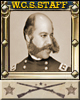
Maj. Gen. Henry Jackson Hunt, USA. (b. 1819, d. 1899). Twice savior of the Union Army, Henry Jackson Hunt was a third generation army officer born in Detroit in 1819. As a result of childhood illness Hunt was deaf in one ear. His father and grandfather were infantry officers, but Hunt was destined to be the outstanding artillery officer of the Army of the Potomac. Hunt entered West Point at age 16, graduated in the class of 1839, and was assigned to the 2nd Artillery. In the Mexican war he was at Vera Cruz and Mexico City [brev. Major]. He was slighty wounded at Molino del Rey when struck by two partially spent musket balls. Breveted Major in the war, Hunt reached Captain in 1852 and remained at that rank until the war. In the 1850's Hunt developed artillery tactics used throughout the Civil War. In early 1861 Hunt constructed defenses at Harper's Ferry and rigged the rifle plant for demolition. At Bull Run, after the federal rout, Hunt was credited with halting a Confederate pursuit with cannon fire at Blackburn's Ford. He was promoted to major and appointed chief of artillery of the Washington defenses. In late September 1861, he was promoted to colonel and placed in charge of the Army of the Potomac Artillery Reserve, a position he held for all the major battles of the Army of the Potomac. Hunt earned his brigadier general star in July 1862 during the Peninsular campaign. At Malvern Hill he deployed over a hundred guns to end R.E. Lee's dreams of destroying the Army of the Potomac, for that campaign. Major General Joseph Hooker on assuming command of the AOP reduced Hunt's authority over the Reserve. At Chancellorsville the artillery was noticeably less effective, following that battle his authority over the artillery was returned, in time for Gettysburg. On the third day, during the largest artillery duel of the war, Hunt made the critical decision to conserve his ammunition. When ten minutes later when Longstreet launched Pickett on his famous charge, Hunt reopened fire, broke the charge, and ended dreams of southern victory. In late June 1864, Grant placed Hunt in command of all siege operations about Petersburg, a position he held when the war ended. Hunt was brevetted major-general in early March 1865. Following the war Hunt remained in the army, reverting to lt. colonel of artillery, he was promoted to full colonel in 1869 and retired in 1883. Hunt was totally deaf, like many redlegs, when he perished from pneumonia in Washington in 1899.
Got it, thanks! I appreciate the suggested ratings and teachable abilities.
Michael Jordan plays ball. Charles Manson kills people. I torment eager potential customers by not sharing screenshots of "Brother Against Brother." Everyone has a talent.
Okay, already edited. (These days, I've gone to a LIFO -- "last in, first out" -- system in editing bios.) A few changes, nothing too major.
Maj. Gen. Henry Jackson Hunt (b. 1819, d. 1899). Twice savior of the Union Army, Hunt was a third-generation army officer born in Detroit in 1819. His father and grandfather had been infantry officers, but Hunt was destined to be the outstanding artillery officers of the Army of the Potomac This last sentence doesn’t read right: do you mean to say that he was THE outstanding artillery officer, or AMONG the outstanding officers?. Hunt entered West Point at age 16, graduated in the class of 1839, and was assigned to the 2nd Artillery. In the Mexican War he was at Vera Cruz and Mexico City, and was slighty wounded at Molino del Rey when struck by two partially spent musket balls. Breveted Major in the war, Hunt reached the rank of Captain in 1852 and remained at that rank until the Civil War. During the intervening decade Hunt developed artillery tactics that would be used throughout the war. In early 1861 Hunt constructed defenses at Harper's Ferry and rigged the rifle plant for demolition. At First Bull Run, after the Union rout, Hunt was credited with halting a Confederate pursuit with cannon fire at Blackburn's Ford. He was subsequently promoted to Major and appointed chief of artillery of the Washington defenses. In late September 1861, Hunt was promoted to Colonel and placed in charge of the Army of the Potomac’s Artillery Reserve, a position he held for all the major battles of that army. Hunt earned his Brigadier General star in July 1862 during the Peninsular campaign. At Malvern Hill he deployed over a hundred guns to end Gen. Robert E. Lee's dreams of destroying the Army of the Potomac during that campaign. On assuming command of the Army of the Potomac, Gen. Joseph Hooker reduced Hunt's authority over the Reserve, but at Chancellorsville the artillery was noticeably less effective, so following that battle his authority over the artillery was restored – in time for the Battle of Gettysburg. On the third day of that battle, during the largest artillery duel of the war, Hunt made the critical decision to conserve his ammunition. Ten minutes later, when Confederate Gen. James Longstreet launched Gen. George Pickett on his famous charge, Hunt reopened fire, broke the charge, and ended dreams of southern victory. The following year, in late June 1864, Gen. Ulysses S. Grant placed Hunt in command of all siege operations around Petersburg, a position he was holding when the war ended. Hunt was brevetted Major General in early March 1865. Following the war Hunt remained in the army, reverting to Lieutenant Colonel of artillery, but later gaining promotion to full Colonel in 1869 and retiring in 1883. Hunt, who had lost the hearing in one ear from a childhood illness, ended up totally deaf – the fate of many “redlegs.” Hunt perished from pneumonia in Washington in 1899.
I'm thinking of making Hunt a 25-percenter. Do people think he deserves the promotion from 9-percenter?
Michael Jordan plays ball. Charles Manson kills people. I torment eager potential customers by not sharing screenshots of "Brother Against Brother." Everyone has a talent.
Thanks for the correction -- this bio's good to go now.
Michael Jordan plays ball. Charles Manson kills people. I torment eager potential customers by not sharing screenshots of "Brother Against Brother." Everyone has a talent.