

If this is acceptible, I will randomly try five more.
Brig. Gen. Turner Ashby, Jr., CSA (b. 1828, d. 1862) Gen. Jackson wrote after the death of his cavalry commander, “His daring was proverbial. His powers of endurance incredible. His tone of character heroic and his sagacity almost intuitive in divining the purpose of the enemy.” He was born Oct 23, 1828 near Markham, VA in the Blue Ridge Mtns. At an early age, he showed great horsemanship and marksmanship. In the 1850s, he formed a cavalry company called the Mountain Rangers. After the 1859 raid on Harper’s Ferry by John Brown, the Mountain Rangers were absorbed into the VA Militia and performed picket and guard duty during Brown’s trial and execution. In April of 1861 just after VA’s succession, he helped capture Harper’s Ferry. Bravery and daring were a part of his character and it was greatly increased after his brother was mortally wounded during a skirmish near the Potomac River in June 1861. He was appointed Colonel of the 7th VA Cavalry on March 12, 1862. Ashby was instrumental in Jackson’s routing of Banks’ army during the first part of the 1862 Valley campaign. He was praised and criticized by Jackson and even at one point threatened to resign after Jackson took away his cavalry, reprimanding him for his lack of discipline and military drilling. However, he was promoted brigadier general on May 23, 1862. His cavalry command became known as Ashby’s Brigade. Later, it became the Laurel Brigade. On June 6, 1862 during the battle of Harrisonburg, he ambushed the 1st NJ Cavalry and took dozens of prisoners including the regimental colonel, Sir Percy Wyndham. Later in the battle, he collected the 1st Maryland and 58th VA Infantry to lead a charge on Chestnut Hill against the 13th PA Reserve Inf., known as the Bucktails. His horse was shot out from under him. He then led the charge on foot saying, “Charge men! For God’s sake, charge!” Moments later, he fell dead from a bullet to the chest. The Confederates continued to charge and took the hill. The man known to many as “The Black Knight of the Valley” was finally laid to rest next to his brother in Winchester, VA.
CSA Bio: Turner Ashby
Moderator: Gil R.
-
shenandoah
- Posts: 80
- Joined: Thu Mar 01, 2007 6:27 pm
- Location: Shenandoah Valley, Virginia
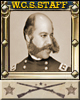
RE: CSA Bio: Turner Ashby
Very nicely done. For the random guys, do you prefer Confederates, being a Virginian yourself? Or would some Union guys be acceptable?
Also, please let me know if I should credit you as "Shenandoah" or by your real name.
Also, please let me know if I should credit you as "Shenandoah" or by your real name.
Michael Jordan plays ball. Charles Manson kills people. I torment eager potential customers by not sharing screenshots of "Brother Against Brother." Everyone has a talent.
-
shenandoah
- Posts: 80
- Joined: Thu Mar 01, 2007 6:27 pm
- Location: Shenandoah Valley, Virginia
RE: CSA Bio: Turner Ashby
I will chose CSA generals first. I have more material on them. Getting close to 1000?
shenandoah, real name - Andrew Thayer
shenandoah, real name - Andrew Thayer
RE: CSA Bio: Turner Ashby
Okay, the next five are:
Cockrell,_F.M.
Colquitt,_A.H.
Colston,_R.E.
Conner,_J.
Cook,_P.
And there are hundreds more where they came from, since we're not even close...
Cockrell,_F.M.
Colquitt,_A.H.
Colston,_R.E.
Conner,_J.
Cook,_P.
And there are hundreds more where they came from, since we're not even close...
Michael Jordan plays ball. Charles Manson kills people. I torment eager potential customers by not sharing screenshots of "Brother Against Brother." Everyone has a talent.
RE: CSA Bio: Turner Ashby
Okay, it's ready to go. As you can see, I ended up adding several details from the Heidlers' "Encyclopedia of the American Civil War" that I found while reading up on him. Please let me know if these are okay, and also if the ratings and teachable abilities I gave him make sense.
Brig. Gen. Turner Ashby, Jr. (b. 1828, d. 1862). Gen. “Stonewall” Jackson wrote after the death of his cavalry commander, “As a partisan officer I never knew his superior; his daring was proverbial; his powers of endurance incredible; his tone of character heroic; and his sagacity almost intuitive in divining the purpose and movements of the enemy.” He was born Oct 23, 1828 near Markham, Virginia, located in the Blue Ridge Mountains. At an early age, he showed great horsemanship and marksmanship. In the 1850s, he formed a volunteer cavalry company called the Mountain Rangers. After John Brown’s 1859 raid on Harper’s Ferry, the Mountain Rangers were absorbed into the Virginia Militia and performed picket and guard duty in the ara during Brown’s trial and execution. In April of 1861, just before his state’s secession, Ashby helped to capture Harper’s Ferry, and soon thereafter his cavalry company became part of the 7th Virginia Cavalry Regiment under Col. Angus W. McDonald . Bravery and daring were a part of his character, but his recklessness greatly increased after his brother was mortally wounded during a skirmish near the Potomac River in June 1861, since his belief that his brother had been stabbed after being felled made him thirst for vengeance against the Union. (I clarified the previous sentence a bit, adding the extra information about the stabbing.) He was appointed Colonel of the 7th Cavalry on March 12, 1862, when rheumatism forced McDonald to retire, but had already had been operating much of the regiment independently because of its commander’s illness I also added this detail. Having spent the fall and winter of 1861-62 operating in the western part of Virginia, Ashby that spring was instrumental in Jackson’s routing of Gen. Nathaniel P. Banks’ army during the first part of the Shenandoah Valley campaign. Though Ashby was greatly valued by Jackson for his abilities in battle, the dangerously poor discipline of the men in his cavalry command led the general to disperse these units, leading an angry Ashby to threaten to resign. Ashby and Jackson then reconciled, with Jackson restoring to Ashby his cavalry command and Ashby promising to become a stricter disciplinarian. I added more details about this falling out between Jackson and Ashby, since it struck me as an interesting episode. A month later, on May 23, 1862, Ashby was rewarded for his performance with a promotion to Brigadier General, and given a cavalry command that became known as “Ashby’s Brigade” (and later became the Laurel Brigade). Just two weeks later, at the Battle of Harrisonburg on June 6, 1862, Ashby ambushed the 1st New Jersey Cavalry and took dozens of prisoners, including the regimental colonel, Sir Percy Wyndham. Later in the battle, he collected the 1st Maryland and 58th Virginia Infantry to lead them in a charge on Chestnut Hill against the 13th Pennsylvania Reserve Infantry (better known as the Pennsylvania Bucktails). When his horse was shot out from under him, Ashby led the charge on foot, saying, “Charge men! For God’s sake, charge!” Moments later, he fell dead from a bullet to the chest. The Confederates continued the charge and took the hill. The man known to many as “The Black Knight of the Valley” was finally laid to rest next to his brother in Winchester, Virginia. (Bio by Andrew Thayer)
Leadership: 6
Tactics: 4
Initiative: 6
Command: 4
Cavalry: 7
Teaches: Brave (2), Wild (3), Independent (9), Chargers (13)
Brig. Gen. Turner Ashby, Jr. (b. 1828, d. 1862). Gen. “Stonewall” Jackson wrote after the death of his cavalry commander, “As a partisan officer I never knew his superior; his daring was proverbial; his powers of endurance incredible; his tone of character heroic; and his sagacity almost intuitive in divining the purpose and movements of the enemy.” He was born Oct 23, 1828 near Markham, Virginia, located in the Blue Ridge Mountains. At an early age, he showed great horsemanship and marksmanship. In the 1850s, he formed a volunteer cavalry company called the Mountain Rangers. After John Brown’s 1859 raid on Harper’s Ferry, the Mountain Rangers were absorbed into the Virginia Militia and performed picket and guard duty in the ara during Brown’s trial and execution. In April of 1861, just before his state’s secession, Ashby helped to capture Harper’s Ferry, and soon thereafter his cavalry company became part of the 7th Virginia Cavalry Regiment under Col. Angus W. McDonald . Bravery and daring were a part of his character, but his recklessness greatly increased after his brother was mortally wounded during a skirmish near the Potomac River in June 1861, since his belief that his brother had been stabbed after being felled made him thirst for vengeance against the Union. (I clarified the previous sentence a bit, adding the extra information about the stabbing.) He was appointed Colonel of the 7th Cavalry on March 12, 1862, when rheumatism forced McDonald to retire, but had already had been operating much of the regiment independently because of its commander’s illness I also added this detail. Having spent the fall and winter of 1861-62 operating in the western part of Virginia, Ashby that spring was instrumental in Jackson’s routing of Gen. Nathaniel P. Banks’ army during the first part of the Shenandoah Valley campaign. Though Ashby was greatly valued by Jackson for his abilities in battle, the dangerously poor discipline of the men in his cavalry command led the general to disperse these units, leading an angry Ashby to threaten to resign. Ashby and Jackson then reconciled, with Jackson restoring to Ashby his cavalry command and Ashby promising to become a stricter disciplinarian. I added more details about this falling out between Jackson and Ashby, since it struck me as an interesting episode. A month later, on May 23, 1862, Ashby was rewarded for his performance with a promotion to Brigadier General, and given a cavalry command that became known as “Ashby’s Brigade” (and later became the Laurel Brigade). Just two weeks later, at the Battle of Harrisonburg on June 6, 1862, Ashby ambushed the 1st New Jersey Cavalry and took dozens of prisoners, including the regimental colonel, Sir Percy Wyndham. Later in the battle, he collected the 1st Maryland and 58th Virginia Infantry to lead them in a charge on Chestnut Hill against the 13th Pennsylvania Reserve Infantry (better known as the Pennsylvania Bucktails). When his horse was shot out from under him, Ashby led the charge on foot, saying, “Charge men! For God’s sake, charge!” Moments later, he fell dead from a bullet to the chest. The Confederates continued the charge and took the hill. The man known to many as “The Black Knight of the Valley” was finally laid to rest next to his brother in Winchester, Virginia. (Bio by Andrew Thayer)
Leadership: 6
Tactics: 4
Initiative: 6
Command: 4
Cavalry: 7
Teaches: Brave (2), Wild (3), Independent (9), Chargers (13)
Michael Jordan plays ball. Charles Manson kills people. I torment eager potential customers by not sharing screenshots of "Brother Against Brother." Everyone has a talent.
-
shenandoah
- Posts: 80
- Joined: Thu Mar 01, 2007 6:27 pm
- Location: Shenandoah Valley, Virginia
RE: CSA Bio: Turner Ashby
The bio looks great. You have added some good and interesting detail about his life. I got most of my material from two sources. Stonewall Jackson by James Robertson(great book) and another book on Ashby by local author named Bushong. Rare book, library wouldn't let me check it out. Bushong is one of those Valley names where the family came to Shenandoah Valley in the 1700s when the Valley was being populated by German and Scots-Irish immigrants. Example the Bushong Farm is where the battle of New Market was fought. "Small" Valley. Back to the bio. His brother's death was very brutal. Shot and bayoneted several times but lived. Ashby followed the trail of battle debris until he found his brother alive. He died about a day later but lived to tell what happened. The resignation is also interesting. Along with Ashby was his right hand man Major Funsten who had been with the cavalry since the beginning. He did not attend the meeting but did withdrawl his resignation as well. For some reason, I feel like I should have started a thread. Anyway, I just happened to read the local paper Daily News Record and...
JMU Faces Monumental Skirmish
Posted 2007-03-07
Turner Ashby Site Eyed As Potential State Park
By Jeff Mellott
[font=arial]
HARRISONBURG — The local camp of the Sons of Confederate Veterans has asked Gov. Timothy M. Kaine to preserve Turner Ashby Lane and nearby property as a state park.
Much of the land the Sons included in their request is owned by James Madison University. The university plans to assess the historic significance of the property, which is the site of an 1862 Civil War skirmish, before going forward with building athletic fields as it has planned.
Preservation of the land near the Turner Ashby monument could bring additional visitors to the city, said John Mann, commander of the D.H. Lee Martz Camp No. 10 of the Sons of Confederate Veterans.
Monument Protection
The park, as the Sons have proposed, would encompass nearly all the land around Turner Ashby Lane, Mann said. The proposed land for the park surrounds the Turner Ashby monument site and extends north of the site, he said.
The lane leads to the monument that marks where Confederate Gen. Turner Ashby was struck down in fighting with federal troops on June 6, 1862.
A 1992 National Park Service study, however, listed the skirmish as a military action that did not rise to the level of a battle.
The Turner Ashby Chapter 162 of the United Daughters of the Confederacy owns the site.
Nancy Gum, of the chapter, called the Sons’ efforts a "noble goal," and welcomed the protection a state park would give the monument.
Sons’ Request
In the Sons’ letter to Kaine dated Feb. 19, the group said preservation of the site would enhance the understanding of Confederate Gen. Thomas "Stonewall" Jackson’s Valley Campaign.
To preserve the site, the Sons asked the governor to direct JMU’s Board of Visitors, the governing board, to give the land along Turner Ashby Lane to the commonwealth for the proposed Harrisonburg Battlefield State Park,which will also encompass some city land.
Harrisonburg officials apparently are unaware of the Sons’ effort to create a state park, which would include some city property.
City Manager Roger Baker said on Wednesday that no one has talked to him about acquiring land for a park. To dispose of city property, Harrisonburg would have to put it up for bids, Baker said.
Mayor Rodney Eagle also was unaware of the efforts to create the park. Eagle said he would need information about the project before commenting.
University Response
JMU continues to plan to turn 16 acres of the property into athletic fields.
The university used student fees to purchase 47 acres for $1.7 million in 2003, said University Vice President for Administration and Finance Charles King.
The university, King said, will make an archaeological and historical assessment to determine where the battle occurred.
In a Feb. 28 letter to the Virginia Department of Historic Resources, King said JMU would use an experienced faculty member during the assessment and rely on historians for the findings.
"We can assure you that we are sensitive to our responsibilities to our neighbors and our community," King wrote to Marc Holma, architectural historian for the Department of Historic Resources.[/font]
JMU Faces Monumental Skirmish
Posted 2007-03-07
Turner Ashby Site Eyed As Potential State Park
By Jeff Mellott
[font=arial]
HARRISONBURG — The local camp of the Sons of Confederate Veterans has asked Gov. Timothy M. Kaine to preserve Turner Ashby Lane and nearby property as a state park.
Much of the land the Sons included in their request is owned by James Madison University. The university plans to assess the historic significance of the property, which is the site of an 1862 Civil War skirmish, before going forward with building athletic fields as it has planned.
Preservation of the land near the Turner Ashby monument could bring additional visitors to the city, said John Mann, commander of the D.H. Lee Martz Camp No. 10 of the Sons of Confederate Veterans.
Monument Protection
The park, as the Sons have proposed, would encompass nearly all the land around Turner Ashby Lane, Mann said. The proposed land for the park surrounds the Turner Ashby monument site and extends north of the site, he said.
The lane leads to the monument that marks where Confederate Gen. Turner Ashby was struck down in fighting with federal troops on June 6, 1862.
A 1992 National Park Service study, however, listed the skirmish as a military action that did not rise to the level of a battle.
The Turner Ashby Chapter 162 of the United Daughters of the Confederacy owns the site.
Nancy Gum, of the chapter, called the Sons’ efforts a "noble goal," and welcomed the protection a state park would give the monument.
Sons’ Request
In the Sons’ letter to Kaine dated Feb. 19, the group said preservation of the site would enhance the understanding of Confederate Gen. Thomas "Stonewall" Jackson’s Valley Campaign.
To preserve the site, the Sons asked the governor to direct JMU’s Board of Visitors, the governing board, to give the land along Turner Ashby Lane to the commonwealth for the proposed Harrisonburg Battlefield State Park,which will also encompass some city land.
Harrisonburg officials apparently are unaware of the Sons’ effort to create a state park, which would include some city property.
City Manager Roger Baker said on Wednesday that no one has talked to him about acquiring land for a park. To dispose of city property, Harrisonburg would have to put it up for bids, Baker said.
Mayor Rodney Eagle also was unaware of the efforts to create the park. Eagle said he would need information about the project before commenting.
University Response
JMU continues to plan to turn 16 acres of the property into athletic fields.
The university used student fees to purchase 47 acres for $1.7 million in 2003, said University Vice President for Administration and Finance Charles King.
The university, King said, will make an archaeological and historical assessment to determine where the battle occurred.
In a Feb. 28 letter to the Virginia Department of Historic Resources, King said JMU would use an experienced faculty member during the assessment and rely on historians for the findings.
"We can assure you that we are sensitive to our responsibilities to our neighbors and our community," King wrote to Marc Holma, architectural historian for the Department of Historic Resources.[/font]
RE: CSA Bio: Turner Ashby
Thanks for the additional info. I've now improved that sentence, which now reads: "Bravery and daring were a part of his character, but his recklessness greatly increased after his brother was mortally wounded during a skirmish near the Potomac River in June 1861, since anger over the violent nature of his brother’s death – he had been shot and bayoneted multiple times, but lived long enough to tell Ashby what had happened – made him thirst for vengeance against the Union." Looks like we're good to go with it.
That's interesting about the park. To me it's a no-brainer that it's an important site, even if not a battlefield proper.
That's interesting about the park. To me it's a no-brainer that it's an important site, even if not a battlefield proper.
Michael Jordan plays ball. Charles Manson kills people. I torment eager potential customers by not sharing screenshots of "Brother Against Brother." Everyone has a talent.