

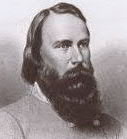
Maj. Gen. William B. Franklin (b. 1823, d. 1903) The star of the U.S. Military Academy Class of 1843, William Buel Franklin racked up an impressive career in the U.S. Army prior to the Civil War, but struggled during the great conflict, both in the east and west. Franklin was born Feb. 27, 1823, in York, Pennsylvania. He graduated first in the West Point Class of 1843, well ahead of U.S. Grant. This led to an adventurous career as an engineer. In the Corps of Topographical Engineers, Franklin participated in the Great Lakes survey of 1843-45 and was with Philip Kearney’s exploration of the South Pass in the Rockies. During the Mexican War, Franklin saw action while with Gen. John E. Wool’s column. At Buena Vista, he won a brevet for gallantry. After the end of that war, Franklin was in Washington, D.C. There, he was charged with the construction of the new Capitol dome and the Treasury addition. At the start of the Civil War, Franklin was commissioned colonel of the 12th U.S. Infantry May 14, 1861. He was made a brigadier general of volunteers May 17, 1861 and commanded a brigade in Gen. Samuel Heintzelman’s division at First Manassas. He went into that battle shorthanded with just two Massachusetts regiments, the First Minnesota and a battery of the First U.S. Artillery. Another of his regiments, the Fourth Pennsylvania, claimed its discharge on the morning of the battle despite an appeal from Army commander Gen. Irwin McDowell. In September, Franklin was given a division in the Washington defenses. During the Peninsular Campaign, Franklin led his division, and later the VI Corps (formed May 18, 1862), with distinction. He was promoted to major general July 4, 1862. During the Second Bull Run Campaign, Franklin was charged with failure to obey orders by Gen. Pope. The charge was later dropped. During the Maryland Campaign, Franklin commanded his corps at South Mountain and penetrated Crampton’s Gap, but could not save the garrison at Harpers Ferry. He commanded his troops at Antietam. Before Fredericksburg, Army Commander Gen. Ambrose Burnside selected him to command the Left Grand Division of his VI Corps and the I Corps of Gen. John Reynolds. During the Federal disaster there, Franklin executed Burnside’s sparse orders, literally. Burnside blamed Franklin for the disaster, claiming he disobeyed the orders. Pres. Abraham Lincoln refused to cashier Franklin and Burnside eventually was relieved of army command. But Franklin didn’t return to the Army of the Potomac, either. After being tied up by the committee on the conduct of the war, Franklin was finally reassigned to command the XIX Corps in the Department of the Gulf midway through 1863. This unit took part in Gen. N. Banks’ Red River Campaign. Franklin was severely wounded at the Battle of Mansfield during this campaign, which ended in another Federal defeat. He did use his engineering skill to help the Federal flotilla from losing ships to low water. Disability and disfavor kept him from being able to come back east to command under his old classmate, Grant. The end of the war found Franklin the president of a board for retiring disabled officers. He resigned his regular and volunteer commissions. In civilian life, Franklin achieved the greatness he missed as a general. For 22 years, he served as the superintendent of Colt’s Fire Arms Manufacturing Company of Hartford, Connecticut, excelling as an engineer and administrator. He supervised the construction of the Connecticut capitol and was a presidential elector for Samuel Tilden in 1876. He served as commissioner general of the United States for the Paris Exposition of 1888. Franklin died in Hartford, Connecticut March 8, 1903.
Edited for updated information on his promotion to major general, which the three primary sources omitted.
USA Bio William B. Franklin
Moderator: Gil R.
-
jkBluesman
- Posts: 797
- Joined: Mon Feb 12, 2007 6:48 pm
RE: USA Bio William B. Franklin
Perhaps it helps to find suitable ratings that Sorrel praised Franklin. He thought him to be the better choice for army command than Burnside and wrote about Franklin's command ability (observed at Fredericksburg): "More brigades were added and there were several in Franklin's possession. He had no trouble in laying what he wanted in his front."
"War is the field of chance."
Carl von Clausewitz
Carl von Clausewitz
RE: USA Bio William B. Franklin
Thanks.
Michael Jordan plays ball. Charles Manson kills people. I torment eager potential customers by not sharing screenshots of "Brother Against Brother." Everyone has a talent.
RE: USA Bio William B. Franklin
Nice job here. Because with my additions it became too long, I had to make some minor cuts. I took out the bit about engineering and the navy after the Battle of Mansfield, since to explain what happened would require more space than we have. I also took out the mention of his resigning his commission, since that was in 1866 and is implied by the following sentence about Franklin in civilian life. It’s still a bit long, but shouldn’t be too hard to get down to 3900 characters once I have the answer to the two questions below.
Maj. Gen. William Buel Franklin (b. 1823, d. 1903). The star of the U.S. Military Academy Class of 1843, Franklin racked up an impressive career in the U.S. Army prior to the Civil War, but struggled during the great conflict, both in the east and west. Born in York, Pennsylvania on February 27, 1823, Franklin graduated first in his West Point class – well ahead of Ulysses S. Grant. Joining the Corps of Topographical engineers, he embarked on an adventurous career as an engineer, participating in the Great Lakes survey of 1843-45 and joining Philip Kearney’s exploration of the South Pass in the Rocky Mountains. During the Mexican War, Franklin saw action while with Gen. John E. Wool’s column; at Buena Vista, he won a brevet for gallantry. After the end of that war, Franklin headed to Washington, D.C., where he was charged with the construction of the new Capitol dome and the Treasury addition. At the start of the Civil War, Franklin was commissioned Colonel of the 12th U.S. Infantry on May 14, 1861. He was made a brigadier general of volunteers May 17, 1861 and commanded a brigade in Gen. Samuel Heintzelman’s division at the First Battle of Bull Run (Was he really promoted to col. and then brig. gen. three days apart, or was his promotion retroactive?). Franklin went into that battle shorthanded, with just two Massachusetts regiments, the 1st Minnesota and a battery of the 1st U.S. Artillery. Another of his regiments, the 4th Pennsylvania, claimed its discharge on the morning of the battle despite an appeal from army commander Gen. Irvin McDowell. That September, as Washington prepared for a potential attack, Franklin was given a division in the city’s defenses. During the Peninsular Campaign the following spring, Franklin led his division, and later the VI Corps (formed May 18, 1862) (Heidler says he commanded the XI Corps from May-November 1862 – which is correct?), with distinction, and following this campaign he was promoted to major general, on July 4. During the Second Bull Run Campaign of late August, Franklin was charged with failure to obey orders by Gen. John Pope, though the charge was later dropped. During the Maryland Campaign two weeks later, Franklin commanded his corps at South Mountain, successfully penetrated Crampton’s Gap (but failed to save the garrison at Harpers Ferry), and played a limited role at Antietam. Before the Battle of Fredericksburg that December, new Army of the Potomac commander Gen. Ambrose Burnside selected Franklin to command the Left Grand Division, consisting of Gen. William F. Smith’s VI Corps and the I Corps of Gen. John Reynolds. During the battle, Franklin executed Burnside’s poorly worded orders literally, and attacked with too few divisions, leading to a total repulse ; afterwards, Burnside blamed Franklin for ensuing disaster, claiming he disobeyed the orders. Pres. Abraham Lincoln refused to cashier Franklin, and Burnside eventually was relieved of army command. But Franklin did not return to the Army of the Potomac, either. After being tied up by the committee on the conduct of the war – which scapegoated him because he was a friend of George B. McClellan, who was becoming active in Democratic politics – Franklin was finally reassigned to command the XIX Corps in the Army of the Gulf midway through 1863. This unit took part in Gen. Nathaniel P. Banks’ Red River Campaign. Franklin was severely wounded at the Battle of Mansfield during this campaign, which ended in another Union defeat. Disability and disfavor kept him from being able to come back east to command under his old classmate, Grant. The end of the war found Franklin the president of a board for retiring disabled officers. In civilian life, Franklin achieved the greatness he missed as a general: for 22 years, he served as the superintendent of Colt’s Fire Arms Manufacturing Company of Hartford, Connecticut, excelling as an engineer and administrator. He supervised the construction of the Connecticut capitol and was a presidential elector for Samuel Tilden in 1876. He also served as commissioner general of the United States for the Paris Exposition of 1888. Franklin died in Hartford, Connecticut March 8, 1903. (Bio by Joern Kaesebier)
Ldr: 4
Tact: 4
Init: 2
Cmd: 4
Cav:
Start date: 9(?)
Teaches: Diggers, Random
Maj. Gen. William Buel Franklin (b. 1823, d. 1903). The star of the U.S. Military Academy Class of 1843, Franklin racked up an impressive career in the U.S. Army prior to the Civil War, but struggled during the great conflict, both in the east and west. Born in York, Pennsylvania on February 27, 1823, Franklin graduated first in his West Point class – well ahead of Ulysses S. Grant. Joining the Corps of Topographical engineers, he embarked on an adventurous career as an engineer, participating in the Great Lakes survey of 1843-45 and joining Philip Kearney’s exploration of the South Pass in the Rocky Mountains. During the Mexican War, Franklin saw action while with Gen. John E. Wool’s column; at Buena Vista, he won a brevet for gallantry. After the end of that war, Franklin headed to Washington, D.C., where he was charged with the construction of the new Capitol dome and the Treasury addition. At the start of the Civil War, Franklin was commissioned Colonel of the 12th U.S. Infantry on May 14, 1861. He was made a brigadier general of volunteers May 17, 1861 and commanded a brigade in Gen. Samuel Heintzelman’s division at the First Battle of Bull Run (Was he really promoted to col. and then brig. gen. three days apart, or was his promotion retroactive?). Franklin went into that battle shorthanded, with just two Massachusetts regiments, the 1st Minnesota and a battery of the 1st U.S. Artillery. Another of his regiments, the 4th Pennsylvania, claimed its discharge on the morning of the battle despite an appeal from army commander Gen. Irvin McDowell. That September, as Washington prepared for a potential attack, Franklin was given a division in the city’s defenses. During the Peninsular Campaign the following spring, Franklin led his division, and later the VI Corps (formed May 18, 1862) (Heidler says he commanded the XI Corps from May-November 1862 – which is correct?), with distinction, and following this campaign he was promoted to major general, on July 4. During the Second Bull Run Campaign of late August, Franklin was charged with failure to obey orders by Gen. John Pope, though the charge was later dropped. During the Maryland Campaign two weeks later, Franklin commanded his corps at South Mountain, successfully penetrated Crampton’s Gap (but failed to save the garrison at Harpers Ferry), and played a limited role at Antietam. Before the Battle of Fredericksburg that December, new Army of the Potomac commander Gen. Ambrose Burnside selected Franklin to command the Left Grand Division, consisting of Gen. William F. Smith’s VI Corps and the I Corps of Gen. John Reynolds. During the battle, Franklin executed Burnside’s poorly worded orders literally, and attacked with too few divisions, leading to a total repulse ; afterwards, Burnside blamed Franklin for ensuing disaster, claiming he disobeyed the orders. Pres. Abraham Lincoln refused to cashier Franklin, and Burnside eventually was relieved of army command. But Franklin did not return to the Army of the Potomac, either. After being tied up by the committee on the conduct of the war – which scapegoated him because he was a friend of George B. McClellan, who was becoming active in Democratic politics – Franklin was finally reassigned to command the XIX Corps in the Army of the Gulf midway through 1863. This unit took part in Gen. Nathaniel P. Banks’ Red River Campaign. Franklin was severely wounded at the Battle of Mansfield during this campaign, which ended in another Union defeat. Disability and disfavor kept him from being able to come back east to command under his old classmate, Grant. The end of the war found Franklin the president of a board for retiring disabled officers. In civilian life, Franklin achieved the greatness he missed as a general: for 22 years, he served as the superintendent of Colt’s Fire Arms Manufacturing Company of Hartford, Connecticut, excelling as an engineer and administrator. He supervised the construction of the Connecticut capitol and was a presidential elector for Samuel Tilden in 1876. He also served as commissioner general of the United States for the Paris Exposition of 1888. Franklin died in Hartford, Connecticut March 8, 1903. (Bio by Joern Kaesebier)
Ldr: 4
Tact: 4
Init: 2
Cmd: 4
Cav:
Start date: 9(?)
Teaches: Diggers, Random
Michael Jordan plays ball. Charles Manson kills people. I torment eager potential customers by not sharing screenshots of "Brother Against Brother." Everyone has a talent.
-
Battleline
- Posts: 426
- Joined: Thu Oct 05, 2006 6:27 pm
RE: USA Bio William B. Franklin
Both Warner and Historical Times Encyclopedia state Franklin commanded VI Corps. Perhaps Heidler made a typo of mistaking XI for VI. XI Corps wasn't founded until September 12, 1862, with Franz Sigel in charge. XI Corps had been I Corps Army of Virginia before that. I would tend to go with Warner and Historical Times on this one.
According to Warner, it was a three-day gap between promotions to colonel and brigadier general. His brigadier general's commission was as a volunteer while the colonel was in the regular army. All of the brevet, volunteer and regular army commissions in the U.S. Army around that time got very confusing! (So confusing that Warner doesn't have many of the major promotion dates).
According to Warner, it was a three-day gap between promotions to colonel and brigadier general. His brigadier general's commission was as a volunteer while the colonel was in the regular army. All of the brevet, volunteer and regular army commissions in the U.S. Army around that time got very confusing! (So confusing that Warner doesn't have many of the major promotion dates).
RE: USA Bio William B. Franklin
I've also noticed that Heidler sometimes has minor errors -- brig. gen. instead of maj. gen., wrong corps/brigade/regimental info, etc. -- so you're no doubt correct.
Okay, the bio's all done. I shortened it by 150 characters, but took out nothing of substance -- a bunch of little tweaks here and there added up. I did catch one glaring error at the very last moment: I somehow attributed the bio to jkBluesman by mistake.
Inspired by the conversation on the main forum, I gave him "Hardy" to complement "Diggers," instead of just "Diggers" and a random ability.
Maj. Gen. William Buel Franklin (b. 1823, d. 1903). The star of the U.S. Military Academy Class of 1843, Franklin racked up an impressive career in the U.S. Army prior to the Civil War, but during the conflict struggled both in the east and west. Born in York, Pennsylvania on February 27, 1823, Franklin graduated first in his West Point class – well ahead of Ulysses S. Grant. Joining the Corps of Topographical Engineers, he embarked on an adventurous career as an engineer, participating in the Great Lakes survey of 1843-45 and joining Philip Kearney’s exploration of the South Pass in the Rocky Mountains. During the Mexican War, Franklin saw action with Gen. John E. Wool’s column; at Buena Vista, he won a brevet for gallantry. After the war, Franklin headed to Washington, D.C., where he headed up the construction of the new Capitol dome and Treasury addition. At the start of the Civil War, he was commissioned Colonel of the 12th U.S. Infantry on May 14, 1861 and a brigadier general of volunteers on May 17. Commanding a brigade in Gen. Samuel Heintzelman’s division at First Bull Run, Franklin went into battle shorthanded, with just two Massachusetts regiments, the 1st Minnesota and a battery of the 1st U.S. Artillery. Another of his regiments, the 4th Pennsylvania, claimed its discharge on the morning of the battle despite an appeal from army commander Gen. Irvin McDowell. That September, as Washington prepared for a potential attack, Franklin was given a division in the city’s defenses. During the Peninsular Campaign the following spring, Franklin led his division, and later the VI Corps (formed May 18, 1862), with distinction; following this campaign, he was promoted to major general, on July 4. During the Second Bull Run Campaign that August, Franklin was charged by Gen. John Pope with failure to obey orders, though the charge was later dropped. During the Maryland Campaign two weeks later, Franklin commanded his corps at South Mountain, successfully penetrated Crampton’s Gap (but failed to save the garrison at Harpers Ferry), and played a limited role at Antietam. Before the Battle of Fredericksburg that December, new Army of the Potomac commander Gen. Ambrose Burnside selected Franklin to command the Left Grand Division, consisting of Gen. William F. Smith’s VI Corps and Gen. John Reynolds’ I Corps. During the battle, Franklin executed Burnside’s poorly worded orders literally and attacked with too few divisions, leading to a total repulse; afterwards, Burnside blamed Franklin for the disaster, claiming he disobeyed the orders. Pres. Abraham Lincoln refused to cashier Franklin, and Burnside eventually was relieved of army command. But Franklin did not return to the Army of the Potomac, either. After being tied up by the committee on the conduct of the war – which scapegoated him because he was a friend of George B. McClellan, who was becoming active in Democratic politics – Franklin was finally reassigned to command the XIX Corps in the Army of the Gulf midway through 1863. This unit took part in Gen. Nathaniel P. Banks’ Red River Campaign. Franklin was severely wounded at the Battle of Mansfield during this campaign, which ended in another Union defeat. Disability and disfavor kept him from being able to come back east to command under his old classmate, Grant. The end of the war found Franklin presiding over a board for retiring disabled officers. In civilian life, Franklin achieved the greatness he missed as a general: for 22 years, he was the superintendent of Colt’s Fire Arms Manufacturing Company in Hartford, excelling as an engineer and administrator. He also supervised the construction of the Connecticut capitol, and was a presidential elector for Samuel Tilden in 1876 and commissioner general of the United States for the Paris Exposition of 1888. Franklin died in Hartford on March 8, 1903. (Bio by Bill Battle)
Ldr: 4
Tact: 4
Init: 2
Cmd: 4
Cav:
Start date: 9
Teaches: Diggers, Hardy
Okay, the bio's all done. I shortened it by 150 characters, but took out nothing of substance -- a bunch of little tweaks here and there added up. I did catch one glaring error at the very last moment: I somehow attributed the bio to jkBluesman by mistake.
Inspired by the conversation on the main forum, I gave him "Hardy" to complement "Diggers," instead of just "Diggers" and a random ability.
Maj. Gen. William Buel Franklin (b. 1823, d. 1903). The star of the U.S. Military Academy Class of 1843, Franklin racked up an impressive career in the U.S. Army prior to the Civil War, but during the conflict struggled both in the east and west. Born in York, Pennsylvania on February 27, 1823, Franklin graduated first in his West Point class – well ahead of Ulysses S. Grant. Joining the Corps of Topographical Engineers, he embarked on an adventurous career as an engineer, participating in the Great Lakes survey of 1843-45 and joining Philip Kearney’s exploration of the South Pass in the Rocky Mountains. During the Mexican War, Franklin saw action with Gen. John E. Wool’s column; at Buena Vista, he won a brevet for gallantry. After the war, Franklin headed to Washington, D.C., where he headed up the construction of the new Capitol dome and Treasury addition. At the start of the Civil War, he was commissioned Colonel of the 12th U.S. Infantry on May 14, 1861 and a brigadier general of volunteers on May 17. Commanding a brigade in Gen. Samuel Heintzelman’s division at First Bull Run, Franklin went into battle shorthanded, with just two Massachusetts regiments, the 1st Minnesota and a battery of the 1st U.S. Artillery. Another of his regiments, the 4th Pennsylvania, claimed its discharge on the morning of the battle despite an appeal from army commander Gen. Irvin McDowell. That September, as Washington prepared for a potential attack, Franklin was given a division in the city’s defenses. During the Peninsular Campaign the following spring, Franklin led his division, and later the VI Corps (formed May 18, 1862), with distinction; following this campaign, he was promoted to major general, on July 4. During the Second Bull Run Campaign that August, Franklin was charged by Gen. John Pope with failure to obey orders, though the charge was later dropped. During the Maryland Campaign two weeks later, Franklin commanded his corps at South Mountain, successfully penetrated Crampton’s Gap (but failed to save the garrison at Harpers Ferry), and played a limited role at Antietam. Before the Battle of Fredericksburg that December, new Army of the Potomac commander Gen. Ambrose Burnside selected Franklin to command the Left Grand Division, consisting of Gen. William F. Smith’s VI Corps and Gen. John Reynolds’ I Corps. During the battle, Franklin executed Burnside’s poorly worded orders literally and attacked with too few divisions, leading to a total repulse; afterwards, Burnside blamed Franklin for the disaster, claiming he disobeyed the orders. Pres. Abraham Lincoln refused to cashier Franklin, and Burnside eventually was relieved of army command. But Franklin did not return to the Army of the Potomac, either. After being tied up by the committee on the conduct of the war – which scapegoated him because he was a friend of George B. McClellan, who was becoming active in Democratic politics – Franklin was finally reassigned to command the XIX Corps in the Army of the Gulf midway through 1863. This unit took part in Gen. Nathaniel P. Banks’ Red River Campaign. Franklin was severely wounded at the Battle of Mansfield during this campaign, which ended in another Union defeat. Disability and disfavor kept him from being able to come back east to command under his old classmate, Grant. The end of the war found Franklin presiding over a board for retiring disabled officers. In civilian life, Franklin achieved the greatness he missed as a general: for 22 years, he was the superintendent of Colt’s Fire Arms Manufacturing Company in Hartford, excelling as an engineer and administrator. He also supervised the construction of the Connecticut capitol, and was a presidential elector for Samuel Tilden in 1876 and commissioner general of the United States for the Paris Exposition of 1888. Franklin died in Hartford on March 8, 1903. (Bio by Bill Battle)
Ldr: 4
Tact: 4
Init: 2
Cmd: 4
Cav:
Start date: 9
Teaches: Diggers, Hardy
Michael Jordan plays ball. Charles Manson kills people. I torment eager potential customers by not sharing screenshots of "Brother Against Brother." Everyone has a talent.
-
jkBluesman
- Posts: 797
- Joined: Mon Feb 12, 2007 6:48 pm
RE: USA Bio William B. Franklin
It seems odd that Franklin gets "Hardy" though if you look at his actions in the Maryland campaign when he moved so slowly that his soldiers had not chance of becomming fatigued. And to give him "Diggers" although his major role was over after Fredericksburg is strange as well.
"War is the field of chance."
Carl von Clausewitz
Carl von Clausewitz
RE: USA Bio William B. Franklin
Well, I gave him Diggers because of his role in preparing Washington's defenses during the winter of 1861-62, and because all West Pointers were highly trained in engineering. I gave him Hardy just because the mood struck me that he would be more valuable if he had it than if he had a Random ability. I'm open to other suggestions.
Michael Jordan plays ball. Charles Manson kills people. I torment eager potential customers by not sharing screenshots of "Brother Against Brother." Everyone has a talent.
-
jkBluesman
- Posts: 797
- Joined: Mon Feb 12, 2007 6:48 pm
RE: USA Bio William B. Franklin
He was a pretty good engineer, so I understand why you gave him "Diggers" though he probably never ordered his troops to entrench. I suggest "Steady" or "Disciplined" as second although the combination with "Diggers" is not that powerful. But "Hardy" has been given to fast marching generals and Franklin was everything but that.
"War is the field of chance."
Carl von Clausewitz
Carl von Clausewitz
RE: USA Bio William B. Franklin
Hah! I'll just give him "Polar Bears," since Fredericksburg was in December.
You're right that "Diggers" isn't really for the types of fortifications at D.C. I'll give him a fort/engineering sort of rating when we enhance generals for the expansion pack.
You're right that "Diggers" isn't really for the types of fortifications at D.C. I'll give him a fort/engineering sort of rating when we enhance generals for the expansion pack.
Michael Jordan plays ball. Charles Manson kills people. I torment eager potential customers by not sharing screenshots of "Brother Against Brother." Everyone has a talent.