

Poor Monty. No one likes him , and often with good reason.
Remember he was reading all Rommel's signals through Enigma, knew his strength, supplies , convoy sailing times etc , had air AND Sea superiority, more men, equipment and supplies and still couldn't catch him.
Market Garden ... what was the plan if it was successful ? ThThe Germans weren't going to counter-attack or anything ? Even if it was totally successful i'm not sure that it wins the war. just leads to heavy fighting in the North.
However as Andy Mac points out who else would take command ? No one springs to mind.
WW2's General Meade.
Good planner , competent , didn't panic, took over a demoralised army from previous failed Generals, restored morale and did a Gettysburg on Rommel. The Africa Corps never threatened Egypt again.
Monty, maybe not Grant , but good enough.
Was Monty Right?
Moderator: maddog986

RE: Was Monty Right?
ORIGINAL: IronDuke
... As for Monty, he was cautious because the British Manpower crisis began to bite in 1944 and he couldn't afford a heavy defeat ...
Monty was an officer in France during WW I, after which he -- and other Brit officers -- developed a strong distaste for taking heavy casualties w/little to show for it, i.e., the Somme. After all, the French lost an entire generation in that war due to poor or indifferent generalship; "Paths of Glory" comes to mind.
Monty was always criticized by the Allies for being too cautious, too slow; MG was counter to his cautious style, and I wonder if he drew up this plan to confound his critics as much as to take credit for bringing the troops home before Christmas.
Stratford, Connecticut, U.S.A.[center]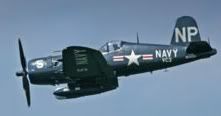 [/center]
[center]"The Angel of Okinawa"[/center]
Home of the Chance-Vought Corsair, F4U
The best fighter-bomber of World War II
[/center][center]"The Angel of Okinawa"[/center]
Home of the Chance-Vought Corsair, F4U
The best fighter-bomber of World War II

RE: Was Monty Right?
It wasn't just the bridges, the land portion depended on tanks moving along one narrow road through a swamp against dug in enemy troops right off the bat. Add in 3 critical Bridges spanning the entire route and you have a disaster waiting to happen. Hell the British never even got more than one battalion to their objective. And they held out for 6 days against armor when they were promised the entire Division would only have to hold 2 days.
Monty's meticulous planning ignored the fact the radios would not work in the swampy terrain they were being dropped in because they were all configured wrong. The plan specifically had the air forces ignore the ground forces with out radio com, one wonders why after several days of ZERO comm someone didn't figure out at HQ that maybe, just maybe, the radios were not working?
They just kept blythly dropping supplies and equipment into drop zones controlled by the Germans. Then there was the back up bridging equipment, it was almost an after thought. Poorly placed in the follow on columns and slow to arrive when needed.
The planning was seriously lacking in the whole scheme of the operation. It depended on to much happenstance and pure unadulterated luck. The time schedule was a farce when they did not even have the aircraft to drop everything in the supposed 2 days it was promised the ground forces would arrive.
The Polish Brigade was lucky they were dropped in the wrong zones when they finally were dropped or they would have been machine gunned coming down and slaughtered once on the ground.
Monty's meticulous planning ignored the fact the radios would not work in the swampy terrain they were being dropped in because they were all configured wrong. The plan specifically had the air forces ignore the ground forces with out radio com, one wonders why after several days of ZERO comm someone didn't figure out at HQ that maybe, just maybe, the radios were not working?
They just kept blythly dropping supplies and equipment into drop zones controlled by the Germans. Then there was the back up bridging equipment, it was almost an after thought. Poorly placed in the follow on columns and slow to arrive when needed.
The planning was seriously lacking in the whole scheme of the operation. It depended on to much happenstance and pure unadulterated luck. The time schedule was a farce when they did not even have the aircraft to drop everything in the supposed 2 days it was promised the ground forces would arrive.
The Polish Brigade was lucky they were dropped in the wrong zones when they finally were dropped or they would have been machine gunned coming down and slaughtered once on the ground.
Favoritism is alive and well here.

RE: Was Monty Right?
At the end of August, 1944 German forces in the west were disintegrating and the Allied armored spearheads were streaming eastward. A quick end to the war seemed tantalizingly possible. Market Garden did not take place in a strategic vacuum - it was a daring plan to strike towards a physical as well as psychological barrier - the Rhine. Even Ike approved of the plan in this atmosphere. Ultimately it was too aggressive and too flawed a plan to win out over the German's resolve which solidified at the Rhine, but placing all the blame on Monty is IMHO inaccurate. Rather I feel the plan was the culmination of the desires of the Armies in France to strike at Germany while the time seemed right.
Consider the comments of one veteran who fought at Arnhem bridge: "We wanted and needed Market Garden in 1944. We knew that there were risks and were willing to take them. Now I know that there were more risks than we were told about back then - but we would have taken them nonetheless." - Len Wright
Consider the comments of one veteran who fought at Arnhem bridge: "We wanted and needed Market Garden in 1944. We knew that there were risks and were willing to take them. Now I know that there were more risks than we were told about back then - but we would have taken them nonetheless." - Len Wright
RE: Was Monty Right?
ORIGINAL: Twotribes
Monty's meticulous planning ignored the fact the radios would not work in the swampy terrain they were being dropped in because they were all configured wrong.
Not configured wrong; the radio's line of sight transmissions didn't work as well in a hilly, wet terrain; after all, they worked just fine in the flat, dry desert!
Edit: When atmospheric conditions changed, the radios mysteriously "worked." Doesn't sound like a configuration/crystal problem.
Stratford, Connecticut, U.S.A.[center][/center]
[center]"The Angel of Okinawa"[/center]
Home of the Chance-Vought Corsair, F4U
The best fighter-bomber of World War II
[/center][center]"The Angel of Okinawa"[/center]
Home of the Chance-Vought Corsair, F4U
The best fighter-bomber of World War II

RE: Was Monty Right?
ORIGINAL: Hartford688
While acknowledging your points that post Kasserine the US forces did everything, and everything the British did was poor, some of your points seem to contrast with Carlos D'Este's article (not that it is necessarily the gospel truth).
He suggested that Montgomery did NOT have a hatred of Patton; plus a rather different view in Sicily; Montgomery supported Patton to take Messina.
D'Este:
When the three Allied ground commanders met for the first time in the campaign on July 25, Montgomery proposed that Seventh Army rather than his Eighth Army capture Messina. The myth that there was a race to Messina between Patton and Montgomery existed only in Patton’s mind – and was unfortunately embellished in the film “Patton” in which a smirking Monty meets Patton in the city centre as two competing bands drown one another out. The truth was that Montgomery not only never went to Messina nor had any desire to do so but also once he recognized Seventh Army was better positioned to carry out this task, actually advocated that Patton do it!
and:
One digression before concluding this installment: when Patton got into serious trouble after slapping two soldiers for what he believed was malingering in U.S. field hospitals, an unfavorable remark about Patton appeared in the Eighth Army newspaper. Montgomery’s policy was to give his editor complete freedom from command interference, however, after the story about Patton appeared, Monty summoned the editor for a chat with his very displeased commanding general. As Montgomery’s official biographer has written: “Monty had been genuinely impressed by Seventh Army’s mobility, speed . . . rugged determination and professionalism – and he would have nothing derogatory printed in Eighth Army newspapers [about Patton].”
Also, just goes to show different views apparently from the same person - James Gavin. Again, per D'Este's articles:
The First Army staff, already resentful of the change of command, is alleged to have been less than pleased to be under British command. Such resentments, and many seem to be of postwar creation, were not evident to James Gavin, the 82d Airborne commander, when he dined with Hodges and his staff several days later. "The staff spoke of Montgomery with amusement and respect. They obviously liked him and respected his professionalism." For his part, Gavin was impressed with Montgomery as a soldier. "I took a liking to him that has not diminished with the years."
Note that this is the same James Gavin post Market Garden.
For all his other faults, he at least was generally right up with his troops:
With the exception of Patton, Montgomery was the only senior commander to regularly visit his troops at the Ardennes front. Montgomery’s presence and his decisions to reassign responsibilities and realign units of both First and Ninth Armies was precisely the fitting remedy. For American commanders, to cede ground was considered sinful, however, after visiting St. Vith and determining that if the 7th Armored remained it would be annihilated, Montgomery decreed that further defense of the town was futile and, with Hodges’s concurrence, ordered what was left of the division to withdraw to new positions on December 22. The 7th Armored’s brilliantly orchestrated defense of St. Vith against near-impossible odds had stemmed the advance of Manteuffel’s Fifth Panzer Army until December 23, when the last elements evacuated the shattered town. The defense of St. Vith was a key factor in the German failure in the Ardennes. The official U.S Army historian wrote that Montgomery’s decision reflected his "ability to honor the fighting man which had endeared him to the hearts of the Desert Rats [of the British 7th Armored Division] in North Africa: ‘They can come back with all honor. They come back to the more secure positions. They put up a wonderful show.’" 7 The defenders of St. Vith were unambiguous about their feelings toward the field marshal. "Montgomery saved the 7th Armored Division," said Robert Hasbrouck
Sorry for the long post. But apparently not all Americans (and among them people with much real experience) had such contempt for Montgomery.
I am, of course, an irate Brit![:'(] And no, I do not think Montgomery was the best general in the world, but a darn sight better than most make out.
Just about the only post in this entire thread worth reading, I think. Field Marshal Sir Bernard Law Montgomery, 1st Viscount Montgomery of Alamein, KG, GCB, DSO, PC, to give him his due (not having known him personally, I will refrain from calling him "Monty"), is probably the most misunderstood figure of the Second World War's senior commanders. The above post goes a long way to explain why this is true. Not that there is a shortage of ink having been spilled about him, but it would seem his critics seem willfully ignorant, and his "competition" is the larger than life product of that great American pastime - the Cult of Personality.
Erik Rutin correctly identified in the first reply the major stumbling block - LOGISTICS. Specifically, ports. But he suggests that taking one was a simple matter. It was not. The Germans doggedly held major port facilities on the western European coast right up to May 1945; reducing them would have been simply far too costly. The Canadians tried to assault one frontally at Dieppe and failed; they launched similar attacks in 1944 at Dunkirk, Cap Griz Nez, and Calais with mixed results. Those port facilities they did liberate (the Germans in Dieppe wisely took flight the second time the 2nd Canadian Division came calling in September 1944) were a fraction of the size necessary to service the armies on the continent.
The suggestion that Patton would somehow have been better then Bradley at commanding an army group is therefore laughable. If amateurs study tactics and professionals study logistics, Patton ranks somewhere in the middle. His feat of turning the 3rd Army 90 degrees in the Battle of the Bulge was impressive, but it was his detailed staff work (done by his subordinates) that made the difference. He gave the order to be prepared, but it was a logistical feat, not a matter of Old Blood and Guts riding a tank into battle with an ivory-handled six-gun or automatic in each hand.
Come to that, Montgomery and Patton were a lot alike and would probably have been friends had they served in the same army. Patton almost joined the Canadians before Pearl Harbor; we'll never know how far he might have gotten in Canada's fledgling armoured corps had that happened - very possibly he would have gone to Italy, as Guy Simonds did, perhaps to command tanks under Montgomery and later Leese. Both had a mania for "chickenshit"; there are stories of both men invoking intense physical training regimes in their commands, to include staff officers - a bold move that made them disliked in some quarters, and revered in others. Both were popular with their troops; both had a penchant for public relations - and not just out of egotism but out of the knowledge that morale, too, wins wars. The so-called "rivalry" has been overblown in post-war accounts. The worst thing to happen to public understanding of Patton was George C. Scott's portrayal in the 1970 film. A stellar performance, it has unfortunately warped the understanding of the common and the casual; Patton is remembered as having a gravelly voice (in reality it was high-pitched and squeaky), of having slapped only one soldier on Sicily (he actually slapped two, on different occasions), of being surprised by getting command of the 3rd Army once in France (he knew many months before the D-Day landings that he would command the 3rd), and of course, the famous rivalry that is played up for dramatic effect. Like a good sportsman, no doubt he did have a fine competitive spirit, but it is hard to seperate the man from the myth now.
As for Antwerp - the port fell without a fight. The trouble was in clearing the Scheldt Estuary, which 1st Canadian Army did, fighting in the Breskens Pocket and South Beveland for a month at great cost. Had 21 Army Group advanced north from Antwerp, less than 100 kilometres, at the end of September, the neck of the Beveland peninsula would have been cut off and with it the ability of the 15th Army to reinforce the garrisons along the Scheldt. But hindsight is 20-20. No one expected the collapse after Normandy. In fact, Normandy was supposed to take 90 days; it took 84 in the event, I believe, and was supposed to conclude with an assault crossing of the Seine. Instead, the Germans hotfooted it across the Seine and didn't stop running til they reached the Netherlands and the German border.
I find it hard to be too critical of the Allies in such a case.
I see a ridiculous assertion just above that FM Montgomery is somehow now responsible for both detailed tactical planning of Market Garden (I always thought it was a 1st Allied Airborne Army operation planned by Browning, who was under Brereton) and, apparently, the failure of the radio equipment at Arnhem. How curious.
-
Erik Rutins

- Posts: 39783
- Joined: Tue Mar 28, 2000 4:00 pm
- Location: Vermont, USA
- Contact:
RE: Was Monty Right?
ORIGINAL: Michael Dorosh
Erik Rutin correctly identified in the first reply the major stumbling block - LOGISTICS. Specifically, ports. But he suggests that taking one was a simple matter. It was not.
I don't think it was a simple matter at all, though there were opportunities that we missed that could have made it easier. I think it should have had a higher priority in terms of forces and effort since a few more major ports in Allied hands (in relatively good shape) would have changed the war more than a Market-Garden success, IMHO.
The suggestion that Patton would somehow have been better then Bradley at commanding an army group is therefore laughable. If amateurs study tactics and professionals study logistics, Patton ranks somewhere in the middle. His feat of turning the 3rd Army 90 degrees in the Battle of the Bulge was impressive, but it was his detailed staff work (done by his subordinates) that made the difference. He gave the order to be prepared, but it was a logistical feat, not a matter of Old Blood and Guts riding a tank into battle with an ivory-handled six-gun or automatic in each hand.
My take on that is simply that, given the terrain and the forces facing each area, Patton could have done more with the supplies _at that point in time_ than Montgomery. No matter who got them at that point though, there were only enough supplies to really keep one major offensive going, so instead of the Germans focusing their efforts on stopping Monty they would have eventually focused on stopping Patton. Without the supply issue being solved, I don't think either front was going to yield a war-winning effort.
Regards,
- Erik
Erik Rutins
CEO, Matrix Games LLC

For official support, please use our Help Desk: http://www.matrixgames.com/helpdesk/
Freedom is not Free.
CEO, Matrix Games LLC
For official support, please use our Help Desk: http://www.matrixgames.com/helpdesk/
Freedom is not Free.
RE: Was Monty Right?
I guess it comes down to a simple question if you had to have a commander who would you want in the following circumstances
1. to prepare an army for battle
2. to command a set piece battle
3. to command a pursuit/exploit
4. to have as a subordinate
5. to be your commander
who would you choose ?
My list would be
1. Monty
2. Monty
3. Patton
4. Anyone but Patton or Monty
5. Monty
1. to prepare an army for battle
2. to command a set piece battle
3. to command a pursuit/exploit
4. to have as a subordinate
5. to be your commander
who would you choose ?
My list would be
1. Monty
2. Monty
3. Patton
4. Anyone but Patton or Monty
5. Monty
RE: Was Monty Right?
ORIGINAL: Erik Rutins
I don't think it was a simple matter at all, though there were opportunities that we missed that could have made it easier. I think it should have had a higher priority in terms of forces and effort since a few more major ports in Allied hands (in relatively good shape) would have changed the war more than a Market-Garden success, IMHO.
Ah, my apologies for misquoting you then. In that case, I think you make a good point. I'm not convinced that crossing the Rhine was a bad idea - devastating the Ruhr would have had its advantages also, but I think Eisenhower's broad front strategy was sound for a number of reasons. The ports were definitely a concern and hindsight does suggest a single thrust out of Antwerp would have at the least saved the Canadians (and those British and other Allied formations under their command) a lot of blood in the Scheldt. I don't know that the war would have been much shorter, even had the Allies gotten decent port facilities in operation.
My take on that is simply that, given the terrain and the forces facing each area, Patton could have done more with the supplies _at that point in time_ than Montgomery. No matter who got them at that point though, there were only enough supplies to really keep one major offensive going, so instead of the Germans focusing their efforts on stopping Monty they would have eventually focused on stopping Patton. Without the supply issue being solved, I don't think either front was going to yield a war-winning effort.
Patton's efforts at Metz were not stellar; his broken-field running was usually done in the absence of serious opposition. Not to belittle the 3rd Army, which proved itself excellent fighters on many occasions, but what it could have done in September 1944 is open to conjecture. You contradict yourself, though - with the 3rd Army in the middle of mainland Europe, where would they have gotten their hands on a port? The emphasis should have gone, to be consistent with your comments above, to 1st Canadian Army, no? Here's a map from my website showing the location of the armies at the time...3rd Army was most definitely land-locked!

RE: Was Monty Right?
ORIGINAL: Michael Dorosh
... I see a ridiculous assertion just above that FM Montgomery is somehow now responsible for both detailed tactical planning of Market Garden (I always thought it was a 1st Allied Airborne Army operation planned by Browning, who was under Brereton) and, apparently, the failure of the radio equipment at Arnhem. How curious.
I don't think anyone said Monty -- or any general officer -- was reponsible for MG's "detailed tactical planning," but I did some research and discovered the following:
From bbc.co.uk
"... The plan (MG) was conceived by General Bernard Montgomery, commander of the British forces in Europe ..."
But Market Garden was planned (in detail?) by SHAEF:
SHAEF Planning Drafts, 3 and 30 May 44, in SHAEF SGS File 381,I:
Eisenhower to Marshall, 22 Aug 44, in SHAEF Cable Logs; Ltr, Eisenhower
to Montgomery, 24 Aug 44, in SHAEF SGS File 381, I; Eisenhower to
Marshall, 5 Sep 44, copy in OCMH files; see also Eisenhower, Crusade in
Europe, p. 345.
Despite the outcome, in Monty's own words MG was 90% successful. Further, he said:
"In my prejudiced view, if the operation had been properly backed from its inception, and given the aircraft, ground forces, and administrative resources necessary for the job, it would have succeeded in spite of my mistakes, or the adverse weather, or the presence of the 2nd SS Panzer Corps in the Arnhem area. I remain Market Garden's unrepentant advocate. Seemingly, every Allied victory is an American success, every Allied defeat a British failure."
However, Dutch Prince Bernhard told author Cornelius Ryan (Bridge too Far) that his "country can never again afford the luxury of another Montgomery success."
Wikipedia
Hope this clarifies things.
Stratford, Connecticut, U.S.A.[center][/center]
[center]"The Angel of Okinawa"[/center]
Home of the Chance-Vought Corsair, F4U
The best fighter-bomber of World War II
[/center][center]"The Angel of Okinawa"[/center]
Home of the Chance-Vought Corsair, F4U
The best fighter-bomber of World War II
-
Yogi the Great

- Posts: 1949
- Joined: Tue Apr 10, 2007 1:28 pm
- Location: Wisconsin
RE: Was Monty Right?
ORIGINAL: Michael Dorosh
Just about the only post in this entire thread worth reading, I think.
[:-] We all appologize - spending too much time on the BF forum will do that to you [:D]
Hooked Since AH Gettysburg
RE: Was Monty Right?
ORIGINAL: Michael Dorosh
As for Antwerp - the port fell without a fight. The trouble was in clearing the Scheldt Estuary, which 1st Canadian Army did, fighting in the Breskens Pocket and South Beveland for a month at great cost. Had 21 Army Group advanced north from Antwerp, less than 100 kilometres, at the end of September, the neck of the Beveland peninsula would have been cut off and with it the ability of the 15th Army to reinforce the garrisons along the Scheldt. But hindsight is 20-20. No one expected the collapse after Normandy. In fact, Normandy was supposed to take 90 days; it took 84 in the event, I believe, and was supposed to conclude with an assault crossing of the Seine. Instead, the Germans hotfooted it across the Seine and didn't stop running til they reached the Netherlands and the German border.
I find it hard to be too critical of the Allies in such a case.
[Snip!!!]
The ports were definitely a concern and hindsight does suggest a single thrust out of Antwerp would have at the least saved the Canadians (and those British and other Allied formations under their command) a lot of blood in the Scheldt. I don't know that the war would have been much shorter, even had the Allies gotten decent port facilities in operation.
Hind sight is indeed 20/20.
My critic Montgomery about the conduct around Antwerpen is as u say ur self and this was known at the time. Allies was in need of a high capacity port. Ports was a problem and the minor ports Dunkirk, Calais and so on didnt have the capacity. U might even avoid taking them using Brest like tactics if u had a high capacity port.
Then when u then take and brilliantly so an entirely intact port with about the highest capacity around. Knowing what stroke of "luck" that is. Why not make sure u can have it operationel ASAP. That would have required much less than a 100km advance but only a 20km advance out of the north end of Antwerpen to cut of 15th army reinforcments and supply routes in question. According Ashley Hart, Guy Simmonds did indeed send a memo/letter on the 4th Sep to Montgomery in regards to that. In his assement that advance was possible at the tim.
Btw ill still promote Ashley Harts book as a look into why Montgomery fought as he did.
Kind regards,
Rasmus
-
Erik Rutins
- Posts: 39783
- Joined: Tue Mar 28, 2000 4:00 pm
- Location: Vermont, USA
- Contact:
RE: Was Monty Right?
ORIGINAL: Michael Dorosh
Patton's efforts at Metz were not stellar; his broken-field running was usually done in the absence of serious opposition. Not to belittle the 3rd Army, which proved itself excellent fighters on many occasions, but what it could have done in September 1944 is open to conjecture. You contradict yourself, though - with the 3rd Army in the middle of mainland Europe, where would they have gotten their hands on a port? The emphasis should have gone, to be consistent with your comments above, to 1st Canadian Army, no? Here's a map from my website showing the location of the armies at the time...3rd Army was most definitely land-locked!
Very true and I suppose I did seem to contradict myself. I was thinking about those two points in isolation. In the best spirit of armchair generalship... if I had been Ike at the time, I would have made the ports and opening up more supply lines my top priority. What supplies I had after making that my top priority would have gone to whichever army seemed to have the best terrain and softest opposition at the time (and strategic objectives). So overall, yeah the 1st Canadian would have had the highest importance.
When I suggested Patton, that was in the context of nothing else changing. In other words, if you haven't managed to solve the supply issue and won't be able to in any reasonable timeframe, which army do you pick to try an offensive to break the newly forming German lines? I probably would have picked 3rd Army in that situation, but that also would have required that supplies to them be maintained from the point they broke out at Cobra, so that there would be no slowdown or stoppage before a new offensive. The whole advantage going into September was in keeping the Germans from coalescing and reorganizing as they had the troops to form new defenses and stop the Allies if given the chance (as they did). Monty's preference for more set-piece affairs would have argued against him in my book (particularly given the terrain he was facing) and in favor of Patton. I'll admit that Market-Garden's objectives were indeed strategic, but I don't think the plan every really had a chance of success.
Regards,
- Erik
Erik Rutins
CEO, Matrix Games LLC
For official support, please use our Help Desk: http://www.matrixgames.com/helpdesk/
Freedom is not Free.
CEO, Matrix Games LLC
For official support, please use our Help Desk: http://www.matrixgames.com/helpdesk/
Freedom is not Free.
-
HansBolter

- Posts: 7457
- Joined: Thu Jul 06, 2006 12:30 pm
- Location: United States
RE: Was Monty Right?
ORIGINAL: Andy Mac
I guess it comes down to a simple question if you had to have a commander who would you want in the following circumstances
1. to prepare an army for battle
2. to command a set piece battle
3. to command a pursuit/exploit
4. to have as a subordinate
5. to be your commander
who would you choose ?
My list would be
1. Monty
2. Monty
3. Patton
4. Anyone but Patton or Monty
5. Monty
My answers:
1. Patton
2. Monty
3. Patton
4. Bradley
5. Patton
The main reason I pick patton over Monty for number one is that sitting on one's duff while the rear area commandos stockpile supplies for one, althewhile whining for yet more supplies, does not constitute "preparing an army for battle". Preparing them for battle constitutes instilling in them a desire to win. Patton did a much better job of that than Monty.
Hans

RE: Was Monty Right?
Politically, with the US providing the majority of the economic and manpower effort by mid-late 1944, a British led thrust at the Reich, backed by the lion's share of materiel was unacceptable. Said thrust by American armies wasn't on because only on the northern end of the front was the terrain suitable for rapid armoured exploitation up to and past the Rhine. in coalition warfare (and for other reasons outlined in other posts) the broad front advance made sense.
To a certain extent (and despite some obvious planning balls-ups) criticism of Market Garden seems somewhat harsh. The Wallies are often accused of not taking risks and then when they do and it doesn't come off it's a bad decision. Hmmm....[&:] Total agreement on the failure to seal off the Beveland peninsula being a dreadful error though. A bit of what the Japanese call "victory disease" perhaps. Although, from the stories of how appreciative the Belgian girls were about liberation, the troops might have been too exhausted. [;)] [:'(]
Cheers, Neilster
To a certain extent (and despite some obvious planning balls-ups) criticism of Market Garden seems somewhat harsh. The Wallies are often accused of not taking risks and then when they do and it doesn't come off it's a bad decision. Hmmm....[&:] Total agreement on the failure to seal off the Beveland peninsula being a dreadful error though. A bit of what the Japanese call "victory disease" perhaps. Although, from the stories of how appreciative the Belgian girls were about liberation, the troops might have been too exhausted. [;)] [:'(]
Cheers, Neilster
Cheers, Neilster
RE: Was Monty Right?
ORIGINAL: HansBolter
... Preparing them for battle constitutes instilling in them a desire to win. Patton did a much better job of that than Monty.
Yes, and he only used his boot!
Stratford, Connecticut, U.S.A.[center][/center]
[center]"The Angel of Okinawa"[/center]
Home of the Chance-Vought Corsair, F4U
The best fighter-bomber of World War II
[/center][center]"The Angel of Okinawa"[/center]
Home of the Chance-Vought Corsair, F4U
The best fighter-bomber of World War II
RE: Was Monty Right?
ORIGINAL: HansBolter
Preparing them for battle constitutes instilling in them a desire to win. Patton did a much better job of that than Monty.
Except that he didn't. What are you offering as evidence? I sincerely hope we're not relying on the "Patton speech" as somehow some kind of evidence that Patton was better at instilling a desire to win? That would be too silly. So what substantive evidence are you offering in lieu?
Montgomery did more than just make speeches (and he made plenty; he was famous for standing on the bonnet of jeeps and gathering entire brigades around to get a close look at him - it made an impression - Denis Whitaker mentions it in at least one of his books); he gave detailed notes to subordinate commanders on technical points. He had a thorough understanding of how his men should be doing their jobs - not to suggest he micromanaged, either. Witness the famous photo of Patton storming off after chastising a Sherman tank commander for using too much "soft armour" on his tank, whereas that practice was standard in 21st Army Group armoured regiments. Ask Bill Mauldin or Andy Rooney what their opinion of Patton's methods were vis a vis inspiring the troops; many were just as likely to think he had gone too far and not take him seriously as to be inspired.
RE: Was Monty Right?
ORIGINAL: Joe D.
ORIGINAL: Michael Dorosh
... I see a ridiculous assertion just above that FM Montgomery is somehow now responsible for both detailed tactical planning of Market Garden (I always thought it was a 1st Allied Airborne Army operation planned by Browning, who was under Brereton) and, apparently, the failure of the radio equipment at Arnhem. How curious.
I don't think anyone said Monty -- or any general officer -- was reponsible for MG's "detailed tactical planning," but I did some research and discovered the following:
The exact quote by Twotribes was "Monty's meticulous planning ignored the fact the radios would not work in the swampy terrain they were being dropped in because they were all configured wrong."
My response to that is that Montgomery did not do any of the "meticulous planning" so this kind of criticism of him is non-sensical.
From bbc.co.uk
"... The plan (MG) was conceived by General Bernard Montgomery, commander of the British forces in Europe ..."
But Market Garden was planned (in detail?) by SHAEF:
SHAEF Planning Drafts, 3 and 30 May 44, in SHAEF SGS File 381,I:
Eisenhower to Marshall, 22 Aug 44, in SHAEF Cable Logs; Ltr, Eisenhower
to Montgomery, 24 Aug 44, in SHAEF SGS File 381, I; Eisenhower to
Marshall, 5 Sep 44, copy in OCMH files; see also Eisenhower, Crusade in
Europe, p. 345.
Despite the outcome, in Monty's own words MG was 90% successful. Further, he said:
"In my prejudiced view, if the operation had been properly backed from its inception, and given the aircraft, ground forces, and administrative resources necessary for the job, it would have succeeded in spite of my mistakes, or the adverse weather, or the presence of the 2nd SS Panzer Corps in the Arnhem area. I remain Market Garden's unrepentant advocate. Seemingly, every Allied victory is an American success, every Allied defeat a British failure."
However, Dutch Prince Bernhard told author Cornelius Ryan (Bridge too Far) that his "country can never again afford the luxury of another Montgomery success."
Wikipedia
Hope this clarifies things.
No, it doesn't address the matter of who did the detailed planning. Wasn't it Browning's staff, because of a feud between Browning and Brereton?

RE: Was Monty Right?
omg another Patton Monty thread.. "AAAAAUUUGH, " freebooy runs from the room his hair on fire! I do remember a very long 20 or so pages of posts, with many simply holding long held beliefs built on childhood propaganda.
My favorite "general in the field story" Rommel rounding up some 88's in the desert to stop a Brit tank breakout.
Could Monty have won ww2 if he could have lit his farts on fire and killed Hitler from afar? we will never know...
note, not in reply to anyone in particular
My favorite "general in the field story" Rommel rounding up some 88's in the desert to stop a Brit tank breakout.
Could Monty have won ww2 if he could have lit his farts on fire and killed Hitler from afar? we will never know...
note, not in reply to anyone in particular
"Tanks forward"
-
IronDuke_slith
- Posts: 1385
- Joined: Sun Jun 30, 2002 4:00 pm
- Location: Manchester, UK
RE: Was Monty Right?
ORIGINAL: Michael Dorosh
He had a thorough understanding of how his men should be doing their jobs
I'd change the word should to could. Doctrine was frequently imposed from the top down in the British Army. Monty had his own ideas and pretty ruthlessly imposed them once he took command of 21st AG but he wasn't always right.
- not to suggest he micromanaged, either.
Well, with the exception of Arnhem, he did micromanage. He frequently bypassed Army Commanders and dealt with Corp or even Divisional Commanders and his whole concept of war was based on the concept everybody should check with him before proceeding. It's why British Armies were mobile but never really operated in the operational depths of anyone's defences. Monty didn't want forces roaming about in the enemy rear because that made them vulnerable and difficult for him to control.
Regards,
IronDuke