


From today's NYT:
On Nov. 12, 1942, the World War II naval Battle of Guadalcanal began. The Americans eventually won a major victory over the Japanese.
But was Midway the actual turning point for the war in the Pacific, or was Midway just a pre-condition for Guadalcanal to be successful for the Americans?
Today in History
Moderators: Joel Billings, Tankerace, siRkid
Today in History
Stratford, Connecticut, U.S.A.[center]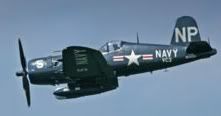 [/center]
[center]"The Angel of Okinawa"[/center]
Home of the Chance-Vought Corsair, F4U
The best fighter-bomber of World War II
[/center][center]"The Angel of Okinawa"[/center]
Home of the Chance-Vought Corsair, F4U
The best fighter-bomber of World War II

RE: Today in History
hi joe and thanks for remembering the battle of guadalcanal.
i would say midway was the turning point. with the midway carriers, the battles of eastern solomons and santa cruz would have a different outcome in favour of the japanese and the US counetrattack would start maybe 1944. with the midway carriers or without...japan had never a chance to win this war. but without the lose of their 1st air fleet at midway, the war would go on 1 or 1.5 more years.
the question is:
was it better for the japanese civilians that the war ended 1945 instead of 1946? when we look at all the terror attacks on japanese cities with the B-29 and the atomic bomb, the answer should be YES.
i would say midway was the turning point. with the midway carriers, the battles of eastern solomons and santa cruz would have a different outcome in favour of the japanese and the US counetrattack would start maybe 1944. with the midway carriers or without...japan had never a chance to win this war. but without the lose of their 1st air fleet at midway, the war would go on 1 or 1.5 more years.
the question is:
was it better for the japanese civilians that the war ended 1945 instead of 1946? when we look at all the terror attacks on japanese cities with the B-29 and the atomic bomb, the answer should be YES.

RE: Today in History
For my 2 cents, not trying to incite anybody in particular, I think that without Midway or with a different outcome the war would've gone on longer. The US population, though war weary, wanted to win the war with Japan as payback for PH.
The B-29 raids would've happened later and maybe there would've been fewer incendiary raids and a couple of more A-bombs at a later date due to the timetable being pushed back up to 2 years because of lack of CVs.
This might've saved Japanese lives in the long run, but that's on the Japanese government. Regardless of what anybody says or thinks, a government has the primary responsibility to it's people and that is to protect them from without & from within.
The B-29 raids would've happened later and maybe there would've been fewer incendiary raids and a couple of more A-bombs at a later date due to the timetable being pushed back up to 2 years because of lack of CVs.
This might've saved Japanese lives in the long run, but that's on the Japanese government. Regardless of what anybody says or thinks, a government has the primary responsibility to it's people and that is to protect them from without & from within.
Todd
I never thought that doing an AAR would be so time consuming and difficult.
www.matrixgames.com/forums/tm.asp?m=2080768
I never thought that doing an AAR would be so time consuming and difficult.
www.matrixgames.com/forums/tm.asp?m=2080768
RE: Today in History
Thanks for the input, guys. I seem to recall titles like Miracle at Midway (book) and phrases as "Guadalcanal: the tide turns". A game reviewer once said the rationale behind UV was that the action here was pivotal to the rest of the war, i.e., after an Allied win in the Solomons, the rest of the war vs Japan would just be a drawn-out, foregone conclusion.
Of course, there's a few hypothetical UV scenarios where Midway doesn't occur and those 4 lost IJ CVs can appear, but unless the Japanese player goes for an autovoctory, I don't think even 4 top of the line IJ CVs would turn the tide for Japan, just delay any Allied advances.
Barring any blatant Allied blunders, has anyone ever won a hypothetical UV scenario as Japan (where Midway doesn't occur) w or w/o an autovictory?
Of course, there's a few hypothetical UV scenarios where Midway doesn't occur and those 4 lost IJ CVs can appear, but unless the Japanese player goes for an autovoctory, I don't think even 4 top of the line IJ CVs would turn the tide for Japan, just delay any Allied advances.
Barring any blatant Allied blunders, has anyone ever won a hypothetical UV scenario as Japan (where Midway doesn't occur) w or w/o an autovictory?
Stratford, Connecticut, U.S.A.[center][/center]
[center]"The Angel of Okinawa"[/center]
Home of the Chance-Vought Corsair, F4U
The best fighter-bomber of World War II
[/center][center]"The Angel of Okinawa"[/center]
Home of the Chance-Vought Corsair, F4U
The best fighter-bomber of World War II
RE: Today in History
Barring any blatant Allied blunders, has anyone ever won a hypothetical UV scenario as Japan (where Midway doesn't occur) w or w/o an autovictory?
I know of two AAR´s where Japan won and a few with draws.
¨If you tremble with indignation at every injustice, then you are a comrade of mine.¨ Che Guevara
The more I know people, the more I like my dog.
The more I know people, the more I like my dog.
RE: Today in History
PzB´s final score, January 1st 1944

- Attachments
-
- PzB.jpg (70.25 KiB) Viewed 598 times
¨If you tremble with indignation at every injustice, then you are a comrade of mine.¨ Che Guevara
The more I know people, the more I like my dog.
The more I know people, the more I like my dog.
-
HansBolter

- Posts: 7457
- Joined: Thu Jul 06, 2006 12:30 pm
- Location: United States
RE: Today in History
ORIGINAL: Joe D.
Thanks for the input, guys. I seem to recall titles like Miracle at Midway (book) and phrases as "Guadalcanal: the tide turns". A game reviewer once said the rationale behind UV was that the action here was pivotal to the rest of the war, i.e., after an Allied win in the Solomons, the rest of the war vs Japan would just be a drawn-out, foregone conclusion.
Of course, there's a few hypothetical UV scenarios where Midway doesn't occur and those 4 lost IJ CVs can appear, but unless the Japanese player goes for an autovoctory, I don't think even 4 top of the line IJ CVs would turn the tide for Japan, just delay any Allied advances.
Barring any blatant Allied blunders, has anyone ever won a hypothetical UV scenario as Japan (where Midway doesn't occur) w or w/o an autovictory?
Some of those hypothetical scenarios also give the Japanese additional air squadrons and boosts to the pilot pool.
Hans

RE: Today in History
I believe that Midway was the turning point. I realize the IJN was blunted in the efforts to take Port Moresby during the Coral Sea engagement but it would have been hard for the USN to start a campaign in the South Pacific at any time in '42 with those four additional fleet carriers with expeirienced air crews roaming the high seas . As it stood the Guadalcanal campaign remained in the balance for much of the campaign.
"There’s no such thing as a bitter person who keeps the bitterness to himself.” ~ Erwin Lutzer
RE: Today in History
It's true that Midway was the turning point as the IJN lost it's advantage in carriers and more importantly experienced flight crews.
However, the battles of Guadacanal deserve equal importance as both sides suffered horrendous losses trying to deny the airfield to the enemy (nobody really wanted it themselves). The US could replace these losses in men, ships and planes with difficulty, but the IJN couldn't, pure and simple. Yamamoto unwisely (given his great strategic understanding) allowed the IJN to be sucked into a war of attrition it could ill afford, and which cost the Japs the last of their cream of pilots over Guadacanal and the Solomons. Sabaru Sakai was seriously wounded in a dogfight with some Avengers over the island, and was never quite the same ever again, and most of his fellow pilots ended up dead within a few months.
It is worth speculating what might have happened if the Japanese had won the struggle for Guadacanal, as they were perfectly capable of doing particularly after the Battle of Santa Cruz, where they sunk one carrier (the Hornet) and sent the other (Enterprise) scuttling off the scene. Presumably the US would have then closed off the SW Pacific theatre, sidelined MacArthur in Australia, and just gone for one concentrated thrust through the central Pacific once they had built up enough new resources and shipping
However, the battles of Guadacanal deserve equal importance as both sides suffered horrendous losses trying to deny the airfield to the enemy (nobody really wanted it themselves). The US could replace these losses in men, ships and planes with difficulty, but the IJN couldn't, pure and simple. Yamamoto unwisely (given his great strategic understanding) allowed the IJN to be sucked into a war of attrition it could ill afford, and which cost the Japs the last of their cream of pilots over Guadacanal and the Solomons. Sabaru Sakai was seriously wounded in a dogfight with some Avengers over the island, and was never quite the same ever again, and most of his fellow pilots ended up dead within a few months.
It is worth speculating what might have happened if the Japanese had won the struggle for Guadacanal, as they were perfectly capable of doing particularly after the Battle of Santa Cruz, where they sunk one carrier (the Hornet) and sent the other (Enterprise) scuttling off the scene. Presumably the US would have then closed off the SW Pacific theatre, sidelined MacArthur in Australia, and just gone for one concentrated thrust through the central Pacific once they had built up enough new resources and shipping
RE: Today in History
ORIGINAL: xj900uk
It's true that Midway was the turning point as the IJN lost it's advantage in carriers and more importantly experienced flight crews.
However, the battles of Guadacanal deserve equal importance as both sides suffered horrendous losses trying to deny the airfield to the enemy (nobody really wanted it themselves ...
IJ definitely wanted the airfield to help isolate Australia from the Allies and then continue its thrust further South, but the Allies weren't going to stand by and just let that happen.
Stratford, Connecticut, U.S.A.[center][/center]
[center]"The Angel of Okinawa"[/center]
Home of the Chance-Vought Corsair, F4U
The best fighter-bomber of World War II
[/center][center]"The Angel of Okinawa"[/center]
Home of the Chance-Vought Corsair, F4U
The best fighter-bomber of World War II
RE: Today in History
Several of the Japanese commanders and leaders who fought on Guadacanal said afterwards they found the place pure hell and admitted they were only there fighting to deny it to the enemy.
One of the leading Japanese strategists who planned the original southern thrust, can't remember his name sorry said after the war that the idea of the airbase was to keep it small and for observation/reconisance only. They were actually planning to go further south towards Nevea/Santa Cruz which they would have built up more as it was a good link in the chain to competely cut off Australia from the US.
Tulagi though was important to them because of its naturally deep anchorage and harbour faciluties, although they never thought more of it than as a flying boat base and servicing area
One of the leading Japanese strategists who planned the original southern thrust, can't remember his name sorry said after the war that the idea of the airbase was to keep it small and for observation/reconisance only. They were actually planning to go further south towards Nevea/Santa Cruz which they would have built up more as it was a good link in the chain to competely cut off Australia from the US.
Tulagi though was important to them because of its naturally deep anchorage and harbour faciluties, although they never thought more of it than as a flying boat base and servicing area
RE: Today in History
imho, even with handerson field in japanese hand, they would not be able to cut the connection between US and the aussies. imagine what US carriers did to rabaul in 1943 and to truk in 1944. when the US got enough carriers with hellcasts on deck and deadly AA-fire, they were even able to shut down strong bases like rabaul and truk with little loses (the raids against rabaul and truk cost the US carrier fleet less then 20 planes). now imagnie what they could do to the japanese AF at lunga point.
fighting at guadalcanal was just stuppid for the japanese. they had not the industrial capacity to fight a war of attrition and beside that, there were no other japanese AF between rabaul and lunga for several months so they lost hunderts of their best pilots to the USN/USAAF and to the sea when they run out of fuel.
in a book about the pacific war, i read that the japanese PM tojo declared guadalcanal as a subject of the "national honor" for the japanese after the allied landing there. he seemd to be as stuppid as hitler who wanted to stay at stalingrad (the city of stalin as a major propaganda succes for the nazis) although he had warnings about a possible sowjet counterattack on the weak flanks of the 6th army.
fighting at guadalcanal was just stuppid for the japanese. they had not the industrial capacity to fight a war of attrition and beside that, there were no other japanese AF between rabaul and lunga for several months so they lost hunderts of their best pilots to the USN/USAAF and to the sea when they run out of fuel.
in a book about the pacific war, i read that the japanese PM tojo declared guadalcanal as a subject of the "national honor" for the japanese after the allied landing there. he seemd to be as stuppid as hitler who wanted to stay at stalingrad (the city of stalin as a major propaganda succes for the nazis) although he had warnings about a possible sowjet counterattack on the weak flanks of the 6th army.
RE: Today in History
Yes, it wasn't fiscally smart of Japan to get into a war they couldn't financially afford, but they did just that. And they wanted that airfield on the 'Canal to help create a chain of airfields to isolate Australia as they moved further south, but when the Allies took it away from them, they wanted it back; not only to deny the SBDs an unsinkable carrier, but as a matter of (lost) honor.
After much frustration, I'm sure Japan would have settled on just destroying the airfield, but the Tokyo Express couldn't keep it out of action indefinately.
Guadalcanal was Japan's first defeat in a string of unbroken victories and they didn't take it very well.
After much frustration, I'm sure Japan would have settled on just destroying the airfield, but the Tokyo Express couldn't keep it out of action indefinately.
Guadalcanal was Japan's first defeat in a string of unbroken victories and they didn't take it very well.
Stratford, Connecticut, U.S.A.[center][/center]
[center]"The Angel of Okinawa"[/center]
Home of the Chance-Vought Corsair, F4U
The best fighter-bomber of World War II
[/center][center]"The Angel of Okinawa"[/center]
Home of the Chance-Vought Corsair, F4U
The best fighter-bomber of World War II

RE: Today in History
it is still amazing to me that Japan put no garrison on the island even when the airfield was nearly done. Considering how close to the edge the whole US invasion operation was, even a Reg size force (100 or so combat factor equalivent in the game), could probably have come very close to keeping the Marines away from the airstrip.
-
HansBolter
- Posts: 7457
- Joined: Thu Jul 06, 2006 12:30 pm
- Location: United States
RE: Today in History
ORIGINAL: borner
it is still amazing to me that Japan put no garrison on the island even when the airfield was nearly done. Considering how close to the edge the whole US invasion operation was, even a Reg size force (100 or so combat factor equalivent in the game), could probably have come very close to keeping the Marines away from the airstrip.
The forces in the area had a particularly strong case of Victory Disease. There was a German military observer who visited Rabaul sometime arounmd March or April of '42 and was flabbergasted to find the Japanese enjoying the South Seas good life and playing golf instead of getting ready to fight the Americans. When he asked why they were so complacent, they replied that the Americans wouldn't be coming at them for another 18 months.
Just as the Americans made a grave prewar mistake in discounting the capabilities of their adversary, the Japanese made a similar mistake in underestimating the American will to fight even before the full weight of their industrial might could be brought to bear.
Hans
RE: Today in History
One of the leading Japanese strategists who planned the original southern thrust, can't remember his name sorry said after the war that the idea of the airbase was to keep it small and for observation/reconisance only. They were actually planning to go further south towards Nevea/Santa Cruz which they would have built up more as it was a good link in the chain to competely cut off Australia from the US.
The Combined Fleet already had float planes from the "R Area Force" at Tulagi. Imperial Forces needed an air base on Guadalcanal to interdict shipping lanes to Australia and use it as a stepping stone for further expansion of the defensive perimeter towards New Caledonia and Figi.
Make no mistake bombers would have been flying from Henderson with a meatball on it instead of a star if the strip was completed before elements of the First Marine Division landed.
"There’s no such thing as a bitter person who keeps the bitterness to himself.” ~ Erwin Lutzer
RE: Today in History
Another big problem faced by the Japanese at Guadacanal was the divided command structure. It was up to the Army to re-take the island from the US, but the Navy to provide the sea transport and air cover (the navy was in charge at Rabaul). The Navy and Army commnicated even less to one another than MacArthur and King did on the allies side. Thus the Naval air force got sucked into a war of attrition it could not afford (and I blame Yamamoto for allowing this to happen) whilst the Army just pussyfooted around for months on end with Guadacanal only sending in small piecemeal forces which attacked in a costly and haphazard strategy. Only until the start of November did it decide to send anything like a decent force to take it back, by which time the airfield was far too strong as were the US in that area.
Also, for reasons nobody seems to fully understand, the airbase at Shortland was never complted by the Japanese to even an emergency landing strip status. They lost hundreds of very good pilots on the long way back to Rabaul (which was at the extent of the Zero's operationg range), if they'd been allowed to operate from Shortland or even if there was an emergency landing strip at Shortland damaged or short-of-fuel pilots could get down on they would certainly have reduced their losses.
You have to remember that the Japanese never had any kind of pilot recovery system, unlike the US who placed top priority on it and had search and rescue planes and teams especially trained and put aside for it. A Zero also never carried a rubber life raft or emergency provisions, nor were their pilots trained for life in the water or in the jungle if they crash-landed. A lot of Zero pilots never had parachutes, or left their radios behind to save weight - if they went in the water on their own or even over land, basically their chances of survival were virtually nil
Also, for reasons nobody seems to fully understand, the airbase at Shortland was never complted by the Japanese to even an emergency landing strip status. They lost hundreds of very good pilots on the long way back to Rabaul (which was at the extent of the Zero's operationg range), if they'd been allowed to operate from Shortland or even if there was an emergency landing strip at Shortland damaged or short-of-fuel pilots could get down on they would certainly have reduced their losses.
You have to remember that the Japanese never had any kind of pilot recovery system, unlike the US who placed top priority on it and had search and rescue planes and teams especially trained and put aside for it. A Zero also never carried a rubber life raft or emergency provisions, nor were their pilots trained for life in the water or in the jungle if they crash-landed. A lot of Zero pilots never had parachutes, or left their radios behind to save weight - if they went in the water on their own or even over land, basically their chances of survival were virtually nil
-
Kingfisher
- Posts: 234
- Joined: Mon Jun 16, 2008 10:25 am
RE: Today in History
ORIGINAL: xj900uk
the Army just pussyfooted around for months on end with Guadacanal only sending in small piecemeal forces which attacked in a costly and haphazard strategy.
The small contingents sent before the big convoy in mid-November had more to do with faulty intelligence than anything else. Up until the October offensive the Japanese estimated less than 8,000 American troops were within the Lunga perimeter, when the actual number was close to three times that.
"splendid was their tactic of diving upon our force from the direction of the sun, taking advantage of intermittent clouds"
-Captain Takahisa Amagai, KAGA, June 4th 1942
-Captain Takahisa Amagai, KAGA, June 4th 1942
RE: Today in History
Actually, that's not entirely true. The Japanese Navy already had fairly good estimates of the numbers of US troops & engineers on both Tulagi and Guadacanal failry quickly, also they had a good coast-watcher system on the islands who could keep them informed of troop movements and landings. Unfortunately communication and co-operation between the IJN and Army was very haphazard and poor at the best of times
RE: Today in History
ORIGINAL: xj900uk
... The Japanese Navy already had fairly good estimates of the numbers of US troops & engineers on both Tulagi and Guadacanal failry quickly, also they had a good coast-watcher system on the islands who could keep them informed of troop movements and landings. Unfortunately communication and co-operation between the IJN and Army was very haphazard and poor at the best of times
Re ShatteredSword, these two IJ branches were practically at at war w/one another! As such, there was no love loss between them, and any cooperation for joint ops vs. the 'Canal was at best reluctantly given.
Stratford, Connecticut, U.S.A.[center][/center]
[center]"The Angel of Okinawa"[/center]
Home of the Chance-Vought Corsair, F4U
The best fighter-bomber of World War II
[/center][center]"The Angel of Okinawa"[/center]
Home of the Chance-Vought Corsair, F4U
The best fighter-bomber of World War II