

Focus on the original question please, this is not the place for conspiracy theories.
One of the biggest challenges of history is putting yourself in the same mindset and with the same limited set of facts that your historical counterparts had before trying to judge them. It's a very, very hard thing to do after the fact because hindsight and additional info are simply so powerful in changing the entire thought process.
Regards,
- Erik
Pearl - one hour alert
Moderators: Joel Billings, wdolson, Don Bowen, mogami
-
Erik Rutins

- Posts: 39786
- Joined: Tue Mar 28, 2000 4:00 pm
- Location: Vermont, USA
- Contact:
RE: Pearl - one hour alert
Erik Rutins
CEO, Matrix Games LLC

For official support, please use our Help Desk: http://www.matrixgames.com/helpdesk/
Freedom is not Free.
CEO, Matrix Games LLC
For official support, please use our Help Desk: http://www.matrixgames.com/helpdesk/
Freedom is not Free.

RE: Pearl - one hour alert
I agree fully with you.
I think the word "conspiracy" is a bit strong words to use here, Ie. Soviet had indications that Germany would attack them, but I don't think there is any conspiracyes because of that. I also think it is naive to think that USA or Britain did not have a single indication that an attack would come.
I don't like the word conspiracy, I prefer to call it Policy. (Or potential Policy).
Regardless, the Forum post ask "if they hed knew" And I think I have said my opinion already.
I don't think they knew, I do think they had indications, and regardless what they knew I don't think they would taken any action.
I think the word "conspiracy" is a bit strong words to use here, Ie. Soviet had indications that Germany would attack them, but I don't think there is any conspiracyes because of that. I also think it is naive to think that USA or Britain did not have a single indication that an attack would come.
I don't like the word conspiracy, I prefer to call it Policy. (Or potential Policy).
Regardless, the Forum post ask "if they hed knew" And I think I have said my opinion already.
I don't think they knew, I do think they had indications, and regardless what they knew I don't think they would taken any action.
-
Erik Rutins
- Posts: 39786
- Joined: Tue Mar 28, 2000 4:00 pm
- Location: Vermont, USA
- Contact:
RE: Pearl - one hour alert
The real question was what could they have done with a one hour alert?
I don't think anyone disputes that there were a few clues here and there that, in hindsight, seem like plenty of warning. But hindsight is very different from foresight. In my opinion, the difference between saying that they should have connected the dots from the clues they had (but didn't) and saying that they did, but chose to let the Japanese attack them, is where it crosses over into conspiracy theory-land.
It's extremely easy, I think, to imagine these kinds of things after the fact and even to find them believable, if you look at things from a modern perspective and with a limited set of data. It's much harder to see things as the people at that time actually saw them and to really get in the mindset they had, that to me is the challenge of really studying history.
Just to add to this, I am no historian, at best an amateur in that trade but I've seen some recent books that tend to get into revisionism of a sort regarding some events of WWII. It seems like these books get a larger audience the further away we get from the actual events, which tells me that we're collectively losing our bearings on what the folks back then actually knew and how they thought.
Regards,
- Erik
I don't think anyone disputes that there were a few clues here and there that, in hindsight, seem like plenty of warning. But hindsight is very different from foresight. In my opinion, the difference between saying that they should have connected the dots from the clues they had (but didn't) and saying that they did, but chose to let the Japanese attack them, is where it crosses over into conspiracy theory-land.
It's extremely easy, I think, to imagine these kinds of things after the fact and even to find them believable, if you look at things from a modern perspective and with a limited set of data. It's much harder to see things as the people at that time actually saw them and to really get in the mindset they had, that to me is the challenge of really studying history.
Just to add to this, I am no historian, at best an amateur in that trade but I've seen some recent books that tend to get into revisionism of a sort regarding some events of WWII. It seems like these books get a larger audience the further away we get from the actual events, which tells me that we're collectively losing our bearings on what the folks back then actually knew and how they thought.
Regards,
- Erik
Erik Rutins
CEO, Matrix Games LLC
For official support, please use our Help Desk: http://www.matrixgames.com/helpdesk/
Freedom is not Free.
CEO, Matrix Games LLC
For official support, please use our Help Desk: http://www.matrixgames.com/helpdesk/
Freedom is not Free.
RE: Pearl - one hour alert
ORIGINAL: Erik Rutins
The real question was what could they have done with a one hour alert?
I don't think anyone disputes that there were a few clues here and there that, in hindsight, seem like plenty of warning. But hindsight is very different from foresight. In my opinion, the difference between saying that they should have connected the dots from the clues they had (but didn't) and saying that they did, but chose to let the Japanese attack them, is where it crosses over into conspiracy theory-land.
It's extremely easy, I think, to imagine these kinds of things after the fact and even to find them believable, if you look at things from a modern perspective and with a limited set of data. It's much harder to see things as the people at that time actually saw them and to really get in the mindset they had, that to me is the challenge of really studying history.
Just to add to this, I am no historian, at best an amateur in that trade but I've seen some recent books that tend to get into revisionism of a sort regarding some events of WWII. It seems like these books get a larger audience the further away we get from the actual events, which tells me that we're collectively losing our bearings on what the folks back then actually knew and how they thought.
Regards,
- Erik
I fully do agree with you.
I however also think we should add one statement to yours, and that is that "new information" who is becoming available as time goes deserve to be studied equally objectively.
The Documentary I referred to above is made by a serious producer (made by the BBC), and it has some interesting perspectives on things. What makes it interesting is that it is based on witness rapport and on newly declassified archives, the data it present was simply impossible to present in 1950 as it was not available to the public.
I prefer this kind of programs, because with actual documentation it some times shows "what was history yesterday"
is no longer history today, simply because "the actual" documents now is available for the public.
And this kind of objective study I think is more reliable, then what was "common knowledge" back in 1946+
A real world example that i personally can remember very well, is Swedish Iron Ore Trade values in 1940 to Germany,
In my history book from 1981 it shows some numbers, and this was what was presented on School to students, and also to University students, it was the knowledge of the day, several sources "verified" the numbers.
Today (January 2007) Riksarkivet (national archive) relished the "actual" contracts, and the "new" but actual history shows that more then 14 times the figures was actually delivered from Sweden to Germany.
So Swedish (and most countries) History Class book's now released in 2008 shows 1400% higher values then the books they used in 1981. The only thing that has changed, is that "more" documents has been released since back in the 1980's.
This kind of information I think we need to study equally objectively as any "former" history that have been known to us.
For this reason, I don't "decline" new information the same way I used to do before,
I instead try to study it objectively and I try to find the "actual" sources for the information. I frequently try to obtain copy of the actual source mentioned, and often try to make my own impression of the reliability in the information presented.
This have been sort of a hobby of mine the last 7-8 years.
I frequently find that many people are "stuck" in old history, and in many cases don't keep them self updated, this leads to a gap between "history" and "history". My personal experience shows that to know the details of a situation, one has to keep studying it for a while, and one need several sources, it is a complicated and time consuming task.
Generally IMHO sources that the BBC are using for its Documenterys I find to usually be very reliable, so I personally find my self less critical to established channels like that.
Anyway, I Agree with you, but we always need to be critical and we should always stay open minded about the "facts" in any situation. I think happenings in modern History is jet another proof of that.
Anyway Eric, nice talking with you, now i must go and sleep so good night to you sir.

RE: Pearl - one hour alert
ORIGINAL: borner
I did not want to hijack Joe's Pearl Harbor alerted thread, but I have a question I thought was interesting and looking for opinions.
What if the warning from Washington was received,and the radar contact thought to be the B-17 flight was identified as the KB's first strike wave. I figure that would give Pearl about an hour to get ready for the attack, perhaps less. What actions could realistically be done in that time? How many fighters were avaialble to get airborn? Ect.
The ships could have made it to battle stations. Not sure if they could get underway, and probably better not to, as if a large ship was sunk in the entry to the harbor, it would have been blocked for some time.
opinoins?
One hour's notice wouldn't have done much. Unless on a state of highest alert, it would take more than an hour for the big warships to raise enough steam. Nevada managed to do it, but the threat of being caught in the channel entrances during the 1st wave attack would have at the very least presented a quandry for any ships that might have been able to get underway. Biggest benefit would be altered air defenses and AA. Realistically though, the full hour would probably not have been utilized as others have mentioned the inevitable delays and interias caused as confirmations and orders criss cross on the neck. The defense would be stiffer and it's reasonable to guess the damage might be less.
-
jwilkerson

- Posts: 8272
- Joined: Sun Sep 15, 2002 4:02 am
- Location: Kansas
- Contact:
RE: Pearl - one hour alert
History is a contingency science - if something happens - this determines the path for things that happen afterwards. We do not know how to find out "what would happen if something different had happened". Historians do not generally engage in these "what if" questions - because fundamentally they are impossible to answer.
My father was in the USN Intelligence community during WWII and he knew people that were involved in the processing of intelligence information prior to Pearl Harbor and he felt like we knew more than was generally thought. The "government" was a large organization - so was the "Navy". So to say that some members knew more than is/was generally known is almost certainly true. To get information assimilated and translated into action at the highest command levels, is a different matter. Clearly there were many warnings, clearly some were ignored. But proving there was a massive conspiracy that was so successful that we do not even generally know about it today certainly smacks of credulity. The individual my father knew, did believe that negligence was involved, that persons avoided escalating information, but it not clear that this was done as a part of a conspiracy.
Generally we expect our governments to be rather incapable organizations. Why do we make an exception and give them the benefit of the doubt when it comes to this case? Executing and then concealing such a conspiracy for almost 70 years would be a very difficult operation - and might even require that we believe the conspiracy is still operating today, almost 70 years later. I think the judgment of history requires far more substantial evidence of such a conspiracy before we could accept such.
Historians are skeptics, but they also operate in accordance with what is most probable - and they require sources - primary sources - and the more the better. This enables a solid web of facts to be built that cannot be dispelled by the over turning of one fact due to new information. If we have such a web of facts regarding the military alerts prior to the attack, I would say these indicate negligence, but not conspiracy.
Regarding the original question - it is a what if question - and hence technically impossible to answer - but it has been mentioned before that had the Pacific Fleet gotten to sea and been spotten by KB, it is also plausible to conceive that loss of life would've been heavier as it would not have been as easy to pick up survivors. Perhaps less ships would've been lost - but perhaps more sailors would've drowned. Saving the men was probably more important to the USN than plus or minus 1-2 BBs IMHO.
My father was in the USN Intelligence community during WWII and he knew people that were involved in the processing of intelligence information prior to Pearl Harbor and he felt like we knew more than was generally thought. The "government" was a large organization - so was the "Navy". So to say that some members knew more than is/was generally known is almost certainly true. To get information assimilated and translated into action at the highest command levels, is a different matter. Clearly there were many warnings, clearly some were ignored. But proving there was a massive conspiracy that was so successful that we do not even generally know about it today certainly smacks of credulity. The individual my father knew, did believe that negligence was involved, that persons avoided escalating information, but it not clear that this was done as a part of a conspiracy.
Generally we expect our governments to be rather incapable organizations. Why do we make an exception and give them the benefit of the doubt when it comes to this case? Executing and then concealing such a conspiracy for almost 70 years would be a very difficult operation - and might even require that we believe the conspiracy is still operating today, almost 70 years later. I think the judgment of history requires far more substantial evidence of such a conspiracy before we could accept such.
Historians are skeptics, but they also operate in accordance with what is most probable - and they require sources - primary sources - and the more the better. This enables a solid web of facts to be built that cannot be dispelled by the over turning of one fact due to new information. If we have such a web of facts regarding the military alerts prior to the attack, I would say these indicate negligence, but not conspiracy.
Regarding the original question - it is a what if question - and hence technically impossible to answer - but it has been mentioned before that had the Pacific Fleet gotten to sea and been spotten by KB, it is also plausible to conceive that loss of life would've been heavier as it would not have been as easy to pick up survivors. Perhaps less ships would've been lost - but perhaps more sailors would've drowned. Saving the men was probably more important to the USN than plus or minus 1-2 BBs IMHO.
WITP Admiral's Edition - Project Lead
War In Spain - Project Lead
War In Spain - Project Lead

RE: Pearl - one hour alert
Hi all,
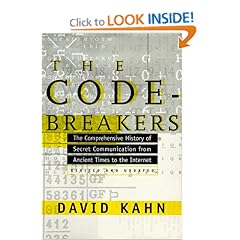
I have book by David Kahn "The Codebreakers: The Comprehensive History of Secret Communication from Ancient Times to the Internet" - the Chapter 1 explains rather nicely how US codebraking effort was made towards Japanese before the WWII in teh Pacific (i.e. attack on Pearl harbor) and how things played the way they played...
The book is very very good and I wholeheartedly reccomen it (though it is hard to read)!
http://www.amazon.com/Codebreakers-Comp ... 208&sr=8-1
Leo "Apollo11"
ORIGINAL: jwilkerson
History is a contingency science - if something happens - this determines the path for things that happen afterwards. We do not know how to find out "what would happen if something different had happened". Historians do not generally engage in these "what if" questions - because fundamentally they are impossible to answer.
My father was in the USN Intelligence community during WWII and he knew people that were involved in the processing of intelligence information prior to Pearl Harbor and he felt like we knew more than was generally thought. The "government" was a large organization - so was the "Navy". So to say that some members knew more than is/was generally known is almost certainly true. To get information assimilated and translated into action at the highest command levels, is a different matter. Clearly there were many warnings, clearly some were ignored. But proving there was a massive conspiracy that was so successful that we do not even generally know about it today certainly smacks of credulity. The individual my father knew, did believe that negligence was involved, that persons avoided escalating information, but it not clear that this was done as a part of a conspiracy.
Generally we expect our governments to be rather incapable organizations. Why do we make an exception and give them the benefit of the doubt when it comes to this case? Executing and then concealing such a conspiracy for almost 70 years would be a very difficult operation - and might even require that we believe the conspiracy is still operating today, almost 70 years later. I think the judgment of history requires far more substantial evidence of such a conspiracy before we could accept such.
Historians are skeptics, but they also operate in accordance with what is most probable - and they require sources - primary sources - and the more the better. This enables a solid web of facts to be built that cannot be dispelled by the over turning of one fact due to new information. If we have such a web of facts regarding the military alerts prior to the attack, I would say these indicate negligence, but not conspiracy.
Regarding the original question - it is a what if question - and hence technically impossible to answer - but it has been mentioned before that had the Pacific Fleet gotten to sea and been spotten by KB, it is also plausible to conceive that loss of life would've been heavier as it would not have been as easy to pick up survivors. Perhaps less ships would've been lost - but perhaps more sailors would've drowned. Saving the men was probably more important to the USN than plus or minus 1-2 BBs IMHO.
I have book by David Kahn "The Codebreakers: The Comprehensive History of Secret Communication from Ancient Times to the Internet" - the Chapter 1 explains rather nicely how US codebraking effort was made towards Japanese before the WWII in teh Pacific (i.e. attack on Pearl harbor) and how things played the way they played...
The book is very very good and I wholeheartedly reccomen it (though it is hard to read)!
http://www.amazon.com/Codebreakers-Comp ... 208&sr=8-1
Leo "Apollo11"

Prior Preparation & Planning Prevents Pathetically Poor Performance!
A & B: WitW, WitE, WbtS, GGWaW, GGWaW2-AWD, HttR, CotA, BftB, CF
P: UV, WitP, WitP-AE
RE: Pearl - one hour alert
ORIGINAL: jwilkerson
History is a contingency science - if something happens - this determines the path for things that happen afterwards. We do not know how to find out "what would happen if something different had happened". Historians do not generally engage in these "what if" questions - because fundamentally they are impossible to answer.
My father was in the USN Intelligence community during WWII and he knew people that were involved in the processing of intelligence information prior to Pearl Harbor and he felt like we knew more than was generally thought. The "government" was a large organization - so was the "Navy". So to say that some members knew more than is/was generally known is almost certainly true. To get information assimilated and translated into action at the highest command levels, is a different matter. Clearly there were many warnings, clearly some were ignored. But proving there was a massive conspiracy that was so successful that we do not even generally know about it today certainly smacks of credulity. The individual my father knew, did believe that negligence was involved, that persons avoided escalating information, but it not clear that this was done as a part of a conspiracy.
Generally we expect our governments to be rather incapable organizations. Why do we make an exception and give them the benefit of the doubt when it comes to this case? Executing and then concealing such a conspiracy for almost 70 years would be a very difficult operation - and might even require that we believe the conspiracy is still operating today, almost 70 years later. I think the judgment of history requires far more substantial evidence of such a conspiracy before we could accept such.
Historians are skeptics, but they also operate in accordance with what is most probable - and they require sources - primary sources - and the more the better. This enables a solid web of facts to be built that cannot be dispelled by the over turning of one fact due to new information. If we have such a web of facts regarding the military alerts prior to the attack, I would say these indicate negligence, but not conspiracy.
Regarding the original question - it is a what if question - and hence technically impossible to answer - but it has been mentioned before that had the Pacific Fleet gotten to sea and been spotten by KB, it is also plausible to conceive that loss of life would've been heavier as it would not have been as easy to pick up survivors. Perhaps less ships would've been lost - but perhaps more sailors would've drowned. Saving the men was probably more important to the USN than plus or minus 1-2 BBs IMHO.
I think a "conspiracy " theories is impossible, it is a very unrealistic scenario, and I would go as far as calling it impossible.
However, I think there have been more knowledge about this then we think, some of it deliberately ignored and some of it lost due to incompetent intelligence operators, and some gone due to negligence.
How would the "top" of military intelligence handle it if it was presented to them?
I think it would been declined and considered "absurd" that Japan would Attack Pearl Harbor, and if not the top Military leaders would drawn this conclusion, then the Politicians in office would. I don't think it has anything to do with any form for conspiracy, but simply due to incompetence. For singe individuals I could mabye surgest some held back information deliberately due to personal hopes for war involvment, and others mabye held it back due to fear of presenting the information as it would been considered "absourd", and some due to negligence or other.
Anyway, now i really must go... night night
RE: Pearl - one hour alert
After 9/11, there was evidence aplenty that there were warning signs The problem was that no one had ALL the information to put it all together. I think this is true of PH also. While there were bits and pieces all over the place, there was no one person or department that had the whole jigsaw puzzle to assemble.
That said, to get back on track, what if Hull had called Marshall and King the minute he got wind of the "13 page document". What if they had taken it as seriously as they should and sent out a flash that all units were to immediately assume a war footing. All leave was to be canceled, all pilots recalled to base, all ships brought up to steam, etc. One of the problems before PH was that the traffic sent from Washigton to Kimmel and Short was vague. There was no "expect Japanese attack on your facilities is imminent" message. Kimmel and Short were thus forced to "read the tea leaves" themselves.
So lets say the war warning came in time. We might assume that at least a couple of P-40's would have been sent to investigate the radar contact. The Army and Navy would not have been ready but the would have been getting there. USS Ward's 0700 sighting would have been like a lightning bolt. We can at least assume the ships would have been at condition 3 and AAA would have been a lot more effective. So, I think an hour's warning would have made a difference at least as far as the loss of life.
One last comment on the conspiracy theory subject: I tend to be very suspect of any premise that is based on "new" iformation 60+ years after the fact when the bulk of the people involved are dead. There can little if any cross checking and/or verification
That said, to get back on track, what if Hull had called Marshall and King the minute he got wind of the "13 page document". What if they had taken it as seriously as they should and sent out a flash that all units were to immediately assume a war footing. All leave was to be canceled, all pilots recalled to base, all ships brought up to steam, etc. One of the problems before PH was that the traffic sent from Washigton to Kimmel and Short was vague. There was no "expect Japanese attack on your facilities is imminent" message. Kimmel and Short were thus forced to "read the tea leaves" themselves.
So lets say the war warning came in time. We might assume that at least a couple of P-40's would have been sent to investigate the radar contact. The Army and Navy would not have been ready but the would have been getting there. USS Ward's 0700 sighting would have been like a lightning bolt. We can at least assume the ships would have been at condition 3 and AAA would have been a lot more effective. So, I think an hour's warning would have made a difference at least as far as the loss of life.
One last comment on the conspiracy theory subject: I tend to be very suspect of any premise that is based on "new" iformation 60+ years after the fact when the bulk of the people involved are dead. There can little if any cross checking and/or verification
"We have met the enemy and they are ours" - Commodore O.H. Perry
-
John Lansford
- Posts: 2664
- Joined: Mon Apr 29, 2002 12:40 am
RE: Pearl - one hour alert
Given an hour of warning, some things could have been accomplished.
Nevada and some other ships could have escaped out of the harbor.
More fighters would have been available to be up and ready to intercept the bombers.
Ships would have been at Battle Stations, and presumably watertight integrity established on all ships that could do so (California an exception).
More AA guns would have been manned and ready.
Now, the real question is, would it have made that much of a difference? I think not; the Japanese planned for a 'no surprise' event and the strike force was prepared to deal with a CAP and alerted bases. The main part of the fleet could not escape in an hour, but perhaps ships like Oklahoma and WV would not have taken as much damage as they did due to heavier AA and more fighters disrupting the attacks.
Nevada and some other ships could have escaped out of the harbor.
More fighters would have been available to be up and ready to intercept the bombers.
Ships would have been at Battle Stations, and presumably watertight integrity established on all ships that could do so (California an exception).
More AA guns would have been manned and ready.
Now, the real question is, would it have made that much of a difference? I think not; the Japanese planned for a 'no surprise' event and the strike force was prepared to deal with a CAP and alerted bases. The main part of the fleet could not escape in an hour, but perhaps ships like Oklahoma and WV would not have taken as much damage as they did due to heavier AA and more fighters disrupting the attacks.
-
Mike Scholl
- Posts: 6187
- Joined: Wed Jan 01, 2003 1:17 am
- Location: Kansas City, MO
RE: Pearl - one hour alert
ORIGINAL: John Lansford
Now, the real question is, would it have made that much of a difference? I think not; the Japanese planned for a 'no surprise' event and the strike force was prepared to deal with a CAP and alerted bases. The main part of the fleet could not escape in an hour, but perhaps ships like Oklahoma and WV would not have taken as much damage as they did due to heavier AA and more fighters disrupting the attacks.
I think it would have made more of a difference thant people suppose. Perhaps not in the damage recieved by the US, but in the losses taken by the Japanese. KB's pilots and aircrews may well have been the best in the world on that morning..., and would have pressed home their attacks regardless of opposition. And that's the problem.
Those aircrews were an extreamly sharp, but brittle weapon. They were literally irreplaceable under the Japanese training system. And the aircraft themselves weren't in a much better state. No Kates were being produced at all at the time. About 30 aircraft and aircrews were lost in conditions of complete suprise---that could easily have been 150 or more with the US prepared and ready. Enough to make 3 of KB's carriers virtually worthless for lack of airgroups.
RE: Pearl - one hour alert
ORIGINAL: Mike Scholl
ORIGINAL: John Lansford
Now, the real question is, would it have made that much of a difference? I think not; the Japanese planned for a 'no surprise' event and the strike force was prepared to deal with a CAP and alerted bases. The main part of the fleet could not escape in an hour, but perhaps ships like Oklahoma and WV would not have taken as much damage as they did due to heavier AA and more fighters disrupting the attacks.
I think it would have made more of a difference thant people suppose. Perhaps not in the damage recieved by the US, but in the losses taken by the Japanese. KB's pilots and aircrews may well have been the best in the world on that morning..., and would have pressed home their attacks regardless of opposition. And that's the problem.
Those aircrews were an extreamly sharp, but brittle weapon. They were literally irreplaceable under the Japanese training system. And the aircraft themselves weren't in a much better state. No Kates were being produced at all at the time. About 30 aircraft and aircrews were lost in conditions of complete suprise---that could easily have been 150 or more with the US prepared and ready. Enough to make 3 of KB's carriers virtually worthless for lack of airgroups.
Excellant point! About 20 of the 30 aircraft were lost in the second wave after the AAA was alerted. Considering that many ships were already incapacitated by that point, it is safe to assume that the number of aircraft lost would have been at least trippled. Also, even a modest CAP would have forced the A6M2 to engage in ATA combat vice strafing airfields. Ergo the USAAF would have lost far fewer a/c. I still think the USN would have been dealt a crippling blow, but the Japanese would have paid a much higher cost.
On a side note, what would have been the political ramifications? Pearl Harbor was a galvanizing influence for teh US populace in WWII. How would have the horendous losses suffered at Iwo Jima and Okinawa been viewed without the PH influence?
"We have met the enemy and they are ours" - Commodore O.H. Perry
RE: Pearl - one hour alert
I doubt it would have been that much. Its a common tendency to assume that if you add more guns, more planes etc, then casualties will exponentially increase, but thats not often the case.
-
John Lansford
- Posts: 2664
- Joined: Mon Apr 29, 2002 12:40 am
RE: Pearl - one hour alert
I'm wondering just how many fighters would have gotten off the ground to engage the attack force. An hour is not a lot of time, and the pilots were either still on shore leave or sleeping in. How many would get to their planes in time to take off at all?
RE: Pearl - one hour alert
Probably not a huge number. I'm basing this as well on the projection that the discussed hour period will suffer inevitable inertia. There would also be issues with what to CAP and where. It would probably be a bit of a mess. An hour simply isn't enough time to organize a coherent defense, much less in one that has been in peacetime status. The opposite of the ready status seen during your typical BoB day.
-
Mike Scholl
- Posts: 6187
- Joined: Wed Jan 01, 2003 1:17 am
- Location: Kansas City, MO
RE: Pearl - one hour alert
ORIGINAL: vettim89
On a side note, what would have been the political ramifications? Pearl Harbor was a galvanizing influence for teh US populace in WWII. How would have the horendous losses suffered at Iwo Jima and Okinawa been viewed without the PH influence?
I doubt that being caught in an "attempted sneak attack" would have made any difference in US public opinion. Now had the Japs had the balls to declare War on Saturday the 6th, then being caught with our pants down at Pearl Harbor on the morning of the 7th would have had Roosevelt between a rock and a hard place.
-
John Lansford
- Posts: 2664
- Joined: Mon Apr 29, 2002 12:40 am
RE: Pearl - one hour alert
That's what I'm thinking too; even a general alert call would get a lot of "WTF, another stupid drill" from everyone involved. The ships, being more disciplined and trained for such things, would be in better shape.
RE: Pearl - one hour alert
He's right. The Japanese actually were not attempting a Sneak Attack but a Suprise Attack timed to go off shortly after a formal declaration of war. Inefficiencies at the Japanese consolate delayed the delivery to IIRC, Mr. Hull. Hence the attack was already under way when it was delivered.
That said.....i can't see how it would have made any tangible difference. Americans would have been just as angered, realizing that they'd been "set up" for a sucker punch.....which is i gather EXACTLY how the Roosevelt administration would have played it had the Japanese timing gone as planned.
That then begs the quesiton.....why did Yamamotto and the GHQ go with such a thing? It may be perhaps a piece of old world thinking. Japan had no qualms about a true sneak attack on the Russians in 1904 but the world was a far different place then.....bigger for one thing. News traveled slower and Russia already had a load of internal problems. The area under attack was also far removed from central Russian living and concerns. In a nutshell, that scenario just didn't apply to the United States in 1941. There was also the simple tactical reasoning. The whole reason for the plan was to deliver a knockout blow to the US Pacific Fleet allowing Japan a free hand in the SRA. That was the #1 priority. So it may be that Yammamotto was hoping that by "technically" delivering a suprise attack 'after' war was declared it would at least be seen as more legit....but ultimately it was the attack itself that counted. The only situation that might produce a tangible difference would be a situation where America has to be the one to declare war first....and thx to Hitler, we'll never know for sure how that would have played out. (in political terms at least)
That said.....i can't see how it would have made any tangible difference. Americans would have been just as angered, realizing that they'd been "set up" for a sucker punch.....which is i gather EXACTLY how the Roosevelt administration would have played it had the Japanese timing gone as planned.
That then begs the quesiton.....why did Yamamotto and the GHQ go with such a thing? It may be perhaps a piece of old world thinking. Japan had no qualms about a true sneak attack on the Russians in 1904 but the world was a far different place then.....bigger for one thing. News traveled slower and Russia already had a load of internal problems. The area under attack was also far removed from central Russian living and concerns. In a nutshell, that scenario just didn't apply to the United States in 1941. There was also the simple tactical reasoning. The whole reason for the plan was to deliver a knockout blow to the US Pacific Fleet allowing Japan a free hand in the SRA. That was the #1 priority. So it may be that Yammamotto was hoping that by "technically" delivering a suprise attack 'after' war was declared it would at least be seen as more legit....but ultimately it was the attack itself that counted. The only situation that might produce a tangible difference would be a situation where America has to be the one to declare war first....and thx to Hitler, we'll never know for sure how that would have played out. (in political terms at least)

RE: Pearl - one hour alert
I would wager that the biggest difference in the Attack would have been much higher casualties for Japan. Imagine Japanese losses for the Second Wave being equaled by the 1st Wave. Figure Japanese plane and pilot losses would have been closer to 60-70 planes. Those losses could have made for a long-term difference with the KB.
Allied losses might have been lighter but I imagine they would have still been severe. The other note to the Fleet side is that they would have tried to clear the Harbor and get moving. That was procedure for the time and they would have tried it. It is counter-intuitive to decide to stay IN the confines of the Harbor when you know an attack is coming. A good number of DDs and Nevada would have been able to move and imagine what might have been underway by the time of the Second Wave...
Allied losses might have been lighter but I imagine they would have still been severe. The other note to the Fleet side is that they would have tried to clear the Harbor and get moving. That was procedure for the time and they would have tried it. It is counter-intuitive to decide to stay IN the confines of the Harbor when you know an attack is coming. A good number of DDs and Nevada would have been able to move and imagine what might have been underway by the time of the Second Wave...

Member: Treaty, Reluctant Admiral and Between the Storms Mod Team.
-
Wirraway_Ace

- Posts: 1509
- Joined: Mon Oct 08, 2007 2:28 pm
- Location: Austin / Brisbane
RE: Pearl - one hour alert
A couple of thoughts.
Washington felt it had warned PH and PI that war was likely.
US Military Planners had conceived of an aerial attack on PH and wargamed it.
The two local commanders did their own threat analysis (as generals and admirals are wont to do) with their own staff and came up with a plan that played into the hands of the Japanese attack.
The only way an hour would have made a significant difference is if somebody like Halsey was in command at the time, and really had his staff and units on wartime footing.
Also, keep in mind when blaming Kimmel, Stark and MacArthur for their apparent belief that the Japanese would have to be crazy to attack and their half-hearted preparations for such an attack—they were completely correct in their assessment. The war that Japan never should have started went just the way most leaders predicted and resulted in the annihilation of the naval, air and ground forces of Imperial Japan.
Washington felt it had warned PH and PI that war was likely.
US Military Planners had conceived of an aerial attack on PH and wargamed it.
The two local commanders did their own threat analysis (as generals and admirals are wont to do) with their own staff and came up with a plan that played into the hands of the Japanese attack.
The only way an hour would have made a significant difference is if somebody like Halsey was in command at the time, and really had his staff and units on wartime footing.
Also, keep in mind when blaming Kimmel, Stark and MacArthur for their apparent belief that the Japanese would have to be crazy to attack and their half-hearted preparations for such an attack—they were completely correct in their assessment. The war that Japan never should have started went just the way most leaders predicted and resulted in the annihilation of the naval, air and ground forces of Imperial Japan.