January 4, 1942- Clark AFB in the Philippines falls to the Japanese, while a series of battles across 5000 miles of ocean erupt in the Central and South Pacific.
The Thayne Reports are published by allied intelligence and distributed to senior officers serving in the Pacific Theater of Operation in order to give these officers an understanding of the overall military situation. These top secret reports contain the best and most up-to-date information available at the time of their writing. Revealing any of the contents of these reports will be punished as treason.
Battles Erupt Across the South Pacific
(Pearl Harbor - Hawaii) In four separate battles in the South Pacific yesterday, the Allied forces sank a sub chaser, severely damaged and probably sank two cargo ships, and put a 1000 lb bomb on a Yamamoto class battleship. In exchange Enterprise and Saratoga lost a total of nine dive bombers while the Japanese occupied two islands under the protection of carrier-based air power.
Only one of these battles had been planned by US forces.
Lexington vs Wake
The aircraft carrier Lexington yesterday sailed into range and attacked Wake Island yesterday. Japan had taken Wake Island from the allies late last month after a prolonged battle.
Dive bombers from Lexington found two cargo ships and a sub chaser at Wake Island. They proceeded to hit the cargo ships with four and five 1000 lb bombs respectively, severely damaging the two ships. The ships are counted as probably sunk, though the sinking was not confirmed.
One dive bomber also put a 1000 lb bomb on the sub chaser. The explosion disintegrated the ship which was confirmed as sunk by other pilots and reconnaissance aircraft.
Lexington will strike Wake again today, then send the heavy cruisers in to shell the island tonight before retiring to Pearl Harbor.
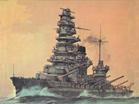
Enterprise and Saratoga vs a Yamato class battleship
Enterprise and Saratoga were withdrawing from their attacks on Tarawa and Makin Islands when scout planes reported a Japanese battleship heading east, approximately 300 miles south by southwest of the carriers' position - moving east. The carriers immediately launched dive bombers against the Japanese battleship; the range being too great for torpedo planes.
The Japanese task force sailed with no air cover.
However, the anti-aircraft power on the Japanese ship proved to be nearly impenetrable. Only seven Dauntless dive bombers on the two carriers returned undamaged. Japanese anti-aircraft claimed 9 dive bombers, while the rest were damaged.
In four different strikes against the battleship throughout the day, one dive bomber is reported to have hit the Japanese battleship with one 1000 bomb. Military experts are treating the one hit as ineffective.
The battleship is believed to be targeting either Baker Island or Canton Island with a naval bombardment. Forces on Canton Island have been placed on alert and told to expect an attack in the next 24 to 48 hours. Allied forces have not yet occupied Baker Island.
VS-6 and VS-3, the scout squadrons from the two carriers, will take over the roles of the bomber squadrons for a second strike against the Japanese battleship if it is found to be within range in the morning.
Saratoga is confronting a severe fuel shortage. There are two allied oilers in the waters east of the carriers. However, in the face of the threat from the Japanese battleship they have been ordered to stay away from the carrier force until the battle is resolved.
Japanese Landing Forces Occupy Ocean Island, Nauru Island.
In the last 48 hours, Japan has taken control of Ocean Island and Nauru Island.
These are small, isolated islands west of Makin and Tarawa, considered to be far behind enemy lines. In a sense, they were already written off as lost by Allied military leaders.
During the attack, Nauru Island to a carrier-based air assault consisting of approximately 20 Zero fighters and Kate dive bombers. This suggests that a small Japanese carrier - an escort carrier or light carrier - is probably nearby.
The Japanese landings were virtually unopposed. Japan had the islands under their control by nightfall.
Japanese Carriers Appear near New Caledonia
Yet another Japanese carrier force appeared northeast of the island of New Caledonia yesterday.
In one of those remarkable coincidences that happen in war time, because of the breakdown in negotiations at the New Caledonia conference the day before, the Australians and New Zealanders had given their fleets orders to withdraw from the island today. By the time the Japanese carriers arrived, they were only able to find a few stragglers from the convoys that had left Noumea.
There were tense moments as Japan launched 10 Val bombers against the trailing troop transport. It was leaving New Caledonia with elements of the 3rd Royal Australian Base Force still on board and was significantly behind the rest of the allied navy, escorted by a pair of minesweepers. Skillful maneuvering on the part of the three ships three ships managed to keep any of the Japanese bombs from doing any damage. By afternoon, the transport had sailed into a storm squall and suffered no further attacks.
The ships are heading toward Norfolk Island, southwest of New Caledonia. The Australians have decided to occupy this island in the face of intelligence that says that Japan plans to occupy New Caledonia. Australia had demanded a full commitment on the part of the Americans to defend New Caledonia. In the face of American refusal to make such a commitment, Australia and New Zealand pulled their fleets out of New Caledonia with some troops still on board the landing craft. Both nations plan to withdraw the rest of their landing forces as opportunity permits.
Norfolk Island does not have any port to speak of capable of harboring more than the smallest ships. Still, its airfields can control the waters around the island and deter surface raiders from moving south into the waters between New Zealand and Australia, and the island is capable of being supplied by air from New Zealand.
New Zealanders have expressed alarm at the thought, as expressed by one New Zealand official. "If we can deliver supplies to Norfolk Island from New Zealand, then Japan, if it decides to occupy that island, will be able to deliver bombs to New Zealand.
Many New Zealanders have already started to leave settlements on the northern part of the North Island and move south.
Japan Takes Clark AFB
(Bataan - Philippines) In a surprise development in the Philippines, Japan was able to occupy Clark Air Force Base yesterday, dividing the forces on the peninsula of Bataan from forces still occupying the region around Manila.
It has been rumored that General Douglas MacArthur, the commander of the forces in the Philippines, had intended to pull his forces out of the capital and into fortifications he has been constructing on the peninsula of Bataan. However, the Japanese assault came with nearly 10,000 soldiers still in and around Manila.
The Manila forces are also reasonably well supplied.
There are rumors that some of the subordinate officers under Manila wanted to leave a significant force behind to occupy the city, to make it tougher for Japan to gain control of its resources and to engage in demolitions as the Japanese forces closed in on the town. As such, they dragged their feet when it came to moving to Bataan.
By comparison, MacArthur is sitting with approximately 40,000 soldiers on Bataan. He had ordered as much food and ammunition as possible to be moved to Bataan and into the tunnels in the island fortress of Corrigador, so the army does have enough material to survive an extended siege.
In addition, MacArthur has ordered two small airstrips constructed in the area, which P-40 fighters have been using to defend the area from Japanese bombers. However, there is little doubt that the fighters will not last long against a significant Japanese effort to take control of the skies above the remaining allied forces.
The Debacle in Central Malaya Continues
(Singapore) The battle in central Malaya, where the Japanese are seeking to entrap 10,000 allied soldiers, continued today with Japanese forces marching into the town of Temuloh, the site of he besieged garrison.
In fierce fighting, the defenders claimed to have inflicted significant damage on the Japanese, though the enemy forces were able to take control of some key locations within the town, forcing the allies to give up some of their forward defenses. It is considered unlikely that the Japanese will
The British forces responded yesterday by sending its land-based bombers out of Singapore against the Japanese forces attempting to encircle the garrison. Reports back from the battlefield suggest that the air forces inflicted more damage than expected on the Japanese attackers. However, it is doubtful that it was enough to slow down the encirclement.