


Did the Japanese employ skip-bombing tactics in the Pacific? Was there a single such attack conducted against Allied ships during the war? If not, why?
Disregard, just found this thread with Google:
tm.asp?m=2659333
Did Japanese employ skip-bombing?
Moderators: wdolson, MOD_War-in-the-Pacific-Admirals-Edition
-
Commander Stormwolf
- Posts: 1623
- Joined: Tue Feb 19, 2008 5:11 pm
RE: Did Japanese employ skip-bombing?
"No Enemy Survives Contact with the Plan" - Commander Stormwolf
-
mike scholl 1
- Posts: 1265
- Joined: Wed Feb 17, 2010 8:20 pm
RE: Did Japanese employ skip-bombing?
ORIGINAL: Yaab
Did the Japanese employ skip-bombing tactics in the Pacific? Was there a single such attack conducted against Allied ships during the war? If not, why?
The Japanese really lacked the kind of tough, durable, well armed and armored A/C needed for this kind of attack. The planes that performed it well were all fitted with massive forward-firing gun armament to supress/eliminate defensive AAA on the run in. Can you think of a Japanese A/C with the equivilent of 12 forward-firing .50 cals?
-
Cap Mandrake

- Posts: 20737
- Joined: Fri Nov 15, 2002 8:37 am
- Location: Southern California
RE: Did Japanese employ skip-bombing?
I think the answer is yes.
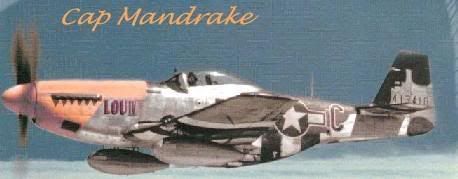
Toward the end, they pretty much decided to "skip bombing" altogether and just crash into the target.
Toward the end, they pretty much decided to "skip bombing" altogether and just crash into the target.
-
DuckofTindalos

- Posts: 39781
- Joined: Fri Apr 22, 2005 11:53 pm
- Location: Denmark
RE: Did Japanese employ skip-bombing?
Happy with that one, Mandrake?[:'(]
We are all dreams of the Giant Space Butterfly.
-
sandman455

- Posts: 214
- Joined: Tue Jul 05, 2011 12:26 am
- Location: 30 yrs ago - SDO -> med down, w/BC glasses on
RE: Did Japanese employ skip-bombing?
ORIGINAL: Cap Mandrake
I think the answer is yes.
Toward the end, they pretty much decided to "skip bombing" altogether and just crash into the target.
Pretty much sums up the real issues with "skip" bombing.
There are so many things that have to happen before you can skip bomb, it shouldn't even be worth the effort to try and set it up. In this game i've seen were pilot training is being used to hamper it from being done, which is fine, but I worry you'll find those training it up and then launching it against open ocean combatants and not getting the appropriate results.
It should be sufficent to say that the optimal approach for skip bombing looks exactly like the very worst approach for a kamikaze. Now go research how many kami's actually made it to their targets when they started their approach low. Kami's didn't have to egress either. Needless to say, the Kami's would get much better results. [:)]
Gary S (USN 1320, 1985-1993)
AOCS 1985, VT10 1985-86, VT86 1986, VS41 1986-87
VS32 1987-90 (NSO/NWTO, deployed w/CV-66, CVN-71)
VS27 1990-91 (NATOPS/Safety)
SFWSLANT 1991-93 (AGM-84 All platforms, S-3 A/B systems)
AOCS 1985, VT10 1985-86, VT86 1986, VS41 1986-87
VS32 1987-90 (NSO/NWTO, deployed w/CV-66, CVN-71)
VS27 1990-91 (NATOPS/Safety)
SFWSLANT 1991-93 (AGM-84 All platforms, S-3 A/B systems)

RE: Did Japanese employ skip-bombing?
[&o][&o][&o][&o][&o][&o][&o]ORIGINAL: Cap Mandrake
I think the answer is yes.
Toward the end, they pretty much decided to "skip bombing" altogether and just crash into the target.
-
Chickenboy

- Posts: 24648
- Joined: Fri Jun 28, 2002 11:30 pm
- Location: San Antonio, TX
RE: Did Japanese employ skip-bombing?
[:D]ORIGINAL: Cap Mandrake
I think the answer is yes.
Toward the end, they pretty much decided to "skip bombing" altogether and just crash into the target.

RE: Did Japanese employ skip-bombing?
In the end the only thing kamis accomplished was to insure there was a shortage of young men in Japan when the war was over.
Considering that not one single invasion was aborted, delayed or even seriously affected I think it is not unreasonable to require something more than an unsupported assertion that kamikaze tactics were more effective than skip bombing.
Considering that not one single invasion was aborted, delayed or even seriously affected I think it is not unreasonable to require something more than an unsupported assertion that kamikaze tactics were more effective than skip bombing.
-
DuckofTindalos
- Posts: 39781
- Joined: Fri Apr 22, 2005 11:53 pm
- Location: Denmark
RE: Did Japanese employ skip-bombing?
Yeah, that's a pretty strange comparison.
We are all dreams of the Giant Space Butterfly.
-
mike scholl 1
- Posts: 1265
- Joined: Wed Feb 17, 2010 8:20 pm
RE: Did Japanese employ skip-bombing?
ORIGINAL: spence
In the end the only thing kamis accomplished was to insure there was a shortage of young men in Japan when the war was over.
I'm a dyed-in-the-wool AFB, but in this case Kamikaze Tactics were a very rational choice for the Japanese. Their best trained Naval aviators had been shreaded in the "Great Mariana's Turkey Shoot", the IJA's aircrews weren't really trained to attack naval targets, and their A/C were outclassed by the latest Allied planes. Given the quality of their A/C and pilots, only the simplest tactics offered ANY chance of success. Even in these circumstances it was the veteran pilots that had the highest percentage of success in suicide attacks.
As to "skip bombing", the designers have made the pre-requisits far too stringent. With the right A/C (Gunships), it was a rather simple profile to master. Come in low, straight at the target; blanket it in a massive hail of suppressive fire, drop your bomb and climb out over the target's masthead. Not exactly "rocket science"....

RE: Did Japanese employ skip-bombing?
It may not have been rocket science, but it took practice to hit the ship with a skipping bomb, and not hit the ship with the plane or get caught in the blast. I agree its too hard in AE.
RE: Did Japanese employ skip-bombing?
They could have skip bombed with dive bombers like the italians did with Stuka.
RE: Did Japanese employ skip-bombing?
Dili, very interesting. Could you elaborate on this?

RE: Did Japanese employ skip-bombing?
ORIGINAL: mike scholl 1
I'm a dyed-in-the-wool AFB, but in this case Kamikaze Tactics were a very rational choice for the Japanese. Their best trained Naval aviators had been shreaded in the "Great Mariana's Turkey Shoot", the IJA's aircrews weren't really trained to attack naval targets, and their A/C were outclassed by the latest Allied planes. Given the quality of their A/C and pilots, only the simplest tactics offered ANY chance of success. Even in these circumstances it was the veteran pilots that had the highest percentage of success in suicide attacks.
The Marianas Turkey Shoot did not shred Japan's trained aircrew. They were long gone before.
"Measure civilization by the ability of citizens to mock government with impunity" -- Unknown

RE: Did Japanese employ skip-bombing?
A pretty good read here, USN Naval AAA & ship losses to air attacks analysis:
http://www.history.navy.mil/library/onl ... y_wwii.htm
As you can see, even after increase in AAA quantity and quality, radar, pickets and ever worsening Japanese pilot quality, kamikazes scored considerably more hits per attack than more conventional ways and those hits tended to do more damage.
Asymmetric warfare - they didnt really have a better option...
http://www.history.navy.mil/library/onl ... y_wwii.htm
As you can see, even after increase in AAA quantity and quality, radar, pickets and ever worsening Japanese pilot quality, kamikazes scored considerably more hits per attack than more conventional ways and those hits tended to do more damage.
Asymmetric warfare - they didnt really have a better option...
-
sandman455
- Posts: 214
- Joined: Tue Jul 05, 2011 12:26 am
- Location: 30 yrs ago - SDO -> med down, w/BC glasses on
RE: Did Japanese employ skip-bombing?
ORIGINAL: spence
In the end the only thing kamis accomplished was to insure there was a shortage of young men in Japan when the war was over.
Considering that not one single invasion was aborted, delayed or even seriously affected I think it is not unreasonable to require something more than an unsupported assertion that kamikaze tactics were more effective than skip bombing.
You are baiting me aren't you? I'll skip the sarcasim (pun intended) and try to address your issues while still being as informative as I can to any others who are interested in the subject.
So get your drink of choice and I shall being this post with the usually instructor story.
Strike-Fighter Weapons School Atlantic was relatively new back in 1991. As things turned out, I got sent there to teach a course on Harpoon missiles and to be the resident weapons inspector for the Atlantic S-3 fleet squadrons. At the time it wasn't consider a good career move for someone who was going places (you want Fitreps that say 1 of 35, not 1 of 1) but the only place I wanted to go was out of the Navy, so I gladly accepted the offer to move my desk across NAS Cecil Field to the weapon school which was just a few buildings down from the F/A-18 replacement airgroup (RAG). It was eye openning and honestly probably the best tour in the Navy for any S3 type, but that's another story.
Back in 1991 the A-7 community still had plenty of pilots that were making their way through the F/A-18 replacement airgroup (RAG). The weapon school was tasked with supporting the process by giving these pilots who had been out of the cockpit for a couple years some familiarization on the ordnance carried by the F/A-18. Anyway, I was kind of brand new in the unit and I was working the slide projector for a brand new F/A-18 instructor who naturally got stuck doing an intro to bomb theory course. Somehow the subject matter got onto how you don't want your bombs to deflect and I remember some LCDR blurting out "unless you are in a B-25." Rather than getting back on focus, the Hornet instructor looked puzzled. As a long time wargamer from my early teen years I had heard of the Battle of Bismark Sea and even read somewhere about a Pole or Italian inventing the tactic. I know the tactic was done, but I too was baffled by the how and why since it seemed like certain suicide to me as well. However, I still managed to rescue my fellow instructor by throwing a preverbial towel over the conversation by saying "skip bombing was done from aircraft that had limited delivery options due to their bomb bays." I had no idea what I was talking about, but I also knew an A7 driver probably couldn't find a bomb bay on a plane so it was a guaranteed a 1-hit kill on the discussion. In fact the navy only had one carrier based aircraft with a bomb bay and I was the resident expert on that aircraft.
So there is your intro.
I have no clue about skip bombing.
Now I need to make up a quick and dirty post on the subject.
Wish me luck.
Gary S (USN 1320, 1985-1993)
AOCS 1985, VT10 1985-86, VT86 1986, VS41 1986-87
VS32 1987-90 (NSO/NWTO, deployed w/CV-66, CVN-71)
VS27 1990-91 (NATOPS/Safety)
SFWSLANT 1991-93 (AGM-84 All platforms, S-3 A/B systems)
AOCS 1985, VT10 1985-86, VT86 1986, VS41 1986-87
VS32 1987-90 (NSO/NWTO, deployed w/CV-66, CVN-71)
VS27 1990-91 (NATOPS/Safety)
SFWSLANT 1991-93 (AGM-84 All platforms, S-3 A/B systems)
-
mike scholl 1
- Posts: 1265
- Joined: Wed Feb 17, 2010 8:20 pm
RE: Did Japanese employ skip-bombing?
ORIGINAL: Mynok
ORIGINAL: mike scholl 1
I'm a dyed-in-the-wool AFB, but in this case Kamikaze Tactics were a very rational choice for the Japanese. Their best trained Naval aviators had been shreaded in the "Great Mariana's Turkey Shoot", the IJA's aircrews weren't really trained to attack naval targets, and their A/C were outclassed by the latest Allied planes. Given the quality of their A/C and pilots, only the simplest tactics offered ANY chance of success. Even in these circumstances it was the veteran pilots that had the highest percentage of success in suicide attacks.
The Marianas Turkey Shoot did not shred Japan's trained aircrew. They were long gone before.
Yes and no. The pre-war veterans had pretty much been wiped out by mid-1943..., but Japan's carriers had been withdrawn to home waters training new aircrews for 18 months before the Battle of the Philippine Sea. These were the best that the IJN had in June 1944...., and they WERE shredded in the "Turkey Shoot". After that, replacement training was pitifully inadequate and made Kamikaze Tactics a virtual necessity if any success was to be gained.
-
sandman455
- Posts: 214
- Joined: Tue Jul 05, 2011 12:26 am
- Location: 30 yrs ago - SDO -> med down, w/BC glasses on
RE: Did Japanese employ skip-bombing?
Ok, boys and girls have a seat, class has begun. Today we shall examine the problem of dropping bombs on ships from low altitude when you have to do it from a platform that is limited by that inconvenient invention known as the bomb bay.
Bomb bays were invented for the sole purpose of giving the aircraft a more aerodynamic profile so as improve range and performance. In exchange for that, they give you almost no flexibility in delivery despite what the engineers at Curtiss wanted you to believe. When you open them, the drag they create is far worse than just a bomb/rack/pylon sitting out on the wing or fuselage of an aircraft. Due to the dynamic loads related to opening them, they are frequently subject to jamming, overspeeding, overstressing, and just a PITA for their crews. I'm talking about modern aircraft here. So you can just imagine how much fun they were back in the 40's.
Bomb bays also had the nifty characteristic of actually having a bomb lose INSIDE your aircraft for a brief moment. This really was a game changer. Here is the attack profile of an aircraft with a bomb bay.
straight-level-1G-straight-level-1G-straight-level-1G-straight-level-1G-straight-level-1G
"Sounds really easy teacher. Is this why the allies skip bombed their way to Tokyo?"
What did you say. . . . SKIP BOMB?? Buwhahahahaha.
Recording history is always full of surprises. Just take skip bombing as an example. Invented by an Italian (sounds ominious already) today if you wiki "skip bombing" or read the few chapters left behind by the 2-3 folks who so graciously left us with their impressions, you will be lead to believe it was something wonderful. "Hey guys, lets skip some bombs into the enemy today." Honestly, "bounce bombing" has a much more informational entry in wikipedia, but that phrase never caught on because everyone thought it was crazy and the results supported the conclusion. If you check out that wiki entry you will see that there was much theory behind it, but in practice it never really got ironed out and folks were dying enough from the enemy. No need to add to the scrolls with crazy ideas.
Lets stay on the subject of bombers skipping bombs. The surprising part is that the tactic most likely had it's name coined from something that was actually very bad. Crews would be watching their fellow avaitors and start screaming over the radio - OMFG, YOUR SKIPPING - everyone climb up!
It is a generally accepted concept that you never ever intentionally skip ordnance. Remember that class, it will be on the test.
It's pretty simple really - an unretarded bomb comes out of the bomb bay (even a retarded one if down on the deck), it flies right under your aircraft as gravity takes it down. When it hits, it will do a varity of things. As one might suspect, when a bomb is dropped low, it doesn't really have the opportunity to start moving more vertical than horizontal. It might stop or start penetrating, or much more likely, with such a shallow impact angle it will have a high propensity to deflect along the motion of travel. You could call it a "skip." Doesn't really matter if it impacts dirt, sand, concrete or water, the effect is the same. And it is here we can surmise our first clue about the merits of skip bombing. If it works just as well on land as it does on water why was there never anyone evangilizing the merits of skip bombing on land? Hmmm. . .
Could it be possible that skipping is bad? Well, think about it. If you did your job during the delivery, a skip means your bomb is now sailing by the target. A very short fuse will help to compensate for this and make the bomb more effective. Only problem is the platform that delivered the bomb is not very far away. The "bounce bomb" wiki page has a nice GIF showing the effect. Now keep in mind this is a bomb traveling beneath you.
A 500lb bomb will throw fragments in pretty pattern out to about ______ (google it, I can't tell you) and that is if you don't hit anything. A hit will do the same but with bigger pieces in same radius. Clearly our heros are going to need some extra time to avoid the impending boom! No problemo, just stick a long fuse on the bomb, hit the pickle switch (early or on time, your choice) and go like hell. Too bad those bomb bay doors are slowing you down, huh?
Oh and just one more tiny detail: Skipping isn't exactly predictable. Go out to any pond and skip some stones at a raft. Yes they seem to go every which way and that is on a glassy pond. But did you notice that some actually go higher into the air than the height from which they were thrown? Yes, students, planes have not only been blown out of the air, they have actually run into their own bombs. I'm not making this it up.
Since the days of WWI, strike aircraft have been shooting themselves down, with some alarming consistency. Skip bombing was correctly identified as just begging for this to happen and never really made it's way into normal bombing tactics. It was conceived in the wardrooms of some gungho crews that were tired of missing naval targets from 10000 feet. The more knowledgeable members of their air groups were wise enough to select ordnance, targets and conditions that would minimize the losses. And for the most part they still dropped their ordnance well off the deck, just to give them plently of run-like-hell time. Just the same, you won't catch me sitting in the tail gunners seat watching the festivities.
As you can see skip bombing isn't so cool after all. AND WE HAVEN'T EVEN GOTTEN TO THE BAD PART.
"But teacher, the good guys did kill the bad guys with the tactic. . .no? What about Bismark Sea???"
The engagement in the Bismark Sea has became a legendary example of "skip bombing." Sounds wonderful and all, but there's more to the story than meets the eye. What were the targets? Where did they come from and what was their location when attacked? What was the weather? How many times had the targets been previously attacked? Yes, yes, yes. All relevent stuff and amazingly, we find that almost every example of successful low level bombing attacks on ships by 2E aircraft was conducted in confined waters (land nearby), on targets that have been attacked for days if not weeks by conventional means (very little AA ammo was left as suggested by the photographs) and by groups of strike aircraft sent into a target rich environment (target diversity/opportunity). Each of these details play a huge role in the survivability of our lumbering 2E's.
You see class, You can't really roll in hot with a big 2E aircraft without getting noticed from miles out by your target when you are over open water. Over land, coming in low is actually an effective means of avoiding some of the air defenses when you are at the mercy of a bomb bay (see Polesti raid). This is not the case over water. All you can do is pray for a nice cloud or go insanely low and hope they don't spot you until 5-10 miles. That way the AA crews will be limited to only going #1 instead of #2 before you come into range.
To add a measure of difficulty to the problem, you really can't use the mass attack formations of the torpedo 2E carrying crowd. Those guys were stuck with bomb bays too (Japanese 2E's would go so far as to pull the damn doors off before takeoff) but had the luxury of dropping 3000-6000 feet out from their target. This gave them plenty of room for multiple attack angles and more overloading of the target's defenses. If you got to drop a bomb out of a bomb bay, you are going to have to fly right over that target. Having multiple aircraft attack simultaneously on a single target is just asking for mid air collisions, and don't forget those pretty frag patterns. Either we find lots of targets so we can each can have our own, or we will need to take turns running in one at a time. Ugh, doesn't that sound like fun.
But wait students, the class is not over. We've been talking about bombing ships down low, lets look at the problem from the target's point of view. Does anyone in class remember the Battle of the Atlantic - the war between U-boats and allied ASW assets? The ultimate weapon of that war were 4E patrol aircraft that could range far and wide looking for U-boats to sink. What few realize is that these 4E's were regularly getting owned by U-boats who chose to fight instead of dive. The ratio was better than 1 to 1 on the sub taking down the aircraft before it could drop its almost always lethal load of ordnance. (Not sure where this number came from but I spotted a few internet references that had loss rates of 1 to 1 after Donitz order his boats to stay up and fight for a few weeks in 1943. There is little doubt that this order resulted in a lowering of the Uboats' success rate as the 4E's got smart)
The 50-50 was not a good exchange for the Uboats, but very acceptable for the 4E. Keep in mind that the U-boats were doing this with a single 20mm mount that was unprotected. The 4E's fifty caliber gun in the nose had good ballistics and could do a decent job of suppressing this single exposed mount if the ride down low wasn't too choppy. Having flown down low a little bit I feel obligated to tell you it's often choppy. And for our 4E crews this was bad, because if that 20mm didn't get surpressed for any reason, things weren't looking good. Big plane, bomb bay, long run in. Oh no, I can't look . . . gives me the willies just thinking about it.
And just think about how difficult the targeting solution would be for the 20mm gun crew as you ran in from a mile out. Yeah, stand by for a bomb bay bad day. It was going to be ugly. So much so that when those evil U-boats stuck another 37mm mount on a few select U-boats, the SOP for 4E's who came across these "flak boats" was to stand off and call in naval support. No kidding - A solitary U-boat, doing maybe doing all of 17 knots with no real gun crews and no director - who would have guessed.
Anyways, the bell is about to sound, so I shall leave you to ponder the horror of attacking a SCTF or CVBG down low with your B-25/A-20/etc. And yes, the kamikaze pilot's worse possible attack profile looked exactly like that of a heavy twin engine aircraft trying to skip bombing, or at least 1/2 of it.
In our next class we shall discuss the subtle differences between level bombing at 3k versus 10k. And we will find out how really hard it is to hit a moving target when your bomb has to travel for at least 10 seconds before it hits.
Bomb bays were invented for the sole purpose of giving the aircraft a more aerodynamic profile so as improve range and performance. In exchange for that, they give you almost no flexibility in delivery despite what the engineers at Curtiss wanted you to believe. When you open them, the drag they create is far worse than just a bomb/rack/pylon sitting out on the wing or fuselage of an aircraft. Due to the dynamic loads related to opening them, they are frequently subject to jamming, overspeeding, overstressing, and just a PITA for their crews. I'm talking about modern aircraft here. So you can just imagine how much fun they were back in the 40's.
Bomb bays also had the nifty characteristic of actually having a bomb lose INSIDE your aircraft for a brief moment. This really was a game changer. Here is the attack profile of an aircraft with a bomb bay.
straight-level-1G-straight-level-1G-straight-level-1G-straight-level-1G-straight-level-1G
"Sounds really easy teacher. Is this why the allies skip bombed their way to Tokyo?"
What did you say. . . . SKIP BOMB?? Buwhahahahaha.
Recording history is always full of surprises. Just take skip bombing as an example. Invented by an Italian (sounds ominious already) today if you wiki "skip bombing" or read the few chapters left behind by the 2-3 folks who so graciously left us with their impressions, you will be lead to believe it was something wonderful. "Hey guys, lets skip some bombs into the enemy today." Honestly, "bounce bombing" has a much more informational entry in wikipedia, but that phrase never caught on because everyone thought it was crazy and the results supported the conclusion. If you check out that wiki entry you will see that there was much theory behind it, but in practice it never really got ironed out and folks were dying enough from the enemy. No need to add to the scrolls with crazy ideas.
Lets stay on the subject of bombers skipping bombs. The surprising part is that the tactic most likely had it's name coined from something that was actually very bad. Crews would be watching their fellow avaitors and start screaming over the radio - OMFG, YOUR SKIPPING - everyone climb up!
It is a generally accepted concept that you never ever intentionally skip ordnance. Remember that class, it will be on the test.
It's pretty simple really - an unretarded bomb comes out of the bomb bay (even a retarded one if down on the deck), it flies right under your aircraft as gravity takes it down. When it hits, it will do a varity of things. As one might suspect, when a bomb is dropped low, it doesn't really have the opportunity to start moving more vertical than horizontal. It might stop or start penetrating, or much more likely, with such a shallow impact angle it will have a high propensity to deflect along the motion of travel. You could call it a "skip." Doesn't really matter if it impacts dirt, sand, concrete or water, the effect is the same. And it is here we can surmise our first clue about the merits of skip bombing. If it works just as well on land as it does on water why was there never anyone evangilizing the merits of skip bombing on land? Hmmm. . .
Could it be possible that skipping is bad? Well, think about it. If you did your job during the delivery, a skip means your bomb is now sailing by the target. A very short fuse will help to compensate for this and make the bomb more effective. Only problem is the platform that delivered the bomb is not very far away. The "bounce bomb" wiki page has a nice GIF showing the effect. Now keep in mind this is a bomb traveling beneath you.
A 500lb bomb will throw fragments in pretty pattern out to about ______ (google it, I can't tell you) and that is if you don't hit anything. A hit will do the same but with bigger pieces in same radius. Clearly our heros are going to need some extra time to avoid the impending boom! No problemo, just stick a long fuse on the bomb, hit the pickle switch (early or on time, your choice) and go like hell. Too bad those bomb bay doors are slowing you down, huh?
Oh and just one more tiny detail: Skipping isn't exactly predictable. Go out to any pond and skip some stones at a raft. Yes they seem to go every which way and that is on a glassy pond. But did you notice that some actually go higher into the air than the height from which they were thrown? Yes, students, planes have not only been blown out of the air, they have actually run into their own bombs. I'm not making this it up.
Since the days of WWI, strike aircraft have been shooting themselves down, with some alarming consistency. Skip bombing was correctly identified as just begging for this to happen and never really made it's way into normal bombing tactics. It was conceived in the wardrooms of some gungho crews that were tired of missing naval targets from 10000 feet. The more knowledgeable members of their air groups were wise enough to select ordnance, targets and conditions that would minimize the losses. And for the most part they still dropped their ordnance well off the deck, just to give them plently of run-like-hell time. Just the same, you won't catch me sitting in the tail gunners seat watching the festivities.
As you can see skip bombing isn't so cool after all. AND WE HAVEN'T EVEN GOTTEN TO THE BAD PART.
"But teacher, the good guys did kill the bad guys with the tactic. . .no? What about Bismark Sea???"
The engagement in the Bismark Sea has became a legendary example of "skip bombing." Sounds wonderful and all, but there's more to the story than meets the eye. What were the targets? Where did they come from and what was their location when attacked? What was the weather? How many times had the targets been previously attacked? Yes, yes, yes. All relevent stuff and amazingly, we find that almost every example of successful low level bombing attacks on ships by 2E aircraft was conducted in confined waters (land nearby), on targets that have been attacked for days if not weeks by conventional means (very little AA ammo was left as suggested by the photographs) and by groups of strike aircraft sent into a target rich environment (target diversity/opportunity). Each of these details play a huge role in the survivability of our lumbering 2E's.
You see class, You can't really roll in hot with a big 2E aircraft without getting noticed from miles out by your target when you are over open water. Over land, coming in low is actually an effective means of avoiding some of the air defenses when you are at the mercy of a bomb bay (see Polesti raid). This is not the case over water. All you can do is pray for a nice cloud or go insanely low and hope they don't spot you until 5-10 miles. That way the AA crews will be limited to only going #1 instead of #2 before you come into range.
To add a measure of difficulty to the problem, you really can't use the mass attack formations of the torpedo 2E carrying crowd. Those guys were stuck with bomb bays too (Japanese 2E's would go so far as to pull the damn doors off before takeoff) but had the luxury of dropping 3000-6000 feet out from their target. This gave them plenty of room for multiple attack angles and more overloading of the target's defenses. If you got to drop a bomb out of a bomb bay, you are going to have to fly right over that target. Having multiple aircraft attack simultaneously on a single target is just asking for mid air collisions, and don't forget those pretty frag patterns. Either we find lots of targets so we can each can have our own, or we will need to take turns running in one at a time. Ugh, doesn't that sound like fun.
But wait students, the class is not over. We've been talking about bombing ships down low, lets look at the problem from the target's point of view. Does anyone in class remember the Battle of the Atlantic - the war between U-boats and allied ASW assets? The ultimate weapon of that war were 4E patrol aircraft that could range far and wide looking for U-boats to sink. What few realize is that these 4E's were regularly getting owned by U-boats who chose to fight instead of dive. The ratio was better than 1 to 1 on the sub taking down the aircraft before it could drop its almost always lethal load of ordnance. (Not sure where this number came from but I spotted a few internet references that had loss rates of 1 to 1 after Donitz order his boats to stay up and fight for a few weeks in 1943. There is little doubt that this order resulted in a lowering of the Uboats' success rate as the 4E's got smart)
The 50-50 was not a good exchange for the Uboats, but very acceptable for the 4E. Keep in mind that the U-boats were doing this with a single 20mm mount that was unprotected. The 4E's fifty caliber gun in the nose had good ballistics and could do a decent job of suppressing this single exposed mount if the ride down low wasn't too choppy. Having flown down low a little bit I feel obligated to tell you it's often choppy. And for our 4E crews this was bad, because if that 20mm didn't get surpressed for any reason, things weren't looking good. Big plane, bomb bay, long run in. Oh no, I can't look . . . gives me the willies just thinking about it.
And just think about how difficult the targeting solution would be for the 20mm gun crew as you ran in from a mile out. Yeah, stand by for a bomb bay bad day. It was going to be ugly. So much so that when those evil U-boats stuck another 37mm mount on a few select U-boats, the SOP for 4E's who came across these "flak boats" was to stand off and call in naval support. No kidding - A solitary U-boat, doing maybe doing all of 17 knots with no real gun crews and no director - who would have guessed.
Anyways, the bell is about to sound, so I shall leave you to ponder the horror of attacking a SCTF or CVBG down low with your B-25/A-20/etc. And yes, the kamikaze pilot's worse possible attack profile looked exactly like that of a heavy twin engine aircraft trying to skip bombing, or at least 1/2 of it.
In our next class we shall discuss the subtle differences between level bombing at 3k versus 10k. And we will find out how really hard it is to hit a moving target when your bomb has to travel for at least 10 seconds before it hits.
Gary S (USN 1320, 1985-1993)
AOCS 1985, VT10 1985-86, VT86 1986, VS41 1986-87
VS32 1987-90 (NSO/NWTO, deployed w/CV-66, CVN-71)
VS27 1990-91 (NATOPS/Safety)
SFWSLANT 1991-93 (AGM-84 All platforms, S-3 A/B systems)
AOCS 1985, VT10 1985-86, VT86 1986, VS41 1986-87
VS32 1987-90 (NSO/NWTO, deployed w/CV-66, CVN-71)
VS27 1990-91 (NATOPS/Safety)
SFWSLANT 1991-93 (AGM-84 All platforms, S-3 A/B systems)

RE: Did Japanese employ skip-bombing?
Thank you teacher for the amusing and enlightening class. Now the question that begs asking how about the turbulence created by the B-29s double bomb bays. Yikes! Two sets of doors! I'll have to call my father and ask him about that.
Todd
I never thought that doing an AAR would be so time consuming and difficult.
www.matrixgames.com/forums/tm.asp?m=2080768
I never thought that doing an AAR would be so time consuming and difficult.
www.matrixgames.com/forums/tm.asp?m=2080768