Artillery effectiveness in woods/forest terrain

Command Ops: Battles From The Bulge takes the highly acclaimed Airborne Assault engine back to the West Front for the crucial engagements during the Ardennes Offensive. Test your command skills in the fiery crucible of Airborne Assault’s “pausable continuous time” uber-realistic game engine. It's up to you to develop the strategy, issue the orders, set the pace, and try to win the laurels of victory in the cold, shadowy Ardennes.
Command Ops: Highway to the Reich brings us to the setting of one of the most epic and controversial battles of World War II: Operation Market-Garden, covering every major engagement along Hell’s Highway, from the surprise capture of Joe’s Bridge by the Irish Guards a week before the offensive to the final battles on “The Island” south of Arnhem.

Moderators: Panther Paul, Arjuna

boroda
Posts: 4
Joined: Fri Dec 23, 2011 6:49 pm

RE: Artillery effectiveness in woods/forest terrain

Post by boroda »

ORIGINAL:  Joe D.

ORIGINAL:  SeinfeldRules

... There's a reason Field Artillery is called the "King of Battle" in the American military.

Did Stalin call it "The Queen of Battle"?


Пехота - царица полей.
Infantry is the queen of the battlefield.

On the conference re results of the Winter war Stalin said:
А что такое современная война - интересный вопрос, чего она требует? Она требует массовой артиллерии. В современной войне артиллерия это Бог, судя по артиллерии. Кто хочет перестроиться на новый современный лад, должен понять - артиллерия решает судьбу войны, массовая артиллерия.

He called artillery a God of war. (well he did not say exactly "Artillery is a God of war" but if you compress everything he said into a simple slogan you'll get something like that)

User avatar
decaro
Posts: 4004
Joined: Wed Aug 31, 2005 12:05 pm
Location: Stratford, Connecticut
Contact:

RE: Artillery effectiveness in woods/forest terrain

Post by decaro »

ORIGINAL: boroda

... He called artillery a God of war. (well he did not say exactly "Artillery is a God of war" but if you compress everything he said into a simple slogan you'll get something like that)

I get the idea.
Thanks.
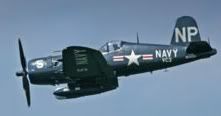
Stratford, Connecticut, U.S.A.[center]Image[/center]
[center]"The Angel of Okinawa"[/center]
Home of the Chance-Vought Corsair, F4U
The best fighter-bomber of World War II
User avatar
T-28A
Posts: 807
Joined: Fri Nov 01, 2002 6:00 pm
Location: Ukraine
Contact:

RE: Artillery effectiveness in woods/forest terrain

Post by T-28A »

ORIGINAL: RockinHarry
@ GoodGuy: Worth to add to german artillery techniques would be the "Abprallerschiessen" (edit: delayed fuzes, low trajectory fire angles, target area flat and harder gound), the bouncing shots. Wasn´t just applied by artillery, also tanks could use this technique effectively vs. infantry masses in the open. Off course there´s considerable random elements in there. Think russians did take the most of it and less so the western allied.
Note the invention of ricochet fire is dated back to 17th Century (usually accredited to de Vauban's genius, but I think I read about earlier implementations by Gustavus Magnus as well). For Soviets with their relatively wide employment of 76mm divisional guns with large muzzle velocity, inadequate against field fortifications (both due to flat trajectory and weak impact), the ricochet fire was the natural way to boost the effectiveness of large chunk of their artillery. In the same time, western Allies enjoyed mostly hi-trajectory pieces (25pdr, 105mm, 155mm) at the divisional level, and should have little interest in ricochet fire.
_________________________________________
"Russia has only two allies: Russian Army and Russian Navy".
---Emperor Alexander III
GoodGuy
Posts: 1506
Joined: Wed May 17, 2006 5:36 pm
Location: Cologne, Germany

RE: Artillery effectiveness in woods/forest terrain

Post by GoodGuy »

ORIGINAL: T-28A

... For Soviets with their relatively wide employment of 76mm divisional guns with large muzzle velocity, inadequate against field fortifications (both due to flat trajectory and weak impact)...

I'm not quite sure what you mean by saying "weak", here. If you're using impact-fuzed HE, which was the usual method for bombardments of trenches and field fortifications, a 76mm-HE shell will explode on impact on the fortification's surface, be it made of wood, concrete or other materials (say steel parts/plates from wrecks or scrap material to reinforce a bunker). A 76mm shell's blast radius will then, depending on the target material's thickness (as well as the density of soil layer and/or sandbag protection behind the wall), either remove parts of the fortification or just leave a big dent in there (concrete, earth wall or filling), if the shell does not contain a penetrator and a delay fuze. With such shells it's not about the kinetic energy, but about the amount of HE carried.

With the 76mm field guns, you must have the 76-mm divisional guns M 1936 (F-22), but rather the M1939 (F-22 USV)(Ф-22 УСВ)and especially the SiS-3 (ЗиС-3) in mind, which were issued since early 1942, gradually but continously replacing the other 2 models. So, for the East Front game, we're mainly talking about the SiS-3 and - even though the Germans had captured large amounts of M1939 guns (USV) - the USV, as the production figures of the F-22 (M1936) were pretty low.

What you describe as "weak impact" was experienced when the SiS-3 and the USV were used as an AT gun, and that was a result of their shell's weight/size of the chamber: Despite these 3 guns having muzzle velocities of 680 to 720 (M1939 with HE, afaik) meters/sec (2x sonic speed is a pretty high muzzle velocity for an artillery piece), the guns lacked some punch. But imho such lack of punch was irrelevant if used as (HE) inf gun. Since the 76mm guns had a range of 4200 meters, with a max. elevation of 37°, and since the usual engagement range was ~2000 meters (according to what I read at least), the piece still provided for an acceptable trajectory, sufficient for most close support roles, maybe except for elevated trench lines, imho. The pretty good Russian mortars were able to jump in with such targets, if needed, too.
... the ricochet fire was the natural way to boost the effectiveness of large chunk of their artillery.

That would mean that they would have had to use delay fuzes. Did they really a) use these fuzes other than in AA and naval gun rounds and b) did they have such rounds for 76mm guns at their disposal?
In the same time, western Allies enjoyed mostly hi-trajectory pieces (25pdr, 105mm, 155mm) at the divisional level, and should have little interest in ricochet fire.

If I am not mistaken, the usual Russian divisional artillery in 1939 (rifle division) used to involve a light arty regiment and a howitzer regiment that provided long-range and high-angle bombardments. The light regiment had 1 Bn with 3 batteries of 76mm guns (four guns each), 2 mixed Bns with 1 battery of 76mm and 2 batteries of 122 mm guns each, at one point. They must have reduced the number of 76mm guns ~1940 (minus almost a full Bn[?], they deemed such guns to be absolutely ineffective against the German heavy tanks with 2 turrets - which the Russians thought were produced in Germany at the time, so they even delayed testing and adoption of a gun like the SiS-3), but even added a 3rd mixed Bn in early 1942, which contained a battery of 76mm and a bty of 122mm. So, if this is correct, that would mean that they still had a good amount of high-angle gun support.

Whatsoever, even when or where - due to general reorganizations or due to operational decisions - a rifle division's Howitzer regiment had been taken away, when guard rifle divisions had "only" 3 mixed arty Bns at their disposal, when motorized divisions had 2 mixed Bns, or when Cavalry divisions had 1 light arty Rgt only (16 x 76mm + 8 x 122mm) in 1943, such divisions could still count on organic "hi-trajectory" support with their 122mm guns. For the crucial period in 1941 and early 1942, where arty pieces were rather scarce and put under High Command (employed on Army level?), rifle divisions would be supported by such assets, or by the Army's Arty Regiment or its guards mortar Bns (multiple rocket launchers).

Also, according to Glantz, with the Russians trying to refine the operational art of war, reshaping (until 1944) the standard defensive and offensive postures of formations in Winter 1942/1943, involved putting the howitzers (if available) in long range support (alternatively the 122mm), while the 76mm pieces served as close inf support in "infantry support artillery groups" around 2 km behind the first line, with one group on the left flank and one group on the right flank, while the long range arty was grouped and positioned behind the division's second echelon, around 5-7 km behind the first line, in a divisional defensive posture. In an offensive posture, the division's light regiment's arty pieces would be split into 3 artillery groups (left, center, right) and positioned on the same line as the divisional reserve (a Rifle Bn) 5-7 km behind the immediate mission area, while the long range arty would be combined and placed 7-9 km behind the immediate mission line/area. The 76mm were then moved forward into range, if close support was needed.

While it's true that rather flat trajectory artillery may be less effective on trenches and some types of fortifications or conceiled positions, the Germans still hated the Russian "Ratsch-Bumm" guns (dubbed according to the sound of firing the gun ["Ratsch"] and almost immediate subsequent impact ["Bumm"], due to the speed and trajectory of the projectile, making it impossible to take cover), plus the Russians DID have high-angle arty support in the form of 122mm guns and either an organic howitzer regiment or howitzer support from Corps/Army level. Even though the SiS-3 was pushed towards an AT role, its performance as field gun was way better, imho.
"Aw Nuts"
General Anthony McAuliffe
December 22nd, 1944
Bastogne

---
"I've always felt that the AA (Alied Assault engine) had the potential to be [....] big."
Tim Stone
8th of August, 2006
User avatar
T-28A
Posts: 807
Joined: Fri Nov 01, 2002 6:00 pm
Location: Ukraine
Contact:

RE: Artillery effectiveness in woods/forest terrain

Post by T-28A »

ORIGINAL: GoodGuy
I'm not quite sure what you mean by saying "weak", here. If you're using impact-fuzed HE, which was the usual method for bombardments of trenches and field fortifications, a 76mm-HE shell will explode on impact on the fortification's surface, be it made of wood, concrete or other materials (say steel parts/plates from wrecks or scrap material to reinforce a bunker). A 76mm shell's blast radius will then, depending on the target material's thickness (as well as the density of soil layer and/or sandbag protection behind the wall), either remove parts of the fortification or just leave a big dent in there (concrete, earth wall or filling), if the shell does not contain a penetrator and a delay fuze. With such shells it's not about the kinetic energy, but about the amount of HE carried.
With the 76mm field guns, you must have the 76-mm divisional guns M 1936 (F-22), but rather the M1939 (F-22 USV)(Ф-22 УСВ)and especially the SiS-3 (ЗиС-3) in mind, which were issued since early 1942, gradually but continously replacing the other 2 models. So, for the East Front game, we're mainly talking about the SiS-3 and the USV, even though the Germans had captured large amounts of M1939 guns (USV), the USV, as the production figures of the F-22 (M1936) were pretty low.
What you describe as "weak impact" was experienced when the SiS-3 and the USV were used as an AT gun, and that was a result of their shell's weight/size of the chamber: Despite these 3 guns having muzzle velocities of 680 to 720 (M1939 with HE, afaik) meters/sec (2x sonic speed is a pretty high muzzle velocity for an artillery piece), the guns lacked some punch. But imho such lack of punch was irrelevant if used as (HE) inf gun.

What really matters are few simple factors:
a) The trajectory of 76mm hi-velocity divisional guns was too flat to hit field fortifications (trenches, foxholes etc) directly. For the positions deployed at the backsides of a hill or behind the frontal covers, as Germans often did, there was no chance to hit them at all.
b) Even when there was a technical possibility to hit, direct hits against the covered objects were ineffective due to flat trajectories, small weight of the shells and small amount of HE.
c) Contrary to >105mm howitzer artillery, when scoring near hits, the 76mm HE were too weak to destroy or damage trench walls.
d) While there was little to no chance of damaging/destroying trenches themselves, the only natural way to make 76mm shells useful against them was to elevate the point of explosion, hitting enemy manpower, occupying a trench, from the above.
That would mean that they would have had to use delay fuzes. Did they really a) use these fuzes and b) did they have such 76mm rounds at their disposal?

Of course they did, how could they use ricochet fire otherwise? The ancient 3GT fuse was used for ricochet fire yet during WW1, the KTM-1 (mechanical delay) during the early WW2 and improved KTMZ-1 (with dedicated delay mechanism optimized especially for ricochet fire) during the late-WW2.
If I am not mistaken, the usual Russian divisional artillery in 1939 (rifle division) used to involve a light arty regiment and a howitzer regiment, where the light regiment had 1 Bn with 3 batteries of 76mm guns (for guns each), 2 mixed Bns with 1 battery of 76mm and 2 batteries of 122 mm guns each, at one point. They must have reduced the number of 76mm guns ~1940 (minus almost a full Bn?), but even added a 3rd mixed Bn in early 1942, which contained a battery of 76mm and a bty of 122mm.
Whatsoever, even when - due to general reorganizations or due to operational decisions - a rifle division's Howitzer regiment had been taken away, when guard rifle divisions had "only" 3 mixed arty Bns at their disposal, when motorized divisions had 2 mixed Bns, or when Cavalry divisions had 1 light arty Rgt only (16 x 76mm + 8 x 122mm) in 1943, such divisions could still count on organic "hi-trajectory" support with their 122mm guns. For the crucial period in 1941, where arty pieces were rather scarce and put under High Command (usually Army), divisions could count on support by these Army assets (Army's Arty Regiment group or reserve).

Again, let me put it simple. While German division had 36-48 105mm-150mm howitzers capable to deal with entrenched infantry, Soviet division had 8-12 122mm howitzers for the same task. How could Soviet division alter the situation and make it more favourable? The simplest and most effective solution - big guys from supporting artillery - was not always available even in 1944/45, not talking about 41/43. While the ricochet fire, if terrain allowed, did not depend of anything, hence its relatively wide use. I can even recall military schooling movie from 1942 or 1943, named "Artillery fire using ricochets".
Also, according to Glantz, with the Russians trying to refine the operational art of war, reshaping (until 1944) the standard defensive and offensive postures of formations in Winter 1942/1943, involved putting the 122mm in long range support, while the 76mm pieces served as close inf support (~2000 meters) in "infantry support artillery groups", with one group on the left flank and one group on the right flank in a defensive posture, while the long range arty was grouped and positioned behind the division's second echelon, around 5-7 km behind the first line. In an offensive posture, the 76mm pieces would be split into 3 artillery groups (left, center, right) and positioned on the same line as the divisional reserve (a Rifle Bn) 5-7 km behind the immediate mission area, while the long range arty would be combined and placed 7-9 km behind the immediate mission line/area.

All this very interesting stuff is a sheer theorizing and extrapolation of few selected cases to the whole variety. In practice, as a Soviet divisional commander, you often would be using your venerable horse-driven 76mm batteries for various sorts of tasks, with most of that fancy "thousands of roaring guns" thing either lagging behind or out of supply. In particular, for the future East Front title (winter 42-43), in reality there were Soviet artillery units at the frontline that made not a single shot at Germans for periods of 3-4 weeks long due to the absence of shells and/or fuel, as well as there were divisions operating with their 76mm artillery only (with howitzer batteries either lagging far behind the advancing infantry or having no precious 122mm shells to fire.
While it's true that rather flat trajectory artillery may be less effective on trenches and some types of fortifications or conceiled positions, the Germans still hated the Russian "Ratsch-Bumm" guns (dubbed according to the sound of firing the gun [Ratsch] and almost immediate subsequent impact ["Bumm"], due to the speed of the projectile, making it impossible to take cover), plus the Russians DID have high-angle arty suppor in the form of 122mm guns and either an organic howitzer regiment or howitzer support from Corps/Army level. Even though the SiS-3 was pushed towards an AT role, its performance as field gun was way better, imho.

Here you seem to refer to their use for direct fire, which is different tactics from the one discussed above, and has its own limits and lead to high losses among artillerymen as a "side effect".

Best regards
_________________________________________
"Russia has only two allies: Russian Army and Russian Navy".
---Emperor Alexander III
GoodGuy
Posts: 1506
Joined: Wed May 17, 2006 5:36 pm
Location: Cologne, Germany

RE: Artillery effectiveness in woods/forest terrain

Post by GoodGuy »

ORIGINAL: T-28A

The ancient 3GT fuse was used for ricochet fire yet during WW1, the KTM-1 (mechanical delay) during the early WW2 and improved KTMZ-1 (with dedicated delay mechanism optimized especially for ricochet fire) during the late-WW2.

Thanks for the info.
Again, let me put it simple. While German division had 36-48 105mm-150mm howitzers capable to deal with entrenched infantry, Soviet division had 8-12 122mm howitzers for the same task.

Yes, 36 x 105mm leFH, and 12 x 150mm sFH if a hvy arty Bn was present, IIRC.
I didn't claim they had more or the same organic support as the Germans, I just said they had SOME hvy support.
Plus, there were more 76mm than 122mm, where the former delivered more punch in the close support role than the Germans' 75mm leIG guns, imo, despite the 76mm downside - if compared to the leIG, the low max. elevation.
I can even recall military schooling movie from 1942 or 1943, named "Artillery fire using ricochets".

I see, interesting. Question is, was it really turned into practice? The Tiger I manual explained how to use ballistic fire on targets at ranges from 2400 to 2800 meters. That did not necessarily mean that it was widely used, though. (It was used in Russia though, especially on gun sites like arty or AT positions.)
All this very interesting stuff is a sheer theorizing and extrapolation of few selected cases to the whole variety. In practice, as a Soviet divisional commander, you often would be using your venerable horse-driven 76mm batteries for various sorts of tasks, with most of that fancy "thousands of roaring guns" thing either lagging behind or out of supply.
In particular, for the future East Front title (winter 42-43), in reality there were Soviet artillery units at the frontline that made not a single shot at Germans for periods of 3-4 weeks long due to the absence of shells and/or fuel, as well as there were divisions operating with their 76mm artillery only (with howitzer batteries either lagging far behind the advancing infantry or having no precious 122mm shells to fire.

Well, the Germans had the same problem during the BFTB, after the initial bombardments, vital ammo supplies were either used up or in transfer later on (and then partially stuck on horse-drawn vehicles that got trapped in the traffic jams, just like vital fuel supplies), rounds were rationed even down to 7 rounds a day in some sectors (eg. Hürtgen Forest, flanks of the bulge), in order to re-route supplies for the actual offensive. What I was talking about was the general Russian doctrine of 1942/43 in the East Front game. Particular Russian supply situations then have to be researched and considered by the scenario designer.
Here you seem to refer to their use for direct fire, which is different tactics from the one discussed above, and has its own limits and lead to high losses among artillerymen as a "side effect".

Well, if you consider a deployment and engagement at a range of ~2000 up to 4200 meters (with no direct LOS) to be direct fire support.... I'd still call it indirect fire support, despite the low arc and max. elevation of 37°, and despite the fact that many sources refer to them as "direct fire" infantry (field) guns.
Still, 37°, or even 30° angles provide curved flight paths, allowing for indirect fire, I'd say.

37 degrees:


Image
Attachments
cangle37_32695_md.gif
cangle37_32695_md.gif (2.21 KiB) Viewed 438 times
"Aw Nuts"
General Anthony McAuliffe
December 22nd, 1944
Bastogne

---
"I've always felt that the AA (Alied Assault engine) had the potential to be [....] big."
Tim Stone
8th of August, 2006
User avatar
T-28A
Posts: 807
Joined: Fri Nov 01, 2002 6:00 pm
Location: Ukraine
Contact:

RE: Artillery effectiveness in woods/forest terrain

Post by T-28A »

Yes, 36 x 105mm leFH, and 12 x 150mm sFH if a hvy arty Bn was present, IIRC.
I didn't claim they had more or the same organic support as the Germans, I just said they had SOME hvy support.
Surely they did. Now, since the discussion drifts and loosely relates to the starting point, don't you mind if I repeat the original theses: the Soviet artillery seemed to employ ricochet fire more often than Western allies. And my explanation to this: because this would increase the effectiveness of the large chunk of their divisional artillery, the chunk ill-suited to deal with field fortifications otherwise. Contrary to Western allies, whose divisional artillery already is optimized for that sort of task by design.
Plus, there were more 76mm than 122mm, where the former delivered more punch in the close support role than the Germans' 75mm leIG guns, imo, despite the 76mm downside - if compared to the leIG, the low max. elevation.
Soviet divisional 76mm guns and German leIGs had different tactical purposes, and the complete tactical analog of German leIG is Soviet regimental 76mm gun.
I see, interesting. Question is, was it really turned into practice?
The Tiger I manual explained how to use ballistic fire on targets at ranges from 2400 to 2800 meters. That did not necessarily mean that it was widely used, though. (It was used in Russia though, especially on gun sites like arty or AT positions.)
From these your sentences it could be concluded that Tigers were used for indirect fire, when there were proper conditions and when there was a need to, weren't they? Likewise it was used by US tankers in Vietnam, btw. And, fyi, I can't say for Western armies, but firing tank guns indirectly was the standard training exercise for post-war Soviet (and still is for modern Russian army) tankers. So, when needed, they are prepared to do this.
The logic is simple: it is nice to have all the various neat things like MRLS, air support, orbital lasers, etc, but when you haven't and yet have to fight off waves of enemies, you will use every possible weapon in every possible way, and better be prepared for this.
Well, the Germans had the same problem during the BFTB, after the initial bombardments, vital ammo supplies were either used up or in transfer later on (and then partially stuck on horse-drawn vehicles that got trapped in the traffic jams, just like vital fuel supplies), rounds were rationed even down to 7 rounds a day in some sectors (eg. Hürtgen Forest, flanks of the bulge), in order to re-route supplies for the actual offensive. What I was talking about was the general Russian doctrine of 1942/43 in the East Front game. Particular Russian supply situations then have to be researched and considered by the scenario designer.
That's for sure. I might remind here that the original point was neither to provide "Ricochet Fire" as the independent button in CmdOps GUI, nor the alteration of game mechanics to model that. It is rather to explain what reasons led Soviet divisional artillery to pay relatively much attention to this technique historically.
Well, if you consider a deployment and engagement at a range of ~2000 up to 4200 meters (with no direct LOS) to be direct fire support.... I'd still call it indirect fire support, despite the low arc and max. elevation of 37°, and despite the fact that many sources refer to them as "direct fire" infantry (field) guns.
Still, 37°, or even 30° angles provide curved flight paths, allowing for indirect fire, I'd say.
There are long-established terms that have clear meaning. Direct fire is exactly the fire with direct LOS disregards of the distance, exposing yourself to enemy's observation.
The elevation angles you propose to use - 30°..37° - mean the firing range of 12200..13000m. Divisional guns never were deployed at these ranges from the frontline because of:
- huge dispersion of shells at that range
- inability to maneuver their fire into the enemy's rears and flanks;
- automatic exclusion of 76mm guns from the AT system of the division (which was among top priorities);
- C2 difficulties.
Typical (indirect) firing ranges for 76mm guns are 4-6km, i.e. angle of fall 6.8° .. 14°. How much curved they are? [:)] At the mentioned ranges of 2000..4200m for ZiS-3 (using HE shells) the angle of fall was 1.8° .. 6.8°. Again, how much curved these are? At these fall angles the only thing you could do against field fortification is to suppress their forward-firing MG nests, bunkers or observation posts. Then, if you use direct fire, you could add here the destruction of the frontal-firing targets via their firing slits. Adding ricochet fire you could destroy enemy manpower in the trenches as well.
_________________________________________
"Russia has only two allies: Russian Army and Russian Navy".
---Emperor Alexander III
Lieste
Posts: 1823
Joined: Sat Nov 01, 2008 10:50 am

RE: Artillery effectiveness in woods/forest terrain

Post by Lieste »

The 105mm light howitzer has been quoted in a Canadian field manual as having a minimum range (of some number I forget) which equated to a 15 degree angle of fall against a target on level ground in the lowest charge.

The maximum range of the 76mm gun does of course allow for indirect fires well in excess of this angle of fall, but the problem with it is that the 'minimum range boundary' of effective indirect fire is much further out - something like 3-4x that for the 105mm howitzer.

This is a problem shared with all field guns - they lack flexibility at ranges above those at which direct fire is accurate, but below which their area fire is concentrated sufficiently. They do have good long range and reasonable accuracy in indirect fires, but ammunition usage is higher for all weapons at longer range, and the low shell weights do still hamper their effectiveness against deployed troops and field fortifications.

The same objections can be raised against FK40, Flak18/37, and other guns with unitary shells and high velocities. Some efforts were made to supply limited quantities of reduced range shells - either separate low propellant/velocity rounds, or spoilers for the shell nose. Both work, but I have some notes that suggest both reduced accuracy and consistency.

The leIG18 is a completely different weapon - with the best characteristics of a mortar and a light field gun, the "minimum range" is similar for both high and low angle fires at a little over 300m, the shell has zoned propellant, and a light anti-armour round became available later in the war... The weapon is also roughly the same size and weight as the 3.7cm PaK. The later leIG37 is less capable - although the range is higher, the carriage is the simpler PaK carriage and the ability to use high angle fire was lost.
User avatar
T-28A
Posts: 807
Joined: Fri Nov 01, 2002 6:00 pm
Location: Ukraine
Contact:

RE: Artillery effectiveness in woods/forest terrain

Post by T-28A »

ORIGINAL: Lieste
The leIG18 is a completely different weapon - with the best characteristics of a mortar and a light field gun, the "minimum range" is similar for both high and low angle fires at a little over 300m, the shell has zoned propellant, and a light anti-armour round became available later in the war... The weapon is also roughly the same size and weight as the 3.7cm PaK. The later leIG37 is less capable - although the range is higher, the carriage is the simpler PaK carriage and the ability to use high angle fire was lost.
I would add here that with leIG 18 the high allowed elevation angle and 5 possible charges allow you to freely balance between the charge / elevation angle / fall angle for the same range. For example, the same range of 2300 m with leIG 18 you could achieve with four possible combinations:
- charge #4, fall angle 43 deg
- charge #4, fall angle 57 deg
- charge #5, fall angle 20 deg
- charge #5, fall angle 77 deg
with appropriate differences with hor/vert dispersions, of course. So that you could choose the combination most fitting your tactical needs and terrain.
_________________________________________
"Russia has only two allies: Russian Army and Russian Navy".
---Emperor Alexander III
User avatar
PeteG662
Posts: 1263
Joined: Mon Jun 07, 2004 1:01 pm

RE: Artillery effectiveness in woods/forest terrain

Post by PeteG662 »

I was an artillery officer in the US Army for 26 years and you are all talking in the same vein here and really agreeing on most points. To clairfy some points though:
 
- The size of the shell is directly proportional to the lethal blast radius. The bigger the shell the more potential harm further from the impact point.
- Almost all artillery is capable of using muzzle burst like a shotgun to blast approaching infantry and even armor so the minimum range is really about 50 feet (enough time for the spin of the projectile to arm and detonate the fuze). Obviously for indirect fire the minimum range will be higher but with the advent of high angle fire comes additional fire computation issues (spin of the earth, weather effects, altitude differences between firing unit and target, etc.)
- The US Army/Navy/Marines used Time fuzes from early on in WWII (don't have exact dates but early battles showed mixed effectiveness. The Army and Navy developed Variable Time (VT or proximity fuzes) based on the mixed results from the time fuzes used early on. The effectiveness of anti-aircraft fire increased significantly because of this evolution as the war went on. VT fuzes would be useless in a wooded area, they are great for bursting over trenches and other open topped field works. For tree bursts, artillery would use point detonating fuzes, not time fuzes. This is what would create better tree burst effects.
- Air bursts in the forest and in open ground are different. While air bursts (tree bursts) in a forest can be more lethal there is also the offsetting effect of cover from the very same trees. Air bursts in open ground there is no such thing as cover unless you can dig real quick and pull some logs or something overhead for protection. Basically, tree bursts can be lethal if you are in the wrong spot but being behind a tree and the tree burst hitting a nearby tree you should be okay from the shrapnel and splinters. When we had short rounds, I would rather be in the treeline than out in the open due to the added protection.  
- The angle of fall (trajectory) also had an effect on the round lethal zone. Think of it as a cone. If you are on the exact spot of a point of impact for a round and it has a time fuze which means it will explode before hitting that spot, you would be more likely to survive the shrapnel effect if it exploded 9-20 meters up (standard height for an air burst) versus it hitting the ground right next to you since when the shell explodes it would spray more to the sides than directly in front of the shell. In the case of a ground burst, distance is your friend since it sprays almost 360 degrees from point of impact. Little folds in the ground help for a ground burst since the shrapnel will pass over you. Being in the open for an air burst there is no place to hide. Statistically speaking, it really doesn't matter if you are prone or upright with an air burst since it is luck whether you get hit or not but being prone for a ground burst is better.
- Artillery is called the King of Battle since it is the largest casualty producer on the battlefield. Infantry is the Queen of Battle.
 
Pete
 
 
User avatar
BletchleyGeek
Posts: 4460
Joined: Thu Nov 26, 2009 3:01 pm
Location: Living in the fair city of Melbourne, Australia

RE: Artillery effectiveness in woods/forest terrain

Post by BletchleyGeek »

Extremely interesting discussion guys :)
ORIGINAL: T-28A
All this very interesting stuff is a sheer theorizing and extrapolation of few selected cases to the whole variety. In practice, as a Soviet divisional commander, you often would be using your venerable horse-driven 76mm batteries for various sorts of tasks, with most of that fancy "thousands of roaring guns" thing either lagging behind or out of supply. In particular, for the future East Front title (winter 42-43), in reality there were Soviet artillery units at the frontline that made not a single shot at Germans for periods of 3-4 weeks long due to the absence of shells and/or fuel, as well as there were divisions operating with their 76mm artillery only (with howitzer batteries either lagging far behind the advancing infantry or having no precious 122mm shells to fire.

As far as I know there's no operational-level computer wargame that provides an accurate account of the situation T-28A describes and I highlighted. It will make things really interesting. These ammunition shortages also marred the infantry in Soviet Rifle formations - though this might only apply to 1941-early 1942 rather than late 1942 - early 1943.

I'm curious how these shortages are to be modeled within the Command Ops engine. Perhaps by having only Division and Army level supply bases, and severely limiting the availability of transport trucks with the capacity to ferry substantial amounts of higher caliber shells? From what I gather about the supply system, you can only gauge the volume of overall supply arriving on the scenario, not of particular types of supply. So I guess that Army level bases will be huge chokepoints for supply distribution, with piles of supply waiting to be delivered but the supply transport network not being able to process them.
Post Reply

Return to “Command Ops Series”