

The American Chestnut Foundation in southwestern Virginia has had the lead on this program for many years. At their big research farm, they've done the genetic crossbreading work for generations now. There are many other smaller groups assisting - there's even a plot of several acres on the campus of Berry College in Rome, about three miles from where I sit. I visited that site yesterday.
Alhtough few folks outside botanical circles would be familiar with all this, the demise of the chestnut and the efforts to breed a disease resistant hybrid has a huge, huge following among tree and nature buffs. There are many people working all over the country in various capacities. I think they are pretty close to being able to generate disease-resistant hybirds on a mass scale for planting.
The 7/8ths-American hybrids will be nearly as good as purebred. If it's able to naturally and efficiently propogate, it should eventually reclaim it's position in the ecosystems of the east, though it might be 150 years before they reach their mature size (I have a photo of loggers standing by an American chestnut that looks as massive as a sequoia). But the question is whether the breeding of 7/8ths with 7/8ths (and successive generations being "more diluted") will yeild the disease-resistant qualities. So I think there is still some doubt about the ability to produce a tree that can resume it's historic place in the ecosystem.
I think there are a few commercial groves of pure American chestnut in California. These have been protected from the blight by the vast Great Plains.
The Good The Bad & The Indifferent
Moderators: wdolson, MOD_War-in-the-Pacific-Admirals-Edition
-
Canoerebel
- Posts: 21099
- Joined: Fri Dec 13, 2002 11:21 pm
- Location: Northwestern Georgia, USA
- Contact:
RE: The Good The Bad & The Indifferent
"Rats set fire to Mr. Cooper’s store in Fort Valley. No damage done." Columbus (Ga) Enquirer-Sun, October 2, 1880.

RE: The Good The Bad & The Indifferent
The whole chestnut thing is very sad, IMHO. How weird is it to have an entire species functionally wiped out? We currently fear the same thing with Oak Wilt for the oaks, which are about the only non-scrub tree that grows in much of Texas. I'm very surprised that a small percentage of Chestnut trees weren't naturally immune. Often at least 10% of a species have a natural resistance (even 10% of humans infected with Ebola live), and then this bit of the population can re-invigorate the species.

RE: The Good The Bad & The Indifferent
Dan, Please take this as student asking a question. The way I understand the US Navy's doctrine regarding the Kido Butai or its elements, involved using intelligence from intercepts, gathering resources, ie. ships, planes, and screens, and confronting it whenever possible. While the ambush at sea was preferable, the carriers first priority was to sink the enemy's regardless of the odds. Midway and Coral Sea were huge risks with the best estimates pitting the USN at parity in number of ships. While I have no problem with pickets (as allied anyway)I believe the only factor would be how fast the USN carriers would close on the contact. I think they would have stayed in "wait", or depending on the admiral how fast they would react and close. In brief summation, I think the game reflects it well. You can play a game of chicken (no offense chicken boy[8|]) but you can't select who you want to fight and whom you don't. You just can't operate in an active combat theater and chose targets of lesser strength than your own and ignore the primary targets of the US Navy and the flattops themselves. This being the case your only option is to order your flag officer to high tail it or risk ambush yourself. I hope this does not set off a &^%$ storm. I am no authority on naval warfare only a student of history learning on the fly.
ps I only operate (and rarely, never made it to late war) picket ships of destroyer and frigate classes with endurances logical to co operate with the TFs involved. NO xAKLs etc. This may be different for Japan as we know they operated 'Junks" hundreds of miles off the home islands.
pss My counter to the situation: avoid Halsey as a flag officer, react 1. I'd really like to know how some of the AE vets set their CVTFs in similar situations.
ps I only operate (and rarely, never made it to late war) picket ships of destroyer and frigate classes with endurances logical to co operate with the TFs involved. NO xAKLs etc. This may be different for Japan as we know they operated 'Junks" hundreds of miles off the home islands.
pss My counter to the situation: avoid Halsey as a flag officer, react 1. I'd really like to know how some of the AE vets set their CVTFs in similar situations.
RE: The Good The Bad & The Indifferent
It never ceases to amaze me the things I learn here. This Chestnut tree story is fascinating, I'm going to have to do some background reading.
RE: The Good The Bad & The Indifferent
Here in Maryland in a little town, railhead in the civil war, Ellicott City has many older buildings on main street. Look carefully inside them, they have open ceilings in most, and you will see American chestnut. Un warped, straight as the day they were installed. It really is amazing how strong and true it is.
-
Chickenboy

- Posts: 24648
- Joined: Fri Jun 28, 2002 11:30 pm
- Location: San Antonio, TX
RE: The Good The Bad & The Indifferent
ORIGINAL: Cribtop
The whole chestnut thing is very sad, IMHO. How weird is it to have an entire species functionally wiped out? We currently fear the same thing with Oak Wilt for the oaks, which are about the only non-scrub tree that grows in much of Texas. I'm very surprised that a small percentage of Chestnut trees weren't naturally immune. Often at least 10% of a species have a natural resistance (even 10% of humans infected with Ebola live), and then this bit of the population can re-invigorate the species.
I don't know a thing about plant immune function / disease resistance. But we see what you're describing quite often over on the animal side of the equation. You just hope that there's enough of a stable breeding population that survivors can repopulate the species after resistance develops.
The whole "indigenous plant vs. imported" argument is strong on the left coast right now too. Witness the various points of view regarding the coastal eucalyptus trees around San Francisco and the bay area versus those clamoring for a reduction in their numbers and restoration of natural coastal vegetation.
I visited Mt. Saint Helens in the mid 1990s and toured the summit...erm...the 'new' summit. Even in the 1980s, the Forestry Service was unable to decide whether to let nature take its course, leaving a moonscape for much of the summit, or to assist with replanting. After some deliberation, they sagely elected to do a little bit of both. One one side of the main summit road, they left if fallow. The other half they selectively restored. 10 years after this approach, the difference was stark. You can still see a significant difference from satellite images of the summit.
Mother nature is brutally efficient. I wouldn't want it any other way.

RE: The Good The Bad & The Indifferent
Zuluhour, in the months just after the PH attack, the USN carefully kept its carriers away from anywhere KB was operating. The Philippine campaign showed that Japanese planes and pilots were much more effective than pre-war propaganda supposed. The USN knew its pilots needed more training and experience, and was already working on replacement aircraft for the Devastator.
After the Marcus raid [Feb 42?] and some AAA upgrades the USN felt it could take on part of KB on equal terms. Intel on the forces coming to invade Port Moresby was for 2 CVs and a CVL. If the Japanese took PM, communications with Australia would be much more difficult and the Aus. government would likely pull all of its troops back from the Middle East and India, leaving those theatres in jeopardy. Since the target was critical and the opposition about equal, the USN committed to oppose the Japanese in the Coral Sea. They learned a lot from the battle that both gave them pause [vulnerability of carriers to fire, need for more fighters] and gave them confidence [effectiveness of US DBs and the Wildcats].
After Coral Sea, the US already knew another big operation was in the wind, and once it was identified as Midway, they decided they had to oppose it. If the Japanese took Midway, they could raid toward the US West coast without being detected until the last minute. Communications with PH would be threatened.
Intel showed that 4 Japanese CVs were assigned to the Midway op, and the US committed the two undamaged carriers it had but rushed Yorktown through patch-up repairs instead of the full repair she needed, so they could have a third carrier available. There was much trepidation about doing this - if the Japanese detected and attacked the US CVs first, the USN could be rendered impotent in the Pacific for a long time. Another Japanese raid on PH could destroy the strategic targets - the repair yards and fuel tank farms. Thankfully, it worked out well for the US.
Even after Midway, the US had to be careful with the CVs, and only used them for critical operations [no raiding].
Point is, the USN would not likely have risked the CVs in 1942 against the full KB of six CVs. There was simply too much at stake strategically to not have any CVs in the Pacific. At one point they even borrowed the RN CV Formidable while Enterprise and Saratoga were repairing.
After the Marcus raid [Feb 42?] and some AAA upgrades the USN felt it could take on part of KB on equal terms. Intel on the forces coming to invade Port Moresby was for 2 CVs and a CVL. If the Japanese took PM, communications with Australia would be much more difficult and the Aus. government would likely pull all of its troops back from the Middle East and India, leaving those theatres in jeopardy. Since the target was critical and the opposition about equal, the USN committed to oppose the Japanese in the Coral Sea. They learned a lot from the battle that both gave them pause [vulnerability of carriers to fire, need for more fighters] and gave them confidence [effectiveness of US DBs and the Wildcats].
After Coral Sea, the US already knew another big operation was in the wind, and once it was identified as Midway, they decided they had to oppose it. If the Japanese took Midway, they could raid toward the US West coast without being detected until the last minute. Communications with PH would be threatened.
Intel showed that 4 Japanese CVs were assigned to the Midway op, and the US committed the two undamaged carriers it had but rushed Yorktown through patch-up repairs instead of the full repair she needed, so they could have a third carrier available. There was much trepidation about doing this - if the Japanese detected and attacked the US CVs first, the USN could be rendered impotent in the Pacific for a long time. Another Japanese raid on PH could destroy the strategic targets - the repair yards and fuel tank farms. Thankfully, it worked out well for the US.
Even after Midway, the US had to be careful with the CVs, and only used them for critical operations [no raiding].
Point is, the USN would not likely have risked the CVs in 1942 against the full KB of six CVs. There was simply too much at stake strategically to not have any CVs in the Pacific. At one point they even borrowed the RN CV Formidable while Enterprise and Saratoga were repairing.
No matter how bad a situation is, you can always make it worse. - Chris Hadfield : An Astronaut's Guide To Life On Earth
RE: The Good The Bad & The Indifferent
I want to respond BB but will not use Dan's forum for it. I just took a quick reread from Nimitz and still feel justified in my acceptance of the game engine in regards to the twenty four hour time frame. I agree with Dan that the inability to "intervene" on the fly is hard to swallow at times. It's just that I think the Devs incorporated some interesting possibilities easily explained by OP-20-G*, weather, and leadership combined with USN doctrine at the time. Granted Admiral King and Nimitz along with secretary Knox were in the process of creating a new doctrine,the AI does create some completely unexpected results.
* Hypo
* Hypo
-
Canoerebel
- Posts: 21099
- Joined: Fri Dec 13, 2002 11:21 pm
- Location: Northwestern Georgia, USA
- Contact:
RE: The Good The Bad & The Indifferent
Chestnuts: The interior of the "old section" of the UGA School of Forest Resources is paneled in gorgeous "wormy chestnut." This came from trees that had died in the '30s or '40s that had been laying on the forest floor for decades, but were still sound. The longs were salvaged in the '70s and sawed into lumber. It was the tannin in the wood that made it so resistant to decay. The wood of American chestnut is gorgeous - hard and a rich reddish brown in color.
The history of natural disasters in the USA is pretty interesting. Just one aspect is figuring out what's real and what isn't. We have "the real things" like chestnut blight, Dutch elm disease, and the hemlock wooly adelgid. Those have truly wreaked havoc on our natural environmenbt. But there have also been interesting cases of "crying wolf" (though with good intentions) like lethal yellowing (was supposed to wipe out coconut palms in Florida in the early '70s) and dogwood anthracnose (those concerns have faded away after peaking in the '90s). Another interesting case study is acid rain. That got amazing attention in the '80s and '90s (the equivalent of AIDS in notoriety). But when's the last time you read anything about acid rain?
Picket Ships: As for USA naval doctrine, BBFanboy is articulating something I've said before. The US Navy almost always knew where the KB was - or at a minimum where it wasn't. Very seldom did the USN stick its nose out without a decent idea of the opposition faced.
But the biggest difference is the "24-hour no turn around" feature of AE. Had the USN faced something like that, strong and creative action would have been taken to protect critical assets. That's exactly what I've done. I've taken low-value assets and employed them in a sensible way to give the minimum needed protection to employ my carriers. I used to use mainly cheap xAK and xAKL. Today, I use at least 50% DD and AM and PC, but there are operations where I don't have enough of these ships.
Two other factors are key: (1) the Japanese employment of a full KB (here John may be operating 15 or more carriers in close proximity) and (2) the Allies can go weeks or months without the slightest idea where the KB is or isn't.
I understand people coming up with their own methods of addressing this issue - there are quite a variety. But what I don't understand is the condemnation of the method I'm using.
The history of natural disasters in the USA is pretty interesting. Just one aspect is figuring out what's real and what isn't. We have "the real things" like chestnut blight, Dutch elm disease, and the hemlock wooly adelgid. Those have truly wreaked havoc on our natural environmenbt. But there have also been interesting cases of "crying wolf" (though with good intentions) like lethal yellowing (was supposed to wipe out coconut palms in Florida in the early '70s) and dogwood anthracnose (those concerns have faded away after peaking in the '90s). Another interesting case study is acid rain. That got amazing attention in the '80s and '90s (the equivalent of AIDS in notoriety). But when's the last time you read anything about acid rain?
Picket Ships: As for USA naval doctrine, BBFanboy is articulating something I've said before. The US Navy almost always knew where the KB was - or at a minimum where it wasn't. Very seldom did the USN stick its nose out without a decent idea of the opposition faced.
But the biggest difference is the "24-hour no turn around" feature of AE. Had the USN faced something like that, strong and creative action would have been taken to protect critical assets. That's exactly what I've done. I've taken low-value assets and employed them in a sensible way to give the minimum needed protection to employ my carriers. I used to use mainly cheap xAK and xAKL. Today, I use at least 50% DD and AM and PC, but there are operations where I don't have enough of these ships.
Two other factors are key: (1) the Japanese employment of a full KB (here John may be operating 15 or more carriers in close proximity) and (2) the Allies can go weeks or months without the slightest idea where the KB is or isn't.
I understand people coming up with their own methods of addressing this issue - there are quite a variety. But what I don't understand is the condemnation of the method I'm using.
"Rats set fire to Mr. Cooper’s store in Fort Valley. No damage done." Columbus (Ga) Enquirer-Sun, October 2, 1880.
RE: The Good The Bad & The Indifferent
No condemnation here Dan. Not in the least. I play as a "romantic" to a degree and can't send merchants out as pickets as the Allies. I also can't find a lot of information on the subject for 1942. I have no problem injecting any vessels you like into screens etc. within reason. I know you don't have thirty merchants out as pickets, I'm guessing half a dozen functioning like AMCs or more likely non-combatant camouflaged merchants. I can see this in the DEI, harder west of the Gilberts Marshalls though. My argument is for the twenty four hours under AI command after you issue orders. The lack of "back off" when sighting carriers button would be some kind of fix but what if the scouting aircraft only picked up two escort carriers? Would that be enough to warrant a "come about" order? I have a lot I'd like to relate on the topic as it is a very discussable area for a future "rebuild" of A&E. My solution for a future version would leave you with some additional features for warships. I think you should be able to establish a rally point with criteria to effect its actuation as well as establishing "way points" (a buoy would be a nice touch) which you could rout convoys on relieving us of the burden of constant merchant and transport navigation ie. establish sea lanes. This could help you abort a landing or an unfavorable carrier confrontation.
-
Canoerebel
- Posts: 21099
- Joined: Fri Dec 13, 2002 11:21 pm
- Location: Northwestern Georgia, USA
- Contact:
RE: The Good The Bad & The Indifferent
Zulu, I knew you weren't condemning. My comments weren't meant to include you, though I should have made that clear.
You guys prompted me to read up on Chestnut Blight. The information I presented is from memory (some of it going back 33 years). I was pretty accurate. Two things: the disease resistant variety is the Chinese (not Spanish, as I asserted) and the disease was introduced not by European lumber but from Asian nursery stock (I'm pretty sure we were taught that it was European lumber, but that seems to have since changed).
You guys prompted me to read up on Chestnut Blight. The information I presented is from memory (some of it going back 33 years). I was pretty accurate. Two things: the disease resistant variety is the Chinese (not Spanish, as I asserted) and the disease was introduced not by European lumber but from Asian nursery stock (I'm pretty sure we were taught that it was European lumber, but that seems to have since changed).
"Rats set fire to Mr. Cooper’s store in Fort Valley. No damage done." Columbus (Ga) Enquirer-Sun, October 2, 1880.
-
JohnDillworth

- Posts: 3104
- Joined: Thu Mar 19, 2009 5:22 pm
RE: The Good The Bad & The Indifferent
I was looking to get some hybrids to replace some of the trees I lost last year to Sandy. They are available, but hey are pricey as you have to make a pretty large donation to the American Chestnut Foundation. However, there are 5 of them planted on Governors island just south of Manhattan. I visited them last year and will be returning in just a few weeks. They were doing well but they have some work to do as they are pretty small. It's an experiment. I will post on their progress next month. The story here: http://home.nps.gov/applications/digest/headline.cfm?type=Announcements&id=7188The 7/8ths-American hybrids will be nearly as good as purebred. If it's able to naturally and efficiently propogate, it should eventually reclaim it's position in the ecosystems of the east, though it might be 150 years before they reach their mature size (I have a photo of loggers standing by an American chestnut that looks as massive as a sequoia). But the question is whether the breeding of 7/8ths with 7/8ths (and successive generations being "more diluted") will yeild the disease-resistant qualities. So I think there is still some doubt about the ability to produce a tree that can resume it's historic place in the ecosystem.
Today I come bearing an olive branch in one hand, and the freedom fighter's gun in the other. Do not let the olive branch fall from my hand. I repeat, do not let the olive branch fall from my hand. - Yasser Arafat Speech to UN General Assembly

RE: The Good The Bad & The Indifferent
ORIGINAL: Canoerebel
Chestnuts: The interior of the "old section" of the UGA School of Forest Resources is paneled in gorgeous "wormy chestnut." This came from trees that had died in the '30s or '40s that had been laying on the forest floor for decades, but were still sound. The longs were salvaged in the '70s and sawed into lumber. It was the tannin in the wood that made it so resistant to decay. The wood of American chestnut is gorgeous - hard and a rich reddish brown in color.
The history of natural disasters in the USA is pretty interesting. Just one aspect is figuring out what's real and what isn't. We have "the real things" like chestnut blight, Dutch elm disease, and the hemlock wooly adelgid. Those have truly wreaked havoc on our natural environmenbt. But there have also been interesting cases of "crying wolf" (though with good intentions) like lethal yellowing (was supposed to wipe out coconut palms in Florida in the early '70s) and dogwood anthracnose (those concerns have faded away after peaking in the '90s). Another interesting case study is acid rain. That got amazing attention in the '80s and '90s (the equivalent of AIDS in notoriety). But when's the last time you read anything about acid rain?
Picket Ships: As for USA naval doctrine, BBFanboy is articulating something I've said before. The US Navy almost always knew where the KB was - or at a minimum where it wasn't. Very seldom did the USN stick its nose out without a decent idea of the opposition faced.
But the biggest difference is the "24-hour no turn around" feature of AE. Had the USN faced something like that, strong and creative action would have been taken to protect critical assets. That's exactly what I've done. I've taken low-value assets and employed them in a sensible way to give the minimum needed protection to employ my carriers. I used to use mainly cheap xAK and xAKL. Today, I use at least 50% DD and AM and PC, but there are operations where I don't have enough of these ships.
Two other factors are key: (1) the Japanese employment of a full KB (here John may be operating 15 or more carriers in close proximity) and (2) the Allies can go weeks or months without the slightest idea where the KB is or isn't.
I understand people coming up with their own methods of addressing this issue - there are quite a variety. But what I don't understand is the condemnation of the method I'm using.
Dogwood Antracnose is a serious problem in Maryland. My yard has lost all (about a dozen) dogwoods over the past two decades. The two survivors have the disease and do not flower one has survived and grown from a seedling to about seven feet but looks pretty bad this year. These trees are deep in the shade and those that are in the sun have a better chance. In Western Maryland it is estimated that 90% of the wild dogwoods have disappeared in the past 20 years. The primary edge tree in the mountains and around here is now the redbud-a lovely tree but not quite a dogwood.
I sell real estate and it is nice to see the Chestnut trim in the older homes in this area. My home, built in 1938, has lovely Chestnut trim throughout the interior. Six months ago I was showing a home in a rural location and stumbled on a large state owned field with hundreds of chestnut saplings growing. So the hybrids are reaching a testing phase as I assume once they are big enough the stage will plant them somewhere.
22 years ago, I planted a disease resistant elm tree (American Liberty Hybrid) in my back yard. It is now about 40 feet tall and looks to be a keeper that will shade my home for generations. I understand that there are better purer hybrids available now but I love my tree..
I am the Holy Roman Emperor and am above grammar.
Sigismund of Luxemburg
Sigismund of Luxemburg
RE: The Good The Bad & The Indifferent
Will the blight end the chestnut The farmers rather guess not, It keeps smoldering at the roots And sending up new shoots Till another parasite Shall come to end the blight.
Robert Frost
Robert Frost
I am the Holy Roman Emperor and am above grammar.
Sigismund of Luxemburg
Sigismund of Luxemburg
-
Chickenboy
- Posts: 24648
- Joined: Fri Jun 28, 2002 11:30 pm
- Location: San Antonio, TX
RE: The Good The Bad & The Indifferent
ORIGINAL: crsutton
I love my tree..
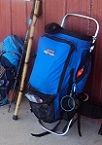
I always had you pegged for a tree hugger, crsutton. First the Birkenstocks and now this...[;)]
RE: The Good The Bad & The Indifferent
Guys, need a little help. I am trying to conduct a air drop on a couple of unoccupied IJA bases within normal range of the transporting aircraft. What more do the paratroopers have to be in? Combat? Strategic? I've tried both modes, but must be doing something wrong as the paras just will not allow themselves to be picked up and dropped on their targets.

RE: The Good The Bad & The Indifferent
Combat mode. If those units are not coming up as selections, that sounds like they are restricted and need an HQ change.
Intel Monkey: https://sites.google.com/view/staffmonkeys/home
RE: The Good The Bad & The Indifferent
They should be in combat mode but I did drop an IJA para unit in rest/training mode having forgotten to switch it (beta 1123m). So I expect most modes work.
Does it allow you to plan the drop which then doesn't go ahead or does the interface prevent planning it?
If the latter, there is usually a helpful tool-tip that explains why.
Does it allow you to plan the drop which then doesn't go ahead or does the interface prevent planning it?
If the latter, there is usually a helpful tool-tip that explains why.
-
Canoerebel
- Posts: 21099
- Joined: Fri Dec 13, 2002 11:21 pm
- Location: Northwestern Georgia, USA
- Contact:
RE: The Good The Bad & The Indifferent
12/4/42 - D+24, Operation Des Wallace
Seems like it took about seven light years for John and I to get this turn done. Perhaps we're back in the saddle now. I hope so.
Japanese Warpower: Six BBs and more CAs bombard Siberoet, which falls to a shock attack at the end of the day. That's not a big deal, except it frees up John to shift attention to bases further foward that do matter. Nias and Sibolga do matter.
Game of Chicken: The KB is three hexes west of Padang. The Allied carriers are just 23 hexes north, nine hexes out of Sabang. John has loaded up Victoria Point's airfield, which I thought had been shut down (recon shows 61% damage and I think supply has to be an issue for him). Port Blair airfield was hit, but it also is supporting some major Japanese air power. So, does John now sprint foward with KB to give battle? I think there's a 50/50 chance. Should I send my merchantmen, which are currently eight hexes from Sabang, towards that port? Should I deploy my carriers to provide cover? Or should I withdraw? I'm leaning towards a more aggressive move, but I've first gotta mull things over and develop a better feel for what John's up to.
Sumatra: Overall it was a good turn for the Allies. Few enemy bombing raids meant basebuilding is going on at several points, plus the ground troops, which have been tuckered out by the campaign, rested. Grunion claimed an xAK at Tandjoen. Five S-Boats refueled at Medan and will patrol the narrows between Tandjoen and Singers.
Elsewhere: Some things are going on, but I'll get to those later, when I feel like it and if I feel like it and if I don't get distracted.
Seems like it took about seven light years for John and I to get this turn done. Perhaps we're back in the saddle now. I hope so.
Japanese Warpower: Six BBs and more CAs bombard Siberoet, which falls to a shock attack at the end of the day. That's not a big deal, except it frees up John to shift attention to bases further foward that do matter. Nias and Sibolga do matter.
Game of Chicken: The KB is three hexes west of Padang. The Allied carriers are just 23 hexes north, nine hexes out of Sabang. John has loaded up Victoria Point's airfield, which I thought had been shut down (recon shows 61% damage and I think supply has to be an issue for him). Port Blair airfield was hit, but it also is supporting some major Japanese air power. So, does John now sprint foward with KB to give battle? I think there's a 50/50 chance. Should I send my merchantmen, which are currently eight hexes from Sabang, towards that port? Should I deploy my carriers to provide cover? Or should I withdraw? I'm leaning towards a more aggressive move, but I've first gotta mull things over and develop a better feel for what John's up to.
Sumatra: Overall it was a good turn for the Allies. Few enemy bombing raids meant basebuilding is going on at several points, plus the ground troops, which have been tuckered out by the campaign, rested. Grunion claimed an xAK at Tandjoen. Five S-Boats refueled at Medan and will patrol the narrows between Tandjoen and Singers.
Elsewhere: Some things are going on, but I'll get to those later, when I feel like it and if I feel like it and if I don't get distracted.
"Rats set fire to Mr. Cooper’s store in Fort Valley. No damage done." Columbus (Ga) Enquirer-Sun, October 2, 1880.

RE: The Good The Bad & The Indifferent
Glad its back on!