


As the case in pretty much every debateable point in history you'll find there is never one easy answer and usually you'll also find many contributing factors that will all add up to why something happened the way it did.
Books, many books have been written to answer this question. SSO really it would be very difficult to answer it in full in a forum post. However you'll find fear of some sort or another is why conflicts and Wars happen oh and splash in money, pride, status and egos.
Who caused WW1 - revisited
Moderator: maddog986

RE: Who caused WW1 - revisited
ORIGINAL: warspite1
warspite1ORIGINAL: Joe D.
ORIGINAL: warspite1
warspite1
No. It triggered a crisis in the northern Balkans between Austria-Hungary and Serbia – and not for the first time....
It triggered the last crisis between Austria-Hungary and Serbia.
One month after the assassination of its archduke, Austria-Hungary declared war on Serbia, sucking in all other nations that had alliances with either nation, thereby starting the first world war.
Removing most of my first paragraph maybe helps make the point you want to make....
My point was only that there were no further diplomatic crisis after the assassination of AH's archduke and its subsequent declaration of war against Serbia after the later refused to accept every ultimatum issued by the offended empire.
And surely anyone can scroll up and read the rest of your points in your original post.
What started World War I? An assassination that lit a tinderbox of alliances based on past grievances and fears.
Why does it have to be more complicated?
Stratford, Connecticut, U.S.A.[center]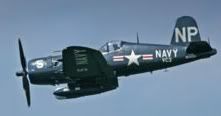 [/center]
[center]"The Angel of Okinawa"[/center]
Home of the Chance-Vought Corsair, F4U
The best fighter-bomber of World War II
[/center][center]"The Angel of Okinawa"[/center]
Home of the Chance-Vought Corsair, F4U
The best fighter-bomber of World War II
RE: Who caused WW1 - revisited
ORIGINAL: wodin
As the case in pretty much every debateable point in history you'll find there is never one easy answer and usually you'll also find many contributing factors that will all add up to why something happened the way it did....
There was an entire continent of contributing factors that were waiting to be set off by just one rogue act of a single state.
Stratford, Connecticut, U.S.A.[center][/center]
[center]"The Angel of Okinawa"[/center]
Home of the Chance-Vought Corsair, F4U
The best fighter-bomber of World War II
[/center][center]"The Angel of Okinawa"[/center]
Home of the Chance-Vought Corsair, F4U
The best fighter-bomber of World War II
RE: Who caused WW1 - revisited
YES.ORIGINAL: Orm
Very well said. But at the same time isn't it simplistic to put so much blame on Germany for that "blank cheque"?

RE: Who caused WW1 - revisited
warspite1ORIGINAL: Joe D.
ORIGINAL: warspite1
warspite1ORIGINAL: Joe D.
It triggered the last crisis between Austria-Hungary and Serbia.
One month after the assassination of its archduke, Austria-Hungary declared war on Serbia, sucking in all other nations that had alliances with either nation, thereby starting the first world war.
Removing most of my first paragraph maybe helps make the point you want to make....
My point was only that there were no further diplomatic crisis after the assassination of AH's archduke and its subsequent declaration of war against Serbia after the later refused to accept every ultimatum issued by the offended empire.
And surely anyone can scroll up and read the rest of your points in your original post.
What started World War I? An assassination that lit a tinderbox of alliances based on past grievances and fears.
Why does it have to be more complicated?
Because that's the situation that presented the great powers after the shooting - a complicated one. One where nothing was pre-ordained, nothing was set in stone in terms of unbreakable treaty obligations and clauses. Leaders, politicians, diplomats, the military - they all had to make decisions. They had options.
Now Maitland, now's your time!
Duke of Wellington to 1st Guards Brigade - Waterloo 18 June 1815
Duke of Wellington to 1st Guards Brigade - Waterloo 18 June 1815
RE: Who caused WW1 - revisited
ORIGINAL: warspite1
warspite1ORIGINAL: Joe D.
ORIGINAL: warspite1
warspite1
Removing most of my first paragraph maybe helps make the point you want to make....
My point was only that there were no further diplomatic crisis after the assassination of AH's archduke and its subsequent declaration of war against Serbia after the later refused to accept every ultimatum issued by the offended empire.
And surely anyone can scroll up and read the rest of your points in your original post.
What started World War I? An assassination that lit a tinderbox of alliances based on past grievances and fears.
Why does it have to be more complicated?
Because that's the situation that presented the great powers after the shooting - a complicated one. One where nothing was pre-ordained, nothing was set in stone in terms of unbreakable treaty obligations and clauses. Leaders, politicians, diplomats, the military - they all had to make decisions. They had options.
Options....
"Despite being part of the Triple Entente, Britain was not committed to going to war in 1914. The Foreign Secretary, Sir Edward Grey, spent much of the summer of 1914 furiously trying to reassure Russia and Germany and prevent a war happening. Even when German troops invaded France and Belgium as part of the Schlieffen Plan, Britain did not have to go to war.
"Germany hoped Britain would stay out of the war altogether. However, the Germans knew that Britain had promised to defend Belgium under the Treaty of London of 1839. The Germans wanted the British government to ignore the Treaty of London and let the German army pass through Belgium. The British government made much of their duty to protect Belgium. Belgium's ports were close to the British coast and German control of Belgium would have been seen as a serious threat to Britain. In the end, Britain refused to ignore the events of 4 August 1914, when Germany attacked France through Belgium. Within hours, Britain declared war on Germany. The Kaiser said how foolish he thought the British were. He said that Britain had gone to war for the sake of a 'scrap of paper.'"
http://www.nationalarchives.gov.uk/educ ... undcs1.htm
Is the word of a sovereign not worth the paper it's written on?
Stratford, Connecticut, U.S.A.[center][/center]
[center]"The Angel of Okinawa"[/center]
Home of the Chance-Vought Corsair, F4U
The best fighter-bomber of World War II
[/center][center]"The Angel of Okinawa"[/center]
Home of the Chance-Vought Corsair, F4U
The best fighter-bomber of World War II
RE: Who caused WW1 - revisited
warspite1ORIGINAL: Joe D.
Options....
"Despite being part of the Triple Entente, Britain was not committed to going to war in 1914. The Foreign Secretary, Sir Edward Grey, spent much of the summer of 1914 furiously trying to reassure Russia and Germany and prevent a war happening. Even when German troops invaded France and Belgium as part of the Schlieffen Plan, Britain did not have to go to war.
"Germany hoped Britain would stay out of the war altogether. However, the Germans knew that Britain had promised to defend Belgium under the Treaty of London of 1839. The Germans wanted the British government to ignore the Treaty of London and let the German army pass through Belgium. The British government made much of their duty to protect Belgium. Belgium's ports were close to the British coast and German control of Belgium would have been seen as a serious threat to Britain. In the end, Britain refused to ignore the events of 4 August 1914, when Germany attacked France through Belgium. Within hours, Britain declared war on Germany. The Kaiser said how foolish he thought the British were. He said that Britain had gone to war for the sake of a 'scrap of paper.'"
http://www.nationalarchives.gov.uk/educ ... undcs1.htm
Is the word of a sovereign not worth the paper it's written on?
[Earlier posts removed because the chain was becoming too long]
Yes options…
I note you have taken one instance – at the end of the process. Naturally the further down the process one is, the less room for manoeuvre.
Why not start at the beginning? Day 1 – the Archduke and his wife are assassinated. At this point Austria-Hungary can do a number of things. A declaration of war on Serbia is not the only solution – and in AH’s parlous state, it is not a sensible – or practicable - thing to do either. Forget Russia, with the AH in the state it’s in, beating Serbia alone is going to be difficult, and costly. Options, Choices.
At this time diplomatic and economic measures are possible. The Austrian emperor appealing to the Czar – one monarch to another - over the dangers of Regicide in an ever more unstable world may even have seen some sort of co-operation and toning down of Russia’s support. Options, Choices.
Despite what you say, at this stage there is no requirement for Germany to do anything. There is no war, no one is mobilising. Austria-Hungary is (rightfully) hurting having suffered a terrorist attack and Germany can understandably show moral support for her ally. But that is not what Germany does. Options, Choices.
Despite not having to do anything, Germany actively promotes AH declaring war on Serbia. Germany knows that Russia is unlikely to stand aside – and certainly won’t if Germany are seen to be pulling the strings – and yet, despite this, Berlin issues the ‘blank cheque’. Let’s be clear. With Russia likely to support Serbia, it is this action that makes the AH declaration of war on Serbia possible. Germany does not need to take this action but CHOOSES to do so. Yes, Options, Choices.
Remember Serbia did not want war – even knowing it has Russia giving support. How do we know this? Well AH gave a list of demands. In an act of desperation, Serbia accepted all bar one – a demand that AH knew she could not realistically concede to. AH could have accepted this Serbian humiliation but, armed with the blank cheque, she did not want anything but war. Yes, Options, Choices.
The above is why the majority of the blame for WWI sits with Germany (and of course Austria-Hungary) but even once the choice is made to attack Serbia, Russia could decide to stay out. You mention a ‘tinderbox of alliances’ but just as there was no requirement for Germany to give AH the blank cheque, so there was no formal alliance between Russia and Serbia. An AH attack on Serbia does not commit Russia to action in Serbia’s defence. It was an action that Russia chose to take. Options, Choices.
Of course once we reach this point then alliances and (AJP Taylor’s famous railway timetables) come into play and at this point there is a feeling of unstoppable forces dictating events and the key individuals appearing almost powerless to stop a juggernaut that has built up too much momentum. But this only happened in the last few days before the outbreak of war.
There was also a whole month between the assassination and the AH attack on Serbia. If World War I was bound to happen because of the murders, what was happening during this time? Time gives both a chance for reflection and allow calmer heads to prevail, it also allows time for hawks in government and the military to spin their web of intrigue. And let’s be clear, when one talks about Germany or Austria-Hungary or Russia, or any of the major powers, there were those within who wanted war, there were sane minds who realised what it would mean and didn’t, and those, like the Kaiser whose bellicose nonsense helped stir the pot and then apparently wanted to back down. All these people – all these Options, Choices.
The assassinations did not cause World War I. They were a catalyst for what ultimately happened. But there was nothing pre-ordained about World War I from the moment Gavrilo Princip did the deed. This was not a case of automated processes driven by clauses within legal documents making Governments powerless to intervene. There were plenty of different paths that could have been taken, different choices made that could have satisfied AH's genuine wish for vengeance against those responsible for the assassination of their heir to the throne, but that didn't result in the useless and massive waste of life that World War I was.
Now Maitland, now's your time!
Duke of Wellington to 1st Guards Brigade - Waterloo 18 June 1815
Duke of Wellington to 1st Guards Brigade - Waterloo 18 June 1815

RE: Who caused WW1 - revisited
"Now assured of Germany's backing, Berchtold's next problem is so to draft the ultimatum to Serbia that it will be unacceptable. This takes some thought and on July 10th Berchtold confesses to Tschirschky that he is still considering 'what demands could be put that it would be wholly impossible to accept'.
.. 'a diplomatic success would be valuless'..
But, two minutes before the ultimatum expired the Serbian reply was handed to the Austrian ambassador. Without waiting to read it, he broke off relations and caught the train from Belgrade, in accordance with his instructions.
"
From Liddell Hart's History of the First World War.
.. 'a diplomatic success would be valuless'..
But, two minutes before the ultimatum expired the Serbian reply was handed to the Austrian ambassador. Without waiting to read it, he broke off relations and caught the train from Belgrade, in accordance with his instructions.
"
From Liddell Hart's History of the First World War.
RE: Who caused WW1 - revisited
ORIGINAL: warspite1
warspite1ORIGINAL: Joe D.
Options....
"Despite being part of the Triple Entente, Britain was not committed to going to war in 1914. The Foreign Secretary, Sir Edward Grey, spent much of the summer of 1914 furiously trying to reassure Russia and Germany and prevent a war happening. Even when German troops invaded France and Belgium as part of the Schlieffen Plan, Britain did not have to go to war.
"Germany hoped Britain would stay out of the war altogether. However, the Germans knew that Britain had promised to defend Belgium under the Treaty of London of 1839. The Germans wanted the British government to ignore the Treaty of London and let the German army pass through Belgium. The British government made much of their duty to protect Belgium. Belgium's ports were close to the British coast and German control of Belgium would have been seen as a serious threat to Britain. In the end, Britain refused to ignore the events of 4 August 1914, when Germany attacked France through Belgium. Within hours, Britain declared war on Germany. The Kaiser said how foolish he thought the British were. He said that Britain had gone to war for the sake of a 'scrap of paper.'"
http://www.nationalarchives.gov.uk/educ ... undcs1.htm
Is the word of a sovereign not worth the paper it's written on?
[Earlier posts removed because the chain was becoming too long]
Yes options…
I note you have taken one instance – at the end of the process. Naturally the further down the process one is, the less room for manoeuvre.
Why not start at the beginning? Day 1 – the Archduke and his wife are assassinated. At this point Austria-Hungary can do a number of things. A declaration of war on Serbia is not the only solution – and in AH’s parlous state, it is not a sensible – or practicable - thing to do either. Forget Russia, with the AH in the state it’s in, beating Serbia alone is going to be difficult, and costly. Options, Choices.
At this time diplomatic and economic measures are possible. The Austrian emperor appealing to the Czar – one monarch to another - over the dangers of Regicide in an ever more unstable world may even have seen some sort of co-operation and toning down of Russia’s support. Options, Choices.
Despite what you say, at this stage there is no requirement for Germany to do anything. There is no war, no one is mobilising. Austria-Hungary is (rightfully) hurting having suffered a terrorist attack and Germany can understandably show moral support for her ally. But that is not what Germany does. Options, Choices.
Despite not having to do anything, Germany actively promotes AH declaring war on Serbia. Germany knows that Russia is unlikely to stand aside – and certainly won’t if Germany are seen to be pulling the strings – and yet, despite this, Berlin issues the ‘blank cheque’. Let’s be clear. With Russia likely to support Serbia, it is this action that makes the AH declaration of war on Serbia possible. Germany does not need to take this action but CHOOSES to do so. Yes, Options, Choices.
Remember Serbia did not want war – even knowing it has Russia giving support. How do we know this? Well AH gave a list of demands. In an act of desperation, Serbia accepted all bar one – a demand that AH knew she could not realistically concede to. AH could have accepted this Serbian humiliation but, armed with the blank cheque, she did not want anything but war. Yes, Options, Choices.
The above is why the majority of the blame for WWI sits with Germany (and of course Austria-Hungary) but even once the choice is made to attack Serbia, Russia could decide to stay out. You mention a ‘tinderbox of alliances’ but just as there was no requirement for Germany to give AH the blank cheque, so there was no formal alliance between Russia and Serbia. An AH attack on Serbia does not commit Russia to action in Serbia’s defence. It was an action that Russia chose to take. Options, Choices.
Of course once we reach this point then alliances and (AJP Taylor’s famous railway timetables) come into play and at this point there is a feeling of unstoppable forces dictating events and the key individuals appearing almost powerless to stop a juggernaut that has built up too much momentum. But this only happened in the last few days before the outbreak of war.
There was also a whole month between the assassination and the AH attack on Serbia. If World War I was bound to happen because of the murders, what was happening during this time? Time gives both a chance for reflection and allow calmer heads to prevail, it also allows time for hawks in government and the military to spin their web of intrigue. And let’s be clear, when one talks about Germany or Austria-Hungary or Russia, or any of the major powers, there were those within who wanted war, there were sane minds who realised what it would mean and didn’t, and those, like the Kaiser whose bellicose nonsense helped stir the pot and then apparently wanted to back down. All these people – all these Options, Choices.
The assassinations did not cause World War I. They were a catalyst for what ultimately happened. But there was nothing pre-ordained about World War I from the moment Gavrilo Princip did the deed. This was not a case of automated processes driven by clauses within legal documents making Governments powerless to intervene. There were plenty of different paths that could have been taken, different choices made that could have satisfied AH's genuine wish for vengeance against those responsible for the assassination of their heir to the throne, but that didn't result in the useless and massive waste of life that World War I was.
catalyst: something that causes an important event to happen; a substance that initiates or accelerates a chemical reaction without itself being affected. In King's English, Serbia caused WW I, but unlike a chemical catalyst, it got itself deeply involved in an exothermic reaction well beyond its control.
And if Serbia didn't want war, what was the motive for its assassination of the heir to the AH throne? What did they expect would happen after they threw a match at a European powder keg?
Stratford, Connecticut, U.S.A.[center][/center]
[center]"The Angel of Okinawa"[/center]
Home of the Chance-Vought Corsair, F4U
The best fighter-bomber of World War II
[/center][center]"The Angel of Okinawa"[/center]
Home of the Chance-Vought Corsair, F4U
The best fighter-bomber of World War II
RE: Who caused WW1 - revisited
ORIGINAL: warspite1
Get any ten historians together and you are likely to get 8 different culprits or combination of culprits for WWI a
You mean like shown in this post over at BBC?
I have heard many reasons for WWI over the years, back when I went to school, the consensus was that this was a wanted war, one they expected would settle the European map once and for all. This view was not the accepted norm when I went to university the last time, so the views on where the blame lies shifts with time.
I feel like Baldrick...
"Hun skal torpederes!" - Birger Eriksen
("She is to be torpedoed!")
("She is to be torpedoed!")

RE: Who caused WW1 - revisited
ORIGINAL: Joe D.
....
catalyst: something that causes an important event to happen; a substance that initiates or accelerates a chemical reaction without itself being affected. In King's English, Serbia caused WW I, but unlike a chemical catalyst, it got itself deeply involved in an exothermic reaction well beyond its control.
And if Serbia didn't want war, what was the motive for its assassination of the heir to the AH throne? What did they expect would happen after they threw a match at a European powder keg?
I'm sorry but in terms of analysing complex real world chains around unique (or near unique) events this approach is deeply flawed. Its like the old medieval logic of associating comets with bad events. Ie a bad event happens (which in that era was common) and oh yes there was a comet sometime last year.
At its simplest you are confusing correlation with causation and by your approach fail to explain how Europe has only had 3 major multi-power wars since 1789 to date. If a small state tweaking the nose of a powerful neighbour (or in this case elements within that state) was sufficient cause then the history of the last 2 centuries would have been very different?
RE: Who caused WW1 - revisited
ORIGINAL: loki100
ORIGINAL: Joe D.
....
catalyst: something that causes an important event to happen; a substance that initiates or accelerates a chemical reaction without itself being affected. In King's English, Serbia caused WW I, but unlike a chemical catalyst, it got itself deeply involved in an exothermic reaction well beyond its control.
And if Serbia didn't want war, what was the motive for its assassination of the heir to the AH throne? What did they expect would happen after they threw a match at a European powder keg?
I'm sorry but in terms of analysing complex real world chains around unique (or near unique) events this approach is deeply flawed. Its like the old medieval logic of associating comets with bad events. Ie a bad event happens (which in that era was common) and oh yes there was a comet sometime last year.
At its simplest you are confusing correlation with causation....
As if the state sanctioned assassination of a rival states' heir to its throne has no correlation whatsoever with a declaration of war between them?
And how exactly is the assassination of a states' designated successor like a comet? It wasn't as if Archduke Ferdinand was hit in the head by a meteorite!
Stratford, Connecticut, U.S.A.[center][/center]
[center]"The Angel of Okinawa"[/center]
Home of the Chance-Vought Corsair, F4U
The best fighter-bomber of World War II
[/center][center]"The Angel of Okinawa"[/center]
Home of the Chance-Vought Corsair, F4U
The best fighter-bomber of World War II
RE: Who caused WW1 - revisited
ORIGINAL: Joe D.
ORIGINAL: loki100
ORIGINAL: Joe D.
....
catalyst: something that causes an important event to happen; a substance that initiates or accelerates a chemical reaction without itself being affected. In King's English, Serbia caused WW I, but unlike a chemical catalyst, it got itself deeply involved in an exothermic reaction well beyond its control.
And if Serbia didn't want war, what was the motive for its assassination of the heir to the AH throne? What did they expect would happen after they threw a match at a European powder keg?
I'm sorry but in terms of analysing complex real world chains around unique (or near unique) events this approach is deeply flawed. Its like the old medieval logic of associating comets with bad events. Ie a bad event happens (which in that era was common) and oh yes there was a comet sometime last year.
At its simplest you are confusing correlation with causation....
As if the state sanctioned assassination of a rival states' heir to its throne has no correlation whatsoever with a declaration of war between them?
And how exactly is the assassination of a states' designated successor like a comet? It wasn't as if Archduke Ferdinand was hit in the head by a meteorite!
ok, leave it there ... [;)]
-
WingedIncubus

- Posts: 722
- Joined: Wed Oct 03, 2007 2:17 am
RE: Who caused WW1 - revisited
ORIGINAL: altipueri
"Now assured of Germany's backing, Berchtold's next problem is so to draft the ultimatum to Serbia that it will be unacceptable. This takes some thought and on July 10th Berchtold confesses to Tschirschky that he is still considering 'what demands could be put that it would be wholly impossible to accept'.
.. 'a diplomatic success would be valuless'..
But, two minutes before the ultimatum expired the Serbian reply was handed to the Austrian ambassador. Without waiting to read it, he broke off relations and caught the train from Belgrade, in accordance with his instructions.
"
From Liddell Hart's History of the First World War.
Given Liddell Hart's reputation for putting into Wehrmacht officers' mouth that the doctrine of armoured warfare, and tangentially the concept of Blitzkrieg in fact was "invented" by the British in 1920s, to the point of badgering them into saying so, I would be a little bit skeptical of this particular quote from him. Littell Hart has written his HOTFWW when it was accepted by everyone that Germany was to blame, and that while the Versailles Treaty was a harsh vindication of that it was well-deserved.
Plus, let's not kid ourselves: The Serbian did not accept the ultimatum. They accepted all the points except allowing Austrian officers to investigate the assassination in Serbia, and Vienna made it clear it was an all-or-nothing proposition. No negociation, no maybe. Take it or we are at war. Even if Liddell Hart said was true, it is most probable that when handing their Serbian reply the official said something like "We accept everything your government asks, except the Austrian policemen part. But we are open to negociate this". This made the point moot. No need to read the document, because to Vienna this was tantamount to a rejected ultimatum anyway.
Instructions were given to the Austrian Minister in Belgrade, Baron von Gieslingen, whereby if "no unconditionally positive answer" is received by the Serbian government within "the 48-hour deadline" of the ultimatum ("as measured from the day and hour of your announcing it"), the Minister should proceed to leave the Austro-Hungarian Embassy of Belgrade together with all its personnel.[98]
https://en.wikipedia.org/wiki/July_Cris ... ncertainty
RE: Who caused WW1 - revisited
warspite1ORIGINAL: Joe D.
ORIGINAL: warspite1
warspite1ORIGINAL: Joe D.
Options....
"Despite being part of the Triple Entente, Britain was not committed to going to war in 1914. The Foreign Secretary, Sir Edward Grey, spent much of the summer of 1914 furiously trying to reassure Russia and Germany and prevent a war happening. Even when German troops invaded France and Belgium as part of the Schlieffen Plan, Britain did not have to go to war.
"Germany hoped Britain would stay out of the war altogether. However, the Germans knew that Britain had promised to defend Belgium under the Treaty of London of 1839. The Germans wanted the British government to ignore the Treaty of London and let the German army pass through Belgium. The British government made much of their duty to protect Belgium. Belgium's ports were close to the British coast and German control of Belgium would have been seen as a serious threat to Britain. In the end, Britain refused to ignore the events of 4 August 1914, when Germany attacked France through Belgium. Within hours, Britain declared war on Germany. The Kaiser said how foolish he thought the British were. He said that Britain had gone to war for the sake of a 'scrap of paper.'"
http://www.nationalarchives.gov.uk/educ ... undcs1.htm
Is the word of a sovereign not worth the paper it's written on?
[Earlier posts removed because the chain was becoming too long]
Yes options…
I note you have taken one instance – at the end of the process. Naturally the further down the process one is, the less room for manoeuvre.
Why not start at the beginning? Day 1 – the Archduke and his wife are assassinated. At this point Austria-Hungary can do a number of things. A declaration of war on Serbia is not the only solution – and in AH’s parlous state, it is not a sensible – or practicable - thing to do either. Forget Russia, with the AH in the state it’s in, beating Serbia alone is going to be difficult, and costly. Options, Choices.
At this time diplomatic and economic measures are possible. The Austrian emperor appealing to the Czar – one monarch to another - over the dangers of Regicide in an ever more unstable world may even have seen some sort of co-operation and toning down of Russia’s support. Options, Choices.
Despite what you say, at this stage there is no requirement for Germany to do anything. There is no war, no one is mobilising. Austria-Hungary is (rightfully) hurting having suffered a terrorist attack and Germany can understandably show moral support for her ally. But that is not what Germany does. Options, Choices.
Despite not having to do anything, Germany actively promotes AH declaring war on Serbia. Germany knows that Russia is unlikely to stand aside – and certainly won’t if Germany are seen to be pulling the strings – and yet, despite this, Berlin issues the ‘blank cheque’. Let’s be clear. With Russia likely to support Serbia, it is this action that makes the AH declaration of war on Serbia possible. Germany does not need to take this action but CHOOSES to do so. Yes, Options, Choices.
Remember Serbia did not want war – even knowing it has Russia giving support. How do we know this? Well AH gave a list of demands. In an act of desperation, Serbia accepted all bar one – a demand that AH knew she could not realistically concede to. AH could have accepted this Serbian humiliation but, armed with the blank cheque, she did not want anything but war. Yes, Options, Choices.
The above is why the majority of the blame for WWI sits with Germany (and of course Austria-Hungary) but even once the choice is made to attack Serbia, Russia could decide to stay out. You mention a ‘tinderbox of alliances’ but just as there was no requirement for Germany to give AH the blank cheque, so there was no formal alliance between Russia and Serbia. An AH attack on Serbia does not commit Russia to action in Serbia’s defence. It was an action that Russia chose to take. Options, Choices.
Of course once we reach this point then alliances and (AJP Taylor’s famous railway timetables) come into play and at this point there is a feeling of unstoppable forces dictating events and the key individuals appearing almost powerless to stop a juggernaut that has built up too much momentum. But this only happened in the last few days before the outbreak of war.
There was also a whole month between the assassination and the AH attack on Serbia. If World War I was bound to happen because of the murders, what was happening during this time? Time gives both a chance for reflection and allow calmer heads to prevail, it also allows time for hawks in government and the military to spin their web of intrigue. And let’s be clear, when one talks about Germany or Austria-Hungary or Russia, or any of the major powers, there were those within who wanted war, there were sane minds who realised what it would mean and didn’t, and those, like the Kaiser whose bellicose nonsense helped stir the pot and then apparently wanted to back down. All these people – all these Options, Choices.
The assassinations did not cause World War I. They were a catalyst for what ultimately happened. But there was nothing pre-ordained about World War I from the moment Gavrilo Princip did the deed. This was not a case of automated processes driven by clauses within legal documents making Governments powerless to intervene. There were plenty of different paths that could have been taken, different choices made that could have satisfied AH's genuine wish for vengeance against those responsible for the assassination of their heir to the throne, but that didn't result in the useless and massive waste of life that World War I was.
catalyst: something that causes an important event to happen; a substance that initiates or accelerates a chemical reaction without itself being affected. In King's English, Serbia caused WW I, but unlike a chemical catalyst, it got itself deeply involved in an exothermic reaction well beyond its control.
And if Serbia didn't want war, what was the motive for its assassination of the heir to the AH throne? What did they expect would happen after they threw a match at a European powder keg?
LOL - I'm not going to get into a war of words over what constitutes a precisely accurate similie. I like catalyst and will continue to use it in this regard. If you don't like catalyst then I can live with that. But for the purposes of this discussion let's park catalyst and make it clear without that word. Put it this way; the assassination of the Archduke and his wife was not a trigger - it did not start WWI.
What was Serbia's motive if 'they' didn't want all out war? Well, given that AH was a total mess, I am guessing that a) they may have believed that AH would have to suck it up as they were not strong enough to go to war (thereby lowering their stock even more), b) the action would at least help to de-stabilise the succession to the AH throne and thereby continue to add to the crumbling Empire's woes and possibly create a power vacuum that the Serbs could exploit, and c) I raised this point previously; Not everyone in every country was of like mind. There were no doubt Serbian hotheads who would welcome a war and the chaos (and of course potential opportunity) that that would bring to AH (and Serbia). What is your understanding of "state-sponsored terrorism" in a country like Serbia - that bedrock of democracy? But if those in charge wanted war then they could have simply told AH to go do something that's probably impossible (although personally I've never tried it). They didn't.
But I don't think they did want war, although again I think you miss the point. Let's just say they did and the plotters, with remarkable foresight, saw the defeat of the Central Powers in any war that they started (and of course without the crushing of Serbia, the death of, how many through disease and starvation)? That still does not mean that the major powers had no choices, no options and that one assassination = World War I. No ifs, no buts, no chance for anyone to do anything to stop it. Sorry it simply doesn't.
Now Maitland, now's your time!
Duke of Wellington to 1st Guards Brigade - Waterloo 18 June 1815
Duke of Wellington to 1st Guards Brigade - Waterloo 18 June 1815
-
Yogi the Great

- Posts: 1949
- Joined: Tue Apr 10, 2007 1:28 pm
- Location: Wisconsin
RE: Who caused WW1 - revisited
Actually you're all wrong  My family caused WWI. Had an old photo of a relative who was a midwife holding the baby that had been delivered she was caring for who would become Kaiser Wilhelm. Even have a medal from the German government to her for "TREUE DIENSTE" (True Service)
Had she not been there for the Kaiser it is possible WWI would never had happened. Come to think of it, maybe WWII then wouldn't have happened. Yes folks a family to be proud of for sure. [:D]
My family caused WWI. Had an old photo of a relative who was a midwife holding the baby that had been delivered she was caring for who would become Kaiser Wilhelm. Even have a medal from the German government to her for "TREUE DIENSTE" (True Service)Had she not been there for the Kaiser it is possible WWI would never had happened. Come to think of it, maybe WWII then wouldn't have happened. Yes folks a family to be proud of for sure. [:D]
Hooked Since AH Gettysburg
RE: Who caused WW1 - revisited
warspite1ORIGINAL: Yogi the Great
Actually you're all wrong
Had she not been there for the Kaiser it is possible WWI would never had happened. Come to think of it, maybe WWII then wouldn't have happened. Yes folks a family to be proud of for sure. [:D]
Did she mangle his arm on the 'way out' on purpose?
Now Maitland, now's your time!
Duke of Wellington to 1st Guards Brigade - Waterloo 18 June 1815
Duke of Wellington to 1st Guards Brigade - Waterloo 18 June 1815
-
Yogi the Great
- Posts: 1949
- Joined: Tue Apr 10, 2007 1:28 pm
- Location: Wisconsin
RE: Who caused WW1 - revisited
ORIGINAL: warspite1
warspite1ORIGINAL: Yogi the Great
Actually you're all wrong
Had she not been there for the Kaiser it is possible WWI would never had happened. Come to think of it, maybe WWII then wouldn't have happened. Yes folks a family to be proud of for sure. [:D]
Did she mangle his arm on the 'way out' on purpose?
Sounds like something the family might do. I do have the medal but wouldn't be able to come up with her name. My last name is French but may mothers maiden name, and most grandparents, great grandparents and back had German names. Just thought it would be fun to add my possible/improbable reasons to the thread for the fun of it. [;)]
Hooked Since AH Gettysburg
RE: Who caused WW1 - revisited
Strikes me as showing Austria-Hungary caused it then. They cashed the blank cheque.ORIGINAL: Drakken
ORIGINAL: altipueri
"Now assured of Germany's backing, Berchtold's next problem is so to draft the ultimatum to Serbia that it will be unacceptable. This takes some thought and on July 10th Berchtold confesses to Tschirschky that he is still considering 'what demands could be put that it would be wholly impossible to accept'.
.. 'a diplomatic success would be valuless'..
But, two minutes before the ultimatum expired the Serbian reply was handed to the Austrian ambassador. Without waiting to read it, he broke off relations and caught the train from Belgrade, in accordance with his instructions.
"
From Liddell Hart's History of the First World War.
Given Liddell Hart's reputation for putting into Wehrmacht officers' mouth that the doctrine of armoured warfare, and tangentially the concept of Blitzkrieg in fact was "invented" by the British in 1920s, to the point of badgering them into saying so, I would be a little bit skeptical of this particular quote from him. Littell Hart has written his HOTFWW when it was accepted by everyone that Germany was to blame, and that while the Versailles Treaty was a harsh vindication of that it was well-deserved.
Plus, let's not kid ourselves: The Serbian did not accept the ultimatum. They accepted all the points except allowing Austrian officers to investigate the assassination in Serbia, and Vienna made it clear it was an all-or-nothing proposition. No negociation, no maybe. Take it or we are at war. Even if Liddell Hart said was true, it is most probable that when handing their Serbian reply the official said something like "We accept everything your government asks, except the Austrian policemen part. But we are open to negociate this". This made the point moot. No need to read the document, because to Vienna this was tantamount to a rejected ultimatum anyway.
Instructions were given to the Austrian Minister in Belgrade, Baron von Gieslingen, whereby if "no unconditionally positive answer" is received by the Serbian government within "the 48-hour deadline" of the ultimatum ("as measured from the day and hour of your announcing it"), the Minister should proceed to leave the Austro-Hungarian Embassy of Belgrade together with all its personnel.[98]
https://en.wikipedia.org/wiki/July_Cris ... ncertainty
RE: Who caused WW1 - revisited
warspite1ORIGINAL: Yogi the Great
ORIGINAL: warspite1
warspite1ORIGINAL: Yogi the Great
Actually you're all wrong
Had she not been there for the Kaiser it is possible WWI would never had happened. Come to think of it, maybe WWII then wouldn't have happened. Yes folks a family to be proud of for sure. [:D]
Did she mangle his arm on the 'way out' on purpose?
Sounds like something the family might do. I do have the medal but wouldn't be able to come up with her name. My last name is French but may mothers maiden name, and most grandparents, great grandparents and back had German names. Just thought it would be fun to add my possible/improbable reasons to the thread for the fun of it. [;)]
I'm confused [&:]- so you are actually called Yogi the Geniale?
Now Maitland, now's your time!
Duke of Wellington to 1st Guards Brigade - Waterloo 18 June 1815
Duke of Wellington to 1st Guards Brigade - Waterloo 18 June 1815