

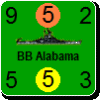
China Sea.

Moderator: Shannon V. OKeets


ORIGINAL: rkr1958
Turn 30. July/August 1944. Allied #5.
Weather. Wow ... two 1's (weather rolls) in a row. The axis wished that that could have been two 10's in a row instead of 1's.
My thinking exactly! [;)]ORIGINAL: Courtenay
ORIGINAL: rkr1958
Turn 30. July/August 1944. Allied #5.
Weather. Wow ... two 1's (weather rolls) in a row. The axis wished that that could have been two 10's in a row instead of 1's.
One, ten, what's the difference? Just a zero, and a zero is nothing, right? [:)]
All these questions will be answered shortly, I believe, after posting the next allied impulse.ORIGINAL: Courtenay
Wow. The position on the Western front is the exact opposite of what I thought it would be. Now there is a really good chance of a substantial pocket; all the Allies have to do is force either one of two stacks to retreat, after having the ARM corps overrun Rudel, and a bunch of Germans are pocketed.
Allied armored units LOVE to overrun Rudel. It gives them a feeling of payback.
What is defending in Bucharest? Will the Russians be able to get a good attack this impulse, or will they have to spend an impulse or two infiltrating around it? The Russians should not make a low odds attack this impulse, anywhere.
They're trying to maintain supply into and through the South China Sea. But, this desire has cost the Japanese dearly and will have to abandoned. That is, forces needing to draw supply through the South China Sea are likely to be left on their own the next the allies break supply there.ORIGINAL: Courtenay
Why are the Japanese insisting on going to the China Sea, when the Sea of Japan is almost as good for putting units in supply, and is a lot more survivable?


