The Great Patriotic Mud Offensive - Bread (G) vs Beethoven (S)

Please post your after action reports on your battles and campaigns here.

Moderator: Joel Billings

User avatar
CapAndGown
Posts: 3078
Joined: Tue Mar 06, 2001 10:00 am
Location: Virginia, USA

RE: The Great Temporarily Motoriotic War - Bread (G) vs Beethoven (S)

Post by CapAndGown »

ORIGINAL: Beethoven1

Of the starting generals, are there any that are significantly better? e.g. giving a tank division to someone with a 3 mech rating rather than a 2 rating probably would not make too much difference. For a larger difference you probably need to spend AP on a better general like Rokossovsky or someone.

It may be too early to switch out generals as they could get caught in a pocket and killed. Some corps commanders that stand out are Belov, in charge of 2 cav corps; Batov in charge of 9 rifle corps (excellent mech rating); Zakharov, 8 rifle corps; Yushkevish, who was in charge of some rifle corps, but just converted to an army; Zhadov, 4 airborne corps.

Some of these may not start out in the corps I listed since I have had some casualties and replacements. At any rate, I would evaluate all my corps commanders and any with a skill rating and/or admin rating of 4 or less I would take that HQ, set its max TOE to 50% and send it off to the reserve. That way, any corps HQs remaining on the map are ones you have vetted for decent leadership. Some of these folk are better than you initial army commanders. So use them where you can without spending the AP to change army commands. (It just occurred to me that a gamey way to get some new commanders would be to let some of your crappy HQ get pocketed and have them displace out of the pocket. This is a good way to get leaders killed and replaced. [:D])
User avatar
M60A3TTS
Posts: 4855
Joined: Fri May 13, 2011 1:20 am

RE: The Great Temporarily Motoriotic War - Bread (G) vs Beethoven (S)

Post by M60A3TTS »

ORIGINAL: Beethoven1

ORIGINAL: M60A3TTS

P. Filatov has no business having a tank division in his army. He's mech rating 2.

Yeah, I hadn't changed any generals yet (all AP that were not used on motorization were used on forts, which was probably a mistake), and for the generals all I looked at was the overall rating, not the specifics. There is one general in the western front that starts off with a 2.5 rating, at least I avoided him :D

Of the starting generals, are there any that are significantly better? e.g. giving a tank division to someone with a 3 mech rating rather than a 2 rating probably would not make too much difference. For a larger difference you probably need to spend AP on a better general like Rokossovsky or someone.

Up to this point in the game, I had spent 5 AP on temporary motorization (1 on NKVD on turn 1, 2 on infantry division turn 1, 1 on paratrooper turn 3, and 1 on the NKVD turn 3). I also accidentally built a fort in the wrong hex near Leningrad and wasted 2 AP on that misclick. That would be close to enough for 1 general, albeit only on one single part of the front (and I probably would have put them in Leningrad anyway).

My first AP spend of the game is typically replacing 20th Army Commander Fyodor Remezov with Fyodor Tolbukhin.

Image

Week 2 that army is under an assault HQ so has a command capacity of 28. That's 14 divisions. If those divisions are good, this army can have an impact.
User avatar
M60A3TTS
Posts: 4855
Joined: Fri May 13, 2011 1:20 am

RE: The Great Temporarily Motoriotic War - Bread (G) vs Beethoven (S)

Post by M60A3TTS »

ORIGINAL: CapAndGown
ORIGINAL: Beethoven1

Of the starting generals, are there any that are significantly better? e.g. giving a tank division to someone with a 3 mech rating rather than a 2 rating probably would not make too much difference. For a larger difference you probably need to spend AP on a better general like Rokossovsky or someone.

It may be too early to switch out generals as they could get caught in a pocket and killed. Some corps commanders that stand out are Belov, in charge of 2 cav corps; Batov in charge of 9 rifle corps (excellent mech rating); Zakharov, 8 rifle corps; Yushkevish, who was in charge of some rifle corps, but just converted to an army; Zhadov, 4 airborne corps.

Some of these may not start out in the corps I listed since I have had some casualties and replacements. At any rate, I would evaluate all my corps commanders and any with a skill rating and/or admin rating of 4 or less I would take that HQ, set its max TOE to 50% and send it off to the reserve. That way, any corps HQs remaining on the map are ones you have vetted for decent leadership. Some of these folk are better than you initial army commanders. So use them where you can without spending the AP to change army commands. (It just occurred to me that a gamey way to get some new commanders would be to let some of your crappy HQ get pocketed and have them displace out of the pocket. This is a good way to get leaders killed and replaced. [:D])

Belov is fine with infantry, but at mech 3 is squarely an infantry commander. Batov is fine with mech at 6, but has a pedestrian infantry rating of 5. You can get away with starting him in a cav HQ that won't disband for a while and giving him some mech/tank divisions. Zakharov is a fine choice, but at mech 5, there are a few mech 6 leaders that match his infantry 7 rating, like Rokossovsky. Still you never go wrong with him. Yushkevich at mech 3 is squarely an infantry leader like Belov, and a solid one. Ditto Zhadov.
User avatar
Beethoven1
Posts: 1439
Joined: Wed Mar 24, 2021 9:23 pm

RE: The Great Temporarily Motoriotic War - Bread (G) vs Beethoven (S)

Post by Beethoven1 »

ORIGINAL: CapAndGown

It may be too early to switch out generals as they could get caught in a pocket and killed. Some corps commanders that stand out are Belov, in charge of 2 cav corps; Batov in charge of 9 rifle corps (excellent mech rating); Zakharov, 8 rifle corps; Yushkevish, who was in charge of some rifle corps, but just converted to an army; Zhadov, 4 airborne corps.

Yeah, I was using all of those corps commanders (also Rokossovsky). I sent basically all the other corps HQs to national reserve on 50% max TOE setting, waiting for them to disband.


ORIGINAL: M60A3TTS

My first AP spend of the game is typically replacing 20th Army Commander Fyodor Remezov with Fyodor Tolbukhin.

Week 2 that army is under an assault HQ so has a command capacity of 28. That's 14 divisions. If those divisions are good, this army can have an impact.

I probably should have done that, but I wasted a lot of AP on forts. In particular it seems that forts in hexes other than cities/urban fill up with equipment very slowly. For example, I built some forts on the Narva and Luga lines, and these constructed virtually 0 forts. I probably should have tried that/found it out in single player first. I was also advised by another Soviet player to build forts in every city that could be captured in 1941. Even in cities, forts seem to get going pretty slowly, although they at least do something.

I did also get Tolbukhin, but only on turn 3 or 4 or so.

Also, I was wondering if there is some real reason to not upgrade the generals yet, since HLYA didn't do that. The logic suggested from CapAndGown of reducing the risk of them getting killed in a pocket makes some sense, I would definitely be worried about that with using good generals very early on (particular if you are trying to do a fighting retreat rather than simply to run).

However, I am somewhat surprised about using an assault army, is that really worth it for Soviets in the early game, since you don't entrench as much then? On the defensive doesn't CPP mostly just help have a bit higher chance of having artillery join the battles mostly? I have gotten up to level 2 forts in various places with normal generals as of turn 5/6 or so.
User avatar
loki100
Posts: 11708
Joined: Sat Oct 20, 2012 12:38 pm
Location: Utlima Thule

RE: The Great Temporarily Motoriotic War - Bread (G) vs Beethoven (S)

Post by loki100 »

ORIGINAL: Beethoven1

ORIGINAL: CapAndGown

It may be too early to switch out generals as they could get caught in a pocket and killed. Some corps commanders that stand out are Belov, in charge of 2 cav corps; Batov in charge of 9 rifle corps (excellent mech rating); Zakharov, 8 rifle corps; Yushkevish, who was in charge of some rifle corps, but just converted to an army; Zhadov, 4 airborne corps.

Yeah, I was using all of those corps commanders (also Rokossovsky). I sent basically all the other corps HQs to national reserve on 50% max TOE setting, waiting for them to disband.


ORIGINAL: M60A3TTS

My first AP spend of the game is typically replacing 20th Army Commander Fyodor Remezov with Fyodor Tolbukhin.

Week 2 that army is under an assault HQ so has a command capacity of 28. That's 14 divisions. If those divisions are good, this army can have an impact.

I probably should have done that, but I wasted a lot of AP on forts. In particular it seems that forts in hexes other than cities/urban fill up with equipment very slowly. For example, I built some forts on the Narva and Luga lines, and these constructed virtually 0 forts. I probably should have tried that/found it out in single player first. I was also advised by another Soviet player to build forts in every city that could be captured in 1941. Even in cities, forts seem to get going pretty slowly, although they at least do something.

I did also get Tolbukhin, but only on turn 3 or 4 or so.

Also, I was wondering if there is some real reason to not upgrade the generals yet, since HLYA didn't do that. The logic suggested from CapAndGown of reducing the risk of them getting killed in a pocket makes some sense, I would definitely be worried about that with using good generals very early on (particular if you are trying to do a fighting retreat rather than simply to run).

However, I am somewhat surprised about using an assault army, is that really worth it for Soviets in the early game, since you don't entrench as much then? On the defensive doesn't CPP mostly just help have a bit higher chance of having artillery join the battles mostly? I have gotten up to level 2 forts in various places with normal generals as of turn 5/6 or so.

1 - Most Soviet Corps don't disband, also you want to find a way to increase their effective TOE not reduce it


as

2 - a good leader commanding a low TOE HQ will not perform that well (the missing support squads)

and

3 - CPP boosts MP and ofsets low admin scores, something that the Soviets just have to put up with for most of the game, otherwise
Nix77
Posts: 565
Joined: Sun Oct 02, 2016 6:19 am
Location: Finland

RE: The Great Temporarily Motoriotic War - Bread (G) vs Beethoven (S)

Post by Nix77 »

ORIGINAL: M60A3TTS

ORIGINAL: Beethoven1

ORIGINAL: M60A3TTS

P. Filatov has no business having a tank division in his army. He's mech rating 2.

Yeah, I hadn't changed any generals yet (all AP that were not used on motorization were used on forts, which was probably a mistake), and for the generals all I looked at was the overall rating, not the specifics. There is one general in the western front that starts off with a 2.5 rating, at least I avoided him :D

Of the starting generals, are there any that are significantly better? e.g. giving a tank division to someone with a 3 mech rating rather than a 2 rating probably would not make too much difference. For a larger difference you probably need to spend AP on a better general like Rokossovsky or someone.

Up to this point in the game, I had spent 5 AP on temporary motorization (1 on NKVD on turn 1, 2 on infantry division turn 1, 1 on paratrooper turn 3, and 1 on the NKVD turn 3). I also accidentally built a fort in the wrong hex near Leningrad and wasted 2 AP on that misclick. That would be close to enough for 1 general, albeit only on one single part of the front (and I probably would have put them in Leningrad anyway).

My first AP spend of the game is typically replacing 20th Army Commander Fyodor Remezov with Fyodor Tolbukhin.

Image

Week 2 that army is under an assault HQ so has a command capacity of 28. That's 14 divisions. If those divisions are good, this army can have an impact.

Tolbukhin standing fast on the land bridge at the helm of the 20th Army is my regular turn 1-2 move too :D

And Beethoven1, thanks for the brilliant report on the Great Temporary Motoriotic War ;)
User avatar
56ajax
Posts: 2294
Joined: Mon Dec 03, 2007 3:43 am
Location: Cairns, Australia

RE: The Great Temporarily Motoriotic War - Bread (G) vs Beethoven (S)

Post by 56ajax »

+1
Molotov : This we did not deserve.

Foch : This is not peace. This is a 20 year armistice.

C'est la guerre aérienne
User avatar
Beethoven1
Posts: 1439
Joined: Wed Mar 24, 2021 9:23 pm

RE: The Great Temporarily Motoriotic War - Bread (G) vs Beethoven (S)

Post by Beethoven1 »

I'm a little bit behind on this AAR (game is currently on turn 9). But never fear, motorization is here! Thanks to all the extra MP, hopefully the AAR can catch up quickly, with the help of the extra movement points.


Start of turn 4:

Germany didn't do that much this turn compared to previous turns (probably makes sense under the circumstances):

Image

In the north my reserves started deploying around Novgorod etc. In the north he consolidated his position. One or two of my units there were in the rear got routed out to safety, but 5 divisions (4 infantry and the 1 motorized brigade) are re-isolated.

However.... look at that paratrooper I have sitting in the swamps. It has 12 MP, and you seem to get 3x as many MP by motorizing units, so at a cost of 1 AP I think to motorize another paratrooper, I am thinking it would be worth re-opening the pocket there yet again.

In Estonia it looks like I have to start getting concerned about getting some sort of defense put up on the Narva river...

Image

I am not sure how many MP he will have there and how far he can get in one turn, but I definitely don't want him to cross there

Also the forts that I built seem to be doing almost nothing still in building up fortification levels. They are simply not filling in with manpower very well. :( That one shown in the screenshot still only has 3 men in the fort!

I am not sure how to approach Estonia, options include:

a) pulling back from Tallinn to free up more troops.
b) sending full reserve divisions to start digging in along the Narva to make sure there is no coup de grace (this would unfortunately detract from the defense around Pskov.
c) sending in more reserves (the problem is any reserves that I deploy this turn that are not on the map won't appear until my next turn, so if he has enough MP to get across the Narva in one turn they would be too late. Also they would not have much time to dig in.

And this turn there are very few new on-map reserves deployed, almost all the new troops got put into the national reserve after the Moscow/Leningrad militia divisions appeared last turn.

In general I am pretty sure that building as many forts as I did was probably not a great idea. I was expecting them to fill up and start doing at least a bit of construction more quickly. In some places (Smolensk and Cherkasy especially) the forts might actually detract from my defense, since they take up 1 of 3 unit slots while apparently doing effectively nothing. So I probably should have built less forts and/or built them further back for the most part.

In the center basically nothing visible happened, except some infantry (126th infantry division here) advanced towards Vitebsk from Polotsk, and of course the Germans un-encircled themselves easily:

Image

The brave 670 men in the 8th (MOTORIZED) airborne brigade sadly shattered. But their sacrifice will be remembered in the annals of great patriotic temporary motorization:

Image

If you look at the river crossing area, it is interesting and potentially informative to look at which hexes he took (and just as importantly, didn't take). He didn't take any more hexes on the north side of the Dvina river, which means that not a single division crossed over to the north side. Also the Panzer regiments that were there last turn are gone, they seem to have crossed back to the south side.

That is very interesting... to me what it suggests is that next turn he is probably not intending to attack towards Vitebsk with his Panzers, but instead the Panzers are going to be heading somewhere in the area between Smolensk and Gomel. If the Panzers are not going to Vitebsk, that probably means that either he doesn't think he needs them to take Vitebsk and can just take Vitebsk with infantry, or alternatively that Vitebsk is not that important to him relative to pushing eastwards. Maybe he is not repairing the rail line currently that goes through Vitebsk, for one thing, and is repairing the one that goes from Minsk through Orsha towards Smolensk, but doesn't go through Vitebsk (that would sort of make sense given the direction of the attack last turn also).

I think there are some other potentially important clues as to German intentions further south around Gomel.

Image

Look at the 3 divisions circled in red, which have a combined offensive combat value of 47 (18 + 29). Now the question is, why would you march up 3 infantry divisions there and get them into the Soviet troops ZOC unless you planned to attack across the river either there or very close to there? He alternatively could have just sent those divisions just slightly further north to where he ALREADY crossed the river (or could have sent most of them except maybe 1 or so division just to take the territory and guard his flanks, maybe broken down into brigades).

He also advanced in the blue area, and in the black circled area he linked up with the cavalry division that I had isolated the previous turn.

The cavalry division itself btw didn't move. Anyway, this makes me suspect that he is probably planning to try and make a 2nd crossing somewhere in this general area around Gomel, most likely at the hex where he already has 3 divisions and which can be attacked from multiple sides. I suspect he may want to repair that double rail line going through Gomel, and maybe he suspects that my forces are weak in this are (in fact they are pretty weak there)

So this makes me concerned about my southern flank there. I would like to reinforce it to the degree possible. 1 river crossing is enough, I would rather not have a 2nd one as well... The problem is I don't have that many troops to reinforce with in the area...

So in the center, the main things I am concerned about are these possibilities:

Image

1) He may try to attack south of Smolensk (or possibly directly on Smolensk itself, but that is probably less likely before the infantry catches up) as in the red arrow. There is a small avenue of attack there through clear terrain towards Yelnya, to threaten the southern flank of Smolensk.

2) He may try to attack in the blue area towards Bryansk. This is probably a bit less likely since it doesn't threaten Smolensk as much, and there is not a double rail line there.

3) He may try to attack along the black line and potentially try to encircle my troops in that area. If so, this might make sense of the expected river crossing attempt in the south, that could potentially be used to expand the bridgehead and encircle my troops there.

4) In general he may/probably will try to get across the river in the south along the double rail lines highlighted in yellow. That may or may not be combined with a crossing attempt in the southern of the 2 black lines.

What I am NOT that concerned about, comparatively, though is a Panzer attack towards Vitebsk or else on the northern flank of Smolensk, because if he were going to do that, it would not make any sense to withdraw his Panzers back across to the southern side of the Dnieper.

So insofar as possible I would like to reinforce against those expected possible avenues of attack to the east. In the south, not much happened. From that little pocket that I had opened up, 3 infantry divisions routed out rather than being encircled. 1 infantry division shattered. So basically I lost significantly less than I probably should have there, due to the sacrifice of the 433 men of the MOTORIZED NKVD border guards (1 AP cost and like 50 trucks):

Image

So I can retreat some extra units to the river as a result (although they are not in good shape, they nevertheless have 16k men between them), and probably within one or two turns of refitting can be back to "ready" status. Also of the units I didn't have MP to get behind the river, the depleted tank unit didn't get encircled, 1 infantry division did. So overall I should not lose very much from my quick retreat to the Dnieper. In the far south, he pushed towards Odessa with motorized units. This looks like my last real opportunity this turn to get anything out of Odessa via land that I want to get out via land. Everything not out this turn will have to stay, either permanently, or unless/until it either surrenders or gets evacuated by sea.

Image

I should also probably be concerned about whether any of those motorized units can get across the Dnieper either next turn, or the turn after that, before I have defenses deployed there... [:(] I definitely do not want Germany to cross the river into an undefended hex without a fight, so I will have to beef up the defenses sufficiently to ensure that does not happen.

He probably does not have enough MP for that (I would hope), but I am not sure quite how much movement is possible in one or two turns. I also still have an opportunity to decide not to leave that many troops in Odessa, and instead to send more back for river defense. Again, these infantry divisions in the Odessa area, despite not having actually fought a single battle, are fairly under-strength at around 8000 men each, so I am also not sure how well/how long they would hold out in Odessa in any case:

Image

I do have a pretty good number of reserve units I can deploy this turn, both infantry and cavalry, but they won't actually appear on the map until my next turn AFAIK (after Germany has moved):

Image

--- editorial note --- at this point in the game, as of turn 9, I think that my deployment of the massive number of turn 4 reserves was probably my biggest mistake so far. I ultimately deployed them basically all in the south, but I should have put at least some in the north and probably a few around Smolensk area also.


Looking at the situation more broadly, as of turn 4, I have lost just under 1 million men in total:

Image

Image

My supply problems were basically resolved last turn, with my truck pool back up to ~12,500, although there are some lingering after effects and it will take another turn or 2 for some undersupplied units to get towards ideal supply status.

Image

I started putting the naval bombers in Crimea (along with a lot of level bombers and some fighters) to be ready to try to support Odessa. FWIW there hasn't been too much activity visible from the Luftwaffe since turn 1.

Image


Next up, the Great Patriotic Turn 4 motorization moves!
User avatar
Beethoven1
Posts: 1439
Joined: Wed Mar 24, 2021 9:23 pm

RE: The Great Temporarily Motoriotic War - Bread (G) vs Beethoven (S)

Post by Beethoven1 »

Turn 4 Soviet action (or should I say, motorization) phase. Let the motorization begin! 174 trucks and 1 AP you say? Sounds like it is worth it:

Image

That increases it from 12 to 36 MP (seems to triple the MP in general):

Image

Pocket opened and the paratrooper division also has enough MP to move 1 back as well if I want to (will hold off on that until I see how the rest shakes out though):

Image

3 prime candidates for motorization. In general what you want to look for in suicide motorization candidates are units that are low strength (not full divisions), and therefore cost only 1 AP and a small # of trucks to motorize. In other words, units such as NKVD border guards and paratroopers can often be the best units to motorize:

Image

I can displace a HQ, presumably that is the Panzer Group HQ:

Image

3 Panzers can be cut off again plus one motorized, just will need to link it up with another unit on the other side:

Image


I pulled out of Tallinn with 2 divisions and preserved them to defend the Narva river. It seemed to me like the only real reason to defend Tallinn is the VP (which in the first place I don't like and am inclined to downplay), but Tallinn held historically until turn 10. That means that you have to hold it something like that long at least to deny Germany the bonus VPs from taking it early, which is not really feasible without a larger commitment.

Image

The only other benefits of Pskov I can see are it helps a bit with supply for Germany via the port, but... At least in this game, if there is anything that is going to make German supply worse around Leningrad later, it is continuing to hold Pskov and stopping more German advance there.

Air supply was dropped to the 5 divisions that had been encircled. Although they were no longer technically isolated, they were still in a perilous position.

Image

So....... Stalin ordered, and Soviet propaganda made much of, THE GREAT PATRIOTIC VELIKIE LUKI OFFENSIVE

THE GREAT PATRIOTIC VELIKIE LUKI OFFENSIVE was to be perhaps the greatest offensive of all time. The narrow objective of the THE GREAT PATRIOTIC VELIKIE LUKI OFFENSIVE was simply to try to relieve the 5 surrounded divisions as much as possible, and in the process also put pressure on the flank of the German advance up the Pskov valley area towards Lake Ilmen.

However, in his less lucid and more delusional moments, Stalin imagined greater things for THE GREAT PATRIOTIC VELIKIE LUKI OFFENSIVE! General Kuznetsov's Northwestern Front would attack to the North-East from the Velikie Luki area up towards Pskov and the German Panzers! This would force Germany to guard its flank, and thereby it would "restore the situation" on the approaches to Leningrad. All would be well in the wake of THE GREAT PATRIOTIC VELIKIE LUKI OFFENSIVE!!!

Image
Soviet soldiers go on the attack in the Great Patriotic Velikie Luki Offensive (kindly ignore the snow, Stalin could not get an appropriate photograph returned from the front amidst the chaotic conditions, so some old footage from Winter War newsreels was inserted)

In those less lucid moments that I mentioned, it was said that THE GREAT PATRIOTIC VELIKIE LUKI OFFENSIVE would strike towards Pskov, link up the defenders there, and isolate most or all of two German Panzer Groups. In the wake of THE GREAT PATRIOTIC VELIKIE LUKI OFFENSIVE, with the large German Panzer formations in the north destroyed, the Red Army would begin a great counteroffensive back into the Baltics and, within a period of a year or so, into Germany itself.

Total victory was at hand!

The first blow of THE GREAT PATRIOTIC VELIKIE LUKI OFFENSIVE was the attack on the Lehr Motorized brigade (shown in the screenshot above). It was surrounded (though not isolated, since a turn didn't pass) and then it was attacked by numerically superior forces. The Lehr brigade was "routed." However, despite the "rout," the Soviets lost more men and equipment [;)]

Anyway, with this, if Germany wanted to re-encircle the 5 divisions and keep them encircled, it would detract significant attention and resources from the push to the north. And otherwise, Germany would have to rout them to get them out of the way, which would also distract some of the German troops from being able to head north and contribute to the push on Leningrad. This seemed like, in some ways, the best thing I could do this turn to effectively contribute to the defense of Leningrad.

My defense in the north felt pretty secure. Especially around Pskov, I was starting to get good defensive CVs, and I had a large amount of depth in my lines. However, in order to do this, I had to weaken my defenses around Vitebsk a bit. This seemed like a good thing to do because it didn't seem like Germany was prioritizing Vitebsk particularly. I was not expecting Germany to attack with his Panzers towards Vitebsk, since his division that had crossed the river in the north had retreated back to the south/east side of it the previous turn.

However, if he did attack towards Vitebsk, I figured that wouldn't be so bad, since at most it would probably lead to a loss of 3-4 divisions, and I doubted that Vitebsk itself could be taken in 1 turn. That would also leave his Panzers somewhat out of position for the next turn to attack towards Smolensk/Bryansk/Gomel. So basically in effect I rotated troops out of the Vitebsk area in 2 directions:

Image

Blue line is rotation of some of the troops there to the north (for THE GREAT PATRIOTIC VELIKIE LUKI OFFENSIVE)

And the Red line is rotation of some other troops over towards Smolensk, and that allowed further rotation of some of the troops around Smolensk to reinforce the other parts of the line further south towards Gomel where I was concerned about the strength of my defense.

For example, I rotated this 4 CV mech division down here to try to make sure there was no secondary river crossing, given the high CV of the German infantry next to that exposed hex:

Image

The big takeaway here though was that the tide was turning and the war would soon be won. Thanks to the emerging success of THE GREAT PATRIOTIC VELIKIE LUKI OFFENSIVE, the German incursion in the North would soon be thrown back, and the German bridgehead across the Dnieper was becoming well contained, and they would surely never cross the river anywhere else also. In the swamps, 409 cavalrymen were heading for Berlin. Hopefully they would not be detected. But if they were, it was only 409 men, so who cares?

Image

In the South, the only thing that really happened was I put 7 divisions into the Odessa city fortress, and retreated the rest:

Image

I didn't upgrade the general in Odessa yet, but I was planning to do so the next turn. Surely it wasn't necessary to already switch the general, since there was no way that Odessa would fall the next turn with such a strong City Fortress defense.

Image

The other important thing is where I put my reserves. Soviets get a huge # of divisions from the reserves on Turn 4. I sent the vast majority of them to the south to fill in the line on the Dnieper. I did not want any sort of easy German crossing of the Dnieper in the south. The relatively few (about 10-12) that I did not order to be deployed for the Dnieper defense, I sent near Gomel, where they could reinforce my defense on the southern flank of the western front, and hopefully hold the river there and in the swamps as well, while helping to contain the German bridgehead in the center and protect Kiev's northern flank.

I did not deploy a single additional division for the north. In the north, I was aware that my defenses towards Starya Russa and Novgorod were weaker as compared to the defenses around Pskov, but I figured that if he pushed too much there without taking Pskov, he would start to get pretty over-extended, with long and thing lines, and (hopefully) some supply issues.

The other thing I thought about this is that in some ways it would be to my advantage if he pushed in those directions, even if he pushed fairly far, because it would effectively lock in his Panzers into that area for another few turns at least, and make it unrealistic/unlikely that they could be redeployed to help push in the center/south instead. So to some degree the north defense, which was very strong at Pskov but weaker (though with depth) towards Novgorod, was conceived of as a trap to lure Germany in to overextension (hopefully).
User avatar
Beethoven1
Posts: 1439
Joined: Wed Mar 24, 2021 9:23 pm

RE: The Great Temporarily Motoriotic War - Bread (G) vs Beethoven (S)

Post by Beethoven1 »

Turn 5:

First of all, 132k losses this turn:

Image

Somehow the air combat losses were only 2 to 1 in Germany's favor, which seems ridiculously good (I am not sure how they can be that good???)

Image

And the pilot losses are almost equal, about 300 each with only slightly more Soviet pilots killed. I don't really understand how/why this happened with the air war, but I did notice a good # of the German recon planes getting shot down (but seemingly by flak). I will search through the battles I guess to try and find any battles where Germany took a lot of air losses.

Actually if you look at the particular planes shot down, it looks like a good # of the Axis air losses are "RU" which I assume stands for Romanian. Although there are also a pretty good # of German planes shot down

My OOB is now well above 3 million, thanks to the reinforcements. Also the fact that there was not much combat in some places like the south where I had retreated behind the Dnieper meant (temporarily) lower losses there:

Image

It has been starting to rain a bit in the north and in some hexes there is already actually some light mud here and there:

Image

Manpower on the map shooting way up (I am not really using the national reserve at this point, however, and basically just deploying stuff as soon as I get it, on the theory that it is better to have troops on the map even if they are refitting, because then they can build fortifications at the same time). I see a lot of AARs where German tanks advance through undefended Soviet territory; that will presumably be less likely to happen as much if I actually deploy the troops that I have, whether they are "ready" or not. The Panzers don't care if we are ready, they are going to come regardless.

Image

Total men (not just on the map) going up, but only slightly, so most of the gains were from reinforcements newly deployed:

Image

Total guns (not just on the map) had been going up, but went down this turn for some reason [:(]

Image

However, AFVs are actually going up! I have been generally trying to keep tanks and mech divisions as much as I can towards the rear of my lines to preserve them a bit more until they can get stronger:

Image

Total planes are pretty stable. I have been training a lot on the biplanes in the national reserve and only deploying planes when I get up to 55-60 experience and morale. For fighters, I only am using MiGs/LaGGs, and Yaks, the biplanes are all just training fodder so that hopefully by the time I get more good fighters I will have more capable people to fly them.

Image

Manpower pool:

Image

Armaments starting to go up:

Image

Also my logistics situation is for the most part fixed now, with about 10k trucks in the pool. Now for what happened on the map! In the north, there were a LOT of battles. It was the Great Patriotic Rout:

Image

(Readers may start to see why I consider it in retrospect a mistake to have not put some turn 4 reserves in the north)

The 5 divisions that had previously been encircled but then freed by the motorized paratroopers, and whom I had airdropped supplies to, all routed out. Obviously he didn't really try to attack Pskov directly, where the defense was very strong, but pushed way up towards Novgorod... In fact he actually took Novgorod! I was not expecting him to get that far (if he attacked that way), but he did. I didn't actually have a ready division in Novgorod unfortunately, just a fort, and the fort surrendered:

Image

However, the fort might have actually been very important because apparently he did not have enough MP to actually move into Novgorod and take it, but only enough to take technical control of it, and who knows, maybe he would have had enough MP if he could just walk in. IIRC I did have a depleted unit there that was refitting, but I didn't have a fighting capable division there, since I wasn't really expecting him to get that far.

This situation in the north has pluses and minuses for both of us... For both of us the front is longer and that means our lines are thinner. Germany is maybe overextended, but the problem is it is tough for me to retain strength and depth around Pskov and also react to this around Novgorod... I will have to think about how much depth to pull out from the Pskov area. Probably I will have to pull out a lot of my depth there in particular behind the strong fortified hexes where I have 3 units. Currently he has only weak regiments on the line there, but there may also be other infantry or something hidden behind.

And since I deployed 0 of my reserve divisions to the north, I have less leeway here than would be ideal. I could pull out of Pskov entirely, but that is probably not a good idea, probably it is best to maintain a strong defense there but to pull out the depth and start stacking up further north. I think that THE GREAT PATRIOTIC VELIKIE LUKI OFFENSIVE will probably have to continue to try to put pressure on his south-eastern flank.

If Germany has a problem here, they are going to be either:

a) Supply from not having Pskov yet
b) not having enough troops to fill everywhere on such a long extended salient, on both sides of it

Copy paste of DM discussion about the north/Novgorod:

[10:26 AM] Bread: i think in future im just abandoning leningrad
[10:26 AM] Bread: not worth it lol
[10:26 AM] Beethoven: It would have been a lot more worth it if I had not thrown such a huge # of troops there
[10:27 AM] Beethoven: Or really I should have been weaker elsewhere as a result of sending as many troops there
[10:27 AM] Beethoven: What is looking good for me there though is Pskov, but you got to Novgorod.
[10:27 AM] Bread: couldnt get a unit in though
[10:28 AM] Beethoven: yeah, that helps, but you destroyed my fort there lol
[10:28 AM] Bread: hail mary attack
[10:28 AM] Beethoven: the fort which had built all the way up to level 0
[10:28 AM] Bread: i fully expected to fail it
[10:28 AM] Beethoven: The problem there for you is that your line is very long and thin, so it is over-extended without much troop density
[10:29 AM] Beethoven: going all the way up to Novgorod
[10:29 AM] Beethoven: At this point that is somewhat the problem for me also lol
[10:29 AM] Beethoven: Because while I did put a lot of troops there, I did not put infinite troops
[10:29 AM] Bread: i have infantry coming to plug any gaps
[10:29 AM] Bread: and i doubt you can significantly dislodge me

In the center, somewhat to my surprise, he encircled Vitebsk:

Image

He sent Panzers/Motorized up there to do this. Maybe it is more important for his strategy than I had thought. Nevertheless this isn't really that bad of a thing for me, since I only have 3 divisions there, and this delays there for one more turn.
[2:07 PM] Beethoven: Also it means those Panzers are at least somewhat out of position for attacking towards Smolensk and elsewhere further east the next turn.

My defense in Smolensk is relatively strong, but not super-deep, so I need to be somewhat careful here. I probably need to pull back to some degree from the Vitebsk area to reinforce the northern flank of Smolensk a bit more, as well as filling in so that THE GREAT PATRIOTIC VELIKIE LUKI OFFENSIVE can continue to push the Northwestern Front towards Leningrad and put pressure on the German flank there.

In general the routs seem to be getting a bit less bad, for example, this sacrificial division didn't get totally obliterated, just lost 1k men while routing:

Image

I have been putting some of my weaker divisions in sacrificial positions to get attacked, with the expectation that they will get routed. In part because I haven't gotten many divisions encircled, it might not be the worst thing of some of them shatter, since I probably have in some ways "too many" divisions for my equipment. But this eats up German MP from the battles they have to keep fighting against weak divisions.

He attacked succesfully across the river here, but didn't have enough MP to actually move troops across. You can see all my reinforcements, which I will plug in to try to keep holding the river here for as long as possible. In the ideal case he won't cross the river at all, and this area will only get taken if/when he starts pushing from the bridgehead he already has.

Image

Unfortunately the cavalry in the swamps that was going on a trip to Berlin was detected and routed [:(]

Image

But the loss of 375 men is essentially irrelevant, and it will be a reminder to Germany that they need to cover their flanks to avoid rail lines etc being cut, so hopefully this will pull away German troops and cause them to be cautious. In the south, he is starting to get quite close to Kiev, but my reinforcements are deploying and troops are digging in:

Image

Actually I might not have put enough troops by Kiev itself... that might actually be my weak point. I put a lot further back, but I probably was not fully taking into account that the logistics will take a while still to catch up. Ultimately though, if it comes down to it, I would probably rather lose Kiev (which is on the western side of the Dnieper) than allow an easy crossing of the Dnieper itself. I should have enough troops here in general to have ~2 and in some cases 3 divisions on every hex on the Dnieper... Hopefully that is enough to hold it for a while.

Now to the far south and Odessa... here is the really bad news... Probably the biggest single disaster I have had since turn 1!

Image

I wasn't really even expecting it to be seriously attacked this turn, much less actually taken outright. I guess putting troops in that city fortress ended up not only being of questionable value, but actually being an outright total waste of resources. I guess I should have just outright abandoned Odessa. It is true that I had "only" 7 divisions there and I had not changed the general yet (I was going to do so this turn), but I think Fortress Cities are essentially worthless to Soviets if a Fortress City with 7 divisions can fall that fasts and easily when it is not even isolated, regardless of the general.

I will evaluate the situation later on, but due to this experience, IMO the only time you should use a fortress city is if you are going to put 10 full strength divisions in it. With anything less than that, if that means it can fall in a single turn when not even isolated, then there is just no way it is worth it. So I will probably not use fortress cities in other places like Kiev/Dnepropetrovsk/Smolensk. They are just going to fall when attacked, in the case of Kiev/Dnepropetrovsk they will likely fall a good # of turns earlier than historical and give Germany bonus VPs (although I am trying to play with minimal attention to VPs since I don't like the VP system).

In summary, ODESSA TOTAL DISASTER, NOT WORTH IT AT ALL

NOT REMOETLY

To anyone who is reading, if you play a game as Soviets against a competent Germany player, I advise you in the strongest terms to not defend Odessa with even a single division. Simply abandon it, save yourself from this! At least not unless/until city forts get patched.

1 division and 2 HQs are also encircled in Nikolaev, but I should be able to pull them out via naval transport. Sadly I cna't pull out any of the divisions from Odessa since we don't have Odessa, just empty clear hexes next to Odessa lol:

Image

As you can see, I do have a good # of reinforcements here to deploy along the Dnieper, but it is definitely going to be a delicate balance now in allocating further reinforcements (more limited this turn) between North/South/Center.

If I had been smart and just pulled everything out of Odessa without a fight, it would subsequently be a lot easier to hold the Dnieper with an extra 7 divisions. In future games, unless the Fortress Cities get rebalanced, I am pretty sure that the only thing I will do in Odessa will either be to hold it with 10 divisions, all my best divisions with 14k men under Zhukov or Tolbukhin, or just abandon it outright.

Nothing in between is worth it if the Axis player has any idea what they are doing. And maybe it is not even worth it with 10 divisions under the best possible generals, if they know what they are doing (hard to say without trying that).

Here are the reserves I have to deploy, not a lot, just 8 half-strength infantry divisions, and 3 25% strengh cavalry divisions. That is not a lot, and I have a lot of potential weak points:

Image

According to my OOB I am supposedly relatively strong for my army (I think?) at this stage of the game, but it definitely doesn't feel like it.

I would really like to deploy the bulk of my reserves in the south and center around Kiev and Gomel to hold firm against any future river crossings, but we will have to see what my deployment looks like at the end of the turn to see how feasible that is.

I do not want to let him have secondary river crossings other than the initial crossing in the Smolensk area. Ideally all of his progress in the center (and south) should have to emanate from out of that initial crossing. That may simply not be realistic (especially in the south, where you would think he will sooner or later find a way to cross somewhere).

At the same time, I DEFINITELY do not want to snatch defeat from the jaws of seeming earlier success (we probably should not quite call it victory though) in holding on in Pskov and delaying the push towards Novgorod.

The other thing is starting around turn 9-10 or so I should get fewer of the shell-reinforcement divisions than in many games, since I will have fewer divisions that got encircled early on (but more routed, and I took plenty of manpower/equipment losses from routed divisions).

I am clearly going to lose (now undefended) Tallinn earlier than historical, along with already losing Odessa way sooner than historical. The plus side is holding Pskov significantly longer than historical, but nevertheless with the Novgorod situation my position in the north is somewhat perilous. And Smolensk still holding for at least another turn or 2 looks good. But Kiev and Dnepropetrovsk will also clearly both fall earlier than historical if Odessa is anything to go by, since those will not even have fortress cities most likely (definitely seems like a waste of AP).

And I built this fortified region on the Luga line, IIRC, on turn 1. It might be have been turn 2, but I think it was turn 1. And it has not even built a fraction of a level 1 fort yet:

Image

Meanwhile this one at Tula, which I built later, has built 40% of a level 1 fort:

Image

My conclusions is that forts are simply not worth it at all, unless they are in a major city/urban area, or are super-far back. Otherwise they simply will not construct anything at all. Might be ok if it is not e.g. in Moscow but is basically right next to Moscow. I also can't assign engineers to any of my forts (note, this issue with engineers was subsequently worked out a few turns later).

In Cherkasy for example, this fort is probably just making me weaker by drawing manpower away from my infantry:

Image

With forts and fort cities not very useful, so the only really useful things I can see for Soviet AP are:

a) Upgrading generals
b) Motorizing units to break pockets - especially NKVD border guards (lol)
carlkay58
Posts: 8778
Joined: Sat Jul 24, 2010 10:30 pm

RE: The Great Temporarily Motoriotic War - Bread (G) vs Beethoven (S)

Post by carlkay58 »

The key to forts is the supply. The one you have on Tula is well supplied and it was easy to get up to strength and start building. The other one in the north was not well supplied and never got the replacements and supplies necessary to build up. I have found the best use of forts is a few at a time in well supplied locations and having engineers and sappers available to help build the fort. You will get a large chunk of engineers/sappers in the Reserve about now in your turn (I think 100) that you can get up to full strength and on the map in a few turns. That will help speed your construction ability. Until these units are available it is not really feasible to build much for the Soviets.
User avatar
Beethoven1
Posts: 1439
Joined: Wed Mar 24, 2021 9:23 pm

RE: The Great Temporarily Motoriotic War - Bread (G) vs Beethoven (S)

Post by Beethoven1 »

Next in the annals of temporary motorization, turn 6! Temporarily, there will be some big temporary motorization news later in this turn, but this is the start of the turn:


Overall situation at start of turn 6:

Image

My on map OOB went up VERY slightly despite losing 100k men in Odessa and Vitebsk, but that was just because of all the reserves deployed. Total losses this turn, 178k, 100k or so of which are those captured troops in Odessa/Vitebsk:

Image

Air losses once again seem fairly good, 145 Axis pilots lost to 352 Soviet:

Image

He lost 84 recon planes... it seems like he is REALLY burning through his recon planes, I am not sure what the German production is like, but I would think that is more than he can really replace? Another potentially important thing is it has been raining in the north, and there has started to be a bit of light mud in places:

Image

Unfortunately next week no rain is forecast, if it kept raining and mud became really widespread especially in the north that could help a lot. Need more rain!

Image

Unsurprisingly, Pskov was taken, but at least he had to use a good # of infantry against just 1 Soviet division:

Image

The bad news, though, is Novgorod was taken yet again, and also the hex to its right:

Image

This turn I will really have to try to firm up my defense here, but at least this turn I actually have some reserves to help plug in, 8 half-strength infantry divisions like this:

Image

And 3 1/3 strength cavalry like this (it seems a bit desparate using cavalry in the north, but desperate times call for desperate measures):

Image

Insofar as possible I will probably try to cycle some troops north from Starya Russa/the south flank of Lake Ilmen. Probably I have too many troops around Velikie Luki for its real importance, and should try and cycle some of those towards Leningrad and also Smolensk:

Image

In the Smolensk area he got through the first screening-part of my defense, but not the whole way through on the southern flank of Smolensk. Looks like he is going for that, which is not too surprising. I have Vasilevsky in that area FWIW.

Image

Pretty clearly Smolensk is going to be a huge thing next turn. I don't have nearly as much depth there as I should have, so will try to reestablish some depth.

Around Gomel, he ground forward a bit more with infantry, but still didn't actually cross. I am hoping to keep all that infantry on the other side for at least 1 more turn:

Image

In Kiev, it is pretty obvious it is going to fall next turn. I actually would even half consider pulling out of it, but the defense is strong enough there that it is worth making him to have to actually attack. If I pulled out, then he would attack across the river, which honestly is probably the best reason to not just abandon Kiev entirely (otherwise it could even be a good idea to leave Kiev undefended maybe?)

Image

He got pretty much to Dnepropetrovsk with motorized. Fortunately almost every hex has at least a level 1 fort by this point to raise the defense values. Need to keep digging in and hope that we can hold:

Image

In the south, he didn't try to cross the river, at least yet, with the Panzers (probably would be hard through the swamp). I will need to recon to try to confirm the location of the Panzers better, that is a worry. Also the troops that took Odessa are coming forward to my Dnieper line. Hopefully we can hold with the swamp + river, but I doubt it will be anything like permanent given how fast he broke Odessa [:(]

Image

Some of my divisions at least are starting to become fairly decent. This one for example is an almost-fully-equipped tank division with an almost full complement of T-34s and KVs:

Image

I am going to try and preserve these in good fighting shape for as long as I can.

The main risk for next turn seems pretty clearly the risk that he will break through south of Smolensk towards Vyazma/Kaluga/etc via Yelnya.

So I need to really concentrate as much defense there as I can. Seems like we may end up potentially with something approximating the historical battle of Yelnya at about the same time. Hopefully I can stop his advance there, but I am afraid I probably put too many of my reserves first in the north and then in the south, so that may be a problem.

And after that, my 2nd major concern is the potential for a Dnepr crossing in the south. Don't want any sort of Dnepr crossing. No sir. Want to dig in, and Germany NEVER cross the Dnepr (not going to happen, but I can dream).
User avatar
Beethoven1
Posts: 1439
Joined: Wed Mar 24, 2021 9:23 pm

RE: The Great Temporarily Motoriotic War - Bread (G) vs Beethoven (S)

Post by Beethoven1 »

End of Turn 6:

Probably the most important thing from turn 6 is that Bread and I agreed that we should have a rule against temporary motorization, and stop temporary motorization. The impetus for that was this (from conversation via direct message):
OK, I think we have kind of a problem here:

Image

That is behind Smolensk. Itcuts off all your troops there

But it is actually even worse than it looks. For one thing, that is not even fully reliant on the temporary motorization, the southern half of the pincer is just a regular tank division with 35 movement points. (btw it is an UNDERSTRENGTH tank division with less than 3000 men and hardly any tanks, and it is unready and generally worthless in combat, so really doesn't matter if it dies)

The part that is even worse than it looks are look at these, the air losses from planes destroyed on the ground:

Image

Because that counts as overrunning airbases where you have a bunch of planes

Beethoven: And... wait for it...

It is even worse than THAT looks too

First of all, that is 351 planes already, which is a considerable chunk of the Axis air force gone (although I guess you would still have the pilots, and those are in some ways more important)

The worse thing is there is also this other airfield with another 100+ planes:

Image

I used the tank for the southern part since I didn't NEED more MP and it saves on AP to use a worthless/expendable unready tank division instead, but I could also just motorize another infantry division and be able to take that and destroy another 100+ planes as well (not sure if that is worth it due to lack of familiarity with how much effect planes really have, but if planes are worth anything, then probably it would be).

Although I have noticed very little obvious effects from air force so far. But also I (as well as you) in principle could do that to other airfields in the future. That is maybe more or less ok if you are just defending against Panzer divisions for example and you know more or less where they are, and can be prudent and move planes a bit away from the front

But it is a lot harder if you can just temporarily motorize any division. So this would clearly be a good thing for me to do in terms of the game mechanics itself, but at this point it seems like too much/unrealistic/excessive.

So maybe I should just not do this and start over without that, and we come to some sort of agreement on a house rule. That is my inclination for what we should do.

I don't mean start over the whole game, if that is not clear (overall the game seems to have pretty decent balance overall so far), just the movement turn. But what I would do is post this in the AAR so that people can see how strong the motorization is, and then just say in that "we decided at this point to not do that."

I do also have some balance concerns in particular around city forts also though (most immediately relevant for Sevastopol after Odessa).

Anyway, so consequently we agreed to ban temporary motorization for now from our game. My guess is that up until this point, the costs/benefits of temporary motorization probably more or less balanced out, though if I had to guess I think I may have benefited from it a bit more than Germany. Germany benefited from motorization a good # of infantry divisions on turn 1 and getting them advanced a lot further forward more quickly, but my subsequent motorization shenanigans probably offset that.

So alas, this Great Patriotic War was indeed only temporarily motorized. Our motorization has come to an end, it was nice while it lasted. Consequently this AAR should probably be renamed the Great Patriotic Rout or something like that.


In the north, not too much happened, I just tried to get my defense better prepared/reoriented:

Image

In the center, I set up more depth in my lines and also tried similar futile counterattacks:

Image

One thing worth noticing is look at the brown colored tanks in the bank there, I had been gathering up a lot of my best tanks in the area and putting them together there. While we had ruled out motorization, I did at least do this suicide run with my under-strength tank division, going behind the German lines and into some (but not all) of the German airfields, and also encircled a few infantry divisions with the help of a cavalry division:

Image

Bread could have prevented that pretty easily if he had broken down his infantry into regiments, or even if he had not clumped up the infantry so much that was encircled (it is divisions all right next to each other, which could have been more spaced out). Obviously it is good for Germany to be aggressive in advancing, but if he is too much so, it is incumbent on the Soviets to do what they can to punish that sort of behavior, to give Germany an incentive to start being a bit more careful and breaking down into regiments where necessary etc.

This destroyed 182 German planes on the ground, which is definitely a lot, but is also quite a bit less than it would have been with temporary motorization. This will definitely hurt the Luftwaffe, although in some ways the main strength of the Luftwaffe is their pilots more so than the planes themselves, and the pilots survive this, it is only the planes that are destroyed:

Image

That is 41 BF-109s, 82 BF-110s, 26 FW-189s, 22 HS-126s, and 7 Ju-88s

In the Gomel/Swamp area, I tried to keep delaying along the Dnepr as long as I could, and encircled a German cavalry division:

Image

I didn't do much in the south, except try to prepare my defenses for the expected assault on Kiev and across the Dnieper next turn. I made a big effort to get in place the best generals I possibly could, however, in order to help avoid failed leader rolls so that I could hopefully hold the river for at least some non-zero amount of time.

Image

Along the river, I had:

Tolbukhin (6.2) --- at Kiev and area nearby
Sokolovsky (5.2) --- Kiev to Cherkasy
Kuznetsov (4.7) --- Cherkasy to Kremenchung
Potapov (3.8), but only in charge of a few divisions in an area where attack looked particularly unlikely
Batov (5.0) --- Part of Kremenchung to Dnepropetrovsk, eastern part
Bobkin (5.5) --- North of Dnepropetrovsk
Vatutin (5.8) --- Dnepropetrovsk to Zaphorozye

The southern front generals were worse, but I put relatively good core commanders (skill 5 and 4.7) at the key parts.

So, I had put pretty much the best commanders I could manage in defense of the river line to try to hold it. Also, having lost very few troops in the first few turns and having deployed basically all my turn 4 reserves in the south, I had made a large commitment to holding the river. If Soviets can't hold in this case, then probably they simply cannot hold the Dnieper in the early game.

At least not with any sort of realistic investment into it.
User avatar
Beethoven1
Posts: 1439
Joined: Wed Mar 24, 2021 9:23 pm

RE: The Great Patriotic Rout - Bread (G) vs Beethoven (S)

Post by Beethoven1 »

I renamed the thread to The Great Patriotic Rout in acknowledgement that the war is no longer motorized. We can only hope that at some point the routing will come to an end.
User avatar
Beethoven1
Posts: 1439
Joined: Wed Mar 24, 2021 9:23 pm

RE: The Great Patriotic Rout - Bread (G) vs Beethoven (S)

Post by Beethoven1 »

Start of Turn 7:


In turn 7, Germany made some worrying progress in the north, both in the Pskov area and in pushing towards the doubel rail line between Moscow/Leningrad. The rail line was in jeapordy of being cut. Meanwhile, if I didn't withdraw from the area north of Pskov, I would be risking a significant encirclement with some of his Panzers pushing to the west. Also, he had reached the Narva river line:

Image

In the center, he pushed into the Yelnia area, right in between two stacks of 3 infantry each under the command of Vasilevsky on two swamp tiles. I had put a whole bunch of really low quality/unready/low strength troops in all those clear hexes, which were all routed away by the tanks. But they did their job, creating combat delay and making sure that if Germany went that way they could not get further and have a larger breakthrough. He also pushed some more around Smolensk, but didn't take Smolensk itself yet:

Image

However, after all of that combat against low quality troops, the Panzers were now relatively low on supply/CPP/CV/etc. See that in the two hexes where he pushed in, his divisions have only combat value of 3. So with this push, he had made himself vulnerable to counterattack... Especially since I had been saving up a bunch of my best equipped, most fresh, and highest CPP tank/mech divisions in the forests right behind Yelnia...

Did someone call Rokossovsky?

Around Gomel, he pushed across the river:

Image

Kiev fell, and despite using Tolbukhin there (the best Soviet general), the combat value went from 1022 to 162 with the leader checks etc... And not only did Kiev fall, but he also attacked successfully across the river. The troops in Kiev didn't retreat either, despite Tolbukhin. They routed. And lost most of their strength in the rout. Looks like this whole let's defend the Dnieper thing might not have been such a great idea... Arguably I shouldn't have even put any troops in Kiev, I don't know. If I had put in a city fort with a bunch of divisions, that would have just weakened my river defense and make it even easier for him to cross the Dnieper.

Image

In addition to this, he also easily got across the Dnieper against Bobkin, who is one of the better Soviet generals (and pretty good for mech divisions in particular). Here he was commanding 2 mech divisions and 1 motorized division, but they lost easily across the river against Panzer divisions, despite Panzer divisions also supposedly having a penalty for attacking across rivers:

Image

The combat value dropped from 90 to 10

Similarly in the other crossing, combat value dropped from 80 to 15, despite a supposedly (relatively) good leader:

Image

I also had a bunch of divisions on reserve all around that area. Given these results, it seems like indeed, it is probably either impossible or close to impossible for Soviets to defend he Dnepr under realistic constraints.

At least there was no crossing in the far south (yet):

Image
User avatar
Beethoven1
Posts: 1439
Joined: Wed Mar 24, 2021 9:23 pm

RE: The Great Patriotic Rout - Bread (G) vs Beethoven (S)

Post by Beethoven1 »

End of Turn 7 ---


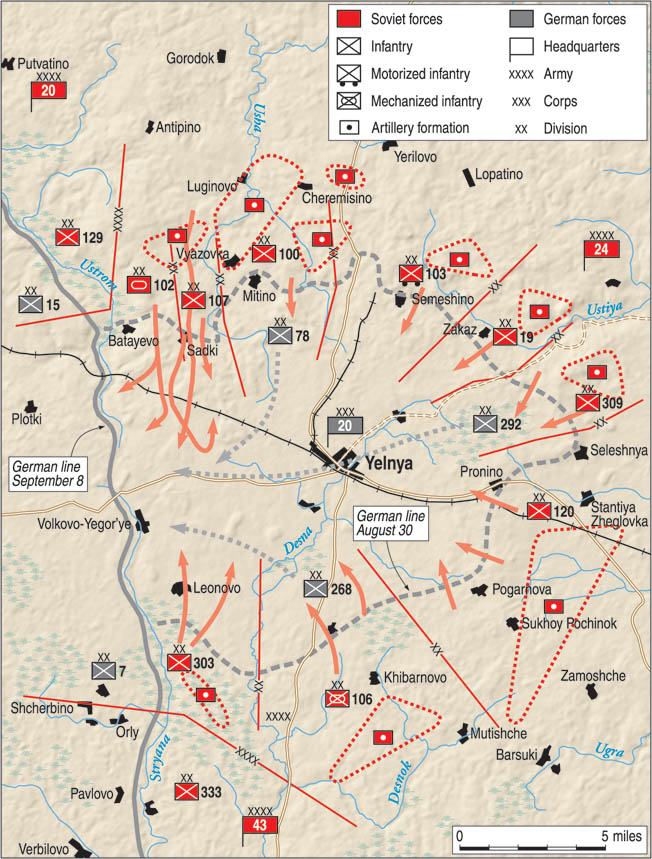
THE BATTLE OF YELNYA

This is pretty much exactly what is about to happen this turn, except with probably more tanks and with Rokossovsky and Vasillesvky in charge:

Image

https://warfarehistorynetwork.com/2019/ ... at-yelnya/

I pulled back in the north to try to straighten my line and make sure that at least there was not a disastrous breakthrough. At this point, especially given that the river defense in the south appeared to be not even close to successful and easily broken, I was regretting not deploying any turn 4 reserves in the north. Even just 5 divisions or so could have made a big difference, and with so many reserves I could have easily deployed at least that. I could have deployed a great deal more, also:

Image

One good thing was at least I successfully attacked the Lehr regiment and took back one hex north of Lake Ilmen:

Image


In the center, there was a great and overall quite successful counteroffensive, especially at Yelnya. This first battle was an attack right next to Smolensk, where he had crossed the river. That attack unfortunately failed, with the combat value dropping from 117 to 6:

Image

But things were a lot better at and around Yelnia. All of these counterattacks were on clear terrain, which I am pretty sure helped them to be succesfull a lot. First of all, in this hex that was keeping open his supply lines there were only ~6000 men of the Grossdeutschland regiment guarding it. But 6,000 men are going to have a tough time against 90,000 men... In particular when commanded by a good general like Vasilevsky:

Image

From the link on the battle of Yelnya, here is an excerpt on how the Grossdeutschland regiment was historically attacked near Yelnya:
Brig. Gen. Wilhelm-Hunold von Stockhausen’s Infantry Regiment (motorized) “Grossdeutschland” (GD) had arrived to take over from Reich security forces guarding the airfields, freeing them up for use at the front, but even with those added troops Hausser was hard pressed to hold his division’s positions.

Von Vietinghoff, worried that his corps might be split in two, discussed the situation with Guderian. When the two were finished, it was decided that the Dorogobuzh mission had to be secondary to clearing the Yelnya bend. Therefore, Hausser was ordered to disengage and head south to occupy the northern flank of the Yelnya salient, releasing the 86th Infantry Regiment.

With the Reich pulling out, the positions west of the airfields were also occupied by the GD. An account in the divisional history describes the first perceptions of the new positions: “The fields are fallow, the villages gloomy. The landscape is wide, gray, and ugly, the sky appears larger than at home. In the terrain in front of us flows a small brook. Over in the direction of the enemy lay a series of interconnected woods.”

Red Army artillery gave the GD a warm welcome. Heavy fire of all calibers raked the area as the men dug in. A member of the unit described the barrage: “Most of the men are sitting in a slit trench. It is narrow and deep. While under artillery fire there are only three possibilities; either one is not hit at all, or one is temporarily buried, or there is a direct hit. Then it’s all over in any case. In artillery fire one must remain in one place. Many have died while searching for another place.”

After the initial bombardment an uneasy peace fell upon the area. The regiment used the time to strengthen its positions knowing that the lull would not last long. Reconnaissance patrols were already reporting the sounds of motorized equipment in the distance. It was clear that the Soviets were bringing reinforcements to the front and that a new attack would soon take place.

Much the same thing happened in the game, with Vasilevsky bombardming the regiment with 1,260 artillery pieces.

In this hex the 17th Panzer division was similarly attacked by 90k men under Vasilevsky. 90k men can do ok on clear terrain against a single division, at least if that division is heavily fatigued from a lot of combat etc in previous turns, like the 17th Panzer division was:

Image

In this hex, one more Panzer division was attacked by vastly numerically-superior forces. Although the numerical superiority was less and the general wasn't as good, I was attacking here with a lot of tanks although not yet the ones from Rokossovsky, although I don't remember if I threw in one or two of his divisions (might have). 67k men and 489 tanks against 1 Panzer division that had just been fighting repeated battles and was running low on supply etc...:

Image

After these attacks, all the Panzer divisions had been herded and surrounded onto one hex (the hex of the town of Yelnia itself, in fact!!! Now it was time to bring in the big boys. Rokossovsky attacked the 3 Panzer divisions, including the two which had just lost the other battles, with a force consisting entirely of tank and meh divisions and numbering 77,369 men, 812 guns, and 1,937 tanks. The tank/mech divisions had all been staying out of combat previously and refitting, so they were in good shape with good combat values etc. The combat value dropped from 416 to 254. But despite that drop, it was still plenty high to do the job:

Image

I am not going to post more excerpts, but if you read through that article, you may also notice frequent references to ferocious Soviet attacks against the 10th Panzer division, which is one of the three divisions that Rokossovsky and Vasilevsky were counterattacking in the game.


Clearly this had to count as a great success (although despite the "victory, Soviets lost about 4x as many tanks, and also more men.")

In the area around Gomel, I was still trying to do a slow fighting retreat around Gomel. I was trying to avoid giving up ground here any more than absolutely necessary, because as you go east, the terrain just gets worse for defending, so it seemed better to try to fight as best as you can in the good terrain. Also, I didn't want a breakthrough around Gomel threatening the northern flank of the Kiev area (although at this point that concern was starting to go out the window):

Image

In the south, I tried to re-establish my river defense as best as I could. It obviously would not hold much longer, but I was hoping things could be slowed down a bit more for maybe another turn. So I counterattacked his crossing near Dnepropetrovsk and also put a lot of units around it to try to contain the breakthrough. First counterattack was a failure, despite Bobkin being a supposedly good general, the combat value dropped from 222 to 57:

Image

2nd counterattack was from Vatutin, one of the best Soviet generals. Nevertheless, combat value dropped from 330 to 74, and the counterattack easily failed:

Image

In the far south, nothing happened since he had not actually crossed yet or attacked across the river.


The Battle of Yelnya was remembered and trumpeted as the first great Soviet success of the war (the tremendously successful Great Patriotic Velikie Luki Offensive which just a few weeks ago Stalin was sure was about to turn the tide of the war had somehow since been forgotten).

This also provided a convenient excuse to forget all about the failure to hold the Dnieper in the south. [:D]
Floxolydian
Posts: 46
Joined: Thu Mar 25, 2021 3:02 pm

RE: The Great Patriotic Rout - Bread (G) vs Beethoven (S)

Post by Floxolydian »

Routing 3 Panzer Divisions at turn 7 is no small feat! Bravo! :D

Looks like it's already a grind pretty much everywhere for the axis. Struggling even to encircle smaller chunks of soviet forces, having to resort to using precious Panzer divisions for the breakthrough who are then also not able to make deep penetrations.

And at its base are really weak formations! Not only at the yelna salient but also in the north: the 900th mot. Lehr Brigade that you pushed aside this turn and a mere regiment of the ss polizei division. Looks lackluster borderline desperate to me.

Don't want to write it off just yet but that's a tough, tough position he's in.
User avatar
Beethoven1
Posts: 1439
Joined: Wed Mar 24, 2021 9:23 pm

RE: The Great Patriotic Rout - Bread (G) vs Beethoven (S)

Post by Beethoven1 »

ORIGINAL: Floxolydian

Routing 3 Panzer Divisions at turn 7 is no small feat! Bravo! :D

Looks like it's already a grind pretty much everywhere for the axis. Struggling even to encircle smaller chunks of soviet forces, having to resort to using precious Panzer divisions for the breakthrough who are then also not able to make deep penetrations.

And at its base are really weak formations! Not only at the yelna salient but also in the north: the 900th mot. Lehr Brigade that you pushed aside this turn and a mere regiment of the ss polizei division. Looks lackluster borderline desperate to me.

Don't want to write it off just yet but that's a tough, tough position he's in.

It was a good counterattack at Yelnia, but keep in mind the conditions for it were basically optimal - a bunch of full or almost full CPP Soviet tanks against heavily fatigued, poor supplied Panzer divisions in clear terrain. When the circumstances have been less good, a large # of other counterattacks have failed. We are a couple of turns ahead, and... spoiler... Germany is still pushing Leningrad!
User avatar
loki100
Posts: 11708
Joined: Sat Oct 20, 2012 12:38 pm
Location: Utlima Thule

RE: The Great Patriotic Rout - Bread (G) vs Beethoven (S)

Post by loki100 »

agree, you have to grab these chances - even if all it does is raise your morale. In reverse as the axis player, you sort of need to accept that something like this will hit you and just hope its not too disruptive [:)]
User avatar
Beethoven1
Posts: 1439
Joined: Wed Mar 24, 2021 9:23 pm

RE: The Great Patriotic Rout - Bread (G) vs Beethoven (S)

Post by Beethoven1 »

ORIGINAL: loki100

agree, you have to grab these chances - even if all it does is raise your morale. In reverse as the axis player, you sort of need to accept that something like this will hit you and just hope its not too disruptive [:)]

Since you are reading, I just want to mention how much I like the terrain layout in Yelnya. I am not sure if that is simply the way it actually is (probably so based on research), but the way it is set up with the swamps and forests surrounding Yelnya in a clear area, it makes for a natural place for an ambush/counterattack. If Soviets can sit and hold on the flanks in the good defensive terrain and Germany goes in between through the clear terrain into Yelnya, then Soviets can attack from all sides - which seems to be pretty much what they actually did historically. Combine that with the fact that it is right along the way to Moscow and you can see very easily why it was an important and contested area. So hats off to those responsible for setting it up like that in the game. I definitely noticed it and saw the effects/implications I think.
Post Reply

Return to “After Action Reports”