

For centuries the waters of the Aegean Sea have carried the weight of history. Ancient trade routes, forgotten battlefields, and the legends of heroes once sailed across the same blue horizon where modern warships now patrol.
In 2026, seismic surveys revealed something beneath those waters—an enormous offshore oil and gas reserve later designated the Helene Field. The name was chosen by Greek geologists with deliberate symbolism, invoking Helen of Troy.
What began as a geological discovery quickly became a geopolitical fault line.
Both Greece and the rising regional power known as Modern Troy claimed jurisdiction over the field. Lawyers and diplomats debated maritime boundaries, but at sea the arguments were made by steel hulls and radar locks. Patrol boats shadowed survey ships. Fighter jets crossed invisible lines in the sky. Each incident added another layer to a rivalry that had already been building for years.
The Helene Field became more than energy. It became a symbol!
Greek commentators spoke openly about history repeating itself, drawing parallels with the ancient war described in the Iliad. In that story, kings and heroes fought for ten years over a woman whose name carried the weight of destiny.
Now, once again, a prize named Helen stands between two rival powers.
Modern Troy’s political rhetoric leaned heavily on its own mythology. State media invoked the memory of Hector, the warrior who stood against the armies of Greece. The message was unmistakable: Troy would not yield what it believed was rightfully its own.
Over the past decade the rivalry hardened into a slow-burning confrontation. Greek and Trojan frigates shadowed one another through narrow straits. Electronic warfare aircraft probed radar networks across the sea. Reconnaissance drones circled drilling platforms in silent observation.
Each year the incidents grew more dangerous. Then came the collision.
During a tense standoff near the Helene security perimeter, two warships—one Greek, one Trojan—made contact in rough seas. Both sides accused the other of deliberate aggression. The event became known simply as the Aegean Collision Incident.
No shots were fired. But something changed after that night.
Naval commanders began adjusting contingency plans. Intelligence agencies intensified satellite surveillance. Long-range strike systems quietly moved to operational readiness.
For the past few months, however, an unsettling calm has settled over the region.Trojan airbases remain quiet. Their fleets are largely in port.
Official statements speak of restraint.
Intelligence reports tell a different story:
Missile units have vanished from known bases
Encrypted communications traffic has surged
And a carrier group sails alone in the Ionian approaches, far from its usual patrol routes.
Somewhere beneath the surface of this calm, something is moving.
Ιn 2035, history may be preparing to write its modern chapter.
And this time, the war for Helen may not last ten years.
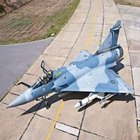
- Rafale_Achilles.png (2.89 MiB) Viewed 1045 times