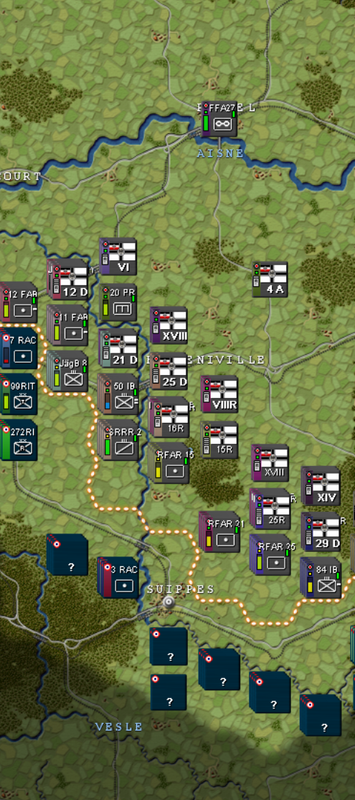
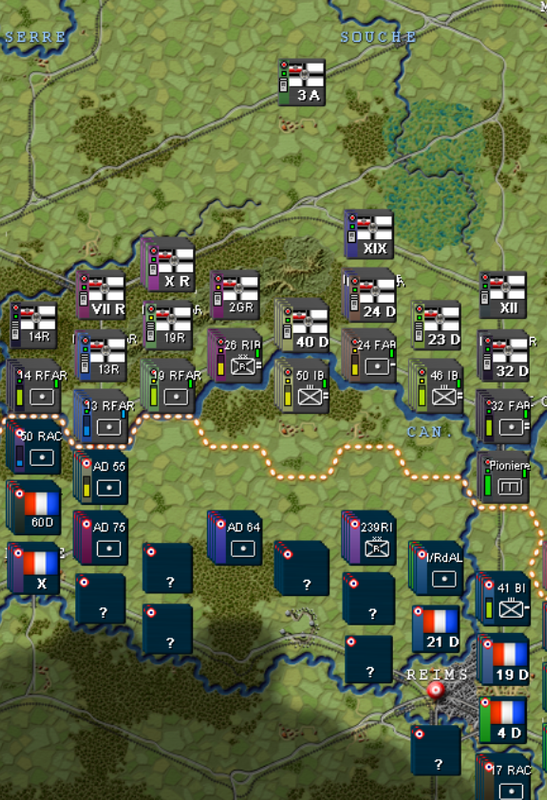
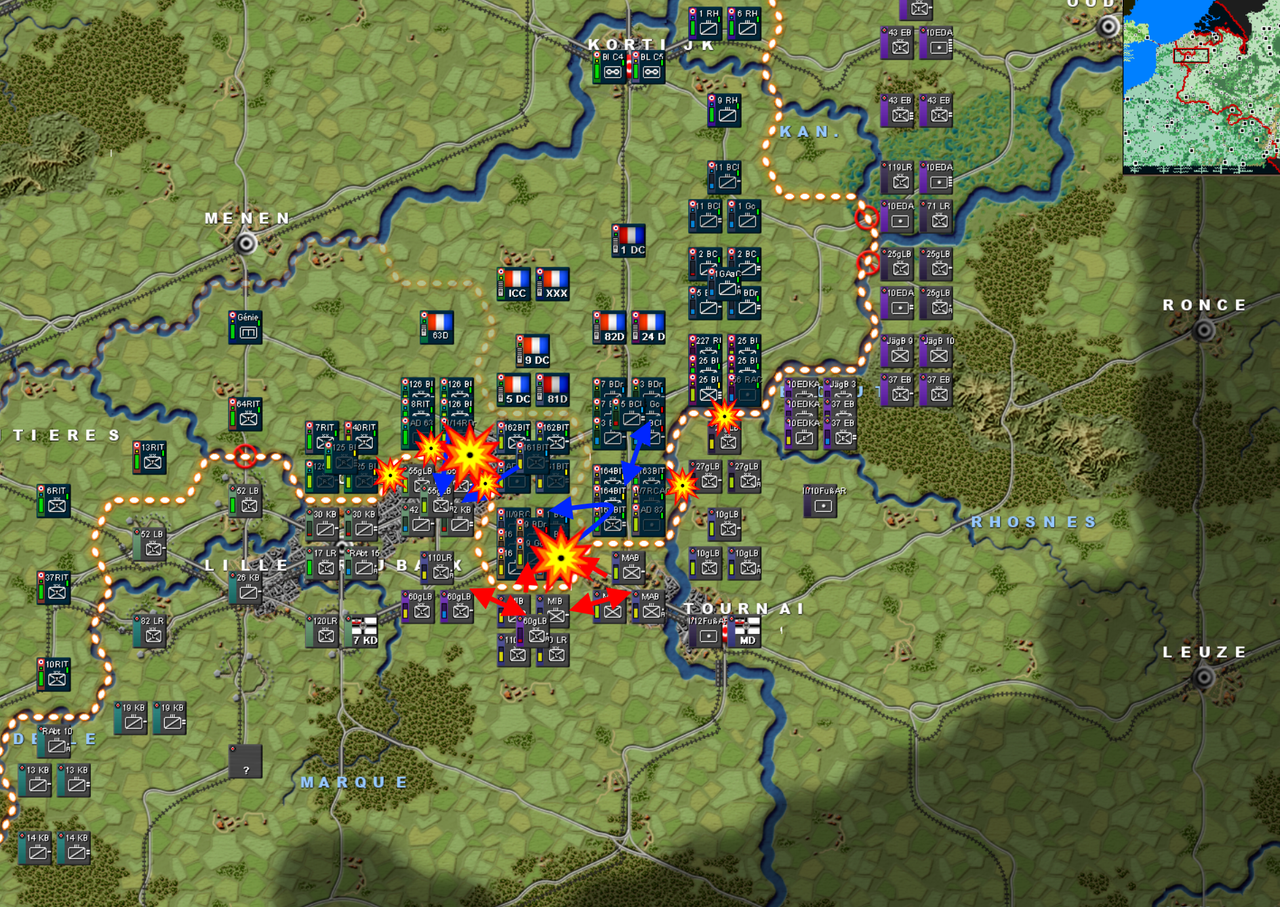
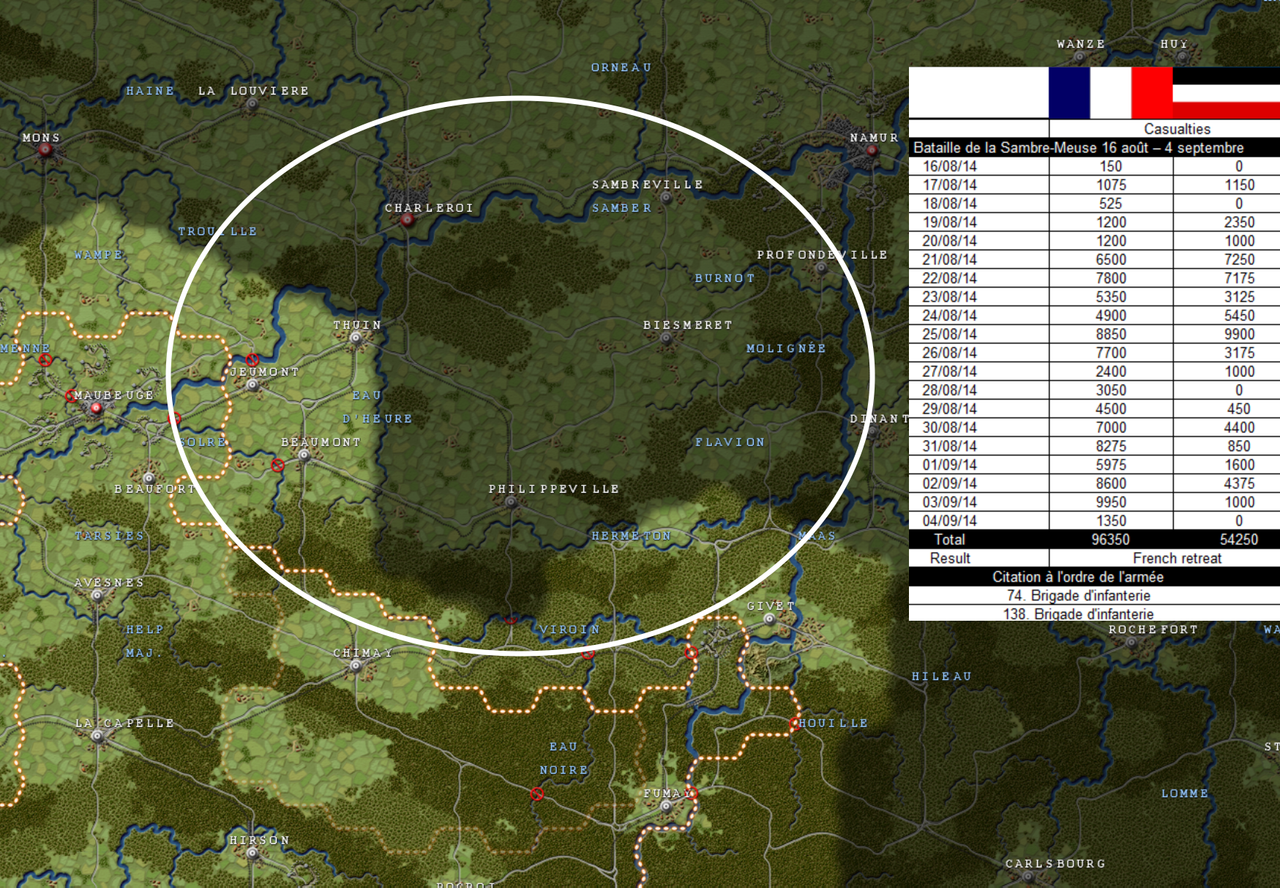
- 4septjourn.png (2.21 MiB) Viewed 4137 times
4 September 1914
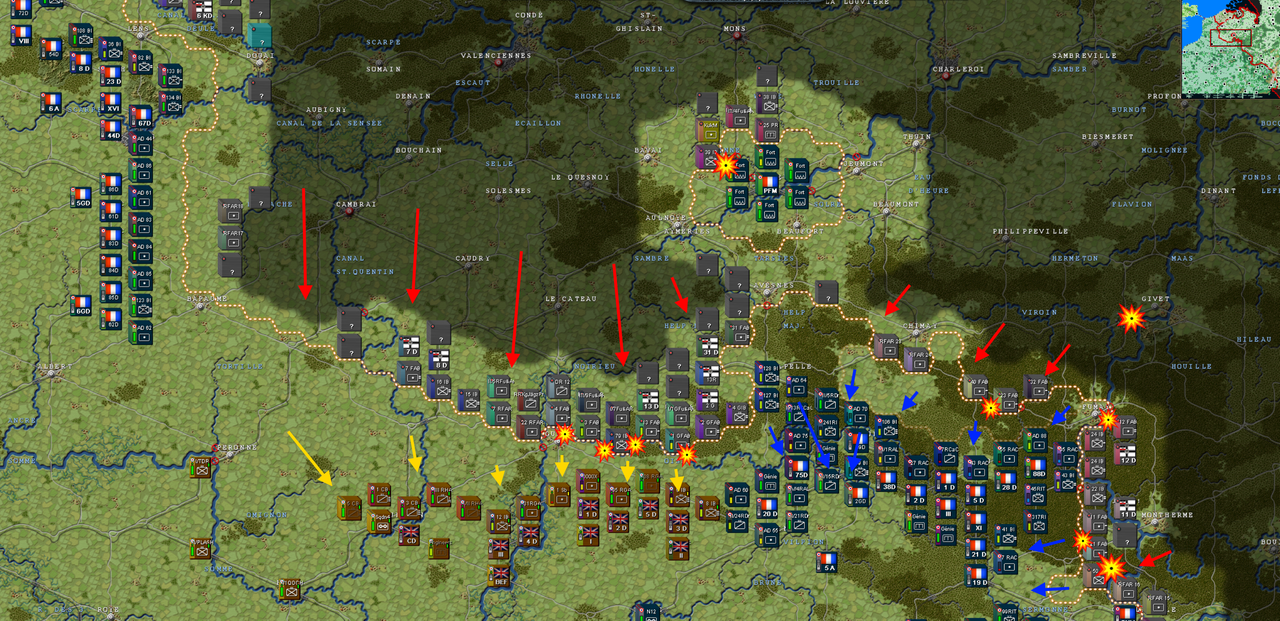
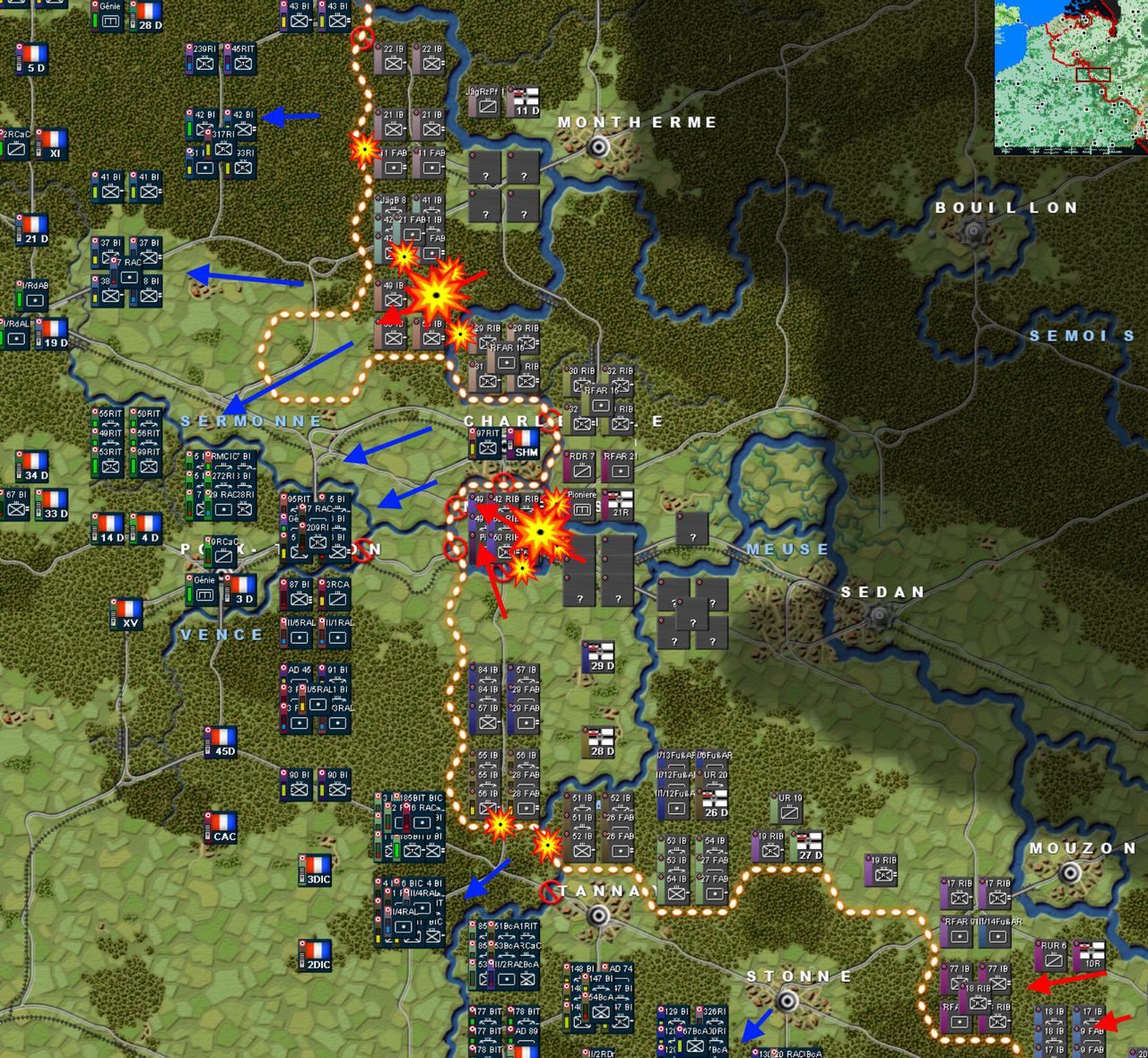
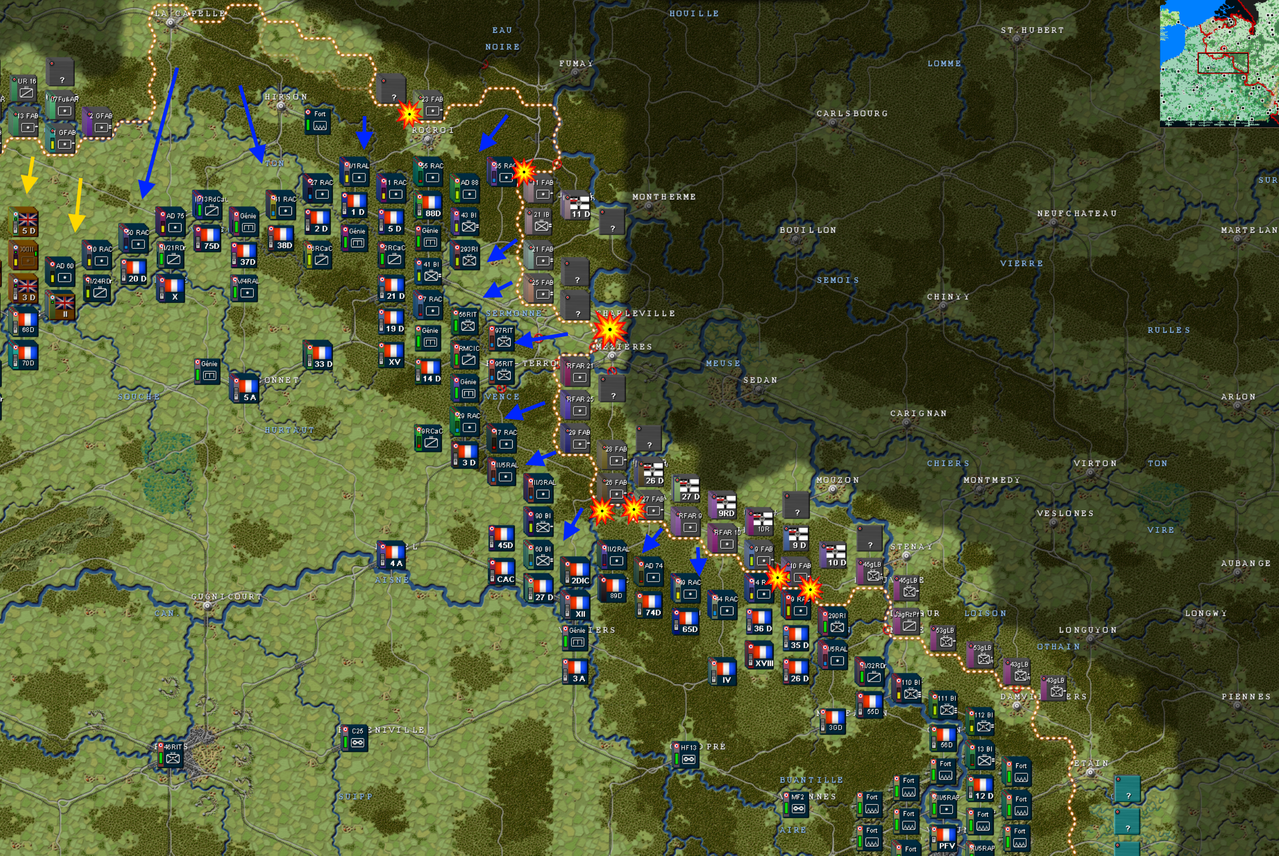
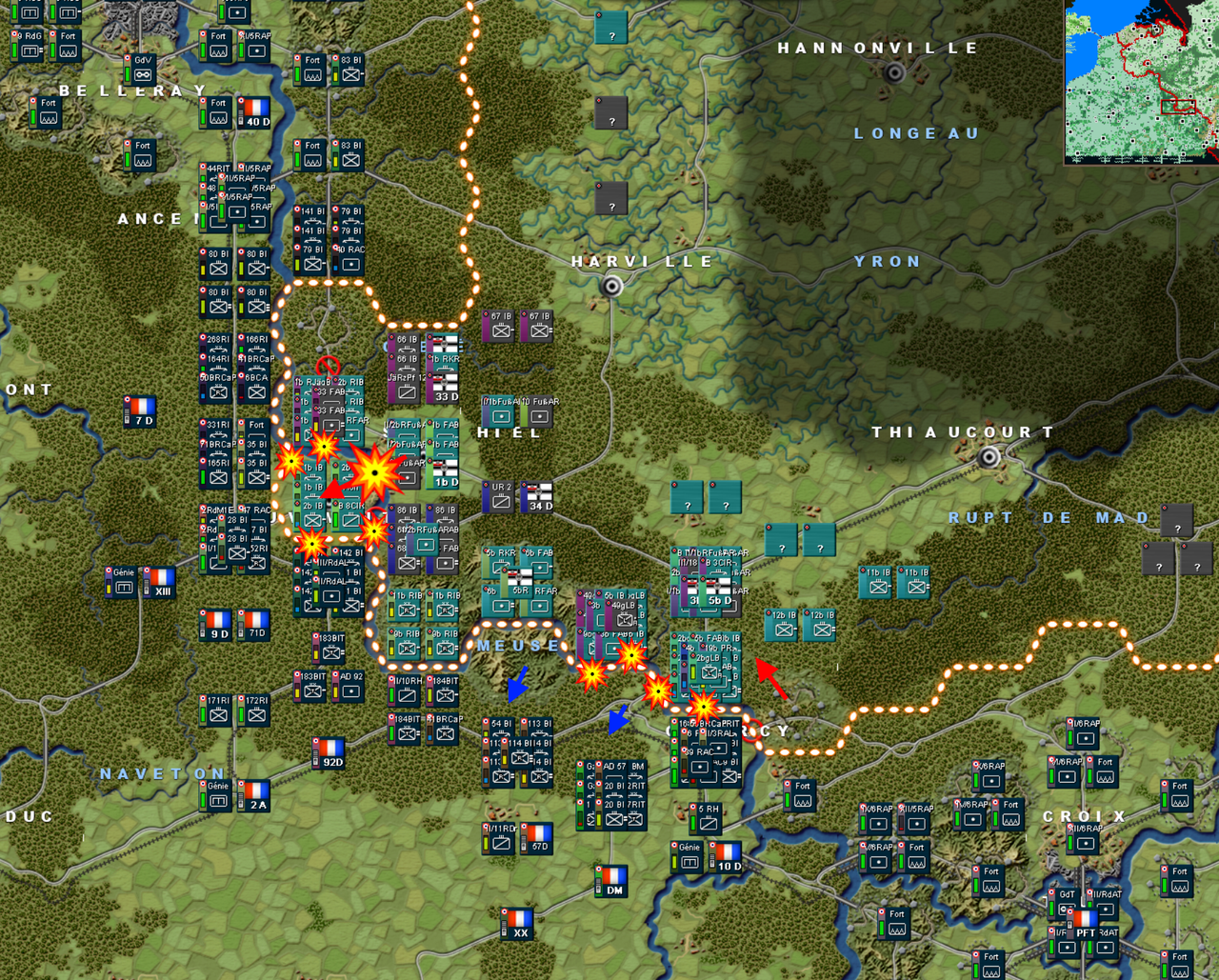
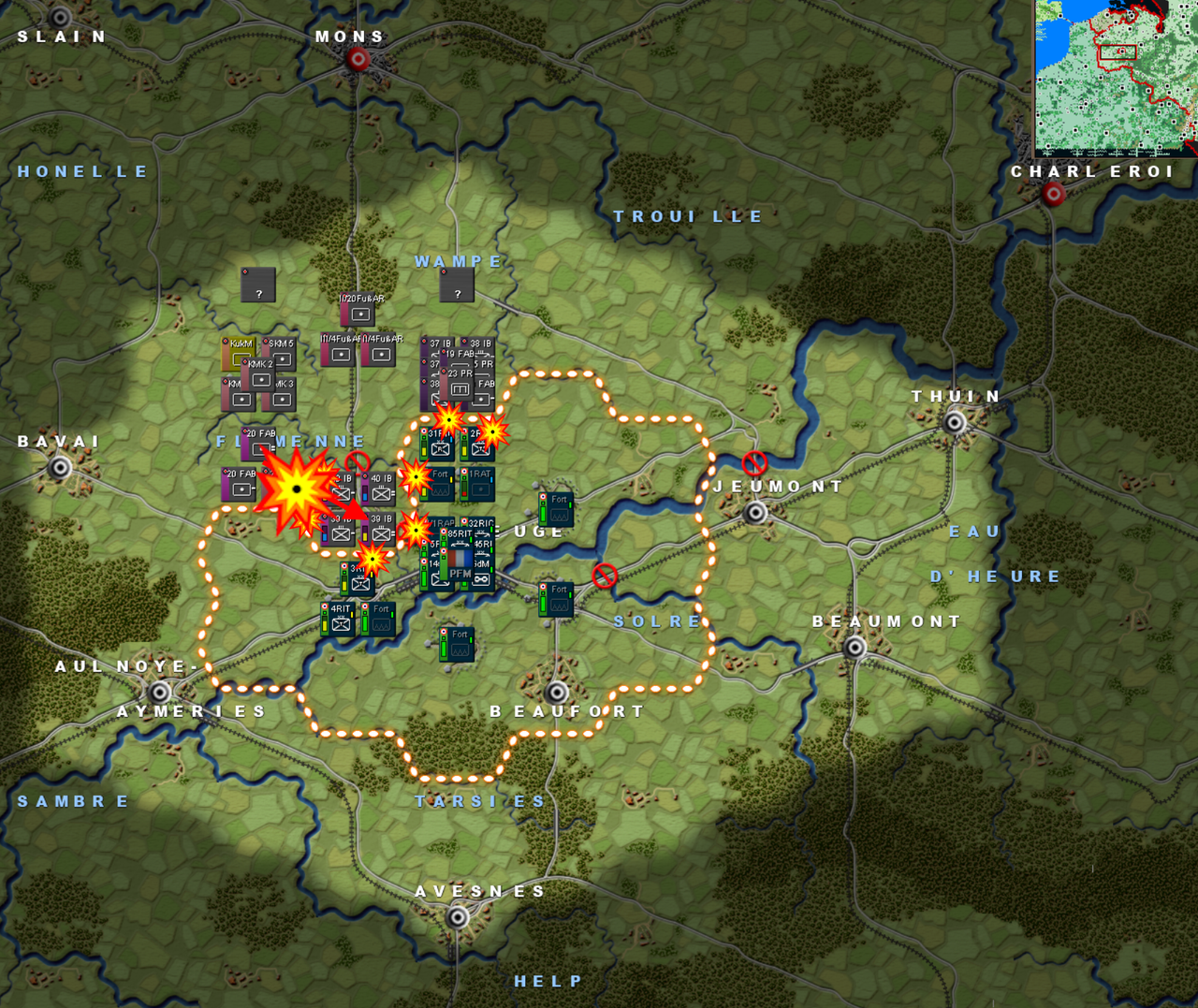
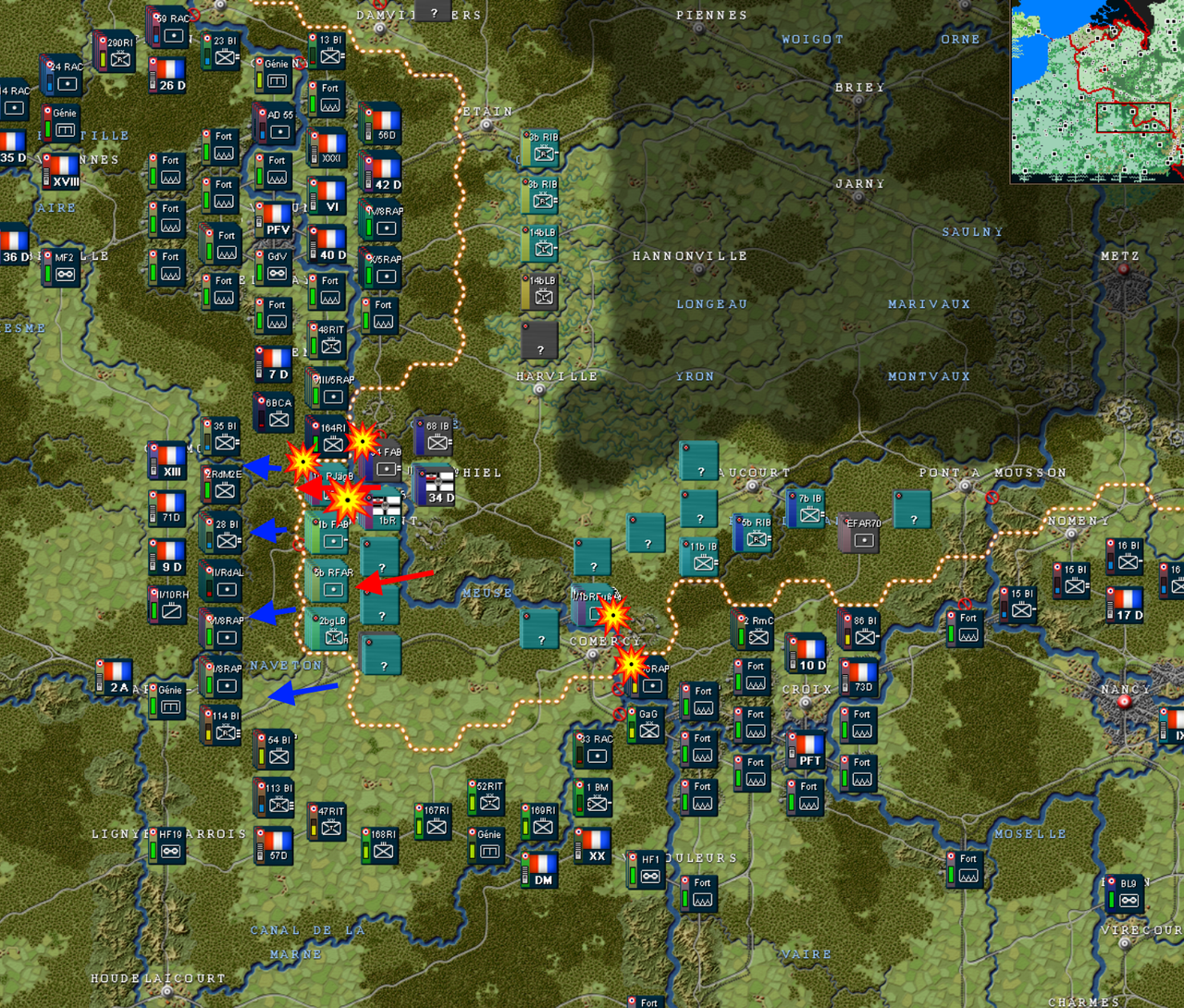
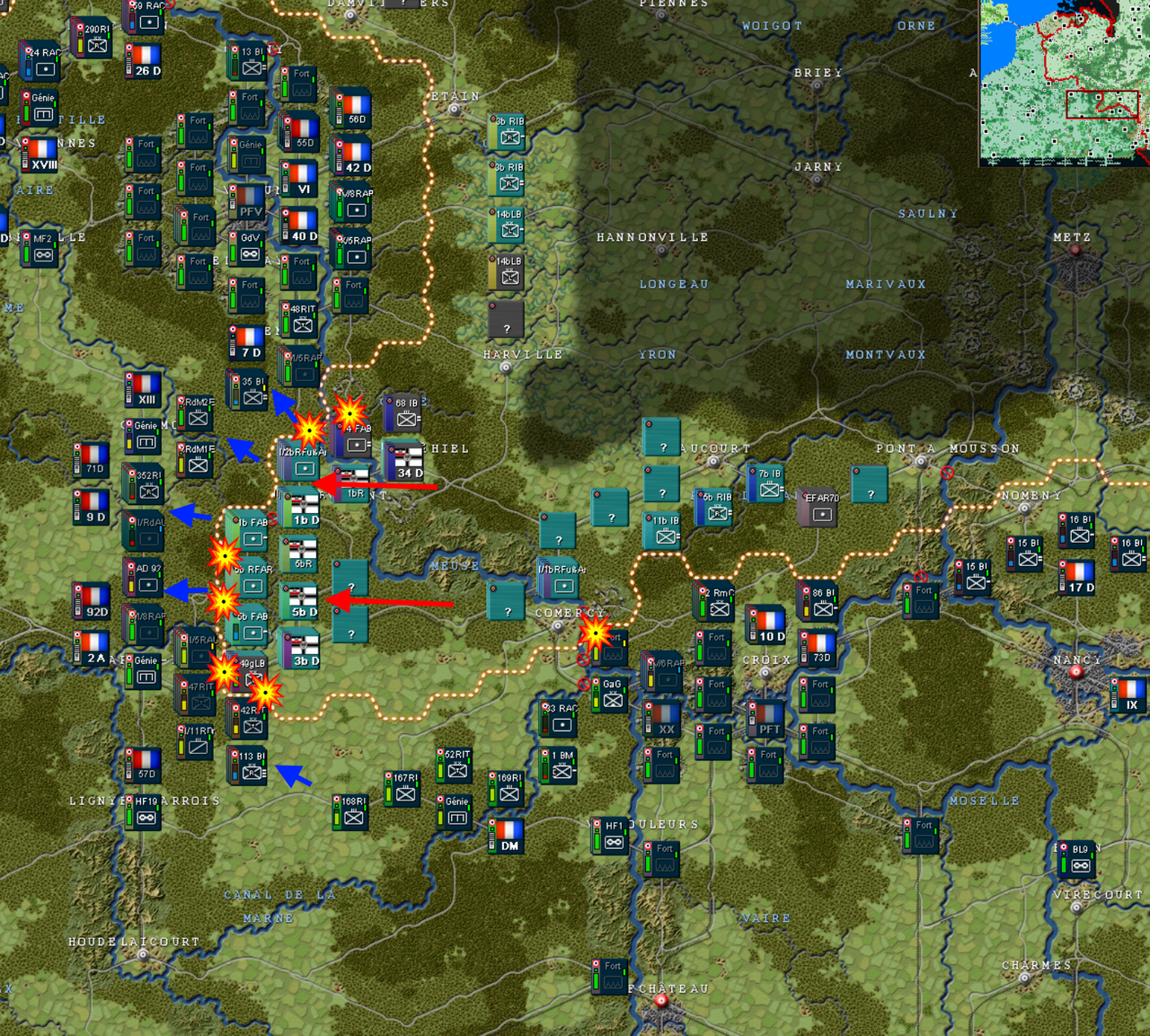
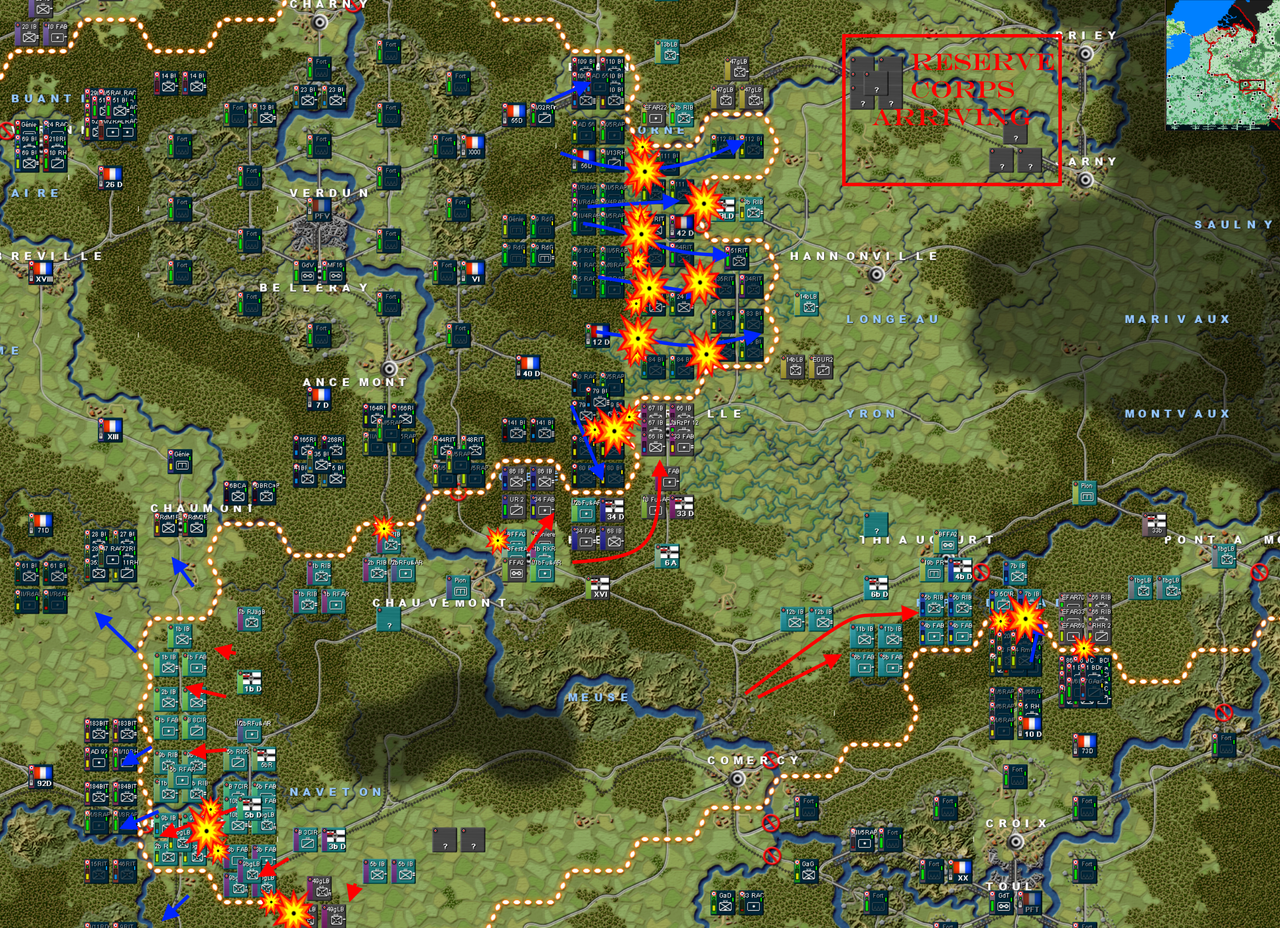
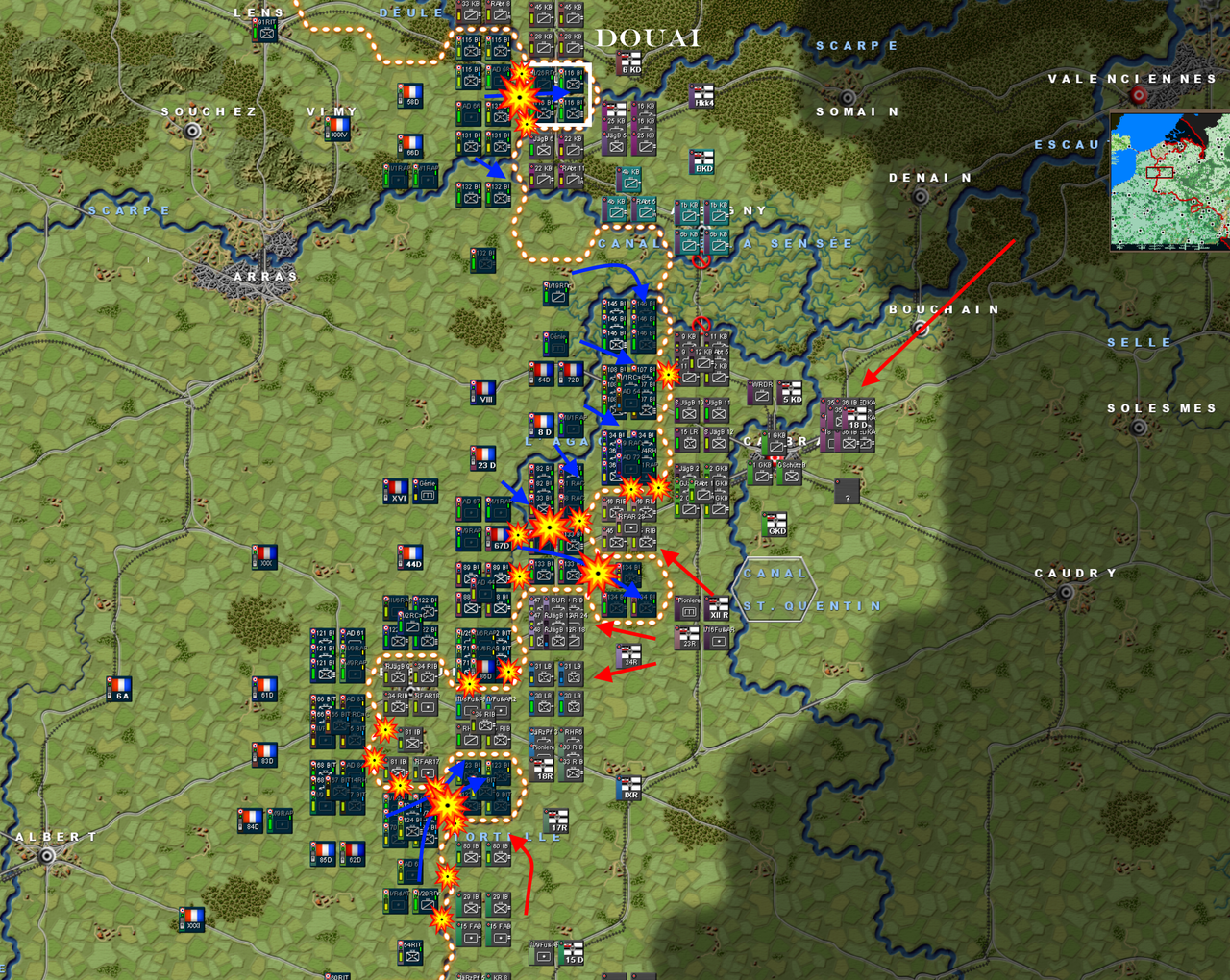
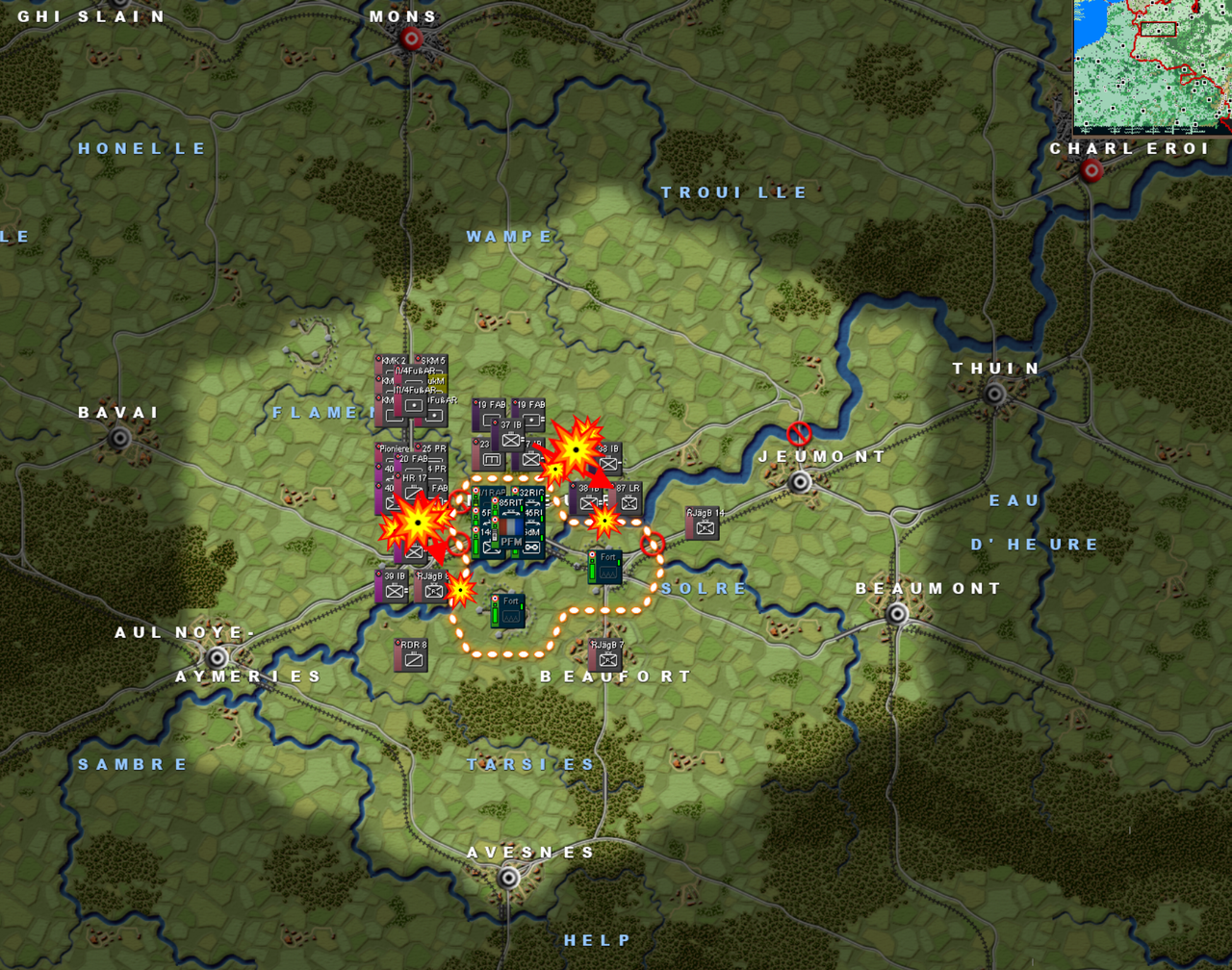
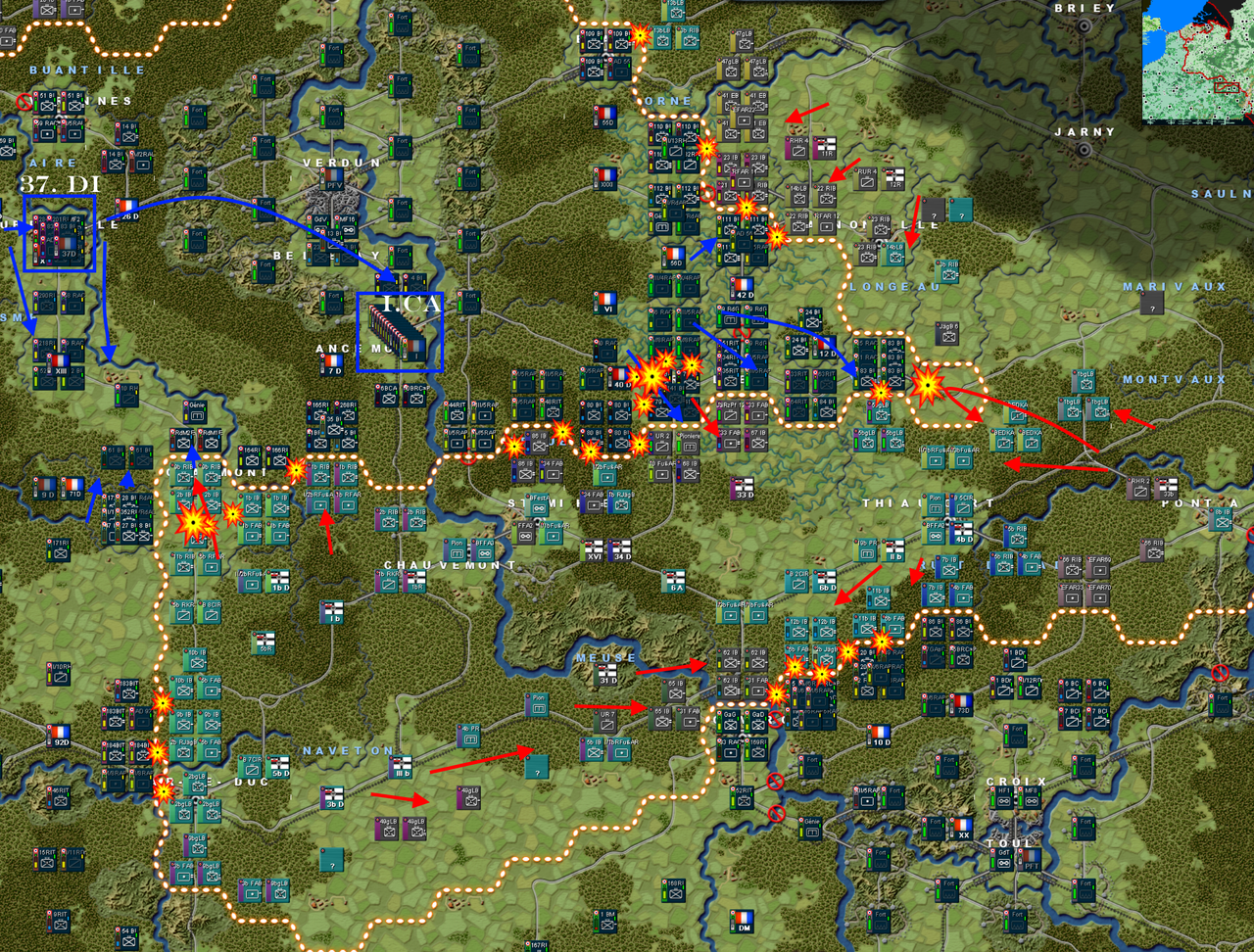
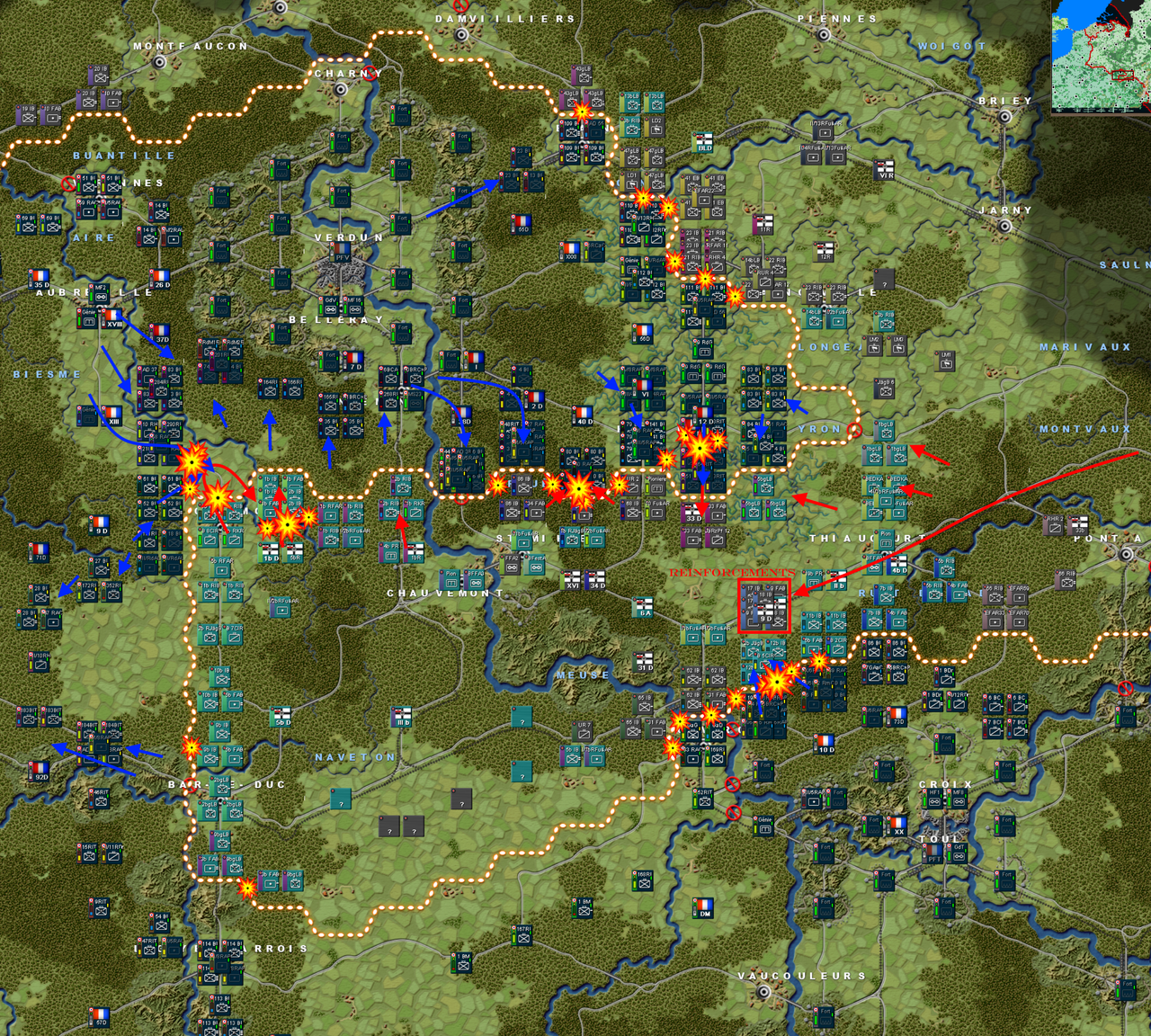
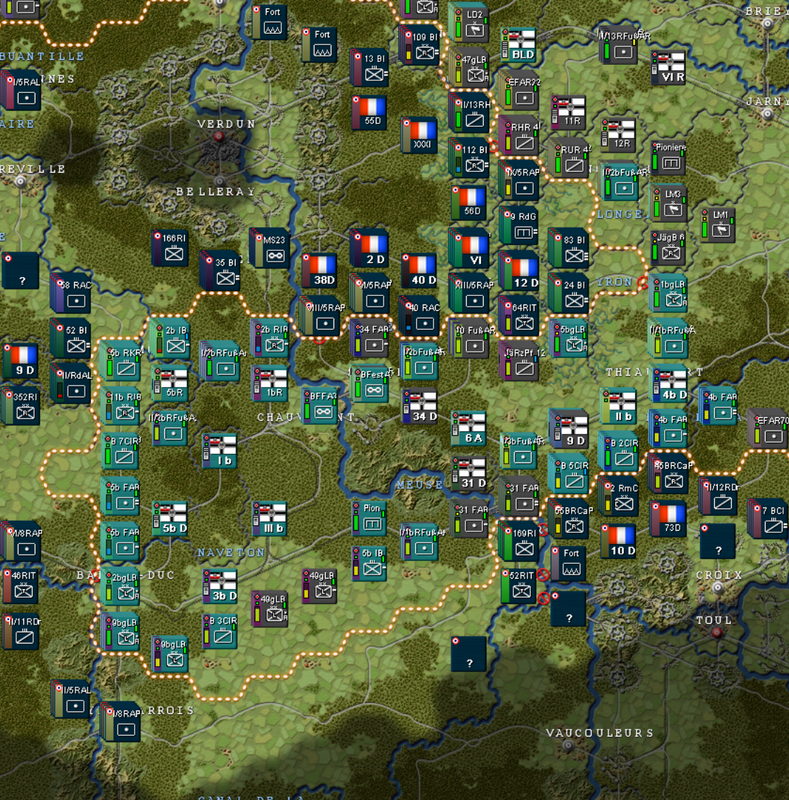
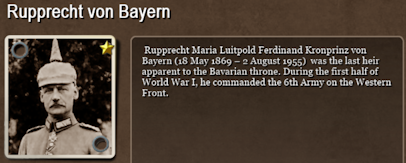
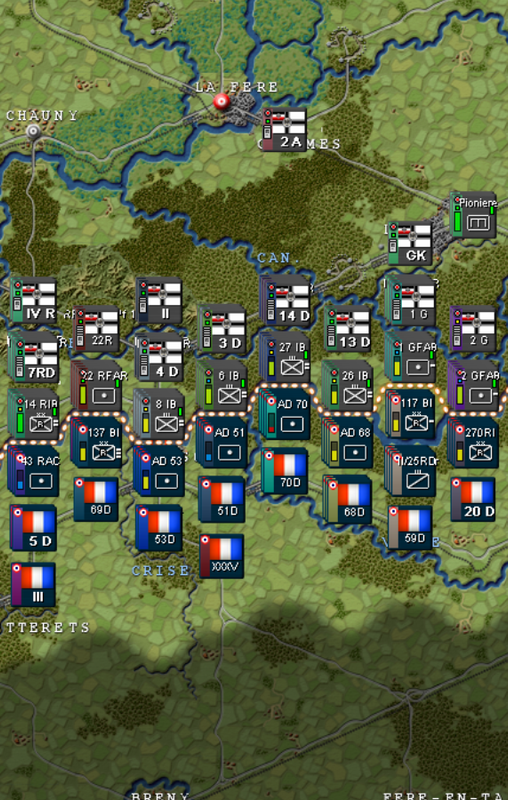
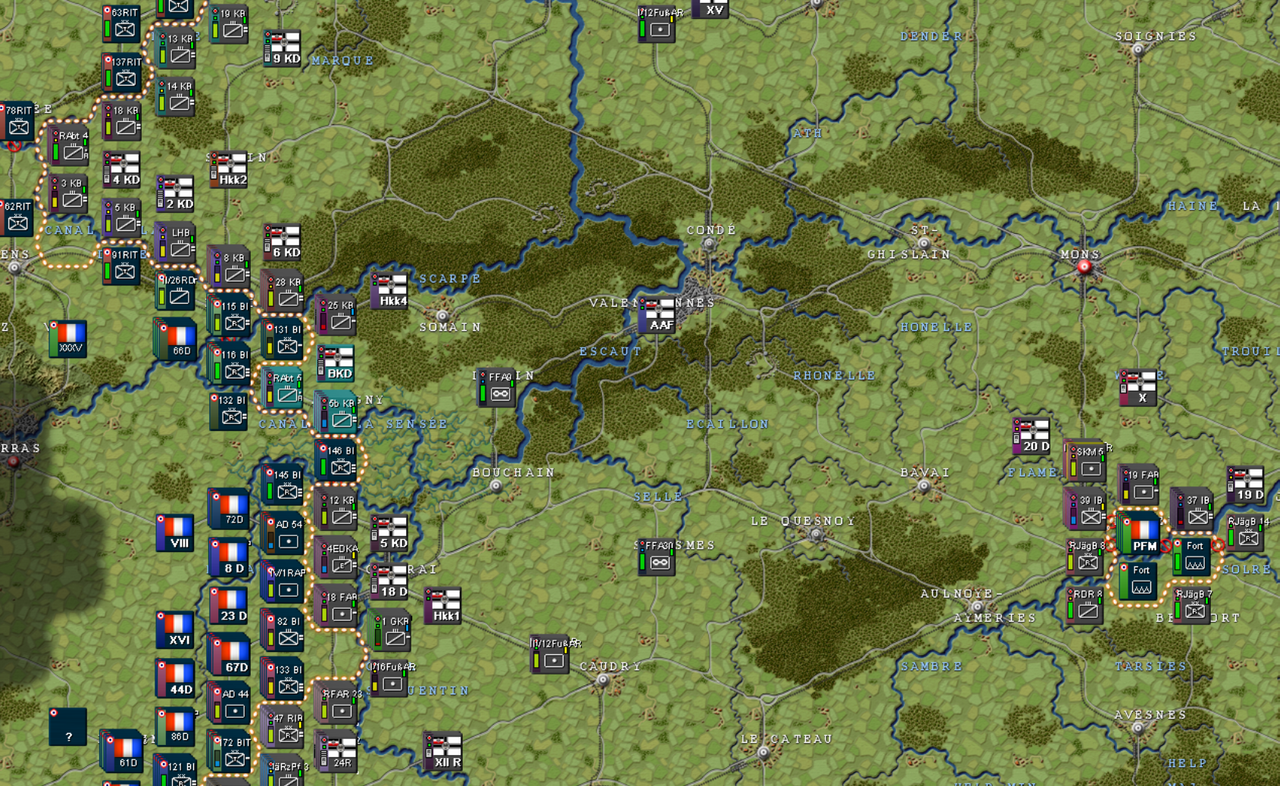
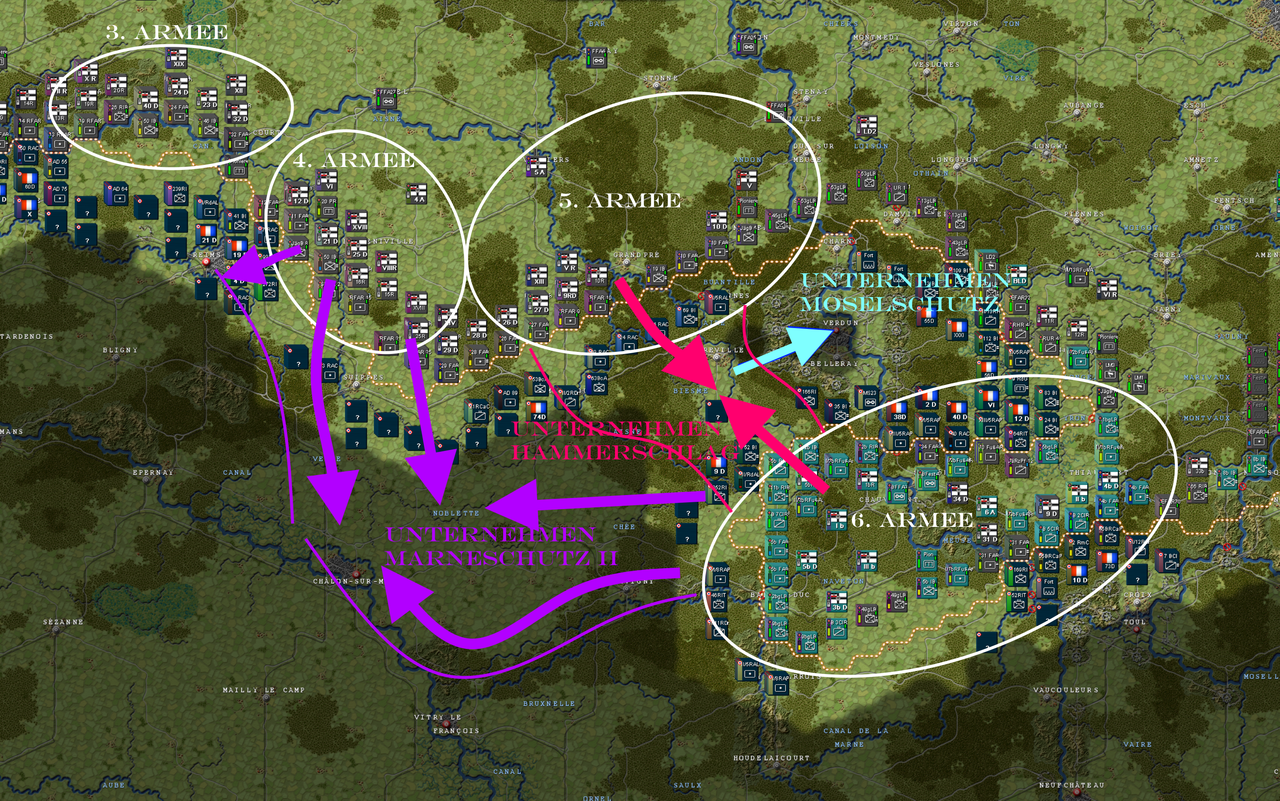
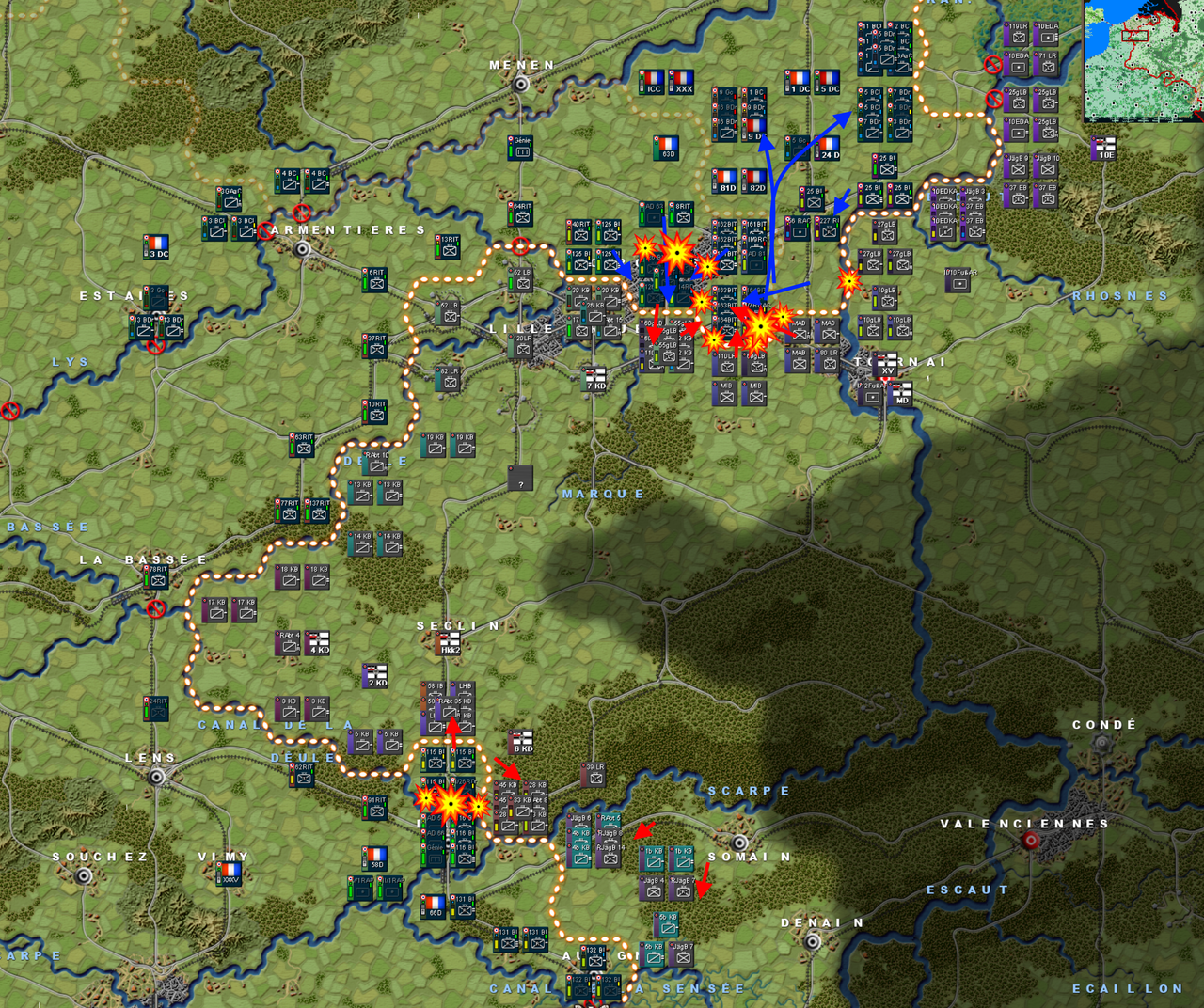
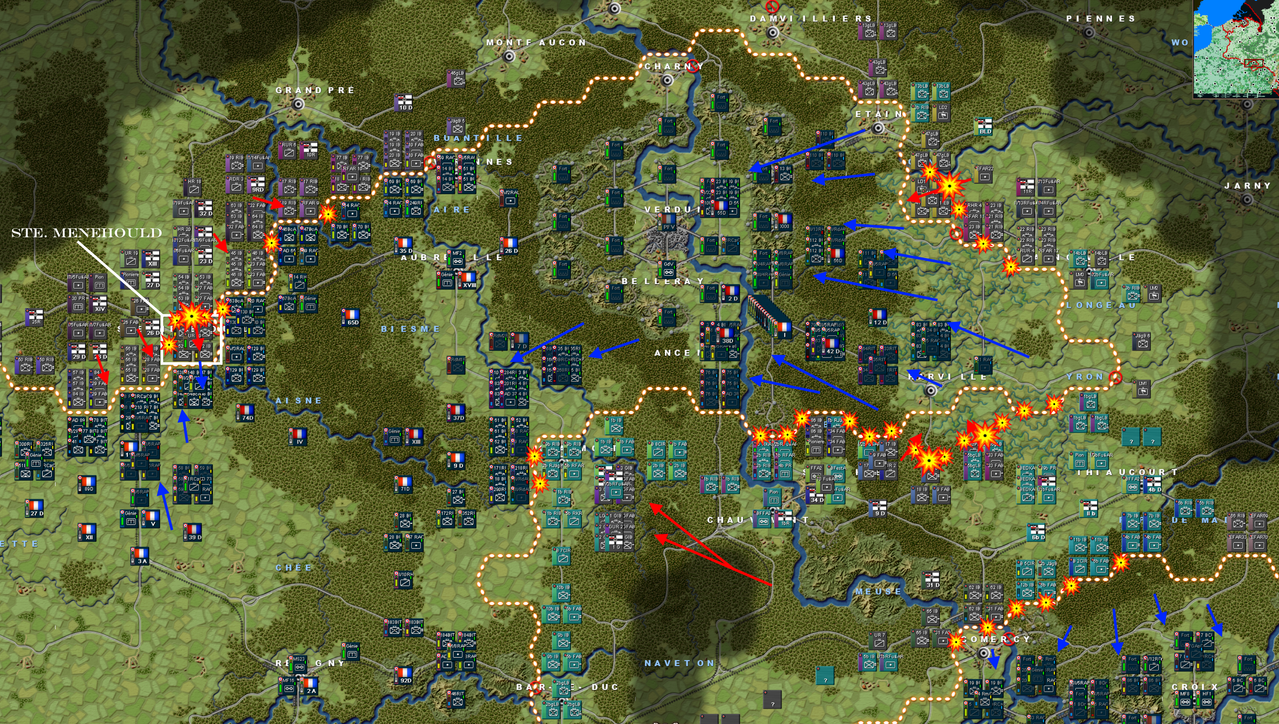
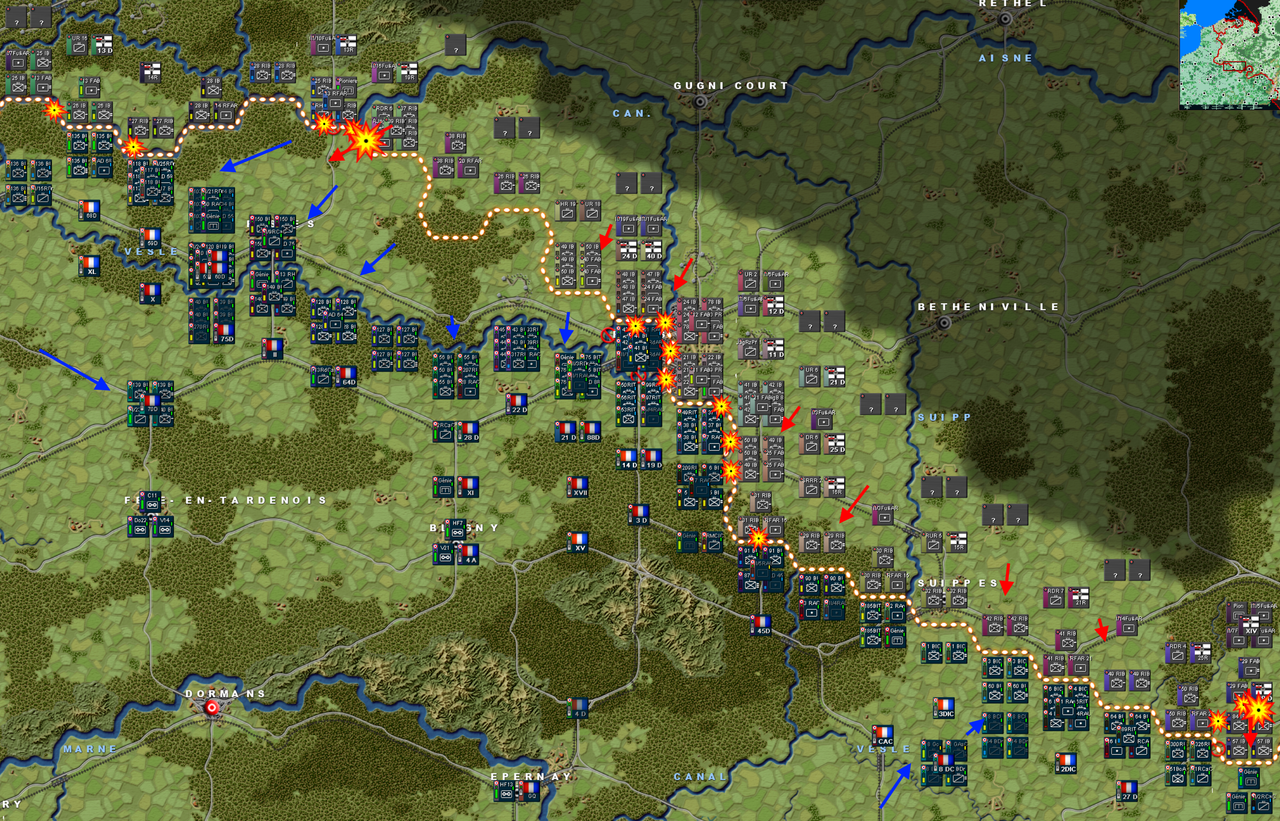
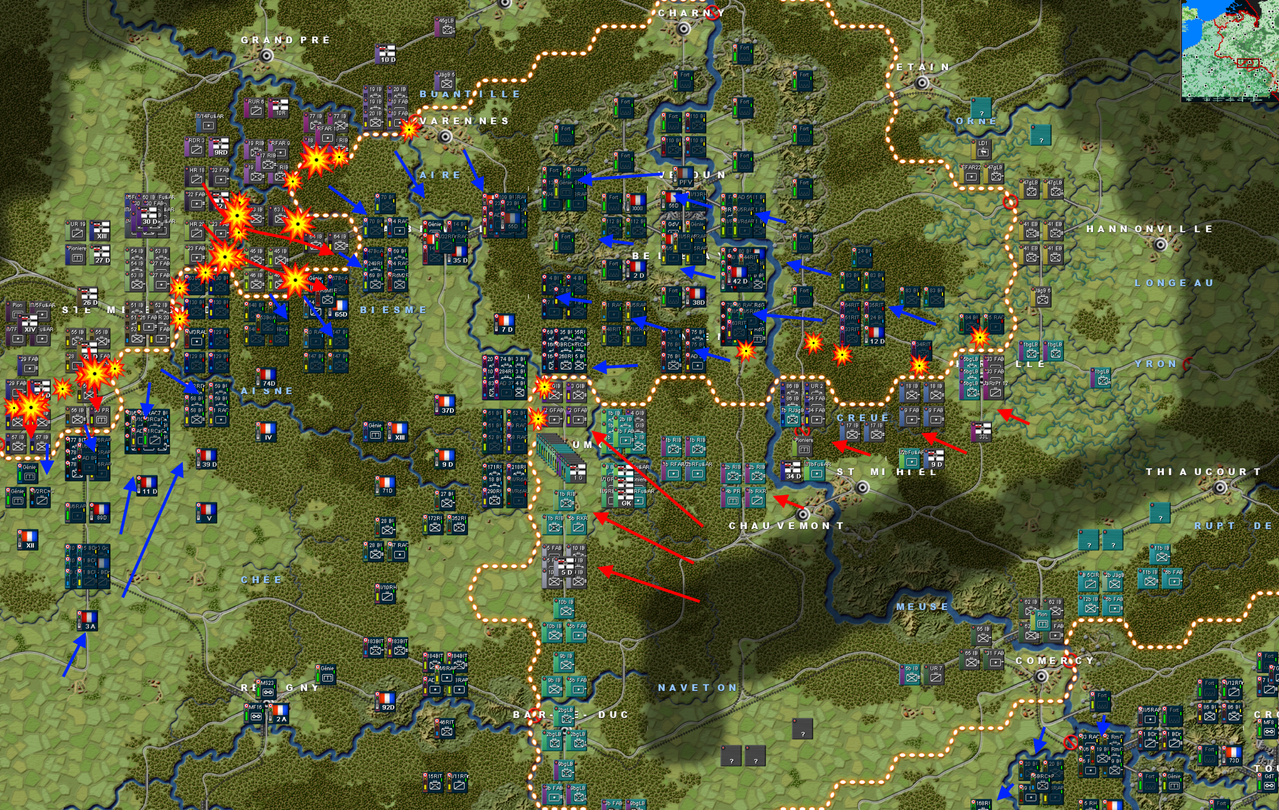
Fort de Troyon is the second fort of the Meuse to fall to the Bavarians. The rest of the frontline is moving slowly on the Meuse and much faster towards the Oise river.
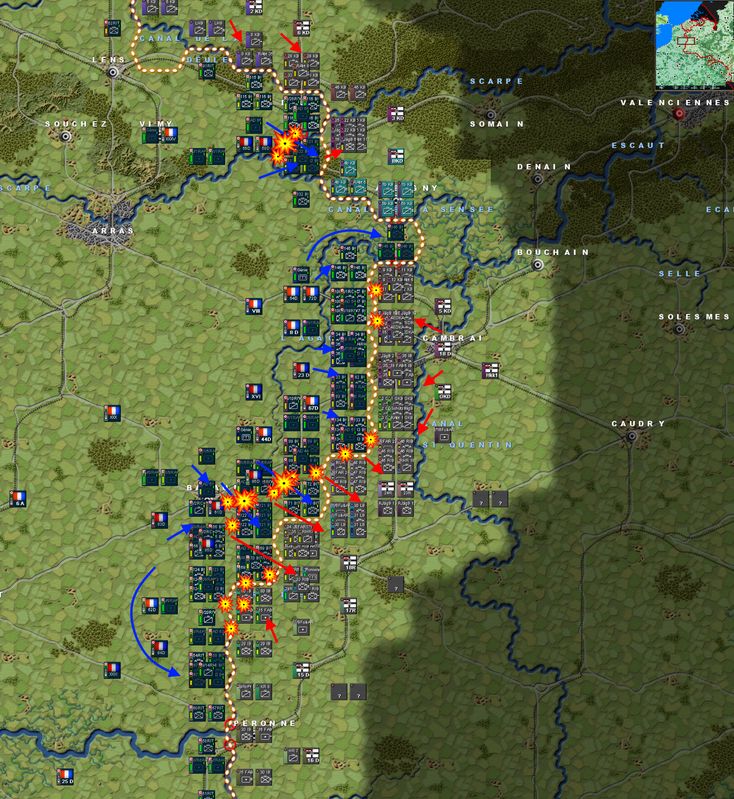
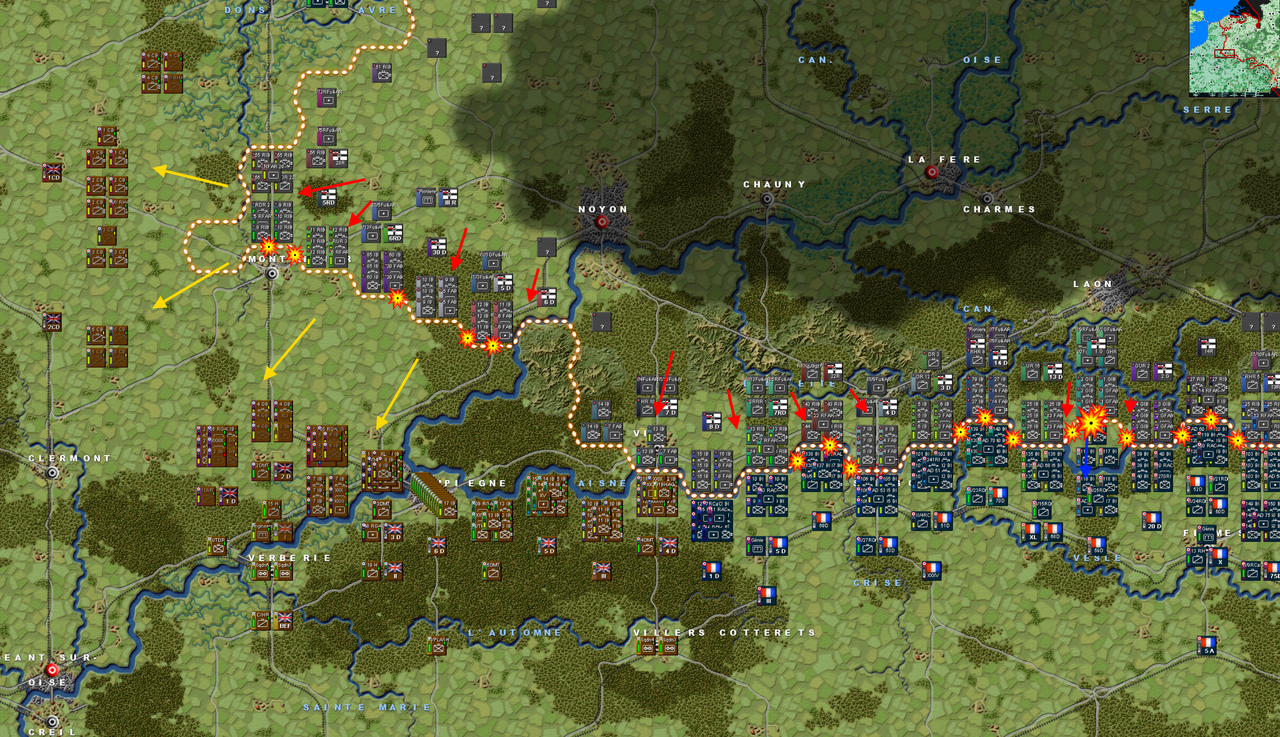
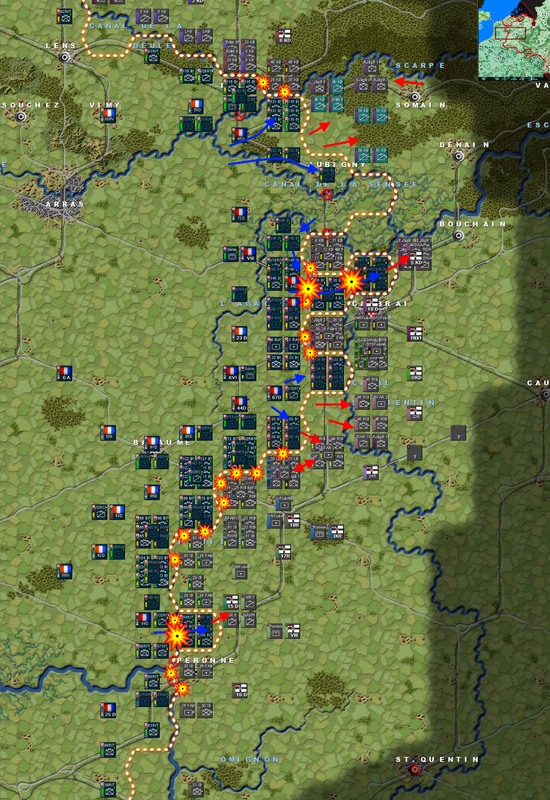
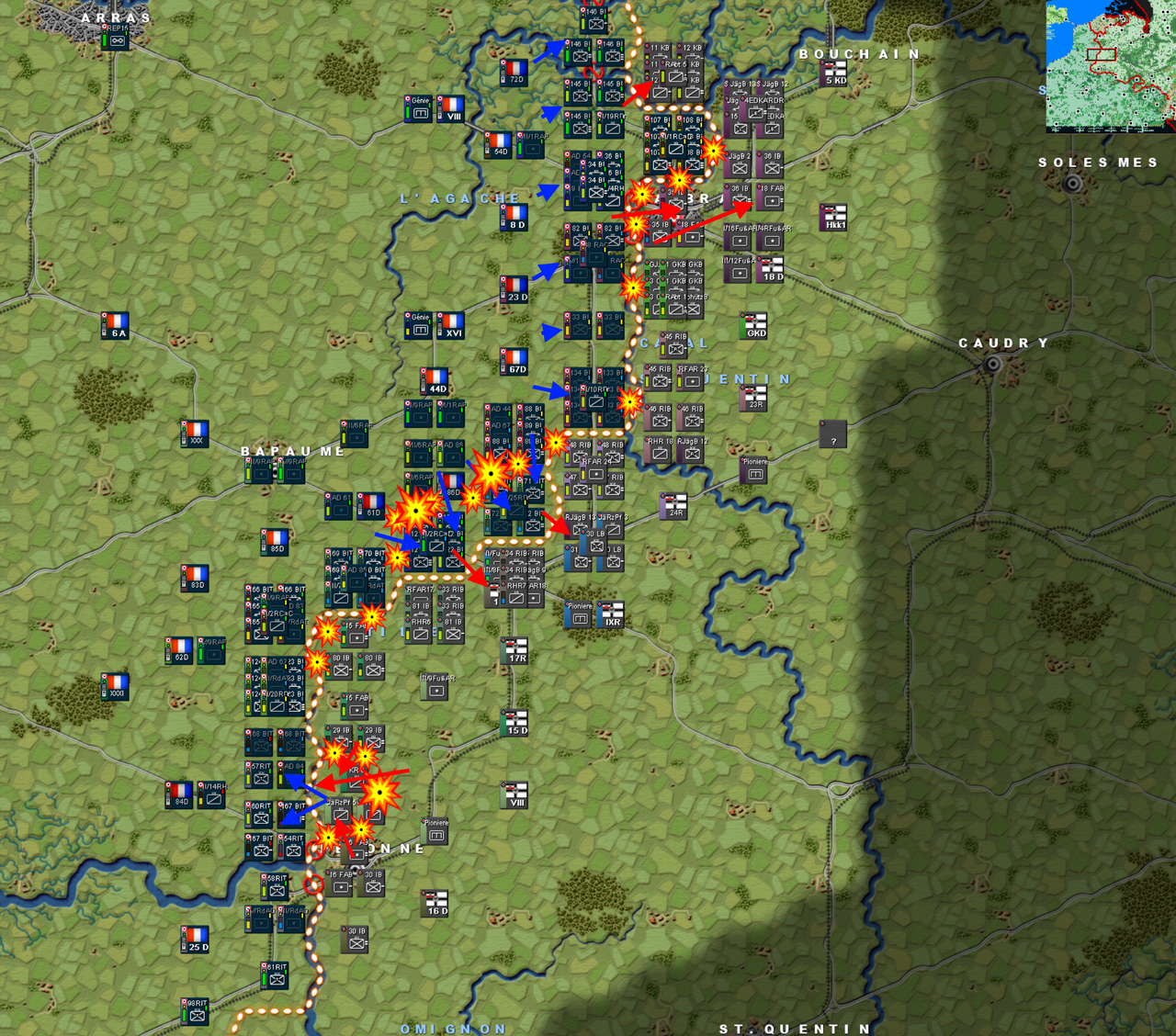
St. Quentin area:
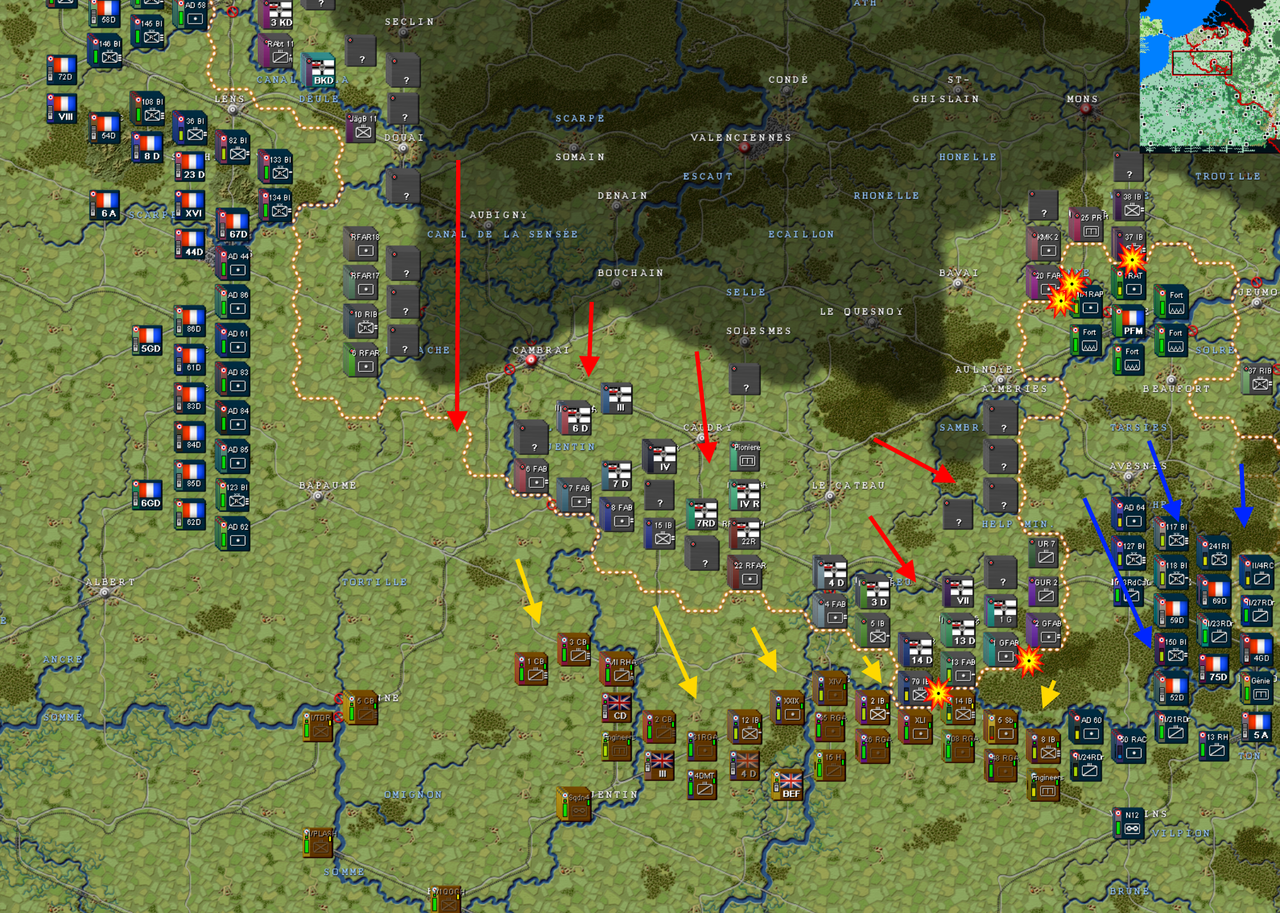
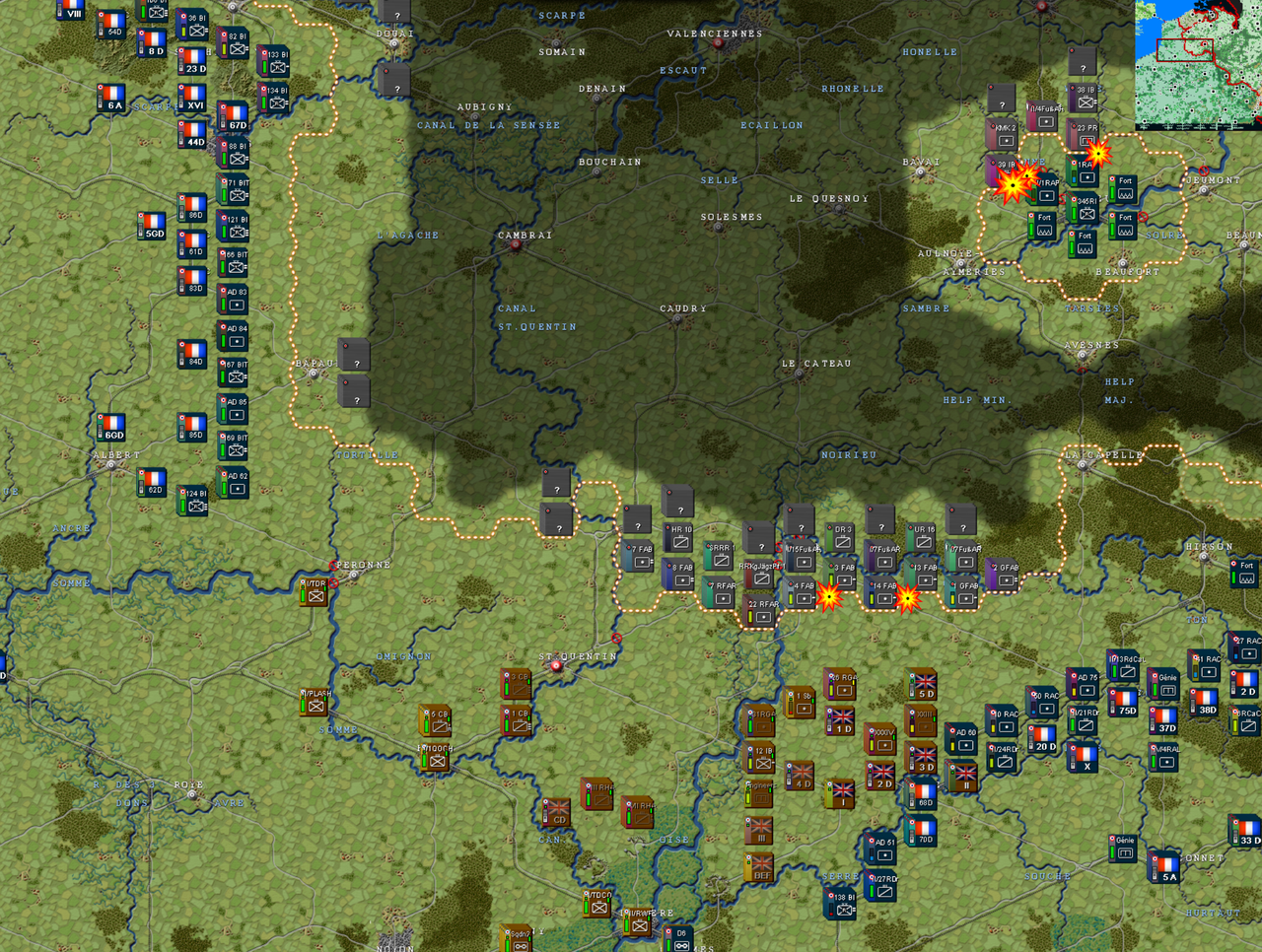
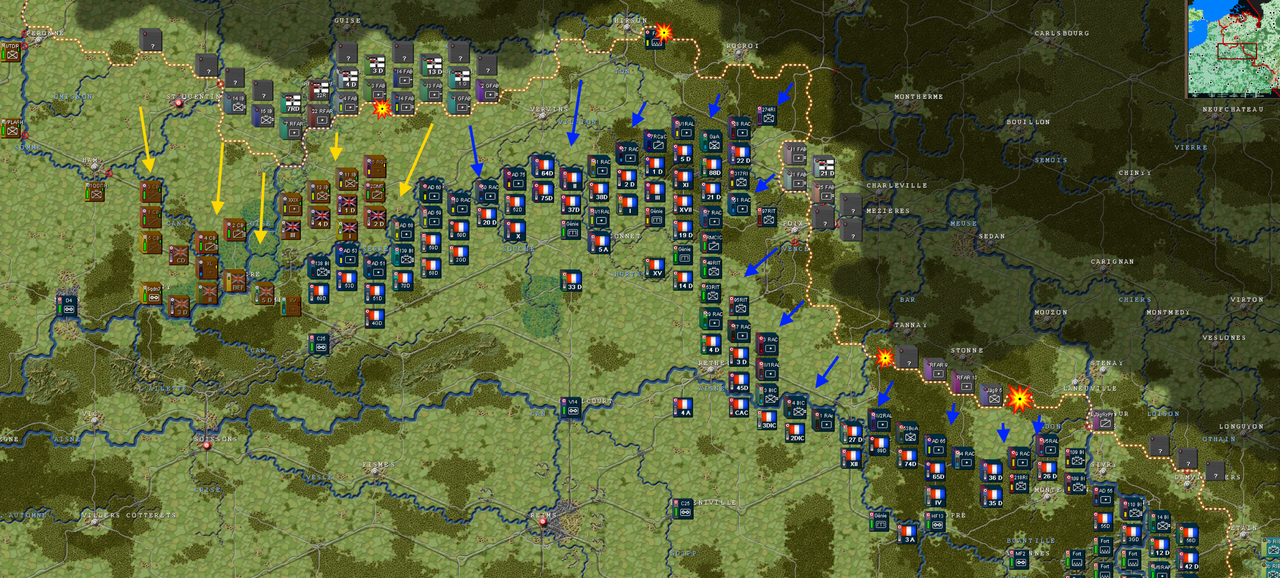
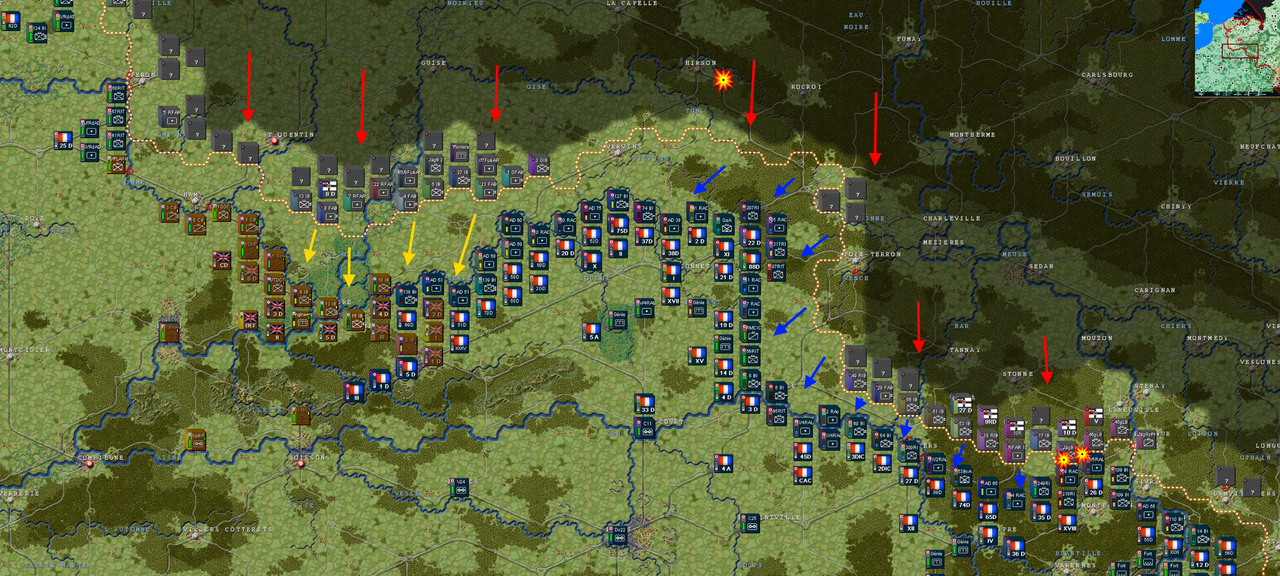
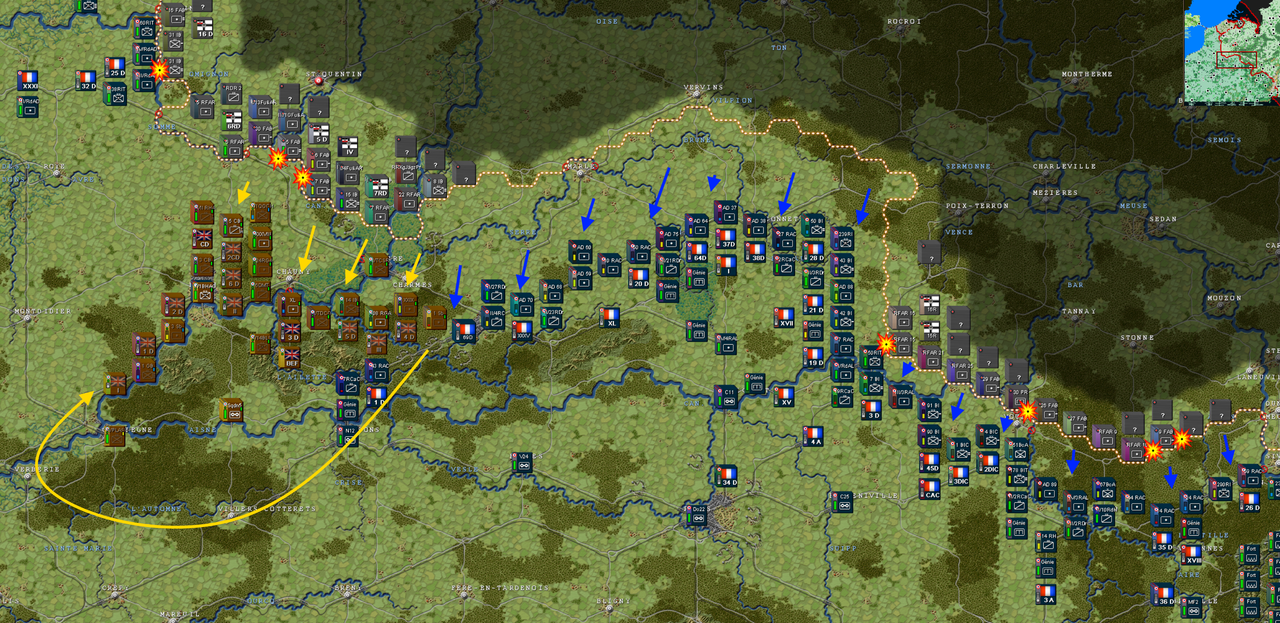
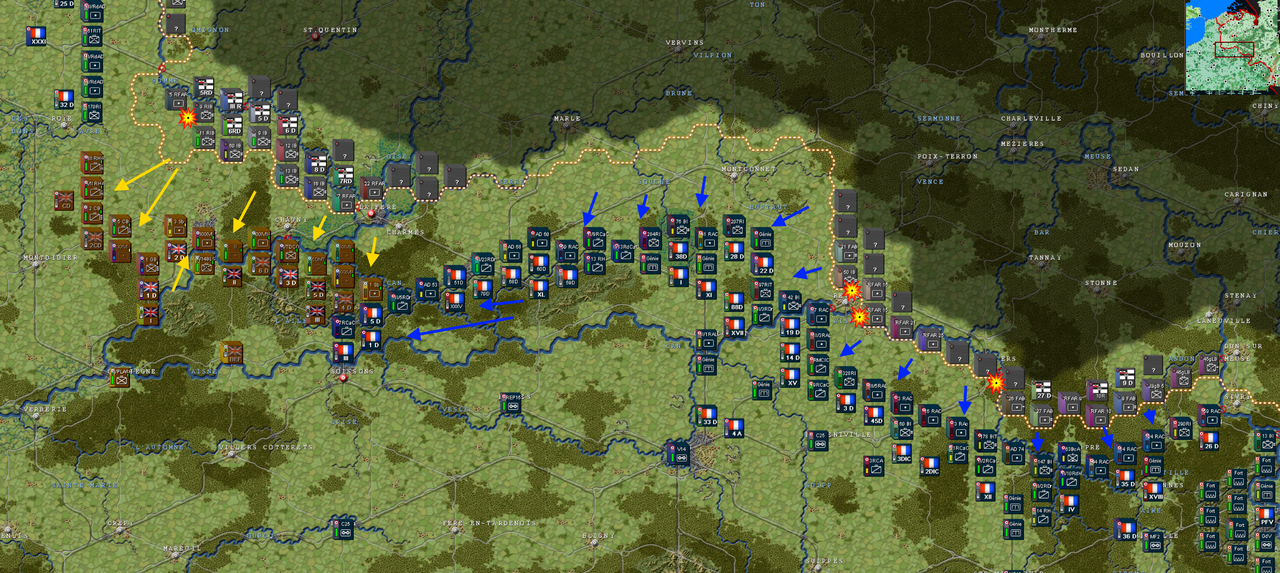
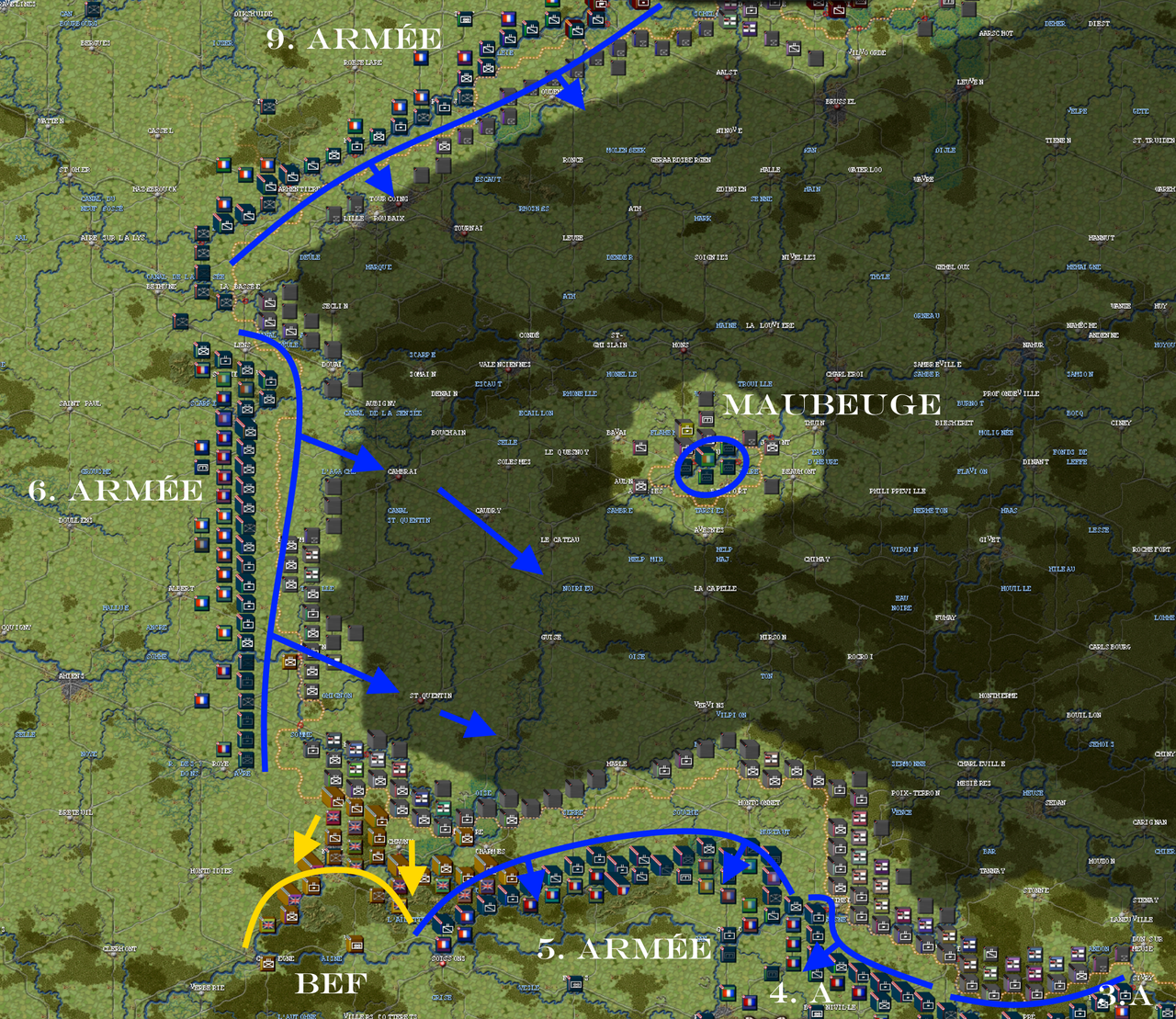
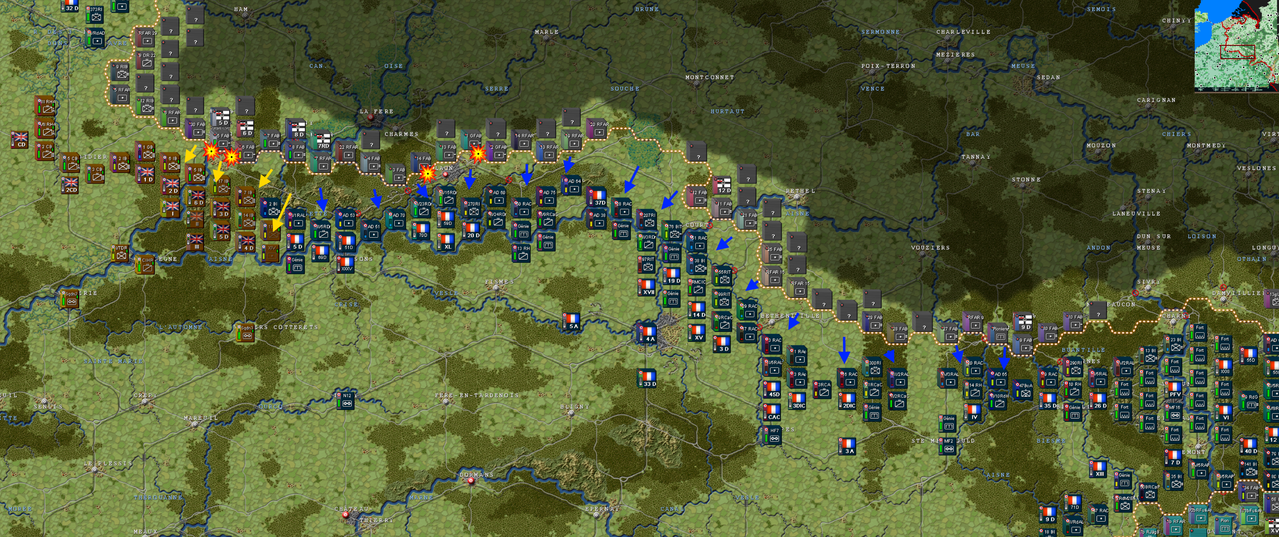
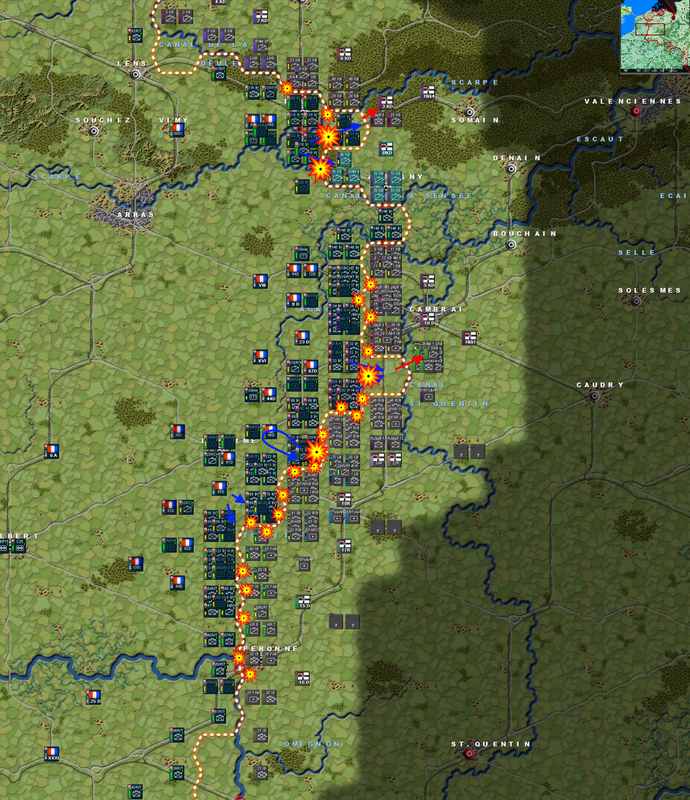
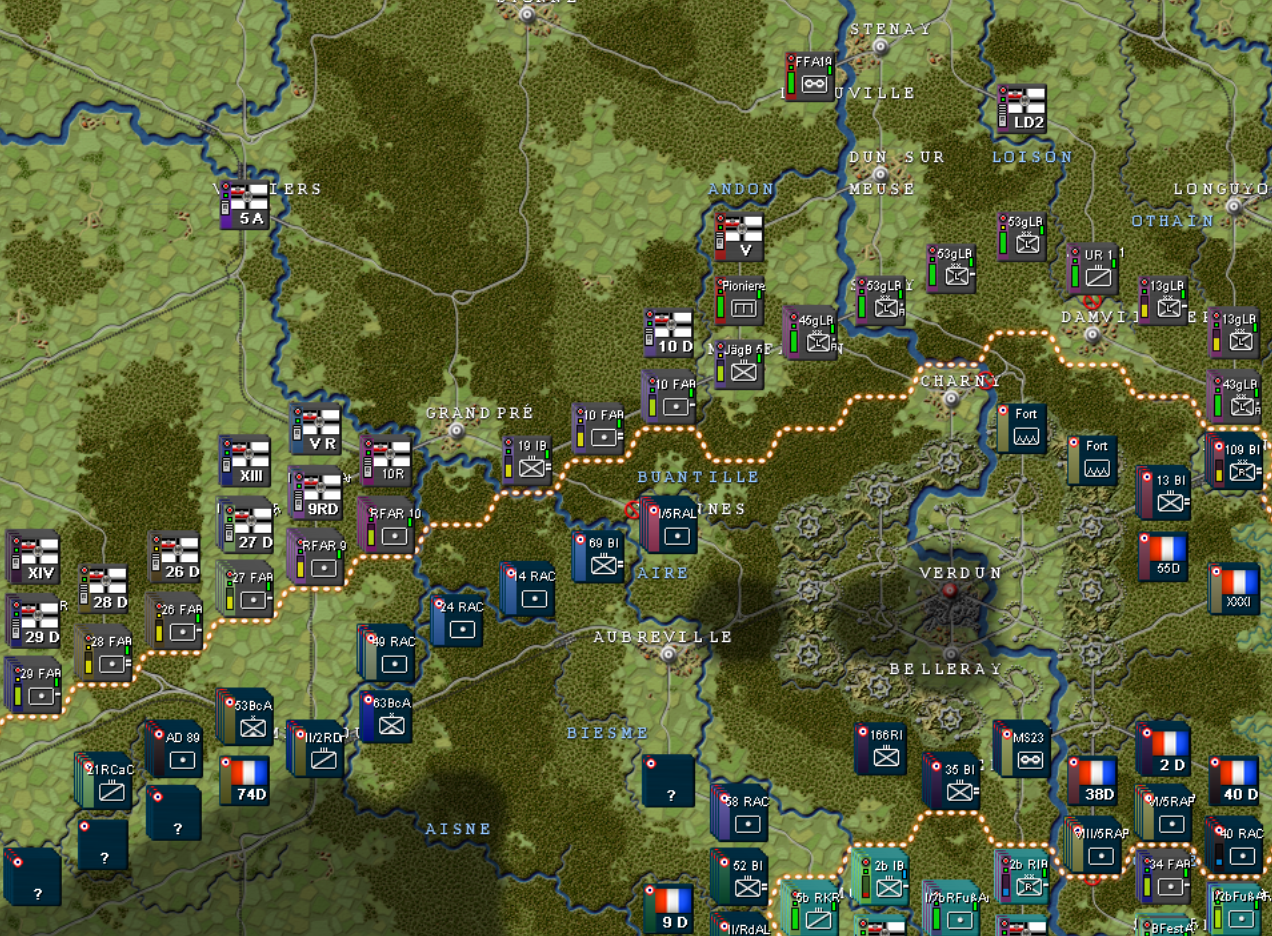
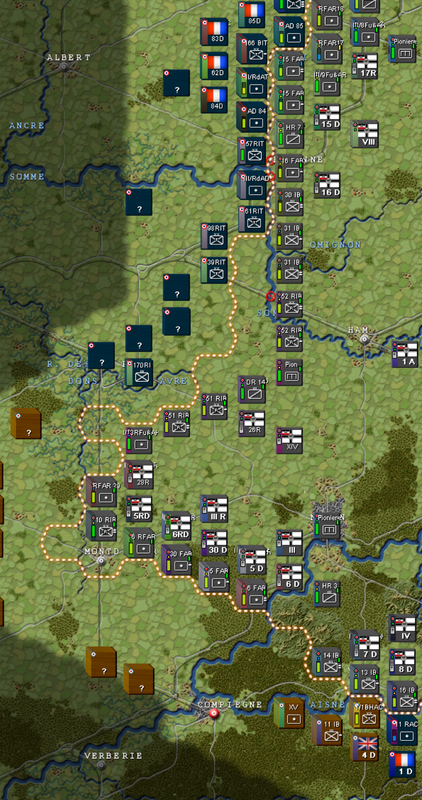
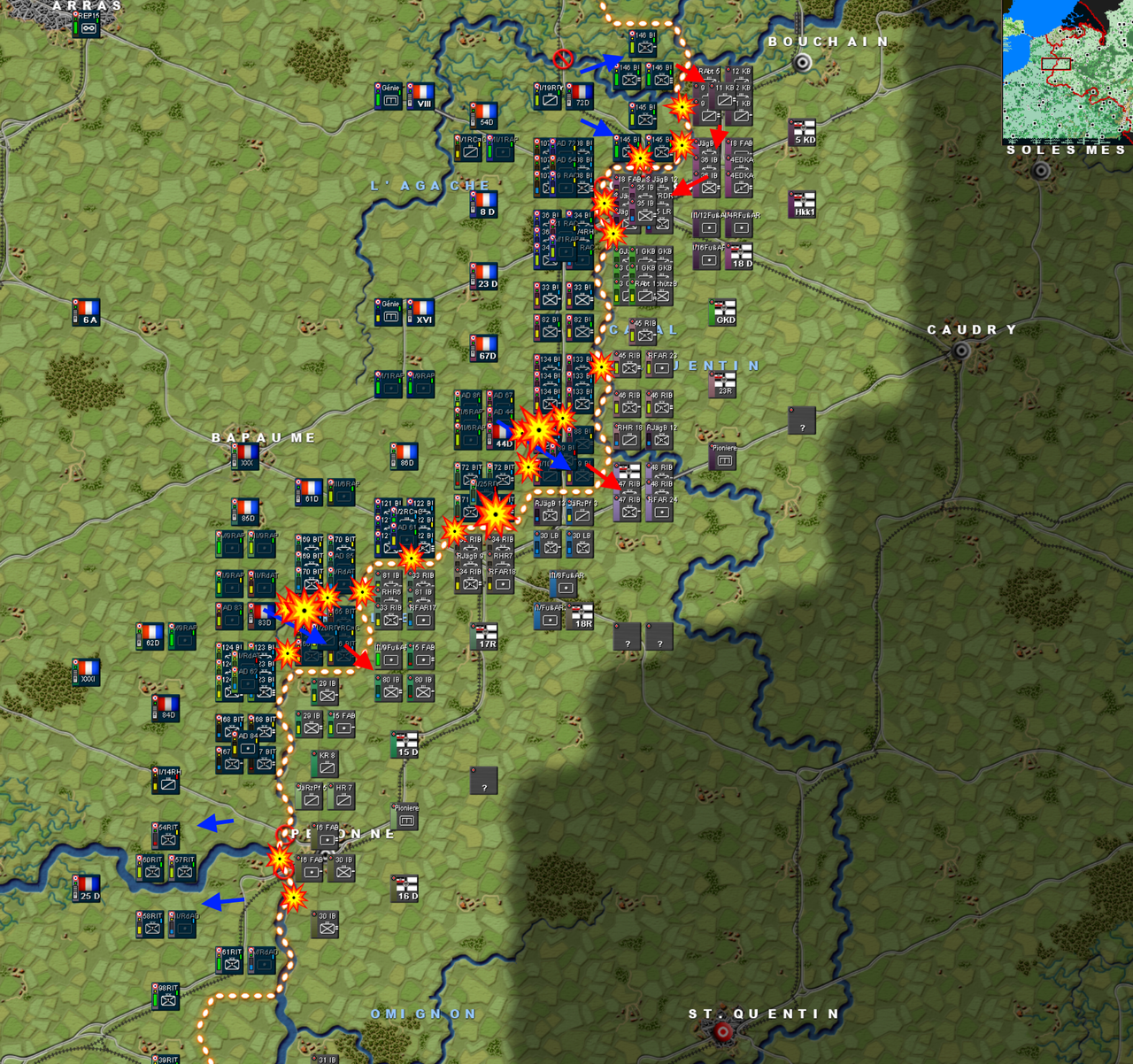
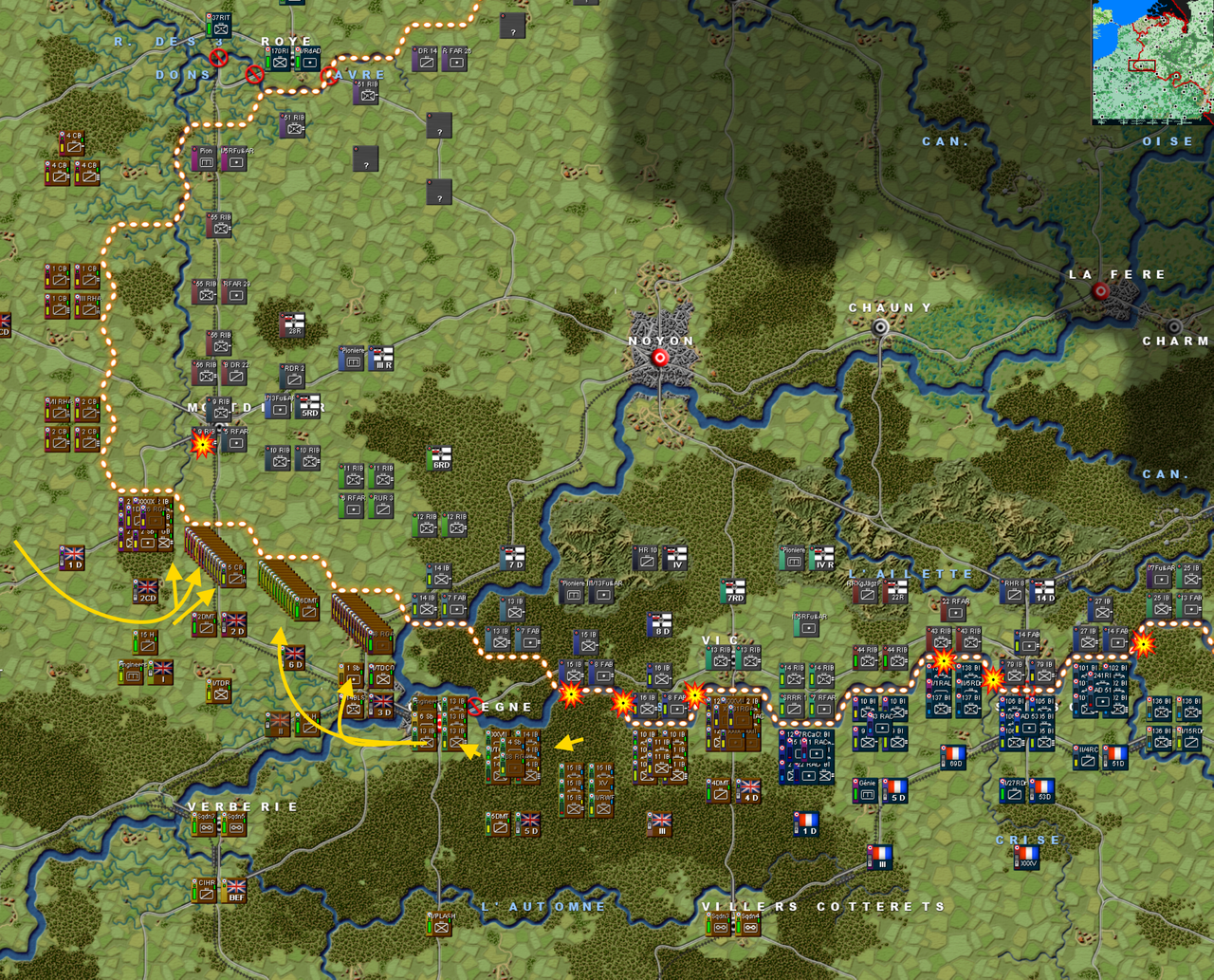
Little actual combat but a lot of maneuvering, the BEF setting up on the Oise river to support the retreat of 5. Armée, those divisions choke the road between Avesnes and Hirson.
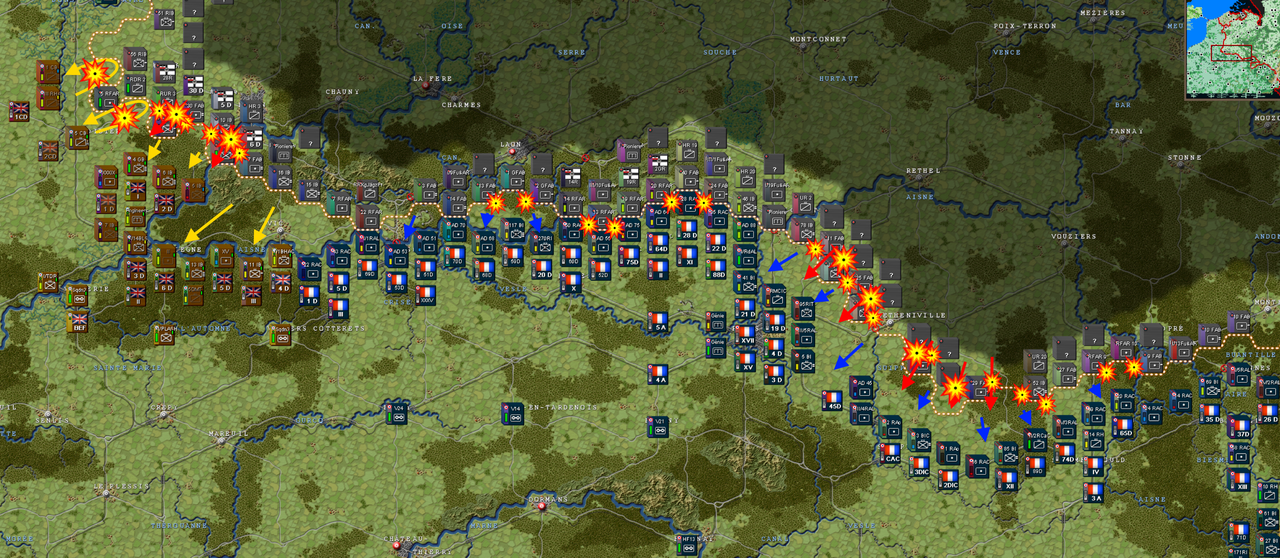
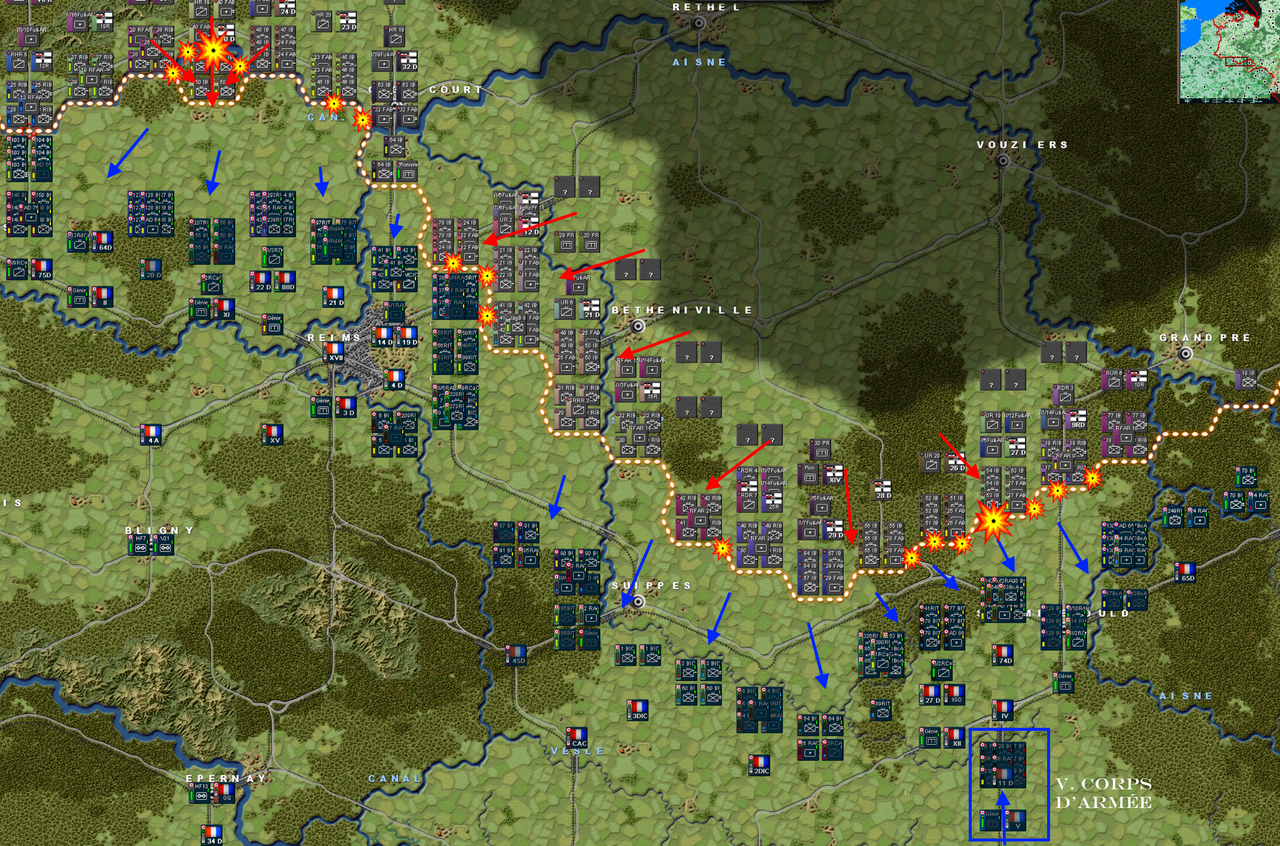
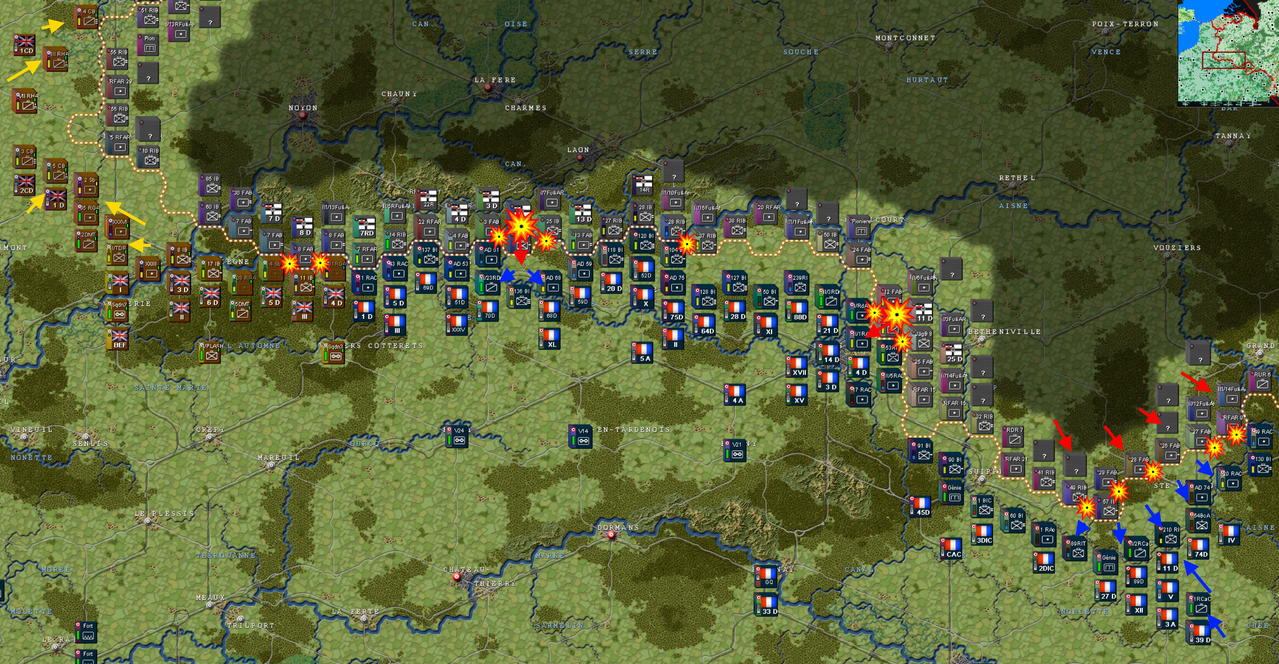
Oise-Meuse line:
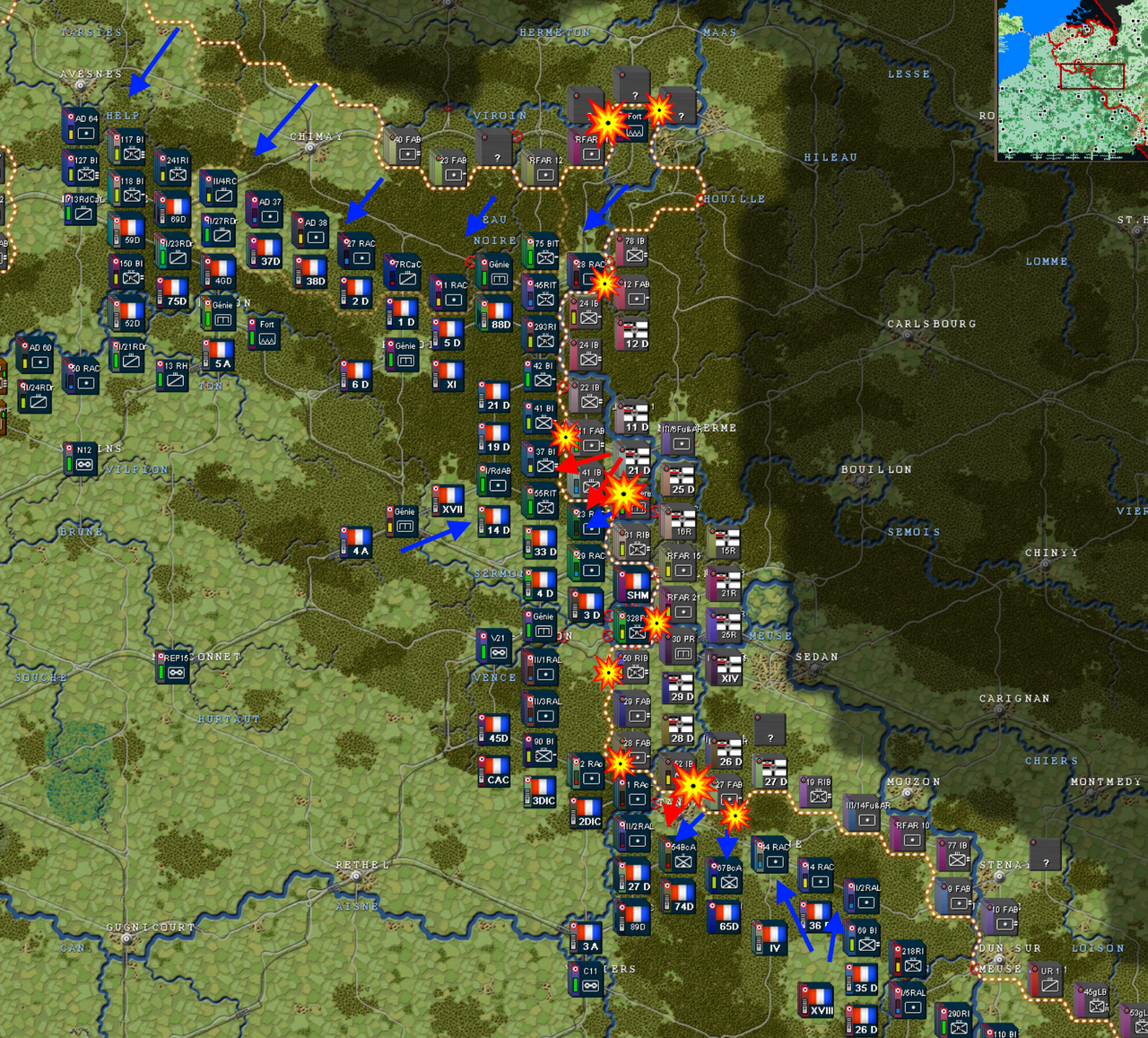
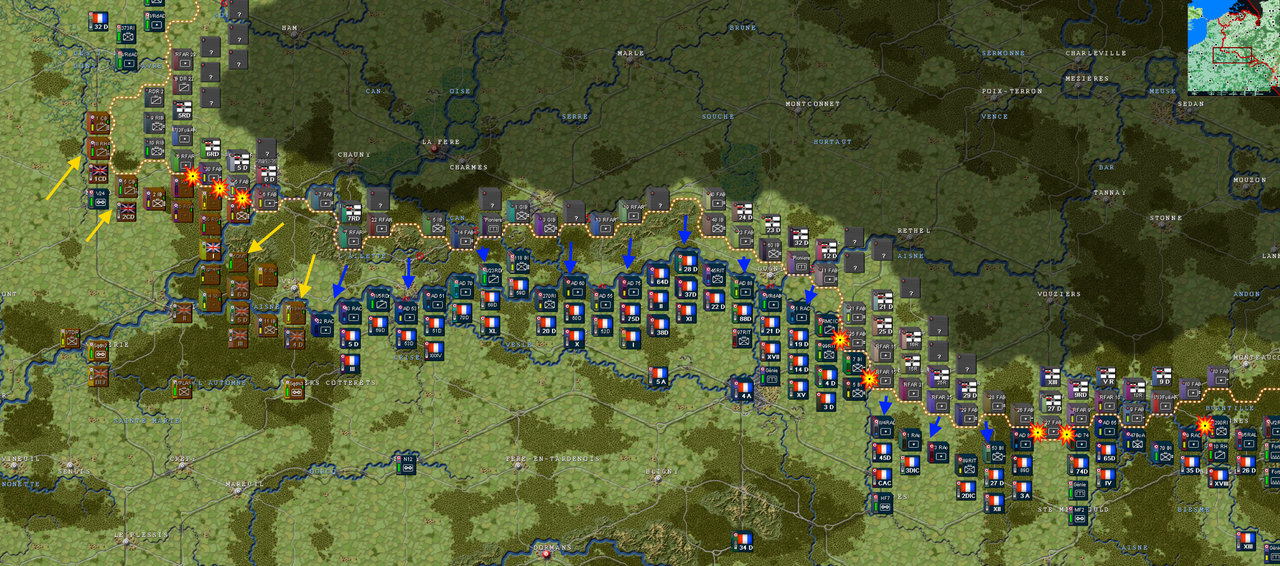
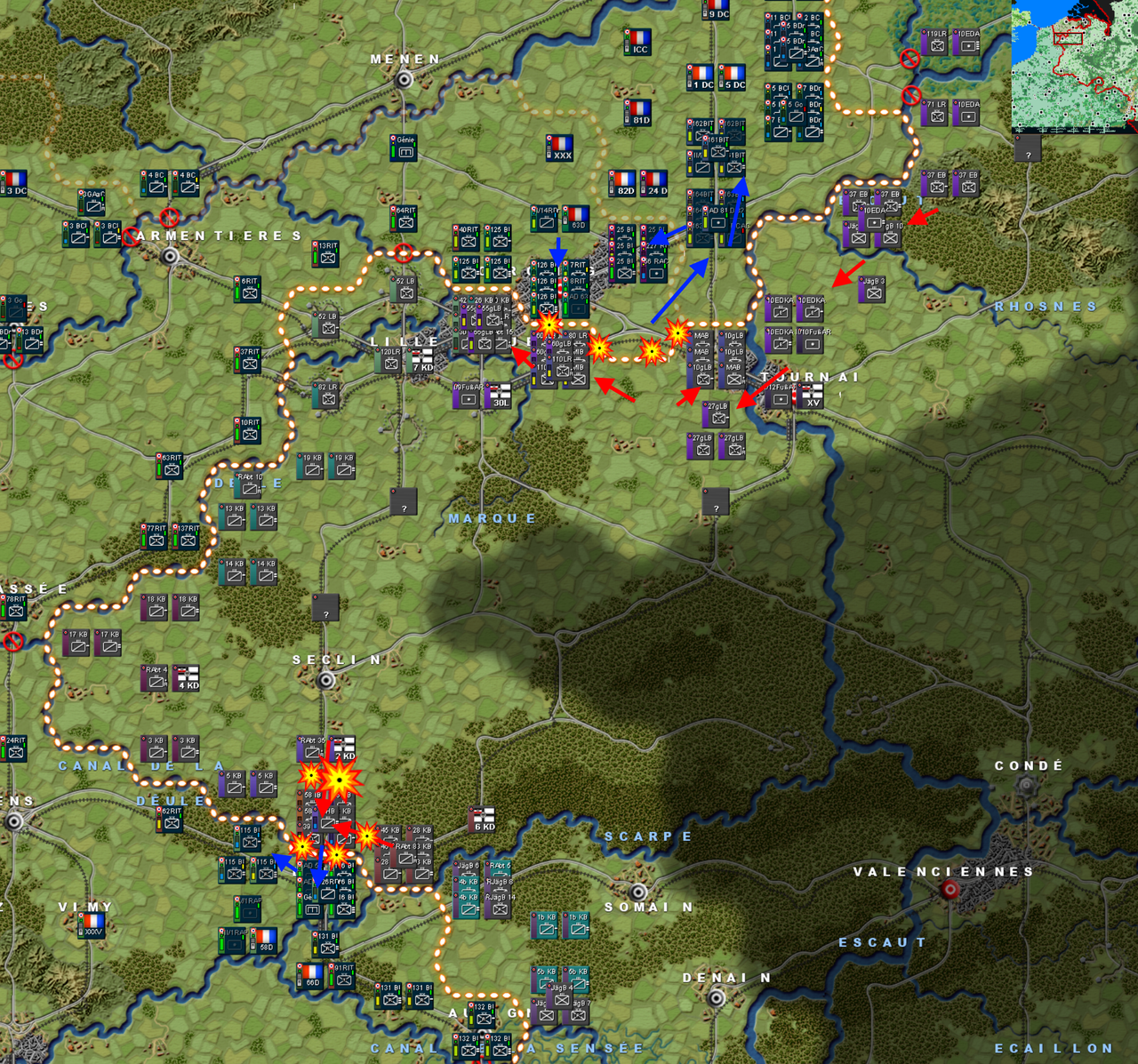
A German division tries to storm the citadel of Charlemont but the heroic defenders still stand by days end. They are cited at the Citation à l'ordre de l'armée of the day for their bravery.
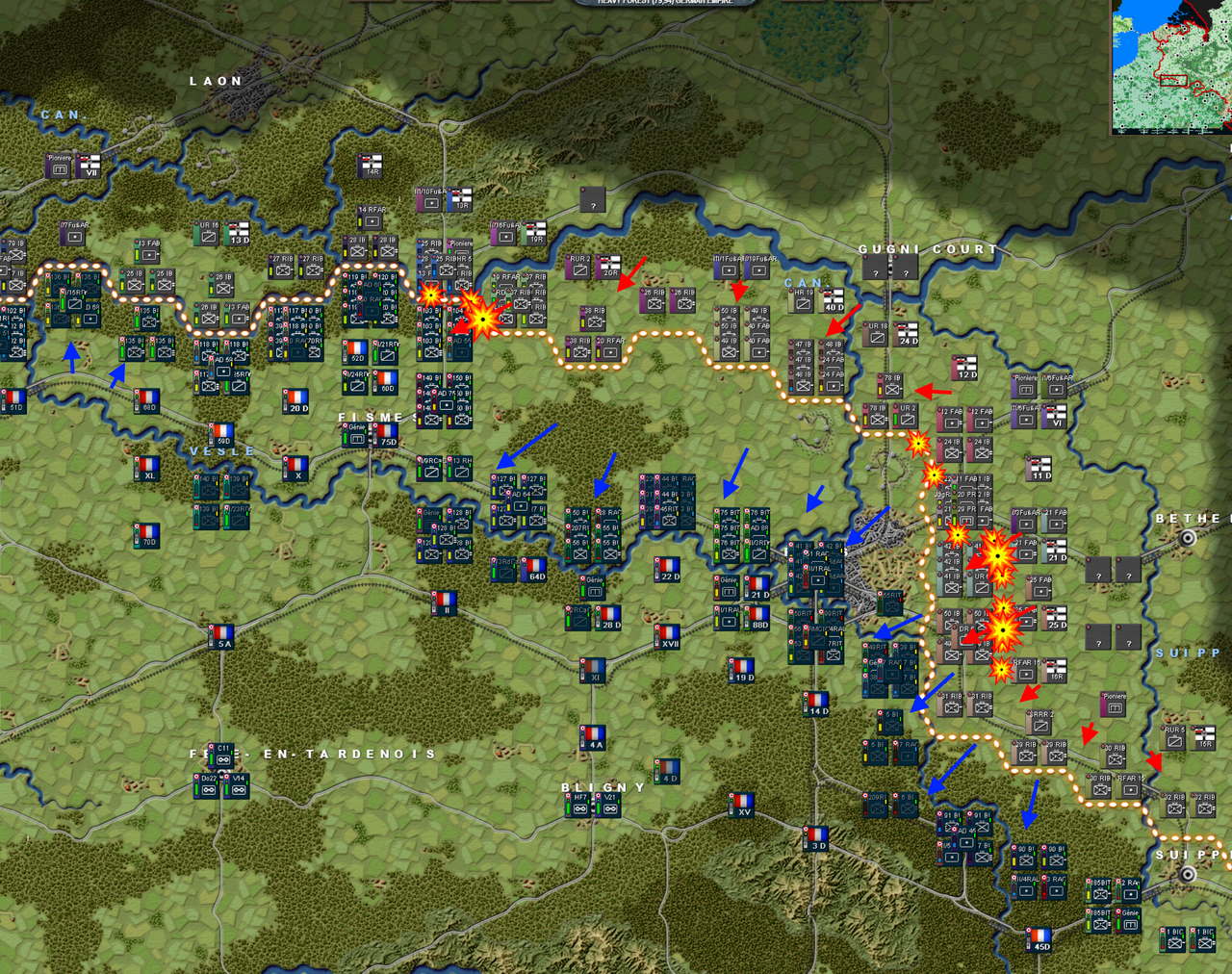
The retreat of 5. Armée continues towards the Oise river, the fort d'Hirson and the small citadel of Rocroi. This effectively concludes the Bataille de la Sambre-Meuse that lasted from 16. August to 4. September; the second most deadly battle of this War so far after the battle of the Woëvre.
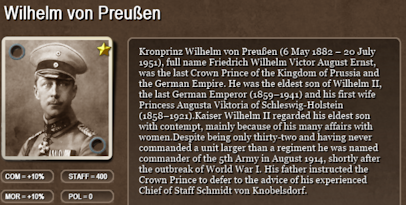
The German attacks around Montherme and Tannay make 3. and 4. Armée more and more nervous. Especially the push from Montherme threatens to enter the Sermonne valley and to cut off Charleville-Mezières. 14. Division d'infanterie having just disembarked from trains yesterday is thrown into the line to try to hold but it looks like a retreat behind the Sermonne is inevitable.
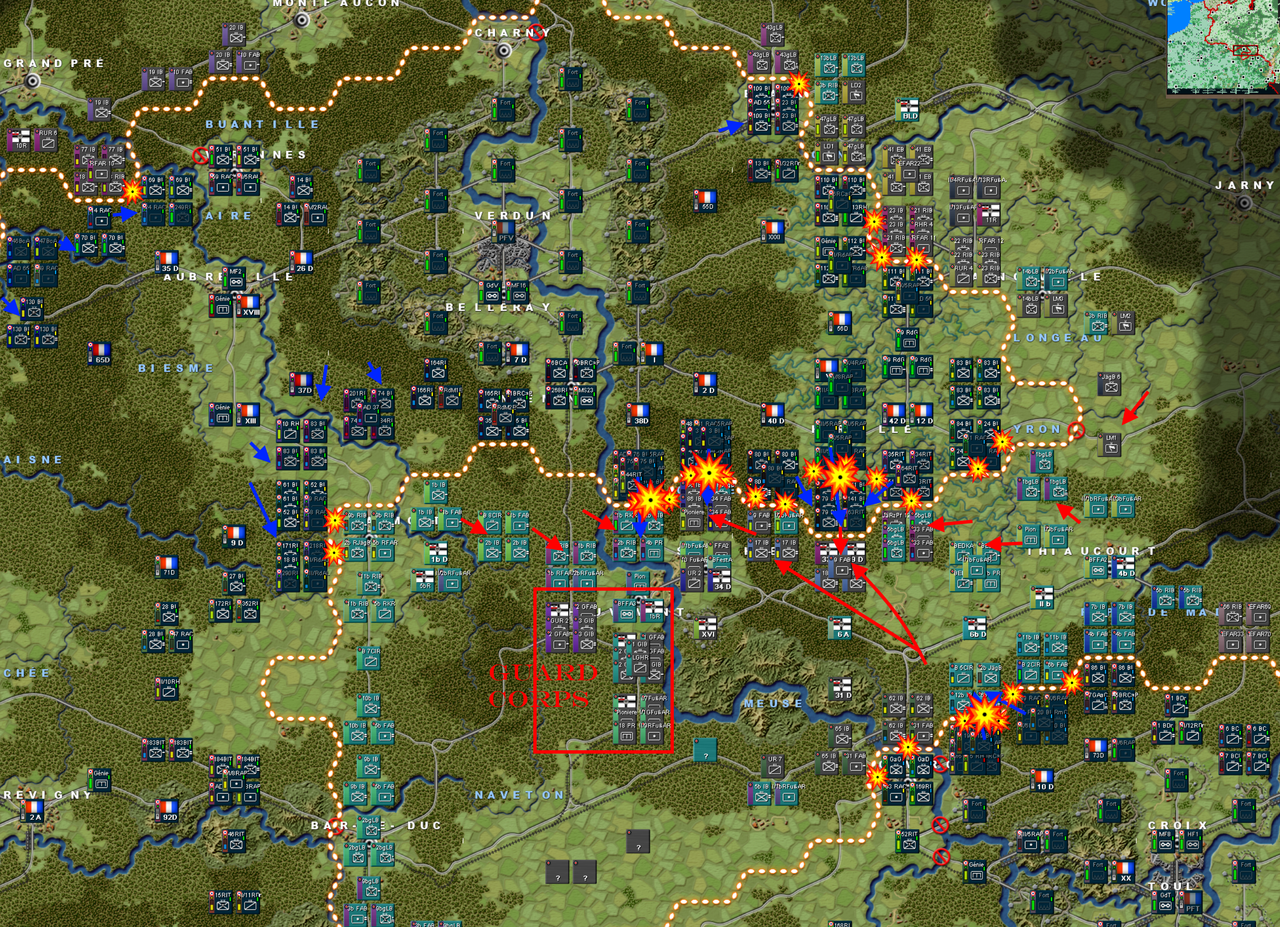
St. Mihiel area:
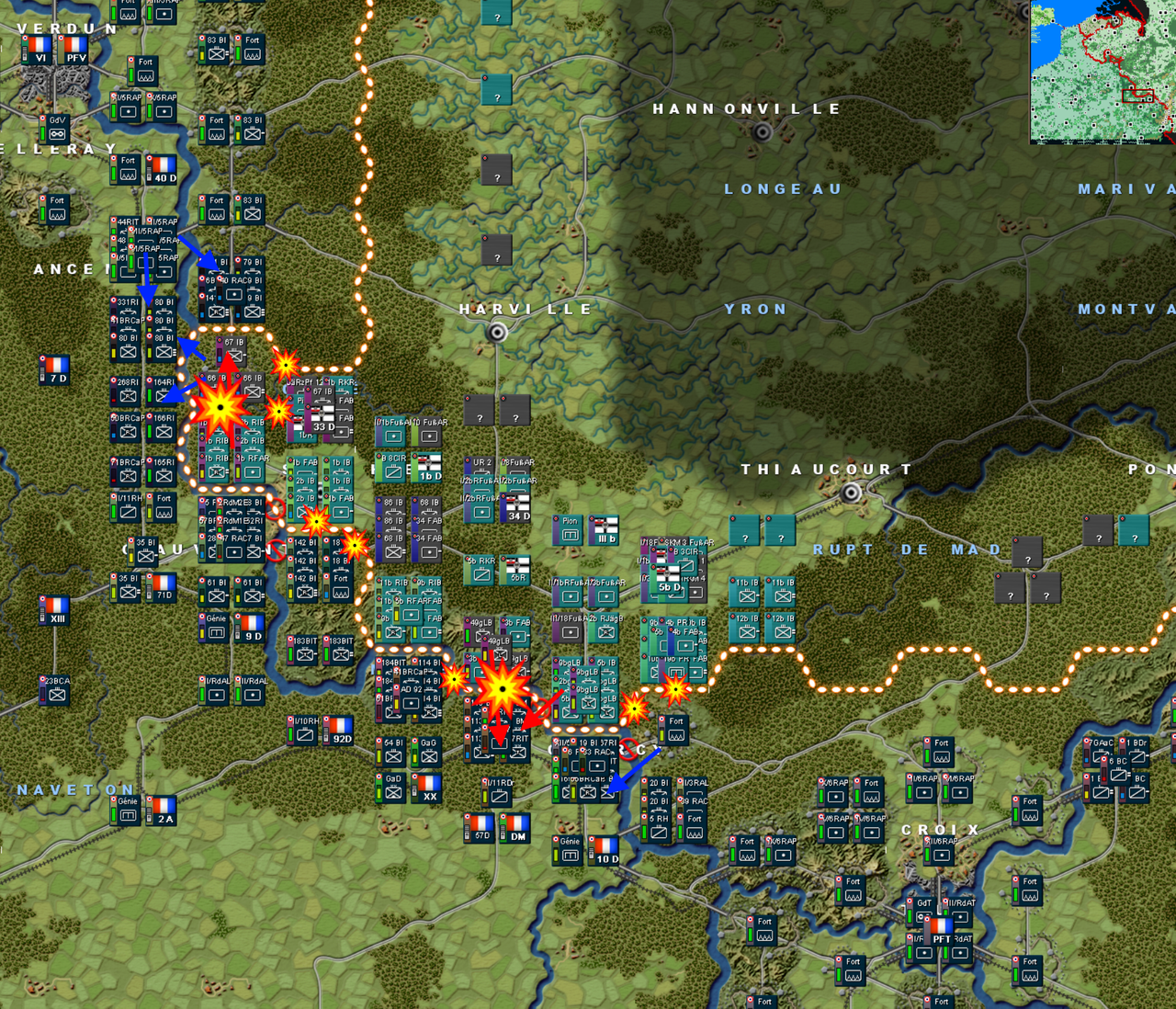
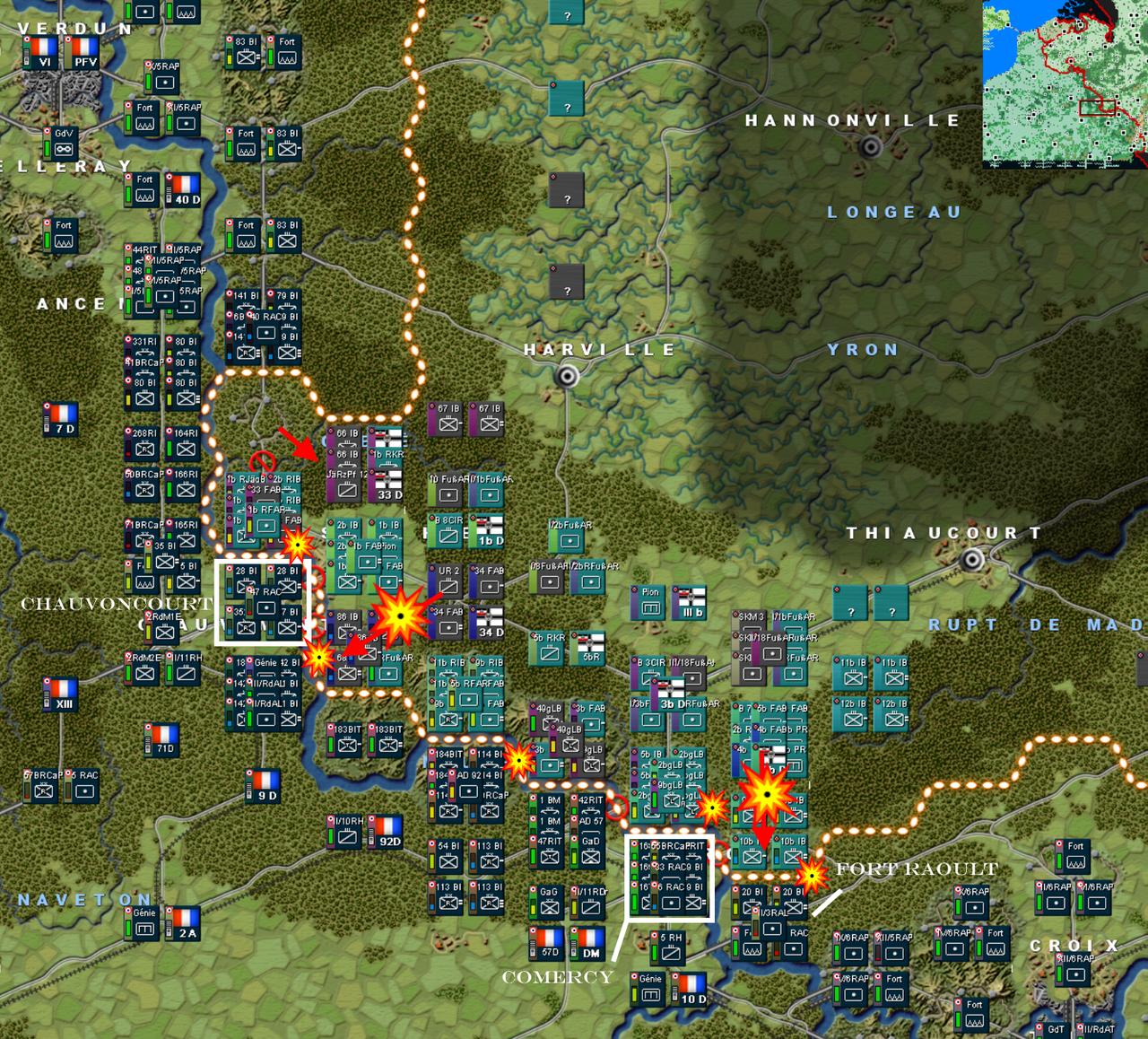
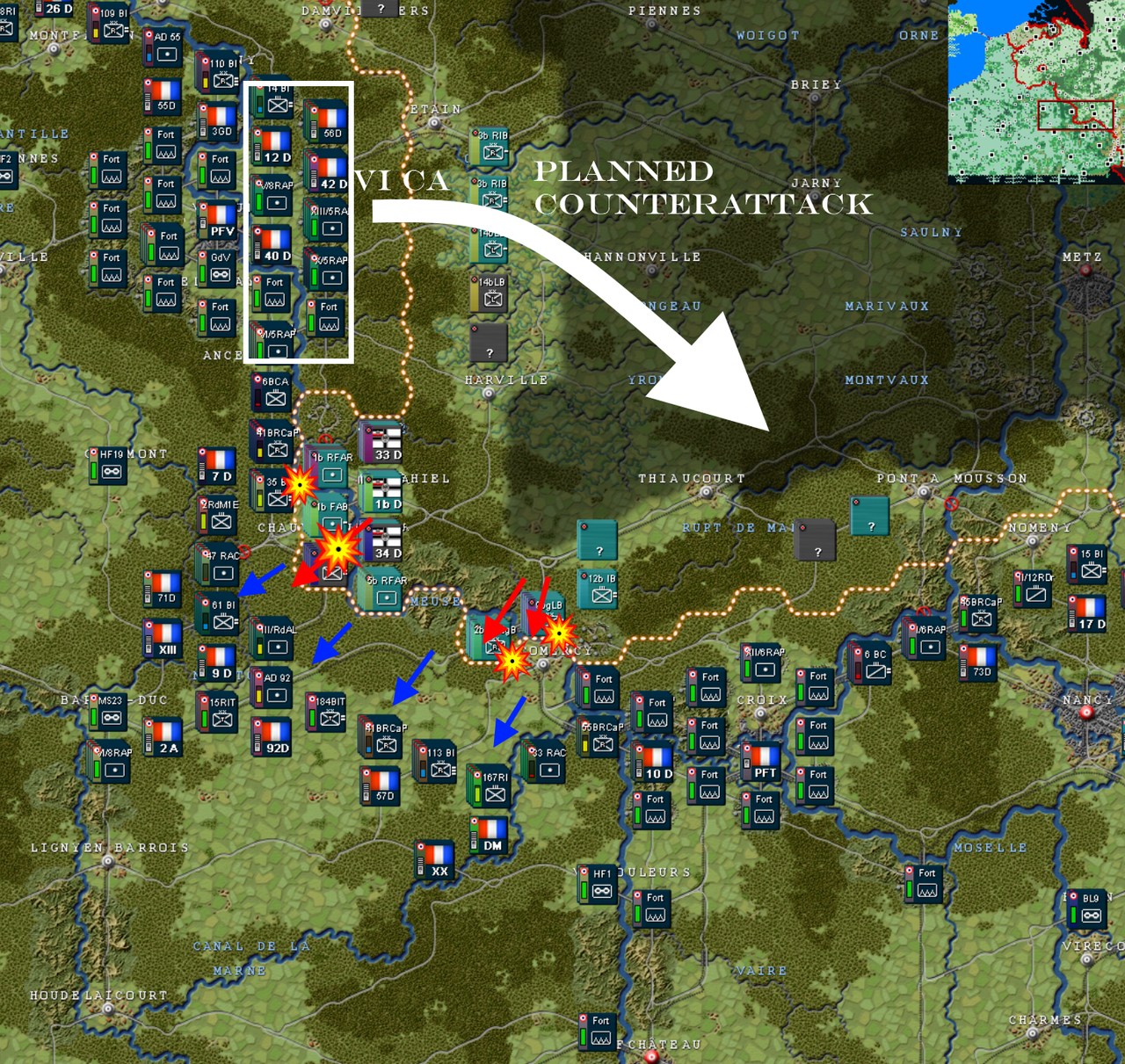
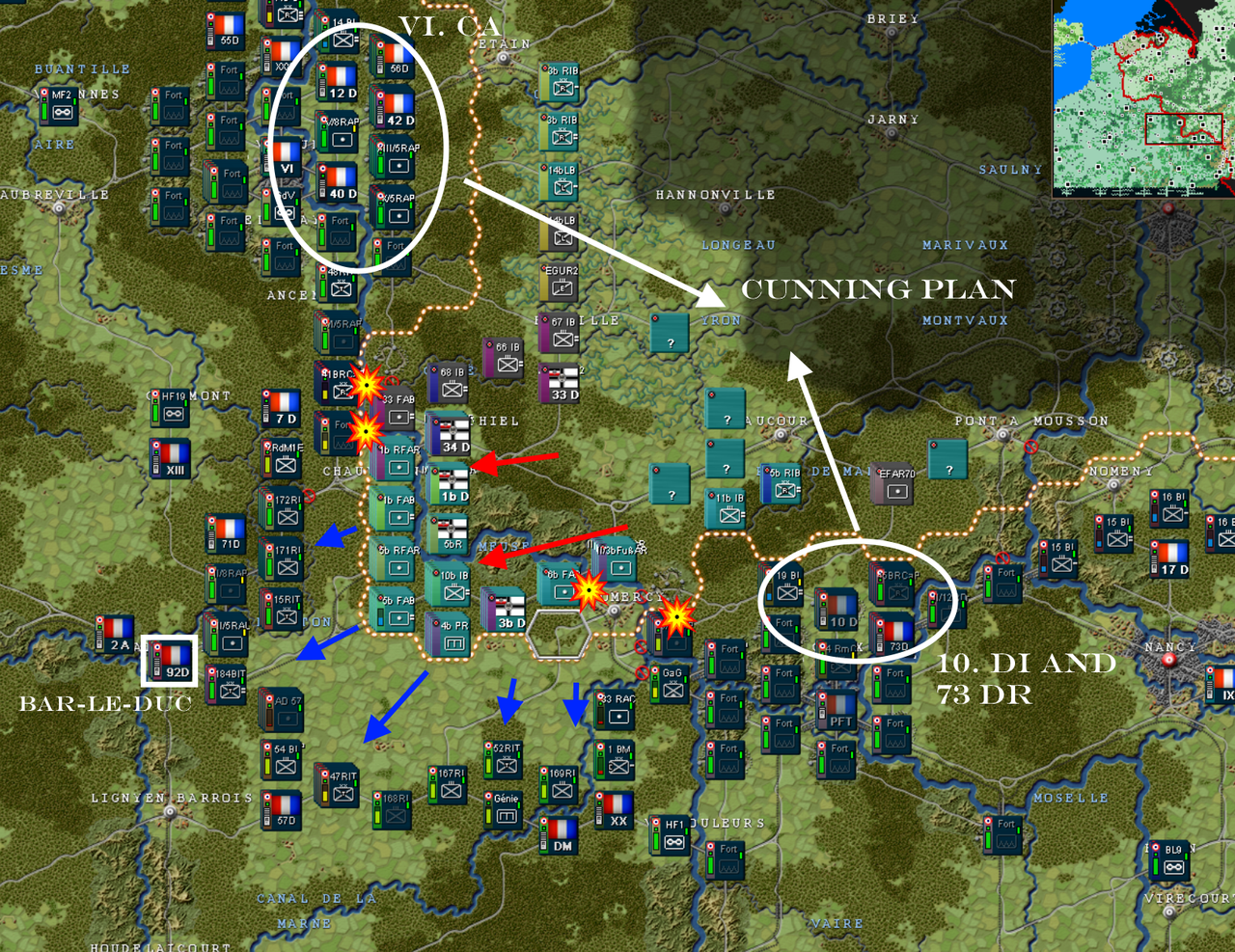
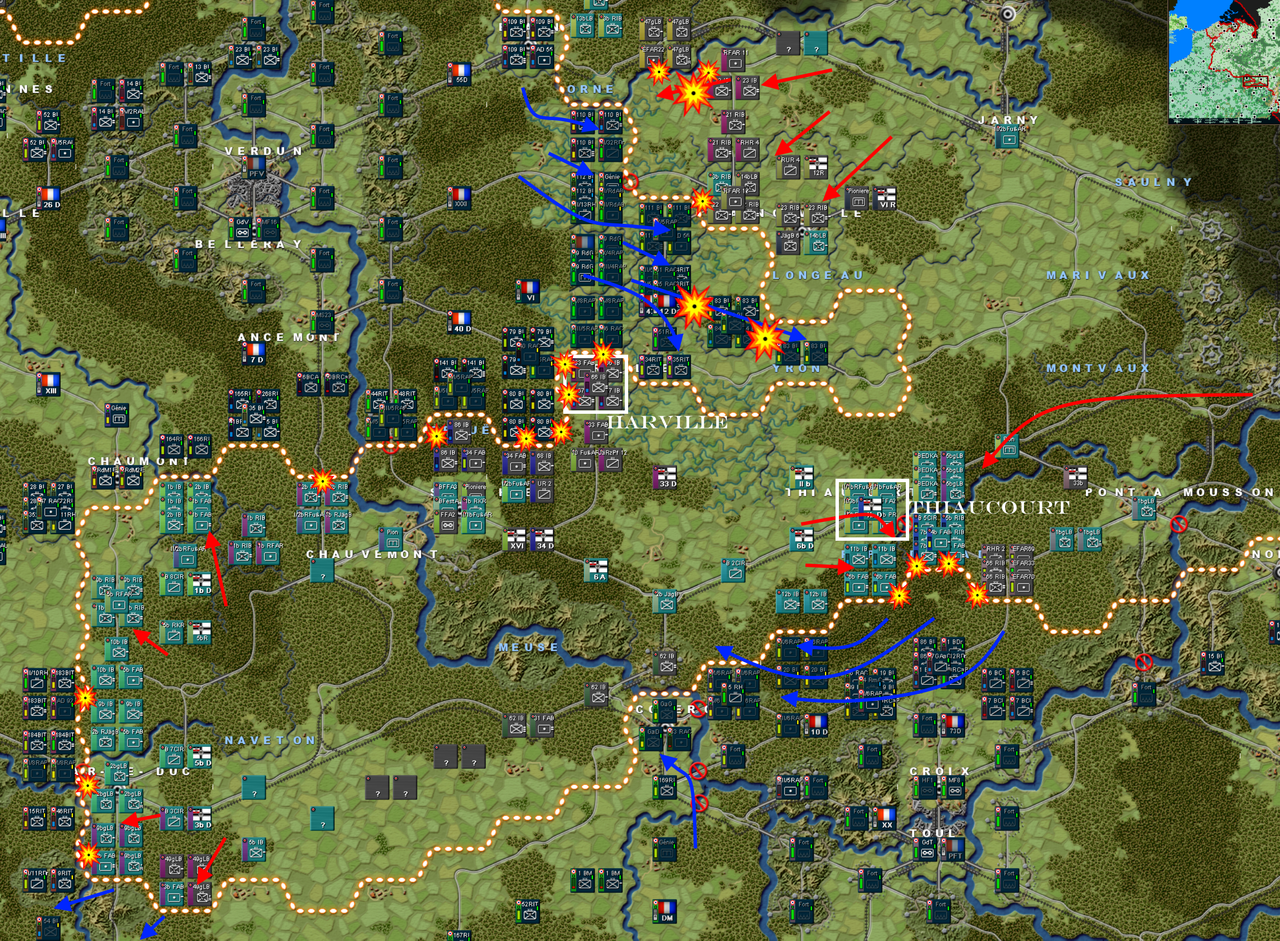
Again it is 1. Bavarian Reserve Division that leads the charge and captures Fort de Troyon. This advance on the other hand means the Bavarian right flank is now under fire fro mthe mobile artillery reserve of Verdun that assembled at Ancemont to support 7. and 40. Division d'infanterie holding the Meuse from Fort des Paroches to Ancemont.
Two Hessian and four Bavarian Landwehr regiments try to cross the Meuse north of Comercy but are repulsed bloodily by 1. Brigade marocaine and 113. Brigade d'infanterie de réserve (113. BIR). General Pétain, newly named commander of XX. Corps d'armée visists the 113. BIR praising the reservists' grit.
The threat of a Meuse bridgehead nonetheless has Pétain order the fall back of the infantry covering Fort de Gironville, expecting it to fall in the coming days and wanting to have his infantry in good shape to defend Comercy and the Fort Raoult.
One more brigade arrive here from Lorraine as well as the chasseurs alpins of Grenoble and Draguignan to bolster the Meuse defenses. The remainder of two North-African brigades that fought for over a week around Liouville are sent the other way to a quiet part of the Vosges front. De Castelnau would prefer at least one new division as reserve but Joffre is reluctant to give up the last three divisions he has in general reserve.
In other news:
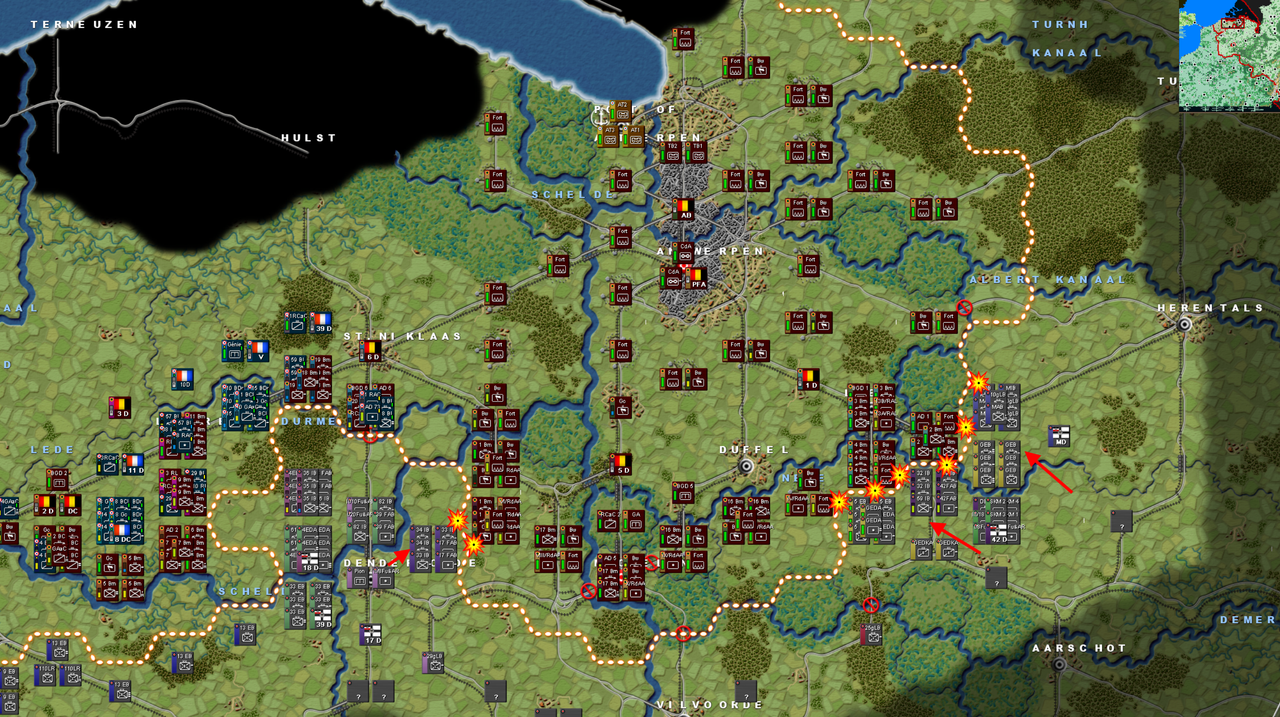
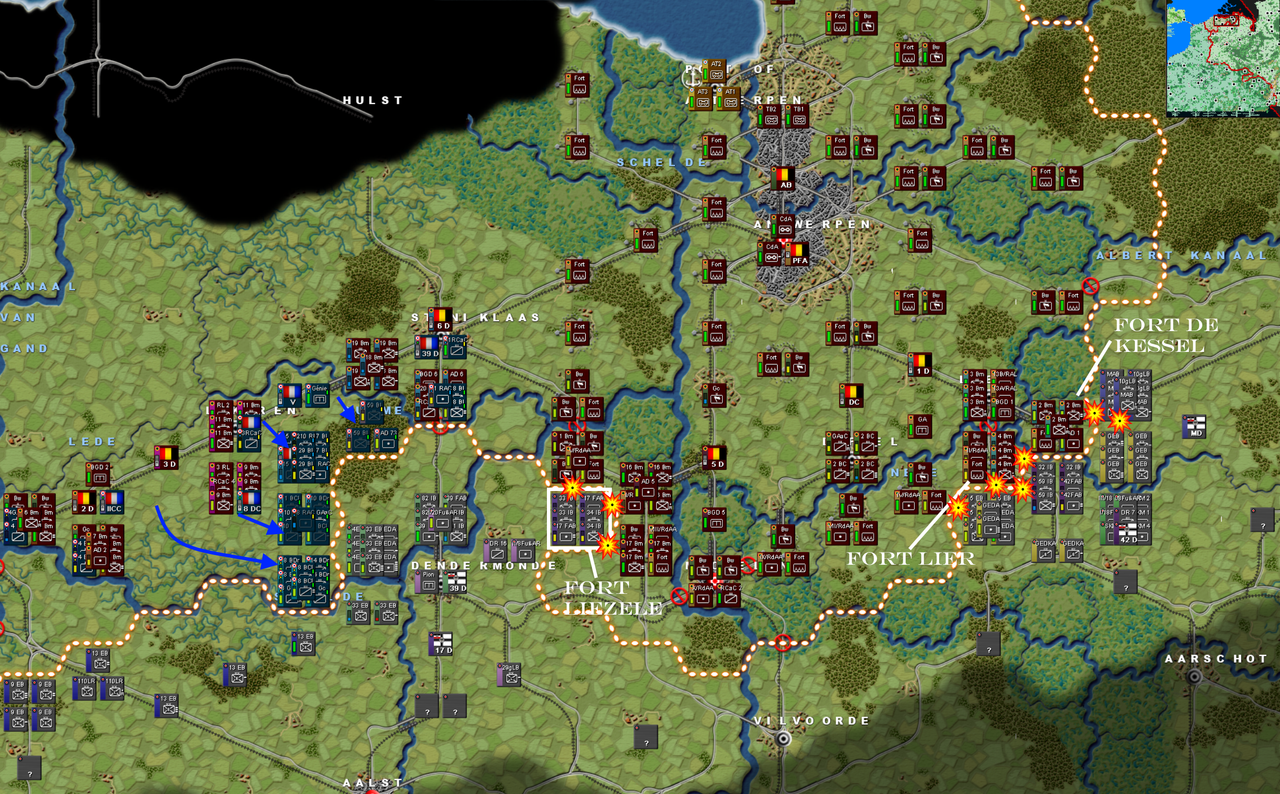
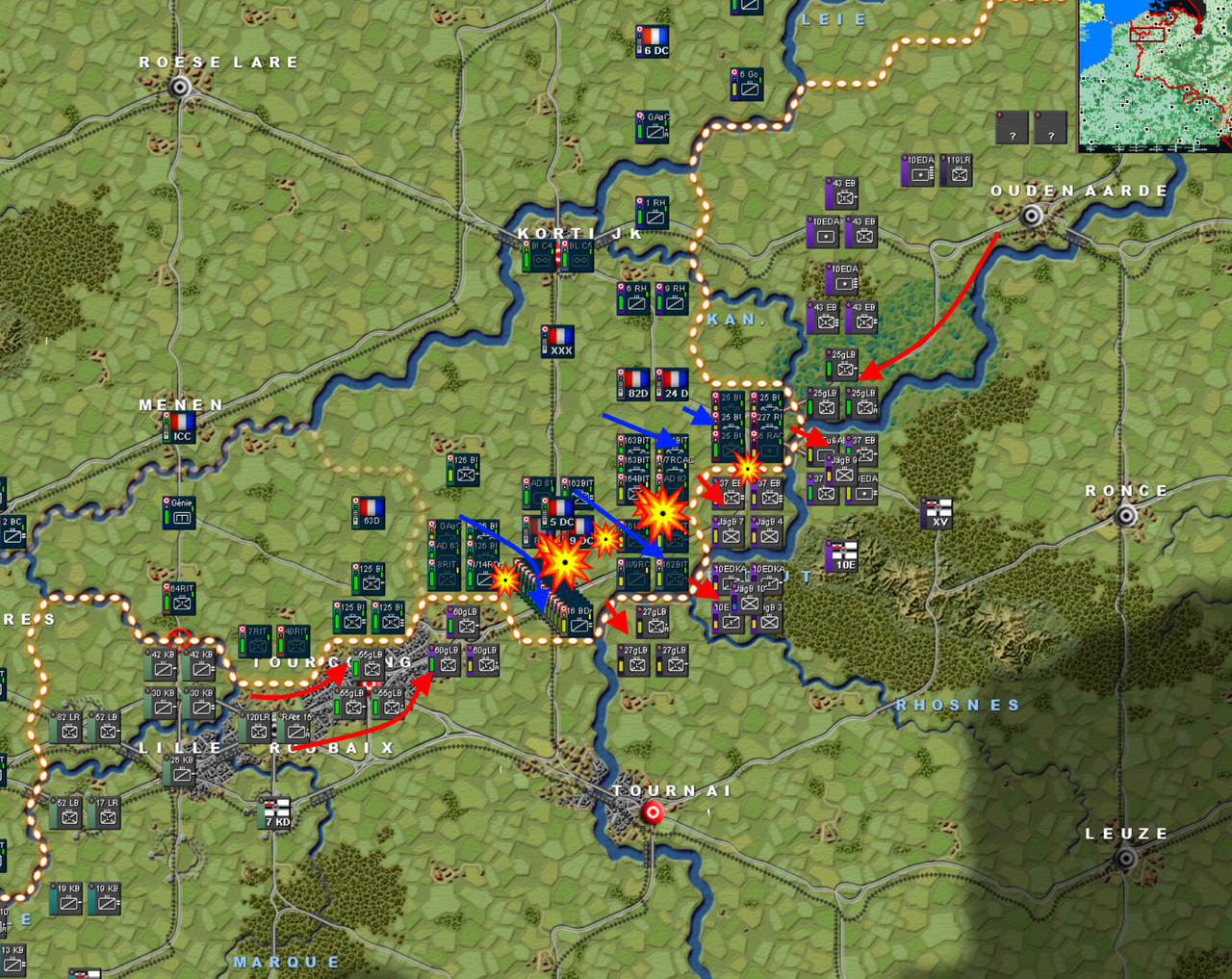
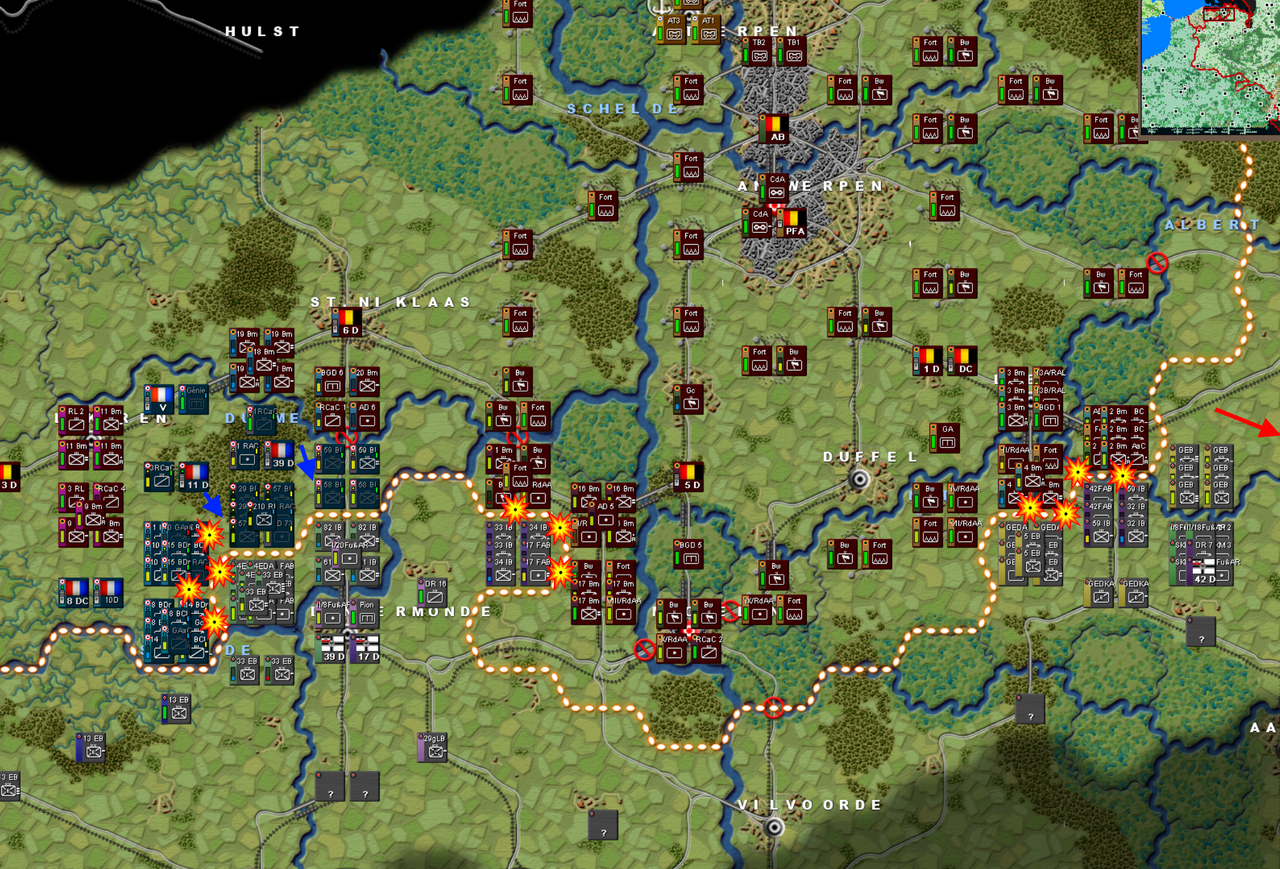
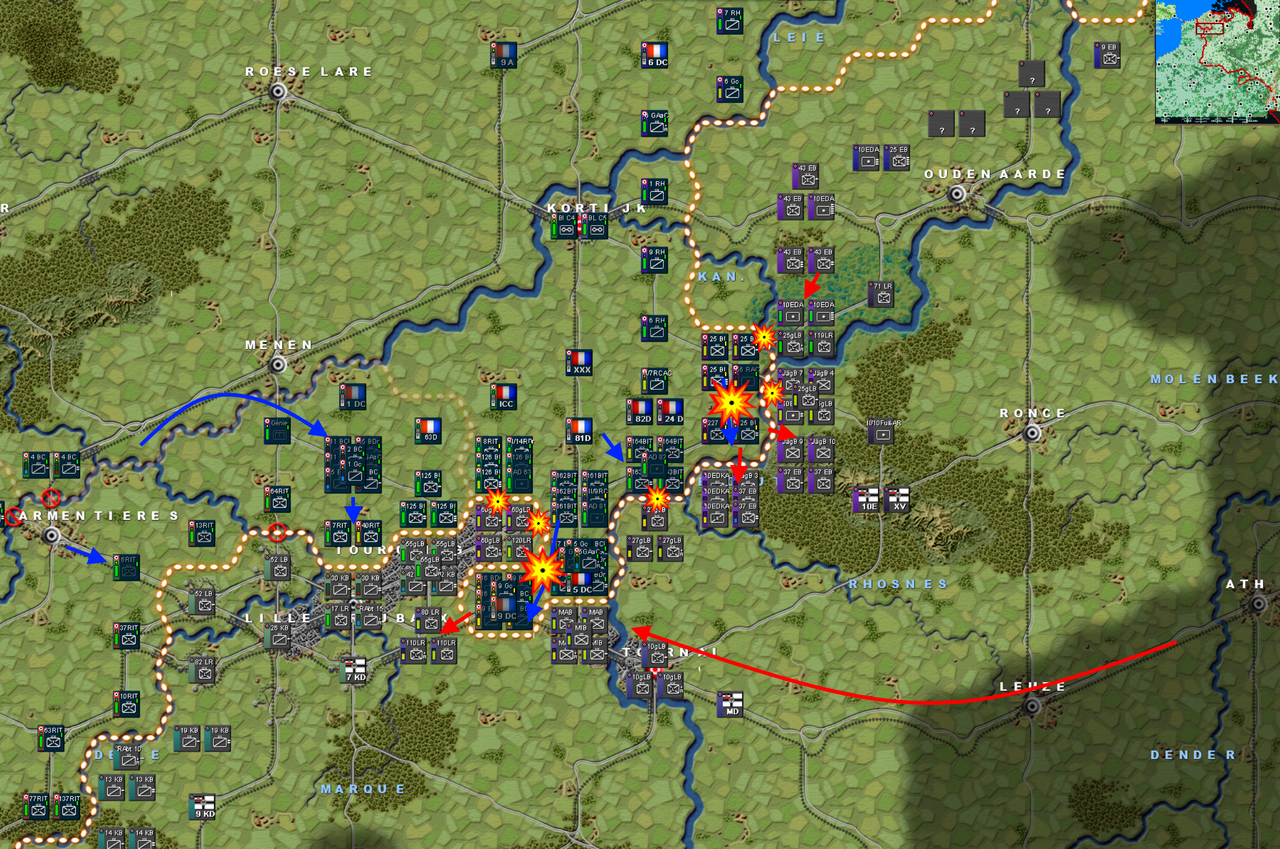
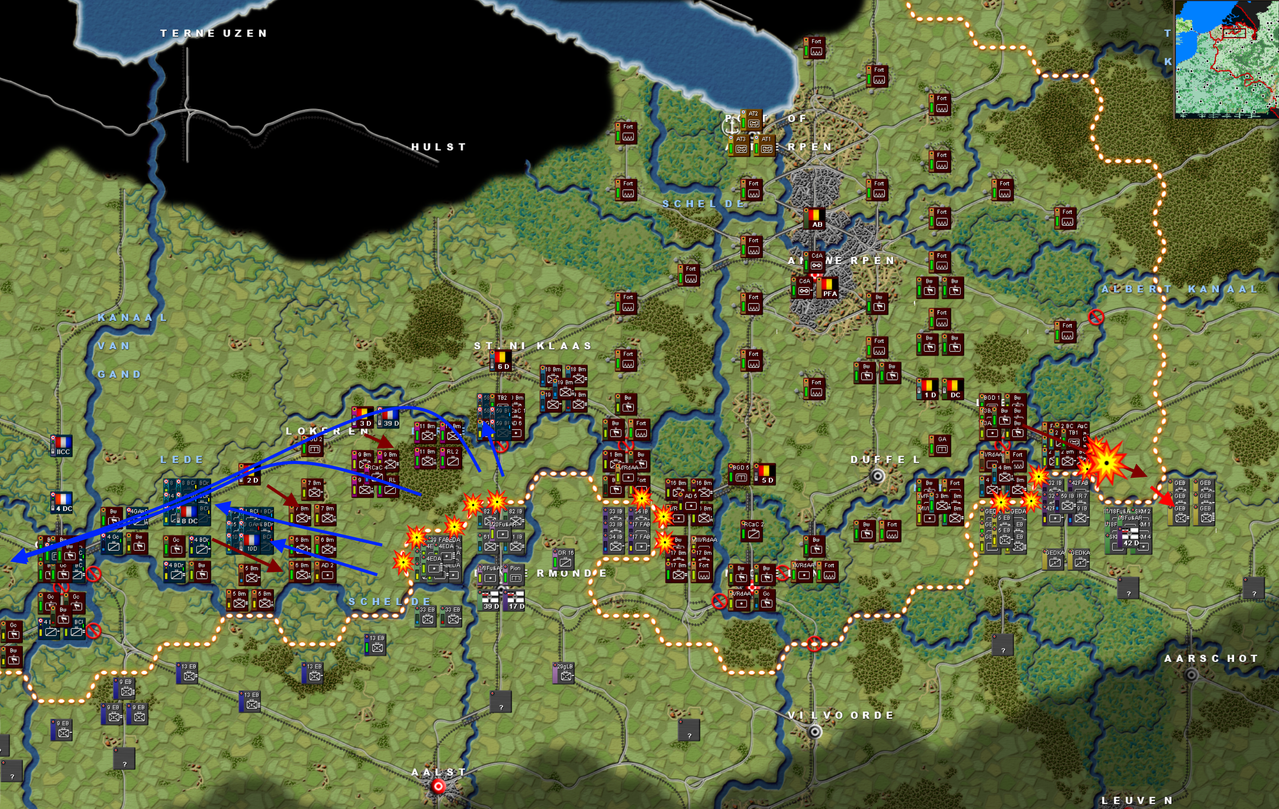
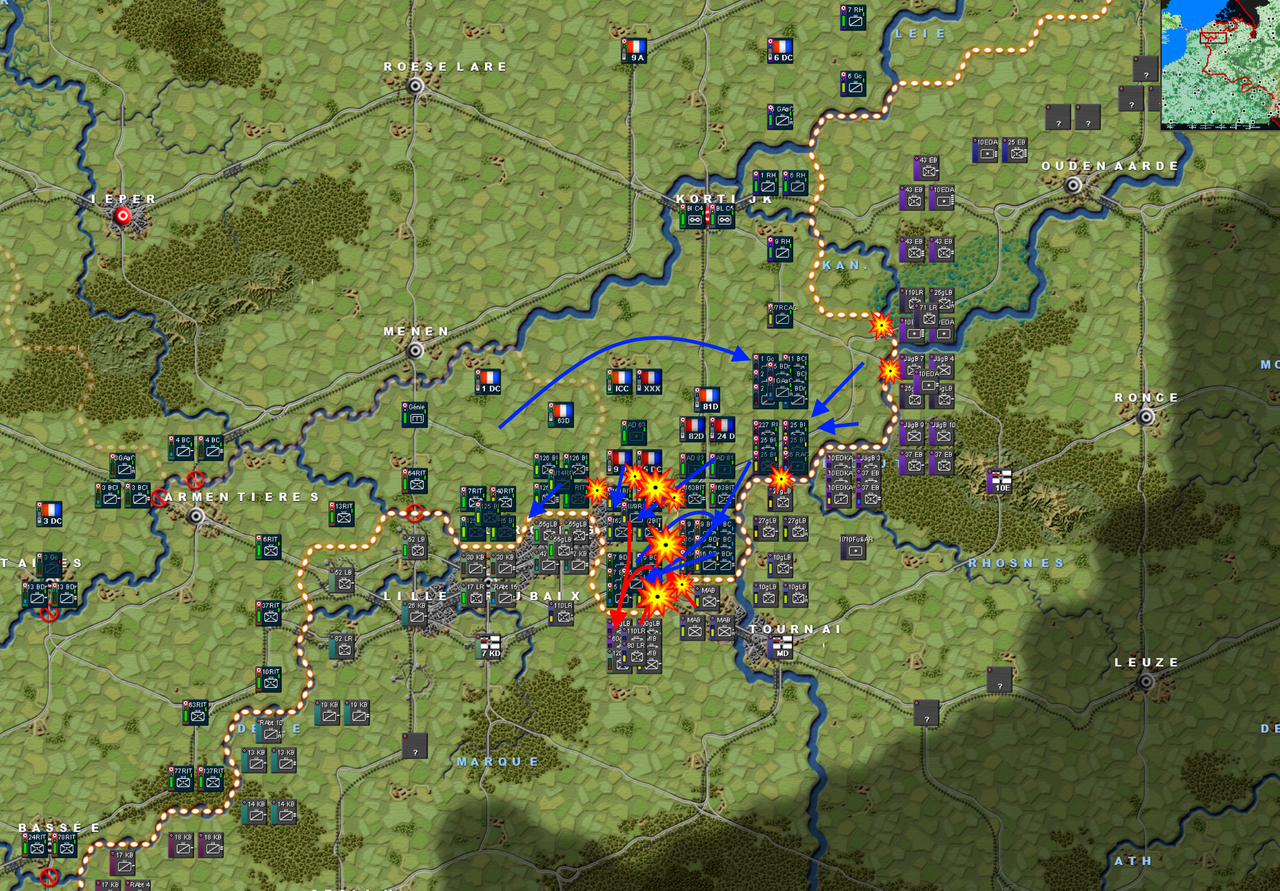
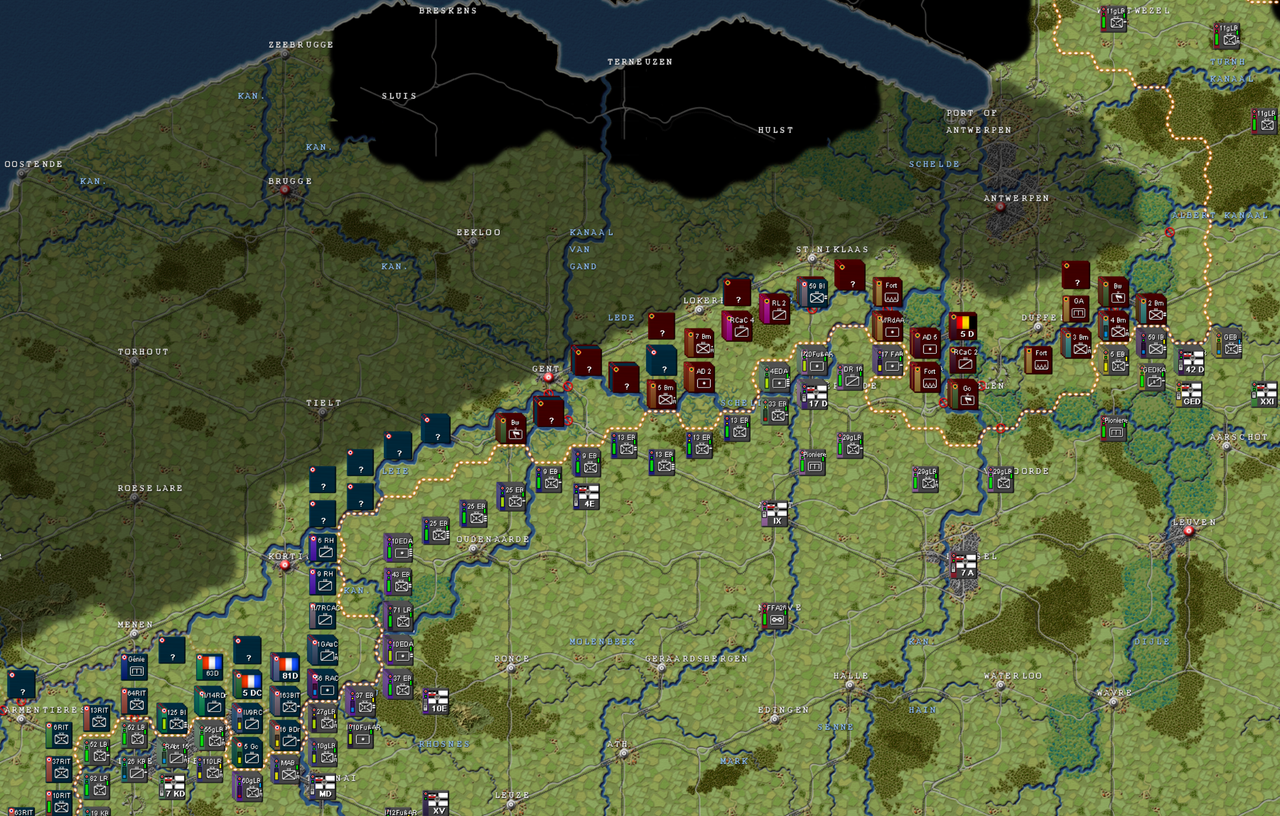
- Etienne de Villaret is now commander of the 9. Armée overseeing the Leie and Schelde frontline.
- Brice Bizot is replaced by Louis de Grandmaison at the helm of 65. Division de réserve.
Conclusion:
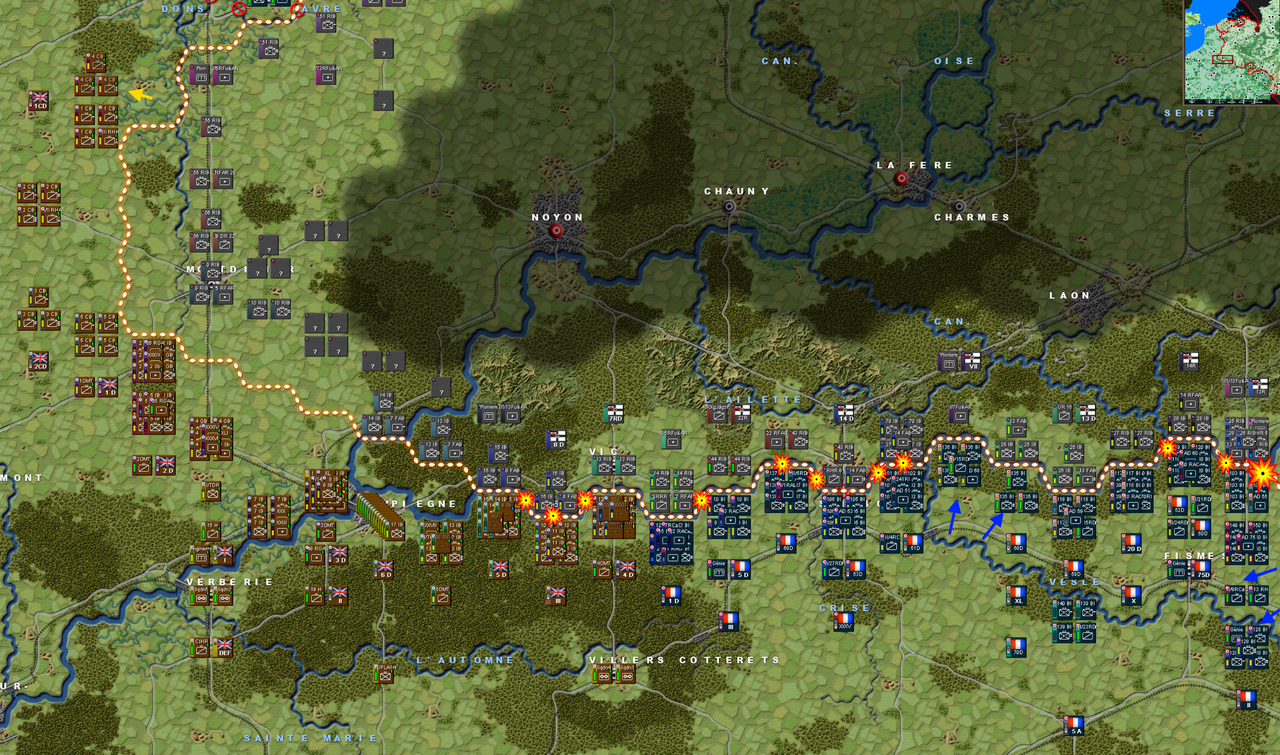
The battle of the Sambre-Meuse is over, now the battle of the Oise is beginning. However the Oise position can only be held if the Charleville-Mezières front doesn't collapse.
Dev comment:
I also redid the entire French reserve and territoriale unit headquarter assignments because it just costs too much political points if attached to Joffre (which is intended), this is why I'm doing so few general replacements. In the scenario file I introduced the Armée des alpes, Armée d'Afrique and the Minisètre de la guerre as rear guard HQs so most of the reinforcements being unlocked in August/September don't cost prohibitive PPs to switch over to active frontline HQs.
I definitely need to rework the British artillery. I made the brigades attached to divisions individual units making them on purpose weaker gameplay wise. This made them way too weak and hard to keep moral high on all of them. I'm not sure if it's a bug or something I can't find a reason for but they just started to capitulate en masse in the last round an artillery attack I was trying to do. First time that happened so not sure sure why that is. I'll most likely redo them in a divisional artillery grouping similar to the Germans, this should give them more punch and staying power.