56ajax wrote: Fri Oct 23, 2026 4:15 am
I remember looking for the Road to Moscow which was for me the early days of the internet. I remember my joy at finding so many hits only to discover nearly all of them were the best places to stop for female company on the road to Moscow.
Anyway...
After WiTE2, which at times I find over whelming due to the detail, probably Staff Work and Strategy would be my interest. Not sure how extensive the original scope was but perhaps to concentrate on one Army, Group or Front and the others to be commanded by the computer.
Hello 56ajax,
Your suggestion of focusing on a single army, army group, or front fits very well with my game idea: You could play at four command levels—either control all of them yourself or delegate individual levels to your AI-controlled staffs and subordinate commanders.
The following four map views illustrate these different perspectives. The scales mentioned are preliminary suggestions for the level of map detail.
1. Staff and High Command – directing the campaign
Here, the focus is on headquarters work: assessing situation reports, issuing long-term directives and daily orders, setting priorities, and evaluating proposals from the general staff.
The overview map helps you understand the overall situation and the relationships between different sectors of the front. Suggested reference scale: 1:3,000,000.
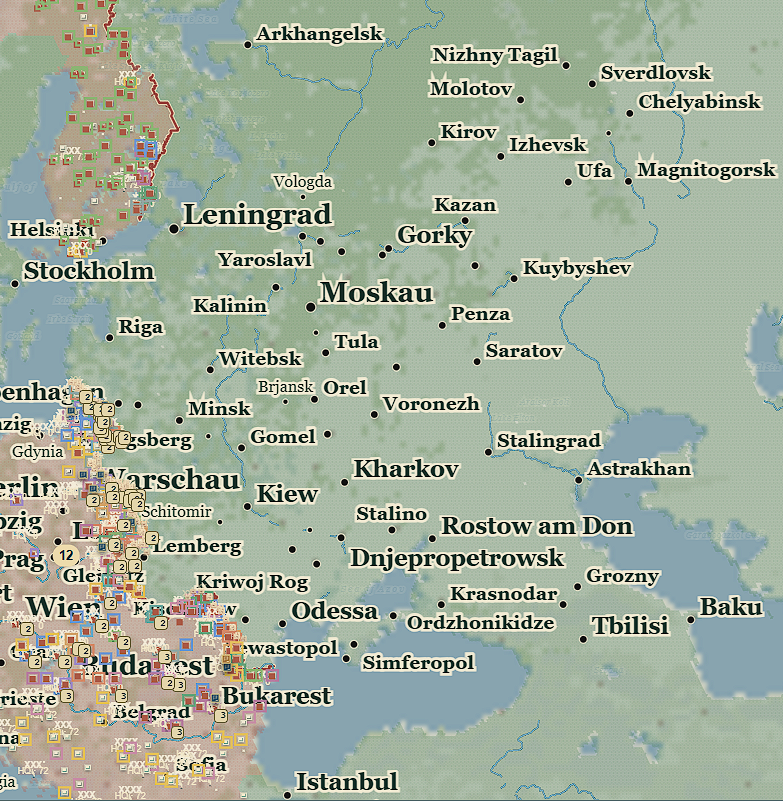
- Stab und Oberkommando.png (1.3 MiB) Viewed 60 times
This zoomed-out view shows the wider geographical context. Summarised situation reports and updates from subordinate headquarters would be particularly important for this command role.
The tension comes from making decisions under uncertainty: Does a reported enemy movement indicate a counterattack? Should a reserve be released? Is an operational objective still achievable?
2. Strategy – allocating forces and resources
At this level, you decide which theatres take priority, where new formations are assigned, and how production, training, replacements, and supplies are allocated.
Suggested reference scale: 1:1,000,000.
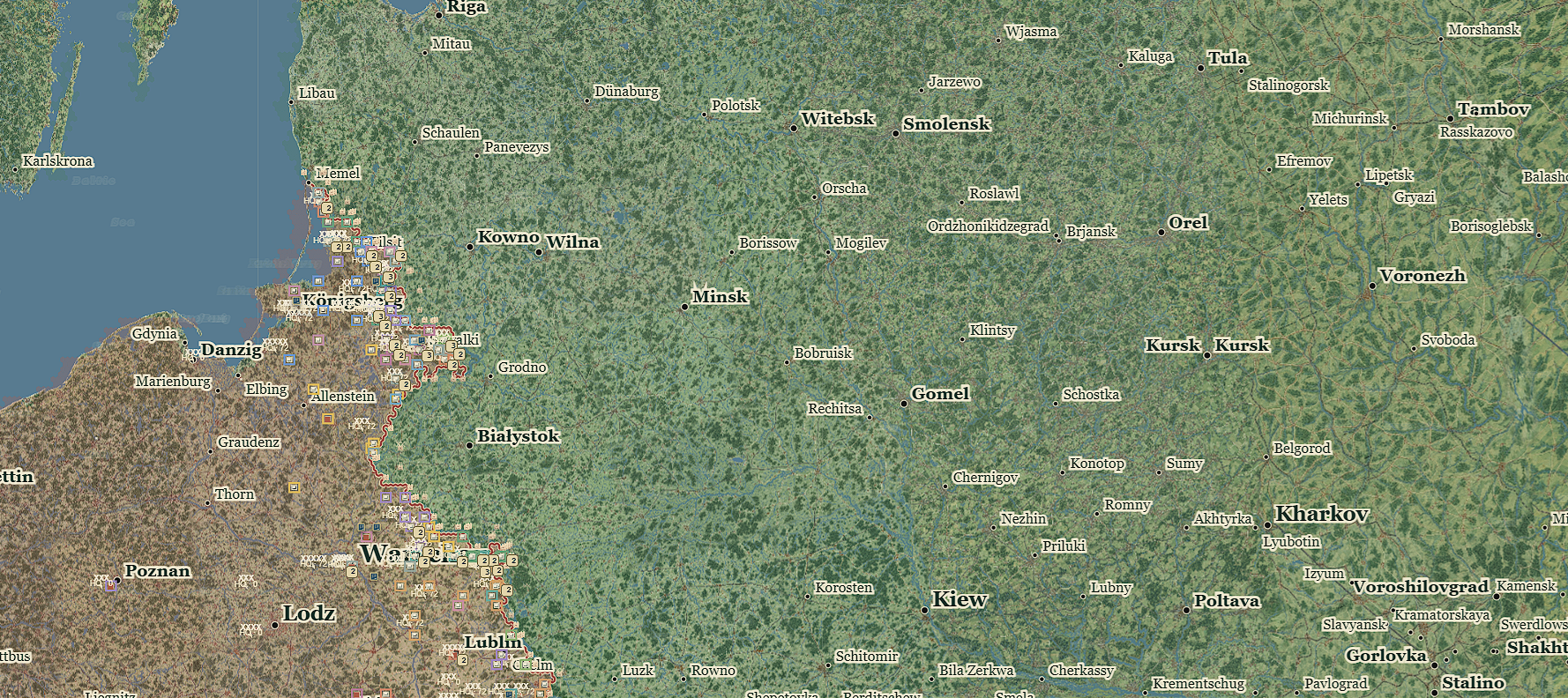
- Strategie.png (3.75 MiB) Viewed 60 times
This view connects larger operational areas. It provides the geographical framework for coordinating army groups and armies and assessing the importance of cities, transport links, and supply routes.
The challenge would be to use limited resources effectively: Which main effort receives fuel and reinforcements, and where must you temporarily make do with less?
3. Operations – commanding armies, corps, and divisions
At this level, you plan breakthroughs, envelopments, river crossings, and withdrawals. Operational arrows are linked to formations, intermediate objectives, schedules, and reserves.
Suggested reference scale: 1:300,000—one centimetre represents three kilometres when the map is displayed at that scale.
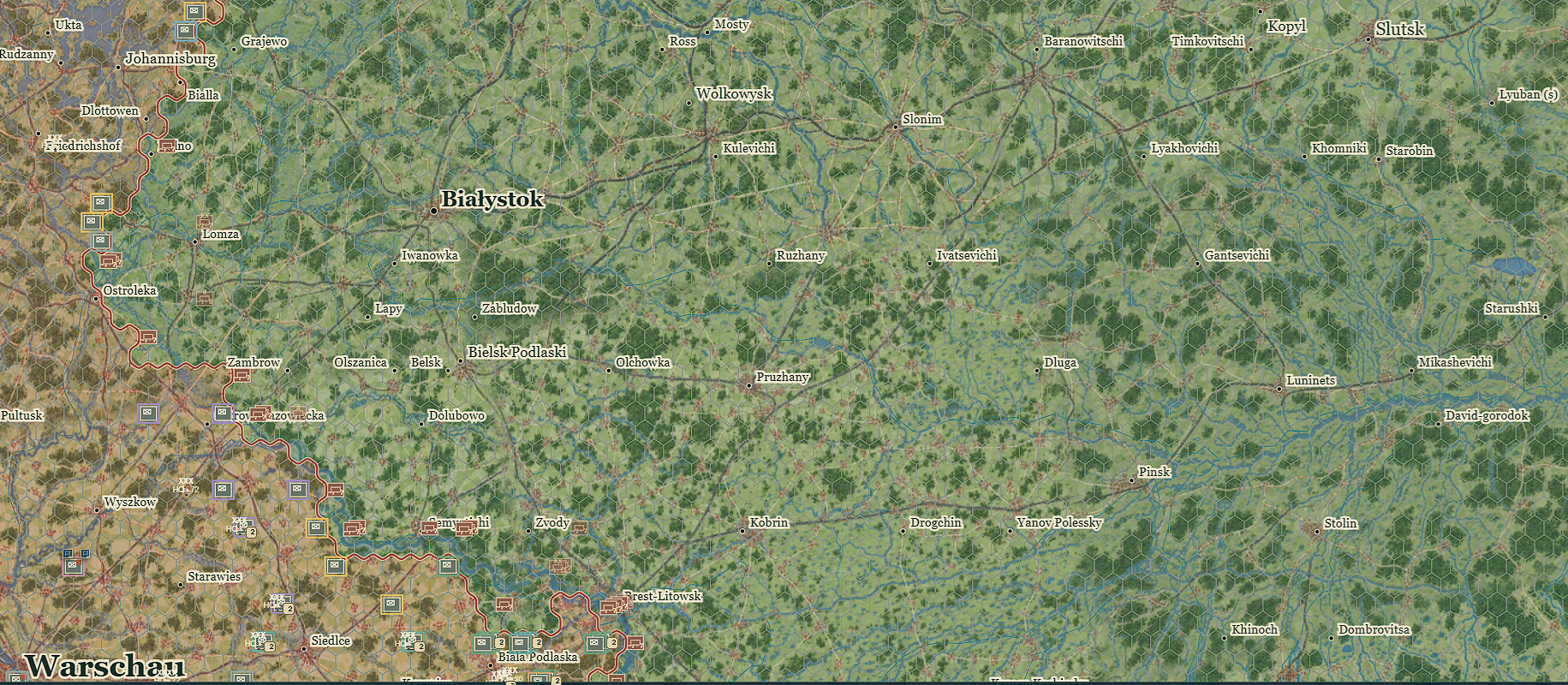
- Operationen.png (4.17 MiB) Viewed 60 times
The Warsaw–Białystok–Brest-Litovsk area becomes visible in greater detail. The hex grid, transport network, and waterways provide the framework for marching movements, assembly areas, and coordination between neighbouring formations.
An order might read: “Secure the river crossing, advance to the intermediate objective, and wait there for the neighbouring formation.” Subordinate commanders handle the execution if you choose to delegate it.
4. Tactics – influencing individual engagements
Here, you command regiments, battalions, and equivalent units. You choose local avenues of approach, employ engineers and fire support, and decide when to commit reserves within the battle area.
Suggested reference scale: 1:50,000.
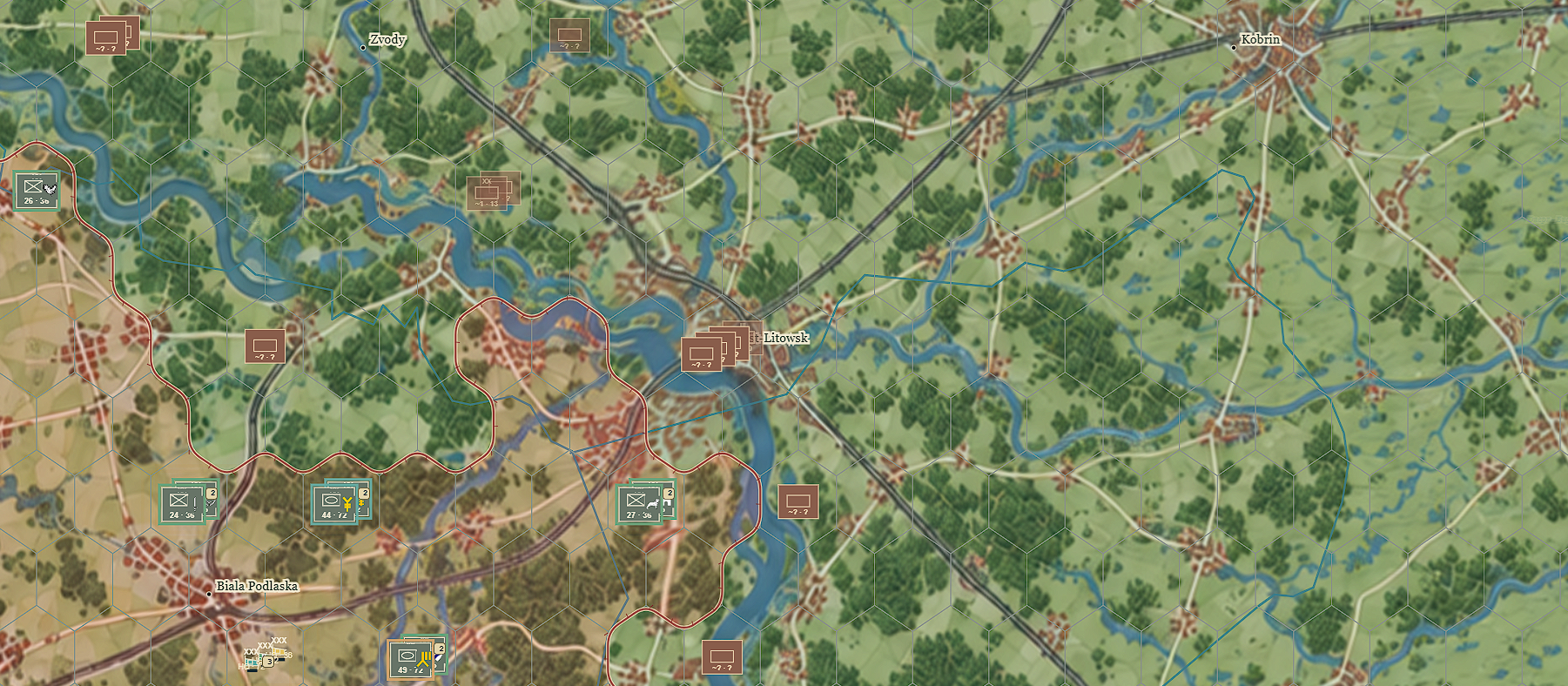
- Taktik.png (3.88 MiB) Viewed 60 times
The closer view around Brest-Litovsk allows a more detailed examination of settlements, woodland, transport routes, and river crossings. The terrain would need to be represented accurately enough to support the intended tactical depth.
A single crossing could become the decisive objective in a battle. Losing it would, in turn, affect the operational timetable.
One game world – you decide what to control yourself
The four maps show the same world at different distances. As you zoom in, more detail becomes visible. Cities, rivers, and roads stay in the same places.
You decide which tasks you want to handle yourself. For example, you could command an entire army group and set its objectives. Your computer-controlled commanders would then handle troop movements and individual battles. They would report on their progress and tell you where they need help.
You could also command just one army or take control of everything, right down to individual battles. The computer handles whatever you choose to delegate.
I imagine planning would be straightforward: draw an attack arrow on the map, select the troops involved, and decide which places they should reach and by when. Your staff would estimate whether there is enough time, fuel, and supplies to carry out the plan.
The tension comes when things go differently than expected: a bridge is destroyed, a unit arrives late, or the enemy launches a surprise attack. You then decide whether to stick to the plan, send help, or set a different objective.
The four images above were created using AI. They show what the maps could look like. The gameplay features described here are ideas for further development.
Would you be interested in a game like this, where you make the big decisions and can leave it to your commanders to work out how to carry out your orders?


