

I would like to assert, that IF Japan had chosen
to simply toss the idea of winning the war out the window. They could easily have secured
Hawaii. It would have taken ALL their assets,
so the Phillipnes et. al. would not be on the
Time Table. But it could have been done. Just my opinion.
New Alternate Strategy
Moderators: Joel Billings, wdolson, Don Bowen, mogami
New Alternate Strategy
“It is clear that the individual who persecutes a man, his brother, because he is not of the same opinion, is a monster.”
Voltaire
'For those with faith, no proof is needed. For those without faith, no proof is enough'
French Priest
"Statistic
Voltaire
'For those with faith, no proof is needed. For those without faith, no proof is enough'
French Priest
"Statistic
-
Lex Morton
- Posts: 16
- Joined: Sat Jun 24, 2000 8:00 am
- Location: Scotland
Hello there Chiteng - I must admit to enjoying your previous posts as I am a boardwargamer too! 
As regards 'Operation Aloha' , the invasion and conquest of Hawaii, then I too agree that it could have been done, but also what if the Japanese had attacked only the British and Dutch at first,thereby securing POL supplies,with the US (probably) remaining neutral,then after say 3 or 4 months, attack the US in Hawaii with EVERYTHING they had including,at that stage, Yamato?
A sustained all out carrier op on Pearl and the airfields with landings followed up by Yamato shelling Pearl may even have induced the US having to negotiate terms with Japan right there and then..I can imagine the sheer terror that Yamato alone would create in the civilian population never mind how bad it would be when the rest of the Japper BB's decide to come into range..All Japanese subs to be pre-placed covering San Diego,San Fran,Panama canal and a few even covering Cape Horn!
Don't know about anyone else but that sounds quite grim already for the US.Follow up Japanese landings in Panama and Ceylon would tighten the noose further.SNLF and engineers set up a forward base in Easter island (Chile will be told to accept it or be invaded!).
Phase 2 begins in December 42 with Musashi joining Yamato and the rest of the fleet after a refit and steaming east at best speed for the final showdown - 'The Main Battle' with the US fleet.If the US don't oblige then proceed to raid the US West coast airfields and shell the ports and particularly the dockyards to smithereens!
BANZAI!
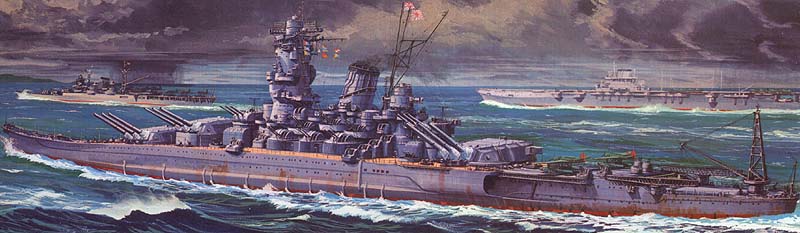
BANZAI!!
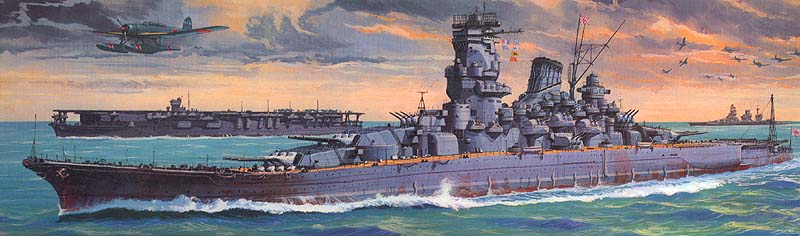
BANZAI!!!
Roll on War in the Pacific!!
Lex Morton
As regards 'Operation Aloha'
, the invasion and conquest of Hawaii, then I too agree that it could have been done, but also what if the Japanese had attacked only the British and Dutch at first,thereby securing POL supplies,with the US (probably) remaining neutral,then after say 3 or 4 months, attack the US in Hawaii with EVERYTHING they had including,at that stage, Yamato?A sustained all out carrier op on Pearl and the airfields with landings followed up by Yamato shelling Pearl may even have induced the US having to negotiate terms with Japan right there and then..I can imagine the sheer terror that Yamato alone would create in the civilian population never mind how bad it would be when the rest of the Japper BB's decide to come into range..All Japanese subs to be pre-placed covering San Diego,San Fran,Panama canal and a few even covering Cape Horn!
Don't know about anyone else but that sounds quite grim already for the US.Follow up Japanese landings in Panama and Ceylon would tighten the noose further.SNLF and engineers set up a forward base in Easter island (Chile will be told to accept it or be invaded!).
Phase 2 begins in December 42 with Musashi joining Yamato and the rest of the fleet after a refit and steaming east at best speed for the final showdown - 'The Main Battle' with the US fleet.If the US don't oblige then proceed to raid the US West coast airfields and shell the ports and particularly the dockyards to smithereens!
BANZAI!
BANZAI!!
BANZAI!!!
Roll on War in the Pacific!!
Lex Morton
I agree that Japanese would have been better off just attacking the Dutch and Singapore. I agree the US would most probably had stayed neutral at least initially. However it would have been very difficult to attack Hawaii 3-4 months after Japan open hostilities. The US even if they had not declared war. Would most assuredly greatly reinforced the PacFleet (notably with Yorktown & Hornet) by then. Making naval air strength more or less equal with Japan. Longrange air and naval patrols from reinforced Guam, Wake and Midway would have virtually made it impossible to sneak up on Hawaii as did in Dec 7. Not to mention the difficulties of supplying and maintianing forces thousands of miles from their home bases. The Japanese would need to capture, Wake, Midway, before it could even consider landing troops on Hawaii.Originally posted by Lex Morton:
Hello there Chiteng - I must admit to enjoying your previous posts as I am a boardwargamer too! <img src="smile.gif" border="0">
As regards 'Operation Aloha' <img src="wink.gif" border="0"> the invasion and conquest of Hawaii then I too agree that it could have been done but also what if the Japanese had attacked only the British and Dutch at first,thereby securing POL supplies,with the US(probably)remaining neutral,then after say 3 or 4 months, attack the US in Hawaii with EVERYTHING they had including,at that stage, Yamato?
A sustained all out carrier op on Pearl and the airfields with landings followed up by Yamato shelling Pearl may even have induced the US having to negotiate terms with Japan right there and then..I can imagine the sheer terror that Yamato alone would create in the civilian population never mind how bad it would be when the rest of the BB's decide to come into range..All Japanese subs to be pre-placed covering San Diego,San Fran,Panama canal and a few even covering Cape Horn!
Don't know about anyone else but that sounds quite grim already for the US.Follow up Japanese landings in Panama and Ceylon would tighten the noose further.SNLF and engineers set up a forward base in Easter island (Chile will be told to accept it or be invaded!).
Phase 2 begins in December 42 with Musashi joining Yamato and the rest of the fleet and steaming east at best speed for the final showdown - 'The Main Battle' with the US fleet.If the US don't oblige then proceed to raid the airfields and shell the ports to smithereens. <img src="eek.gif" border="0">
BANZAI!
BANZAI!!
BANZAI!!!
Roll on War in the Pacific!! <img src="biggrin.gif" border="0">
Lex Morton
[ February 03, 2002: Message edited by: Lex
Morton ]
A better stratedy would have been once the DEI and Malaya had been secured, to then launch an all out attack on the PI islands. The US would then would have no choice but to try come to its rescue. Now its the US fleet that is overextended thousands of miles from there home bases. I admit this is hindsite, but I think the superior training and performance of the IJN would probably had resulted in disaster for the USN.


Greetings, What would be the point of Japan ignoring everything else to try for Hawaii? Japan is going to run out of fuel in 6 months (of peacetime use) She has two choices: give in to US pressure and withdraw from China or go and capture the resources she requires to continue the China War. Going for Hawaii even if completely successfull (which I doubt) would not solve the basic need. If Japan chooses war she has to declare on the U.S. (I doubt the USAAF at Clark Field who remain Idle while Japan declare war on US allies.)(Japan doubted it also thats why they attack Pearl Harbor) But the Southern Resource Area for good pratical reasons is the true target of her very limited war aims. Not having a plan for a war, only the siezing of material Japan wandered into disaster in mid 42, by getting over optimistic. The U.S. won the Pacific war using less then 30% of her potentional. Any increase in Japanese success(threat) will be meet with a larger US commitment (after all Europe was still a bit of an overkill, so there is a little room to begin with) The largest single problem with planning operations for Japan is the limited nature of her military, it's only going to get smaller and less experianced with time. There is just no way to force the US to acknowledge defeat unless you can sink everything and lose nothing. Going to PH on a suprise raid in peacetime and then skaddadling away is one thing but to even consider a protracted seige of the place is going to involve losing ships that can never be replaced. There are no bases to repair damage at. Midway and Johnson/Palmyra are all in range of US long range bombers and would be under constant air attack. (the US meanwhile has plenty of space in the area to disperse and repair. ) Everything that is possible in Pac War is possible because of the system (1 week turns air bases can not be put out of action) B-17's would keep Midway and other Japan held bases suppressed much easier (In Pac War it is impossible to capture PH against a human who detirmines to hold the place from the outset-exactly the stratagy the US held in the actual war) Sending the entire Japanese fleet there the first week might yield a nice crop of damage to the US, but it would not capture it and any attempt to maintain a forward presence would begin attriting the IJN. (not to mention it would result in the delay in securing the SRA)

I'm not retreating, I'm attacking in a different direction!
I am sorry but I cant see any reason to go to the PI. Except pride.
It has no natural resources, it produces nothing I want, it consumes precious material.
Let them all starve. Just drop leaflets saying,
'we would feed you but the USA has troops there'
or something along that line. Then sink every
damn ship that can float. The overpopulated
island would soon have alot of hungry people.
Yes yes I am aware that the USA presence under
Caesar would quite likely inflict some strikes.
I say its better than having to deal with the entire mess. Maybe after say 18 months the people
would start to blame the USA for the mess.
Then again maybe not.
It has no natural resources, it produces nothing I want, it consumes precious material.
Let them all starve. Just drop leaflets saying,
'we would feed you but the USA has troops there'
or something along that line. Then sink every
damn ship that can float. The overpopulated
island would soon have alot of hungry people.
Yes yes I am aware that the USA presence under
Caesar would quite likely inflict some strikes.
I say its better than having to deal with the entire mess. Maybe after say 18 months the people
would start to blame the USA for the mess.
Then again maybe not.
“It is clear that the individual who persecutes a man, his brother, because he is not of the same opinion, is a monster.”
Voltaire
'For those with faith, no proof is needed. For those without faith, no proof is enough'
French Priest
"Statistic
Voltaire
'For those with faith, no proof is needed. For those without faith, no proof is enough'
French Priest
"Statistic
Hi, of course you and I with hindsight might prefer to use the 14th Army else where. But then again having B-17's catching cities on the home Islands on fire in Dec 1941 might get the Emperour angry and result in our having to atone for the oversight. It is hard to look at the map and figure where our oil ladden tankers are going to sail to avoid landbase air attacks (and those pesky PT boats and subs based right next to Japanese ports) and still bring the oil home. Not to mention B-17's would be in range of the oil fields. No PI lasting even a few months could be fatal to any hopes Japan has of winning the war. The best stratagy is one the captures the SRA intact and with the fewest lossess in the shortest amount of time. Something Japan did pretty well. Then from lack of a long range plan for follow up operations she fumbled at Midway. Now we know the Allies have our codes they didn't. What needs to be found is a way to get the allies to commit forces Japan can defeat in locations Japan can maintain the required means.
I think the South Pacific bears closer study (a 1942 plan of operations that has several divisions and plenty of IJAAF groups on hand before it starts-not letting them be sucked in piecemeal and un-coordinated. There are plenty of bases in mutal support range (aligned nicly in a chain) that present a direct threat to Allied interests. Only in the actual event they were approached rather hap hazzardly almost as an after thought rather then having the material ready and sent with a purpose.) It is here if you can draw the allies to commit forces before they are ready that signifcant damage can be inflicted (without undue risk)
[ February 08, 2002: Message edited by: Mogami ]
[ February 08, 2002: Message edited by: Mogami ]</p>
I think the South Pacific bears closer study (a 1942 plan of operations that has several divisions and plenty of IJAAF groups on hand before it starts-not letting them be sucked in piecemeal and un-coordinated. There are plenty of bases in mutal support range (aligned nicly in a chain) that present a direct threat to Allied interests. Only in the actual event they were approached rather hap hazzardly almost as an after thought rather then having the material ready and sent with a purpose.) It is here if you can draw the allies to commit forces before they are ready that signifcant damage can be inflicted (without undue risk)
[ February 08, 2002: Message edited by: Mogami ]
[ February 08, 2002: Message edited by: Mogami ]</p>
I'm not retreating, I'm attacking in a different direction!
You sure have an exagerated idea of what
the B-17 can do. One lousy group in the PI will
do all that? And yet 25 of them in the ETO barely
managed to defeat the Luftwaffe.
Sorry I dont think so. Yes the PT boats et al would TRY to do alot. It is by no means certain that they could succeed.
57 planes with a bombload on one ton each
that will bring them to their knees?
I disagree
the B-17 can do. One lousy group in the PI will
do all that? And yet 25 of them in the ETO barely
managed to defeat the Luftwaffe.
Sorry I dont think so. Yes the PT boats et al would TRY to do alot. It is by no means certain that they could succeed.
57 planes with a bombload on one ton each
that will bring them to their knees?
I disagree
“It is clear that the individual who persecutes a man, his brother, because he is not of the same opinion, is a monster.”
Voltaire
'For those with faith, no proof is needed. For those without faith, no proof is enough'
French Priest
"Statistic
Voltaire
'For those with faith, no proof is needed. For those without faith, no proof is enough'
French Priest
"Statistic
Hi, it might be the B-17's do not have to destroy Saesbo in one mission. Also if you leave the airbase more can fly in (unless now you are going to attack other US bases to prevent them) We know B-25's can launch from a CV (another possible means of reinforcing) The sub base means subs can continue to come and go. It should be remembered there were large stores of supplies that had to be abandoned when the invasion came. If they remain in US hands the situation on PI is not as bad as it became. 10 PI divisions did not begin mobliazation till 1 Dec, you would give them time to organize. Once war begins the US will start tucking their material away to safer places. It would require a large effort for Japan to establish and maintain a blockade type seige. It does not require that much effort to simply remove the place, tell me again why you would not do it? You would need to still maintain the airgroups attacking PI why not just kill it? I usally reinforce 14th Army rather then dimminish it. (to get the job done faster) (the original target date for Homma was 50 days)
PS I think you under estimate the effect even 1 B-17 bombing mainland Japan would have had. In April of 42 a handfull of B-25s triggered the Midway Operation
[ February 08, 2002: Message edited by: Mogami ]</p>
PS I think you under estimate the effect even 1 B-17 bombing mainland Japan would have had. In April of 42 a handfull of B-25s triggered the Midway Operation
[ February 08, 2002: Message edited by: Mogami ]</p>
I'm not retreating, I'm attacking in a different direction!
Uhhgg.... Here we go again. Everyone always seem to assume that the US would have declared war if Japan had attacked the Brits and Dutch. There is no historical evidence to support that assumption. Quite the contrary most evidence seems to suport that FDR would not or could not declare war under those circumstances. In any event. Check the map again. Japan controls the the whole coast of China and indo-china. It controls both Hainin and Formosa Islands. The convoys can hug that coast protected by land bases. Its close to 1000 miles away and quite out of range of your PT's. Regardless those PTs and B-17s would run out of fuel and munitions very shortly under a IJN blockade. The fact is, the PI is geographically isolated, Which is precisely why the US navy gave up on any notion of defending it years before the war.Originally posted by Mogami:
Hi, of course you and I with hindsight might prefer to use the 14th Army else where. But then again having B-17's catching cities on the home Islands on fire in Dec 1941 might get the Emperour angry and result in our having to atone for the oversight. It is hard to look at the map and figure where our oil ladden tankers are going to sail to avoid landbase air attacks (and those pesky PT boats and subs based right next to Japanese ports) and still bring the oil home. Not to mention B-17's would be in range of the oil fields. No PI lasting even a few months could be fatal to any hopes Japan has of winning the war. The best stratagy is one the captures the SRA intact and with the fewest lossess in the shortest amount of time. Something Japan did pretty well. Then from lack of a long range plan for follow up operations she fumbled at Midway. Now we know the Allies have our codes they didn't. What needs to be found is a way to get the allies to commit forces Japan can defeat in locations Japan can maintain the required means.
I think the South Pacific bears closer study (a 1942 plan of operations that has several divisions and plenty of IJAAF groups on hand before it starts-not letting them be sucked in piecemeal and un-coordinated. There are plenty of bases in mutal support range (aligned nicly in a chain) that present a direct threat to Allied interests. Only in the actual event they were approached rather hap hazzardly almost as an after thought rather then having the material ready and sent with a purpose.) It is here if you can draw the allies to commit forces before they are ready that signifcant damage can be inflicted (without undue risk)
[ February 08, 2002: Message edited by: Mogami ]
[ February 08, 2002: Message edited by: Mogami ]
To be fair. the USAAF plan, given time,was to eventually have 4 Heavy bomber groups based at the PI. with a like number of pursuit groups. No mistaking the PI as a base would have gotten more and more formidable the longer time passed by, but once war had started and the blockade put in place. It would enivitably whither away to a point of irrevevelance.Originally posted by Chiteng:
You sure have an exagerated idea of what
the B-17 can do. One lousy group in the PI will
do all that? And yet 25 of them in the ETO barely
managed to defeat the Luftwaffe.
Sorry I dont think so. Yes the PT boats et al would TRY to do alot. It is by no means certain that they could succeed.
57 planes with a bombload on one ton each
that will bring them to their knees?
I disagree
Hi "Even so, without the Japanese attack, America would never have declared war upon Japan."
Not true. Most people point to the August 1941 resolution to keep draftees on duty for more than twelve months, a measure that passed by the narrowest of margins, 203-202. But antiwar sentiment was waning quickly, especially in the wake of German U-boat attacks upon American vessels. In September, a poll showed 67 percent of the American public felt the United States should risk war rather than allow Japan to grow more powerful; 70 percent felt the United States should risk war with Germany. Many in Roosevelt's cabinet and the press felt that the President would have no difficulty in getting a declaration of war against Japan following the breakdown in peace negotiations in late November.
The freezing of Japanese assets in the United States on July 25, 1941.
This step, which was followed by similar action on the part of Great Britain and the Netherlands East Indies, amounted to a commercial blockade of Japan. The warmaking potentialities of this decision had been recognized by Roosevelt himself shortly before it was taken. Addressing a delegation and explaining why oil exports to Japan had not been stopped previously, he said:
It was very essential, from our own selfish point of view of defense, to prevent a war from starting in the South Pacific. So our foreign policy was trying to stop a war from breaking out down there.... (in the meantime he sent the B-17's the subs and PT-boats once they were there he declared the embargo) Now, if we cut the oil off, they [the Japanese] probably would have gone down to the Netherlands East Indies a year ago, and we would have had war.
When the Japanese Prime Minister, Prince Fumimaro Konoye, appealed for a personal meeting with Roosevelt to discuss an amicable settlement in the Pacific, this appeal was rejected, despite the strong favorable recommendations of the American ambassador to Japan, Joseph C. Grew.
Final step on the road to war in the Pacific was Secretary of State Hull's note to the Japanese government of November 26. Before sending this communication Hull had considered proposing a compromise formula which would have relaxed the blockade of Japan in return for Japanese withdrawal from southern Indochina and a limitation of Japanese forces in northern Indochina.
However, Hull dropped this idea under pressure from British and Chinese sources. He dispatched a veritable ultimatum on November 26, which demanded unconditional Japanese withdrawal from China and from Indochina and insisted that there should be "no support of any government in China other than the National government [Chiang Kai-shek]." Hull admitted that this note took Japanese-American relations out of the realm of diplomacy and placed them in the hands of the military authorities.
Japan went to war in order to get the first strike, The Japanese had no doubt the US would declare war on them. The US technically had been in a shooting war with Germany since Sept (DD's ordered to shoot on sight any German U-boat)
There is no way to concive Japan going to war with the US ally Great Britian and not having the US declare under much better conditions then Japan getting that first strike.
Now all you have to do is convince your selfs Japan can maintain a blockage on PI (they would need 3 times the Navy)
One question I have, every one assumes PI will just whither away because Japanese patrol boats are going in circles around it. How long do you assume this whithering will take and how much loss are you will to take while it happens? The US could and would bring material in far easier then Japan could prevent it without physically occuping the in take ports/airfields. B-17's flying at night would hurt even a lowly 35 a night
(besides how much fun would a game on the Pacific War be without the US? Please when this game is release use your plan against me in a game please)
PS don't you (as Japan)use the PI bases in continuing the offensive in Southern resource Area?
[ February 08, 2002: Message edited by: Mogami ]</p>
Not true. Most people point to the August 1941 resolution to keep draftees on duty for more than twelve months, a measure that passed by the narrowest of margins, 203-202. But antiwar sentiment was waning quickly, especially in the wake of German U-boat attacks upon American vessels. In September, a poll showed 67 percent of the American public felt the United States should risk war rather than allow Japan to grow more powerful; 70 percent felt the United States should risk war with Germany. Many in Roosevelt's cabinet and the press felt that the President would have no difficulty in getting a declaration of war against Japan following the breakdown in peace negotiations in late November.
The freezing of Japanese assets in the United States on July 25, 1941.
This step, which was followed by similar action on the part of Great Britain and the Netherlands East Indies, amounted to a commercial blockade of Japan. The warmaking potentialities of this decision had been recognized by Roosevelt himself shortly before it was taken. Addressing a delegation and explaining why oil exports to Japan had not been stopped previously, he said:
It was very essential, from our own selfish point of view of defense, to prevent a war from starting in the South Pacific. So our foreign policy was trying to stop a war from breaking out down there.... (in the meantime he sent the B-17's the subs and PT-boats once they were there he declared the embargo) Now, if we cut the oil off, they [the Japanese] probably would have gone down to the Netherlands East Indies a year ago, and we would have had war.
When the Japanese Prime Minister, Prince Fumimaro Konoye, appealed for a personal meeting with Roosevelt to discuss an amicable settlement in the Pacific, this appeal was rejected, despite the strong favorable recommendations of the American ambassador to Japan, Joseph C. Grew.
Final step on the road to war in the Pacific was Secretary of State Hull's note to the Japanese government of November 26. Before sending this communication Hull had considered proposing a compromise formula which would have relaxed the blockade of Japan in return for Japanese withdrawal from southern Indochina and a limitation of Japanese forces in northern Indochina.
However, Hull dropped this idea under pressure from British and Chinese sources. He dispatched a veritable ultimatum on November 26, which demanded unconditional Japanese withdrawal from China and from Indochina and insisted that there should be "no support of any government in China other than the National government [Chiang Kai-shek]." Hull admitted that this note took Japanese-American relations out of the realm of diplomacy and placed them in the hands of the military authorities.
Japan went to war in order to get the first strike, The Japanese had no doubt the US would declare war on them. The US technically had been in a shooting war with Germany since Sept (DD's ordered to shoot on sight any German U-boat)
There is no way to concive Japan going to war with the US ally Great Britian and not having the US declare under much better conditions then Japan getting that first strike.
Now all you have to do is convince your selfs Japan can maintain a blockage on PI (they would need 3 times the Navy)
One question I have, every one assumes PI will just whither away because Japanese patrol boats are going in circles around it. How long do you assume this whithering will take and how much loss are you will to take while it happens? The US could and would bring material in far easier then Japan could prevent it without physically occuping the in take ports/airfields. B-17's flying at night would hurt even a lowly 35 a night
(besides how much fun would a game on the Pacific War be without the US? Please when this game is release use your plan against me in a game please)
PS don't you (as Japan)use the PI bases in continuing the offensive in Southern resource Area?
[ February 08, 2002: Message edited by: Mogami ]</p>
I'm not retreating, I'm attacking in a different direction!
Well I am NOT asserting USA Neutrality. I am saying that the 'threat' of bombing from the
PI was and apparently still is greatly exagerated.
There is no possibility that any substantive damage would be caused by even 100 bombers.
Its a pipe dream. Really Mogami I am sure you read
extracts of the bomb survey. Even the B-29 bombing
at 5k was hard pressed to hit anything usefull.
The facts are that PLANT space simply wasnt in short supply on mainland Japan. YES I am CERTAIN they would try, possibly try very hard, and they would get shot down by Jap standing patrols.
NOT radar, good old standing patrols. They would have done whatever it took to minimize the problem.
In addition to bombing the B-17 airfields.
Oh I agree that Mac would have gone beserk trying
to find ways of harming Japan. BUT that doesnt mean he would succeed. There simply was NOT enough
bombers in the pipe to maintain a credible
threat. Just like Cruise missiles today.
You have not commented on the possibility of simply starving the PI out. Actually I think Mac was way too stupid to allow civillian deaths to
force surrender. He would rather have seen mass
starvation of the civilians than face humiliation.
That is exactly what he would have gotten.
PI was and apparently still is greatly exagerated.
There is no possibility that any substantive damage would be caused by even 100 bombers.
Its a pipe dream. Really Mogami I am sure you read
extracts of the bomb survey. Even the B-29 bombing
at 5k was hard pressed to hit anything usefull.
The facts are that PLANT space simply wasnt in short supply on mainland Japan. YES I am CERTAIN they would try, possibly try very hard, and they would get shot down by Jap standing patrols.
NOT radar, good old standing patrols. They would have done whatever it took to minimize the problem.
In addition to bombing the B-17 airfields.
Oh I agree that Mac would have gone beserk trying
to find ways of harming Japan. BUT that doesnt mean he would succeed. There simply was NOT enough
bombers in the pipe to maintain a credible
threat. Just like Cruise missiles today.
You have not commented on the possibility of simply starving the PI out. Actually I think Mac was way too stupid to allow civillian deaths to
force surrender. He would rather have seen mass
starvation of the civilians than face humiliation.
That is exactly what he would have gotten.
“It is clear that the individual who persecutes a man, his brother, because he is not of the same opinion, is a monster.”
Voltaire
'For those with faith, no proof is needed. For those without faith, no proof is enough'
French Priest
"Statistic
Voltaire
'For those with faith, no proof is needed. For those without faith, no proof is enough'
French Priest
"Statistic
Hi again, If it's not broke why try to fix it? Japan does not lose the war because it takes PI. It loses because it has no plan for the war, just the conquest of the SRA then nothing but adlib. As for starvation on PI, I can't find where Japan used too much merchant space hauling food for civilians there. Why do you continue to think in terms of 1 bombing mission? (although now you at least admit the need to bomb Clark Field yourself)
As long as Clark field remains in US hands it can do damage why allow any? (I don't think Jap fighters could intercept high altitude B-17s at night in fact i don't think in 1941-42 they have a fighter that a Jap pilot would even care to try it in. Nate 1 7mm /Oscar two 7mm. Zeros have a 20mm cannon but now your Naval pilots are flying cap at night over Japan? If I am over estimating B-17's I think a case could be made that you are under estimating Japans willingness to allow even a Swordfish flying over the homeland (makes those radio propaganda messages difficult to swallow)Take the darn place. It's easy and whats more you can use it yourself (if for nothing more then a transfer/landing field for planes headed South) Where are these blockading ships based? TAKE THE DAMN PLACE!!!!
and whats more before you start the game/war have a plan that looks further then April 42. How and where are you going to engage the US Navy on favorable terms. Not Hawaii your bases are too far away. In the South, have the men and material earmarked, start building the airfields you'll need for landbased air cover the first week of the war. Then when the battles take place in May you will have the air control over the battle. Make real threats against Espirtu Santo New Cal and the pipeline and force them to commit.
I love discussing stratigic options for players in wargames. Ignoring a strong enemy positioned astride my supply routes is not something I buy into without a really good reason. What is Japan doing to offset this? How is Japans ability to wage and win the war helped?
As long as Clark field remains in US hands it can do damage why allow any? (I don't think Jap fighters could intercept high altitude B-17s at night in fact i don't think in 1941-42 they have a fighter that a Jap pilot would even care to try it in. Nate 1 7mm /Oscar two 7mm. Zeros have a 20mm cannon but now your Naval pilots are flying cap at night over Japan? If I am over estimating B-17's I think a case could be made that you are under estimating Japans willingness to allow even a Swordfish flying over the homeland (makes those radio propaganda messages difficult to swallow)Take the darn place. It's easy and whats more you can use it yourself (if for nothing more then a transfer/landing field for planes headed South) Where are these blockading ships based? TAKE THE DAMN PLACE!!!!
and whats more before you start the game/war have a plan that looks further then April 42. How and where are you going to engage the US Navy on favorable terms. Not Hawaii your bases are too far away. In the South, have the men and material earmarked, start building the airfields you'll need for landbased air cover the first week of the war. Then when the battles take place in May you will have the air control over the battle. Make real threats against Espirtu Santo New Cal and the pipeline and force them to commit.
I love discussing stratigic options for players in wargames. Ignoring a strong enemy positioned astride my supply routes is not something I buy into without a really good reason. What is Japan doing to offset this? How is Japans ability to wage and win the war helped?
I'm not retreating, I'm attacking in a different direction!
Its easy to bomb Clark Field, I mean what else are you targeting? The bombers will be sitting idle on their fields after a while. If you think a B-17 bombing at high altitude at NIGHT
which the Norden Bombsite is NOT designed to do,
can hit anything at all your dreaming.
Yes PRIDE can force you to invade the PI. That doesnt mean you must stay there.
The tactic does work in both PacWar and WitP.
You can easily gain a close blockade by air and
you need no substantive surface assets.
The Lilys and Sallys and So-anns are simply too short ranged to hit anything except Clark field
and possibly not that.
But you are way way exagerating one lousy airbase
magnifying it into sometype of warwinning asset.
UHHH hey they didnt win the war with Clark.
The planes were caught on the field and destroyed.
They were NOT replaced.
which the Norden Bombsite is NOT designed to do,
can hit anything at all your dreaming.
Yes PRIDE can force you to invade the PI. That doesnt mean you must stay there.
The tactic does work in both PacWar and WitP.
You can easily gain a close blockade by air and
you need no substantive surface assets.
The Lilys and Sallys and So-anns are simply too short ranged to hit anything except Clark field
and possibly not that.
But you are way way exagerating one lousy airbase
magnifying it into sometype of warwinning asset.
UHHH hey they didnt win the war with Clark.
The planes were caught on the field and destroyed.
They were NOT replaced.
“It is clear that the individual who persecutes a man, his brother, because he is not of the same opinion, is a monster.”
Voltaire
'For those with faith, no proof is needed. For those without faith, no proof is enough'
French Priest
"Statistic
Voltaire
'For those with faith, no proof is needed. For those without faith, no proof is enough'
French Priest
"Statistic
Hi again, OK I am being silly. I think I must be missing the point. Are you proposing some alternative stratagy or just bashing Mac? What are you doing with the forces (14 Army) instead of capturing the PI bases. Short range low payload bombers will not blockade PI (they can't even reach all the points supplies could enter by. Of course historicaly Clark Field was not a factor in the early war why? because Japan first used strong air units to suppress it and then they physically occupied the place. I propose doing the same. It does not matter what the B-17's hit as long as they drop a load on the Home Islands US morale and prestige will benifit, Japanese morale and prestige will suffer. So what I am mainly interested in now is your reasons for ignoring PI. Where do you hope to gain some otherwise unattainable advantage by not destroying the allied presence on PI?
In chess, when a knight is forced to move to the edge of the board there is a popular saying "knight on rim prospects dim" however this piece still remains on the board. Should at some future point it be allowed to move off the edge and back into the picture it can become important again. No matter how long PI is rendered in effective as long as it survives it retains potentional to become important again (at mostly likely at a time when it would not be as easy to deal with as it is in Dec 41) What does Japan gain by allowing even this remote possibily of happening?
(BTW I once played a human Japanese player in PBEM game who did not bomb Clark field on Turn one. The B-17's bombed Saesbo killing 2000 civilians and damageing the ship yard. On turn 2 I flew in another B-17 group and did it again on turn three all those Japanese airgroups that had been sent into the central Pacific to support his Midway operation were back doing what they should have done on turn 1 only now the US P-40 groups there were also up and running, it was not pretty from a Japanese point of view)(PSS the Midway operation also yielded diddly he captured Midway alright and the 3rd and 4th B-17 airgroups now had a nice handy training target.)
[ February 09, 2002: Message edited by: Mogami ]</p>
In chess, when a knight is forced to move to the edge of the board there is a popular saying "knight on rim prospects dim" however this piece still remains on the board. Should at some future point it be allowed to move off the edge and back into the picture it can become important again. No matter how long PI is rendered in effective as long as it survives it retains potentional to become important again (at mostly likely at a time when it would not be as easy to deal with as it is in Dec 41) What does Japan gain by allowing even this remote possibily of happening?
(BTW I once played a human Japanese player in PBEM game who did not bomb Clark field on Turn one. The B-17's bombed Saesbo killing 2000 civilians and damageing the ship yard. On turn 2 I flew in another B-17 group and did it again on turn three all those Japanese airgroups that had been sent into the central Pacific to support his Midway operation were back doing what they should have done on turn 1 only now the US P-40 groups there were also up and running, it was not pretty from a Japanese point of view)(PSS the Midway operation also yielded diddly he captured Midway alright and the 3rd and 4th B-17 airgroups now had a nice handy training target.)
[ February 09, 2002: Message edited by: Mogami ]</p>
I'm not retreating, I'm attacking in a different direction!
I am talking 'PURE STRATEGY' in the sence of
Clausewtiz. Not reality.
In reality the Japanese army would likely shoot
anyone who advocated a bypass.
There is reality, and fantasy.
Clausewtiz. Not reality.
In reality the Japanese army would likely shoot
anyone who advocated a bypass.
There is reality, and fantasy.
“It is clear that the individual who persecutes a man, his brother, because he is not of the same opinion, is a monster.”
Voltaire
'For those with faith, no proof is needed. For those without faith, no proof is enough'
French Priest
"Statistic
Voltaire
'For those with faith, no proof is needed. For those without faith, no proof is enough'
French Priest
"Statistic
I already said that.
It produces nothing it consumes much.
What other impetous do you need?
PI would not even provide good slaves.
I mean there is NOTHING good about the
islands. Just leave them alone, or if you must
go in kill the americans destroy the bases and LEAVE. Do the Cambodia thing 50 years early.
Just END it. One way or the other.
I love WitP because it DOES allow base demolition
and strategic installation demolition.
You ARE able to blow up the stores that you know damn well the Japs want. It takes MONTHS to get those Oil installations back online.
It produces nothing it consumes much.
What other impetous do you need?
PI would not even provide good slaves.
I mean there is NOTHING good about the
islands. Just leave them alone, or if you must
go in kill the americans destroy the bases and LEAVE. Do the Cambodia thing 50 years early.
Just END it. One way or the other.
I love WitP because it DOES allow base demolition
and strategic installation demolition.
You ARE able to blow up the stores that you know damn well the Japs want. It takes MONTHS to get those Oil installations back online.
“It is clear that the individual who persecutes a man, his brother, because he is not of the same opinion, is a monster.”
Voltaire
'For those with faith, no proof is needed. For those without faith, no proof is enough'
French Priest
"Statistic
Voltaire
'For those with faith, no proof is needed. For those without faith, no proof is enough'
French Priest
"Statistic
The draft resolution was passed, not as a belligerent act of mobilizing for war, but as a prudent mobilization of defence. Sure sentiment against war with the Germans was wanning becuase they were sinking US ships and killing US sailors. Even so half the people blamed there own government for putting those sailors in harms way in the first place. If sentiment was so strong. Why then did FDR not declare war after those DDs were sunk? I will tell you why becuase he new he did not have the popular support. Regarding your poll. All that I have read indicates that the majority of americans were willing to do anything short of outright war to prevent Japanese expansion. I mean come on, most americans had no idea were Singarpore or Java were. FDR himself said according to (Morrison&Toland)that an attack on the British and Dutch would not be aOriginally posted by Mogami:
Hi "Even so, without the Japanese attack, America would never have declared war upon Japan."
Not true. Most people point to the August 1941 resolution to keep draftees on duty for more than twelve months, a measure that passed by the narrowest of margins, 203-202. But antiwar sentiment was waning quickly, especially in the wake of German U-boat attacks upon American vessels. In September, a poll showed 67 percent of the American public felt the United States should risk war rather than allow Japan to grow more powerful; 70 percent felt the United States should risk war with Germany. Many in Roosevelt's cabinet and the press felt that the President would have no difficulty in getting a declaration of war against Japan following the breakdown in peace negotiations in late November.
The freezing of Japanese assets in the United States on July 25, 1941.
This step, which was followed by similar action on the part of Great Britain and the Netherlands East Indies, amounted to a commercial blockade of Japan. The warmaking potentialities of this decision had been recognized by Roosevelt himself shortly before it was taken. Addressing a delegation and explaining why oil exports to Japan had not been stopped previously, he said:
It was very essential, from our own selfish point of view of defense, to prevent a war from starting in the South Pacific. So our foreign policy was trying to stop a war from breaking out down there.... (in the meantime he sent the B-17's the subs and PT-boats once they were there he declared the embargo) Now, if we cut the oil off, they [the Japanese] probably would have gone down to the Netherlands East Indies a year ago, and we would have had war.
When the Japanese Prime Minister, Prince Fumimaro Konoye, appealed for a personal meeting with Roosevelt to discuss an amicable settlement in the Pacific, this appeal was rejected, despite the strong favorable recommendations of the American ambassador to Japan, Joseph C. Grew.
Final step on the road to war in the Pacific was Secretary of State Hull's note to the Japanese government of November 26. Before sending this communication Hull had considered proposing a compromise formula which would have relaxed the blockade of Japan in return for Japanese withdrawal from southern Indochina and a limitation of Japanese forces in northern Indochina.
However, Hull dropped this idea under pressure from British and Chinese sources. He dispatched a veritable ultimatum on November 26, which demanded unconditional Japanese withdrawal from China and from Indochina and insisted that there should be "no support of any government in China other than the National government [Chiang Kai-shek]." Hull admitted that this note took Japanese-American relations out of the realm of diplomacy and placed them in the hands of the military authorities.
Japan went to war in order to get the first strike, The Japanese had no doubt the US would declare war on them. The US technically had been in a shooting war with Germany since Sept (DD's ordered to shoot on sight any German U-boat)
There is no way to concive Japan going to war with the US ally Great Britian and not having the US declare under much better conditions then Japan getting that first strike.
Now all you have to do is convince your selfs Japan can maintain a blockage on PI (they would need 3 times the Navy)
One question I have, every one assumes PI will just whither away because Japanese patrol boats are going in circles around it. How long do you assume this whithering will take and how much loss are you will to take while it happens? The US could and would bring material in far easier then Japan could prevent it without physically occuping the in take ports/airfields. B-17's flying at night would hurt even a lowly 35 a night
(besides how much fun would a game on the Pacific War be without the US? Please when this game is release use your plan against me in a game please)
PS don't you (as Japan)use the PI bases in continuing the offensive in Southern resource Area?
[ February 08, 2002: Message edited by: Mogami ]
"cassis belli" in itself. He felt that the US people would see it as a war to prop up "Tottering colonial powers".
Futhermore, Britain was not a US allie. There were no formal or imformal agreements or treaties that obligated the US to come to their defence. In fact FDR repeatdly turned down Churchills request for just such a declaration. If the US were so certain to go to war. Why then, did we not make a formal declartation as such? I will tell you why, because American mothers were not going to allow their boys to be killed for Euro Colonies. Those American boys were not going to line up to join the service chanting "Remember Singapore!" (It just doesnt have the same ring as remember Pearl Harbor). The only way the US was going to declare war was for Japan to attack us. Sure the Japanese thought the US would certainly attack her if she attack the Brits and Dutch. Thats becuase they had no concept of how the US political system worked. They fell for FDR's collossal bluff.