

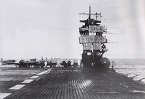
I guess for our discussion it is a shame that the Wake relief operation was called off or all of this discussion would be moot.
I can see the admiral now, "What risk three carriers when the Zero bonus is +5 are you crazy!"
Proposal for CHS - Remove the Zero bonus. Any opinions?
Moderators: Joel Billings, wdolson, Don Bowen, mogami

RE: Proposal for CHS - Remove the Zero bonus. Any opinions?
At last, someone sensible[:D]ORIGINAL: Skyros
I can see the admiral now, "What risk three carriers when the Zero bonus is +5 are you crazy!"

-
Demosthenes

- Posts: 525
- Joined: Thu Dec 08, 2005 6:41 pm
- Location: Los Angeles CA
RE: Proposal for CHS - Remove the Zero bonus. Any opinions?
ORIGINAL: Skyros
I guess for our discussion it is a shame that the Wake relief operation was called off or all of this discussion would be moot.
I can see the admiral now, "What risk three carriers when the Zero bonus is +5 are you crazy!"
You have just crystallized the anti Zero Bonus argument.
It is pure conjecture, a figment of the imagination.
Of course no such conversation as the above ever took place (although the Wake Is. relief expedition did in fact sail) because the bonus is not real.
What planet are the rest of you living on?
-
Bradley7735

- Posts: 2073
- Joined: Mon Jul 12, 2004 8:51 pm
RE: Proposal for CHS - Remove the Zero bonus. Any opinions?
ORIGINAL: John 3rd
Bradley--That is not what I meant in a complete manner. I think the American pilots on the fleet CVs were the best trained within the American forces; however, they were no where near the equal of the Japanese in thos early months. It took months of them flying BORING CAP, search, and ASW missions to increase their skills and then the small tastes of TRUE combat helped them to raise them even more.
I have not played the Allies in WitP yet. I am not sure where these pilots start with their starting scores. No doubt, they were the best that the Americans had. What do they start with for their initial stats?
I see what you're saying, but look at it this way: If what you're saying is true, then lets say Japan starts the game highly experienced and the US starts good, but not awesome. Now, for 5 months, US does boring CAP, a few small skirmishes, etc. Now they are better than good, but still not awesome. In that same time, the Japanese are conducting very heavy combat. so, in effect they are going from awesome to almost perfect. May comes around and the two forces clash. In this example, perfect pilots should decimate good pilots. But that isn't what happened IRL. in 4 carrier engagements in 42, the USN won tactical and strategic victories in 2, strategic win and tactical loss in 1 and strategic win and tactical draw in 1.
You can't achieve these results in the game. Equal carrier conflicts in the game (up to mid 43) will 90% of the time result in a US defeat.
Ok, rant off. I'm going back to work.
The older I get, the better I was.

RE: Proposal for CHS - Remove the Zero bonus. Any opinions?
The Claudes had a horrible combat record against first line opposition. It was the one plane in the Japanese naval arsenal that could make the Brewster Buffalo look like a great fighter.
Would you mind providing your sources for this statement? The Claude served primarily in the China theater and it was also used in very limited quantities in the PI campaign but was pretty much withdrawn for training duties by Mar 42. I am particularly interested in any info you have about its performance in combat versus the P-40, F4F, P-39 and the Buffalo (any variant).
The loaded Ki-27 weighed 85% of the loaded weight of a P-36 but despite that was 30 mph slower, armed with two rifle caliber popguns, and could be outmaneuvered by most allied a/c at almost any airpseed owing to the high drage induced by its fixed landing gear.
Would you also mind providing your source for this statement? The Nate was designed to dogfight biplanes and was very maneuverable. Indeed Japanese army pilots initially disliked the Oscar because it wasn't as maneueverable as the Nate. It wasn't until butterfly flaps were added to it that pilots accepted the Oscar. The Nate had decent success against the Buffalo but was chewed to pieces by the P-40s of the AVG. It saw little front-line action after the spring of 42 having been replaced by the Oscars.
The fixed landing gear has little to do with maneuverability and weighs less than retractable gear thereby actually increasing its climb and maneuverability potential. And it has an added advantage of being very durable making it suitable for operating from unimproved airfields (something the Buffalo could not do). Of course, the disadvantage is the increased drag that reduces speed which you noted. Both the Nate and the Claude were extremely maneverable. Their biggest flaws were the poor armament and slow top speeds.
I'd also like to know what you base your opinions on concerning the Buffalo's combat worthiness. According to Brian Cull in his book, "Buffalos over Singapore", the Buffalo did very poorly against all Japanese fighters. It suffered from weak landing gear and an engine that routinely overheated. It also had a nasty habit of venting oil all over the windscreen. Another common bad habit were the electrical shorts in the gun circuits which often caused them to not fire. The B-339 had a published top speed of 311mph during flight trials but rarely exceeded 290mph in level flight in the field. Its performance was also extremely limited above 12K feet due to problems with its supercharger. BTW, Brewster had major manufacturing problems with the Buffalo and used recycled TWA airliner engines in many planes sent to Britain. These egines, while rated at 1200hp, were lucky to achieve 900hp on a good day.
The Buffalos were pretty much blown out of the air over Malaya. You can read about their performance in Buffalos in Malaya.
The only theater in which the Buffalo did well was was in Finland where they racked a very impressive kill ratio of 26:1 in claims (though the claims themselves have never been verified). Of course this was the B-239 version and was faster than the B-339 or the F-2A vesions which had increased armament and armor.
Chez
Ret Navy AWCS (1972-1998)
VP-5, Jacksonville, Fl 1973-78
ASW Ops Center, Rota, Spain 1978-81
VP-40, Mt View, Ca 1981-87
Patrol Wing 10, Mt View, CA 1987-90
ASW Ops Center, Adak, Ak 1990-92
NRD Seattle 1992-96
VP-46, Whidbey Isl, Wa 1996-98
VP-5, Jacksonville, Fl 1973-78
ASW Ops Center, Rota, Spain 1978-81
VP-40, Mt View, Ca 1981-87
Patrol Wing 10, Mt View, CA 1987-90
ASW Ops Center, Adak, Ak 1990-92
NRD Seattle 1992-96
VP-46, Whidbey Isl, Wa 1996-98

RE: Proposal for CHS - Remove the Zero bonus. Any opinions?
It is not often I hear "not substantiated by facts" as a military historian and Professor of Military History.
As I would say to any of my peers, show me your documentation.
Points:
1. War Games are exactly that! Those gunnery games and Fleet Exercises held every year were beneficial but did not help once a new war broke out. They did provide great potential for immediate Doctrinal changes after Pearl Harbor and it took the Carrier-minded Admirals to force change. Additionally, practice A2A is beneficial but did not reflect life-or-death combat.
2. The Japanese started with nearly 700 combat hours per pilot. What do you call that? I do not care if it were against the Chinese with inferior aircraft. Those were COMBAT missions. They provided the Japanese with invaluable experience that led to superior Carrier Air Group tactics. This is why American CV Strike Rule was put in place to reflect reality.
3. Also, do not confuse doctrine with experience. The DB doctrine developed by American officers (that 70-80* Dive) prior to the war was excellent. Other nations took it, modified it, and made it their own. The Japanese method of diving from 60* was just as effective but different. American pilots were very brave in carrying out their attacks--this reflects morale and not experience.
4. You mention 'superior' doctrine of the Americans? If the Zeros and their F4F counterparts were 'so equal' in quality, then why did Jimmy Thach come up with the Thach Weave? This was developed during the OPENING months of the war. Guess that goes against some prevailing sentiment here...
5. If they were SO equal then explain the radical difference in qualities of the Torpedo Plane Doctrine. The American pilots had a TERRIBLE plane AND torpedo. They were terribly brave (read morale) but didn't stand a chance. The Japanese were superior here as well. Through the Battle of Santa Cruz, no one did the scissors attack better.
6. Simple reality is that the American CV Air Groups needed TIME to prepare for what they faced: experience, doctrine changes, and new aircraft gave them the chance that they exploited at Midway. 'Bull' Halsey himself said something to that effect.
I could go on but then I might be attacked like Ron does. Everything I have covered here can be found in Kaigun, Sunburst, and Frank's Guadalcanal.
As I would say to any of my peers, show me your documentation.
Points:
1. War Games are exactly that! Those gunnery games and Fleet Exercises held every year were beneficial but did not help once a new war broke out. They did provide great potential for immediate Doctrinal changes after Pearl Harbor and it took the Carrier-minded Admirals to force change. Additionally, practice A2A is beneficial but did not reflect life-or-death combat.
2. The Japanese started with nearly 700 combat hours per pilot. What do you call that? I do not care if it were against the Chinese with inferior aircraft. Those were COMBAT missions. They provided the Japanese with invaluable experience that led to superior Carrier Air Group tactics. This is why American CV Strike Rule was put in place to reflect reality.
3. Also, do not confuse doctrine with experience. The DB doctrine developed by American officers (that 70-80* Dive) prior to the war was excellent. Other nations took it, modified it, and made it their own. The Japanese method of diving from 60* was just as effective but different. American pilots were very brave in carrying out their attacks--this reflects morale and not experience.
4. You mention 'superior' doctrine of the Americans? If the Zeros and their F4F counterparts were 'so equal' in quality, then why did Jimmy Thach come up with the Thach Weave? This was developed during the OPENING months of the war. Guess that goes against some prevailing sentiment here...
5. If they were SO equal then explain the radical difference in qualities of the Torpedo Plane Doctrine. The American pilots had a TERRIBLE plane AND torpedo. They were terribly brave (read morale) but didn't stand a chance. The Japanese were superior here as well. Through the Battle of Santa Cruz, no one did the scissors attack better.
6. Simple reality is that the American CV Air Groups needed TIME to prepare for what they faced: experience, doctrine changes, and new aircraft gave them the chance that they exploited at Midway. 'Bull' Halsey himself said something to that effect.
I could go on but then I might be attacked like Ron does. Everything I have covered here can be found in Kaigun, Sunburst, and Frank's Guadalcanal.

Member: Treaty, Reluctant Admiral and Between the Storms Mod Team.
RE: Proposal for CHS - Remove the Zero bonus. Any opinions?
That was well said ChezDaJez! Documentation, documentation, documentation...
Bradley--You make a great argument! I completely agree with it.
The Japanese started with a fantastic group of flyers but by April/May had to bring in new pilots and this caused HUGE issues. We all, presumably, know Nagumo, Kusaka, and Genda's reservations about going to Midway with this new group of younger pilots. The orginal pilots were also farmed out to strengthen the new Air Groups of the new Japanese CVs being finished (Junyo and others). This led Nagumo to the decision to send the less experienced pilots to Midway (1st Strike) and hold back the better ones for any encounter with the American CVs.
The combination of new Japanese pilots and American pilots having trained and flown some combat missions set-up the victory at Midway--not starting equality!
Shattered Sword, which I am reading now, makes a TON of great points in this area.
Bradley--You make a great argument! I completely agree with it.
The Japanese started with a fantastic group of flyers but by April/May had to bring in new pilots and this caused HUGE issues. We all, presumably, know Nagumo, Kusaka, and Genda's reservations about going to Midway with this new group of younger pilots. The orginal pilots were also farmed out to strengthen the new Air Groups of the new Japanese CVs being finished (Junyo and others). This led Nagumo to the decision to send the less experienced pilots to Midway (1st Strike) and hold back the better ones for any encounter with the American CVs.
The combination of new Japanese pilots and American pilots having trained and flown some combat missions set-up the victory at Midway--not starting equality!
Shattered Sword, which I am reading now, makes a TON of great points in this area.
Member: Treaty, Reluctant Admiral and Between the Storms Mod Team.
RE: Proposal for CHS - Remove the Zero bonus. Any opinions?
I think you should read "Shattered Sword: The Untold History of the Battle of Midway". Different Doctrine for sure. Better is open to serious question. The results at Midway may not have been the "fluke" or lucky die roll we've all been led to believe over the years. It has everything to do with faults in the IJN: plan, leadership, doctrine, and execution.
RE: Proposal for CHS - Remove the Zero bonus. Any opinions?
Would you mind providing your sources for this statement? The Claude served primarily in the China theater and it was also used in very limited quantities in the PI campaign but was pretty much withdrawn for training duties by Mar 42. I am particularly interested in any info you have about its performance in combat versus the P-40, F4F, P-39 and the Buffalo (any variant).
It was a rhetorical point based on specs. AFAIK the Claude never directly fought the F2A. Claude's were engaged in the PI. Hard to find documentation on the PNAF. A long time ago I read that one PNAF pilot aced by shooting down Claude's in his P-26. I'll start digging for the reference.
In re the rest. I do not agree with your comment on the effect on maneuverability of fixed gear. It affects the roll and pitch rates by distributing weight well outside of the fuselage centerline. (You know. The centripetal effect that you get when a figure skater starts a spin and then extends her arms outward, thereby reducing the spin rate). And then there's the drag. Sure the Nate was designed to fight biplanes; biplanes have even more drag than fixed gear monoplanes. They have two wigs and all those spars and struts. And most biplanes also have fixed gear -- that increases drag. The Claude wasn't designed to fight folding gear monoplanes with better speed and armament. Yes they were lighter without retractor gear, but they had far less HP than comparable monoplanes of the day. Reducing weight doesn't gain you much if the purpose of the weight reduction is merely to allow you to install a lower thrust engine.
Vis the F2A3 it was a bad plane. Period. The F2A2 had less armor but better flight characteristics than the A3, but neither were particularly good. Yes the Finns established a good record with them.
At Midway the F2s were slaughtered but there are mitigating circumstances such as focusing their attention on strike aircraft. Against an unescorted enemy bomber the F2A was a decent enough platform for shooting ducks, but that doesn't say much for the Buffalo as "a fighter."
The thing is, the Claude was substantially inferior in airspeed and armament to the F2. So if you fought Claudes vs F2s you would not have anything comparable to the A6M vs F4F engagement (in which the A6M's greater level flight max airspeed and superior medium-speed maneuverability was countered by the F4Fs superior high speed maneuverability and overall better armament and armor).
The Claude vs F2 pits inferior firepower (Claude) vs superior (F2), inferior max level flight airspeed (Claude) vs F2, inferior high speed maneuverability (Claude) vs F2, and inferior damage protection (Claude) vs F2.
It's the one "theoretical engagement" of that I can imagine where an F2 can be made to look like a great aircraft.
In Burma, the primary opposition of the F2 were Oscars and Nates. A whole different kettle of fish. The Oscar (like the Zeke) was a much better aircraft in most respects than the F2. The only arena in which an F2 was better than the Oscar was in firepower. The Nate and F2 were comparable, which IMO gives the advantage to the Nate in re general maneuverability.
The Nates were pretty much dead meat whenever they encountered the AVG, so there's your comparison of Nates vs P40s. It was only when the Oscars started showing up that Japan gave evidence of taking AVG seriously.
Vis the Claude I think if you want to find a worthy USN opponent you have to look to the F3F. An interesting aircraft but not a good one.
And yes your arguments about the F2 quality control are valid. But then, WitP does not make similar consideration for Japanese quality control. The Ki-84 and Ki-100 had terrible problems with engines and landing gear that were not substantially resolved by the end of the war. WitP does not seem to "fudge factor" things like "MVR" (which is some sort of generic assessment of "how good is this airplane in a dogfight") according to quality control issues.
Show me a fellow who rejects statistical analysis a priori and I'll show you a fellow who has no knowledge of statistics.
Didn't we have this conversation already?
Didn't we have this conversation already?
RE: Proposal for CHS - Remove the Zero bonus. Any opinions?
Spence--Good points! Superior doctrine is a matter of perspective and you are dead right on that. It is all opinion...
What do you think of that book?!! [:D] Not to go in a new direction...
What do you think of that book?!! [:D] Not to go in a new direction...
Member: Treaty, Reluctant Admiral and Between the Storms Mod Team.
-
Demosthenes
- Posts: 525
- Joined: Thu Dec 08, 2005 6:41 pm
- Location: Los Angeles CA
RE: Proposal for CHS - Remove the Zero bonus. Any opinions?
ORIGINAL: John 3rd
It is not often I hear "not substantiated by facts" as a military historian and Professor of Military History.
As I would say to any of my peers, show me your documentation.
Points:
1. War Games are exactly that! Those gunnery games and Fleet Exercises held every year were beneficial but did not help once a new war broke out. They did provide great potential for immediate Doctrinal changes after Pearl Harbor and it took the Carrier-minded Admirals to force change. Additionally, practice A2A is beneficial but did not reflect life-or-death combat.
2. The Japanese started with nearly 700 combat hours per pilot. What do you call that? I do not care if it were against the Chinese with inferior aircraft. Those were COMBAT missions. They provided the Japanese with invaluable experience that led to superior Carrier Air Group tactics. This is why American CV Strike Rule was put in place to reflect reality.
3. Also, do not confuse doctrine with experience. The DB doctrine developed by American officers (that 70-80* Dive) prior to the war was excellent. Other nations took it, modified it, and made it their own. The Japanese method of diving from 60* was just as effective but different. American pilots were very brave in carrying out their attacks--this reflects morale and not experience.
4. You mention 'superior' doctrine of the Americans? If the Zeros and their F4F counterparts were 'so equal' in quality, then why did Jimmy Thach come up with the Thach Weave? This was developed during the OPENING months of the war. Guess that goes against some prevailing sentiment here...
5. If they were SO equal then explain the radical difference in qualities of the Torpedo Plane Doctrine. The American pilots had a TERRIBLE plane AND torpedo. They were terribly brave (read morale) but didn't stand a chance. The Japanese were superior here as well. Through the Battle of Santa Cruz, no one did the scissors attack better.
6. Simple reality is that the American CV Air Groups needed TIME to prepare for what they faced: experience, doctrine changes, and new aircraft gave them the chance that they exploited at Midway. 'Bull' Halsey himself said something to that effect.
I could go on but then I might be attacked like Ron does. Everything I have covered here can be found in Kaigun, Sunburst, and Frank's Guadalcanal.
700 hours of combat experience? Oh really? Every IJN pilot had 700 hours of battles behind them?
Obviously that practice in China didn't do much for them against the US Navy in real combat because in 1942 the IJN got repeatedly bested by the US Navy - open any book for the source on that.
Japanese Torpedoes and planes and pilots definately superior?
Well, technically better than the TDB yes, but on the other hand THE best CV torpedo strike of the war was by TBDs against Shoho - source any history book.
Superior Zeros over F4F's? The tally of enenmy a/c shot down doesen't point that way - source 'The First Team' series.
That was well said ChezDaJez! Documentation, documentation, documentation...
Bradley--You make a great argument! I completely agree with it.
The Japanese started with a fantastic group of flyers but by April/May had to bring in new pilots and this caused HUGE issues. We all, presumably, know Nagumo, Kusaka, and Genda's reservations about going to Midway with this new group of younger pilots. The orginal pilots were also farmed out to strengthen the new Air Groups of the new Japanese CVs being finished (Junyo and others). This led Nagumo to the decision to send the less experienced pilots to Midway (1st Strike) and hold back the better ones for any encounter with the American CVs.
The combination of new Japanese pilots and American pilots having trained and flown some combat missions set-up the victory at Midway--not starting equality!
Shattered Sword, which I am reading now, makes a TON of great points in this area.
Just how in the game are these Japanese Supermen going to get replaced by June 1942 so the American Untermench can have a fair go at them?
-
Admiral DadMan

- Posts: 3426
- Joined: Fri Feb 22, 2002 10:00 am
- Location: A Lion uses all its might to catch a Rabbit
RE: Proposal for CHS - Remove the Zero bonus. Any opinions?
The game itself is just too damn lethal. You wouldn't need all the "bonuses" and "modifiers" if things like weapon accuracy and effectiveness were toned down along with pilot experience more properly modelled.
(BTW folks are talking about doing away with the Zero Bonus- you can't it's programmed, not OOB.)
The Nik Mod is on the right track toning down the A2A blood fest. A lot of the error is programming a 1940's simulation for a fast-food Y2K crowd. The game should be slower paced and frustrating and make you have to work for it without a lot of artificial BS.
Did I piss off/annoy/irritate enough people?
"Pumbaa buddy back me up here! Aweeee oh weee dum bum alay!!!! Pumbaa?"
Timon, from The Lion King.
(BTW folks are talking about doing away with the Zero Bonus- you can't it's programmed, not OOB.)
The Nik Mod is on the right track toning down the A2A blood fest. A lot of the error is programming a 1940's simulation for a fast-food Y2K crowd. The game should be slower paced and frustrating and make you have to work for it without a lot of artificial BS.
Did I piss off/annoy/irritate enough people?
"Pumbaa buddy back me up here! Aweeee oh weee dum bum alay!!!! Pumbaa?"
Timon, from The Lion King.
RE: Proposal for CHS - Remove the Zero bonus. Any opinions?
Wow...hmmmmm...OK...lets play!
1. 700 Hours is what I have read in the sources stated above. Just re-checked it in Frank right now.
2. To which battles do you refer in 1942? Of the contests:
1. Coral Sea Tactical Victory for Japanese
2. Midway Decisive Victory for US
3. Eastern Solomons Draw
4. Santa Cruz Tactical Victory for Japanese
I do not see whatever you think you see with these four CV-on-CV Battles.
3. Name ANY other time where American TTs worked. I grant Shoho but nothing else.
4. F4Fs prior to or after Thach? Most of the Zero--F4F A2A happened after this new doctrine. HE is the great equalizer!
5. Balance occurs naturally, as at Midway, due to the poor Japanese replacement system.
1. 700 Hours is what I have read in the sources stated above. Just re-checked it in Frank right now.
2. To which battles do you refer in 1942? Of the contests:
1. Coral Sea Tactical Victory for Japanese
2. Midway Decisive Victory for US
3. Eastern Solomons Draw
4. Santa Cruz Tactical Victory for Japanese
I do not see whatever you think you see with these four CV-on-CV Battles.
3. Name ANY other time where American TTs worked. I grant Shoho but nothing else.
4. F4Fs prior to or after Thach? Most of the Zero--F4F A2A happened after this new doctrine. HE is the great equalizer!
5. Balance occurs naturally, as at Midway, due to the poor Japanese replacement system.
Member: Treaty, Reluctant Admiral and Between the Storms Mod Team.
RE: Proposal for CHS - Remove the Zero bonus. Any opinions?
Also, as ErikShilling (AVG pilot) points out, those tests with the Aleutian Zero were made with the Zero carrying no armament - a bit of an unrealistic weight advantage for the tests, so if that's the case the performance of the Zero in THAT test should be taken with a bit of a grain of salt.
Not to start a debate but I wouldn't put much stock into anything Erik Schilling said. Chennault pretty much determined that Schilling was not fighter pilot material and had him fly the recon P-40 most of the time. Schilling ended up flying transports over the Hump because Chenault refused to endorse him for fighters with the 23rd FG after the AVG disbanded. Besides, having only .75 kills, he could hardly be called an expert in air-air combat. Tex Hill once said that Erik couldn't hit a mountain unless he was standing on it.
As far as the Koga Zero tests go, there are a lot of intangibles and inaccuracies for all aircraft participating. True, the aircraft were flown without ammo but all had guns installed. Additionally, the US fighters were new whereas Koga's Zero had been extensively used and improperly repaired after its crash. The tail was also twisted 2 degrees off center and the landing gear fairings were not flush with the wing. The automatic mixture control was inoperative and the engine ran very rough above 35 in/hg of manifold pressure so overboost (40 in/hg) could not be used. The Allied aircraft were not restricted in the use of overboost. An offsetting factor is that all aircraft were flown with 100 octane AVGAS instead of the normal 90 octane the Japanese used. The US pilots were all highly qualified test pilots and very familiar with US aircraft while the US test pilot for the Zero had less than 5 hours time in it at the time of the tests.
So, yes you are correct when you say these tests need to be taken with a grain a salt.
For further discussion of the accuracy of these tests, you can go here.
Chez
Ret Navy AWCS (1972-1998)
VP-5, Jacksonville, Fl 1973-78
ASW Ops Center, Rota, Spain 1978-81
VP-40, Mt View, Ca 1981-87
Patrol Wing 10, Mt View, CA 1987-90
ASW Ops Center, Adak, Ak 1990-92
NRD Seattle 1992-96
VP-46, Whidbey Isl, Wa 1996-98
VP-5, Jacksonville, Fl 1973-78
ASW Ops Center, Rota, Spain 1978-81
VP-40, Mt View, Ca 1981-87
Patrol Wing 10, Mt View, CA 1987-90
ASW Ops Center, Adak, Ak 1990-92
NRD Seattle 1992-96
VP-46, Whidbey Isl, Wa 1996-98
RE: Proposal for CHS - Remove the Zero bonus. Any opinions?
Obviously that practice in China didn't do much for them against the US Navy in real combat because in 1942 the IJN got repeatedly bested by the US Navy - open any book for the source on that.
He could look at Guadalcanal by Richard Frank for the summary stats too, since he has the book. The observations about superior USN deflection shooting are available in Lundstrom's "The First Team" series in several places.
In the end though this general argument seems to precipitate two positions. One in which one considers a few older histories with general claims about superior IJN pilots and aircraft and repeats, without really looking into much detail, that the IJN planes and pilots were better. The other held by people who wonder how that can be true in the face of extant empirical data.
1. War Games are exactly that! Those gunnery games and Fleet Exercises held every year were beneficial but did not help once a new war broke out. They did provide great potential for immediate Doctrinal changes after Pearl Harbor and it took the Carrier-minded Admirals to force change. Additionally, practice A2A is beneficial but did not reflect life-or-death combat.
That assessment of the value of war games is not supported by facts. First, you can note that Thach and Flatley invented the beam defense and used it in 1941 during the Army-Navy games. In that contest, the beam defense (aka "Thach weave") was used successfully by USN pilots to counter the superior speed characteristics of the P40s. Mutual support as a general doctrine was in effect among USN pilots before Pearl Harbor. If you look at John Lundstrom's "The First Team at Guadalcanal" you can read USMC pilots interviewed who noted that their propensity for mutual cooperation gave them an edge over the Zeroes even though they never employed or had been instructed specifically in the use of the beam defense.
Second, during world war 2 USN pilots had an advanced tactical pilot school that was later resurrected in the 1960s as the "Top Gun" program. The basic premise of this program, and it is still used today, is that rigorous simulation DOES in fact provide a substantial benefit to trained pilots for use in combat. Therefore the suggestion that the only experience that matters is live-fire combat experience not only is contradicted by the USN experience in late WW2, and in Viet Nam, but is also contradicted by the assumptions used by the current United States Navy for training pilots.
2. The Japanese started with nearly 700 combat hours per pilot. What do you call that? I do not care if it were against the Chinese with inferior aircraft. Those were COMBAT missions. They provided the Japanese with invaluable experience that led to superior Carrier Air Group tactics. This is why American CV Strike Rule was put in place to reflect reality.
The Japanese did not employ superior Carrier air group tactics. In detail:
1. the Japanese used a 3 plane vic that was less useful than the 4 plane 2-section formation used by the USN.
2. Japanese did not stress mutual support in combat to the degree that the USN did prior to the US entry into the war. As late as 1943 Sakai's colleagues were complaining that superiors weren't willing to install a decent radio in their aircraft to facilitate plane to plane communication. The official higher up rebuttal to this request was "What has a radio got to do with shooting down enemy aircraft?"
3. Very few Japanese pilots had more than 100 hours of actual combat experience prior to the US entry into the war. Their experience was extensively in training, and unfortuntaley for them some of the training was simply flawed... the use of the 3-plane vic, the inattention to deflection shooting, and the lack of emphasis on mutual support.
4. Experience facing Chinese pilots may have been of no value in dealing with other Allied aircraft. Most of the Chinese pilots engaged by Japanese aviators were fought in 1937 and 1938. At the time, Chinese pilots used (a) different (inferior) aircraft than allied ones, (b) line abreast combat formations, (c) did not stress mutual support, and (d) had substantially less training than US pilots. Any lessons derived from fighting the Chinese, OTHER THAN managing a damaged aircraft, may have been counterproductive when fighting the other western powers.
3. Also, do not confuse doctrine with experience. The DB doctrine developed by American officers (that 70-80* Dive) prior to the war was excellent. Other nations took it, modified it, and made it their own. The Japanese method of diving from 60* was just as effective but different. American pilots were very brave in carrying out their attacks--this reflects morale and not experience.
US pilots were more effective in delivering dive bombing attacks. This is an example of US training being better than Japanese experience.
4. You mention 'superior' doctrine of the Americans? If the Zeros and their F4F counterparts were 'so equal' in quality, then why did Jimmy Thach come up with the Thach Weave? This was developed during the OPENING months of the war. Guess that goes against some prevailing sentiment here...
That is an incorrect statement. Thach and Flatley invented the beam defense (aka Thach Weave) in summer 1941 for use in the USArmy vs USNavy wargames. The initial concern was combat reports from the ETO vis the qualities of the ME-109 and more recent intel that the Japanese had an aircraft that was exceptionally maneuverable.
Thus your suggestions that (a) training could not prepare USN pilots adequately for engaging Japanese pilots, (b) the beam defense was worked out as a response to combat experience engaging in A6Ms, and (c) a mutual support doctrine was not in effect at the start of the war are all rebutted at once.
5. If they were SO equal then explain the radical difference in qualities of the Torpedo Plane Doctrine. The American pilots had a TERRIBLE plane AND torpedo. They were terribly brave (read morale) but didn't stand a chance.
There was nothing wrong with USN torpedo plane *doctrine.* The TBD was known to be obsolete and the TBF was through design and Y-prototype by the time the Japanese attacked Pearl Harbor. Sometimes you just don't have the aircraft that you want when you want it.
The Japanese were superior here as well. Through the Battle of Santa Cruz, no one did the scissors attack better.
That comparison does not seem to be supported by anything. The US strikes at Midway broke up into scissors attacks. It was standard doctrine in the USN and the pilots attempted to emploty it. I warrant that an unescorted Japanese torpedo plane strike met by a robust formation of F4Fs would have been equally ineffective at the time.
6. Simple reality is that the American CV Air Groups needed TIME to prepare for what they faced: experience, doctrine changes, and new aircraft gave them the chance that they exploited at Midway. 'Bull' Halsey himself said something to that effect.
That is incorrect. It was not the reality nor have you made the case that SBD pilots' recon and strike missions over Tarawa somehow made F4F pilots more capable at combating the A6M. It is at the least a wierd sort of chemistry that has SBD attacks on a land installation improving F4F drivers knowledge of the flight characteristics of the Zero.
Bull Halsey's complaint (and Thach's) in late 1942 was that the F4F did not have sufficient acceleration and power. They were disappointed that by their assessment (which was incorrect) that American F4Fs were "only" destroying 3 Zeroes for every F4F shot down. The real kill ratio through August 1942 was closer to 1:1.
The history has in part been nuanced by expectations. If one designed a game to convey the "look and feel of the war" to Halsey for example the game would have the USN slaughtering Zeroes wholesale from the outset but the USN player would be told he was losing the war.
I could go on but then I might be attacked like Ron does. Everything I have covered here can be found in Kaigun, Sunburst, and Frank's Guadalcanal.
The claims that you make are not suppored by Richard Frank's Guadalacanal.
Show me a fellow who rejects statistical analysis a priori and I'll show you a fellow who has no knowledge of statistics.
Didn't we have this conversation already?
Didn't we have this conversation already?

RE: Proposal for CHS - Remove the Zero bonus. Any opinions?
US pilots were more effective in delivering dive bombing attacks. This is an example of US training being better than Japanese experience.
Actually, this might be from experience also. I've read that they used divebombers in the Central American conflicts shortly before the war (Nicaraugua and maybe others, iirc).

RE: Proposal for CHS - Remove the Zero bonus. Any opinions?
ORIGINAL: John 3rd
Wow...hmmmmm...OK...lets play!
1. 700 Hours is what I have read in the sources stated above. Just re-checked it in Frank right now.
700 hours per pilot would be 100 combat missions at 7 hours each, or 200 combat missions at 3.5 hours each, etc.
Regardless of the cited source I find that difficult to accept. Would you explain a little further?
Intel Monkey: https://sites.google.com/view/staffmonkeys/home
-
Demosthenes
- Posts: 525
- Joined: Thu Dec 08, 2005 6:41 pm
- Location: Los Angeles CA
RE: Proposal for CHS - Remove the Zero bonus. Any opinions?
OK, your on.ORIGINAL: John 3rd
Wow...hmmmmm...OK...lets play!
1. 700 Hours is what I have read in the sources stated above. Just re-checked it in Frank right now.
2. To which battles do you refer in 1942? Of the contests:
1. Coral Sea Tactical Victory for Japanese
2. Midway Decisive Victory for US
3. Eastern Solomons Draw
4. Santa Cruz Tactical Victory for Japanese
I do not see whatever you think you see with these four CV-on-CV Battles.
3. Name ANY other time where American TTs worked. I grant Shoho but nothing else.
4. F4Fs prior to or after Thach? Most of the Zero--F4F A2A happened after this new doctrine. HE is the great equalizer!
5. Balance occurs naturally, as at Midway, due to the poor Japanese replacement system.
1)Coral Sea Strategic Victory for the USN, Tactical Victory as well, The US shot down more planes and scored more torp and bomb hits.
The disaster on the Lex was an AFTAER ACTION event (the same almost happened to Shokaku on the way back to Japan)
2) Midway, agreed US Victory
3) Eastern Solomons Us Victory, to quote"Nagumo had lost seventy planes, and once more, the heavy carriers were out of the fight because of lacking air strength. Ryujo had been lost; and the strategic objective had not been achieved. "
4) Santa Cruz, US Strategic Victory
to quote:
"The morning of 27 October saw Enterprise in bad condition. Her forward elevator was stuck in the "Up” position, no one daring to move it for fear of having it stuck in the "Down” position. Her task force was in good condition, but she would be severely handicapped for several weeks to come. The loss of Hornet was a serious blow to American strategic planning.
It was fortunate indeed that the IJN, on recovering its carrier planes, found that it had lost the larger part of them. None of the four fighting airgroups had enough planes left to continue operations; with the shot-down planes, many hundreds of Japan's last highly trained aviators had perished. The rapier that Evans and Peattie pointed the IJNAF out to be, the brittle weapon of a range fighter, had been thrust against the hardened steel of the USN and had shattered, leaving the IJN with but a dagger."
The USN came out of each of those battles with a strategic and or tactical victory. They were in a better position for future events than were the Japanese after each ecounter.
Also: Avengers sucsessfully torpedoed Ryujo at Eastern Solomons dooming that ship.

RE: Proposal for CHS - Remove the Zero bonus. Any opinions?
Here's my 2 pfinnings, even tho I'd never played CHS (so you can just toss this out with the morning trash... [8|])
I don't understand the big deal about the Zero bonus.
Granted, I'm only playing stock scenarios (all with the Zero bonus).
But how much good is it REALLY doing?
Yes, in December, the kill death ratio of Allies:Japan is high (about 3:1). But by march, in all my games at least, that ratio is down to about 2:1. And my June, it's approaching 1:1.
Zero bonus isn't helping Japan -that- much.
More than anything, it's the high exp of it's starting pilots, more than the performance increase of a single aircraft type (IMO).
Do I think it's historical? Not so much. But do I really think it matters as much as folks think it does? Nope.
-F-
I don't understand the big deal about the Zero bonus.
Granted, I'm only playing stock scenarios (all with the Zero bonus).
But how much good is it REALLY doing?
Yes, in December, the kill death ratio of Allies:Japan is high (about 3:1). But by march, in all my games at least, that ratio is down to about 2:1. And my June, it's approaching 1:1.
Zero bonus isn't helping Japan -that- much.
More than anything, it's the high exp of it's starting pilots, more than the performance increase of a single aircraft type (IMO).
Do I think it's historical? Not so much. But do I really think it matters as much as folks think it does? Nope.
-F-
"It is obvious that you have greatly over-estimated my regard for your opinion." - Me
RE: Proposal for CHS - Remove the Zero bonus. Any opinions?
USN torpedo pilots also put hits into Mikuma in the post-Midway mop up. In one of the more bizzarre instances at Midway, a PBY pilot torpedoed a Japanese auxiliary. I recall the author saying that "It could scarcely have been stranger had the auxiliary torpedoed the PBY" or words to that effect. PBYs also employed torpedoes successfully at Guadalcanal.
There's no disputing that the IJN aerial torpedo was better than the USN one. But the USN one was not the iron dog that some make it out to be. And USN aviators were very well trained and used excellent doctrine in employing them. As did the RNAF.
There's no disputing that the IJN aerial torpedo was better than the USN one. But the USN one was not the iron dog that some make it out to be. And USN aviators were very well trained and used excellent doctrine in employing them. As did the RNAF.
Show me a fellow who rejects statistical analysis a priori and I'll show you a fellow who has no knowledge of statistics.
Didn't we have this conversation already?
Didn't we have this conversation already?