

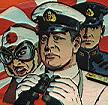

Into the Breach

RE: Surf
funny one, ike. but soon bigred will be able to surf AND shoot as the allied war monster is unleashed.
Unleash it.
¨If you tremble with indignation at every injustice, then you are a comrade of mine.¨ Che Guevara
The more I know people, the more I like my dog.
The more I know people, the more I like my dog.
Oscar
Three squadron of Oscars now ready to fight Bigreds bombers. The Oscar with it´s super climb rate, not the Zero, is the best UV fighter against Allied bombers despite it´s less firepower.
Song of the Oscar
Song of the Oscar
¨If you tremble with indignation at every injustice, then you are a comrade of mine.¨ Che Guevara
The more I know people, the more I like my dog.
The more I know people, the more I like my dog.

RE: Oscar
Quite a find Ike, never realised the Japs actually made propaganda films like that during the war.
However, I cant agree that the Oscar is better than the Zero for fighting bombers in UV, they never seem to score in any of my games.
I use them only as bullet sponges (sorry, escorts) later in the game.
However, I cant agree that the Oscar is better than the Zero for fighting bombers in UV, they never seem to score in any of my games.
I use them only as bullet sponges (sorry, escorts) later in the game.
RE: Oscar
It is true that the Oscar had a fantastic climb rate (even better than the Zero) and, thanks to its butterfly flaps, had no equal in a low-speed turning dogfight against any allied opponent during WWII.
On the downside, no armour plate and only two small MG's with only 250 rpg was not much use against B17's or B24's
On the downside, no armour plate and only two small MG's with only 250 rpg was not much use against B17's or B24's
RE: Oscar
in my game vs nomad, i find that oscars show a poor preformance against everything with more then one engine. i have 3 oscar daitais in combat now for a long time and their kill score is at 15-20 planes for each daitai.
they realy lack enough punch for the allied heavies.
they realy lack enough punch for the allied heavies.
RE: Oscar
Section 12
Combat Air Patrol
In this game, the most important characteristic for combat air patrol (CAP) is climb rate. Normally, only a couple to a few aircraft are in the air at once.
When enemy aircraft are spotted by those aircraft that are airborne or by radar or ground forces assigned to watch for enemy aircraft, all planes available for CAP are scrambled.
Oscars have 36 fighter per squadron compared to the Zero with 27 and they climb faster. Yes their guns are lighter but they damage more bombers.
More damaged bombers means lower moral and lower moral means less bombers flying.
Oscar squadron, 30% Cap over airfields will out perform Zeros against 4E´s in my experience.
¨If you tremble with indignation at every injustice, then you are a comrade of mine.¨ Che Guevara
The more I know people, the more I like my dog.
The more I know people, the more I like my dog.
RE: Oscar
Quite a find Ike, never realised the Japs actually made propaganda films like that during the war.
There are many of them. You just have to use the Japanese language to find them. Here is a good one.
軍歌:父よあなたは強かった
¨If you tremble with indignation at every injustice, then you are a comrade of mine.¨ Che Guevara
The more I know people, the more I like my dog.
The more I know people, the more I like my dog.
New Base
I´m not sure of it´s strategic importance but Bigred has built a new 1Port/1Airfield base.
Value, 2pts for the Allies. [&o]
[:D]

Value, 2pts for the Allies. [&o]
[:D]
- Attachments
-
- PTs.jpg (25.75 KiB) Viewed 391 times
¨If you tremble with indignation at every injustice, then you are a comrade of mine.¨ Che Guevara
The more I know people, the more I like my dog.
The more I know people, the more I like my dog.
-
Kingfisher
- Posts: 234
- Joined: Mon Jun 16, 2008 10:25 am
RE: Oscar
ORIGINAL: Ike99
Section 12
Combat Air Patrol
In this game, the most important characteristic for combat air patrol (CAP) is climb rate. Normally, only a couple to a few aircraft are in the air at once.
When enemy aircraft are spotted by those aircraft that are airborne or by radar or ground forces assigned to watch for enemy aircraft, all planes available for CAP are scrambled.
Oscars have 36 fighter per squadron compared to the Zero with 27 and they climb faster. Yes their guns are lighter but they damage more bombers.
More damaged bombers means lower moral and lower moral means less bombers flying.
Oscar squadron, 30% Cap over airfields will out perform Zeros against 4E´s in my experience.
Seems to me a wash, IMO.
Sure the Oscar has a better climb rate, but by the time they arrive the Allies are escorting their bombers with Lightnings, followed soon after by Corsairs and Hellcats.
I believe thats called check mate.
"splendid was their tactic of diving upon our force from the direction of the sun, taking advantage of intermittent clouds"
-Captain Takahisa Amagai, KAGA, June 4th 1942
-Captain Takahisa Amagai, KAGA, June 4th 1942
RE: Oscar
It is interesting to note that when faced with bombers with armour plate + some escorts around 1943 (we're talkign early P38's here) the JAAF actually uped the firepower on their Oscar's to 4 mg (two light and two heavy, think two may have been in the cowling but not sure which) but it was a field modification and never officially adopted, although a lot of Oscars operating in New Guinea had the upgrade.
However when the new Oscar II officially appeared in the fall of 1943 it reverted back to the old 2 mg, although now it was officially designated a 'bomber destroyer' with the great emphasis on climb so the Oscars could get up to the bombers altitude quickly. Can understand the plane being made as light as possible, but lets face it 2 mg are not going to bring down many US 4E jobs...
However when the new Oscar II officially appeared in the fall of 1943 it reverted back to the old 2 mg, although now it was officially designated a 'bomber destroyer' with the great emphasis on climb so the Oscars could get up to the bombers altitude quickly. Can understand the plane being made as light as possible, but lets face it 2 mg are not going to bring down many US 4E jobs...
RE: Oscar
thats very true. i read a book about the air battle over germany in WW2 and even FW-190 with their 4x20 mm MC had huge trouble to bring down B-17 bombers when they arrived over europe in 1942. german luftwaffe experts said that in 1942, a average german fighter pilot was not able to bring down a US heavy bomber. german pilots attacked the US bombers in "schwärme" of 4 fighters ahead or from behind to get maximum firepower on them. that was their only chance to bring down a B-17 in 1942.
things got better in 1943, when the fantastic 30 mm "Maschinenkanone MK 108" was installed into the frontline fighters. that resulted to massacares like stuttgart or schweinfurt in 1943.
when excelent german fighters with 4x20 mm had little chance to bring down a B-17, what should the poor oscar with its "toilet-paper armor"[:D] and 2 MG do against this monsters?
things got better in 1943, when the fantastic 30 mm "Maschinenkanone MK 108" was installed into the frontline fighters. that resulted to massacares like stuttgart or schweinfurt in 1943.
when excelent german fighters with 4x20 mm had little chance to bring down a B-17, what should the poor oscar with its "toilet-paper armor"[:D] and 2 MG do against this monsters?
RE: Oscar
The Japanese were obviously very optimistic!
Actually, the different approaches from the Luftwaffe and the JAAF (the IJN were not officially responsible for the defence of homeland Japan and attacking 4E bombers, although there are loads of instances when they did actually do so, read Sakai's autobiography for more suhc instances!) reflect the different philosophy/doctrine.
The Luftwaffe concentrated more on sheer firepower (20mm canon, 30mm canon, 37mm canon, the HS129 even tried it with a 75mm anti-tank canon!) at the expense of manueverability/climb rate. This just made their interceptors vulnerable to the bombers defenders, even equipping the bomber destroyers with escorts themselves didn't seem to help much. By the time the MK108 30mm came along which was both lightweight and quickfiring, it was far too late to make much of an impact
The JAAF on the other hand had their nimble and nifty little Oscar, althuogh it's 2 mg's can I guess be likened to taking on an elephant wiht a pea-shooter! Even when more advanced types were availalbe for homeland defence (like the Jack, which at least had some decent canon armament) the pilots and squadrons tended to stick with the hopelessly outdated Oscar. The same can also said to be true for the IJN, they continued to plumb for the Zero long after it was obviously quite obsolete even though more advanced types like the Shinden were starting to trickle through from the factories.
As a side comment, it is worth noting the official RAF/FAA policy for much of WWII was quite similar to the JAAF - 8mg's on the Hurricane, Spitfire and FAA Fulmar (4 in the case of the early Martlet) were considered quite sufficient to destroy any bomber the fighters were sent to intercept whilst in reality most bombers post-BofB carried far too much armour plate for any amont of mg ammo to bring down (excepting a lucky hit)
Actually, the different approaches from the Luftwaffe and the JAAF (the IJN were not officially responsible for the defence of homeland Japan and attacking 4E bombers, although there are loads of instances when they did actually do so, read Sakai's autobiography for more suhc instances!) reflect the different philosophy/doctrine.
The Luftwaffe concentrated more on sheer firepower (20mm canon, 30mm canon, 37mm canon, the HS129 even tried it with a 75mm anti-tank canon!) at the expense of manueverability/climb rate. This just made their interceptors vulnerable to the bombers defenders, even equipping the bomber destroyers with escorts themselves didn't seem to help much. By the time the MK108 30mm came along which was both lightweight and quickfiring, it was far too late to make much of an impact
The JAAF on the other hand had their nimble and nifty little Oscar, althuogh it's 2 mg's can I guess be likened to taking on an elephant wiht a pea-shooter! Even when more advanced types were availalbe for homeland defence (like the Jack, which at least had some decent canon armament) the pilots and squadrons tended to stick with the hopelessly outdated Oscar. The same can also said to be true for the IJN, they continued to plumb for the Zero long after it was obviously quite obsolete even though more advanced types like the Shinden were starting to trickle through from the factories.
As a side comment, it is worth noting the official RAF/FAA policy for much of WWII was quite similar to the JAAF - 8mg's on the Hurricane, Spitfire and FAA Fulmar (4 in the case of the early Martlet) were considered quite sufficient to destroy any bomber the fighters were sent to intercept whilst in reality most bombers post-BofB carried far too much armour plate for any amont of mg ammo to bring down (excepting a lucky hit)
RE: Oscar
However when the new Oscar II officially appeared in the fall of 1943 it reverted back to the old 2 mg, although now it was officially designated a 'bomber destroyer' with the great emphasis on climb so the Oscars could get up to the bombers altitude quickly. Can understand the plane being made as light as possible, but lets face it 2 mg are not going to bring down many US 4E jobs...
It seems incredible to believe the designers would still be placing just 2 small MGs on a fighter in 1943..there must have been very little pilot to designer communication.
¨If you tremble with indignation at every injustice, then you are a comrade of mine.¨ Che Guevara
The more I know people, the more I like my dog.
The more I know people, the more I like my dog.
-
anarchyintheuk
- Posts: 3958
- Joined: Wed May 05, 2004 7:08 pm
- Location: Dallas
RE: Oscar
Sorry to post this on your aar but were the Oscars ever capable of mounting wing mgs or cannons? The only pics I remember showed the nose mounted 7.7s, 12.7s or 20mms.
-
HansBolter

- Posts: 7457
- Joined: Thu Jul 06, 2006 12:30 pm
- Location: United States
RE: Oscar
ORIGINAL: Ike99
However when the new Oscar II officially appeared in the fall of 1943 it reverted back to the old 2 mg, although now it was officially designated a 'bomber destroyer' with the great emphasis on climb so the Oscars could get up to the bombers altitude quickly. Can understand the plane being made as light as possible, but lets face it 2 mg are not going to bring down many US 4E jobs...
It seems incredible to believe the designers would still be placing just 2 small MGs on a fighter in 1943..there must have been very little pilot to designer communication.
Beregrud (Fire in the Sky) portrayed them as better suited for WWI style aerial combat. They were the most nimble dogfighter in the sky, mimicking the acrobatic flying techniques of the biplanes of WWI and armed the same way a WWI plane had been. A skilled Oscar pilot could escape from an encounter with just about any other plane type and was the only fighter of WW2 capable of performing a double Immelman followed by a Hammerhead stall. Still, I agree with Ike that the failure to upgrade the weaponry as the war dragged on is a little hard to fathom.
Hans
RE: Oscar
Oh golly gosh! Anarchy the official armament for the Oscar was always two cowling-mounted mg's, intially 7.7's on the early ones (mk 1 a&b), later replaced with 12.7's or even the odd 20 mm towards the end of the war with the mark II onwards.
However, because it was quite obvious that there was not enough firepower on the plane, unofficial armament additions actually took place on quite a few of the operational airfields in the south pacific, particularly PNG who may have started the idea. Basically extra mg's (only ever 7.7 I think) were mounted in the wings but with a limited supply of ammo. Apparently the extra firepower did make a difference a bit without ever adversely affecting the performance of the aircraft, but it was never adopted officially and later marks of Oscar still only carried the cowling armament, although again there could have been unofficial field modifications like in the case of the land-based A6M5 Zeros at the end of the war
Also Ike, contrary to popular belief there was far too much communication between pilots and designers. It was the top of the cream pilots who tested the Oscar (and also Zero) particularly pre-war and they always emphasied maneuverability and climb above anything else. Nothing else seemed to get a mention and thus the designers took this on board when designing their early war fighters (Oscar and Zero) - nimbleness and climb rate was always top priority.
Interestingly, the US design teams and manufacturers when they asked their best front-line pilots for their advice received soem completely different feedback - speed and armour protection was more important to the USN & USM with firepower a close third
This was one of the main reasons why the Japanese never put heavier or more realistic armament on the Oscar - the pilots didn't want it. I guess as the war wore on, and the Oscar pilots being increasingly outnumbered and outflown, they wanted a quick easy way to get out of the gunsights of the US and Aussie pilots.
It is also worth noting that, partly because of the way the Oscar kept its extra-ordinary climb rate and maneuverability right ot the bitter end, unlike the Zero who gained some armour protection and extra firepower but at the expense of its other attributes, it's loss-rate was far lower than most other Japanese fighters simply because it was so difficult to shoot down. It can be argued (although records are incomplete on the Japanese side) that more Oscars were lost tryign to shoot down big bombers than in straight 1-to-1 fights with the US or Aussies
However, because it was quite obvious that there was not enough firepower on the plane, unofficial armament additions actually took place on quite a few of the operational airfields in the south pacific, particularly PNG who may have started the idea. Basically extra mg's (only ever 7.7 I think) were mounted in the wings but with a limited supply of ammo. Apparently the extra firepower did make a difference a bit without ever adversely affecting the performance of the aircraft, but it was never adopted officially and later marks of Oscar still only carried the cowling armament, although again there could have been unofficial field modifications like in the case of the land-based A6M5 Zeros at the end of the war
Also Ike, contrary to popular belief there was far too much communication between pilots and designers. It was the top of the cream pilots who tested the Oscar (and also Zero) particularly pre-war and they always emphasied maneuverability and climb above anything else. Nothing else seemed to get a mention and thus the designers took this on board when designing their early war fighters (Oscar and Zero) - nimbleness and climb rate was always top priority.
Interestingly, the US design teams and manufacturers when they asked their best front-line pilots for their advice received soem completely different feedback - speed and armour protection was more important to the USN & USM with firepower a close third
This was one of the main reasons why the Japanese never put heavier or more realistic armament on the Oscar - the pilots didn't want it. I guess as the war wore on, and the Oscar pilots being increasingly outnumbered and outflown, they wanted a quick easy way to get out of the gunsights of the US and Aussie pilots.
It is also worth noting that, partly because of the way the Oscar kept its extra-ordinary climb rate and maneuverability right ot the bitter end, unlike the Zero who gained some armour protection and extra firepower but at the expense of its other attributes, it's loss-rate was far lower than most other Japanese fighters simply because it was so difficult to shoot down. It can be argued (although records are incomplete on the Japanese side) that more Oscars were lost tryign to shoot down big bombers than in straight 1-to-1 fights with the US or Aussies
Nevea
Bigred lands on Nevea, it is undefended. Not without hitting mines though.

- Attachments
-
- nevea.jpg (17.81 KiB) Viewed 391 times
¨If you tremble with indignation at every injustice, then you are a comrade of mine.¨ Che Guevara
The more I know people, the more I like my dog.
The more I know people, the more I like my dog.
Not A Drill
12-24-42
Air Raid...this is not a drill.
Seventeen Allied ships are burning and sinking for 35 Japanese aircraft.

Air Raid...this is not a drill.
Seventeen Allied ships are burning and sinking for 35 Japanese aircraft.
- Attachments
-
- fuego.jpg (31.94 KiB) Viewed 391 times
¨If you tremble with indignation at every injustice, then you are a comrade of mine.¨ Che Guevara
The more I know people, the more I like my dog.
The more I know people, the more I like my dog.