

ORIGINAL: JWE
ORIGINAL: el cid again
Isn't it ironic that if I quote a source in the Japanese language, it is somehow out of bounds, but you are free to do so?
Yeah, it's very ironic that I give my sources by name and publication title, such that anyone, anywhere can look them up. You do not give sources, except to say that they are in some "archive" somewhere, without identifying anything by name, ttle, or author, after repeated requests.
The official history is not a specific enough reference? Nor is the translated materials cited by name - many times - from the University of Hawaii Press? Or is your memory as selective as your ability to solve the aritmetic problem of loading ships cargos? The plain fact is that the vast majority of people would admit it when they get the math wrong. Most would suspect they were wrong when they learned officials who had all the required information officially came to the opposite conclusion. It takes a gigantic ego to ignore both. And no source is ever going to be good enough if you cannot even believe the math.
Day-one Scenarios
Moderators: wdolson, Don Bowen, mogami
-
el cid again
- Posts: 16983
- Joined: Mon Oct 10, 2005 4:40 pm
RE: Day-one Scenarios

RE: Day-one Scenarios
[font="arial, helvetica, sans-serif"]History of Aviation[/font]
[font="arial, helvetica, sans-serif"]Clement Adler[/font]
[blockquote][align=left]
[font="arial, helvetica, sans-serif"]Clement Adler was born in France in 1841. He became an engineer in Toulouse and took a keen interest in aviation. He studied the flight of birds and bats built small model flying machines. In 1872 he began experimenting with a flapping wing machine. However, it failed because a man did not have the strength to operate it. [/font]
[font="arial, helvetica, sans-serif"]Adler was also an inventor who worked on the development of the telephone. At the 1881 Paris Expedition of Electricity he demonstrated stereophonic sound transmission by telephone. Later that year he patented his invention. [/font]
[font="arial, helvetica, sans-serif"]In 1886 Adler began building a monoplane powered by a steam engine. It was bat-shaped and had heavily cambered wings of 45.9 feet (14 m) span. The Ecole was flown by Adler near Gretz on 9th October, 1890. It rose about 6 inches off the ground and travelled about 165 feet (50.29 m). [/font]
[center] [/center]
[font="arial, helvetica, sans-serif"]The French War Ministry was impressed by Adler's achievement and commissioned him to produce a new plane. It took him five years to build the Avion III. Like the Ecole it had bat-shaped wings that had a span of 52.5 feet (16 m). Powered by two steam engines it had two tractor propellers. [/font]
[font="arial, helvetica, sans-serif"]The Avion III underwent a secret test at the Sartory Military Base on 12th October, 1897. The engines were too heavy and too weak to lift the machine off the ground. However, Adler falsely claimed that he had flown about 1,000 feet (300 m). It was not until 1910 that the French War Ministry admitted that Adler had been lying about the achievements of the Avion III.[/font]
[font="arial, helvetica, sans-serif"]Clement Adler died in 1925[/font][/align][/blockquote]
from www.spartacus.schoolnet.co.uk/AVadler.htm
[font="arial, helvetica, sans-serif"]Clement Adler[/font]
[blockquote][align=left]
[font="arial, helvetica, sans-serif"]Clement Adler was born in France in 1841. He became an engineer in Toulouse and took a keen interest in aviation. He studied the flight of birds and bats built small model flying machines. In 1872 he began experimenting with a flapping wing machine. However, it failed because a man did not have the strength to operate it. [/font]
[font="arial, helvetica, sans-serif"]Adler was also an inventor who worked on the development of the telephone. At the 1881 Paris Expedition of Electricity he demonstrated stereophonic sound transmission by telephone. Later that year he patented his invention. [/font]
[font="arial, helvetica, sans-serif"]In 1886 Adler began building a monoplane powered by a steam engine. It was bat-shaped and had heavily cambered wings of 45.9 feet (14 m) span. The Ecole was flown by Adler near Gretz on 9th October, 1890. It rose about 6 inches off the ground and travelled about 165 feet (50.29 m). [/font]
[center]
[/center] [font="arial, helvetica, sans-serif"]The French War Ministry was impressed by Adler's achievement and commissioned him to produce a new plane. It took him five years to build the Avion III. Like the Ecole it had bat-shaped wings that had a span of 52.5 feet (16 m). Powered by two steam engines it had two tractor propellers. [/font]
[font="arial, helvetica, sans-serif"]The Avion III underwent a secret test at the Sartory Military Base on 12th October, 1897. The engines were too heavy and too weak to lift the machine off the ground. However, Adler falsely claimed that he had flown about 1,000 feet (300 m). It was not until 1910 that the French War Ministry admitted that Adler had been lying about the achievements of the Avion III.[/font]
[font="arial, helvetica, sans-serif"]Clement Adler died in 1925[/font][/align][/blockquote]
from www.spartacus.schoolnet.co.uk/AVadler.htm
Interdum feror cupidine partium magnarum Europae vincendarum
-
el cid again
- Posts: 16983
- Joined: Mon Oct 10, 2005 4:40 pm
RE: Day-one Scenarios
One site says "in the entire history of aviation, there is no figure more controversial than Clement Adler" - which - if true - is saying a lot. There is even controversy about wether the Wright brothers achieved powered flight - because for one thing it was not still air and for another it may be that "takeoff" got energy from an incline. [A French steam powered aircraft took off from a warship as early as 1868 - but because the engine only produced 8 hp - and because the takeoff ramp was inclined - it is generally classified as a "powered glider" rather than an aircraft able to take off on its own power in still air from a level surface]. Since there had been a number of powered flights in the 19th century, I regard all claims for a "first" one in the 20th century as incorrect, even if they occurred as advertised. I don't wish to digress and hijack the thread - my only point was that I am prepared to give the French credit when it is due them. You may or may not agree on this record or that one - but the SUBJECT was the Normandie - possibly the largest ship in the world - and possibly not - depending on date - and what you prefer to believe. One record book says that the record for the Wright brothers is for a "fully controlled" flight - and that Adler did not achieve that because he lacked one of the two control surfaces required (flaps or alerons, I forget which). Clearly those authors thought there was something that flew. I don't particularly care - one way or the other: the pioneers were right - powered flight was possible - and when engine technology permitted - it became practical. But it was no all made in the USA. Note that the US was not even in the ocean liner race before the war - but ultimately was in it for speed - after the war. I don't think the record of the USS United States was ever broken.
-
DuckofTindalos

- Posts: 39781
- Joined: Fri Apr 22, 2005 11:53 pm
- Location: Denmark
RE: Day-one Scenarios
ORIGINAL: el cid again
ORIGINAL: Terminus
Clement Adler started out building those human-powered flapping batwing "aircraft" that were so popular in Europe in the second half of the 19th Century. Adler's first non-flapping aircraft, the Ecole, rose 6 inches off the ground and flew 165 feet in 1890.
Which is interesting since he was paid the French Military award in 1885 for flying a specified course - measured in km. Clearly something was absent from the material you were exposed to!
Or something was added to the material YOU were exposed to. NOBODY flew heavier-than-air aircraft over a kilometer-long course in 1885. NOBODY.
Adler was a liar, pure and simple.
And BTW, it was you who invited a subject change with your claim that he "invented" powered flight "no matter what is taught in America". So don't act all pissy when you're called on it.
We are all dreams of the Giant Space Butterfly.
RE: Day-one Scenarios
[font=tahoma]It is Ader and not Adler.[/font][/align][font=tahoma][/font] [/align][font=tahoma]Some works published between 1980 and 1990 tend to proove that the 1897 flight was real. It is based on French military documents declassified after 1980.[/font][/align][font=tahoma]Some models were made and have actually fly but the Avion III was clearly instable.[/font][/align][font=tahoma][/font] [/align]Pierre Lissarague, Clément Ader, inventeur d'avions, Toulouse, Privat, 1990. ISBN 2708953559 [/align]Au temps de Clément Ader, ouvrage coordonné par l'Académie de l'Air et de l'Espace, 1994. ISBN 2877170446 [/align]
War Options 1941 mod : https://sites.google.com/site/waroptionswitpaemod/
RE: Day-one Scenarios
Shows you can find anything on the net, dont even have to spell correctly!!
A History of Aeronautics
by E. Charles Vivian
Part IX. Not Proven : Ader
http://www.bookrags.com/books/haero/PART9.htm
The early history of flying, like that of most sciences, is replete with tragedies; in addition to these it contains one mystery concerning Clément Ader, who was well known among European pioneers in the development of the telephone, and first turned his attention to the problems of mechanical flight in 1872. At the outset he favoured the ornithopter principle, constructing a machine in the form of a bird with a wing-spread of twenty-six feet; this, according to Ader's conception, was to fly through the efforts of the operator. The result of such an attempt was past question and naturally the machine never left the ground.
A pause of nineteen years ensued, and then in 1886 Ader turned his mind to the development of the aeroplane, constructing a machine of bat-like form with a wingspread of about forty-six feet, a weight of eleven hundred pounds, and a steam-power plant of between twenty and thirty horse-power driving a four-bladed tractor screw. On October 9th, 1890, the first trials of this machine were made, and it was alleged to have flown a distance of one hundred and sixty-four feet. Whatever truth there may be in the allegation, the machine was wrecked through deficient equilibrium at the end of the trial. Ader repeated the construction, and on October 14th, 1897, tried out his third machine at the military establishment at Satory in the presence of the French military authorities, on a circular track specially prepared for the experiment. Ader and his friends alleged that a flight of nearly a thousand feet was made; again the machine was wrecked at the end of the trial, and there Ader's practical work may be said to have ended, since no more funds were forthcoming for the subsidy of experiments. There is the bald narrative, but it is worthy of some amplification. If Ader actually did what he claimed, then the position which the Wright Brothers hold as first to navigate the air in a power-driven plane is nullified. Although at this time of writing it is not a quarter of a century since Ader's experiment in the presence of witnesses competent to judge on his accomplishment, there is no proof either way, and whether he was or was not the first man to fly remains a mystery in the story of the conquest of the air.
The full story of Ader's work reveals a persistence and determination to solve the problem that faced him which was equal to that of Lilienthal. He began by penetrating into the interior of Algeria after having disguised himself as an Arab, and there he spent some months in studying flight as practiced by the vultures of the district. Returning to France in 1886 he began to construct the 'Eole,' modelling it, not on the vulture, but in the shape of a bat. Like the Lilienthal and Pilcher gliders this machine was fitted with wings which could be folded; the first flight made, as already noted, on October 9th, 1890, took place in the grounds of the chateau d'Amainvilliers, near Bretz; two fellow-enthusiasts named Espinosa and Vallier stated that a flight was actually made; no statement in the history of aeronautics has been subject of so much question, and the claim remains unproved.
It was in September of 1891 that Ader, by permission of the Minister of War, moved the 'Eole' to the military establishment at Satory for the purpose of further trial. By this time, whether he had flown or not, his nineteen years of work in connection with the problems attendant on mechanical flight had attracted so much attention that henceforth his work was subject to the approval of the military authorities, for already it was recognised that an efficient flying machine would confer an inestimable advantage on the power that possessed it in the event of war. At Satory the 'Eole' was alleged to have made a flight of 109 yards, or, according to another account, 164 feet, as stated above, in the trial in which the machine wrecked itself through colliding with some carts which had been placed near the track--the root cause of this accident, however, was given as deficient equilibrium.
Whatever the sceptics may say, there is reason for belief in the accomplishment of actual flight by Ader with his first machine in the fact that, after the inevitable official delay of some months, the French War Ministry granted funds for further experiment. Ader named his second machine, which he began to build in May, 1892, the 'Avion,' and--an honour which he well deserve--that name remains in French aeronautics as descriptive of the power-driven aeroplane up to this day. This second machine, however, was not a success, and it was not until 1897 that the second 'Avion,' which was the third power-driven aeroplane of Ader's construction, was ready for trial. This was fitted with two steam motors of twenty horse-power each, driving two four-bladed propellers; the wings warped automatically: that is to say, if it were necessary to raise the trailing edge of one wing on the turn, the trailing edge of the opposite wing was also lowered by the same movement; an under-carriage was also fitted, the machine running on three small wheels, and levers controlled by the feet of the aviator actuated the movement of the tail planes.

Clément Ader's Avion III
download a larger image
On October the 12th, 1897, the first trials of this 'Avion' were made in the presence of General Mensier, who admitted that the machine made several hops above the ground, but did not consider the performance as one of actual flight. The result was so encouraging, in spite of the partial failure, that, two days later, General Mensier, accompanied by General Grillon, a certain Lieutenant Binet, and two civilians named respectively Sarrau and Leaute, attended for the purpose of giving the machine an official trial, over which the great controversy regarding Ader's success or otherwise may be said to have arisen.
We will take first Ader's own statement as set out in a very competent account of his work published in Paris in 1910. Here are Ader's own words:
[blockquote]'After some turns of the propellers, and after travelling a few metres, we started off at a lively pace; the pressure-gauge registered about seven atmospheres; almost immediately the vibrations of the rear wheel ceased; a little later we only experienced those of the front wheels at intervals. 'Unhappily, the wind became suddenly strong, and we had some difficulty in keeping the "Avion" on the white line. We increased the pressure to between eight and nine atmospheres, and immediately the speed increased considerably, and the vibrations of the wheels were no longer sensible; we were at that moment at the point marked G in the sketch; the "Avion" then found itself freely supported by its wings; under the impulse of the wind it continually tended to go outside the (prepared) area to the right, in spite of the action of the rudder. On reaching the point V it found itself in a very critical position; the wind blew strongly and across the direction of the white line which it ought to follow; the machine then, although still going forward, drifted quickly out of the area; we immediately put over the rudder to the left as far as it would go; at the same time increasing the pressure still more, in order to try to regain the course. The "Avion" obeyed, recovered a little, and remained for some seconds headed towards its intended course, but it could not struggle against the wind; instead of going back, on the contrary it drifted farther and farther away. And ill-luck had it that the drift took the direction towards part of the School of Musketry, which was guarded by posts and barriers. Frightened at the prospect of breaking ourselves against these obstacles, surprised at seeing the earth getting farther away from under the "Avion," and very much impressed by seeing it rushing sideways at a sickening speed, instinctively we stopped everything. What passed through our thoughts at this moment which threatened a tragic turn would be difficult to set down. All at once came a great shock, splintering, a heavy concussion: we had landed.'
[/blockquote]
Thus speaks the inventor; the cold official mind gives out a different account, crediting the 'Avion' with merely a few hops, and to-day, among those who consider the problem at all, there is a little group which persists in asserting that to Ader belongs the credit of the first power-driven flight, while a larger group is equally persistent in stating that, save for a few ineffectual hops, all three wheels of the machine never left the ground. It is past question that the 'Avion' was capable of power-driven flight; whether it achieved it or no remains an unsettled problem.
Ader's work is negative proof of the value of such experiments as Lilienthal, Pilcher, Chanute, and Montgomery conducted; these four set to work to master the eccentricities of the air before attempting to use it as a supporting medium for continuous flight under power; Ader attacked the problem from the other end; like many other experimenters he regarded the air as a stable fluid capable of giving such support to his machine as still water might give to a fish, and he reckoned that he had only to produce the machine in order to achieve flight. The wrecked 'Avion' and the refusal of the French War Ministry to grant any more funds for further experiment are sufficient evidence of the need for working along the lines taken by the pioneers of gliding rather than on those which Ader himself adopted.

Clément Ader's Avion III
download a larger image
Let it not be thought that in this comment there is any desire to derogate from the position which Ader should occupy in any study of the pioneers of aeronautical enterprise. If he failed, he failed magnificently, and if he succeeded, then the student of aeronautics does him an injustice and confers on the Brothers Wright an honour which, in spite of the value of their work, they do not deserve. There was one earlier than Ader, Alphonse Penaud, who, in the face of a lesser disappointment than that which Ader must have felt in gazing on the wreckage of his machine, committed suicide; Ader himself, rendered unable to do more, remained content with his achievement, and with the knowledge that he had played a good part in the long search which must eventually end in triumph. Whatever the world might say, he himself was certain that he had achieved flight. This, for him, was perforce enough.
A History of Aeronautics
by E. Charles Vivian
Part IX. Not Proven : Ader
http://www.bookrags.com/books/haero/PART9.htm
The early history of flying, like that of most sciences, is replete with tragedies; in addition to these it contains one mystery concerning Clément Ader, who was well known among European pioneers in the development of the telephone, and first turned his attention to the problems of mechanical flight in 1872. At the outset he favoured the ornithopter principle, constructing a machine in the form of a bird with a wing-spread of twenty-six feet; this, according to Ader's conception, was to fly through the efforts of the operator. The result of such an attempt was past question and naturally the machine never left the ground.
A pause of nineteen years ensued, and then in 1886 Ader turned his mind to the development of the aeroplane, constructing a machine of bat-like form with a wingspread of about forty-six feet, a weight of eleven hundred pounds, and a steam-power plant of between twenty and thirty horse-power driving a four-bladed tractor screw. On October 9th, 1890, the first trials of this machine were made, and it was alleged to have flown a distance of one hundred and sixty-four feet. Whatever truth there may be in the allegation, the machine was wrecked through deficient equilibrium at the end of the trial. Ader repeated the construction, and on October 14th, 1897, tried out his third machine at the military establishment at Satory in the presence of the French military authorities, on a circular track specially prepared for the experiment. Ader and his friends alleged that a flight of nearly a thousand feet was made; again the machine was wrecked at the end of the trial, and there Ader's practical work may be said to have ended, since no more funds were forthcoming for the subsidy of experiments. There is the bald narrative, but it is worthy of some amplification. If Ader actually did what he claimed, then the position which the Wright Brothers hold as first to navigate the air in a power-driven plane is nullified. Although at this time of writing it is not a quarter of a century since Ader's experiment in the presence of witnesses competent to judge on his accomplishment, there is no proof either way, and whether he was or was not the first man to fly remains a mystery in the story of the conquest of the air.
The full story of Ader's work reveals a persistence and determination to solve the problem that faced him which was equal to that of Lilienthal. He began by penetrating into the interior of Algeria after having disguised himself as an Arab, and there he spent some months in studying flight as practiced by the vultures of the district. Returning to France in 1886 he began to construct the 'Eole,' modelling it, not on the vulture, but in the shape of a bat. Like the Lilienthal and Pilcher gliders this machine was fitted with wings which could be folded; the first flight made, as already noted, on October 9th, 1890, took place in the grounds of the chateau d'Amainvilliers, near Bretz; two fellow-enthusiasts named Espinosa and Vallier stated that a flight was actually made; no statement in the history of aeronautics has been subject of so much question, and the claim remains unproved.
It was in September of 1891 that Ader, by permission of the Minister of War, moved the 'Eole' to the military establishment at Satory for the purpose of further trial. By this time, whether he had flown or not, his nineteen years of work in connection with the problems attendant on mechanical flight had attracted so much attention that henceforth his work was subject to the approval of the military authorities, for already it was recognised that an efficient flying machine would confer an inestimable advantage on the power that possessed it in the event of war. At Satory the 'Eole' was alleged to have made a flight of 109 yards, or, according to another account, 164 feet, as stated above, in the trial in which the machine wrecked itself through colliding with some carts which had been placed near the track--the root cause of this accident, however, was given as deficient equilibrium.
Whatever the sceptics may say, there is reason for belief in the accomplishment of actual flight by Ader with his first machine in the fact that, after the inevitable official delay of some months, the French War Ministry granted funds for further experiment. Ader named his second machine, which he began to build in May, 1892, the 'Avion,' and--an honour which he well deserve--that name remains in French aeronautics as descriptive of the power-driven aeroplane up to this day. This second machine, however, was not a success, and it was not until 1897 that the second 'Avion,' which was the third power-driven aeroplane of Ader's construction, was ready for trial. This was fitted with two steam motors of twenty horse-power each, driving two four-bladed propellers; the wings warped automatically: that is to say, if it were necessary to raise the trailing edge of one wing on the turn, the trailing edge of the opposite wing was also lowered by the same movement; an under-carriage was also fitted, the machine running on three small wheels, and levers controlled by the feet of the aviator actuated the movement of the tail planes.

Clément Ader's Avion III
download a larger image
On October the 12th, 1897, the first trials of this 'Avion' were made in the presence of General Mensier, who admitted that the machine made several hops above the ground, but did not consider the performance as one of actual flight. The result was so encouraging, in spite of the partial failure, that, two days later, General Mensier, accompanied by General Grillon, a certain Lieutenant Binet, and two civilians named respectively Sarrau and Leaute, attended for the purpose of giving the machine an official trial, over which the great controversy regarding Ader's success or otherwise may be said to have arisen.
We will take first Ader's own statement as set out in a very competent account of his work published in Paris in 1910. Here are Ader's own words:
[blockquote]'After some turns of the propellers, and after travelling a few metres, we started off at a lively pace; the pressure-gauge registered about seven atmospheres; almost immediately the vibrations of the rear wheel ceased; a little later we only experienced those of the front wheels at intervals. 'Unhappily, the wind became suddenly strong, and we had some difficulty in keeping the "Avion" on the white line. We increased the pressure to between eight and nine atmospheres, and immediately the speed increased considerably, and the vibrations of the wheels were no longer sensible; we were at that moment at the point marked G in the sketch; the "Avion" then found itself freely supported by its wings; under the impulse of the wind it continually tended to go outside the (prepared) area to the right, in spite of the action of the rudder. On reaching the point V it found itself in a very critical position; the wind blew strongly and across the direction of the white line which it ought to follow; the machine then, although still going forward, drifted quickly out of the area; we immediately put over the rudder to the left as far as it would go; at the same time increasing the pressure still more, in order to try to regain the course. The "Avion" obeyed, recovered a little, and remained for some seconds headed towards its intended course, but it could not struggle against the wind; instead of going back, on the contrary it drifted farther and farther away. And ill-luck had it that the drift took the direction towards part of the School of Musketry, which was guarded by posts and barriers. Frightened at the prospect of breaking ourselves against these obstacles, surprised at seeing the earth getting farther away from under the "Avion," and very much impressed by seeing it rushing sideways at a sickening speed, instinctively we stopped everything. What passed through our thoughts at this moment which threatened a tragic turn would be difficult to set down. All at once came a great shock, splintering, a heavy concussion: we had landed.'
[/blockquote]
Thus speaks the inventor; the cold official mind gives out a different account, crediting the 'Avion' with merely a few hops, and to-day, among those who consider the problem at all, there is a little group which persists in asserting that to Ader belongs the credit of the first power-driven flight, while a larger group is equally persistent in stating that, save for a few ineffectual hops, all three wheels of the machine never left the ground. It is past question that the 'Avion' was capable of power-driven flight; whether it achieved it or no remains an unsettled problem.
Ader's work is negative proof of the value of such experiments as Lilienthal, Pilcher, Chanute, and Montgomery conducted; these four set to work to master the eccentricities of the air before attempting to use it as a supporting medium for continuous flight under power; Ader attacked the problem from the other end; like many other experimenters he regarded the air as a stable fluid capable of giving such support to his machine as still water might give to a fish, and he reckoned that he had only to produce the machine in order to achieve flight. The wrecked 'Avion' and the refusal of the French War Ministry to grant any more funds for further experiment are sufficient evidence of the need for working along the lines taken by the pioneers of gliding rather than on those which Ader himself adopted.

Clément Ader's Avion III
download a larger image
Let it not be thought that in this comment there is any desire to derogate from the position which Ader should occupy in any study of the pioneers of aeronautical enterprise. If he failed, he failed magnificently, and if he succeeded, then the student of aeronautics does him an injustice and confers on the Brothers Wright an honour which, in spite of the value of their work, they do not deserve. There was one earlier than Ader, Alphonse Penaud, who, in the face of a lesser disappointment than that which Ader must have felt in gazing on the wreckage of his machine, committed suicide; Ader himself, rendered unable to do more, remained content with his achievement, and with the knowledge that he had played a good part in the long search which must eventually end in triumph. Whatever the world might say, he himself was certain that he had achieved flight. This, for him, was perforce enough.
Interdum feror cupidine partium magnarum Europae vincendarum

RE: Day-one Scenarios
ORIGINAL: el cid again
The official history is not a specific enough reference? Nor is the translated materials cited by name - many times - from the University of Hawaii Press?
Nope. I did find an "Official Report" on the price of fish to primary processing plants, in the Shimbun, though. The purpose of citations is to allow someone to look things up themselves. That's why things have titles; you know, those funny little words on the title page (maybe that's why they call it a title page). No title, or publication data, then no bubble gum for you.
University of Hawaii Press
2840 Kolowalu Street
Honolulu, Hawaii 96822-1888
1-808-956-8255
has absolutely no idea what you are talking about. They suggest Princeton. They do have a nice translation of early Chinese erotica, but that may not qualify as an "Official Report".
RE: Day-one Scenarios
Post some examples and prove its wrong[:'(]
Interdum feror cupidine partium magnarum Europae vincendarum
RE: Day-one Scenarios
Back to the Normandie, for brother George24;
Bragging rights to the “largest” are conventionally recognized as given by the vessel’s gross registered tonnage. Normandie acquired these at her finish trials in 1935, and kept them till superceded by the Queen Elizabeth at her finish trials in late 1939. Also the first passenger vessel to exceed 1000’ loa, although her clipper bow and stern overhang restricted lpp somewhat.
Normandie at finish trials in 1935 was 78,880 gross registered tons (or 79,280, depending on who’s counting). Refitted in early 1936 with addition of deckhouse and remeasured to give 82,800 gross registered tons (or 83,423, depending on who’s counting). Loa was 1029’, lpp (builder’s method) was 962’ on a waterline displacement of about 71,500 tons.
Queen Mary at finish trials in mid 1936 was 80,800 gross registered tons (or 81,250, depending on who’s counting). Loa was 1019’, lpp (builder’s method) was 965’, on a waterline displacement of about 81,900 tons.
Bragging rights to the “largest” are conventionally recognized as given by the vessel’s gross registered tonnage. Normandie acquired these at her finish trials in 1935, and kept them till superceded by the Queen Elizabeth at her finish trials in late 1939. Also the first passenger vessel to exceed 1000’ loa, although her clipper bow and stern overhang restricted lpp somewhat.
Normandie at finish trials in 1935 was 78,880 gross registered tons (or 79,280, depending on who’s counting). Refitted in early 1936 with addition of deckhouse and remeasured to give 82,800 gross registered tons (or 83,423, depending on who’s counting). Loa was 1029’, lpp (builder’s method) was 962’ on a waterline displacement of about 71,500 tons.
Queen Mary at finish trials in mid 1936 was 80,800 gross registered tons (or 81,250, depending on who’s counting). Loa was 1019’, lpp (builder’s method) was 965’, on a waterline displacement of about 81,900 tons.
RE: Day-one Scenarios
ORIGINAL: JeffK
Post some examples and prove its wrong[:'(]
OK. No peeking inside though. [:D][:D] They have a catalog number for everything they have ever published. This one is it's ISBN number 978-0-8248-2412-9. Ciao.

- Attachments
-
- 0824824121P.gif (38.49 KiB) Viewed 245 times
-
DuckofTindalos
- Posts: 39781
- Joined: Fri Apr 22, 2005 11:53 pm
- Location: Denmark
RE: Day-one Scenarios
Good lord! Sure that's OT...[:D]
We are all dreams of the Giant Space Butterfly.
RE: Day-one Scenarios
ORIGINAL: Terminus
Good lord! Sure that's OT...[:D]
Well ... maybe a teensy bit [:D][:D]
But brother Jeff wanted confirmation. Even in my most sarcastic moments, I don't invent things, so ...
RE: Day-one Scenarios
Anyway, back to merchies, for brother George24.
And as you suggest, pay no attention to the man behind door number 4.
The most concise description of the problem is probably in a study of Japanese SLOCs 1940-2004, by Dr. Euan Graham, Nissan Institute/Routledge Japanese Studies, Nissan Institute call No. 359||Ge. Dr. Graham is a Foreign Office type that works the Asian desk. His perceptions and prose are indicative of why we appreciate, so much the denizens of a moderately sized Island off the coast of Europe proper. I would give major body parts to be able to express myself as clearly, elegantly, and authoritatively, as my counterpart ‘cousins’ in British Govt. Service.
Anyhoo: Some of the issues confronting the Japanese were:
Japan had about 1240 cargo & semi-cargo (P&C) types in ’41, but continued to depend on foreign bottoms to carry about 40% of its trade; certain to withdraw their services in the event of hostilities.
Shipping was independently controlled by the Army Gen. Staff, the Navy Gen. Staff, and the Shipping Control Board. None spoke to the other, and there was no central controlling authority. Of the 5.5 – 6 Mtons of shipping, the Navy requisitioned 1,750,000 tons, while the Army requisitioned 2,300,000 tons. The Navy total was predicted to remain steady at 1,800,000 tons, while the Army total was predicted to fall to 1,200,000 tons, after six months of operations. Though some were returned to civilian control, the extended campaigns in the Solomons and Burma retarded the process such that the Army was so critically short of lift that additional demands were made on the civilian sector, as well as pressing Naval warships into transport duties.
In August, 1941, the Cabinet Planning Board determined that 3,000,000 tons of shipping was the absolute minimum requirement to keep the economy afloat, at 1941 levels, by rigidly restricting transport of all except absolutely essential foodstuffs and raw materials. Needless to say the 12/41-06/42 period caused no small amount of intestinal distress. Imagine the increased toilet paper sales when things got substantially worse.
So yeah; strapped short with the vang pulled tight. No where to go and nothing to go there with.
Dr. Graham bases his conclusions on: Kaigun gunsembi, ichi, Showa jurokunen Juichigatsu made (Senshi Sosho Series), Kaigun gunsembi, ni kaisen igo (Senshi Sosho Series) [Asagumo, Shimbunsha, 1975], Nihon Zosen Gakkai, ed. Showa zoshenshi, [Shobo, 1977], Yoshida Akihito, Alan Zinn, and Mark Epstein.
And as you suggest, pay no attention to the man behind door number 4.
The most concise description of the problem is probably in a study of Japanese SLOCs 1940-2004, by Dr. Euan Graham, Nissan Institute/Routledge Japanese Studies, Nissan Institute call No. 359||Ge. Dr. Graham is a Foreign Office type that works the Asian desk. His perceptions and prose are indicative of why we appreciate, so much the denizens of a moderately sized Island off the coast of Europe proper. I would give major body parts to be able to express myself as clearly, elegantly, and authoritatively, as my counterpart ‘cousins’ in British Govt. Service.
Anyhoo: Some of the issues confronting the Japanese were:
Japan had about 1240 cargo & semi-cargo (P&C) types in ’41, but continued to depend on foreign bottoms to carry about 40% of its trade; certain to withdraw their services in the event of hostilities.
Shipping was independently controlled by the Army Gen. Staff, the Navy Gen. Staff, and the Shipping Control Board. None spoke to the other, and there was no central controlling authority. Of the 5.5 – 6 Mtons of shipping, the Navy requisitioned 1,750,000 tons, while the Army requisitioned 2,300,000 tons. The Navy total was predicted to remain steady at 1,800,000 tons, while the Army total was predicted to fall to 1,200,000 tons, after six months of operations. Though some were returned to civilian control, the extended campaigns in the Solomons and Burma retarded the process such that the Army was so critically short of lift that additional demands were made on the civilian sector, as well as pressing Naval warships into transport duties.
In August, 1941, the Cabinet Planning Board determined that 3,000,000 tons of shipping was the absolute minimum requirement to keep the economy afloat, at 1941 levels, by rigidly restricting transport of all except absolutely essential foodstuffs and raw materials. Needless to say the 12/41-06/42 period caused no small amount of intestinal distress. Imagine the increased toilet paper sales when things got substantially worse.
So yeah; strapped short with the vang pulled tight. No where to go and nothing to go there with.
Dr. Graham bases his conclusions on: Kaigun gunsembi, ichi, Showa jurokunen Juichigatsu made (Senshi Sosho Series), Kaigun gunsembi, ni kaisen igo (Senshi Sosho Series) [Asagumo, Shimbunsha, 1975], Nihon Zosen Gakkai, ed. Showa zoshenshi, [Shobo, 1977], Yoshida Akihito, Alan Zinn, and Mark Epstein.
RE: Day-one Scenarios
ORIGINAL: JWE
ORIGINAL: JeffK
Post some examples and prove its wrong[:'(]
OK. No peeking inside though. [:D][:D] They have a catalog number for everything they have ever published. This one is it's ISBN number 978-0-8248-2412-9. Ciao.
Can I get a copy from Alibris??
Interdum feror cupidine partium magnarum Europae vincendarum
RE: Day-one Scenarios
JeffK
Can I get a copy from Alibris??
Don't know. But it's only $45.00 from UH press. Call the # and ask for Danny Li or Cindy Yen. I think Danny's direct dial is (808) 956-6279, but there has to be a toll free # somewhere.

RE: Day-one Scenarios
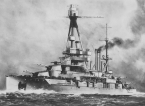
Yes, the great liners do hold me in awe. Here is a shot of the big three docked in New York:ORIGINAL: JWE
ORIGINAL: AlaskanWarrior
Incorrect,
Normandie - 83,0000
Queen Elizabeth - 83,000
Queen Mary - 81,000
"The Merchant Ships of the World 1939", Roger Jordan, Naval Institute Press
Hey Alaska, 'sup guy?
Quite right. I notice you are interested in stuff like this ... well, here's something BTW, and a bit OT, that you might appreciate.
There was a big 'break point' in canal tolls (Suez & Panama) set at 35,000 tons in the mid 20s. It wasn't an issue with the 'biggies', because they ran the North Atlantic, South Atlantic, and Dakar tracks; didn't have to go thu the ditches. So size wasn't an economic issue in the 20s and 30s. France's "Isle de France" was the definition of luxury in the 20s, and the French wanted to give her a "soul mate", thus "Normandie". Nobody cared much till the French designed Normandie to be the "largest' passenger vessel at 78-79000 tons. The French (Syrians) went to the international canal consortium and had them put the 'break' at 80,000 tons.
Meanwhile, the Queen Mary was designing in the 78,000 ton range, and her designers went to Cunard and determined that she would never be routed thru either of the canals, so they extended the promenade deck to put her over 80,000 tons.
Well, imagine the shock in St. Nazare; "Zut alors!!, the Goddams build a bigger ship?? Zis is not 'appen!!". So Chantiers designed a deckhouse on the promenade and boat decks that would put her at a nominal gross tonnage of 82,800 (by design). On her maiden voyage, she was the 'biggest', at the time. However, the Queen Mary was due to launch. Normandie was yanked and refitted with the deckhouse and re-launched, just a few months before the Queen Mary got her ticket.
"Whew ... can't let ze Goddams have ze biggest! L'honeur de France is at stake!"
No matter what they say, to my mind, Normandie is the most perfectly proportioned, and beautiful ship ever to come off the builder's yards.
Thank you for reminding me of this special vessel.

- Attachments
-
- great_liner_1.jpg (48.74 KiB) Viewed 244 times
-
el cid again
- Posts: 16983
- Joined: Mon Oct 10, 2005 4:40 pm
RE: Day-one Scenarios
ORIGINAL: JWE
ORIGINAL: el cid again
The official history is not a specific enough reference? Nor is the translated materials cited by name - many times - from the University of Hawaii Press?
Nope. I did find an "Official Report" on the price of fish to primary processing plants, in the Shimbun, though. The purpose of citations is to allow someone to look things up themselves. That's why things have titles; you know, those funny little words on the title page (maybe that's why they call it a title page). No title, or publication data, then no bubble gum for you.
University of Hawaii Press
2840 Kolowalu Street
Honolulu, Hawaii 96822-1888
1-808-956-8255
has absolutely no idea what you are talking about. They suggest Princeton. They do have a nice translation of early Chinese erotica, but that may not qualify as an "Official Report".
The Japanese Official History of WWII dwarfs Morrison - it is over 100 volumes long - costs more than normal people can afford - and is not found in well over 99% of major libraries (no matter what definition is used). It is also not very easy for people who do not read Japanese in the scholarly sense (that is, you need vast numbers of Kanji - five figures of them - which is daunting even for readers of technical or lay Japanese - who recognize more normal numbers of Kanji well enough to function with less than scholarly literature). About the only way for our members to get at something in this material is either by citation or to write to the National Diet Library with a specific question. If you didn't want information - just copies - of specific pages - you probably could get them from the Library of Congress. But that would require you know exactly where what you wanted to see was before you asked for it. I know a fair number of scholars of Japan, and also Japanese linguists with advanced degrees: not one even knows someone who has a set of these books (like we, say, have copies of Morison, or the Army "green books"). Although Japanese consulates serve as libraries, not one I know of has a copy to look at. I am mystified that you are mystified by reference to this material: it is famous if not very accessable - and it is nothing like a "report." It is probably the longest official history ever written (except, the Russians being what they are, they may have something bigger: the Russians LIKE to have impractically big things - see Tzar Cannon - Tzar Bombe - Tzar Bell - etc).
-
el cid again
- Posts: 16983
- Joined: Mon Oct 10, 2005 4:40 pm
RE: Day-one Scenarios
ORIGINAL: JWE
Anyway, back to merchies, for brother George24.
And as you suggest, pay no attention to the man behind door number 4.
The most concise description of the problem is probably in a study of Japanese SLOCs 1940-2004, by Dr. Euan Graham, Nissan Institute/Routledge Japanese Studies, Nissan Institute call No. 359||Ge. Dr. Graham is a Foreign Office type that works the Asian desk. His perceptions and prose are indicative of why we appreciate, so much the denizens of a moderately sized Island off the coast of Europe proper. I would give major body parts to be able to express myself as clearly, elegantly, and authoritatively, as my counterpart ‘cousins’ in British Govt. Service.
Anyhoo: Some of the issues confronting the Japanese were:
Japan had about 1240 cargo & semi-cargo (P&C) types in ’41, but continued to depend on foreign bottoms to carry about 40% of its trade; certain to withdraw their services in the event of hostilities.
Shipping was independently controlled by the Army Gen. Staff, the Navy Gen. Staff, and the Shipping Control Board. None spoke to the other, and there was no central controlling authority. Of the 5.5 – 6 Mtons of shipping, the Navy requisitioned 1,750,000 tons, while the Army requisitioned 2,300,000 tons. The Navy total was predicted to remain steady at 1,800,000 tons, while the Army total was predicted to fall to 1,200,000 tons, after six months of operations. Though some were returned to civilian control, the extended campaigns in the Solomons and Burma retarded the process such that the Army was so critically short of lift that additional demands were made on the civilian sector, as well as pressing Naval warships into transport duties.
In August, 1941, the Cabinet Planning Board determined that 3,000,000 tons of shipping was the absolute minimum requirement to keep the economy afloat, at 1941 levels, by rigidly restricting transport of all except absolutely essential foodstuffs and raw materials. Needless to say the 12/41-06/42 period caused no small amount of intestinal distress. Imagine the increased toilet paper sales when things got substantially worse.
So yeah; strapped short with the vang pulled tight. No where to go and nothing to go there with.
Dr. Graham bases his conclusions on: Kaigun gunsembi, ichi, Showa jurokunen Juichigatsu made (Senshi Sosho Series), Kaigun gunsembi, ni kaisen igo (Senshi Sosho Series) [Asagumo, Shimbunsha, 1975], Nihon Zosen Gakkai, ed. Showa zoshenshi, [Shobo, 1977], Yoshida Akihito, Alan Zinn, and Mark Epstein.
This is all fairly well done - and somewhat repetitious of what I have already written (having already defined the different shipping authorities for example). But the material is not very germane to the discussion - or debate. It makes no reference whatever to the peculiar start of war situation. Nor does it note the difference between peacetime maritime trade and wartime maritime trade routes. During the war Japan isn't going to be sending ships to San Francisco - London - or Rio. And the effect of distance on shipping throughput is dramatic: cut the distance by 80% you multiply the cargo throughput by as much as 500%. Nor can one know at the START of a war what will happen in future years? But the really big deal is this: when the war begins most of this tonnage is IDLE. There is NO cargo. Not that there will be no cargo - but there is not NOW any cargo. You cannot be sailing to Palembang, Singapore, Soerabaja, Balikpapan, Manila,
or a host of other ports that will - a year into the war - be regular ports of call for these ships. I didn't say that Japan was fat in terms of shipping required to support the economy - or operations - for the duration. Just at start. So data about the long term requirements is not really helpful in terms of evaluating what is required up front. It does, however, give an indication of the vast tonnages of ships in the pool. To which add 300,000 more IRL - captured. And yet more constructed (the time determines the amount). Not that either is enough - it is not nothing. The key to success for Japan is to manage resources - including shipping - efficiently. But not using ships to capture what is needed - or useful - when it is cheap and easy is a grave strategic error. What is possible declines sharply over time.
-
Kereguelen

- Posts: 1474
- Joined: Wed May 12, 2004 9:08 pm
RE: Day-one Scenarios
ORIGINAL: el cid again
I didn't say that Japan was fat in terms of shipping required to support the economy - or operations - for the duration. Just at start. So data about the long term requirements is not really helpful in terms of evaluating what is required up front. It does, however, give an indication of the vast tonnages of ships in the pool. To which add 300,000 more IRL - captured. And yet more constructed (the time determines the amount). Not that either is enough - it is not nothing. The key to success for Japan is to manage resources - including shipping - efficiently. But not using ships to capture what is needed - or useful - when it is cheap and easy is a grave strategic error. What is possible declines sharply over time.
Sid, your reasoning is quite logical. Problem is that there actually was a shortage in Japanese (troop transport) shipping even early in the war. To give you just one example:
When 33rd Division arrived in Burma in January 1942 (moving from Shanghai), it was missing one infantry regiment (213th) and two of the three battalions of its mountain artillery regiment (33rd). The infantry regiment and the mountain battalions were left behind in China because the neccessary shipping space had not been available in December/January. The missing parts did rejoin the division in March. This alone indicates a shortage of shipping during the early stages of the war.
Another example could be the 2nd Division (in this case it is not clear if it was not deployed before March because it had been in the process of reststructuring when the war started, or because there was not enough shipping space available - the division was at its home depot in Sendai on Dec 7th 1941 and remained there until February).
RE: Day-one Scenarios
ORIGINAL: Kereguelen
Sid, your reasoning is quite logical. Problem is that there actually was a shortage in Japanese (troop transport) shipping even early in the war. To give you just one example:
When 33rd Division arrived in Burma in January 1942 (moving from Shanghai), it was missing one infantry regiment (213th) and two of the three battalions of its mountain artillery regiment (33rd). The infantry regiment and the mountain battalions were left behind in China because the neccessary shipping space had not been available in December/January. The missing parts did rejoin the division in March. This alone indicates a shortage of shipping during the early stages of the war.
Another example could be the 2nd Division (in this case it is not clear if it was not deployed before March because it had been in the process of reststructuring when the war started, or because there was not enough shipping space available - the division was at its home depot in Sendai on Dec 7th 1941 and remained there until February).
Hello K,
Logic is a very satisfactory means of winnowing wheat from chaff. However, logic should be applied to the initial premise, in order to hold any validity. Logic in a vacuum does not provide differentiation.
The initial premise is that Japan did not have sufficient lift to accommodate an invasion of the HI, while maintaining their operations in Malaysia, the PI and the CenPac areas. I address this point:
At about December 1941, the Japanese had 27 fast, modern, large vessels in the 500’ range. Of these, 12 had been taken by the IJN for conversion to auxiliaries, leaving 15. As of December 1941, the Japanese had (plus or minus 2 to 5) 98 fast, modern, large vessels in the 450’ range, of which 14 had been taken by the IJN for conversion to auxiliaries, leaving 84. As of December 1941, the Japanese had (plus or minus 1 to 4) 25 moderately fast, modern, medium sized vessels in the 400’ range. Add to this about 47 moderately fast, old vessels in the 450’ range, and you get a sense of the long-distance, high-capacity, Japanese merchant marine of the period in question: about 170 – 175 tops.
This is 1,400,000 gross tons, after IJN requisitions but before any IJA operational requisitions. The vast majority of these were requisitioned by the IJA/IJN for initial invasion TF duties.
There were only about 520 vessels remaining, of the total Japanese merchant marine in December 1941, that had a reasonable tonnage and were oil fired.
This is about 1,300,000 gross tons.
The remaining 800, or so, vessels >1000 tons, were primarily coal and composite fired, with fuel mile ranges of 2500 to 4000 nm; suitable only for very near seas transport.
This is about 1,500,000 gross tons.
This is predicated on the acquisition of 1,800,000 tons by the IJN, but before any of the 2,300,000 tons of acquisitions by the IJA.
Of the foreign hulls carrying cargo to Japan in the prewar years, 28% were carried by US bottoms, and represented a large majority of Japanese strategic materials imported before the war’s beginning: oil, refined petroleum, scrap metal, gutta percha, wheat, barley, copper, iron ore, cokeing coal, nickel, cotton, industrial chemicals, and the like.
80% of the remainder of foreign hull transport, was represented by grains, rice, tin, rubber, cotton, oil, petrochemicals, machine tools, from SRA sources and Aus/NZ. The remaining 20% was represented by foodstuffs from S.Am., and tin and bauxite ores from So. Africa.
Once the outside flow ceased, Japan needed to catch up the slack with her own hulls. Looking at the flow of strategic materials to Japan, it is little wonder they went to war. The big wonder is that they went to war with nothing in the hamper, as it were.