warspite1ORIGINAL: RFalvo69
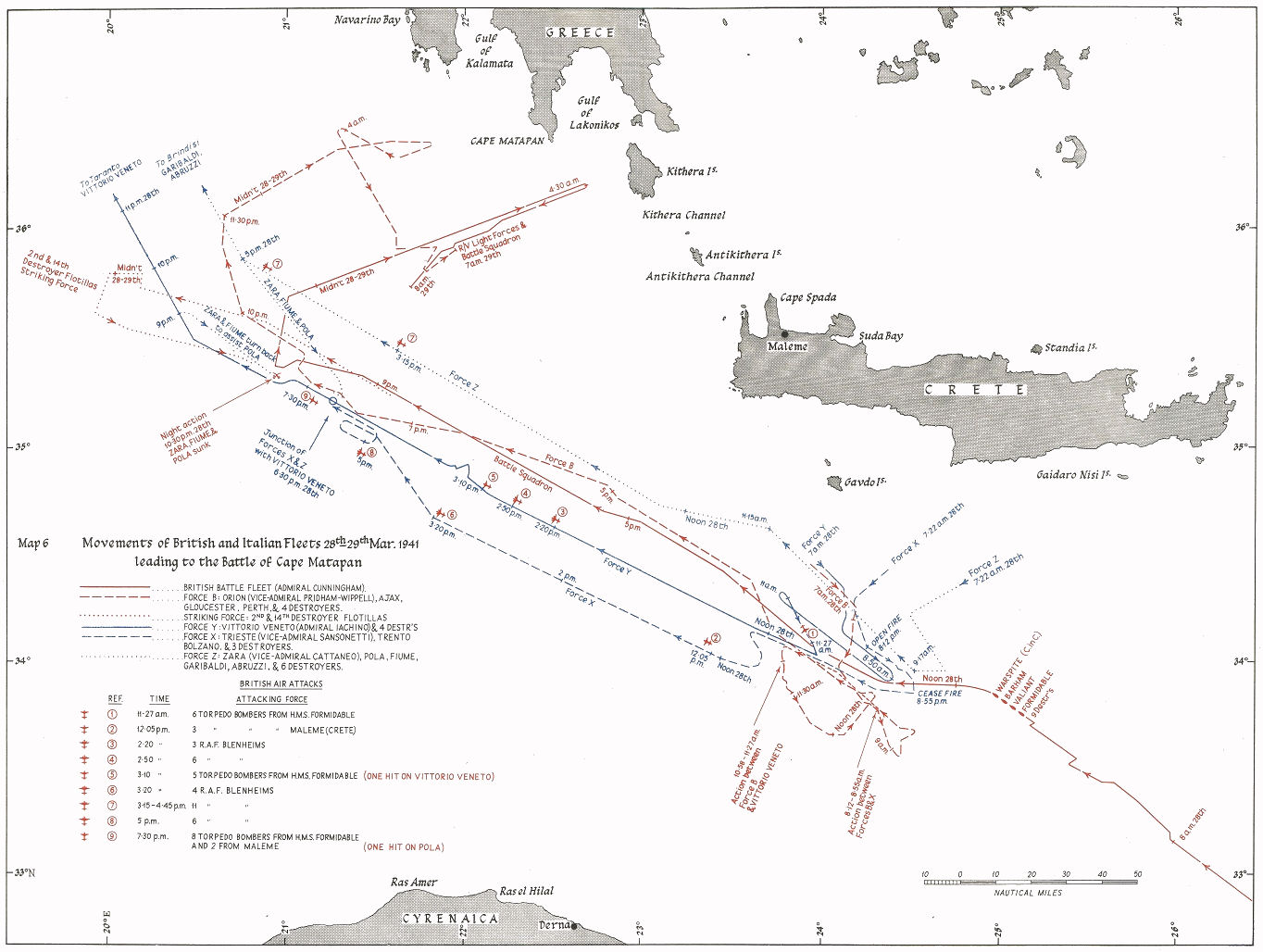
The real problem was the co-ordination between the Navy and the Air Force - which could be rated as "none". The commanders at sea had to request air support from Superaereo (the high command of the Air Force). Here, after deciding what to do, they had to arm and fuel the planes, and brief the pilots. The result was that the Air Force arrived when the battle was over and, in a few occasions, mistakenly attacked Italian ships. The same happened when, for example, a British convoy was sighted.
Just imagine Spruance at the Battle of Midway: instead of launching his attacks, he had to contact Pearl Harbor, detail the situation, wait for an answer, and only then launch the attack. Guess who would have won...
Yes and in fairness the Italians were not alone here. Look at the Germans in the North Sea (February 1940 was a classic) or the Allies at Savo Island. Those in charge were getting to grips with one or more of three distinct problems - integration of new technology and how best to employ this - inter-service rivalry between 'old school' and 'new school' ways of thinking - and in extreme cases, humans being humans, you have people on the same side actively working against each other, in time of war! for prestige and political brownie points - Goering vs Raeder being an example or IJN vs IJA.