

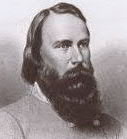
Brig. Gen. Micah Jenkins (b. 1835, d. 1864). Jenkins was a young and promising officer, who quickly learned to use his theoretical skills in practise. He had graduated in 1854 from the South Carolina Citadel Military Academy first in his class and had helped to establish the King’s Mountain Military School in his home state. After South Carolina had seceded, Jenkins took a major part in raising the 5th South Carolina Regiment, one of the first regiments to enter the Confederate Service, and was elected its colonel. At First Manassas the regiment was part of Gen. D.R. Jones brigade, fighting on the Confederate right wing. In 1862 Jenkins organized his new unit: the Palmetto Sharpshooters,. He fought with distinction on the Peninsula, leading Gen. Richard H. Anderson’s brigade (who was then in charge of wing commander Gen. James Longstreet’s division) at Seven Pines, where Jenkins sustained his first wound in the war, and Williamsburg. At Gaines Mill he captured the colours of the 16th Michigan. At Frayser’s Farm his men silenced an enemy battery. Gen. D.H. Hill said after the battle that Jenkins’ brigade “rendered more service than any two combined”. Lomgstreet also recognized the performance and strongly supported Jenkins’ promotion to Brig. Gen. in July 1862. The young general was wounded at Second Manassas and did not return to the army for two months. At Fredericksburg his brigade was part of Gen. George Pickett’s division and played only a minor role in the battle. When the first corps was send to south-eastern Virginia and North Carolina to gather supplies, Jenkins went with it. His brigade was one of the two that stayed in the South during the Pennsylvania campaign thus missing Pickett’s Charge. But it went with Longstreet to Tennessee in the fall of 1863. Jenkins arrived too late to take part in the victorious Battle of Chickamauga, but as Gen. John Hood was wounded in that fight, he got to command the whole division. He did not perform well in that position, loosing Lookout Valley to the Federals, who could afterwards re-supply their besieged troops in Chattanooga. One reason was the feud between Jenkins and Gen. Evander Law, which reduced the division’s moral. Jenkins was supported by Longstreet, while the other officers in the division and most of the rank were in favour of Law. In the operations around Knoxville, Tennessee, Jenkins could not settle the problem with Law and consequently the division did not perform much better than in the Lookout Valley. Law would be transferred to the cavalry in summer 1864, but the ambitious Jenkins did not get his promotion to Maj. Gen. and permanent command of a division either. Instead, Pres. Jefferson Davis appointed Gen. Charles Field in February 1864. When Longstreet pressed charges against Gen. Lafayette McLaws and tried to shift Jenkins to his division, Davis and the War Department preferred Gen. Joseph Kershaw. Thus Jenkins got back to command his brigade. He lead it at the second day of the Battle of the Wilderness in a flanking movement that might have destroyed the whole Federal left wing, when in the dense woods his own troops mistook a group of officers as Union soldiers and fired a volley – Longstreet was wounded and Jenkins killed. According to Longstreet the South had lost “the best officer he (Longstreet) ever saw”.
Ldr: 3
Tact: 6
Init: 5
Cmd: 4
Cav: 0
Teaches: Shooters (2), Charge
CSA Brig. Gen. Micah Jenkins
Moderator: Gil R.
-
jkBluesman
- Posts: 797
- Joined: Mon Feb 12, 2007 6:48 pm
CSA Brig. Gen. Micah Jenkins
"War is the field of chance."
Carl von Clausewitz
Carl von Clausewitz

RE: CSA Brig. Gen. Micah Jenkins
I haven't played the South yet in the new patch but is the South Carolina military Academy represented in the game?
Col Saito: "Don't speak to me of rules! This is war! It is not a game of cricket!"

RE: CSA Brig. Gen. Micah Jenkins
It is represented the same way that West Point and VMI are represented.
Tactics II
RE: CSA Brig. Gen. Micah Jenkins
Thanks for the bio!
As for the S.C. Military Academy issue, I can't remember if there's a War College in S.C. If there isn't, but should be, we might be able to move one there, or add one. I'm not familiar with the institution's history -- should it be represented?
As for the S.C. Military Academy issue, I can't remember if there's a War College in S.C. If there isn't, but should be, we might be able to move one there, or add one. I'm not familiar with the institution's history -- should it be represented?
Michael Jordan plays ball. Charles Manson kills people. I torment eager potential customers by not sharing screenshots of "Brother Against Brother." Everyone has a talent.
-
jkBluesman
- Posts: 797
- Joined: Mon Feb 12, 2007 6:48 pm
RE: CSA Brig. Gen. Micah Jenkins
According to their website the cadets of the Citadel were involved in the bombarment at Fort Sumter and it was South Carolinas main military academy.
http://www.citadel.edu/r3/about/history/civilwar.shtml
http://www.citadel.edu/r3/about/history/civilwar.shtml
"War is the field of chance."
Carl von Clausewitz
Carl von Clausewitz
RE: CSA Brig. Gen. Micah Jenkins
Good grief, you're talking about the Citadel! Well, of course THAT should be represented in the game. I'll make sure it is.
Michael Jordan plays ball. Charles Manson kills people. I torment eager potential customers by not sharing screenshots of "Brother Against Brother." Everyone has a talent.
RE: CSA Brig. Gen. Micah Jenkins
Here's Jenkins. A few issues need to be cleared up before it's ready:
Brig. Gen. Micah Jenkins (b. 1835, d. 1864). Jenkins was a young and promising officer, who quickly learned to use his theoretical skills in practice. He had graduated in 1854 from the South Carolina Citadel Military Academy first in his class and had helped to establish the King’s Mountain Military School in his home state. After South Carolina had seceded, Jenkins played a major part in raising the 5th South Carolina Infantry Regiment, one of the first regiments to enter Confederate service, and was elected its colonel. At the Battle of First Bull Run, this regiment was part of Gen. D.R. Jones’ brigade, fighting on the Confederate right wing. He next raised a new regiment, Jenkins’ Palmetto Sharpshooters. He fought with distinction on the Peninsula, leading Gen. Richard H. Anderson’s brigade (while Anderson himself was in charge of wing commander Gen. James Longstreet’s division) at Seven Pines, where Jenkins sustained his first wound in the war, and Williamsburg. At Gaines’ Mill on June 27 he captured the colors of the 16th Michigan, and at Frayser’s Farm three days later his men silenced an enemy battery, leading Gen. D.H. Hill to comment afterwards that Jenkins’ brigade “rendered more service than any two combined.” Longstreet also recognized the performance and strongly supported Jenkins’ promotion to brigadier general in July 22, 1862. The young general was wounded at Second Bull Run that August and did not return to the army for two months. At the Battle of Fredericksburg that December, Jenkins’ brigade was part of Gen. George Pickett’s division and played only a minor role. In spring of 1863 when Longstreet’s corps was sent to southeastern Virginia and North Carolina to gather supplies and strike a blow against Union garrisons there that culminated in the unsuccessful siege of Suffolk, Jenkins and his brigade participated. That summer, his brigade was one of the two (From the whole corps? From the division Jenkins was in?) that stayed in the South during the Pennsylvania Campaign, and thus missed participating in Pickett’s Charge. Jenkins next went with Longstreet’s corps to Tennessee and, although his brigade arrived too late to take part in the victorious Battle of Chickamauga, he got to command Gen. John B. Hood’s division after Hood was wounded in that fight. He did not perform well in that position, losing at Lookout Valley to the Union and therefore enabling the enemy to re-supply their besieged troops in Chattanooga. (I read that at Lookout Valley he was facing superior numbers and performed well, considering. What do others think?) One reason (For what? The Lookout Valley defeat? Also, isn’t it called the Battle of Lookout Mountain?) was the feud between Jenkins and Gen. Evander M. Law, which reduced the division’s morale. (What caused this feud? I read that Law commanded Hood’s division at Chickamauga – might the feud have been caused by Jenkins arriving after the fighting and taking over the division?) Jenkins was supported by Longstreet, while the other officers in the division and most of the rank (Shouldn’t this be “rank and file”?) were in favor of Law. In the subsequent operations around Knoxville, Jenkins could not settle the problem with Law and consequently the division did not perform much better than it had in Lookout Valley. Law would be transferred to the Army of Northern Virginia in the spring of 1864, but the ambitious Jenkins also suffered from the tensions, not receiving the promotion to major general and permanent command of a division he desired. When Longstreet pressed charges against Gen. Lafayette McLaws for his actions and inaction at Fort Sanders and tried to shift Jenkins to command of McLaws’ division, Pres. Jefferson Davis and the War Department preferred Gen. Joseph Kershaw, returning Jenkins to command of his brigade. On the second day of the Battle of the Wilderness, Jenkins was leading this brigade in a flanking movement that might have destroyed the whole Union left wing, when in the dense woods his own troops mistook a group of officers as Union soldiers and fired a volley – wounding Longstreet and killing Jenkins. According to Longstreet, the South had lost “the best officer he (Longstreet) ever saw.” (Bio by Joern Kaesebier)
Ldr: 3
Tact: 6
Init: 5
Cmd: 4
Cav: 0
Teaches: Blasted (15), Shooters (10), Chargers (13)
Start date: 37
Death date: 80
Brig. Gen. Micah Jenkins (b. 1835, d. 1864). Jenkins was a young and promising officer, who quickly learned to use his theoretical skills in practice. He had graduated in 1854 from the South Carolina Citadel Military Academy first in his class and had helped to establish the King’s Mountain Military School in his home state. After South Carolina had seceded, Jenkins played a major part in raising the 5th South Carolina Infantry Regiment, one of the first regiments to enter Confederate service, and was elected its colonel. At the Battle of First Bull Run, this regiment was part of Gen. D.R. Jones’ brigade, fighting on the Confederate right wing. He next raised a new regiment, Jenkins’ Palmetto Sharpshooters. He fought with distinction on the Peninsula, leading Gen. Richard H. Anderson’s brigade (while Anderson himself was in charge of wing commander Gen. James Longstreet’s division) at Seven Pines, where Jenkins sustained his first wound in the war, and Williamsburg. At Gaines’ Mill on June 27 he captured the colors of the 16th Michigan, and at Frayser’s Farm three days later his men silenced an enemy battery, leading Gen. D.H. Hill to comment afterwards that Jenkins’ brigade “rendered more service than any two combined.” Longstreet also recognized the performance and strongly supported Jenkins’ promotion to brigadier general in July 22, 1862. The young general was wounded at Second Bull Run that August and did not return to the army for two months. At the Battle of Fredericksburg that December, Jenkins’ brigade was part of Gen. George Pickett’s division and played only a minor role. In spring of 1863 when Longstreet’s corps was sent to southeastern Virginia and North Carolina to gather supplies and strike a blow against Union garrisons there that culminated in the unsuccessful siege of Suffolk, Jenkins and his brigade participated. That summer, his brigade was one of the two (From the whole corps? From the division Jenkins was in?) that stayed in the South during the Pennsylvania Campaign, and thus missed participating in Pickett’s Charge. Jenkins next went with Longstreet’s corps to Tennessee and, although his brigade arrived too late to take part in the victorious Battle of Chickamauga, he got to command Gen. John B. Hood’s division after Hood was wounded in that fight. He did not perform well in that position, losing at Lookout Valley to the Union and therefore enabling the enemy to re-supply their besieged troops in Chattanooga. (I read that at Lookout Valley he was facing superior numbers and performed well, considering. What do others think?) One reason (For what? The Lookout Valley defeat? Also, isn’t it called the Battle of Lookout Mountain?) was the feud between Jenkins and Gen. Evander M. Law, which reduced the division’s morale. (What caused this feud? I read that Law commanded Hood’s division at Chickamauga – might the feud have been caused by Jenkins arriving after the fighting and taking over the division?) Jenkins was supported by Longstreet, while the other officers in the division and most of the rank (Shouldn’t this be “rank and file”?) were in favor of Law. In the subsequent operations around Knoxville, Jenkins could not settle the problem with Law and consequently the division did not perform much better than it had in Lookout Valley. Law would be transferred to the Army of Northern Virginia in the spring of 1864, but the ambitious Jenkins also suffered from the tensions, not receiving the promotion to major general and permanent command of a division he desired. When Longstreet pressed charges against Gen. Lafayette McLaws for his actions and inaction at Fort Sanders and tried to shift Jenkins to command of McLaws’ division, Pres. Jefferson Davis and the War Department preferred Gen. Joseph Kershaw, returning Jenkins to command of his brigade. On the second day of the Battle of the Wilderness, Jenkins was leading this brigade in a flanking movement that might have destroyed the whole Union left wing, when in the dense woods his own troops mistook a group of officers as Union soldiers and fired a volley – wounding Longstreet and killing Jenkins. According to Longstreet, the South had lost “the best officer he (Longstreet) ever saw.” (Bio by Joern Kaesebier)
Ldr: 3
Tact: 6
Init: 5
Cmd: 4
Cav: 0
Teaches: Blasted (15), Shooters (10), Chargers (13)
Start date: 37
Death date: 80
Michael Jordan plays ball. Charles Manson kills people. I torment eager potential customers by not sharing screenshots of "Brother Against Brother." Everyone has a talent.
-
jkBluesman
- Posts: 797
- Joined: Mon Feb 12, 2007 6:48 pm
RE: CSA Brig. Gen. Micah Jenkins
Okay, here we go:
Jenkins brigade was one of the two of Pickett's division that were left behind and thus did not make it north and to Gettysburg.
It should be "rank and file".
The feud question and Lookout Valley remarks needs further details:
Hood was wounded at Gettysburg. Longstreet wanted to take Hood's division to Tennessee with Jenkins as its new commander. Law and other officers urged Hood to call for duty in time to resume command of his division for the expedition. Hood did so but was wounded again at Chickamauga. So Longstreet finally put Jenkins in charge of the division. But this did not end the feud between Law and Jenkins.
When Gen. Grant started his operation in Lookout Valley to open a new supply line, Law knew of enemy activity in the valley and asked for reinforcements. Longstreet seems to have been too much involved in his quarrel with Bragg and did not pay attention. Thus Law did not get more men but did not press the matter either but went to Hood, who was convalescing south of Chattanooga, though there was enemy activity in his front. Jenkins withdrew Law's three regiments from the northern end of the valley. When Law returned two days later he tried to get the regiments back but arrived too late. The Federals had attacked the outnumbered Confederates at Brown's Ferry and secured most of the valley. Jenkins oredered a night attack to regain the lost ground. The Battle of Wauhatchie was a Union victory.
The Battle of Lookout Mountain was faught when Longstreet's corps was already on its way to Knoxville.
Jenkins brigade was one of the two of Pickett's division that were left behind and thus did not make it north and to Gettysburg.
It should be "rank and file".
The feud question and Lookout Valley remarks needs further details:
Hood was wounded at Gettysburg. Longstreet wanted to take Hood's division to Tennessee with Jenkins as its new commander. Law and other officers urged Hood to call for duty in time to resume command of his division for the expedition. Hood did so but was wounded again at Chickamauga. So Longstreet finally put Jenkins in charge of the division. But this did not end the feud between Law and Jenkins.
When Gen. Grant started his operation in Lookout Valley to open a new supply line, Law knew of enemy activity in the valley and asked for reinforcements. Longstreet seems to have been too much involved in his quarrel with Bragg and did not pay attention. Thus Law did not get more men but did not press the matter either but went to Hood, who was convalescing south of Chattanooga, though there was enemy activity in his front. Jenkins withdrew Law's three regiments from the northern end of the valley. When Law returned two days later he tried to get the regiments back but arrived too late. The Federals had attacked the outnumbered Confederates at Brown's Ferry and secured most of the valley. Jenkins oredered a night attack to regain the lost ground. The Battle of Wauhatchie was a Union victory.
The Battle of Lookout Mountain was faught when Longstreet's corps was already on its way to Knoxville.
"War is the field of chance."
Carl von Clausewitz
Carl von Clausewitz
RE: CSA Brig. Gen. Micah Jenkins
Thanks for the clarification. The bio now reads:
Brig. Gen. Micah Jenkins (b. 1835, d. 1864). Jenkins was a young and promising officer, who quickly learned to use his theoretical skills in practice. He had graduated in 1854 from the South Carolina Citadel Military Academy first in his class and had helped to establish the King’s Mountain Military School in his home state. After South Carolina had seceded, Jenkins played a major part in raising the 5th South Carolina Infantry Regiment, one of the first regiments to enter Confederate service, and was elected its colonel. At the Battle of First Bull Run, this regiment was part of Gen. D.R. Jones’ brigade, fighting on the Confederate right wing. He next raised a new regiment, Jenkins’ Palmetto Sharpshooters. He fought with distinction on the Peninsula, leading Gen. Richard H. Anderson’s brigade (while Anderson himself was in charge of wing commander Gen. James Longstreet’s division) at Seven Pines, where Jenkins sustained his first wound in the war, and Williamsburg. At Gaines’ Mill on June 27 he captured the colors of the 16th Michigan, and at Frayser’s Farm three days later his men silenced an enemy battery, leading Gen. D.H. Hill to comment afterwards that Jenkins’ brigade “rendered more service than any two combined.” Longstreet also recognized the performance and strongly supported Jenkins’ promotion to brigadier general in July 22, 1862. The young general was wounded at Second Bull Run that August and did not return to the army for two months. At the Battle of Fredericksburg that December, Jenkins’ brigade was part of Gen. George Pickett’s division and played only a minor role. In spring of 1863 when Longstreet’s corps was sent to southeastern Virginia and North Carolina to gather supplies and strike a blow against Union garrisons there that culminated in the unsuccessful siege of Suffolk, Jenkins and his brigade participated. That summer, his brigade was one of the two from Pickett’s division that stayed in the South during the Pennsylvania Campaign, and thus missed participating in Pickett’s Charge. Jenkins next went with Longstreet’s corps to Tennessee and, although his brigade arrived too late to take part in the victorious Battle of Chickamauga, he got to command Gen. John B. Hood’s division after Hood was wounded in that fight. He did not perform well in that position, losing the Battle of Wauhatchie on the night of October 27 and therefore enabling Gen. Ulysses S. Grant to create a new supply line through Lookout Valley for the besieged Union forces at Chattanooga. One reason for this defeat was the feud between Jenkins and Gen. Evander M. Law, which reduced the division’s morale. Jenkins was supported by Longstreet, while the other officers in the division and most of the rank and file were in favor of Law. In the subsequent operations around Knoxville, Jenkins could not settle the problem with Law and consequently the division did not perform much better than it had in Lookout Valley. Law would be transferred to the Army of Northern Virginia in the spring of 1864, but the ambitious Jenkins also suffered from the tensions, not receiving the promotion to major general and permanent command of a division he desired. When Longstreet pressed charges against Gen. Lafayette McLaws for his actions and inaction at Fort Sanders and tried to shift Jenkins to command of McLaws’ division, Pres. Jefferson Davis and the War Department preferred Gen. Joseph Kershaw, returning Jenkins to command of his brigade. On the second day of the Battle of the Wilderness, Jenkins was leading this brigade in a flanking movement that might have destroyed the whole Union left wing, when in the dense woods his own troops mistook a group of officers as Union soldiers and fired a volley – wounding Longstreet and killing Jenkins. According to Longstreet, the South had lost “the best officer he (Longstreet) ever saw.” (Bio by Joern Kaesebier)
Also, since the Battle of Wauhatchie was one of the few significant nighttime battles, I'm giving Jenkins "Night Owls" instead of "Shooters." (Someone has to have that ability. That and "Polar Bears"...)
Brig. Gen. Micah Jenkins (b. 1835, d. 1864). Jenkins was a young and promising officer, who quickly learned to use his theoretical skills in practice. He had graduated in 1854 from the South Carolina Citadel Military Academy first in his class and had helped to establish the King’s Mountain Military School in his home state. After South Carolina had seceded, Jenkins played a major part in raising the 5th South Carolina Infantry Regiment, one of the first regiments to enter Confederate service, and was elected its colonel. At the Battle of First Bull Run, this regiment was part of Gen. D.R. Jones’ brigade, fighting on the Confederate right wing. He next raised a new regiment, Jenkins’ Palmetto Sharpshooters. He fought with distinction on the Peninsula, leading Gen. Richard H. Anderson’s brigade (while Anderson himself was in charge of wing commander Gen. James Longstreet’s division) at Seven Pines, where Jenkins sustained his first wound in the war, and Williamsburg. At Gaines’ Mill on June 27 he captured the colors of the 16th Michigan, and at Frayser’s Farm three days later his men silenced an enemy battery, leading Gen. D.H. Hill to comment afterwards that Jenkins’ brigade “rendered more service than any two combined.” Longstreet also recognized the performance and strongly supported Jenkins’ promotion to brigadier general in July 22, 1862. The young general was wounded at Second Bull Run that August and did not return to the army for two months. At the Battle of Fredericksburg that December, Jenkins’ brigade was part of Gen. George Pickett’s division and played only a minor role. In spring of 1863 when Longstreet’s corps was sent to southeastern Virginia and North Carolina to gather supplies and strike a blow against Union garrisons there that culminated in the unsuccessful siege of Suffolk, Jenkins and his brigade participated. That summer, his brigade was one of the two from Pickett’s division that stayed in the South during the Pennsylvania Campaign, and thus missed participating in Pickett’s Charge. Jenkins next went with Longstreet’s corps to Tennessee and, although his brigade arrived too late to take part in the victorious Battle of Chickamauga, he got to command Gen. John B. Hood’s division after Hood was wounded in that fight. He did not perform well in that position, losing the Battle of Wauhatchie on the night of October 27 and therefore enabling Gen. Ulysses S. Grant to create a new supply line through Lookout Valley for the besieged Union forces at Chattanooga. One reason for this defeat was the feud between Jenkins and Gen. Evander M. Law, which reduced the division’s morale. Jenkins was supported by Longstreet, while the other officers in the division and most of the rank and file were in favor of Law. In the subsequent operations around Knoxville, Jenkins could not settle the problem with Law and consequently the division did not perform much better than it had in Lookout Valley. Law would be transferred to the Army of Northern Virginia in the spring of 1864, but the ambitious Jenkins also suffered from the tensions, not receiving the promotion to major general and permanent command of a division he desired. When Longstreet pressed charges against Gen. Lafayette McLaws for his actions and inaction at Fort Sanders and tried to shift Jenkins to command of McLaws’ division, Pres. Jefferson Davis and the War Department preferred Gen. Joseph Kershaw, returning Jenkins to command of his brigade. On the second day of the Battle of the Wilderness, Jenkins was leading this brigade in a flanking movement that might have destroyed the whole Union left wing, when in the dense woods his own troops mistook a group of officers as Union soldiers and fired a volley – wounding Longstreet and killing Jenkins. According to Longstreet, the South had lost “the best officer he (Longstreet) ever saw.” (Bio by Joern Kaesebier)
Also, since the Battle of Wauhatchie was one of the few significant nighttime battles, I'm giving Jenkins "Night Owls" instead of "Shooters." (Someone has to have that ability. That and "Polar Bears"...)
Michael Jordan plays ball. Charles Manson kills people. I torment eager potential customers by not sharing screenshots of "Brother Against Brother." Everyone has a talent.
-
jkBluesman
- Posts: 797
- Joined: Mon Feb 12, 2007 6:48 pm
RE: CSA Brig. Gen. Micah Jenkins
Great, ready to go I should say.
And yes, you should give "Night Owls" to some of the Union generals involved at Wauhatchie and perhaps to one who fought on Culp's Hill.
"Polar Bears" might go to one of Sherman's generals as his troops went to Kentucky to relieve Burnside in December of 1863 and did travel light, i.e. without blankets. One of Longstreet's genrals could get it too, for the poorly equiped Knoxville campaign.
And yes, you should give "Night Owls" to some of the Union generals involved at Wauhatchie and perhaps to one who fought on Culp's Hill.
"Polar Bears" might go to one of Sherman's generals as his troops went to Kentucky to relieve Burnside in December of 1863 and did travel light, i.e. without blankets. One of Longstreet's genrals could get it too, for the poorly equiped Knoxville campaign.
"War is the field of chance."
Carl von Clausewitz
Carl von Clausewitz
RE: CSA Brig. Gen. Micah Jenkins
ORIGINAL: jkBluesman
Great, ready to go I should say.
And yes, you should give "Night Owls" to some of the Union generals involved at Wauhatchie adn perhaps to one who fought on Culp's Hill.
"Polar Bears" might go to one of Sherman's generals as his troops went to Kentucky to relieve Burnside in December of 1863 and did travel light, i.e. without blankets. One of Longstreet's genrals could get it too for the poorly equiped Knoxville campaign.
Does anyone have recommendations for specific generals? Those are good ideas, but I don't remember who would be candidates.
Michael Jordan plays ball. Charles Manson kills people. I torment eager potential customers by not sharing screenshots of "Brother Against Brother." Everyone has a talent.
-
jkBluesman
- Posts: 797
- Joined: Mon Feb 12, 2007 6:48 pm
RE: CSA Brig. Gen. Micah Jenkins
It was Hooker's corps that was engaged at Wauhatchie (I think it was already labeled the XX corps). Geary was the main point of attack, so he might get "Night Owls".
"War is the field of chance."
Carl von Clausewitz
Carl von Clausewitz
RE: CSA Brig. Gen. Micah Jenkins
Okay, I made a note to give Geary Night Owls once he gets a bio done and official ratings. Thanks.
Michael Jordan plays ball. Charles Manson kills people. I torment eager potential customers by not sharing screenshots of "Brother Against Brother." Everyone has a talent.