

Gents,
The Quotes thread currently has a vigorous debate over Churchill's merits and demerits. Most of us Americans who are now at or near middle age were taught that he was a hero. Some now claim he was more of a hindrance (I disagree, but it's an interesting debate).
I was in highschool when I first decided to be objective instead of accepting history just as I had been taught. This happened while I was reading Kenneth Robert's book, Oliver Wiswell, a historican novel about the Revolution. Only it's told from the Loyalist point of view. Thanks to years of education, I had been indoctrinated with the view that the Patriots were the good guys and the Loyalists were the bad guys. When I realized that at least a third of Americans remained loyal, it made me look much more deeply into their viewpoint, which was quite an education.
Since then, I've looked pretty closesly into some of the other things I was taught and took for granted, with mixed results. A few examples:
1) Education Slant: John Brown, the abolitionist, was a nut. Truth: Yes, he was insane and quite evil.
2) Education Slant: Benedict Arnold was nothing but a scoundrel. Truth: No true. Benedict Arnold was a gifted military leader. He betrayed the Colonies, partly out of fear that the Colonies were better off under English rule than French. Quite a few other Patriots changed side, and several prominent patriots, including Andrew Pickens, nearly did.
3) Education Slant: The Jap attack on Pearl Harbor was a surprise attack. Truth: Yes, it was. The "conspiracy theory" slant that Roosevelt allowed it to happen is pure hocum. The military knew an attack was coming, but figured it was in the Philippines, Malaya, or possibly Russia.
I'm interested in hearing other examples from the forum.
Historial Reputations/Accounts True?
Moderators: Joel Billings, wdolson, Don Bowen, mogami
-
Canoerebel

- Posts: 21099
- Joined: Fri Dec 13, 2002 11:21 pm
- Location: Northwestern Georgia, USA
- Contact:
Historial Reputations/Accounts True?
"Rats set fire to Mr. Cooper’s store in Fort Valley. No damage done." Columbus (Ga) Enquirer-Sun, October 2, 1880.
RE: Historial Reputations/Accounts True?
Hi,
The Americas in the 1700's were heavily taxed, ultimately leading to the declaration of independence: False, the tax burden in the British Isles was higher.
Mark
The Americas in the 1700's were heavily taxed, ultimately leading to the declaration of independence: False, the tax burden in the British Isles was higher.
Mark
-
LargeSlowTarget

- Posts: 4957
- Joined: Sat Sep 23, 2000 8:00 am
- Location: Hessen, Germany - now living in France
RE: Historial Reputations/Accounts True?
I though the issue was more about representation (in Parliament) rather than the amount of the tax burden.


RE: Historial Reputations/Accounts True?
ORIGINAL: mark24
Hi,
The Americas in the 1700's were heavily taxed, ultimately leading to the declaration of independence: False, the tax burden in the British Isles was higher.
Mark
Those two are not mutually exclusive you know.
The era of procrastination, of half-measures, of soothing and baffling expedients, of delays, is coming to a close.
In its place we are entering a period of consequences..
In its place we are entering a period of consequences..
-
anarchyintheuk
- Posts: 3958
- Joined: Wed May 05, 2004 7:08 pm
- Location: Dallas
RE: Historial Reputations/Accounts True?
Never really understood the 1/3 of Americans were loyal statistic.
Certainly 1/3 of the population didn't leave after the war was over. IIRC approximately 100k loyalists left after the war out of 2.5m population. Either the remaining 'loyalists' quickly acclimated to the new regime, the percentage of loyalists was lower than quoted or those loyalists were more in the indifferent category.
John Brown: good ideas can come in insane packages.
It's true B. Arnold may have thought the colonies were better off under English rule; however, his wife and her family being loyalists, feeling peeved about not being promoted, being investigated for (and censured by Washington) for speculation and cold hard cash were probably more important elements in his changing sides.
As far as other examples: the Mayflower and the founding of that colony is always more celebrated and stressed in textbooks than Jamestown because the supposed reason for its founding (religious freedom) represents a far more noble idea of the birth of what would eventually be the US than the reason for the founding of Jamestown (striking it rich).
Certainly 1/3 of the population didn't leave after the war was over. IIRC approximately 100k loyalists left after the war out of 2.5m population. Either the remaining 'loyalists' quickly acclimated to the new regime, the percentage of loyalists was lower than quoted or those loyalists were more in the indifferent category.
John Brown: good ideas can come in insane packages.
It's true B. Arnold may have thought the colonies were better off under English rule; however, his wife and her family being loyalists, feeling peeved about not being promoted, being investigated for (and censured by Washington) for speculation and cold hard cash were probably more important elements in his changing sides.
As far as other examples: the Mayflower and the founding of that colony is always more celebrated and stressed in textbooks than Jamestown because the supposed reason for its founding (religious freedom) represents a far more noble idea of the birth of what would eventually be the US than the reason for the founding of Jamestown (striking it rich).
RE: Historial Reputations/Accounts True?
It was more like 40% were loyalists. Many of them moved to areas that remained under British control after the war, such as around Buffalo or remained a local majority. Most of the ones moving to Canada stayed close to the border. Later, as relations normalised, a lot of them came back in and got involved in US politics.
The Federalists lost influence after the War of 1812 because it became clear many of them supported the British side.
The Federalists lost influence after the War of 1812 because it became clear many of them supported the British side.
Harry Erwin
"For a number to make sense in the game, someone has to calibrate it and program code. There are too many significant numbers that behave non-linearly to expect that. It's just a game. Enjoy it." herwin@btinternet.com
"For a number to make sense in the game, someone has to calibrate it and program code. There are too many significant numbers that behave non-linearly to expect that. It's just a game. Enjoy it." herwin@btinternet.com
-
Panther Bait

- Posts: 654
- Joined: Wed Aug 30, 2006 8:59 pm
RE: Historial Reputations/Accounts True?
Also, some percentage of those who considered themselves loyalists in 1776 changed their minds and eventually backed independence or at least became indifferent. Some former loyalists became disenchanted with the British as the war dragged on, particularly those forced to support British (or worse Hessian) troops.
When you shoot at a destroyer and miss, it's like hit'in a wildcat in the ass with a banjo.
Nathan Dogan, USS Gurnard
Nathan Dogan, USS Gurnard

RE: Historial Reputations/Accounts True?
ORIGINAL: anarchyintheuk
Never really understood the 1/3 of Americans were loyal statistic.
Certainly 1/3 of the population didn't leave after the war was over. IIRC approximately 100k loyalists left after the war out of 2.5m population. Either the remaining 'loyalists' quickly acclimated to the new regime, the percentage of loyalists was lower than quoted or those loyalists were more in the indifferent category.
John Brown: good ideas can come in insane packages.
It's true B. Arnold may have thought the colonies were better off under English rule; however, his wife and her family being loyalists, feeling peeved about not being promoted, being investigated for (and censured by Washington) for speculation and cold hard cash were probably more important elements in his changing sides.
As far as other examples: the Mayflower and the founding of that colony is always more celebrated and stressed in textbooks than Jamestown because the supposed reason for its founding (religious freedom) represents a far more noble idea of the birth of what would eventually be the US than the reason for the founding of Jamestown (striking it rich).
Well, this is especially true in the Southern colonies where the revolution was not so much a revolution as a civil conflict-and a very vicious one at that. South of Virginia, it is probable that there were more people loyal to the king than to the rebellion. Very few British troops fought in the Southern campaigns.
For generations after the conflict, there was no more hated name than Tarleton. Really not to be replaced until Uncle Billy burned his initials into the landscape in the ACW.
I am the Holy Roman Emperor and am above grammar.
Sigismund of Luxemburg
Sigismund of Luxemburg

RE: Historial Reputations/Accounts True?
ORIGINAL: herwin
It was more like 40% were loyalists. Many of them moved to areas that remained under British control after the war, such as around Buffalo or remained a local majority. Most of the ones moving to Canada stayed close to the border. Later, as relations normalised, a lot of them came back in and got involved in US politics.
The Federalists lost influence after the War of 1812 because it became clear many of them supported the British side.
Many of them did leave (the ones that could afford to)... many others were imprisoned or ruined financially: my wife was doing geneological research and ran across a guy who basically had his estates seized for toasting the King during the war in public.

RE: Historial Reputations/Accounts True?
ORIGINAL: crsutton
... For generations after the conflict, there was no more hated name than Tarleton. Really not to be replaced until Uncle Billy burned his initials into the landscape in the ACW.
Tarleton, as in "Tarleton's Quarters," which was no quarter (mercy) at all. There was a character based on him in Mel Gibson's "The Patriot," but it was embarassing watching historical fiction passing as fact in Bosnia w/Brit officers.
When I was in basic training in the '80s at Fort Jackson, the locals were still selling T-shirts bearing Sherman's image w/a red "no" symbol through it.
Arnold was our best field commander, but when he was wounded, he was quickly forgotten. JP Jones died forgotten and impoverished in France during the Jefferson administration.
Most of the leaders of the American Revolution practiced dubious professions: law and journalism. I wouldn't buy a used car from either.
Stratford, Connecticut, U.S.A.[center]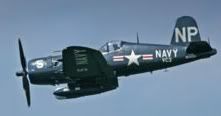 [/center]
[center]"The Angel of Okinawa"[/center]
Home of the Chance-Vought Corsair, F4U
The best fighter-bomber of World War II
[/center][center]"The Angel of Okinawa"[/center]
Home of the Chance-Vought Corsair, F4U
The best fighter-bomber of World War II
RE: Historial Reputations/Accounts True?
ORIGINAL: rtrapasso
... my wife was doing geneological research and ran across a guy who basically had his estates seized for toasting the King during the war in public.
Eventually Anglicans in America went so far as to revise the Book of Common prayer so as to avoid swearing allegiance to both King and Country, esp. when that king was named George and the country was England.
Stratford, Connecticut, U.S.A.[center][/center]
[center]"The Angel of Okinawa"[/center]
Home of the Chance-Vought Corsair, F4U
The best fighter-bomber of World War II
[/center][center]"The Angel of Okinawa"[/center]
Home of the Chance-Vought Corsair, F4U
The best fighter-bomber of World War II
RE: Historial Reputations/Accounts True?
That's interesting about Sherman. Most objective studies mark Sherman as a brilliant strategist as well as tactician, and the first person to really comprehend and implement strategic warfare's implications for economic production. Sherman's march was the B-17 raid of the civil war. In the south he is reviled. In the north, he's revered and there was a song celebrating Sherman's 1864 slash through the south that was still part of the piano repertoire for intermediate learners that was still being widely used when I was a boy.... "Marching through Georgia."
Show me a fellow who rejects statistical analysis a priori and I'll show you a fellow who has no knowledge of statistics.
Didn't we have this conversation already?
Didn't we have this conversation already?

RE: Historial Reputations/Accounts True?
ORIGINAL: mark24
Hi,
The Americas in the 1700's were heavily taxed, ultimately leading to the declaration of independence: False, the tax burden in the British Isles was higher.
Mark
Trade restrictions were a part also. I forget if this one changed before war broke out, but one example is that all metal shovels had to be imported from (or perhaps through) England. Such regulations kept prices artificially high and stifled industrial/economic development in the colonies.
On the other hand British soldiers who came to the colonies before and during the war were (in general) amazed at the great quantity of good food available. Obviously campaign conditions could change that for various military units, but the point was the abundance of food in North America.
Intel Monkey: https://sites.google.com/view/staffmonkeys/home

RE: Historial Reputations/Accounts True?
The Colonies did have a lower tax burden than the average British subject at home. The problem was that until the French-Indian War (or Seven Years War on the other side of the pond), Parliament hardly ever involved itself in the affairs of the colonies. They were considered the affairs of various companies and other organizations, nothing more. In that vacuum, the colonies were not really governed from England, but self-governing. During the Seven Years War, colonies were asked to volunteer funds and troops, but were not specifically taxed or had soldiers conscripted. It was only when Parliament attempted to IMPOSE a tax, starting with the Stamp Act, rather than ASK for taxes, after 150 years of basic indifference, that the colonials objected. Parliament sought these revenue sources after the crushing debt incurred during the Seven Years War.
Even though the tax burden was lighter, there was never any assent, either through participation in Parliament, or otherwise. "Taxation without Representation", perceived as tyranny.
To another comment on amount of food, the average American was fully 2 inches taller than the average Briton in the late 18th century. This was due to a much better diet. The American Colonies had the highest standard of living of anywhere on the globe in the late 18th century, because of the availability of land and other resources. The Colonies had a population that was 1/4 of that of Britain, not insignificant. Philadelphia was the 3rd largest english-speaking city in the British Empire (London of course, and I think Manchester)
Even though the tax burden was lighter, there was never any assent, either through participation in Parliament, or otherwise. "Taxation without Representation", perceived as tyranny.
To another comment on amount of food, the average American was fully 2 inches taller than the average Briton in the late 18th century. This was due to a much better diet. The American Colonies had the highest standard of living of anywhere on the globe in the late 18th century, because of the availability of land and other resources. The Colonies had a population that was 1/4 of that of Britain, not insignificant. Philadelphia was the 3rd largest english-speaking city in the British Empire (London of course, and I think Manchester)
RE: Historial Reputations/Accounts True?
ORIGINAL: crsutton
ORIGINAL: anarchyintheuk
Never really understood the 1/3 of Americans were loyal statistic.
Certainly 1/3 of the population didn't leave after the war was over. IIRC approximately 100k loyalists left after the war out of 2.5m population. Either the remaining 'loyalists' quickly acclimated to the new regime, the percentage of loyalists was lower than quoted or those loyalists were more in the indifferent category.
John Brown: good ideas can come in insane packages.
It's true B. Arnold may have thought the colonies were better off under English rule; however, his wife and her family being loyalists, feeling peeved about not being promoted, being investigated for (and censured by Washington) for speculation and cold hard cash were probably more important elements in his changing sides.
As far as other examples: the Mayflower and the founding of that colony is always more celebrated and stressed in textbooks than Jamestown because the supposed reason for its founding (religious freedom) represents a far more noble idea of the birth of what would eventually be the US than the reason for the founding of Jamestown (striking it rich).
Well, this is especially true in the Southern colonies where the revolution was not so much a revolution as a civil conflict-and a very vicious one at that. South of Virginia, it is probable that there were more people loyal to the king than to the rebellion. Very few British troops fought in the Southern campaigns.
For generations after the conflict, there was no more hated name than Tarleton. Really not to be replaced until Uncle Billy burned his initials into the landscape in the ACW.
With regard to the 1/3,1/3,1/3, I have read that most historians consider it slightly over 1/3 were Rebels, and under 1/3 were Loyalists, but that changed very much by region. New England of course had very few loyalists, whereas New York City was a noted Loyalist stronghold even before the British Occupation.
I don't buy that there were that many true Loyalists. Judging by the relative numbers of Americans who fought on each side, there were many more in the Continental Army and Militias, than there were in Provisional Regiments or Tory Militias. And that is despite the obvious Loyalist advantages in terms of logistical support.
-
niceguy2005

- Posts: 12522
- Joined: Mon Jul 04, 2005 1:53 pm
- Location: Super secret hidden base
RE: Historial Reputations/Accounts True?
It was about the perception of high taxes. Tax levels are relative. It was even more about being treated as a colony and not an equal.ORIGINAL: mark24
Hi,
The Americas in the 1700's were heavily taxed, ultimately leading to the declaration of independence: False, the tax burden in the British Isles was higher.
Mark

Artwork graciously provided by Dixie

RE: Historial Reputations/Accounts True?
ORIGINAL: Canoerebel
I was in highschool when I first decided to be objective instead of accepting history just as I had been taught. This happened while I was reading Kenneth Robert's book, Oliver Wiswell, a historican novel about the Revolution. Only it's told from the Loyalist point of view. Thanks to years of education, I had been indoctrinated with the view that the Patriots were the good guys and the Loyalists were the bad guys. When I realized that at least a third of Americans remained loyal, it made me look much more deeply into their viewpoint, which was quite an education.
I was always taught that it was basically a 1/3 Pro-Brit, 1/3 Pro Independence, 1/3 "whatever" split.
You must be old [:D]
-
niceguy2005
- Posts: 12522
- Joined: Mon Jul 04, 2005 1:53 pm
- Location: Super secret hidden base
RE: Historial Reputations/Accounts True?
Funny how it is now basically 1/3 Democrat, 1/3 Republican, 1/3 IndependentORIGINAL: AcePylut
ORIGINAL: Canoerebel
I was in highschool when I first decided to be objective instead of accepting history just as I had been taught. This happened while I was reading Kenneth Robert's book, Oliver Wiswell, a historican novel about the Revolution. Only it's told from the Loyalist point of view. Thanks to years of education, I had been indoctrinated with the view that the Patriots were the good guys and the Loyalists were the bad guys. When I realized that at least a third of Americans remained loyal, it made me look much more deeply into their viewpoint, which was quite an education.
I was always taught that it was basically a 1/3 Pro-Brit, 1/3 Pro Independence, 1/3 "whatever" split.
You must be old [:D]
Artwork graciously provided by Dixie
-
juliet7bravo
- Posts: 893
- Joined: Wed May 30, 2001 8:00 am
RE: Historial Reputations/Accounts True?
Had to do a paper once (details hazy now) for a professor with pronounced political leanings...bottomline, what he was looking for was that the colonists were largely apolitical and a few individuals pushed/incited revolution for personal gain. A minority in favor, most apathetic, used more or less staged/fabricated/embellished events to drive their agenda and whip up the masses. British over-reacted, harsh measures pushed more into the revolution camp, snowballed from there. Tax issue was a red herring, the nacent exploiters (aka "Founding Fathers") real issue was the British trade laws reducing their ability to make the big bucks via manufacturing and carrying the resulting trade on the own (colonial) ships. British policy and law envisioned the colonies as sources of raw materials and captive markets for their own British produced finished products and prohibited/stifled local manufacturing and trade through a combination of taxes, tariffs, and the Navigation Acts that ensured the big bucks all funneled through British hands...colonials got the table scraps.
Some truth to it, some typical leftist twaddle. Truth somewhere in the middle.
Some truth to it, some typical leftist twaddle. Truth somewhere in the middle.
RE: Historial Reputations/Accounts True?
OK I have one.
Politically Correct Slant: The Mexican War was started by the United States in order to divest Mexico of its northern states. It was a lopsided affair in which the US used its clear military dominance in the region to obtain a predictable victory.
Truth: The Mexican War was started by Mexico in an effort to militarily obtain as fait accompli a favorable outcome in a border dispute entrained by their non-ratification of the Treaty of Velasco that established the border between Mexico and the Republic of Texas (later the US State of Texas). Mexico, which had a vastly larger army based on "The European System" was expected by most European powers, and by many in the US Congress, to easily brush aside US forces and reacquire Texas.
Politically Correct Slant: The Mexican War was started by the United States in order to divest Mexico of its northern states. It was a lopsided affair in which the US used its clear military dominance in the region to obtain a predictable victory.
Truth: The Mexican War was started by Mexico in an effort to militarily obtain as fait accompli a favorable outcome in a border dispute entrained by their non-ratification of the Treaty of Velasco that established the border between Mexico and the Republic of Texas (later the US State of Texas). Mexico, which had a vastly larger army based on "The European System" was expected by most European powers, and by many in the US Congress, to easily brush aside US forces and reacquire Texas.
Show me a fellow who rejects statistical analysis a priori and I'll show you a fellow who has no knowledge of statistics.
Didn't we have this conversation already?
Didn't we have this conversation already?