

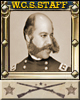
Today's bio was written a long, long time ago, by someone no longer active in our project. Unfortunately, as I discovered a while back, he simply copied and pasted Wikipedia entries when producing bios, with no more than a few words of his own. This was back in the early, "Wild West" days of the bios project, before we had a set of standards, so I am not saying that he did anything wrong. But I think we can all agree that the point to the project is to come up with original bios, since there's no point in copying and pasting someone else's work. So, I ended up completely rewriting this bio, using just Wikipedia -- which means, of course, that I would welcome suggestions for improvements. (I also deleted the original thread, so that people wouldn't go about trying to figure out who the bio-writer was).
Maj. Gen. Wesley Merritt (b. 1834, d. 1910). Born in New York City on June 16, 1834, Merritt graduated from West Point in 1860 and was commissioned a 2nd Lieutenant in the 2nd U.S. Dragoons (later the 2nd U.S. Cavalry), serving initially in Utah under the future Union cavalry commander John Buford. Remaining in the U.S. Army when the Civil War erupted, Merritt was promoted to captain in 1862 and served as an aide-de-camp to Gen. Philip St. George Cooke, who commanded the Cavalry Department of the Army of the Potomac. Merritt spent the bulk of that year serving in the defenses of Washington, D.C. In 1863, he was appointed adjutant to Gen. George Stoneman, who had been put in charge of the Cavalry Corps by army commander Gen. Joseph Hooker, and participated in Stoneman’s Raid prior to the Battle of Chancellorsville in May 1863. A month later, on June 9, Merritt was wounded in the Battle of Brandy Station, the biggest cavalry engagement of the Civil War and thus the biggest to take place in the history of North America. For his “gallant and meritorious service” in this battle Merritt was promoted to brigadier general of volunteers – a rare promotion directly from captain. At Gettysburg the following month Merritt commanded a reserve brigade in the Cavalry Corps, and was primarily tasked with protecting lines of communication to the capital, seeing only limited action in the aftermath of Pickett’s Charge. Replacing Buford in command of the 1st Division of the Cavalry Corps after his death from typhoid fever that December, Merritt led his men through the Gen. Ulysses S. Grant’s Overland Campaign and Gen. Philip Sheridan’s Valley Campaigns of 1864. For his decisive role in the Third Battle of Winchester on September 19, the battle that ultimately led to the end of Gen. Jubal A. Early’s attempt to threaten the capital (and, in turn, enhanced Pres. Abraham Lincoln’s chances of reelection), Merritt was promoted to major general. In the Appomattox Campaign the following April Merritt was second-in-command to Sheridan, and served as one of the commissioners overseeing the surrender of the Army of Northern Virginia. Following the Civil War, Merritt remained in the cavalry and was stationed on the frontier, where he participated in the Indian Wars until being appointed superintendent of West Point in 1882, a post he held for five years. After the outbreak of the Spanish-American War a decade later, Merritt was given command of the VIII Corps, which was raised in California and sent to the Philippines. Working in tandem with Rear Adm. George Dewey, who defeated the Spanish navy in the Battle of Manila Bay on May 1, 1898, Merritt gained control of Manila and became military governor of the Philippines for two weeks, before returning home. Merritt retired in 1900 and died on December 3, 1910. He is buried in the Post Cemetery at West Point.
Leadership: 3
Tactics: 3
Initiative: 3
Command: 4
Cavalry: 5
Teaches: Flankers (11), Sustained Volley (20)
Start date: 58
Maj. Gen. Wesley Merritt
Moderator: Gil R.
Maj. Gen. Wesley Merritt
Michael Jordan plays ball. Charles Manson kills people. I torment eager potential customers by not sharing screenshots of "Brother Against Brother." Everyone has a talent.
-
jkBluesman
- Posts: 797
- Joined: Mon Feb 12, 2007 6:48 pm
RE: Maj. Gen. Wesley Merritt
Merritt showed some merit in the valley it seems. http://www.angelfire.com/va3/valleywar/ ... brook.html (Heidler mentions this battle as well)
Are you sure he was made a major general? I have only read he got the brevet rank.
In the bio there is a "the" too much: "through the Gen. Ulysses S. Grant’s Overland Campaign".
Are you sure he was made a major general? I have only read he got the brevet rank.
In the bio there is a "the" too much: "through the Gen. Ulysses S. Grant’s Overland Campaign".
"War is the field of chance."
Carl von Clausewitz
Carl von Clausewitz
RE: Maj. Gen. Wesley Merritt
The issue of whether he was a major general got me poking around, and I found a long profile of Merritt in the New York Times from May, 1898: http://query.nytimes.com/mem/archive-fr ... ref=slogin
I used this to add to the bio, but noticed several stark discrepancies in terms of dates, units and ranks between the Times piece and Heidler and/or Wikipedia. I think that in some cases the reporter got confused because he simply didn't know enough about the Civil War, or perhaps back then there wasn't very good reference material available. I was able to work around most of the problems, but the issue of what year he was born is unresolved. Also, I bumped up his ratings based on the NYT piece.
Maj. Gen. Wesley Merritt (b. 1834, d. 1910). (Weird. Heidler has 1837 and the New York Times 1836 (on Dec. 1!!!). Any other opinions?) Among his contemporaries, Merritt was noted not just for his performance in particular engagements, but for the speed with which he gained promotions and achieved senior ranks normally not held by one so young – earning him the nickname of “Boy Brigadier.” Born in New York City on June 16, 1834 and raised on a farm in Illinois after his father gave up practicing law and decided to move west, Merritt prematurely ended his legal studies and attended West Point out of respect for his father’s wishes rather than because he desired a military career. Graduated from West Point in 1860 in the only five-year class, he was assigned to the dragoons, serving initially in Utah under the future Union cavalry commander John Buford. Remaining in the U.S. Army when the Civil War erupted, Merritt was promoted to 1st Lieutenant in the 2nd U.S. Cavalry on May 13, 1861. Called east, he served as an aide-de-camp to Gen. Philip St. George Cooke, who commanded a cavalry brigade in Washington, D.C. and a cavalry reserve division in the Army of the Potomac during the Peninsula Campaign of 1862. Merritt thus spent the bulk of that year serving in the defenses of Washington, D.C. In spring 1863, he was promoted to captain and appointed adjutant to Gen. George Stoneman, who had been put in charge of the Cavalry Corps of the Army of the Potomac by army commander Gen. Joseph Hooker, and participated in Stoneman’s Raid prior to the Battle of Chancellorsville in May 1863. A month later, on June 9, Merritt was wounded in the Battle of Brandy Station, the biggest cavalry engagement of the Civil War and thus the biggest to take place in the history of North America. For his “gallant and meritorious service” in this battle Merritt was promoted to brigadier general of volunteers – a rare promotion directly from captain. At Gettysburg the following month Merritt commanded a reserve brigade in the Cavalry Corps, and was primarily tasked with protecting lines of communication to the capital, seeing only limited action in the aftermath of Pickett’s Charge but performing ably enough to earn a brevet to major in the Regular Army. Replacing Buford in command of the 1st Division of the Cavalry Corps after his death from typhoid fever that December, Merritt led his men through Gen. Ulysses S. Grant’s Overland Campaign and Gen. Philip Sheridan’s Shenandoah Valley Campaigns of 1864. For his decisive role in Third Winchester on September 19 and performance at Fisher’s Hill on September 21-22 – battles that ultimately led to the end of Gen. Jubal A. Early’s attempt to threaten the capital and, in turn, enhanced Pres. Abraham Lincoln’s chances of reelection – Merritt was brevetted to major general on October 19. During their service together in the Valley Merritt greatly impressed Sheridan, and the two ended up becoming friends until the latter’s death. The following spring, Merritt played a role in dislodging the Confederates from Petersburg through his participation in the battles at Dinwiddie Court House and Five Forks, and subsequently was second-in-command to Sheridan in the Appomattox Campaign, and served as one of the commissioners overseeing the surrender of the Army of Northern Virginia. Following the war, Merritt received the honor of a brevet to major general in the Regular Army. He remained in the cavalry and was stationed on the frontier, where he demonstrated his tactical skills once again in the Indian Wars, until being appointed superintendent of West Point in 1882, a post he held for five years. After the outbreak of the Spanish-American War a decade later, Merritt, who had previously been promoted to major general, was given command of the VIII Corps, which was raised in California and sent to the Philippines. Working in tandem with Rear Adm. George Dewey, who defeated the Spanish navy in the Battle of Manila Bay on May 1, 1898, Merritt gained control of Manila and became military governor of the Philippines for two weeks, before returning home. Merritt retired in 1900 and died on December 3, 1910. He is buried in the Post Cemetery at West Point.
Leadership: 5
Tactics: 5
Initiative: 4
Command: 4
Cavalry: 5
Teaches: Flankers (11), Sustained Volley (20)
Start date: 58
I used this to add to the bio, but noticed several stark discrepancies in terms of dates, units and ranks between the Times piece and Heidler and/or Wikipedia. I think that in some cases the reporter got confused because he simply didn't know enough about the Civil War, or perhaps back then there wasn't very good reference material available. I was able to work around most of the problems, but the issue of what year he was born is unresolved. Also, I bumped up his ratings based on the NYT piece.
Maj. Gen. Wesley Merritt (b. 1834, d. 1910). (Weird. Heidler has 1837 and the New York Times 1836 (on Dec. 1!!!). Any other opinions?) Among his contemporaries, Merritt was noted not just for his performance in particular engagements, but for the speed with which he gained promotions and achieved senior ranks normally not held by one so young – earning him the nickname of “Boy Brigadier.” Born in New York City on June 16, 1834 and raised on a farm in Illinois after his father gave up practicing law and decided to move west, Merritt prematurely ended his legal studies and attended West Point out of respect for his father’s wishes rather than because he desired a military career. Graduated from West Point in 1860 in the only five-year class, he was assigned to the dragoons, serving initially in Utah under the future Union cavalry commander John Buford. Remaining in the U.S. Army when the Civil War erupted, Merritt was promoted to 1st Lieutenant in the 2nd U.S. Cavalry on May 13, 1861. Called east, he served as an aide-de-camp to Gen. Philip St. George Cooke, who commanded a cavalry brigade in Washington, D.C. and a cavalry reserve division in the Army of the Potomac during the Peninsula Campaign of 1862. Merritt thus spent the bulk of that year serving in the defenses of Washington, D.C. In spring 1863, he was promoted to captain and appointed adjutant to Gen. George Stoneman, who had been put in charge of the Cavalry Corps of the Army of the Potomac by army commander Gen. Joseph Hooker, and participated in Stoneman’s Raid prior to the Battle of Chancellorsville in May 1863. A month later, on June 9, Merritt was wounded in the Battle of Brandy Station, the biggest cavalry engagement of the Civil War and thus the biggest to take place in the history of North America. For his “gallant and meritorious service” in this battle Merritt was promoted to brigadier general of volunteers – a rare promotion directly from captain. At Gettysburg the following month Merritt commanded a reserve brigade in the Cavalry Corps, and was primarily tasked with protecting lines of communication to the capital, seeing only limited action in the aftermath of Pickett’s Charge but performing ably enough to earn a brevet to major in the Regular Army. Replacing Buford in command of the 1st Division of the Cavalry Corps after his death from typhoid fever that December, Merritt led his men through Gen. Ulysses S. Grant’s Overland Campaign and Gen. Philip Sheridan’s Shenandoah Valley Campaigns of 1864. For his decisive role in Third Winchester on September 19 and performance at Fisher’s Hill on September 21-22 – battles that ultimately led to the end of Gen. Jubal A. Early’s attempt to threaten the capital and, in turn, enhanced Pres. Abraham Lincoln’s chances of reelection – Merritt was brevetted to major general on October 19. During their service together in the Valley Merritt greatly impressed Sheridan, and the two ended up becoming friends until the latter’s death. The following spring, Merritt played a role in dislodging the Confederates from Petersburg through his participation in the battles at Dinwiddie Court House and Five Forks, and subsequently was second-in-command to Sheridan in the Appomattox Campaign, and served as one of the commissioners overseeing the surrender of the Army of Northern Virginia. Following the war, Merritt received the honor of a brevet to major general in the Regular Army. He remained in the cavalry and was stationed on the frontier, where he demonstrated his tactical skills once again in the Indian Wars, until being appointed superintendent of West Point in 1882, a post he held for five years. After the outbreak of the Spanish-American War a decade later, Merritt, who had previously been promoted to major general, was given command of the VIII Corps, which was raised in California and sent to the Philippines. Working in tandem with Rear Adm. George Dewey, who defeated the Spanish navy in the Battle of Manila Bay on May 1, 1898, Merritt gained control of Manila and became military governor of the Philippines for two weeks, before returning home. Merritt retired in 1900 and died on December 3, 1910. He is buried in the Post Cemetery at West Point.
Leadership: 5
Tactics: 5
Initiative: 4
Command: 4
Cavalry: 5
Teaches: Flankers (11), Sustained Volley (20)
Start date: 58
Michael Jordan plays ball. Charles Manson kills people. I torment eager potential customers by not sharing screenshots of "Brother Against Brother." Everyone has a talent.
RE: Maj. Gen. Wesley Merritt
Ack. I forgot to shorten the bio, so that one's too long. Here's what will be the final bio, once we can figure out when this guy was born.
Maj. Gen. Wesley Merritt (b. 1834, d. 1910). (Weird. Heidler has 1837 and the New York Times 1836 (on Dec. 1!!!). Any other opinions?) Among his contemporaries, Merritt was known for the speed with which he gained promotions and achieved senior ranks normally not held by one so young – earning him the nickname of “Boy Brigadier.” Born in New York City on June 16, 1834 and raised on a farm in Illinois after his father gave up practicing law and decided to move west, Merritt prematurely ended his legal studies and attended West Point out of respect for his father’s wishes rather than because he desired a military career. Graduating from West Point in 1860, he was assigned to the dragoons, serving initially in Utah under the future Union cavalry commander John Buford. Remaining in the U.S. Army when the Civil War erupted, Merritt was promoted to 1st Lieutenant in the 2nd U.S. Cavalry on May 13, 1861. Called east, he served on the staff of Gen. Philip St. George Cooke, who commanded a cavalry brigade defending Washington, D.C. and a cavalry reserve division in the Army of the Potomac during the Peninsula Campaign of 1862. Merritt thus spent the bulk of that year in Washington, D.C. In spring 1863, he was promoted to captain and appointed adjutant to Gen. George Stoneman, who had been put in charge of the Cavalry Corps of the Army of the Potomac by army commander Gen. Joseph Hooker, and participated in Stoneman’s Raid prior to the Battle of Chancellorsville in May 1863. A month later, on June 9, Merritt was wounded in the Battle of Brandy Station, the biggest cavalry engagement of the Civil War and thus the biggest to take place in the history of North America. For his “gallant and meritorious service” in this battle Merritt was promoted to brigadier general of volunteers – a rare promotion directly from captain. At Gettysburg the following month Merritt commanded a reserve brigade in the Cavalry Corps and was primarily tasked with protecting lines of communication to the capital, finally seeing limited action in the aftermath of Pickett’s Charge but performing ably enough to earn a brevet to major in the Regular Army. Replacing Buford in command of the 1st Division of the Cavalry Corps after his death from typhoid that December, Merritt led his men through Gen. Ulysses S. Grant’s Overland Campaign and Gen. Philip Sheridan’s Shenandoah Valley Campaign of 1864. For his decisive role in Third Winchester on September 19 and performance at Fisher’s Hill on September 21-22 – battles that ultimately led to the end of Gen. Jubal A. Early’s attempt to threaten the capital and, in turn, enhanced Pres. Abraham Lincoln’s chances of reelection – Merritt was brevetted to major general on October 19. During their service together, Merritt greatly impressed Sheridan, and the two ended up becoming close friends. The following spring, Merritt fought at Dinwiddie Court House and Five Forks, battles which dislodged the Confederates from Petersburg, and then was second-in-command to Sheridan in the Appomattox Campaign, serving as one of the commissioners overseeing the surrender of the Army of Northern Virginia. Following the war, Merritt received the honor of a brevet to major general in the Regular Army. He remained in the cavalry and was stationed on the frontier, demonstrating his tactical skills once again in the Indian Wars, until becoming superintendent of West Point in 1882, a post he held for five years. After the outbreak of the Spanish-American War a decade later, Merritt, by then a major general, was given command of the VIII Corps, which was raised in California and sent to the Philippines. Working in tandem with Rear Adm. George Dewey, who defeated the Spanish navy in the Battle of Manila Bay on May 1, 1898, Merritt gained control of Manila and became military governor of the Philippines for two weeks, before returning home. Merritt retired in 1900 and died on December 3, 1910. He is buried in the Post Cemetery at West Point.
Maj. Gen. Wesley Merritt (b. 1834, d. 1910). (Weird. Heidler has 1837 and the New York Times 1836 (on Dec. 1!!!). Any other opinions?) Among his contemporaries, Merritt was known for the speed with which he gained promotions and achieved senior ranks normally not held by one so young – earning him the nickname of “Boy Brigadier.” Born in New York City on June 16, 1834 and raised on a farm in Illinois after his father gave up practicing law and decided to move west, Merritt prematurely ended his legal studies and attended West Point out of respect for his father’s wishes rather than because he desired a military career. Graduating from West Point in 1860, he was assigned to the dragoons, serving initially in Utah under the future Union cavalry commander John Buford. Remaining in the U.S. Army when the Civil War erupted, Merritt was promoted to 1st Lieutenant in the 2nd U.S. Cavalry on May 13, 1861. Called east, he served on the staff of Gen. Philip St. George Cooke, who commanded a cavalry brigade defending Washington, D.C. and a cavalry reserve division in the Army of the Potomac during the Peninsula Campaign of 1862. Merritt thus spent the bulk of that year in Washington, D.C. In spring 1863, he was promoted to captain and appointed adjutant to Gen. George Stoneman, who had been put in charge of the Cavalry Corps of the Army of the Potomac by army commander Gen. Joseph Hooker, and participated in Stoneman’s Raid prior to the Battle of Chancellorsville in May 1863. A month later, on June 9, Merritt was wounded in the Battle of Brandy Station, the biggest cavalry engagement of the Civil War and thus the biggest to take place in the history of North America. For his “gallant and meritorious service” in this battle Merritt was promoted to brigadier general of volunteers – a rare promotion directly from captain. At Gettysburg the following month Merritt commanded a reserve brigade in the Cavalry Corps and was primarily tasked with protecting lines of communication to the capital, finally seeing limited action in the aftermath of Pickett’s Charge but performing ably enough to earn a brevet to major in the Regular Army. Replacing Buford in command of the 1st Division of the Cavalry Corps after his death from typhoid that December, Merritt led his men through Gen. Ulysses S. Grant’s Overland Campaign and Gen. Philip Sheridan’s Shenandoah Valley Campaign of 1864. For his decisive role in Third Winchester on September 19 and performance at Fisher’s Hill on September 21-22 – battles that ultimately led to the end of Gen. Jubal A. Early’s attempt to threaten the capital and, in turn, enhanced Pres. Abraham Lincoln’s chances of reelection – Merritt was brevetted to major general on October 19. During their service together, Merritt greatly impressed Sheridan, and the two ended up becoming close friends. The following spring, Merritt fought at Dinwiddie Court House and Five Forks, battles which dislodged the Confederates from Petersburg, and then was second-in-command to Sheridan in the Appomattox Campaign, serving as one of the commissioners overseeing the surrender of the Army of Northern Virginia. Following the war, Merritt received the honor of a brevet to major general in the Regular Army. He remained in the cavalry and was stationed on the frontier, demonstrating his tactical skills once again in the Indian Wars, until becoming superintendent of West Point in 1882, a post he held for five years. After the outbreak of the Spanish-American War a decade later, Merritt, by then a major general, was given command of the VIII Corps, which was raised in California and sent to the Philippines. Working in tandem with Rear Adm. George Dewey, who defeated the Spanish navy in the Battle of Manila Bay on May 1, 1898, Merritt gained control of Manila and became military governor of the Philippines for two weeks, before returning home. Merritt retired in 1900 and died on December 3, 1910. He is buried in the Post Cemetery at West Point.
Michael Jordan plays ball. Charles Manson kills people. I torment eager potential customers by not sharing screenshots of "Brother Against Brother." Everyone has a talent.
-
jkBluesman
- Posts: 797
- Joined: Mon Feb 12, 2007 6:48 pm
RE: Maj. Gen. Wesley Merritt
Alberts, Don E Brandy station to Manila Bay: a biography of General Wesley Merritt Austin TX, Presidial Press, 1980.
http://www.findagrave.com/cgi-bin/fg.cg ... id=5844313&
http://www.findagrave.com/cgi-bin/fg.cg ... id=5844313&
"War is the field of chance."
Carl von Clausewitz
Carl von Clausewitz
RE: Maj. Gen. Wesley Merritt
The tombstone itself doesn't have his death date! (Or not in one of the photos at the site). I'll stick with 1834, then, though for all we know this site just used Wikipedia. Thanks.
Michael Jordan plays ball. Charles Manson kills people. I torment eager potential customers by not sharing screenshots of "Brother Against Brother." Everyone has a talent.