

How do you think citizens of London would react if the German army reach the town's outskirts?
Would they do everything to defend the city, or just give up?
Would the siege of London be similar to the siege of Leningrad?
Citizens of London facing German Army
Moderator: doomtrader
-
doomtrader

- Posts: 5319
- Joined: Tue Jul 22, 2008 5:21 am
- Location: Poland
- Contact:

RE: Citizens of London facing German Army
I think it would have been harder than leningrad / stalingrad; citizens joining the local militia en masse and street fighting with civilians joining the fray spontaneously.
H. Barca,
Surplus Consuls Dispatcher
Surplus Consuls Dispatcher

RE: Citizens of London facing German Army
not sure.. remember in these things its always about mass culture and leadership.. the leadership to resist ? not sure in London, hypothetically as we do not know what happens up to London being threatened..
but for sure the royal navy would put up fight over shorelines.. tough to model, England as Island nation at war in her history without and within for many years over the last melinia..sp?( 1000 years)
but for sure the royal navy would put up fight over shorelines.. tough to model, England as Island nation at war in her history without and within for many years over the last melinia..sp?( 1000 years)
"Tanks forward"

RE: Citizens of London facing German Army
ORIGINAL: HanBarca
I think it would have been harder than leningrad / stalingrad; citizens joining the local militia en masse and street fighting with civilians joining the fray spontaneously.
Let's just go with equally as hard here.
WitE Alpha Tester

RE: Citizens of London facing German Army
England still had a society much like the US in terms of gun laws IIRC (they could own them). I would venture that they would fight every bit as tenaciously as a country who had no private property rights.
Combat Command Matrix Edition Company, The Forgotten Few
-
doomtrader
- Posts: 5319
- Joined: Tue Jul 22, 2008 5:21 am
- Location: Poland
- Contact:
RE: Citizens of London facing German Army
Does anyone has got some data available how many handguns were stockpiled in and around London?
I do agree that the RN will give a good fight. IIRC many of the RN ships were able to anchor in London.
I do agree that the RN will give a good fight. IIRC many of the RN ships were able to anchor in London.

RE: Citizens of London facing German Army
There is some information on the gun control laws passed in the early twentieth century. http://en.wikipedia.org/wiki/Gun_politi ... ed_KingdomORIGINAL: doomtrader
Does anyone has got some data available how many handguns were stockpiled in and around London?
I do agree that the RN will give a good fight. IIRC many of the RN ships were able to anchor in London.
And I found this interesting comment about the the state of private gun ownership in Britain during WWII.
As a direct consequence of the 1920 gun control act, not only did Britain not have "a rifle in every cottage" but they had to ask American citizens to send them every type of rifle and handgun at the outbreak of WWII, so British people would have some means of defending their homes and islands against the Nazi hordes massing across the English Channel. Americans responded by sending every type of firearm to the unarmed and helpless people of Britain. No surprise, but at the end of the war the British people did not get to keep the guns, the government seized many of them back and dumped them in the sea. Such was the British government's gratitude to the American public and distrust of their own people.
http://www.ncc-1776.org/tle2010/tle558-20100221-07.html
From what I have read on the matter the Royal Navy would have reacted very aggressively against any attempted invasion by the German across the channel. The Home Fleet based in Scapa Flow would have descended on the Germans like a pack of wolves. This is of course why the Germans fought the Battle of Britain in the first place. To achieve undisputed air superiority over southern England so that Luftwaffe bombers could concentrate on the Royal Navy unmolested. The Krigesmarine, only a few months earlier, had suffered heavy losses at the hands of the Royal Navy during the invasion of Norway. From that experience the Germans realized that only an unhindered Luftwaffe could have given them any chance of defeating the Royal Navy.
As far as the resolve of the British people to go on fighting even if invaded well there is the famous Churchill "on the beaches" speech.
Even though large tracts of Europe and many old and famous States have fallen or may fall into the grip of the Gestapo and all the odious apparatus of Nazi rule, we shall not flag or fail. We shall go on to the end, we shall fight in France, we shall fight on the seas and oceans, we shall fight with growing confidence and growing strength in the air, we shall defend our Island, whatever the cost may be, we shall fight on the beaches, we shall fight on the landing grounds, we shall fight in the fields and in the streets, we shall fight in the hills; we shall never surrender, and even if, which I do not for a moment believe, this Island or a large part of it were subjugated and starving, then our Empire beyond the seas, armed and guarded by the British Fleet, would carry on the struggle, until, in God's good time, the New World, with all its power and might, steps forth to the rescue and the liberation of the old.
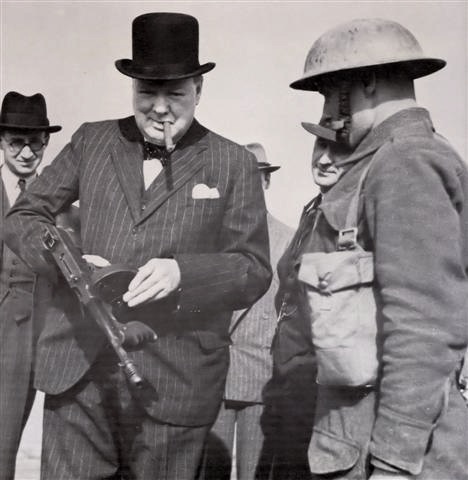
At the very least Churchill himself would have given Jerry some grief before he went down fighting.
RE: Citizens of London facing German Army
You may also find this discussion on the Axis History Forum on "Seelöwe: German Air Operations and anti-ship Capabilities" quite interesting and informative. Axis History
Generally it is doubtful that the Luftwaffe bombers could have decisively defeated the Royal Navy at sea due to their poor quality aerial torpedoes and mediocre skills at bombing ships at sea.
Generally it is doubtful that the Luftwaffe bombers could have decisively defeated the Royal Navy at sea due to their poor quality aerial torpedoes and mediocre skills at bombing ships at sea.
-
Rasputitsa

- Posts: 2902
- Joined: Sat Jun 30, 2001 8:00 am
- Location: Bedfordshire UK
- Contact:
RE: Citizens of London facing German Army
There is no doubt that the RAF and the RN would have fought tenaciously to defend the British Isles, there are many instances of British ships making suicidal attacks on superior enemy forces, even when the fate of the nation was not in question. The captain of the armed liner 'HMS Rawalpindi' chose to fight the Scharnhorst and Gniesenau, rather than take their offer to surrender. When the same German ships were making the 'Channel Dash' back to Germany, six RN Swordfish torpedo bombers were based at Manston, to be used in a night attack on the anticipated targets. When the German ships unexpectedly came through the Channel in daylight the station commander at Manston contacted the Admiralty to cancel the attack. The reply was that the Royal Navy would attack the enemy wherever and whenever he can be found, all six aircraft were shot down.
The RN would have fought in the Channel whatever the cost, likewise throughout the Battle of Britain the RAF was never diverted by the odds and every attack was met, there is no reason the expect any change on policy if the invasion was taking place.
However, if a successful landing had taken place, most of the civilian population living in the cities and towns where unarmed, gun ownership was fairly widespread in the country (mainly shotguns - limited military use), but not in the large industrial areas. Despite Churchill's speeches I would not expect that a serious resistance could have been made. No towns were surrounded, by anti-tank ditches, defence preparations were limited to coping with landings by parachute troops. A major attack by tank forces would have been overwhelming, but then Britain's tank ditch was the Channel.
I do not believe that London, or any other major city, would have become a Leningrad, or Stalingrad, otherwise there would have been much greater preparation made in terms of real defences. The Russians prepared miles of anti-tanks ditches and fighting trenches for defence against major assault. In Britain, trenches were dug as air-raid shelters and the concrete and brick 'pill boxes', which still litter the countryside, would not have stood against a serious attack.
The battle would have been won, or lost, at sea, or on the beaches.
The RN would have fought in the Channel whatever the cost, likewise throughout the Battle of Britain the RAF was never diverted by the odds and every attack was met, there is no reason the expect any change on policy if the invasion was taking place.
However, if a successful landing had taken place, most of the civilian population living in the cities and towns where unarmed, gun ownership was fairly widespread in the country (mainly shotguns - limited military use), but not in the large industrial areas. Despite Churchill's speeches I would not expect that a serious resistance could have been made. No towns were surrounded, by anti-tank ditches, defence preparations were limited to coping with landings by parachute troops. A major attack by tank forces would have been overwhelming, but then Britain's tank ditch was the Channel.
I do not believe that London, or any other major city, would have become a Leningrad, or Stalingrad, otherwise there would have been much greater preparation made in terms of real defences. The Russians prepared miles of anti-tanks ditches and fighting trenches for defence against major assault. In Britain, trenches were dug as air-raid shelters and the concrete and brick 'pill boxes', which still litter the countryside, would not have stood against a serious attack.
The battle would have been won, or lost, at sea, or on the beaches.
"In politics stupidity is not a handicap" - Napoleon
“A people which is able to say everything becomes able to do everything” - Napoleon
“Among those who dislike oppression are many who like to oppress" - Napoleon
“A people which is able to say everything becomes able to do everything” - Napoleon
“Among those who dislike oppression are many who like to oppress" - Napoleon
RE: Citizens of London facing German Army
London, or any other major British city, may not have become a Leningrad or Stalingrad, but I seriously doubt that London would have been declared an open city like Paris followed by a rapid capitulation. The nature of the British government was quite different from the French and British morale seems to have been far more robust than of the French who had lost the will to fight the Germans.ORIGINAL: Rasputitsa
There is no doubt that the RAF and the RN would have fought tenaciously to defend the British Isles, there are many instances of British ships making suicidal attacks on superior enemy forces, even when the fate of the nation was not in question. The captain of the armed liner 'HMS Rawalpindi' chose to fight the Scharnhorst and Gniesenau, rather than take their offer to surrender. When the same German ships were making the 'Channel Dash' back to Germany, six RN Swordfish torpedo bombers were based at Manston, to be used in a night attack on the anticipated targets. When the German ships unexpectedly came through the Channel in daylight the station commander at Manston contacted the Admiralty to cancel the attack. The reply was that the Royal Navy would attack the enemy wherever and whenever he can be found, all six aircraft were shot down.
The RN would have fought in the Channel whatever the cost, likewise throughout the Battle of Britain the RAF was never diverted by the odds and every attack was met, there is no reason the expect any change on policy if the invasion was taking place.
However, if a successful landing had taken place, most of the civilian population living in the cities and towns where unarmed, gun ownership was fairly widespread in the country (mainly shotguns - limited military use), but not in the large industrial areas. Despite Churchill's speeches I would not expect that a serious resistance could have been made. No towns were surrounded, by anti-tank ditches, defence preparations were limited to coping with landings by parachute troops. A major attack by tank forces would have been overwhelming, but then Britain's tank ditch was the Channel.
I do not believe that London, or any other major city, would have become a Leningrad, or Stalingrad, otherwise there would have been much greater preparation made in terms of real defences. The Russians prepared miles of anti-tanks ditches and fighting trenches for defence against major assault. In Britain, trenches were dug as air-raid shelters and the concrete and brick 'pill boxes', which still litter the countryside, would not have stood against a serious attack.
The battle would have been won, or lost, at sea, or on the beaches.
The British might have not been able to offer a sustainable resistance because they lacked the vast hinterland from which to draw upon manpower and resources. Inevitably the Germans would have probably prevailed as long as they were able to maintain lines of communications with the continent. That is a big if, because it is not at all certain that the Luftwaffe could have fully neutralized the Royal Navy and what ships that evaded the Luftwaffe would be able to interdict the soft targets of the German supply ships and would have had significant impact on the effectiveness of the German army operating in Britain.
-
Rasputitsa
- Posts: 2902
- Joined: Sat Jun 30, 2001 8:00 am
- Location: Bedfordshire UK
- Contact:
RE: Citizens of London facing German Army
ORIGINAL: Lascar
London, or any other major British city, may not have become a Leningrad or Stalingrad, but I seriously doubt that London would have been declared an open city like Paris followed by a rapid capitulation. The nature of the British government was quite different from the French and British morale seems to have been far more robust than of the French who had lost the will to fight the Germans.ORIGINAL: Rasputitsa
There is no doubt that the RAF and the RN would have fought tenaciously to defend the British Isles, there are many instances of British ships making suicidal attacks on superior enemy forces, even when the fate of the nation was not in question. The captain of the armed liner 'HMS Rawalpindi' chose to fight the Scharnhorst and Gniesenau, rather than take their offer to surrender. When the same German ships were making the 'Channel Dash' back to Germany, six RN Swordfish torpedo bombers were based at Manston, to be used in a night attack on the anticipated targets. When the German ships unexpectedly came through the Channel in daylight the station commander at Manston contacted the Admiralty to cancel the attack. The reply was that the Royal Navy would attack the enemy wherever and whenever he can be found, all six aircraft were shot down.
The RN would have fought in the Channel whatever the cost, likewise throughout the Battle of Britain the RAF was never diverted by the odds and every attack was met, there is no reason the expect any change on policy if the invasion was taking place.
However, if a successful landing had taken place, most of the civilian population living in the cities and towns where unarmed, gun ownership was fairly widespread in the country (mainly shotguns - limited military use), but not in the large industrial areas. Despite Churchill's speeches I would not expect that a serious resistance could have been made. No towns were surrounded, by anti-tank ditches, defence preparations were limited to coping with landings by parachute troops. A major attack by tank forces would have been overwhelming, but then Britain's tank ditch was the Channel.
I do not believe that London, or any other major city, would have become a Leningrad, or Stalingrad, otherwise there would have been much greater preparation made in terms of real defences. The Russians prepared miles of anti-tanks ditches and fighting trenches for defence against major assault. In Britain, trenches were dug as air-raid shelters and the concrete and brick 'pill boxes', which still litter the countryside, would not have stood against a serious attack.
The battle would have been won, or lost, at sea, or on the beaches.
The British might have not been able to offer a sustainable resistance because they lacked the vast hinterland from which to draw upon manpower and resources. Inevitably the Germans would have probably prevailed as long as they were able to maintain lines of communications with the continent. That is a big if, because it is not at all certain that the Luftwaffe could have fully neutralized the Royal Navy and what ships that evaded the Luftwaffe would be able to interdict the soft targets of the German supply ships and would have had significant impact on the effectiveness of the German army operating in Britain.
I am not saying that London, or any other city in the UK would have been declared 'open', just that no meaningful preparations were being made. Anti-tank guns were not being dug-in at each street corner, the population was not being mobilised to dig defences, etc..
The British government was quite capable of organising and planning on a large scale, there was a plan, enacted as war started, to move 3,000,000 people out of major cities (only 1, 500,000 actually moved, because the rest refused), a major undertaking, which was completed in a few days. 337,000 troops were lifted from Dunkirk, in a staggering feat of improvisation and short notice planning.
The British government was fully capable of organising a last ditch defence of London, but they did not prepare for that eventuality, they prepared for what they expected to happen inland - parachute drop. All other meaningful preparations were confined to the beaches and the Channel, that was were the battle would take place, not in the cities.
"In politics stupidity is not a handicap" - Napoleon
“A people which is able to say everything becomes able to do everything” - Napoleon
“Among those who dislike oppression are many who like to oppress" - Napoleon
“A people which is able to say everything becomes able to do everything” - Napoleon
“Among those who dislike oppression are many who like to oppress" - Napoleon
RE: Citizens of London facing German Army
Obviously, at the beaches is where, in the limited time they had to prepare for invasion, they would put most of their resources into stopping the Germans.ORIGINAL: Rasputitsa
ORIGINAL: Lascar
London, or any other major British city, may not have become a Leningrad or Stalingrad, but I seriously doubt that London would have been declared an open city like Paris followed by a rapid capitulation. The nature of the British government was quite different from the French and British morale seems to have been far more robust than of the French who had lost the will to fight the Germans.ORIGINAL: Rasputitsa
There is no doubt that the RAF and the RN would have fought tenaciously to defend the British Isles, there are many instances of British ships making suicidal attacks on superior enemy forces, even when the fate of the nation was not in question. The captain of the armed liner 'HMS Rawalpindi' chose to fight the Scharnhorst and Gniesenau, rather than take their offer to surrender. When the same German ships were making the 'Channel Dash' back to Germany, six RN Swordfish torpedo bombers were based at Manston, to be used in a night attack on the anticipated targets. When the German ships unexpectedly came through the Channel in daylight the station commander at Manston contacted the Admiralty to cancel the attack. The reply was that the Royal Navy would attack the enemy wherever and whenever he can be found, all six aircraft were shot down.
The RN would have fought in the Channel whatever the cost, likewise throughout the Battle of Britain the RAF was never diverted by the odds and every attack was met, there is no reason the expect any change on policy if the invasion was taking place.
However, if a successful landing had taken place, most of the civilian population living in the cities and towns where unarmed, gun ownership was fairly widespread in the country (mainly shotguns - limited military use), but not in the large industrial areas. Despite Churchill's speeches I would not expect that a serious resistance could have been made. No towns were surrounded, by anti-tank ditches, defence preparations were limited to coping with landings by parachute troops. A major attack by tank forces would have been overwhelming, but then Britain's tank ditch was the Channel.
I do not believe that London, or any other major city, would have become a Leningrad, or Stalingrad, otherwise there would have been much greater preparation made in terms of real defences. The Russians prepared miles of anti-tanks ditches and fighting trenches for defence against major assault. In Britain, trenches were dug as air-raid shelters and the concrete and brick 'pill boxes', which still litter the countryside, would not have stood against a serious attack.
The battle would have been won, or lost, at sea, or on the beaches.
The British might have not been able to offer a sustainable resistance because they lacked the vast hinterland from which to draw upon manpower and resources. Inevitably the Germans would have probably prevailed as long as they were able to maintain lines of communications with the continent. That is a big if, because it is not at all certain that the Luftwaffe could have fully neutralized the Royal Navy and what ships that evaded the Luftwaffe would be able to interdict the soft targets of the German supply ships and would have had significant impact on the effectiveness of the German army operating in Britain.
I am not saying that London, or any other city in the UK would have been declared 'open', just that no meaningful preparations were being made. Anti-tank guns were not being dug-in at each street corner, the population was not being mobilised to dig defences, etc..
The British government was quite capable of organising and planning on a large scale, there was a plan, enacted as war started, to move 3,000,000 people out of major cities (only 1, 500,000 actually moved, because the rest refused), a major undertaking, which was completed in a few days. 337,000 troops were lifted from Dunkirk, in a staggering feat of improvisation and short notice planning.
The British government was fully capable of organising a last ditch defence of London, but they did not prepare for that eventuality, they prepared for what they expected to happen inland - parachute drop. All other meaningful preparations were confined to the beaches and the Channel, that was were the battle would take place, not in the cities.
In the summer of 1940 their one intact and most powerful branch of the military was the Royal Navy. The army had been deprived of most its heavy weapons in France and the RAF had been badly bloodied in the fighting over France. The linchpin of the British strategy to defeat the German invasion was the Royal Navy.
But in the event that the RN and army failed to defeat the Germans at the initial point of invasion does not suggest that there would have been no further resistance in the interior of the country; regardless if they had not established prepared defensive positions in the interior. They still had an army in the field supported by territorial units; although they were poorly equipped they would have continued to resist.
Meanwhile other naval assets from around the empire would have been called back for the defense of the home islands. As long as they controlled the seas Britain had the means to continue resistance at home. There back was not truly up against the wall as long as the Royal Navy ruled the waves.
-
Rasputitsa
- Posts: 2902
- Joined: Sat Jun 30, 2001 8:00 am
- Location: Bedfordshire UK
- Contact:
RE: Citizens of London facing German Army
ORIGINAL: Lascar
Obviously, at the beaches is where, in the limited time they had to prepare for invasion, they would put most of their resources into stopping the Germans.
In the summer of 1940 their one intact and most powerful branch of the military was the Royal Navy. The army had been deprived of most its heavy weapons in France and the RAF had been badly bloodied in the fighting over France. The linchpin of the British strategy to defeat the German invasion was the Royal Navy.
But in the event that the RN and army failed to defeat the Germans at the initial point of invasion does not suggest that there would have been no further resistance in the interior of the country; regardless if they had not established prepared defensive positions in the interior. They still had an army in the field supported by territorial units; although they were poorly equipped they would have continued to resist.
Meanwhile other naval assets from around the empire would have been called back for the defense of the home islands. As long as they controlled the seas Britain had the means to continue resistance at home. There back was not truly up against the wall as long as the Royal Navy ruled the waves.
The questions were :
How do you think citizens of London would react if the German army reach the town's outskirts?
Would they do everything to defend the city, or just give up?
Would the siege of London be similar to the siege of Leningrad?
All that you say is correct and I have made similar comments, but it does not address the original questions.
The real answer is we do not know, because it never happened, but I'm saying that as far as I know, no preparations were made to defend London, with any similarity to Leningrad, or Stalingrad. The citizens of London had no way of resisting a serious German assault, all preparations were directed against air attack and parachute landing.
Plans were made for military 'stop lines', with some defensive positions prepared, in the hills South of London and I never suggested that there would be no resistance in the interior of the country, just that the citizens were neither prepared, nor equipped to defend their towns and cities from a major attack.
Again this was not due to an inability to plan and mobilise, as 1000s of civilian observers were an essential part of the air defence system, providing a continuous flow of information on the movements of friendly and enemy aircraft, from prepared and equipped observer sites. These were an integral part of the RAF's network and operated in the inland areas not covered by radar, many more 10,000s of civilians spent their nights after work as fire watchers, and dozens of other air defence tasks.
The point being, that the British government was ready and able to mobilise and equip 100,000s of people, but the tasks were almost exclusively directed against air attack, which was were the danger was seen. It was not envisaged that there would need to be a mobilisation of civilians against a large scale land attack and no significant provisions were made for that.
Quite correctly as it turned out.
"In politics stupidity is not a handicap" - Napoleon
“A people which is able to say everything becomes able to do everything” - Napoleon
“Among those who dislike oppression are many who like to oppress" - Napoleon
“A people which is able to say everything becomes able to do everything” - Napoleon
“Among those who dislike oppression are many who like to oppress" - Napoleon
RE: Citizens of London facing German Army
Yes, my response has encompassed a larger question than just the defense of London. If doomtrader is simply concerned about the question of defense of London then I am not quite sure why that in and of itself would be an issue. Does the capture of London trigger some kind of surrender event?ORIGINAL: Rasputitsa
ORIGINAL: Lascar
Obviously, at the beaches is where, in the limited time they had to prepare for invasion, they would put most of their resources into stopping the Germans.
In the summer of 1940 their one intact and most powerful branch of the military was the Royal Navy. The army had been deprived of most its heavy weapons in France and the RAF had been badly bloodied in the fighting over France. The linchpin of the British strategy to defeat the German invasion was the Royal Navy.
But in the event that the RN and army failed to defeat the Germans at the initial point of invasion does not suggest that there would have been no further resistance in the interior of the country; regardless if they had not established prepared defensive positions in the interior. They still had an army in the field supported by territorial units; although they were poorly equipped they would have continued to resist.
Meanwhile other naval assets from around the empire would have been called back for the defense of the home islands. As long as they controlled the seas Britain had the means to continue resistance at home. There back was not truly up against the wall as long as the Royal Navy ruled the waves.
The questions were :
How do you think citizens of London would react if the German army reach the town's outskirts?
Would they do everything to defend the city, or just give up?
Would the siege of London be similar to the siege of Leningrad?
All that you say is correct and I have made similar comments, but it does not address the original questions.
The real answer is we do not know, because it never happened, but I'm saying that as far as I know, no preparations were made to defend London, with any similarity to Leningrad, or Stalingrad. The citizens of London had no way of resisting a serious German assault, all preparations were directed against air attack and parachute landing.
Plans were made for military 'stop lines', with some defensive positions prepared, in the hills South of London and I never suggested that there would be no resistance in the interior of the country, just that the citizens were neither prepared, nor equipped to defend their towns and cities from a major attack.
Again this was not due to an inability to plan and mobilise, as 1000s of civilian observers were an essential part of the air defence system, providing a continuous flow of information on the movements of friendly and enemy aircraft, from prepared and equipped observer sites. These were an integral part of the RAF's network and operated in the inland areas not covered by radar, many more 10,000s of civilians spent their nights after work as fire watchers, and dozens of other air defence tasks.
The point being, that the British government was ready and able to mobilise and equip 100,000s of people, but the tasks were almost exclusively directed against air attack, which was were the danger was seen. It was not envisaged that there would need to be a mobilisation of civilians against a large scale land attack and no significant provisions were made for that.
Quite correctly as it turned out.
Also, to what extent were civilians involved in the defense of Leningrad and Stalingrad? I have read of some amazing exploits of Soviet civilians manning the defenses of Stalingrad and Leningrad. Namely the young women volunteers of the 1077th Anti-Aircraft Regiment, which held up the advance of the 16th panzer division for the better part of the day, fighting to the last woman.
So is doomtrader thinking of a situation where there are none or very few army units in London with the bulk of the resistance coming from the civilians? In that case it seems that in the fall of 1940 the lack of weapons both civilian small arms and military arms would have made such a defense meager at best. In the case of Leningrad and Stalingrad they had actual armaments factories producing weapons in the midst of battle. So I would agree that London relying on some intrinsic defense strength (resistance of civilians) without the presence of regular army units would have had a low level of effective resistance but they would not simply give up at the approach of the Germans like the French.

RE: Citizens of London facing German Army
Actually, much of the wartime instructions to civilians were to stay put, go about their daily lives as best as possible & not intefere with military operations. I can't see a bunch of civilians being too handy against well-trained German soldiers.
Never Underestimate the Power of a Small Tactical Nuclear Weapon...

RE: Citizens of London facing German Army
Even well-trained German soldiers couldn't stand up to a charge by these defenders of London (and Walmington-on-Sea)[:D]

- Attachments
-
- dadsarmy.jpg (36.3 KiB) Viewed 483 times
"In War: Resolution. In Defeat: Defiance. In Victory: Magnanimity. In Peace: Goodwill." - Winston Churchill
-
Titanwarrior89

- Posts: 3282
- Joined: Thu Aug 28, 2003 4:07 pm
- Location: arkansas
- Contact:
RE: Citizens of London facing German Army
I think if the germans were ashore in Mass. It would have been a done deal. I think England would have declare London a open city. I don't think it would have been a Leningrad or a Stalingrad. Especially in 1940 and early 41 without the russian invasion. I think the Brits would have put up a hard fight but in the end it would not have gone well for them.
"Before Guadalcanal the enemy advanced at his pleasure. After Guadalcanal, he retreated at ours".
"Mama, There's Rabbits in the Garden"
"Mama, There's Rabbits in the Garden"
-
Rasputitsa
- Posts: 2902
- Joined: Sat Jun 30, 2001 8:00 am
- Location: Bedfordshire UK
- Contact:
RE: Citizens of London facing German Army
ORIGINAL: Titanwarrior89
I think if the germans were ashore in Mass. It would have been a done deal. I think England would have declare London a open city. I don't think it would have been a Leningrad or a Stalingrad. Especially in 1940 and early 41 without the russian invasion. I think the Brits would have put up a hard fight but in the end it would not have gone well for them.
The problem was not just getting across the Channel, but in keeping a supply line open. Many of the barges and ships that the Germans were going to use were adapted to carry military loads, but were not very seaworthy and once beached in England, to unload, may not have been able to be easily reused. With winter coming, it was essential that there be a very quick victory and as air superiority had not been won by September, it is difficult to see when the Germans could ever have made a successful crossing.
Which seems to indicate why the British government never took any serious steps to defend London to the last and as an admiral during the Napoleonic wars once said, 'I don't say that Napoleon can't come, I just say that he can't come by sea', the same applied to Hitler.
"In politics stupidity is not a handicap" - Napoleon
“A people which is able to say everything becomes able to do everything” - Napoleon
“Among those who dislike oppression are many who like to oppress" - Napoleon
“A people which is able to say everything becomes able to do everything” - Napoleon
“Among those who dislike oppression are many who like to oppress" - Napoleon
-
battlevonwar

- Posts: 1233
- Joined: Thu Dec 22, 2011 3:17 am
RE: Citizens of London facing German Army
That is a very difficult question to answer. I remember when I lived in East Anglia we had a article covered on TV about the many pillboxes still there today that were made in haste due to the fear of an invasion, here is a link to one such site, and these were all over England, not near London alone. The whole Island would have been tough to easily chew up, unless the invasion came too early! http://www.pillbox-study-group.org.uk/t ... oxpage.htm
-
Rasputitsa
- Posts: 2902
- Joined: Sat Jun 30, 2001 8:00 am
- Location: Bedfordshire UK
- Contact:
RE: Citizens of London facing German Army
ORIGINAL: battlevonwar
That is a very difficult question to answer. I remember when I lived in East Anglia we had a article covered on TV about the many pillboxes still there today that were made in haste due to the fear of an invasion, here is a link to one such site, and these were all over England, not near London alone. The whole Island would have been tough to easily chew up, unless the invasion came too early! http://www.pillbox-study-group.org.uk/t ... oxpage.htm
The pillboxes and obstacles which were installed in open areas were mainly intended as a defence against parachute troops and glider landing. They might have held up quite well against lightly armed paratroops, but they would not have had much impact on a serious ground attack by an invading force with heavy weapons. [:)]
"In politics stupidity is not a handicap" - Napoleon
“A people which is able to say everything becomes able to do everything” - Napoleon
“Among those who dislike oppression are many who like to oppress" - Napoleon
“A people which is able to say everything becomes able to do everything” - Napoleon
“Among those who dislike oppression are many who like to oppress" - Napoleon