

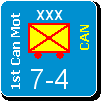
This pic shows how that turns out.
And there's worse to come. I'll post the next pic in a moment.

Moderator: Shannon V. OKeets

Garrison ratios
You may break a neutrality pact, any turn after the calendar year following its signing, provided you have at least a 2:1 garrison ratio on your common border. To work out your garrison ratio with the major power you want to attack:
13.3.3
Actions both sides take before the US is at war with every Axis major power can hasten or delay its entry.
When a major power takes any action specified on the US entry actions chart, you should check the US entry cost of that action. If the cost is positive, you may have to randomly choose one or more markers from the common marker pool and put it in one of your entry pools. If the cost is negative, you may have to randomly choose one or more markers from an entry pool and return it to the common marker pool.
If the action has "(Ge/It)" after it, place or remove the marker into/from the German/Italian entry pool. If the action has "(Ja)" after it, place or remove the marker into/from the Japanese entry pool. In all other cases, the US player can choose either entry pool.
For every 10 US entry points the action costs, randomly select 1 marker. If there are any remaining points, roll a die. If the roll is less than or equal to the remaining points, select another marker.
Example: Japan occupies Indo-China. This has a US entry cost of 12. So, you add 1 marker from the common marker pool to the Japan entry pool. Roll a die and compare it to the remaining 2 points. If you roll a 1 or 2, you put a further marker into the Japan entry pool.
You can only pick markers for each action once, regardless of the number of times that the action occurs, unless the chart notes otherwise.
If the US can’t take a marker from an entry marker pool when required, it can never declare war on that pool’s major power(s).
ORIGINAL: Joseignacio
Besides if the American has few chits in the Europe pool, it could be a disaster for the allies if USSR declares war:
13.3.3
Actions both sides take before the US is at war with every Axis major power can hasten or delay its entry.
When a major power takes any action specified on the US entry actions chart, you should check the US entry cost of that action. If the cost is positive, you may have to randomly choose one or more markers from the common marker pool and put it in one of your entry pools. If the cost is negative, you may have to randomly choose one or more markers from an entry pool and return it to the common marker pool.
If the action has "(Ge/It)" after it, place or remove the marker into/from the German/Italian entry pool. If the action has "(Ja)" after it, place or remove the marker into/from the Japanese entry pool. In all other cases, the US player can choose either entry pool.
For every 10 US entry points the action costs, randomly select 1 marker. If there are any remaining points, roll a die. If the roll is less than or equal to the remaining points, select another marker.
Example: Japan occupies Indo-China. This has a US entry cost of 12. So, you add 1 marker from the common marker pool to the Japan entry pool. Roll a die and compare it to the remaining 2 points. If you roll a 1 or 2, you put a further marker into the Japan entry pool.
You can only pick markers for each action once, regardless of the number of times that the action occurs, unless the chart notes otherwise.
If the US can’t take a marker from an entry marker pool when required, it can never declare war on that pool’s major power(s).
IIRW the number of chits that a russian war declaration to GE costs is 2 + 70% of a 3rd one, which the American may not have that early in the game. My opponent almost bit this bait in a board session.

ORIGINAL: paulderynck
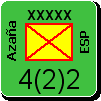
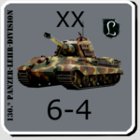
Maybe the German chits were all offensive and the Russians too and/or many of the German units pictured in Post #2 were disorganized when Russia DoW'd or the German units railed back in a later impulse. Otherwise I don't understand how Russia broke the garrison ratio in 1940? Either that or there's a ton more Russian units in Lithuania.
ORIGINAL: Joseignacio
Dont panick! I f you are just attacking France now, odds are that you are at '40. If it is so, the USSR most probably cannot attack, mainly because of the garrison ratio... And remember you can only double the counters' value with the chits,and also they need to have two times as much as you, it seems they don't, in the pic, provided you have some in defense position:
Garrison ratios
You may break a neutrality pact, any turn after the calendar year following its signing, provided you have at least a 2:1 garrison ratio on your common border. To work out your garrison ratio with the major power you want to attack:
19.6.2 Rumania
The USSR doesn’t claim Bessarabia
If the USSR hasn’t claimed Bessarabia:
ï it cannot declare war on Rumania;
ï Rumania can only align with Germany if Germany has declared war either on Yugoslavia or the USSR (not if the USSR has declared war on Germany), or if Germany controls Belgrade;
ï Bulgaria can only align with Germany if Germany controls Belgrade or is at war with Greece; and
ï Hungary can only align with Germany after Germany has declared war on Yugoslavia or the USSR.
The USSR claims Bessarabia
During any Allied declaration of war step (after the first) while Rumania is neutral, the USSR can claim Bessarabia.
The German player (acting as Rumania) must either allow the claim or deny it.
Rumania allows the claim
If Rumania allows the claim, it stays neutral and Bessarabia becomes part of the USSR for all purposes until the USSR controls no hex in Bessarabia. At that point, Bessarabia again becomes part of Rumania. The USSR can not declare war on Rumania until the USSR is at war with Germany.
Allowing the claim immediately reduces the resources the USSR supplies to Germany by 1 (see 5.1).
In the next Axis declaration of war step, Hungary and Bulgaria make demands on Rumania for Transylvania and South Dobruja respectively. Germany, as mediator, must either allow both claims or deny both.
If Germany allows their claims:
ï Transylvania becomes part of Hungary for all purposes. Germany can declare Hungary aligned with Germany during any later Axis declaration of war step.
ï South Dobruja becomes part of Bulgaria for all purposes. Germany can declare Bulgaria aligned with Germany during any later Axis declaration of war step.
ï Germany can declare Rumania aligned with Germany during any Axis declaration of war step if Germany has declared war on the USSR (not if the USSR has declared war on Germany), is at war with Yugoslavia, or controls Belgrade.
If Germany denies their claims:
ï Hungary stops supplying its resource to Germany until Hungary aligns with Germany. Germany can declare Hungary aligned with Germany during any Axis declaration of war step after Germany has declared war on the USSR (not if the USSR declares war on Germany). No more than 1 Hungarian unit can ever be outside of Hungary;
ï Bulgaria can never align with Germany but the USSR can declare it aligned with the USSR during any later Allied declaration of war step;
ï Rumania becomes aligned with Germany as a full Axis ally during the next Axis declaration of war step. It need no longer keep half of its units inside Rumania - they can all leave.
Rumania denies the claim
If Rumania denies the USSR’s claim, the USSR must immediately declare war on Rumania.
Germany can enforce a peace between Rumania and the USSR during any peace step if:
ï no hex of Rumania, outside of Bessarabia, is Soviet controlled; and
ï Germany and the USSR are not at war.
If Rumania and the USSR come to peace:
ï Rumania again becomes a neutral minor country;
ï the USSR keeps control of Bessarabia provided there is a Soviet land unit anywhere in Bessarabia; and
ï Germany can declare Rumania, Hungary and Bulgaria aligned with Germany during any later Axis declaration of war steps.
If the USSR conquers Rumania:
ï Germany can declare Hungary aligned with Germany during any later Axis declaration of war step; and
ï Bulgaria can never align with Germany but the USSR can declare it aligned with the USSR during any later Allied declaration of war step.
While Rumania and the USSR are at war:
ï Germany can declare Hungary aligned with Germany during any Axis declaration of war step; and
ï Bulgaria can not align with either Germany or the USSR.
