Spring 1862
Turns 25-30
A lot of action this season, all of it in the west.
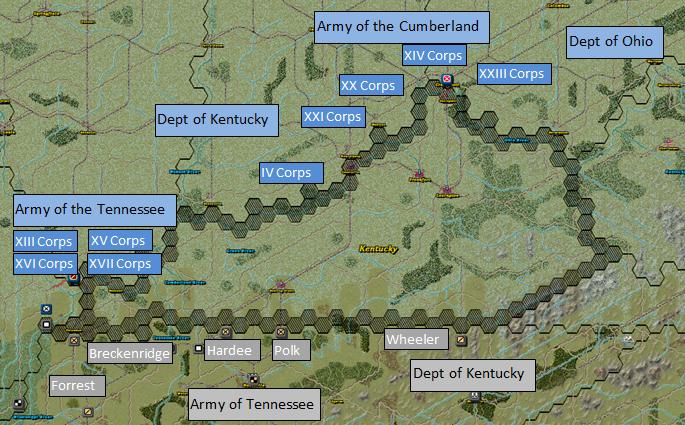
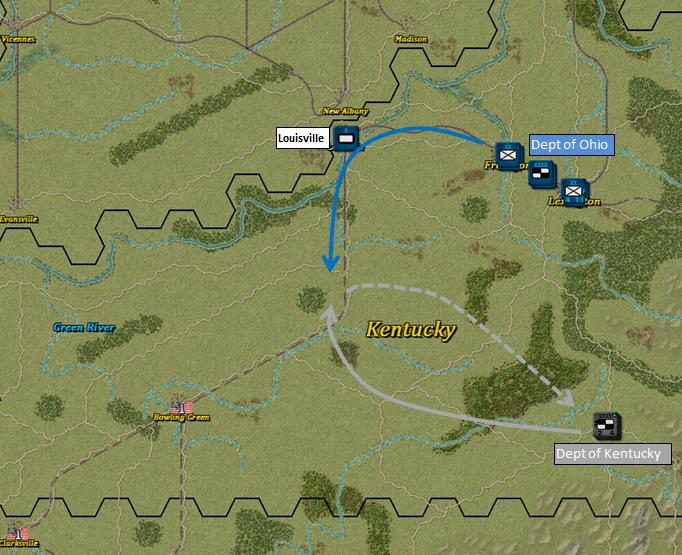
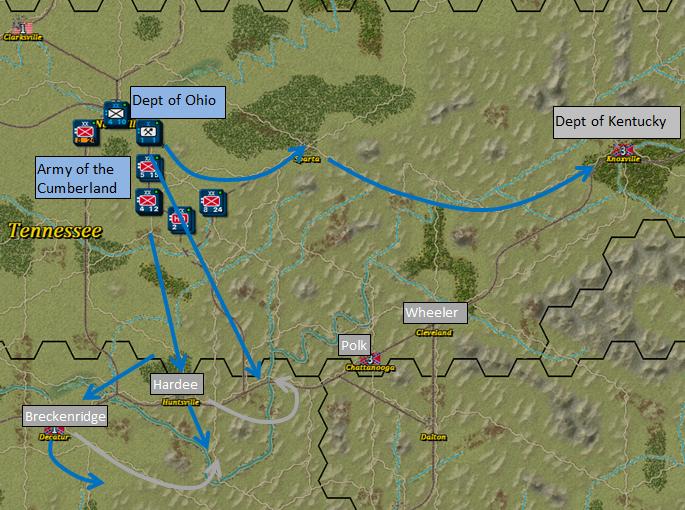
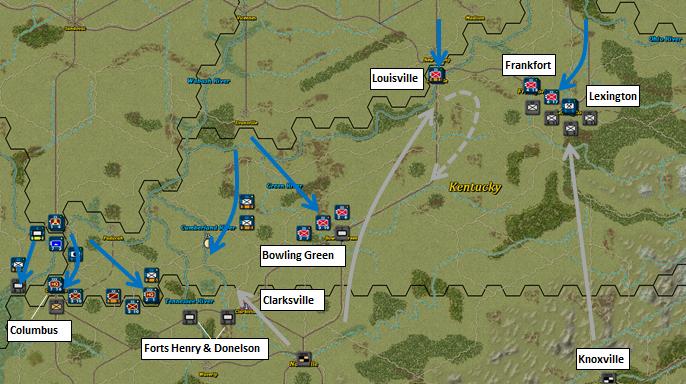
With control of the rail lines and waterways, and better access to the larger cities, Union troops quickly asserted dominance over Kentucky. Louisville, Frankfort, and Lexington were all occupied within a week. Grant was a little slow to get going in the west and unable to capture Columbus prior to Confederate militia being organized. However, Confederate General Breckenridge was also slow out of the gate, and arrived too late to support them. A Union attack captured the town.
The remainder of the Confederate Army of Tennessee was operating east of the river forts (Henry and Donelson). Hardee moved up to protect Clarksville. Polk moved into Kentucky to secure Bowling Green, the last major Kentucky city under Confederate control. He made it as far as Louisville but was unable to drive out the Union troops. Further east, the Confederate Department of Kentucky headed north out of Knoxville towards Lexington. A stalemate developed as neither side had sufficient force to drive back the other. Operating on the west side of the Mississippi River, forces from the Union Department of Arkansas (Steele) launched an unsuccessful attack on Island No. 10.
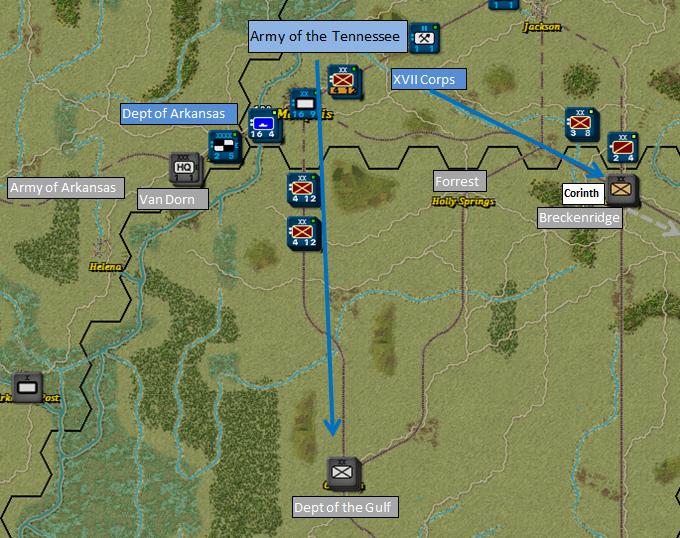
The problem the Confederacy faced at this point was that their right wing was too far forward. The Union had enough troops that they could hold them on the Lousiville-Frankfort-Lexington line, while continuing to push south along the Mississippi River. Grant dispatched the XVII Corps (McPherson) to capture Fort Henry. It was anticipated that if Fort Henry fell, Fort Donelson could not hold out for long. At that point the Confederates would have to abandon Kentucky.
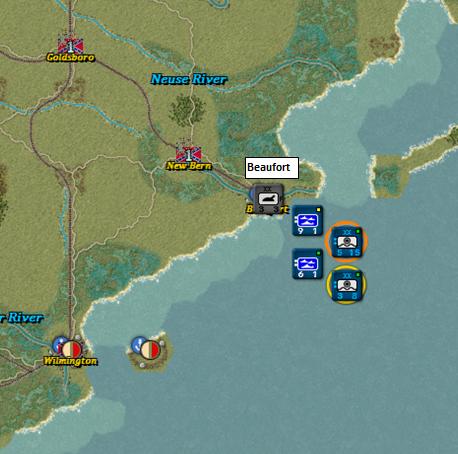
We had our first ship vs ship naval engagement of the war in Arbemarle Sound, off the coast of North Carolina. The Union was landing a force at Plymouth when they discovered a Confederate river monitor guarding the harbor. The Union ships fired. The river monitor was hit and sunk. End of battle.
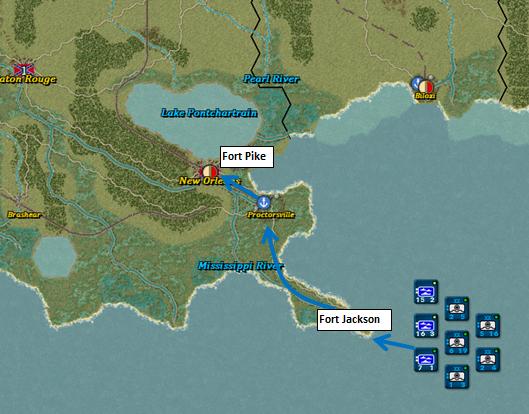
In late March the Union sent a force of 82 warships and 21,000 men against New Orleans. The map limitations prevented a direct sea assault on New Orleans, as was done in real life. So instead of running the guns of Fort Jackson, the Union had to assault it directly. On the initial approach the fort opened fire and the Union lost 20 ships. But from that point on Admiral Farragut’s fleet was able to suppress the fort’s guns, and the landing succeeded with light ground casualties. New Orleans itself would be captured a couple turns later by ground assault.
Note that a landing at Proctorville would have provided a shorter and more direct route to New Orleans. But Fort Pike was on the other side of the harbor and its guns would not have been silenced by the landing. It could have continued to fire upon follow up Union reinforcements landing at the port. It was felt that the Fort Jackson route, though longer, was the better choice since supply and reinforcements could land without interference.
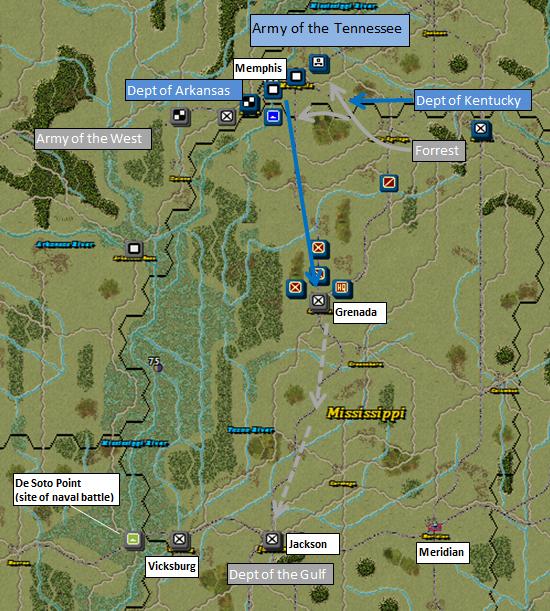
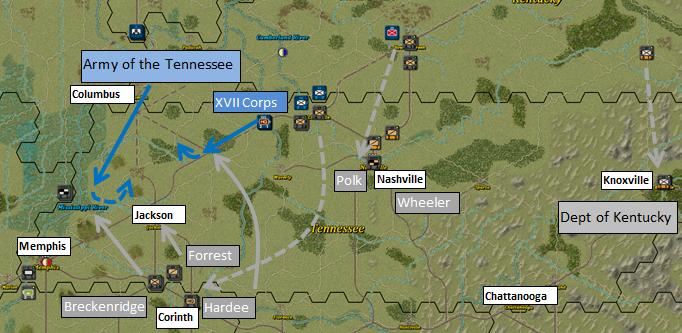
By late April the situation had grown precarious for the Confederacy in the western theater. Island No. 10 and Fort Henry had fallen. Fort Donelson was being invested. There was nothing to stop Grant from reaching Memphis in the next couple weeks. So the Confederates pulled back their entire right wing and concentrated for a counterattack on the left. Hardee, Breckenridge, and Forrest mustered at Corinth. The Department of Kentucky fell back to Knoxville. The remaining forces held a perimeter in front of Nashville.
The Confederate attack caught the Union forces spread out between Columbus and Memphis. The only thing that kept them from reaching Columbus was the XVII Corps, which was on its way back to rejoin the Army after the Fort Henry expedition. Forrest’s cavalry engaged Grierson’s cavalry at Jackson and delivered a sharp blow. Breckenridge moved between Memphis and Grant’s lead units and forced them to fall back. Hardee sliced into McPherson’s left flank and knocked him off his line of march.
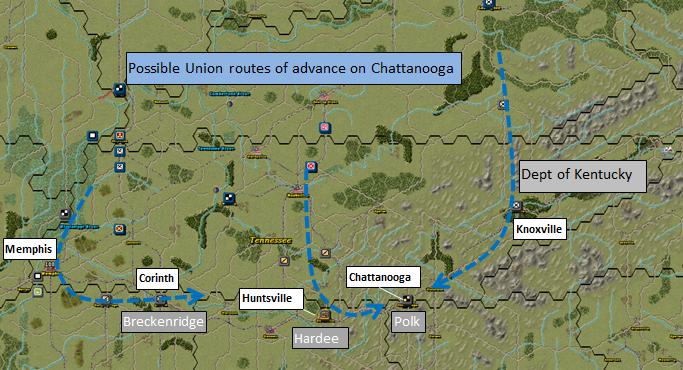
The attacks were successful, but not to the point of improving the overall situation. The Union left wing was now moving forward filling the space left by the retreating Confederates. Grant was temporarily checked, but western Tennessee could not be defended indefinitely. It was going to be a long war and there was a lot of southern land to protect, so it didn’t make sense to throw everything into the fight at this time. After a few more tactical victories the Army of Tennessee started falling back on Chattanooga. The Union followed up with the capture of Nashville and Memphis, and the campaign in the west moved into a new phase.
Grab them by the balls. Their hearts and minds will follow.