

While rough field capability means rougher than heavy concrete based airbases, even a rough field require some prep to operate. You could still use the basic airfield components to build those fields. It should have no impact on the game.
For example, a Mig-23 can't just land and operate from any old field. At a minimum it would require a dirt grading and compaction. It also requires fuel, some basic level of maintenance, and arming. Even a VTOL like the Harrier usually requires some type of matting and other support to operate with any effectiveness.
If you wanted to go crazy, you could use lua and events for a multi-day scenario and have to move resources to a specific area and "build" a rough field. Just use lua to progressively increase the capacity of the runway and taxiways plus the arrival of ammo stores. But even over a couple days, the field would be very rough and you would probably have to limit its capacity.
Rough field capability
Moderator: MOD_Command
Re: Rough field capability
I just used it as an example. Regardless. They don't just pick random fields. They have to have a usable field, even grass, that is compacted. That compaction has to happen naturally or it has to be manually done. And a grass field that can handle the rigor of multiple jet fighters landing and taking off is rare. Rough field capability for Russian, or any aircraft, is based on being able to build a rough field very quickly. But it still takes days to build. Not weeks/months like a concrete runway. Thats the benefit of rough field capability. Its not that they can land anywhere, but that prepping a usable field is faster.
There also has to be some minimal infrastructure for turning the aircraft around. Otherwise the aircraft is useless. So the point is that you already have airstrips in the game and can use those for existing rough fields.
There also has to be some minimal infrastructure for turning the aircraft around. Otherwise the aircraft is useless. So the point is that you already have airstrips in the game and can use those for existing rough fields.
-
SunlitZelkova

- Posts: 426
- Joined: Tue Mar 06, 2018 11:49 pm
- Location: Portland, USA
Re: Rough field capability
Rough field capability could be implemented by spawning single unit airfields with the “automatically detectable” setting switched off through Lua. Trucks and other support equipment could be added to make it more detectable, once they get spotted to a certain level (like recognized as trucks instead of mobile units), an event triggering spawning of normal airfield units runs, and then if those units get destroyed the single unit airfield gets deleted.
Modeling their construction would be a bit more complex. I’m not sure how it would work, both in terms of gameplay and required Lua.
Conventional use of a multi unit airfield wouldn’t really be feasible because the group marker automatically appears even when all units are set to not be automatically detectable.
In terms of balance it would be a bit of a hit and miss. I could see it being useful in a Cold War Central Front scenario, especially if nuclear weapons will be targeting normal air bases. But the sheer number of aircraft on both sides will make doing anything difficult.
Modeling their construction would be a bit more complex. I’m not sure how it would work, both in terms of gameplay and required Lua.
Conventional use of a multi unit airfield wouldn’t really be feasible because the group marker automatically appears even when all units are set to not be automatically detectable.
In terms of balance it would be a bit of a hit and miss. I could see it being useful in a Cold War Central Front scenario, especially if nuclear weapons will be targeting normal air bases. But the sheer number of aircraft on both sides will make doing anything difficult.
"One must not consider the individual objects without the whole."- Generalleutnant Gerhard von Scharnhorst, Royal Prussian Army

Re: Rough field capability
Delete: Duplicate post
Last edited by CV60 on Sat Jul 16, 2022 1:04 pm, edited 1 time in total.
“Do I not destroy my enemies when I make them my friends?” -Abraham Lincoln
Re: Rough field capability
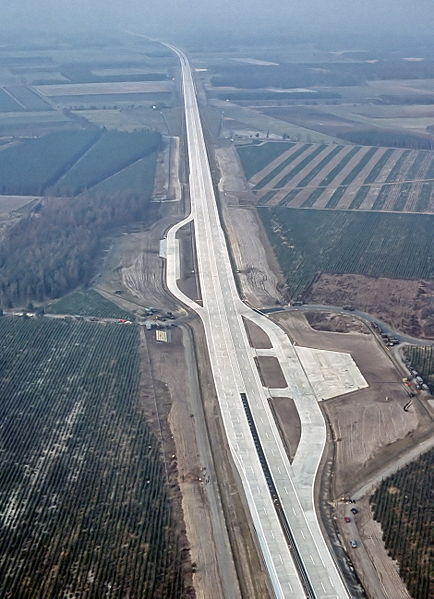
NATO countries also used pre-selected stretches of highway as dispersal airfields. A scenario designer could recreate some of these (or rough fields for the USSR) by simply placing a small airfield with limited fuel and ammo at appropriate locations on the map.Jeww wrote: Sat Jul 16, 2022 12:09 am Many missions revolve around bombing airfields. Russian aircraft have rough field capability. Su 27 can operate from dirt fields. I suspect the tu 22 blinder can as its engines are mounted higher up. Il 76 and derivatives routinely operate from rough fields. Of western aircraft maybe the jaguar and warthog can do this but most are not fitted with the necessary shields.
If you implement rough field capability (most Russian aircraft take off everywhere) will this negate a lot of scenarios?
“Do I not destroy my enemies when I make them my friends?” -Abraham Lincoln
Re: Rough field capability
What others have said is correct - there's a lot of prep work required to get grass strips prepared. In my experience operating light aircraft from grass airfields - the locations are often pre-surveyed and prepared with a roller (and mowed if applicable). There's also substantial risk operating off one of these fields after it has rained. There's a significant amount of training and work that goes into ensuring that dispersed airfields are can actually support the operations required. This is important at built-up airfields as well - I've seen business jets sink through pavement because they were parked in an area not rated for the weight. The challenges with getting sufficient information in denied areas is one of the key reasons for special reconnaissance operations.
Additionally, there's always the challenge of actually getting to a dispersal field in time. If the main base runway is cut, and construction equipment isn't available to restore the base, your only option may be to take an aircraft apart and truck it somewhere, which may not be doable in a reasonable timeframe.
Additionally, there's always the challenge of actually getting to a dispersal field in time. If the main base runway is cut, and construction equipment isn't available to restore the base, your only option may be to take an aircraft apart and truck it somewhere, which may not be doable in a reasonable timeframe.
Re: Rough field capability
CV60 wrote: Sat Jul 16, 2022 1:00 pmNATO countries also used pre-selected stretches of highway as dispersal airfields. A scenario designer could recreate some of these (or rough fields for the USSR) by simply placing a small airfield with limited fuel and ammo at appropriate locations on the map.Jeww wrote: Sat Jul 16, 2022 12:09 am Many missions revolve around bombing airfields. Russian aircraft have rough field capability. Su 27 can operate from dirt fields. I suspect the tu 22 blinder can as its engines are mounted higher up. Il 76 and derivatives routinely operate from rough fields. Of western aircraft maybe the jaguar and warthog can do this but most are not fitted with the necessary shields.
If you implement rough field capability (most Russian aircraft take off everywhere) will this negate a lot of scenarios?
This site (https://www.mil-airfields.de/germany/hi ... trips.html) includes many details about all sorts of Cold War airfields, including known highway strips in both East and West Germany. Lots of interesting examples for anyone interested in creating scenarios with them.
Re: Rough field capability
While plenty of lighter aircraft (including many WWII fighters) were capable of operating from grass airfields - they generally preferred not to due to the weather restrictions I mentioned above (planes do not like mud). Airfields were constructed from some variety of steel plates/mats that required somewhat level, compacted ground to deploy. These airfields took time to construct - in the case of Normandy it took several days after D-Day for them to be operational, with the earliest ones simply being "emergency landing sites". Additionally, all of those sites had been pre-selected for suitability. The most recent example I can think of was HMS Sheathbill, which was built on a pre-existing grass airstrip and still took 6 days to build. There is no "magic airfield anywhere" button.Jeww wrote: Sat Jul 16, 2022 9:03 pm Im just saying, in Ww2 it was a routine thing, after Normandy it took a day to get b 17s there.
Re: Rough field capability
I think that's what I already said. Some prep has to be done. The advantage of rough fields is the time to make it usable. That's can all be be modeled in CMO already.ExNusquam wrote: Sat Jul 16, 2022 11:22 pmWhile plenty of lighter aircraft (including many WWII fighters) were capable of operating from grass airfields - they generally preferred not to due to the weather restrictions I mentioned above (planes do not like mud). Airfields were constructed from some variety of steel plates/mats that required somewhat level, compacted ground to deploy. These airfields took time to construct - in the case of Normandy it took several days after D-Day for them to be operational, with the earliest ones simply being "emergency landing sites". Additionally, all of those sites had been pre-selected for suitability. The most recent example I can think of was HMS Sheathbill, which was built on a pre-existing grass airstrip and still took 6 days to build. There is no "magic airfield anywhere" button.Jeww wrote: Sat Jul 16, 2022 9:03 pm Im just saying, in Ww2 it was a routine thing, after Normandy it took a day to get b 17s there.
Re: Rough field capability
Its actually very difficult to destroy a runway, if not impossible in the game. Its even difficult to damage it enough to put it out of operation. And even then, it repairs enough to fly at some capacity over a period of time.
You can also model roads as runways easily by placing a runway on the road and make it hidden.
You can also model roads as runways easily by placing a runway on the road and make it hidden.
Re: Rough field capability
I'd suggest playing the game a little and compare that to what you see as real
Re: Rough field capability
No scripting involved. What does anywhere mean? Can they land on a steep cliff? Can they land on water? can they land on soft sand desert? What does anywhere mean?

Re: Rough field capability
I know only very little about this topic, can you please post some examples of what the roughest, documented, ground conditions were the TU-95 successfully operated in, or any other Russian aircraft? ThanksJeww wrote: Sun Jul 17, 2022 6:32 am I see no issue with landing these planes in the desert. The "softness" of dirt isn't really a factor. Mud can matter but these planes have mud guards as well. Anything you can drive a bulldozer over would be fine.

-
SunlitZelkova
- Posts: 426
- Joined: Tue Mar 06, 2018 11:49 pm
- Location: Portland, USA
Re: Rough field capability
Guys don’t waste your time, it is likely mustang191 again.
HOWEVER, the Tu-16 did do some semi-successful tests on operating from ice floes in the Arctic with little preparation.
Sources: two books by Yefim Gordon
The point everyone has been making is still valid though- they can’t just land “anywhere”, preparation and proper terrain is required.
The Tu-95 can not operate from dirt airfields. Special airfields are built and maintained in the Arctic, but these too are specially designed, not “just anywhere”.Gizzmoe wrote: Sun Jul 17, 2022 11:25 amI know only very little about this topic, can you please post some examples of what the roughest, documented, ground conditions were the TU-95 successfully operated in, or any other Russian aircraft? ThanksJeww wrote: Sun Jul 17, 2022 6:32 am I see no issue with landing these planes in the desert. The "softness" of dirt isn't really a factor. Mud can matter but these planes have mud guards as well. Anything you can drive a bulldozer over would be fine.
HOWEVER, the Tu-16 did do some semi-successful tests on operating from ice floes in the Arctic with little preparation.
Sources: two books by Yefim Gordon
The point everyone has been making is still valid though- they can’t just land “anywhere”, preparation and proper terrain is required.
"One must not consider the individual objects without the whole."- Generalleutnant Gerhard von Scharnhorst, Royal Prussian Army
Re: Rough field capability
Yeah, that's what I imagined, so all of this was basically on "solid" ground. Jeww mentioned that "The "softness" of dirt isn't really a factor" and the mud thing, I would really love to see some examples of it, because I don't believe it.SunlitZelkova wrote: Sun Jul 17, 2022 11:49 am The Tu-95 can not operate from dirt airfields. Special airfields are built and maintained in the Arctic, but these too are specially designed, not “just anywhere”.
HOWEVER, the Tu-16 did do some semi-successful tests on operating from ice floes in the Arctic with little preparation.
Re: Rough field capability
No. You are way off-base by making the statement that B-17s operated from rough fields the day after Normandy.Jeww wrote: Sat Jul 16, 2022 9:03 pmExNusquam wrote: Sat Jul 16, 2022 7:13 pm What others have said is correct - there's a lot of prep work required to get grass strips prepared. In my experience operating light aircraft from grass airfields - the locations are often pre-surveyed and prepared with a roller (and mowed if applicable). There's also substantial risk operating off one of these fields after it has rained. There's a significant amount of training and work that goes into ensuring that dispersed airfields are can actually support the operations required. This is important at built-up airfields as well - I've seen business jets sink through pavement because they were parked in an area not rated for the weight. The challenges with getting sufficient information in denied areas is one of the key reasons for special reconnaissance operations.
Additionally, there's always the challenge of actually getting to a dispersal field in time. If the main base runway is cut, and construction equipment isn't available to restore the base, your only option may be to take an aircraft apart and truck it somewhere, which may not be doable in a reasonable timeframe.
Im just saying, in Ww2 it was a routine thing, after Normandy it took a day to get b 17s there.
Certainly there were some fighters that were transferred to improvised airfields a few weeks after the invasion. But those were "improvised airfields" that were prepared, stocked, and manned. Not just a field with a deuce and a half with jerry cans and ammo pulled up to it.
Re: Rough field capability
Oh I cant let that one past the post... That whole Operation was a cluster ****, brown outs, crashes, loss of SF, no hostages actually collected.... (Argo was based on how they actually did it).Jeww wrote: Sun Jul 17, 2022 9:05 pm
Like I said the Iranian hostage rescue used a Hercules in the desert.
Notwithstanding that you are clearly not an aviator or even remotely 'schooled' in aviation. There are a myriad of reasons why a rough field cannot be used for operations just as you say. One of the critical reasons was shown in an earlier post. A three letter word FOD. You should see the damage a 400g bird does to a modern turbofan, it isnt pretty and thats a bird. Imagine if that road sign had been ingested or a big rock...
A more proper term would be austere location. One of the most famous was Henderson Field, but it was still heavily prepared and improved first by the Japanese then by the Cactus Air Force. Things havent changed much, indeed the aeroplanes are less forgiving today.
Re: Rough field capability
No, again you are wrong, even your sources dont back you up at all.
9AF was a Tactical Air Force flying Fighters, Fighter Bombers, Light and Medium Bombers along with troop transports. C-47 are not 'heavy' cargo planes, they take a stick of paratroopers, a few litters with attendant medics or a jeep sized vehicle. The earliest landings and medevacs were conducted 'engines running' because the areas were still 'hot'.
Basing Ftrs and Ftr Bombers in Normandy so early would make no tactical sense. The air supremacy enjoyed by the allied air forces during the day precluded the early need to base that type of aircraft there. Ammo was better served by being delivered to 21 AG as it attempted to secure the area immediately behind the beach heads. Ammo and fuel for that matter (prior to PLUTO) was better served up in the southern UK where 9AF and 2TAF had their MOB's. That way the Sqn's could get up into the 'taxi ranks' and rain down destruction when called upon by FAC's.
Do your homework, construct your arguments such that they stand scrutiny, then perhaps you may be taken seriously. You picked on an area well studied by proponents of air power and have tried to present a ludicrous alternate reality to support your whacky ideas - with methodology and reasoning such as you present, you would be better placed in the Duma than on this forum.
9AF was a Tactical Air Force flying Fighters, Fighter Bombers, Light and Medium Bombers along with troop transports. C-47 are not 'heavy' cargo planes, they take a stick of paratroopers, a few litters with attendant medics or a jeep sized vehicle. The earliest landings and medevacs were conducted 'engines running' because the areas were still 'hot'.
Basing Ftrs and Ftr Bombers in Normandy so early would make no tactical sense. The air supremacy enjoyed by the allied air forces during the day precluded the early need to base that type of aircraft there. Ammo was better served by being delivered to 21 AG as it attempted to secure the area immediately behind the beach heads. Ammo and fuel for that matter (prior to PLUTO) was better served up in the southern UK where 9AF and 2TAF had their MOB's. That way the Sqn's could get up into the 'taxi ranks' and rain down destruction when called upon by FAC's.
Do your homework, construct your arguments such that they stand scrutiny, then perhaps you may be taken seriously. You picked on an area well studied by proponents of air power and have tried to present a ludicrous alternate reality to support your whacky ideas - with methodology and reasoning such as you present, you would be better placed in the Duma than on this forum.
Re: Rough field capability
"No, again you are wrong, even your sources dont back you up at all."
Maverick has had this issue in all three of his forays into this board.
Maverick has had this issue in all three of his forays into this board.
Re: Rough field capability
I feel an incoming Aerogavin. 