


Without suggesting actions or bravery on Tarawa or Saipan were any less, I hearby apologise for hijacking thread as to why Gurkhas, Indians, West Africans et al should get proper recognition in the game OOB. My great uncle was also a Chindit so hence bias on Burma!
Naik (Corporal) Gian Singh VC 15th Punjab Regiment
Naik Gian Singh was awarded the Victoria Cross for his bravery in Burma on 2nd March 1945. On that day the Japanese were strongly entrenched in fox-holes on the Kame-Myingyan Road. Naik Singh was in command of the leading section of one of the platoons that was ordered to attack the Japanese positions. On seeing the enemy troops some twenty yards ahead, Naik Singh requested covering fire and then rushed forward to attack enemy fox-holes. Despite being wounded, he continued with his attack and killed several of the enemy. He then attacked an enemy anti-tank gun which he captured after killing the crew. His bravery inspired his men and they were able to successfully capture all the enemy positions
Rifleman Ganju Lama
7th Gurkha Rifles
Ninthoukhong, Burma June 1944
… B Company, 7th Gurkha Rifles, was ordered to counter-attack and restore the situation. Shortly after passing the starting line it came under heavy enemy medium machine-gun and tank machine-gun fire at point blank range, which covered all lines of approach. Rifleman Ganju Lama, the No.1 of the PIAT gun, on his own initiative, with great coolness and complete disregard for his own safety, crawled forward and engaged the tanks single handed. In spite of a broken left wrist and two other wounds, one in his right hand and one in his leg, caused by withering cross fire concentrated upon him, Rifleman Ganju Lama succeeded in bringing his gun into action within thirty yards of the enemy tanks and knocked out first one and then another, the third tank being destroyed by an anti-tank gun. In spite of his serous wounds, he then moved forward and engaged with grenades the tank crews, who now attempted to escape. Not until he hand killed them all, thus enabling his company to push forward, did he allow himself to be taken back to the Regimental Aid Post to have his wounds dressed…….
....and most amazingly...
Havildar Lachhiman Gurung
8th Gurkha Rifles
Taungdaw, Myanmar (Burma)
12-13 May 1945
… Before assaulting, the enemy hurled innumerable grenades at the position from close range. Once grenade fell on the lip of Rifleman Lachhiman Gurung’s trench; he at once grasped it and hurled it back at the enemy. A second grenade landed in his trench. Again this Rifleman snatched to throw it back but it exploded in his hand, blowing off his finger, shattering his right arm and severely wounding him in the face body and right leg. His two comrades were also badly wounded and lay helpless in the button of the trench. The enemy, screaming and shouting, now formed up shoulder to shoulder and attempted to rush the position by sheer weight of numbers. Rifleman Lachhiman Gurung, regardless of his wounds, fires and loaded his rifle with his left hand, maintaining a continuous and steady rate of fire. Wave after wave of fanatical attacks were thrown in by the enemy during the next four hour and all-were repulsed with heavy casualties…
(Mostly from http://www.nepalesekhukuri.com/vcs.html )
OOB Comments
Moderators: Joel Billings, wdolson, Don Bowen, mogami
RE: OOB Comments

Twinkle twinkle PBY
Seeking Kido Bu-tai
Flying o' the sea so high
An ill-omen in the sky
Twinkle twinkle PBY
Pointing out who's next to fry

RE: OOB Comments
Pascal, Below is a list of referances for my post's above:
Japanese Aircraft of the Pacific War: Francillion
Japanese Naval Aces and Fighter Units: Hata/Izawa
The Japanese Naval Avaitor 1937-45: Tagaya
Mitsubishi Type 1 Rikyo "Betty" units of WW2: Tagaya
Japanese Aircraft Code Names and Designations: Mikesh
Japanaese Naval Airforce Camuflage and Markings WW2: Thorpe
Flying Guns of WW2: Williams/Gustin
Combat Aircraft of WW2: Gunston
NakiJima Ki-84: Aero Detail # 24
Kawanishi N1K2-J "George": Aero Detail # 26
Kawasaki Ki-61 HEIN: Bueschel
Mitisubishi A6M1/2/-2N ZERO-SEN: Bueschel
Mitsubishi Ki-67/Ki-109 HIRYU: Bueschel
Nakijima Ki-84 a/b HAYATE: Bueschel
Nakijima Ki-44 SHOKI: Bueschel
Mitsubishi/Nakijima G3M1/2/3 96 RIKYO: Bueschel
Nakijima Ki-49 DONRYU: Bueschel
Mechanic of World Aircraft # 7
Mechanic of World Aircraft # 14
Gakken Series # 6,29,22
Zero Fighter: Mikesh/Watanabe
Bombers of WW2: Donald
Japanese Aircraft of the Pacific War: Francillion
Japanese Naval Aces and Fighter Units: Hata/Izawa
The Japanese Naval Avaitor 1937-45: Tagaya
Mitsubishi Type 1 Rikyo "Betty" units of WW2: Tagaya
Japanese Aircraft Code Names and Designations: Mikesh
Japanaese Naval Airforce Camuflage and Markings WW2: Thorpe
Flying Guns of WW2: Williams/Gustin
Combat Aircraft of WW2: Gunston
NakiJima Ki-84: Aero Detail # 24
Kawanishi N1K2-J "George": Aero Detail # 26
Kawasaki Ki-61 HEIN: Bueschel
Mitisubishi A6M1/2/-2N ZERO-SEN: Bueschel
Mitsubishi Ki-67/Ki-109 HIRYU: Bueschel
Nakijima Ki-84 a/b HAYATE: Bueschel
Nakijima Ki-44 SHOKI: Bueschel
Mitsubishi/Nakijima G3M1/2/3 96 RIKYO: Bueschel
Nakijima Ki-49 DONRYU: Bueschel
Mechanic of World Aircraft # 7
Mechanic of World Aircraft # 14
Gakken Series # 6,29,22
Zero Fighter: Mikesh/Watanabe
Bombers of WW2: Donald

SCW Beta Support Team
Beta Team Member for:
WPO
PC
CF
AE
WiTE
Obi-wan Kenobi said it best: A lot of the reality we perceive depend on our point of view
-
Central Blue
- Posts: 695
- Joined: Fri Aug 20, 2004 5:31 pm
Where's Matson Line?
Dollar Line is well represented with all those president AP's, where are the Matson Line ships?
Dear old Dad sailed to the South Pacific on the Lurline.
I would have "complained" during PacWar--if we had had the internet back then.
Dear old Dad sailed to the South Pacific on the Lurline.
I would have "complained" during PacWar--if we had had the internet back then.
USS St. Louis firing on Guam, July 1944. The Cardinals and Browns faced each other in the World Series that year

-
Central Blue
- Posts: 695
- Joined: Fri Aug 20, 2004 5:31 pm
lineage
more niggling....
lineage features....
I can't speak for the other Nationalities represented, but maybe it would be cool for the US to distinguish between National Guard, reserve, and regular units? Fans of other nationalities will know where I'm going I think.
Por exemple... The 200th AA in the Philippines was a New Mexico National Guard outfit. The 164th, adopted by the Marines at Guadalcanal was a NG outfit from North Dakota. I've read that their motto is "Je Suis Pret." I suspect they will be remembered as the 164th Marines. The 200th went by "Pro Civitate Et Patria"
What I'm talking about doesn't change the game engine, it just requires a little more look up and data entry, maybe some formatting. Check the cool crest for the 200th here:
http://members.aol.com/bcmfofnm/200thdetails.html
volunteers would come out of the woodwork to enhance the game this way; I think.
lineage features....
I can't speak for the other Nationalities represented, but maybe it would be cool for the US to distinguish between National Guard, reserve, and regular units? Fans of other nationalities will know where I'm going I think.
Por exemple... The 200th AA in the Philippines was a New Mexico National Guard outfit. The 164th, adopted by the Marines at Guadalcanal was a NG outfit from North Dakota. I've read that their motto is "Je Suis Pret." I suspect they will be remembered as the 164th Marines. The 200th went by "Pro Civitate Et Patria"
What I'm talking about doesn't change the game engine, it just requires a little more look up and data entry, maybe some formatting. Check the cool crest for the 200th here:
http://members.aol.com/bcmfofnm/200thdetails.html
volunteers would come out of the woodwork to enhance the game this way; I think.
USS St. Louis firing on Guam, July 1944. The Cardinals and Browns faced each other in the World Series that year
RE: OOB Comments
Scenario 10- Jan. 1945 to end of war.
This Scenario has NO MLE ships for Allied side. There are no MLE's on the ship list at all. This makes it tough to conduct mine warfare ops. There shoudl be a few I woudl think.
UB
This Scenario has NO MLE ships for Allied side. There are no MLE's on the ship list at all. This makes it tough to conduct mine warfare ops. There shoudl be a few I woudl think.
UB


RE: OOB Comments
Oops, my bad... The Notoro was a purpose built CS but it was not of the Nisshin class. It was a one-of that was comparable to the requistioned Sanyo Maru.
8 Aircraft capacity.
Will the Akitsushima work correctly in the game? It was made to carry 1 Mavis flying boat. I do not have a air unit with 1 Mavis so i am unsure what to do with these ships. Also, when i convert an AK to an AV in game, i get another Akitsushima. I agree that 2 more Akitsushima class vessels should be on the build list from game start, however, when we convert a merchant ship to an AV we should probably get another Sanyo Maru, especially considering the worthlessness of the Akitsushima.
Mike
8 Aircraft capacity.
Will the Akitsushima work correctly in the game? It was made to carry 1 Mavis flying boat. I do not have a air unit with 1 Mavis so i am unsure what to do with these ships. Also, when i convert an AK to an AV in game, i get another Akitsushima. I agree that 2 more Akitsushima class vessels should be on the build list from game start, however, when we convert a merchant ship to an AV we should probably get another Sanyo Maru, especially considering the worthlessness of the Akitsushima.
Mike

RE: OOB Comments
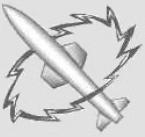
Actually Notoro was an oiler. Notoro, her near sister Tsurumi and the somewhat larger Kamoi were oilers converted to auxiliary seaplane carriers pre-war. Tsurumi reconverted to an oiler in 1931, Notoro in 1942 and Kamoi in 1943.

- Attachments
-
- notoro.jpg (54.99 KiB) Viewed 1031 times
RE: OOB Comments
But it was built to be easily convertible to a seaplane tender. And had already beenconverted pre war. And i would rather have another seaplane tender rather than a high speed oiler. Besides, Japan had virtually no use for oilers beyond fall '42. And there should be half a dozen tankers converted to oilers already as the Pearl Harbor replenishment group was oilers not tankers.
Mike
Mike
-
Oleg Mastruko

- Posts: 4534
- Joined: Sat Oct 21, 2000 8:00 am
Peggy and Frances bombers
I posted this on the main board, but will repeat it here, so that developers take notice [:D]
Both Peggy and Frances according to literature were able to carry torpedo payload, yet in game they are unable to. Anybody knows why? Peggy's combat payload is especially laughable - 3 250kg bombs? Three? What is extended range payload then? 1 bomb? Gimme a break And it's supposedly a "best Japanese WW2 bomber" in every aircraft book I've seen.
Also their production/arrival dates are a bit strange.
IJN receives many Frances squadrons beginning of 44, and the aircraft itself is available for production Dec 43, yet most literature says Frances wasn't available till very late 44, and due to further problems was first used operationally no earlier than Okinawa campaign in Spring 45. (?) In WITP you receive ~150+ operational Franceses almost year and a half earlier?
With Peggy it's the opposite - it is available in Oct 44 in game, yet in fact that is when the aircraft was fisrt used operationally, though it was available for production some months before that. I noticed IJA gets one squadron of Peggies mid-42 (!!). Isn't a bit strange you get fully operational squadron of aircraft - that is scheduled to get into production and operational use more than 2 years later (according to game database)?
Oleg
Both Peggy and Frances according to literature were able to carry torpedo payload, yet in game they are unable to. Anybody knows why? Peggy's combat payload is especially laughable - 3 250kg bombs? Three? What is extended range payload then? 1 bomb? Gimme a break And it's supposedly a "best Japanese WW2 bomber" in every aircraft book I've seen.
Also their production/arrival dates are a bit strange.
IJN receives many Frances squadrons beginning of 44, and the aircraft itself is available for production Dec 43, yet most literature says Frances wasn't available till very late 44, and due to further problems was first used operationally no earlier than Okinawa campaign in Spring 45. (?) In WITP you receive ~150+ operational Franceses almost year and a half earlier?
With Peggy it's the opposite - it is available in Oct 44 in game, yet in fact that is when the aircraft was fisrt used operationally, though it was available for production some months before that. I noticed IJA gets one squadron of Peggies mid-42 (!!). Isn't a bit strange you get fully operational squadron of aircraft - that is scheduled to get into production and operational use more than 2 years later (according to game database)?
Oleg
-
Oleg Mastruko
- Posts: 4534
- Joined: Sat Oct 21, 2000 8:00 am
RE: B-17 Endurance
I posted this on the main board, flying boats carry two torpedos each (Catalinas, and Japanese Mavis and Emily flying boats) even on patrol/ASW missions and are apparently unable to damage or sink a sub.
PBY Catalina, when it attacks a sub - what ordnance it uses? The only payload given for Catalina is two 22in torpedos, not very suitable to attack a sub. Same goes for IJN Mavis and Emily flying boats...
Oleg
PBY Catalina, when it attacks a sub - what ordnance it uses? The only payload given for Catalina is two 22in torpedos, not very suitable to attack a sub. Same goes for IJN Mavis and Emily flying boats...
Oleg
RE: B-17 Endurance
Oleg, In the Game Aircraft that are listed as Torpedo capable, those show to have the Torpedo as the main aramement use a bomb if not doing torpedo atacks, but since we cant in the editor see what the bomb is it does raise an interesting question, be nice if we could see this setting and adjust it. Torpedos were not used for ASW typicaly Depth Charges would be carried on these types of sorties by both sides or bombs.
Peggy/Francis, ya They should be torp capable, both the Army and Navy used the Peggy in torpedo runs. The Peggy did not have a Huge bomb capacity, it had realy the same load as prety much all the preceding Japanese Bombers around 1,800 pounds, bomb loads would vary depending on type carried and the Peggy could manage:
1 x 500Kg bomb, 8 x 100 Kg bombs or 3 x 250 KG bombs carried internaly.
The Peggy was realy a fine machine, well defended and fast for her type, the only real drawback to her designe when compared to types from other countrys was the comparatively smalish bombload.
The Peggy did only serve in the last 9 months of the war. It became available in the summer of 44. The 12th of October 44 saw the combat debue of the Ki-67*, though she had been in service for some time before this, they had yet to be deployed to combat. The Ki-67 was issued to Army and Navy Bomber Units, several Army Bomber Regements had actualy been asigned to the Comand of the Navy and were deploed to a special TF this unit was tasked with the defense of the Philipines area and station in Formosa, the overall comand was speicaly trained in Night and Bad wheater tactics and was truly all wheater capable.
*T-Force Bombers (Typhoon) Launcehd Night Atacks (torpedo) .... (T-Force was the Army/Navy composet force).
Peggy/Francis, ya They should be torp capable, both the Army and Navy used the Peggy in torpedo runs. The Peggy did not have a Huge bomb capacity, it had realy the same load as prety much all the preceding Japanese Bombers around 1,800 pounds, bomb loads would vary depending on type carried and the Peggy could manage:
1 x 500Kg bomb, 8 x 100 Kg bombs or 3 x 250 KG bombs carried internaly.
The Peggy was realy a fine machine, well defended and fast for her type, the only real drawback to her designe when compared to types from other countrys was the comparatively smalish bombload.
The Peggy did only serve in the last 9 months of the war. It became available in the summer of 44. The 12th of October 44 saw the combat debue of the Ki-67*, though she had been in service for some time before this, they had yet to be deployed to combat. The Ki-67 was issued to Army and Navy Bomber Units, several Army Bomber Regements had actualy been asigned to the Comand of the Navy and were deploed to a special TF this unit was tasked with the defense of the Philipines area and station in Formosa, the overall comand was speicaly trained in Night and Bad wheater tactics and was truly all wheater capable.
*T-Force Bombers (Typhoon) Launcehd Night Atacks (torpedo) .... (T-Force was the Army/Navy composet force).
SCW Beta Support Team
Beta Team Member for:
WPO
PC
CF
AE
WiTE
Obi-wan Kenobi said it best: A lot of the reality we perceive depend on our point of view
RE: B-17 Endurance
Hmmm... I think I had a cranial-rectal inversion.
The Akitsushima only CARRIES one aircraft but it can still support 10 or so, right? I would love to get confirmation on this from Matrix.
Mike
The Akitsushima only CARRIES one aircraft but it can still support 10 or so, right? I would love to get confirmation on this from Matrix.
Mike
RE: B-17 Endurance
For IJN...can support capacity plus 10, minus the number of a/c actually on board (in the manual you know[;)])
Fear the kitten!
RE: B-17 Endurance
Yes, i know, it was just that '1' staring at me that had me thinking the ship was useless; i mean where am i going to find a unit with 1 Mavis??
-
Oleg Mastruko
- Posts: 4534
- Joined: Sat Oct 21, 2000 8:00 am
RE: B-17 Endurance
Make it in the editor [:D]
O.
O.
RE: B-17 Endurance
My worry with that is with 1 plane it is easy to lose it and then have zero aircraft in a unit.
UV showed us that once a unit hits zero it will quite often never get a replacement.
Mike
UV showed us that once a unit hits zero it will quite often never get a replacement.
Mike

Missing Aussie planes and an early arrival.
The Australians had over 1000 Avro Ansons used for Maritime patrol,ASW and recon,(missing from WITP),they had over 300 Vultee Vengeance dive bombers in New Ginea 1942-1944,(vastly under represented or non-existent),and they never had the Short Sunderland in Australia till 1944..Please see the following info..
ttp://users.chariot.net.au/~theburfs/index_mil.html
ttp://users.chariot.net.au/~theburfs/index_mil.html

Dutch T.IVa - Aircraft Type?
Dutch T.IVa - Aircraft Type
How come this aircraft is listed as a Torpedo bomber and not a Float Plane?
reff:
http://pub131.ezboard.com/fjpspanzersfr ... =467.topic
How come this aircraft is listed as a Torpedo bomber and not a Float Plane?
reff:
http://pub131.ezboard.com/fjpspanzersfr ... =467.topic
Merchant Ship Eratta - Scenario 15
Esso Rochester, listed as a Small AK (US) was a Tanker - the name was a dead giveaway.
Empire Celtic is listed as an LST. I can find no reference for this ship during World War II. However, British LST 3507 was renamed Empire Celtic when converted to merchant service in 1946.
Landing Ship Infantry had a different meaning to the U.S. and the British. A U.S. LSI was a small beaching ship for landing infantry directly on the shore. A British LSI was a small transport that carried assault landing craft to land it's troops - the equivalent of a U.S. APA. The following British Ships are mis-classed as American LSI:
Empire Mace
Empire Halberd
Empire Lance
Also, mis-classed as American LST:
Empire Battleaxe
These four ships (and eight others) were Type C1-S-AY1 converted merchant ships of 11600 tons (full load) made available under Lend Lease. They carried 1 LCM, 6 LCA, 2 LCP(S) landing craft.
And, special for Ron Saueracker -
The Japanese converted at least 5 large whaling ships into "super Tankers":
Nisshin Maru (actually renamed Nissin Maru in 1938)
Nisshin Maru #2 (renamed Nissin Maru #2 in 1938)
Kyokuyo Maru
Tonan Maru #2
Tonan Maru #3
Displacement was 16-17 Thousand tons (as Whaling ships) - at least 50% more than the average "large" tanker. I can find no reference for their oil capacity. All five are in Scenario 15 as Large Tankers.

Empire Celtic is listed as an LST. I can find no reference for this ship during World War II. However, British LST 3507 was renamed Empire Celtic when converted to merchant service in 1946.
Landing Ship Infantry had a different meaning to the U.S. and the British. A U.S. LSI was a small beaching ship for landing infantry directly on the shore. A British LSI was a small transport that carried assault landing craft to land it's troops - the equivalent of a U.S. APA. The following British Ships are mis-classed as American LSI:
Empire Mace
Empire Halberd
Empire Lance
Also, mis-classed as American LST:
Empire Battleaxe
These four ships (and eight others) were Type C1-S-AY1 converted merchant ships of 11600 tons (full load) made available under Lend Lease. They carried 1 LCM, 6 LCA, 2 LCP(S) landing craft.
And, special for Ron Saueracker -
The Japanese converted at least 5 large whaling ships into "super Tankers":
Nisshin Maru (actually renamed Nissin Maru in 1938)
Nisshin Maru #2 (renamed Nissin Maru #2 in 1938)
Kyokuyo Maru
Tonan Maru #2
Tonan Maru #3
Displacement was 16-17 Thousand tons (as Whaling ships) - at least 50% more than the average "large" tanker. I can find no reference for their oil capacity. All five are in Scenario 15 as Large Tankers.
- Attachments
-
- JnSide0207.jpg (3.13 KiB) Viewed 1032 times

British/Indian/Empire etc. OOBs
1) I'm not sure why Indian army field artillery regiments (independent or in brigade groups or divisions) seem to be listed with 18 guns. When organised as 2 batteries they would logically have 16 guns, with 3 batetries 24. Unless of course the Indian units in the Pacific differed greatly from those in the Medditeranean (Joslen clearly states Indian unit's with 24 x 25 pdr.).
2) Again unless there was a significant difference between Europe and the Pacific, British style (British, Indian, ANZAC etc.) field artillery regiments should have only one type of guns (18pdr., 18/25pdr. (not sure how those were really called, probably not used in Asia anyhow) and 25pdr.). The 4.5" was not used in field regiments.
3) Medium artillery regiments used a mix of 5.5" and 4.5" guns, probably 4 x 5.5" and 12 x 4.5" (4 x 4 gun batteries).
4) I noticed British style units tend to upgrade to 76mm AT, some units might have used these (I could imagine Australian militia units), but usually the upgrade should be 2pdr., 6pdr. (possibly two variants to reflect the serious upgrades in 1944) and 17pdr. The 6pdr. (unlike the US 57mm AT) is actually a better gun then the US 76mm AT. The 17pdr. (not sure it was used in Asia, it would have been quite akward due to it's size) would obviously have been much better yet.
5) As some others have mentionned (I have not managed to read all the OOB posts yet), the Indian army generally had one British battalion attached (integral part) to their brigades. So an Indian Army brigade (this includes Burmese and Malayan units) usually had two "native" battalions and one British. In game this should be reflected as British squads. This was not just the case for Infantry brigades, but also armour and tank (though there it would be hard to reflect the different nationality). British artillery regiments also served with the Indian army (probably reflected by the independent regiments in game, though I feel that's a less then ideal way to represent it).
6) ANZAC (or Canadian) warships should not be penalized when compared to RN ships. That means any ANZAC cruisers or destroyers that served against Germany or Italy earlier in the war should have similar experience to RN ships (Achiles comes to mind, she should have slightly better crew ratings then Exeter).
7) ANZAC and Dutch ships newly arriving in the theater of operations should probably arrive at Karachi and not in their home countries. This obviously does not include newly built (in Oceania) units.
8) Same applies to ANZAC LCU's arriving from outside the Theater of Operations.
9) HMS Victorious should start at San Fransisco like US ships (iirc she was repaired in the US and then served with the US fleet).
10) All Empire air, land and naval units should use the same syntax rules (most noticeable differences are with air units).
These are just a few preliminary notes. I'm much more used to the ETO or the Middle East and North Africa. I can back up some of the above notes via source material, particularly Joslen's (the official British and Empire (not including dominions and India) order of battle. I think the AT, AA, armour and tank TOE's for Empire units are also incorrect in WitP (again I can get the exact values from Joslen's, while ETO units tended to have more material, the theoretical maximal equipment would seem like the logical benchmark to use in a strategic game). I can also look up US material (but then I do assume others can do the same).
Marc aka Caran...
P.S.: Not sure WiE's OOB is worked on currently. If it is and you want a hand email me, I can work on British (Joslen's, Victory in the West etc.) and German (Verbande und Truppen...) land forces with ease. I could also take a look at the US (Stanton and one or two others) army OOB. French I only have incomplete data etc. (Belgian, Dutch, Commonwealth and allied under British or French command etc., oh and of course Italian).
2) Again unless there was a significant difference between Europe and the Pacific, British style (British, Indian, ANZAC etc.) field artillery regiments should have only one type of guns (18pdr., 18/25pdr. (not sure how those were really called, probably not used in Asia anyhow) and 25pdr.). The 4.5" was not used in field regiments.
3) Medium artillery regiments used a mix of 5.5" and 4.5" guns, probably 4 x 5.5" and 12 x 4.5" (4 x 4 gun batteries).
4) I noticed British style units tend to upgrade to 76mm AT, some units might have used these (I could imagine Australian militia units), but usually the upgrade should be 2pdr., 6pdr. (possibly two variants to reflect the serious upgrades in 1944) and 17pdr. The 6pdr. (unlike the US 57mm AT) is actually a better gun then the US 76mm AT. The 17pdr. (not sure it was used in Asia, it would have been quite akward due to it's size) would obviously have been much better yet.
5) As some others have mentionned (I have not managed to read all the OOB posts yet), the Indian army generally had one British battalion attached (integral part) to their brigades. So an Indian Army brigade (this includes Burmese and Malayan units) usually had two "native" battalions and one British. In game this should be reflected as British squads. This was not just the case for Infantry brigades, but also armour and tank (though there it would be hard to reflect the different nationality). British artillery regiments also served with the Indian army (probably reflected by the independent regiments in game, though I feel that's a less then ideal way to represent it).
6) ANZAC (or Canadian) warships should not be penalized when compared to RN ships. That means any ANZAC cruisers or destroyers that served against Germany or Italy earlier in the war should have similar experience to RN ships (Achiles comes to mind, she should have slightly better crew ratings then Exeter).
7) ANZAC and Dutch ships newly arriving in the theater of operations should probably arrive at Karachi and not in their home countries. This obviously does not include newly built (in Oceania) units.
8) Same applies to ANZAC LCU's arriving from outside the Theater of Operations.
9) HMS Victorious should start at San Fransisco like US ships (iirc she was repaired in the US and then served with the US fleet).
10) All Empire air, land and naval units should use the same syntax rules (most noticeable differences are with air units).
These are just a few preliminary notes. I'm much more used to the ETO or the Middle East and North Africa. I can back up some of the above notes via source material, particularly Joslen's (the official British and Empire (not including dominions and India) order of battle. I think the AT, AA, armour and tank TOE's for Empire units are also incorrect in WitP (again I can get the exact values from Joslen's, while ETO units tended to have more material, the theoretical maximal equipment would seem like the logical benchmark to use in a strategic game). I can also look up US material (but then I do assume others can do the same).
Marc aka Caran...
P.S.: Not sure WiE's OOB is worked on currently. If it is and you want a hand email me, I can work on British (Joslen's, Victory in the West etc.) and German (Verbande und Truppen...) land forces with ease. I could also take a look at the US (Stanton and one or two others) army OOB. French I only have incomplete data etc. (Belgian, Dutch, Commonwealth and allied under British or French command etc., oh and of course Italian).
Marc aka Caran... ministerialis